Jennifer Cano is an Assistant Professor in Physics and Astronomy at Stony Brook University. She joined the faculty in 2018 after postdoctoral work at Princeton Center for Theoretical Science and completed her Ph.D. at UC Santa Barbara in 2015. Research Focus: Specializes in theoretical condensed matter physics, particularly classification and prediction of topological phases of matter. Current work explores fractional Chern insulators, Weyl semimetals, and quantum Hall systems using analytical and computational methods. Recent publications emphasize moiré materials (40%) and topological superconductivity (30%). Research funded by NSF CAREER award and Sloan Fellowship supports investigations into quantum geometry effects in correlated electron systems. Teaching: Regularly offers graduate courses in Solid State Physics (PHY 556) and undergraduate mechanics (PHY 303/573), with innovative approaches to quantum materials education.
Koos Zevenhoven is a doctoral researcher at Aalto University's School of Science, Department of Neuroscience and Biomedical Engineering. He leads a research group focused on innovative MRI technologies, particularly ultra-low-field MRI and hybrid MEG-MRI systems. His work emphasizes portable, cost-effective medical imaging solutions and 'intelligent dynamics' techniques to solve hardware challenges. Zevenhoven's research spans MRI hardware development, signal processing, and clinical applications in neuroimaging. He has collaborated internationally, including with UC Berkeley, and has over 30 publications. His thesis, defended in 2023, addresses unconventional MRI scanner design and dynamic pulse-waveform coupling. Education: Engineering Physics and Mathematics (Aalto University) Leadership: Research group leader for 10 years during his PhD Key Projects: First prototypes of combination brain scanners for epilepsy treatment planning Patents: Dynamical pulse-waveform coupling (DynaCAN) techniques Research interests include magnetic noise reduction, sensor design, and biomedical instrumentation. His work bridges theoretical physics and practical medical applications, aiming to improve diagnostic tools' accessibility and accuracy.
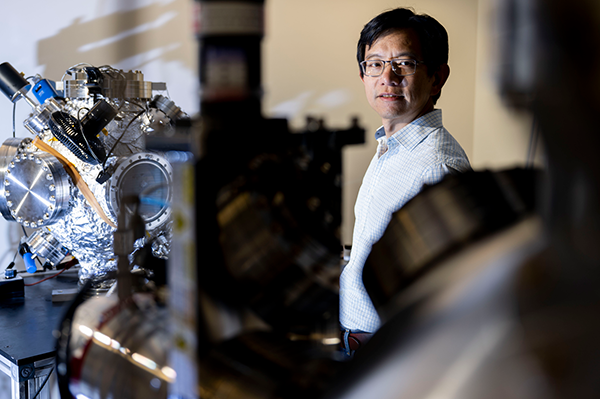
Jun.-Prof. Dr. Marco Rahm is an Assistant Professor in the Department of Physics at Technische Universität Kaiserslautern, where he leads the junior research group on Metamaterials and Transformation Optics. His research focuses on the design and application of artificial electromagnetic materials for terahertz (THz) technology, including active modulation, sensing, and novel optical components. He maintains close collaborations with the Fraunhofer Institute for Physical Measurement Techniques (IPM) and Duke University’s Center for Metamaterials and Integrated Plasmonics. Research Interests: Marco Rahm's research lies at the intersection of metamaterials, transformation optics, and terahertz photonics. He investigates how engineered materials can manipulate electromagnetic waves in unconventional ways, enabling applications such as invisibility cloaking, subwavelength sensing, and dynamically tunable optical devices. His work emphasizes both theoretical design and experimental realization of THz components using metamaterials with reconfigurable properties. Publication Trends: His recent publications reveal a strong focus on terahertz metamaterials, with key themes including gradient-index lenses, surface wave control, active modulation using graphene or semiconductors, and transformation-optical devices. The works span high-impact journals in optics and applied physics, demonstrating expertise in both fundamental theory and device engineering. Scientific Awards: Excellent Poster Award, 4th Workshop on Terahertz Technology (2009) Advising and Grants: He supervises multiple PhD and diploma students, including Benjamin Reinhard, Peter Weis, and Jens Neu, guiding research in THz sensing, tunable metamaterials, and surface waves. His group benefits from institutional support through the Fraunhofer Attract program and international partnerships, particularly with Duke University, enabling cutting-edge research in electromagnetic metamaterials. Labs and Teams: Rahm leads the junior research group 'Metamaterials and Transformation Optics' at TU Kaiserslautern, closely linked with the Fraunhofer IPM group he also directs. The team includes physicists and engineers working on micro/nanofabrication, optical characterization, and simulation of metamaterials, forming an interdisciplinary effort in advanced THz optics.
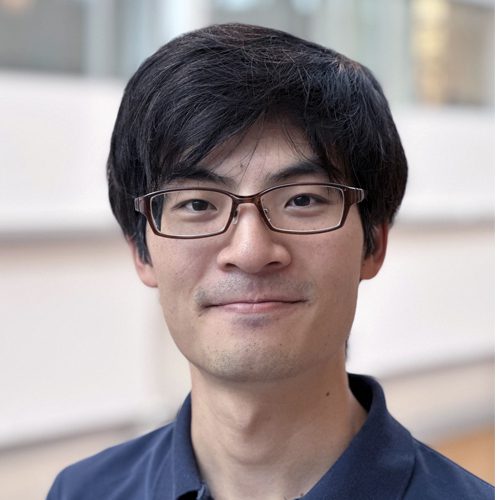
Kenji Yasuda serves as an Assistant Professor in the School of Applied and Engineering Physics at Cornell University, joining the faculty in 2024. His research program bridges experimental condensed matter physics, quantum materials engineering, and nanoscale device physics through innovative heterostructure design. Education: Ph.D. in Applied Physics, University of Tokyo (2018) Postdoctoral Research, Massachusetts Institute of Technology Dr. Yasuda's research focuses on the rational design of quantum nanomaterials through atomic-scale symmetry engineering of 2D van der Waals heterostructures. His work pioneers artificial ferroelectrics and explores symmetry-broken electronic states including unconventional magnetism and topological phenomena. Key thrusts include engineering Berry curvature for quantum transport, developing scanning probe techniques for nanoscale manipulation of moiré superlattices, and prototyping quantum devices for neuromorphic computing and information storage. His approach integrates advanced synthesis, low-temperature characterization, and device integration to unlock functionalities beyond conventional semiconductors. Analysis of his 2017-2022 publications reveals a strategic progression from fundamental topological insulator physics toward engineered quantum functionalities in 2D materials. His work consistently bridges fundamental quantum phenomena (topology, Berry phase) with applied device concepts, demonstrating particular expertise in interfacial ferroelectricity and chiral edge transport. Scientific Recognition: MRS Postdoctoral Awards (2022) Condensed-Matter Science Prize (2022) Springer Theses Prize (2019) President’s Award, University of Tokyo (2019) JSPS Ikushi Prize (2019) Dr. Yasuda leads an active research group pursuing quantum materials synthesis and characterization. His lab develops novel nanofabrication approaches for quantum heterostructures while maintaining strong industry and academic collaborations focused on translating fundamental discoveries into next-generation electronic and spintronic technologies. Current projects emphasize moiré-engineered quantum phases and topological device architectures. The Yasuda Lab operates advanced nanofabrication and low-temperature measurement facilities, specializing in van der Waals heterostructure assembly, scanning probe microscopy, and quantum transport characterization. The team collaborates extensively with materials theorists and device engineers to accelerate the development of quantum technologies based on 2D material platforms.
Professor John A Rogers is a leading academic in materials science and biomedical engineering, currently holding the Louis Simpson and Kimberly Querrey Professor position at Northwestern University . He is also the founding Director of the Querrey-Simpson Institute of Bioelectronics , with joint appointments in Biomedical Engineering, Mechanical Engineering, Electrical Engineering, Chemistry, and Neurological Surgery. His research spans bio-integrated electronics, flexible devices, and nanofabrication technologies. Education : BA/BS in Chemistry and Physics (University of Texas, 1989); SM in Physics and Chemistry (MIT, 1992); PhD in Physical Chemistry (MIT, 1995). Rogers’ work focuses on Soft, skin-like electronics for vital signs monitoring, Bioresorbable devices for cardiac and neural applications, Injectable optoelectronics in neuroscience, and 3D microsystems for biomedical research. His team pioneers stretchable silicon , transient electronics , and bio-inspired fabrication methods. Recent research trends include millimeter-scale pacemakers , wireless skin-interfaced systems , and closed-loop bio-optoelectronics . These innovations leverage flexible substrates , nanoscale thermocapillary flows , and soft lithography for unprecedented biocompatibility and functionality. Scientific Awards : Sigma Xi William Procter Prize (2023), IEEE Biomedical Engineering Award (2023), James Prize (2022), Guggenheim Fellowship (2021), MacArthur Fellowship (2009), and multiple academy fellowships. Rogers leads a multidisciplinary team and has co-authored over 1000 peer-reviewed papers, with more than 100 patented technologies commercialized through startups. His lab’s 3D electronic pericardium and skin-integrated microfluidics exemplify his commitment to translating fundamental science into clinical solutions.
Georgios Syrakoulis serves as a full Professor at Democritus University of Thrace's School of Engineering, Department of Electrical and Computer Engineering since 2018 (appointed faculty member since 2008). He concurrently holds a visiting researcher/Professor position at UWE, UK since 2014 and maintains active industry collaborations through prior founding roles at Ulysses O.E. (1999-2002). His educational background includes a Diploma (1996) and Ph.D. (2001) in Electrical and Computer Engineering from Democritus University of Thrace. His research spans complex electronic systems , with specialized focus on memristive nanodevices, cellular automata theory, neuromorphic computing architectures, and bioinspired computational models. His work bridges theoretical frameworks with practical implementations in nanoelectronics and unconventional computing paradigms. Recent publications reveal a concentrated research trajectory in memristor-based neuromorphic and quantum computing systems , with significant contributions to modeling dynamic behavior of TaO memristors, developing virtual physarum-based computing labs, and establishing foundational frameworks for memristive networks. His scholarly output demonstrates consistent emphasis on bridging nanoscale device physics with computational architecture design. Professor Syrakoulis has supervised 11 Ph.D. dissertations, 22 Master's theses, and 75 undergraduate projects, with several receiving departmental and international awards. He has coordinated over 30 research programs funded by the EU, GSRT, HFRI, and private entities, including Wave-Based Memristive Devices (2020-2022), 1D1M Crossbar Architecture (2019-2021), and Synthesis and Performance Optimization of a Switching Nano-Crossbar Computer (2015-2019). As leader of the Electronics Laboratory, he directs research in nanoelectronic devices, memristive circuits, and unconventional computing architectures. His team maintains active collaborations through initiatives like Greek-Russian bilateral projects on quantum computing and EU-funded NANOxCOMP. He has organized international conferences including NANOARCH 2019 and PACET 2017, while presenting as invited speaker at over 30 international venues in the past five years.
Kin Chung Fong is an Associate Professor in the Department of Electrical and Computer Engineering and holds a joint appointment in Physics at Northeastern University. As a Core Faculty Member of the Quantum Materials and Sensing Institute, he leads research focused on quantum technologies including quantum sensing, quantum networks, and quantum computation using low-dimensional quantum materials. His interdisciplinary work bridges fundamental physics and engineering to develop innovative quantum devices. Fong's research explores electron hydrodynamics, unconventional superconductivity, and novel quantum phenomena in materials like graphene, topological insulators, and Weyl semimetals. His group designs and characterizes quantum devices including single-photon detectors, quantum noise amplifiers, and superconducting qubit systems. Recent publications demonstrate a strong focus on quantum materials characterization and device engineering, with recurring themes in graphene-based detectors, superconducting circuits, and topological materials. Research consistently addresses fundamental limits of quantum measurement while developing practical applications for quantum sensing and computing. Awards & Recognitions: Principal Investigator for DARPA-funded WIdeband graphene-based aXion dARk matter quantum Detector (WIXARD) Fong leads the Quantum Wave-Matter Lab at Northeastern, which develops ultrahigh-sensitivity techniques for investigating quantum phenomena and pioneers technological innovations based on novel physics discoveries.
Dominique Vuillaume is an Emeritus Research Professor and former Research Director at CNRS, working at the Institute for Electronics, Microelectronics and Nanotechnology (IEMN) in Lille. He holds a PhD and Habilitation in solid-state physics from the University of Lille (1984 and 1992). His research spans molecular nanostructures, molecular electronics, and unconventional computing, with a focus on quantum transport, spintronics, and neuromorphic systems. He led the Nanostructures, nanoComponents & Molecules (NCM) group (2000–2019) and the Department of Physics of Materials and Nanostructures at IEMN (2015–2019). Notable achievements include pioneering molecular synapstors, THz molecular switches, and reservoir computing systems using nanoparticle-molecule networks. He has authored/co-authored over 240 peer-reviewed papers and advised industrial projects in semiconductor reliability and nanoelectronics. Education: PhD (1984), Habilitation (1992) in Solid-State Physics, University of Lille Affiliations: CNRS Research Director, IEMN Laboratory, University of Lille Leadership: Founded NCM Group (2000), Head of Department (2015–2019) Research focuses on molecular-scale devices, including: molecular junctions for high-frequency electronics, spintronics, and neuromorphic systems. Key innovations include low-voltage organic synapse transistors interfaced with biological neurons, and optically-driven molecular networks for reservoir computing. Recent work explores terahertz molecular switches and redox-controlled polyoxometalate junctions. Publications emphasize molecular electronics fundamentals and applications, with 2020s contributions on nanoscale thermal conductivity, THz devices, and neuromorphic architectures. Collaborations span industry (Bull R&D, CEA) and academic networks in Europe and globally.
Thottungal Valapu Raziman is a former researcher at EPFL, known for contributions to plasmonics and nanotechnology. Their work focuses on hybrid metal-dielectric systems, optical forces, and computational modeling of plasmonic nanostructures. They completed a doctoral thesis on advanced numerical methods for plasmonic systems, emphasizing surface integral equation (SIE) techniques. Raziman collaborated extensively with Olivier J.F. Martin and others, exploring applications in refractive index sensing, Raman scattering enhancement, and nanofabrication. Their research bridges theoretical modeling and experimental nanostructure design, with affiliations to EPFL units including Nam (Nanotechnology and Microengineering) and Bios (Bioscience Instrumentation). Key research interests include plasmonic metasurfaces, optical trapping mechanisms, and the interplay between nanostructure geometry and optical properties. Raziman’s publications span high-impact journals like Nano Letters and Faraday Discussions , addressing topics from refractive index sensing to polarization-dependent force dynamics. Their computational work improved numerical accuracy in simulating plasmonic systems, while experimental studies demonstrated novel sensing and enhancement mechanisms.
Dr. Carl Hoover is an Associate Professor and Director of Laboratories in the Department of Mechanical & Aerospace Engineering at Clarkson University 's Coulter School of Engineering & Applied Sciences. With over 15 years of industry experience including executive leadership roles, he integrates machine learning and testing applications into engineering education and research. Ph.D. & M.S. in Mechanical Engineering (Clarkson University) B.S. in Aerospace Engineering (University of Virginia) His research focuses on data science applications across engineering domains, with current projects in temporal relational dependence models and manufacturing digital twins . Publications span renewable energy systems , biomedical prosthetics , and aeroelastic power sources . He oversees Clarkson's wind tunnel facility and mechanical testing labs , and founded the A-TEAMS committee for academic test equipment safety. Industry collaborations include co-developing Solinsky Challenge microcredentials in manufacturing analytics. Contact: choover@clarkson.edu Office: 264 CAMP Building, Clarkson University
Sayed Ahmad Salehi is an Assistant Professor in the Department of Electrical and Computer Engineering at the University of Kentucky's College of Engineering, where he directs the Computing with Unconventional Technologies (CUT) Lab. His research spans energy-efficient VLSI circuits for deep learning, stochastic computing, and DNA-based molecular programming. His research focuses on unconventional computing paradigms to address limitations in traditional electronics. Key areas include stochastic and approximate computing for energy-efficient deep learning hardware targeting IoT and edge devices, and biomolecular computing using DNA for environments incompatible with silicon. His lab develops tools like FUNSC (stochastic computing) and FUNDNA (DNA computing) that enable mathematical function computation through novel encoding schemes. Analysis of his recent publications reveals strong emphasis on in-memory computing architectures (particularly for DRAM and phase-change memory), stochastic-to-binary conversion techniques , and DNA circuit synthesis for mathematical operations. His work bridges theoretical computer science with practical hardware implementations for resource-constrained environments. Award highlights include: BIOMOD competition silver award (2023) Best paper nomination at Asilomar Conference (2022) ESWEEK Student Travel Grant (2019) He actively mentors PhD and undergraduate researchers, with recent graduates joining companies like Applied Materials. His lab secures significant NSF funding for interdisciplinary projects in stochastic computing and DNA-based systems. Current initiatives include CUT Lab's Kentucky iGEM team and collaborations on photonics-integrated computing. The CUT Lab operates at the intersection of computer architecture, molecular biology, and signal processing, with research impacting edge AI hardware, biocompatible computing, and next-generation memory systems.
Simon O'Keefe is a Professor in the Department of Computer Science at the University of York. He holds a DPhil in Computer Science from the University of York, preceded by MSc degrees in Operational Research (Lancaster) and Information Processing (York), and a BA in Natural Science/Engineering from the University of Cambridge. His research focuses on bio-inspired computation, particularly neural networks and unconventional computing paradigms. He has held roles including Deputy Head of Department (Online) and previously served as Reader (2022-2024), Senior Lecturer, Lecturer, and Research Assistant at York. His work spans computational neuroscience, neuromorphic engineering, and AI applications in crisis response. Notable contributions include studies on reservoir computing using nanomagnetic devices, Arabic temporal understanding, and domain adaptation techniques. His publications explore topics like spike-based computing, cellular automata classification, and dependency-based bilingual embeddings. Prof O’Keefe’s research integrates theoretical computer science with practical applications in robotics, disaster informatics, and chemical computing systems. He leads the Artificial Intelligence research group at York and has contributed to interdisciplinary projects involving biochemistry and materials science.
Bin Wang is a Professor in the Department of Sustainable Chemical, Biological and Materials Engineering at the University of Oklahoma's Sarkeys Energy Center. His research focuses on computational simulations of materials chemistry, catalysis, and energy conversion, utilizing density functional theory (DFT) and molecular dynamics. Key areas include nanoscale materials, energy storage (e.g., lithium-sulfur batteries), and catalytic processes for biomass conversion. Education: Ph.D. in Chemistry, École Normale Supérieure (ENS) de Lyon, France (2011) B.A. in Chemical Engineering, East China University of Science & Technology (2004) Postdoctoral Research, Vanderbilt University (2010–2014) Awards: DOE Early Career Award (2019) ACSIN Young Scientist Prize (2009) Marie Curie Fellowship (2007–2009) His work bridges computational modeling and experimental catalysis, addressing challenges in renewable energy, material design, and sustainable chemistry. Notable contributions include studies on hydrogenation pathways in liquid water, MXene ion diffusion, and graphene functionalization. Collaborations span academia and industry, focusing on advancing UN Sustainable Development Goals through distributed biomass conversion.
Annica Black-Schaffer is a Professor in the Department of Physics and Astronomy at Uppsala University, specializing in Quantum Matter Theory and Material Theory within the Faculty of Science and Technology. Her research program focuses on theoretical condensed matter physics with emphasis on quantum phenomena in novel materials. Professor Black-Schaffer's research expertise spans topological superconductivity, unconventional superconducting pairing mechanisms, and the interplay between magnetism and quantum states. She has made significant contributions to understanding odd-frequency superconductivity, altermagnetism, and chiral d-wave superconductors. Her work combines advanced theoretical techniques with computational modeling to explore quantum phenomena at the forefront of condensed matter physics, with particular focus on graphene-based systems, topological insulators, and quasicrystalline materials. Her recent publications reveal a strong emphasis on cutting-edge topics including altermagnetism, topological superconductivity in quasicrystalline systems, and quantum state manipulation. Black-Schaffer's work bridges fundamental theoretical concepts with potential applications in quantum computing and advanced electronic devices, particularly through research on Majorana zero-modes and topological quantum states that could revolutionize quantum information processing. While specific scientific awards are not detailed in the available information, her extensive publication record in high-impact journals such as Physical Review Letters and Nature Physics indicates significant recognition within the physics community. Her work has garnered substantial attention as evidenced by numerous citations across academic platforms. Professor Black-Schaffer actively collaborates with researchers worldwide and likely supervises students and postdoctoral researchers in theoretical condensed matter physics. Her research group at Uppsala University's Ångström Laboratory focuses on computational and theoretical investigations of quantum materials, contributing to both fundamental understanding and potential technological applications of novel quantum phenomena. Her laboratory specializes in theoretical modeling of quantum materials with particular expertise in superconductivity, topological phases, and the electronic properties of low-dimensional systems. The group employs advanced computational techniques to investigate quantum phenomena that could have implications for future quantum technologies, including quantum computing devices and novel electronic components based on topological materials.
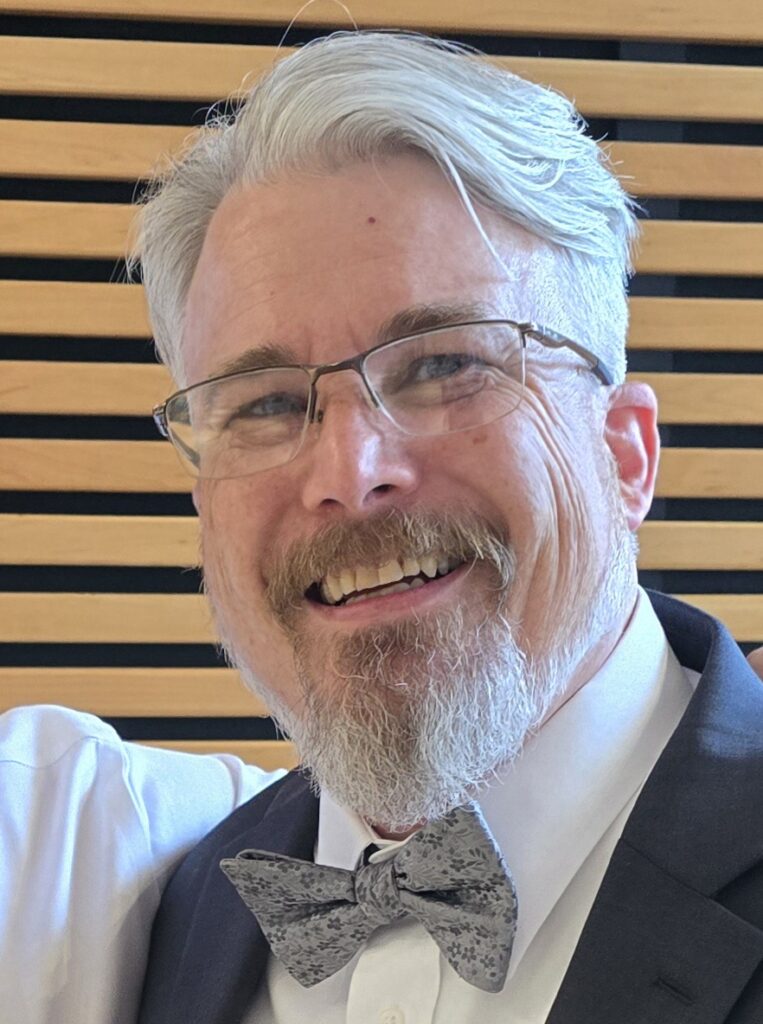
Hajo Broersma is a Full Professor specializing in Formal Methods and Tools, with a prominent focus on graph theory and its applications. His research spans theoretical and applied domains, including extremal graph theory, spectral graph theory, and unconventional computing using nanoelectronic devices. Current research interests include graph coloring, Hamiltonian properties, Turán-type problems, and spectral analysis of graphs and digraphs. Recent publications investigate signed edge colorings, disordered dopant networks, hypergraph star forests, and computational complexity of graph algorithms. His work bridges theoretical mathematics and practical applications in nanotechnology, exemplified by collaborations on nanoelectronic device modeling and machine learning integration.