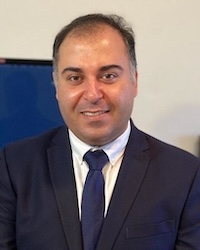
Ramachandrudu Arasada serves as a Postdoctoral Fellow at the Bureau of Economic Geology (BEG), part of the Jackson School of Geosciences at the University of Texas at Austin. His research spans critical energy and environmental geoscience domains including reservoir characterization, carbon sequestration, and geothermal systems. His research focuses on energy transition technologies with emphasis on CO2 storage security, hydrogen infrastructure, and unconventional resource recovery. Key projects involve developing novel carbon storage incentive frameworks, optimizing formate-alternating-gas injection methods, and analyzing seismotectonic risks in hydrocarbon basins. His work bridges fundamental geoscience with practical energy-water nexus challenges. Analysis of recent publications reveals strong trends in geological carbon management (60% of output), energy-water interdependencies (25%), and advanced reservoir characterization (15%). His research consistently integrates field data with computational modeling, particularly in CO2 sequestration optimization and induced seismicity assessment. Arasada contributes to major BEG consortia including the Gulf Coast Carbon Center (GCCC) and Center for Injection and Seismicity Research (CISR), focusing on subsurface energy systems where geoscience intersects with energy security and environmental stewardship.
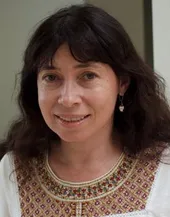
Hassan Dashtian serves as a Research Assistant Professor at the Bureau of Economic Geology (BEG), a prominent research unit within The University of Texas at Austin's Jackson School of Geosciences. His work bridges energy systems, environmental science, and subsurface engineering through multiple research consortia including GeoH2, HotRock Geothermal, and the Center for Injection and Seismicity Research (CISR). His research focuses on geothermal energy systems , carbon capture and storage , and hydrogen infrastructure development , with particular emphasis on optimizing resource recovery while addressing environmental constraints. Recent work explores the energy-water nexus, reservoir characterization techniques, and seismic risk assessment in unconventional resource plays. Analysis of his 15 most recent publications reveals a strong trajectory toward climate mitigation technologies , with increasing focus on carbon sequestration security (40% of recent works), geothermal energy systems (25%), and water management challenges in energy production (20%). His methodology frequently combines field observations with computational modeling and policy analysis. Dr. Dashtian actively contributes to major energy transition initiatives through the Bureau's research consortia, particularly advancing practical implementation frameworks for carbon management and clean hydrogen systems. His work demonstrates strong industry engagement through applied research addressing real-world energy transition challenges.
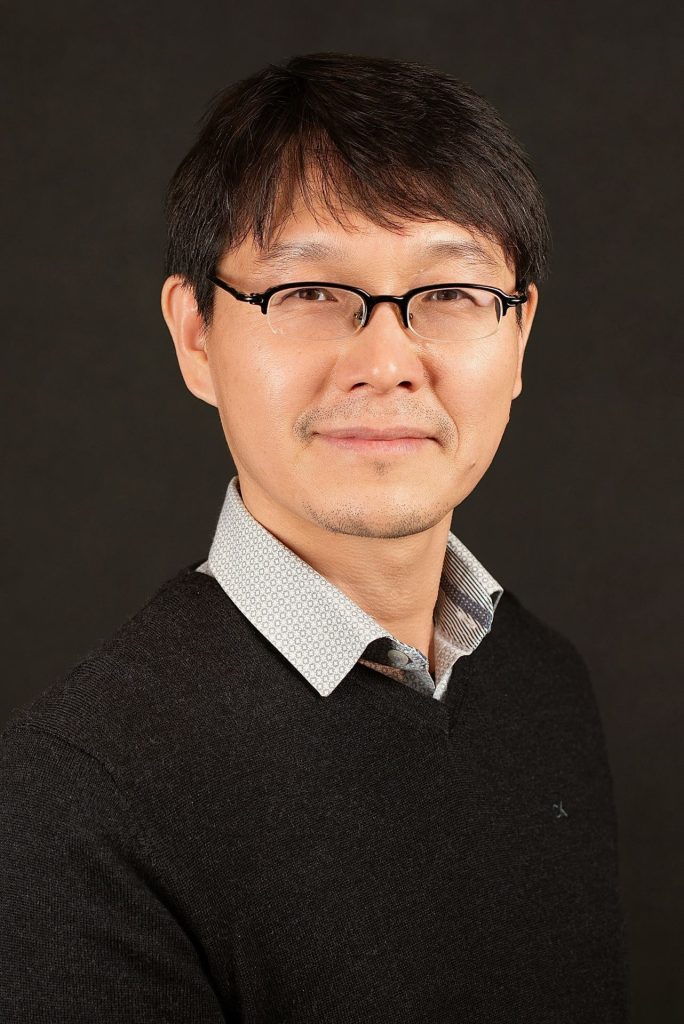
Natalia Perkins is a Professor at the School of Physics and Astronomy , University of Minnesota , and a Hans Fischer Senior Fellow at the Technical University of Munich Institute for Advanced Study (TUM-IAS) since 2022. Her work bridges fundamental theoretical condensed matter physics and quantum magnetism. Her research explores unconventional quantum phases in correlated electron systems , focusing on quantum spin liquids , topological transitions , and spin-orbit coupling in geometrically frustrated materials. She develops microscopic models to explain phenomena in Kitaev spin liquids and iridates . NSF CAREER Award (DMR-1929311) U.S. Department of Energy Grant (DE-SC0018056) Fellow of the American Physical Society Her recent work with colleagues like Prof. Johannes Knolle examines fractionalized excitations , vacancy-induced modes , and chiral quantum orders in Kitaev-Γ and Yao-Lee models . She contributes to understanding topological materials and strongly correlated quantum systems , with applications in next-generation quantum technologies.
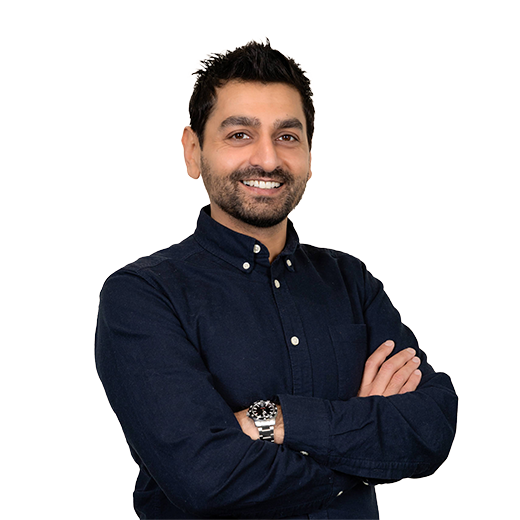
Hyunsoo Kim serves as an Assistant Professor in the Department of Physics at Missouri University of Science and Technology and holds a dual appointment as Senior Investigator at the Materials Research Center. His research focuses on emergent quantum phenomena in solid-state systems where many-body interactions generate novel electronic ground states, with particular emphasis on superconducting and topological phases for quantum information technology applications. Education: Ph.D. in Experimental Condensed Matter Physics, Iowa State University (2013) M.S. in Computational Condensed Matter Physics, Pusan National University (2005) B.S. in Physics, Pusan National University (1999) Research Focus: Dr. Kim's experimental work investigates quantum materials to uncover unconventional electronic behaviors. His research on superconductivity and magnetism explores fundamental mechanisms in correlated electron systems, while studies of topological phases of matter target materials platforms for fault-tolerant quantum computing. He actively develops quantum devices including sensors and computational elements, bridging fundamental physics with quantum technology applications. Academic Role: As a core faculty member, he teaches Advanced Physics Lab (Physics 3119/3129) across multiple semesters (Spring 2022, Fall 2022, Fall 2023, Fall 2024) and Engineering Physics II recitations (Physics 2135 in Spring 2023 and Spring 2024). His Materials Research Center affiliation enables experimental work on quantum material synthesis and characterization.
Vikram Kaushal is a Senior Lecturer at the Manchester School of Architecture, focusing on the intersection of live performance, interactive media design, and biofeedback-driven environments. His work explores collective experiences through technology and spatial innovation. Academic Rank: Senior Lecturer University: Manchester Metropolitan University School: Manchester School of Architecture His research examines how performance, space, and technology foster community connection. Projects include immersive installations utilizing dynamic video, biofeedback, and real-time systems, often hosted in unconventional venues like disused buildings and railway arches. Key themes include British cybernetics, urban regeneration, and deconstructing cultural consumption models. Recent works such as 'Repercussion' (2025) and 'HomoBloc Festival' (2024) highlight his engagement with responsive environments and participatory art. Earlier outputs like 'Verfasst' (2017) and 'Manchester Urban Pioneers' (2015) emphasize biometric data integration and post-industrial urban strategies. Scientific Awards Shortlisted for the Colvin Prize (2025) Second Place in 'Murder Children During the Bombing' Competition (2021) Kaushal's collaborative consultancy, Logan & Wilcox, extends his practice into community arts and cultural projects. He frequently participates in international exhibitions, residencies, and academic conferences.
Monica Mordonini is an Associate Professor in the Department of Computer Engineering at the Faculty of Engineering, University of Parma, where she has been a faculty member since 1999. She teaches courses across multiple programs including Computer Engineering, Engineering Management, Civil and Environmental Engineering, and Law, with a focus on Artificial Intelligence, Software Engineering, and Information Systems. Her research interests lie primarily in Artificial Intelligence , with emphasis on visual sensors, unconventional vision algorithms for autonomous systems, and applications in video surveillance. More recently, her work extends to information extraction from distributed multimedia databases, semantic web applications, and ontology design for smart environments. She is actively involved in interdisciplinary research, particularly in healthcare technology, including patient tracking and operating room optimization using IoT and digital twin technologies. The most recent publications reflect a strong trend toward applied AI in healthcare and intelligent systems. Her work integrates computer vision, real-time data processing, and system modeling to improve clinical workflows and service delivery. Themes such as digital twins, location-based services, and simulation-based optimization are central to her current research trajectory. Scientific Awards: No scientific awards mentioned in the provided text. Advising and Grants: There is no explicit information about PhD or Master’s students she has advised. Similarly, no grants or funded projects are detailed in the text, though her collaborative publications suggest involvement in research initiatives, particularly in healthcare and intelligent systems. Labs and Research Teams: While specific lab affiliations are not mentioned, Monica Mordonini collaborates extensively with researchers in healthcare, engineering, and computer science, particularly in projects involving patient tracking, operating room systems, and digital libraries. Her work appears to be conducted within interdisciplinary teams at the University of Parma, likely connected to intelligent systems and applied AI laboratories.
Jorge Lobo is an Assistant Professor at the Department of Electrical and Computer Engineering, Faculty of Science and Technology, University of Coimbra. His research focuses on computer vision, sensor fusion for mobile robotics, and low power computing, with recent emphasis on quantum computing and bio-inspired computational approaches. B.Sc/M.Sc in Electrical Engineering (University of Coimbra) Ph.D. in Electrical and Computer Engineering (2007, thesis: 'Integration of Vision and Inertial Sensing') Research Interests: Specializes in artificial perception systems combining computer vision and inertial sensing for robotics. Develops probabilistic models for sensor fusion and explores unconventional computing architectures like stochastic circuits and quantum computing for efficient Bayesian inference. Key applications include autonomous robotic grasping and disaster response systems. Scientific Leadership: Principal Investigator for Q-Bet: Bridging classical/quantum computing via HPC and bio-inspired methods Founding member of Quantum@UC interest group Coordinator of quantum computing specialization courses (collaboration with Physics & Computer Science departments) Key Projects: Contributed to European initiatives BACS (Bayesian Cognitive Systems), HANDLE (robotic dexterity), BAMBI (Bayesian inference hardware), and ECOBOTICS.SEA (marine ecosystem robotics). Academic Recognition: IEEE Senior Member and former president of the Portuguese IEEE RAS chapter. Developed innovative remote labs for stochastic computing education.
R. J. Nemiroff is a Professor in the Department of Physics at Michigan Technological University, where he conducts research in astrophysics, particularly in gamma-ray bursts, gravitational lensing, cosmology, and sky monitoring. He is widely recognized as the co-creator of the Astronomy Picture of the Day (APOD), a pioneering public outreach project launched in 1995. His academic work spans theoretical, observational, and computational domains, and he has mentored several PhD students whose theses contributed to major projects like the Night Sky Live network. University: Michigan Technological University School: College of Sciences and Arts Department: Department of Physics Academic Rank: Professor His research interests include: - Gamma-ray burst physics (time dilation, pulse structure, hardness-luminosity relation) - Gravitational lensing (solar lens, microlensing, finite source effects) - Cosmology (Friedmann equations, dark energy, ultralight energy) - Sky monitoring and transient detection (CONCAM, Night Sky Live) - Astronomical data systems (ASCL, PHOTZIP compression) The 15 most recent articles reflect a strong focus on time-domain astrophysics, observational strategies, and innovative instrumentation. Trends include the development of all-sky monitoring networks, theoretical models for GRB emission, and methods to improve data accessibility and reproducibility in astronomy. His work bridges theoretical insight with practical implementation, often leading to falsifiable predictions and widely used tools. Scientific contributions: Co-founded APOD, a landmark science communication platform Founded the Astrophysics Source Code Library (ASCL) Organized modern versions of historic astronomical debates Discovered GRB time dilation signal with Jay Norris Proposed the solar gravitational lens as a future telescope Nemiroff has advised multiple PhD students, including Bijunath Patla, Lior Shamir, and Amir Shahmoradi, whose work advanced projects in lensing, data compression, and GRB physics. He secured NSF funding for the CONCAM/NSL project, which deployed fisheye cameras globally for cloud and transient monitoring. Though the project ended due to funding constraints, it pioneered real-time sky monitoring practices now adopted worldwide. He leads or has led several innovative teams: Night Sky Live (NSL) project team for global sky monitoring APOD editorial team with Jerry Bonnell ASCL development and curation group GRB research group at NASA GSFC and MTU
George Prpich is an Associate Professor of Chemical Engineering at the University of Virginia. He holds a B.Sc. in Chemical Engineering from the University of Saskatchewan (2000) and a Ph.D. from Queen's University (2007). His research spans the water-energy-food nexus, blending engineering methods with policy analysis to address challenges in environmental remediation, risk management, and sustainable resource governance. He has received the Robert A. Moore Jr. Award for integrating industry-relevant research with student career preparation. Prpich's work focuses on contamination management in contexts such as Nigeria's oil-polluted sites, where he emphasizes stakeholder engagement and policy frameworks. He also explores CO₂ capture technologies and unconventional energy risks, alongside developing machine learning tools for toxicity assessments. His teaching includes 'Startup Ops for Entrepreneurs,' reflecting his interest in bridging technical innovation with real-world applications. Key research trends in his articles include bioavailability modeling of chemical mixtures, environmental policy risk analysis, and sustainable remediation strategies. His interdisciplinary approach addresses both technical and governance dimensions of environmental challenges, with a focus on global scalability and stakeholder collaboration. Awards: Robert A. Moore Jr. Award (2018) Prpich’s grants and advising activities are not explicitly detailed in the provided text, but his research consistently intersects engineering solutions with policy implementation. He has contributed to frameworks for contaminated land management in Nigeria and EU energy policy analysis, demonstrating a commitment to practical, cross-sectoral impact.
Ioannis (John) Kymissis is a Professor of Electrical Engineering at Columbia University, serving as Vice Dean of Infrastructure and Innovation and Chair of the Department of Electrical Engineering. He is the Kenneth Brayer Professor of Electrical Engineering and Co-Director of the Maker Space Facility. SB in Electrical Engineering and Computer Science, MIT (1998) M.Eng. in Electrical Engineering and Computer Science, MIT (1999) PhD in Electrical Engineering and Computer Science, MIT (2003) His research focuses on the application of thin film materials in novel electronic and optical systems. Key areas include organic semiconductors , piezoelectric materials , and recrystallized semiconductor materials , enabling devices for energy storage , medical sensors , and compact spectrometers . His group emphasizes interdisciplinary collaboration with chemists, physicists, and physicians to advance technologies in healthcare , environmental monitoring , and security . The work also integrates robotics , displays , and communication systems . NSF CAREER award IEEE EDS Paul Rappaport award Vodaphone Americas Foundation Wireless Innovation Award MIT Clean Energy Prize Verizon Powerful Answers award Kymissis has co-founded companies such as Chromation , Lumiode , and Radiator Labs to commercialize his research. He leads the Columbia Laboratory for Unconventional Electronics (CLUE) , which develops hybrid systems for sensing, energy conversion, and display technologies using low thermal budget fabrication and advanced characterization techniques like synchrotron x-ray studies .
Martin Sarott is a Postdoctoral Researcher in Complex Oxides at the University of Groningen, affiliated with the Zernike Institute for Advanced Materials and the Faculty of Science and Engineering. His research focuses on epitaxial ferroic thin films, domain configurations, optical control of ferroic order, and complex oxides for unconventional computing. He specializes in experimental techniques including pulsed laser deposition, nonlinear optics, X-ray diffraction, and advanced microscopy methods. His work addresses challenges in material synthesis, domain engineering, and device fabrication, with applications in next-generation electronics and energy-efficient systems. Notably, he explores strain effects on polar phases in WO3 thin films and optical manipulation of ferroelectric polarization states. Recent publications highlight contributions to understanding structure-property relationships in epitaxial systems, polar skyrmions, and novel diffraction strategies for hidden order detection. Sarott collaborates on projects involving 2D materials, plasmonic membranes, and quantum sensing for domain imaging. His experimental toolkit includes advanced lithography (photolithography, electron beam lithography) and in-situ characterization methods.
Shanshan Yao, PhD, is an ATS Assistant Teaching Professor in the Department of Civil and Environmental Engineering at the University of Alberta's Faculty of Engineering. She specializes in teaching and research focusing on unconventional resources, hydraulic fracturing, reservoir characterization, and drilling engineering. Her courses include PET E 275 (Petroleum Reservoir Fluids), PET E 364 (Drilling Engineering), and advanced reservoir and production engineering modules. Dr. Yao's research interests span pore-scale processes in porous media, pneumatic percussion drilling, and pumped storage hydropower systems. Her recent articles highlight contributions to proppant dynamics, fluid mechanics in fracturing, and optimization of drilling technologies. While no awards or grants are explicitly listed, her work reflects active engagement in petroleum engineering and reservoir science. She currently teaches across multiple terms, demonstrating a commitment to both education and applied research in energy systems.
Ronghao Cui is a Postdoctoral Fellow at the Department of Mathematics, University of Bergen, Norway, conducting advanced research in computational fluid dynamics within porous media systems. His work bridges petroleum engineering and environmental science through high-resolution modeling of nanoscale fluid behavior. His core research interests include porous media transport phenomena, multiphase fluid dynamics, computational pore-network modeling, molecular simulation techniques, interfacial chemistry in complex fluids, and nanofluidics applications. He specializes in simulating shale reservoir systems and clay mineral interactions using multiscale approaches that integrate molecular dynamics with continuum-scale principles. Analysis of his publication record reveals a concentrated focus on pore-scale mechanisms in unconventional reservoirs, with recent work emphasizing CO2-brine-silica interactions for carbon sequestration and ethanol-clay systems for enhanced recovery. His methodologies consistently combine Earth science principles with chemical engineering applications, demonstrating strong interdisciplinary connections between computational mathematics, petroleum engineering, and environmental fluid mechanics.
Dr. Sabine Wurmehl is the head of the Department of Synthesis and Crystal Growth at the Leibniz Institute for Solid State and Materials Research Dresden (IFW Dresden), Germany. She has held this leadership position since 2015, overseeing research on functional intermetallic materials, unconventional superconductors, and frustrated magnetic systems. Prior to becoming department head, she led an Emmy Noether research group at IFW Dresden from 2010 to 2015. Her work bridges materials synthesis, crystal growth, and advanced physical characterization to understand structure-property relationships in quantum materials. Dr. Wurmehl received her chemistry education at the University of Mainz, Germany, earning her Diploma in 2002 and her Doctorate (Dr., summa cum laude) in 2006 under the supervision of Prof. C. Felser. Following her PhD, she conducted postdoctoral research at TU Eindhoven in the Netherlands (2007-2009) before returning to IFW Dresden as a postdoc (2009-2010). Her research focuses on the synthesis and characterization of quantum materials, particularly exploring the relationship between crystal structure and physical properties. She specializes in growing high-quality single crystals of complex materials including iron-based superconductors, Heusler compounds, and frustrated magnetic systems. Her work employs nuclear magnetic resonance spectroscopy to study ferromagnetic materials and other advanced characterization techniques to probe electronic and magnetic properties. Dr. Wurmehl has made significant contributions to understanding unconventional superconductivity, frustrated magnetism, and the physics of intermetallic compounds. Dr. Wurmehl's publication record demonstrates consistent leadership in condensed matter physics, with over 200 publications spanning two decades. Her recent work shows increasing focus on complex quantum materials, particularly iron-based superconductors and Heusler compounds, with emphasis on crystal growth techniques, structure-property relationships, and nematic phenomena. She has developed expertise in advanced characterization methods including ARPES, neutron scattering, and ultrafast spectroscopy to probe electronic structure and dynamics. IFW research award (2014) IFF research award of the IFW Dresden (2012) Emmy-Noether fellowship of the DFG (2010) Research fellowship of the DFG (Eindhoven, Netherlands) (2007) Dr. Wurmehl has supervised an extensive research group since 2010, mentoring 14 postdoctoral researchers, 14 PhD students, 8 diploma and master students, and 12 additional students. She has secured significant research funding through the Emmy-Noether program and other competitive grants, enabling her to establish a world-class crystal growth facility at IFW Dresden. Her group collaborates extensively with international partners, including institutions in the Netherlands, Poland, Japan, and the United States. At IFW Dresden, Dr. Wurmehl leads the Synthesis and Crystal Growth Department, which houses specialized facilities for growing high-quality single crystals of complex quantum materials. Her team employs various crystal growth techniques including the optical floating-zone method, flux growth, and solid-state synthesis to produce materials for fundamental research on superconductivity, magnetism, and topological phenomena. The department serves as a central resource for the Dresden physics community, providing high-quality crystals for numerous collaborative projects.
Assoc. Prof. Cina Foroutan-Nejad is affiliated with the Institute of Organic Chemistry, Polish Academy of Sciences , where they lead a research group focused on molecular electronics. Their academic rank as Associate Professor reflects their expertise in theoretical and computational chemistry. University: Institute of Organic Chemistry, Polish Academy of Sciences Academic Rank: Associate Professor Research interests include: Design of molecular devices for molecular electronics and in-memory processing Application of quantum chemical topology methods to analyze chemical bonds Theoretical studies on chemical reactivity and aromaticity Smart catalysis under external electric fields Recent publications highlight work on memristors , actinide compounds , and collective atomic interactions , with a focus on unconventional bonding and aromaticity. The group has secured funding through the NCN OPUS grant 2020/39/B/ST4/02022 for "Design of Functional Organic Memristors (DOOM)." PhD students under their supervision include Minu Sheeja and Muhammad Yasir Mehboob . The research team collaborates with scientists across disciplines, including computational chemists and experimentalists.