Aly A. Farag is a Professor of Electrical and Computer Engineering at the University of Louisville, where he founded the Computer Vision and Image Processing (CVIP) Laboratory. His research focuses on imaging science, computer vision, and biomedical imaging, with applications in cancer detection and medical visualization. He has authored over 350 technical papers and two upcoming textbooks. Dr. Farag holds patents in imaging technologies and has led projects funded by NSF, DoD, NIH, and industry. Educations: B.S. in Electrical Engineering, Cairo University, 1976 M.S. in Bioengineering, University of Michigan, 1984 M.S. in Biomedical Engineering, Ohio State University, 1981 Ph.D. in Electrical Engineering, Purdue University, 1990 Research Interests: Scene analysis, multimodal imaging reconstruction, statistical segmentation, and biomedical visualization. His work has advanced tubular topology visualization, colon segmentation, and lung nodule analysis. Collaborations span medical institutions and federal agencies. Awards: 2002 University Scholar designation for technical achievements. Served as associate editor for IEEE Transactions on Image Processing and general co-chair of IEEE ICIP-09. Grants & Advising: Principal investigator on NSF/NIH-funded projects. Advised 15 PhD and 26 MS students, trained 10 postdocs, and introduced new ECE curriculum topics. Labs/Teams: CVIP Lab pioneers innovations in medical imaging and AI-driven diagnostics. Active in interdisciplinary teams for STEM education engagement metrics.
Giampaolo Liuzzi is an Associate Professor at the Department of Computer, Automation, and Management Engineering 'Antonio Ruberti' (DIAG) at Sapienza University of Rome since July 2023. Previously, he was a fixed-term researcher at the same department (July 2020-June 2023) and a Senior Researcher at the Institute of Systems Analysis and Computer Science 'A. Ruberti' of the CNR until July 2020. He teaches Mathematical Programming, Complements of Mathematics, and Mathematical Analysis 2 for various engineering programs at Sapienza University. Dr. Liuzzi's research focuses on Nonlinear Optimization , particularly derivative-free methods for constrained and unconstrained optimization, global optimization, mixed integer nonlinear programming, and applications in operations research and machine learning. His work spans theoretical developments in optimization algorithms as well as practical applications in engineering design, simulation-based optimization, and biomedical systems. He has made significant contributions to derivative-free optimization techniques that don't require gradient information, which is particularly valuable for black-box optimization problems where derivatives are unavailable or expensive to compute. His recent publications (2022-2025) demonstrate a strong focus on advancing derivative-free optimization methods, with particular attention to complexity analysis, convergence properties, and practical implementations for challenging problem classes including nonsmooth, constrained, multi-objective, and mixed-integer optimization problems. His work bridges theoretical computer science with practical engineering applications, with publications appearing in top optimization journals like Optimization Methods & Software, Computational Optimization and Applications, and Journal of Optimization Theory and Applications. Dr. Liuzzi has received significant professional recognition through National Scientific Habilitations for both Associate Professor (2014) and Full Professor (2018) positions in Italy. He is actively involved in the academic community as an administrator of the Derivative-Free Library (DFL), a collection of algorithms and methods for derivative-free optimization developed through collaboration among several prestigious Italian research institutions. As an educator, Dr. Liuzzi has developed comprehensive teaching materials for courses in Mathematical Programming, Complements of Mathematics, and Mathematical Analysis. He is also engaged in academic entrepreneurship as a co-founder of DEIX s.r.l., a Sapienza startup focused on algorithms and industrial software for planning and control of complex systems. Additionally, he organized the 2nd Derivative-Free Optimization Symposium (DFOS'24) in June 2024 in Padua, highlighting his leadership role in this specialized optimization community.
Dr.-Ing. Sebastian Nagel is a scientist at the Institute of Communication Systems and Data Processing (IKS) under the Faculty of Electrical Engineering and Information Technology at RWTH Aachen University . His research focuses on immersive binaural audio systems, spatial audio signal processing, and real-time adaptation of head-related transfer functions (HRTFs). Key research areas include: Interactive binaural reproduction for moving listeners Coherence-adaptive binaural cue algorithms Acoustic head-tracking with unconstrained movement Dereverberation and noise reduction in spatial audio His recent work (2025) extends binaural cue adaptation for hearable devices, while earlier publications (2024-2018) address multi-microphone integration, HRTF modeling, and real-time signal enhancement. Teaching activities include Laboratory Real-Time Audio Processing and Selected Topics in Communications Engineering seminars. Contact: Room 314 | Phone: +49 241 80-26961 | Email: nagel@iks.rwth-aachen.de
Bahman Gharesifard is a Professor in the Department of Mathematics and Statistics at Queen's University, Canada. He holds a Ph.D. from Queen's University (2009) and advanced degrees from Shiraz University (B.Sc., 2002; M.Sc., 2005). His research focuses on systems and control theory, with emphasis on distributed control, optimization, geometric control, and their intersections with network sciences, machine learning, and game theory. He has been recognized with the First Year Instructor Teaching Award in Engineering & Applied Science (2014 & 2016). His academic journey includes postdoctoral research at the University of California, San Diego (2009–2012) and the University of Illinois, Urbana-Champaign (2012–2013). His work bridges theoretical foundations of control systems with practical applications in distributed optimization, neural networks, and contagion models on networks. Recent research trends include advancing Lyapunov-based methods for reinforcement learning, analyzing structural controllability in sparse systems, and developing models for network dynamics using Pólya urn frameworks. His articles explore topics like averaged controllability, flexible-step MPC, and stability in distributed algorithms. Education: Ph.D., Queen's University (2009) M.Sc., Shiraz University (2005) B.Sc., Shiraz University (2002) Awards: Engineering & Applied Science First Year Instructor Teaching Award (2014) Engineering & Applied Science First Year Instructor Teaching Award (2016) He collaborates on projects involving secure distributed optimization, epidemic modeling via Pólya contagion networks, and neural network approximation guarantees. His lab contributes to theoretical control advancements with practical implications in robotics, energy systems, and AI.
Arnold Neumaier is a Full Professor (Chair for Computational Mathematics) at the Faculty of Mathematics, University of Vienna, Austria. His research focuses on global optimization, heuristic optimization, nonlinear optimization, and optimization under uncertainty. He leads a research group developing state-of-the-art software for optimization, numerical analysis, and statistics. Collaborations include work on global optimization with Immanuel Bomze and Vladimir Kolmogorov, heuristic optimization with Nysret Musliu and Günther Raidl, and optimization for data analysis with Dan Alistarh and Radu Boț. Neumaier holds a Ph.D. from the Free University of Berlin (1977) and has held academic positions at the University of Freiburg (1987–1993), AT&T Bell Laboratories (1993–1994), and visiting roles at Princeton University, the University of Nice, and RWTH Aachen. His work spans computational mathematics, quantum physics, and mathematical software development. He maintains extensive web resources on optimization and numerical analysis. Research interests include algorithmic software development, verified computing, mathematical modeling languages, uncertainty modeling, and quantum physics. His group comprises 1 full professor, 1 associate professor, 1 university assistant, 3 postdocs, and multiple PhD students. Key contributions include the 'Global Optimization' WWW site and foundational work in causal perturbation theory for quantum field theory.
Žiga Emeršič is an Assistant Professor at the University of Ljubljana, Faculty of Computer and Information Science , affiliated with the Computer Vision Laboratory . His work bridges biometrics , deep learning , and computer vision , with a focus on ear-based recognition systems and explainable AI. IEEE Member #98052610 Email: ziga.emersic@fri.uni-lj.si Office: R2.33, LRV Laboratory Office Hours: Tuesdays 12:30 or by arrangement Research interests include biometric recognition , deep neural networks , object detection , and privacy-preserving AI . He pioneered ear biometrics research, developing tools like the Ear Biometric Database in the Wild and ContexedNet for context-aware recognition. Recent publications analyze biometric model performance ( Neural Computing & Applications, 2018 ), explore k-Same-Net for face deidentification ( Entropy, 2018 ), and advance ear alignment using two-stack hourglass networks ( IET Biometrics, 2023 ). His 2021 work on context-aware ear detection addresses real-world variability. Awards include the European Association for Biometrics Award (2021) , SDRV Excellence Plaque (2023) , and multiple University of Ljubljana recognitions for teaching and research (2016, 2018, 2022). He co-organized the 1st Machine Learning Summer School in Central America (2018) . As co-founder of OOSM Ltd (2014-2015), he applied deep learning to smart city solutions. His 2017 doctoral thesis on visual ear detection in unconstrained environments solidified his expertise in biometric AI .
Chuan He is an Assistant Professor in the Department of Mathematics at Linköping University, Sweden, affiliated with the Division of Applied Mathematics (TIMA) and the Wallenberg AI, Autonomous Systems and Software Program (WASP). His research bridges continuous optimization and machine learning, focusing on algorithmic efficiency and theoretical foundations. Education: Ph.D. in Industrial and Systems Engineering, University of Minnesota, USA (2019–2023) B.S. in School of Mathematical Sciences, Xiamen University, China (2015–2019) His research interests include deep learning, decentralized and large-scale optimization, high-order methods, and applications in healthcare, scientific computing, and engineering. He develops algorithms with strong theoretical guarantees, particularly in nonconvex optimization settings. His work emphasizes improving the speed, reliability, and scalability of machine learning training processes. His recent publications focus on Newton-CG based methods, augmented Lagrangian techniques, and federated learning under constraints. These contributions span top journals in operations research, optimization, and machine learning, reflecting a strong trend toward integrating second-order optimization with practical machine learning challenges. Scientific Awards: No awards explicitly mentioned in the text. Chuan He advises and collaborates within the WASP Mathematics research environment, particularly in the 'Optimisation for machine learning' group. He previously held a postdoctoral position at the University of Minnesota under Professor Ju Sun. His research is supported through institutional affiliations with WASP and Linköping University. He actively contributes to the academic community through conference presentations at INFORMS, SIAM, and NeurIPS workshops. He is involved in the 'Optimisation for machine learning' research group at MAI, which aims to develop more efficient and theoretically sound algorithms for machine learning. The group focuses on replacing heuristic methods with principled approaches, reducing computational costs in training models.
Zhuanghe Ren is a Postdoctoral Scholar in the Department of Physics at the University of Central Florida (UCF), affiliated with the College of Sciences. His research focuses on advanced materials for energy storage and catalysis, particularly hydrogen storage systems and electrocatalytic processes. Key areas include developing novel nanomaterials for enhancing catalytic activity in hydride-based systems and exploring mechanisms for efficient hydrogen cycling at low temperatures. His work spans the synthesis and characterization of titanium-based nanomaterials, copper nanowire electrocatalysts, and synergistic catalyst designs for ammonia synthesis from nitrate. Recent studies emphasize optimizing surface properties and microenvironments to improve gas-phase and electrochemical reactions. He collaborates on projects involving magnesium, sodium, and lithium hydrides, aiming to achieve high-capacity, reversible hydrogen storage under mild conditions. No scientific awards or grants are explicitly mentioned in the provided text. His research contributions highlight innovative approaches to energy materials, with a focus on sustainability and practical applications in hydrogen economy and electrochemical systems.
Marco Volino is a Senior Lecturer in Computer Vision and Graphics at the University of Surrey's Centre for Vision, Speech and Signal Processing (CVSSP). He holds a PhD and MEng in Electronic Engineering from the University of Surrey. His research focuses on advancing visual media production through interdisciplinary work in computer vision, graphics, and machine learning, with applications in film, broadcast, gaming, and immersive technologies like AR/VR. He has led projects such as the Polymersive and ALIVE initiatives, and developed hardware/software systems for volumetric video and photogrammetry. Volino has secured funding including an Epic MegaGrant and InnovateUK projects, and serves on the editorial boards of multiple conferences. Education: PhD Computer Vision and Graphics (2016, University of Surrey), MEng Electronic Engineering (2011, University of Surrey), BTec National Diploma in Electrical/Electronic Engineering (2006). Professional experience includes roles at BBC R&D, USC Institute for Creative Technologies, and Sony Broadcast Labs. He teaches modules like AR/VR and the Metaverse, and supervises MSc and PhD students in topics such as volumetric capture and digital humans. Research Highlights: Volumetric video compression, 3D human reconstruction, real-time motion capture, and immersive media production. Key Contributions: Developed 64-camera photogrammetry systems, WebGL-based renderers, and tools for Unreal Engine integration. Leadership: Co-chair of European Conference on Visual Media Production (CVMP) 2023-2024 and Area Chair for BMVC 2021-2024.
Robert Brian O'Hara is a Professor in the Department of Mathematical Sciences at NTNU. His research focuses on the intersection of ecology and statistics, particularly developing models to analyze species distributions and dynamics. He leads a research group addressing challenges in biodiversity monitoring, including citizen science data integration and statistical tool development. Current projects include the GreenPlan initiative for land-use impact modeling and the Transforming Citizen Science for Biodiversity project. His work emphasizes integrating diverse data sources (e.g., observational, experimental, citizen science) to improve model accuracy. Notable contributions include the PointedSDMs R package for species distribution modeling and collaborations on projects like the gllvm package for model-based ordination. He supervises PhD students Kwaku Peprah Adjei, Philip Stanley Mostert, and Ron Tuganov, whose research spans data integration, statistical tools, and ecological modeling. Key themes in his publications include niche overlap prediction, climate-driven ecosystem shifts, and methodological advancements in ecological statistics. His research aims to bridge gaps between statistical rigor and ecological complexity to inform conservation and policy decisions.
Masashi Sugiyama is a Professor at the Department of Complexity Science and Engineering, Graduate School of Frontier Sciences, The University of Tokyo, where he has been serving since 2014. He concurrently serves as the Director of the RIKEN Center for Advanced Intelligence Project (AIP) since 2016, leading research groups focused on fundamental AI technologies, AI applications, and social issues of AI. His academic journey began at Tokyo Institute of Technology, where he earned his Bachelor, Master, and Doctor of Engineering degrees in Computer Science in 1997, 1999, and 2001 respectively, before becoming an Assistant Professor and later Associate Professor at the same institution. Sugiyama's research primarily focuses on statistical machine learning, with particular expertise in weakly supervised learning, learning from noisy supervision, and learning under distribution shift. His work has established important theoretical frameworks for density ratio estimation, covariate shift adaptation, and non-stationary environments. He has developed numerous practical algorithms including KLIEP (Kullback-Leibler importance estimation procedure), uLSIF (unconstrained least-squares importance fitting), and LSDD (least-squares density difference), which have become standard tools in the machine learning community. Analysis of his recent publications reveals a strong emphasis on reliable and robust machine learning techniques that can handle imperfect supervision and data distribution changes. His work spans theoretical foundations, algorithm development, and practical applications across various domains including bioinformatics, anomaly detection, and dimensionality reduction. The recurring themes in his research include direct density ratio estimation methods, importance weighting techniques, and mutual information-based approaches for various machine learning tasks. Award for Science and Technology from the Japanese Minister of Education, Culture, Sports, Science and Technology (2022) Japan Academy Medal (2017) Japan Society for the Promotion of Science Award (2017) Faculty Award from IBM (2007) Nagao Special Researcher Award from the Information Processing Society of Japan (2011) Young Scientists' Prize for the Commendation for Science and Technology by the Minister of Education, Culture, Sports, Science and Technology Japan (2014) Sugiyama has served as program co-chair for major machine learning conferences including NeurIPS 2015, AISTATS 2019, and ACML 2010 and 2020. He has received prestigious fellowships including the Alexander von Humboldt Foundation Research Fellowship (2003-2004) and the European Commission Program Erasmus Mundus Scholarship (2006). He is the (co-)author of influential machine learning monographs including Machine Learning in Non-Stationary Environments (MIT Press, 2012), Density Ratio Estimation in Machine Learning (Cambridge University Press, 2012), Statistical Reinforcement Learning (Chapman & Hall, 2015), and Machine Learning from Weak Supervision (MIT Press, 2022). At RIKEN AIP, Sugiyama leads research initiatives focused on developing robust AI systems that can operate reliably in real-world conditions with imperfect data. His laboratory maintains an active software development effort, providing open-source implementations of many of his research contributions, which has significantly influenced both academic research and practical applications of machine learning.
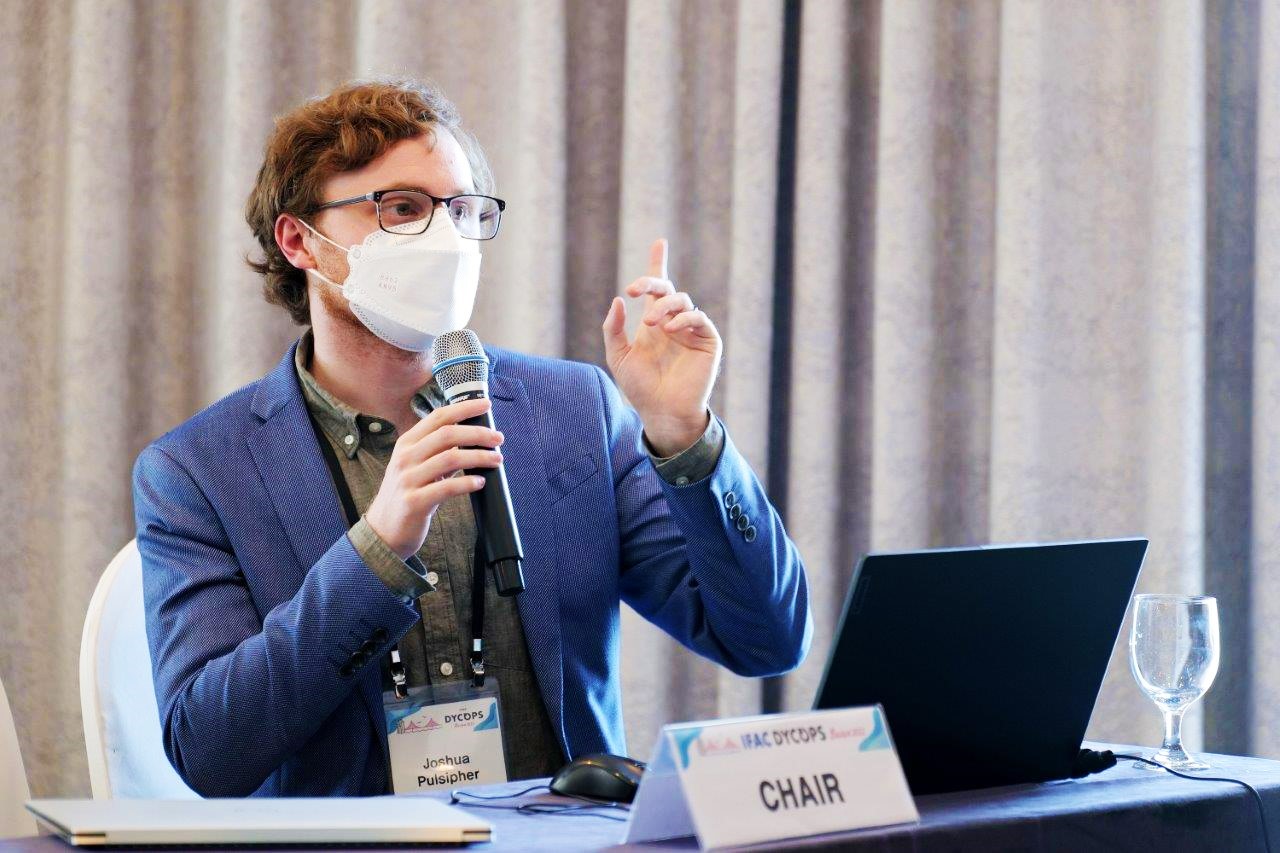
Joshua Pulsipher is an Assistant Professor of Chemical Engineering at the University of Waterloo, Canada. He joined in 2023 and leads a research group focused on interdisciplinary solutions at the intersection of chemical engineering, computer science, mathematics, and statistics. His work addresses challenges in sustainability, energy systems, and data-driven decision-making under uncertainty. He holds a B.Sc. from Brigham Young University and a Ph.D. from the University of Wisconsin-Madison, with postdoctoral training at Carnegie Mellon University. Education: B.Sc. in Chemical Engineering, Brigham Young University (2017) Ph.D. in Chemical & Biological Engineering, University of Wisconsin-Madison (2022) Postdoctoral Research, Carnegie Mellon University (2022–2023) Research Interests: Optimization under uncertainty, machine learning, sustainable systems, infinite-dimensional optimization, energy systems, wildfire mitigation, and software development for accessibility in research. His projects span wildfire management frameworks, resilient infrastructure, and software tools like InfiniteOpt.jl and FlexibilityAnalysis.jl. Awards: Best Presentation Award, JuMP-dev 2024 Travel Award, FOCAPO/CPC (2023) Plenary Speaker at AICHE Annual Meeting (2022) Teaching: Courses include CHE 322 (Numerical Methods), CHE 341 (Process Control), and CHE 521 (Process Optimization). His philosophy emphasizes active learning and inclusivity. Labs/Software: Develops open-source software frameworks such as InfiniteOpt.jl for infinite-dimensional optimization and SAFE-OCC for computer vision sensor reliability. Active in promoting reproducibility and software-driven research.
Faicel HNAIEN is a Full Professor at the Université de Technologie de Troyes (UTT), where he leads the Computer Science and Applied Mathematics Academic Department since December 2024. He also heads the Optimization Axis (LIST3N laboratory) with 30 members and oversees the International Master's Track in Logistics and Transport in Togo since 2023. His research focuses on optimization under uncertainties, scheduling algorithms, inventory control, wireless sensor networks, and quantum optimization. His work bridges theoretical advances with practical applications in manufacturing systems, energy management, and logistics. Responsibilities include academic leadership roles, strategic planning for research initiatives, and international program coordination. His recent projects address challenges like energy cost optimization in production scheduling, robust supply chain management under uncertainty, and deployment strategies for sensor networks in hazardous environments. He actively contributes to interdisciplinary research, integrating stochastic modeling, combinatorial optimization, and quantum computing approaches. His publications span high-impact journals such as Annals of Operations Research and European Journal of Industrial Engineering. Research trends emphasize hybrid methods (exact/ heuristic), stochastic programming for inventory systems, and multi-objective optimization in dynamic environments. Current efforts explore quantum formulations for scheduling problems and AI-driven solutions for supply chain resilience.
Dr.-Ing. Christiane Antweiler is a Researcher at the Institute of Communication Systems (IKS) , part of RWTH Aachen University 's Faculty of Electrical Engineering and Information Technology. Her work focuses on algorithms for digital speech/audio processing, multi-channel system identification, head-related transfer functions (HRTFs), and acoustic/echo cancellation in medical and teleconferencing applications. Research topics: Medical diagnostics signal processing , time-variant system identification , HRTF measurement , and real-time audio implementation . Current projects: Connected Visual Reality (CoVR) , Acoustic Tube Endoscopy , and Spatial Rendering with quasi-continuous HRTFs. Her 15 most recent publications (2025–2011) span adaptive filtering , acoustic system identification , and 3D audio rendering , with a strong emphasis on perfect sequence excitation and medical applications . She received the Best Paper Award at ICMCIS 2022 for her work on spectrum monitoring. Teaching roles include Information Theory and Source Coding (since 2009) and Digital Speech Processing 1 (2014–2015). Tools used: Matlab , C/C++ , and RT Proc for real-time audio processing.
Decky Aspandi is a Researcher at Universitat Stuttgart in the Analytic Computing department. He holds a Ph.D. in Information and Communication Technologies from Universitat Pompeu Fabra, Barcelona, an M.Sc. in Computer Engineering from King Mongkuts University of Technology Thonburi, and a Bachelor in Computer Science from University of Mulawarman. Research Focus: Machine Learning, Deep Learning, Computer Vision, Affective Computing, Temporal Modeling, and Human-Computer Interaction. Teaching Experience: Teaching Fellow at Universitat Stuttgart (2022-2023, 2021-2022), Universitat Pompeu Fabra (2017-2020), and University of Mulawarman (2009-2013). Key Publications: 14 recent works on topics including eye-gaze prediction, facial alignment, lie detection, and affective computing applications.