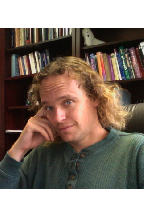
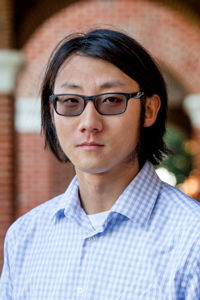
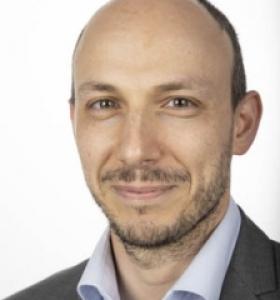
Seyed A. Reihani is a Senior Research Scientist at the University of Illinois (2013–present) within the Department of Nuclear, Plasma, and Radiological Engineering, College of Engineering. Previously, he held roles as a Research Associate Faculty at the University of Maryland (2005–2007) and Postdoctoral Research Associate at MIT (2007–2010). He earned a Ph.D. in Mechanical Engineering from the University of Maryland in 2005. His research focuses on catalytic systems for energy applications, risk-informed nuclear safety designs, and integrated energy systems. Professional activities include consulting roles at Soteria Consultants LLC (2011–2013) and RES Group Inc. (2010–2011), and contributions to risk-informed approaches for nuclear safety (e.g., STP Nuclear Operating Company reports). He has authored peer-reviewed articles on catalytic processes in fuel cells and hydrogen systems. He teaches graduate courses NPRE 448 (Nuclear Systems Engineering) and NPRE 475 (Wind Power Systems). His work with the SoTeRiA Laboratory includes advancing uncertainty analysis for next-generation nuclear reactors and aging plant regulation, supported by NRC grants.
Julian Padget is a Reader (equivalent to Associate Professor) in the Department of Computer Science at the University of Bath, with extensive affiliations across multiple research centers including the EPSRC Centre for Doctoral Training in Statistical Applied Mathematics (SAMBa), Water Innovation and Research Centre (WIRC), UKRI CDT in Accountable, Responsible and Transparent AI, Centre for Therapeutic Innovation, and Institute for Digital Security and Behaviour (IDSB). His work bridges computer science with energy systems, healthcare, and digital governance through interdisciplinary collaborations. Padget's research centers on multiagent systems , agent architecture , norm representation and reasoning , and fusing symbolic and statistical AI , with significant contributions to distributed ledgers, policy modeling, and narrative models. His fingerprint analysis reveals dominant connections to multi-agent systems (100%), web services (72%), and normative frameworks (48%), reflecting his focus on creating ethically aligned autonomous systems for complex socio-technical environments. Recent work demonstrates increasing integration of AI with energy infrastructure and biomedical applications. Analysis of his 15 most recent publications shows a clear trajectory toward operationalizing AI ethics, particularly in bias management and trust frameworks, while maintaining strong foundations in multiagent coordination. His energy sector research increasingly focuses on digital spine architectures for data sharing, and biomedical collaborations explore molecular imaging techniques for cancer research. The consistent thread across domains is the development of governance frameworks for autonomous systems. Padget actively supervises doctoral students with 23 supervised works documented and serves as Principal Investigator on major grants including EPSRC-funded energy network projects (2025-2026) and Innovate UK collaborations with the BBFC. His policy impact is evidenced by parliamentary testimony in March 2025 that generated coverage across 16 news outlets. Current projects emphasize AI for agile energy networks, value-aware agent architectures, and statutory compliance frameworks for online media. His laboratory ecosystem spans the IAAPS Innovation Bridge and Institute for Digital Security and Behaviour, focusing on translating theoretical agent frameworks into practical applications for energy systems, digital governance, and health interventions. The Water Innovation and Research Centre provides critical infrastructure for his energy-related simulations, while therapeutic innovation collaborations enable biomedical applications of his norm-representation frameworks.
William Campbell is a Researcher at the School of Physics, Mathematics and Computing within The University of Western Australia . His work focuses on resonator physics , acoustic wave dynamics , dark matter detection , and gravitational wave physics , with a particular emphasis on cryogenic quantum systems and high-Q resonators. His research employs lithium niobate bulk acoustic wave resonators and microwave cavities to explore fundamental physics, including quantum gravity , axion dark matter , and high-frequency gravitational waves . Recent publications highlight advancements in phonon-microwave photon upconversion and multi-mode acoustic detector designs . The 15 most recent articles span disciplines in physics , quantum optics , astrophysics , and materials science . Key subfields include gravitational wave detection , dark matter interactions , resonator stability , and quantum transduction .
Liz Lapidow is a Postdoctoral Fellow and Researcher at the University of Waterloo, investigating how children and adults learn causal systems through exploration and decision-making. Her interdisciplinary work bridges cognitive development, philosophy, and computational modeling to understand spontaneous learner behaviors. Her research centers on cognitive development and causal reasoning, specifically examining preschoolers' uncertainty handling, exploration-exploitation trade-offs, and question-asking strategies. Key interests include how learners recognize inconsistent evidence, transfer causal knowledge across domains, and use causality to guide information-seeking during self-directed learning. Analysis of her 2020-2025 publications reveals methodological innovation (in-person, Zoom, and online platforms) and thematic focus on confidence judgments, directed questioning in classrooms, and inconsistent causal relationship processing. Her work demonstrates how children function as intuitive scientists, with implications for educational practices and developmental theory.
Chris Eliasmith is a Professor jointly appointed in the Systems Design Engineering and Philosophy departments at the University of Waterloo, with a cross-appointment to Computer Science. He is the Founding Director of the Centre for Theoretical Neuroscience and holds the Canada Research Chair in Theoretical Neuroscience. His research focuses on mathematical modeling of neural systems, including the Neural Engineering Framework (NEF) and Semantic Pointer Architecture (SPA), which underpin the world’s largest functional brain simulation, Spaun. He leads the Computational Neuroscience Research Group (CNRG), advancing neuromorphic computing, spiking neural networks, and cognitive modeling. Education: PhD in Neuroscience & Psychology (2000), Washington University in St. Louis MA in Philosophy (1995), University of Waterloo BASc in Systems Design Engineering (1994), University of Waterloo Research: His work integrates theoretical neuroscience with practical applications in robotics, AI, and neuromorphic hardware. Key contributions include the NEF, Spaun, and innovations like the Legendre Memory Unit (LMU) and Spatial Semantic Pointers (SSPs). His lab explores adaptive neural systems, decision-making models, and biologically plausible machine learning algorithms. Teaching: Recent courses include SYDE 556 (Simulating Neurobiological Systems), SYDE 750 (Topics in Systems Modelling), and PHIL 356 (Intelligence in Machines, Humans, and Other Animals). Awards: 2015 NSERC Polanyi Prize Labs & Projects: The CNRG develops tools like Nengo for simulating large-scale neural systems and collaborates on neuromorphic hardware platforms such as Loihi. Current projects span neural robotics, cognitive architectures, and biologically inspired AI systems.
Keith W. Hipel is University Professor of Systems Design Engineering at the University of Waterloo, where he serves as Coordinator of the Conflict Analysis Group. He is also Former President of the Academy of Science within the Royal Society of Canada, Senior Fellow of the Centre for International Governance Innovation, and Fellow of the Balsillie School of International Affairs. Hipel's academic journey includes: Doctorate in Civil Engineering (1975), University of Waterloo Master's in Systems Design Engineering (1972), University of Waterloo Bachelor's in Civil Engineering (1970), University of Waterloo Professor Hipel's research centers on developing sophisticated decision-making methodologies for addressing complex interdisciplinary problems at the interface of society, technology, and the environment. His work has pioneered the Graph Model for Conflict Resolution (GMCR), multiple criteria decision analysis, and time series analysis frameworks. These methodologies are systematically applied to critical areas including water resources management, environmental engineering, energy systems, and sustainable development. His recent work has expanded into inverse engineering of decision systems, creating novel connections between conflict resolution and artificial intelligence. Hipel's approach consistently integrates systems thinking with practical applications to solve real-world challenges. An analysis of Hipel's recent publications reveals a strong trajectory toward addressing planetary health challenges through advanced conflict resolution methodologies. His work increasingly focuses on climate change impacts, water resource conflicts, and sustainable development using sophisticated graph model techniques. There is a clear evolution from theoretical foundations to practical applications, with growing emphasis on AI integration through inverse engineering. His publications consistently bridge engineering, environmental science, and social sciences to develop implementable solutions for complex system-of-systems problems. Hipel has received exceptional recognition for his scholarly contributions: Officer of the Order of Canada (highest civilian honor) Foreign Member of the U.S. National Academy of Engineering Japan Society for Promotion of Science Eminent Scientist Award (previously awarded to six Nobel laureates) IEEE SMC Norbert Wiener Award (highest honor in systems engineering) Miroslaw Romanowski Medal and Sir John William Dawson Medal from the Royal Society of Canada Three Honorary Doctorates (France, Hungary, Canada) Professor Hipel has mentored 86 graduate students to completion (37 PhD, 49 Master's), with each graduate securing successful careers in industry, government, or academia. His research has been supported by numerous grants from NSERC, SSHRC, and international funding agencies, enabling the development of influential decision support systems including GMCR II (used by 95 groups in 28 countries) and the McLeod-Hipel Time Series Package. He founded and chairs the International Conferences on Water Resources and Environment Research (ICWRER) and co-chaired the Expert Panel on Energy Use and Climate Change for the Council of Canadian Academies. As Coordinator of Waterloo's Conflict Analysis Group, Hipel leads a dynamic research team that bridges theoretical advances with practical applications across multiple domains. The group has produced seminal textbooks including 'Time Series Modelling of Water Resources and Environmental Systems' and 'Conflict Resolution Using the Graph Model: Strategic Interactions in Competition and Cooperation.' Their decision support systems have been implemented worldwide for addressing environmental conflicts, water resource management challenges, and complex decision-making scenarios requiring interdisciplinary approaches.
Giorgio Fumera is an Associate Professor of Computer Engineering at the University of Cagliari. His research focuses on statistical pattern recognition, machine learning, and their applications in video surveillance, particularly in person re-identification, adversarial robustness, and uncertainty quantification. He has authored over 100 papers in leading journals and conferences, and serves as an associate editor for Pattern Recognition and Pattern Analysis and Applications . He is a member of IEEE and IAPR. His work explores cutting-edge topics such as synthetic data for surveillance systems, adversarial training defense mechanisms, and Bayesian inference for crowd counting. Recent contributions include studies on the robustness of machine learning models against adversarial attacks and the application of neural networks in microwave medical imaging. His research also emphasizes practical applications in cybersecurity, medical diagnostics, and ethical AI systems like the IMMAGINA project. Fumera’s publications span domains like ensemble methods, human-in-the-loop systems, and sparse learning. Despite extensive contributions, no specific awards or grants are explicitly mentioned in the provided materials. His research team actively collaborates on interdisciplinary projects, blending computer vision, medical imaging, and trustworthy AI principles.
Dr Baihua Fu is an Honorary Senior Lecturer at the Fenner School of Environment and Society, Australian National University. Her research focuses on developing and improving environmental models for decision-making in water quality management, uncertainty assessment, ecological modeling, and integrated systems analysis. She has contributed to over 40 publications and led/co-led 9 projects between 2010–2032, including strategic partnerships like the One Basin CRC Tier 1 Agreement (2022–2032). Her work emphasizes catchment-scale modeling, particularly in Australia, addressing challenges like groundwater management, socio-environmental systems modeling, and interdisciplinary collaboration. Projects include strategic foresight for Queensland water resources (2020–2022), uncertainty analysis in water quality models (2019–2021), and improving model constituent frameworks (2017–2020). Research interests include uncertainty quantification, decision-relevant modeling frameworks, and scenario analysis for complex socio-environmental systems. She has explored innovative approaches like factor-fixing frameworks, bricolage-style scenario analysis, and formative evaluation methods for interdisciplinary teams. Key contributions span model validation, stakeholder engagement strategies, and bridging gaps between technical modeling and policy implementation. Her work bridges environmental science with practical management solutions, emphasizing usability, reliability, and feasibility in model design.
Stephen M. Stigler is the Ernest DeWitt Burton Distinguished Service Professor in the Department of Statistics and The College at the University of Chicago. His research focuses on the history of statistics and probability, tracing developments from early applications in gambling, astronomy, and geodesy to modern methodologies in social sciences and biology. Key areas include the evolution of statistical concepts, the role of pivotal figures like Laplace, Gauss, and Fisher, and the influence of statistical methods on scientific disciplines. His work emphasizes 20th-century mathematical statistics and the history of lotteries. Notable publications include The History of Statistics (1986), Statistics on the Table (1999), and The Seven Pillars of Statistical Wisdom (2016). While no formal awards are listed, his contributions to historical scholarship are widely recognized. No specific advising activities or grants are detailed in the provided text. Stigler’s research integrates historical analysis with scientific rigor, bridging disciplinary boundaries to illuminate foundational statistical principles.
Dr. Junli Liu is an Associate Professor in the Department of Biosciences at the University of Durham. Their research focuses on systems biology, particularly in understanding hormonal crosstalk and plant root development through computational modeling. Key areas include auxin, cytokinin, and ethylene signaling, as well as calcium signal decoding mechanisms in plant immunity. Research Interests: Systems Biology Plant Hormonal Crosstalk Computational Modeling of Developmental Processes Root Architecture and Growth Dynamics Calcium Signaling and Gene Expression Publications highlight contributions to modeling hormonal interactions in Arabidopsis roots, with a focus on integrating experimental and computational approaches. Recent work includes studies on auxin-ethylene-cytokinin networks and Bayesian uncertainty analysis in systems biology models. Advising: Phoebe Newman (PhD Student)
Dr. Mert Kimya is affiliated with the School of Economics at the University of Sydney. His research focuses on Microeconomic Theory, Game Theory, and Decision Theory. His work examines coalition formation, farsighted stability, stochastic choice processes, and alliance network dynamics. Key contributions include studies on dominance invariance in coalition formation and stability criteria in one-to-one matching problems. He has been awarded a 2021 Australian Research Council DECRA grant for research on multilateral cooperation limits. His CV and publications are accessible via his personal website. Professional activities include peer-reviewed journal contributions and collaborations with institutions like the University of Sydney's Faculty of Arts and Social Sciences. Education details are not explicitly stated in the provided texts, but his academic trajectory suggests advanced training in economics and game theory. Research interests emphasize theoretical frameworks explaining strategic behavior in economic contexts, particularly under uncertainty and farsightedness assumptions. His recent articles analyze stability mechanisms in alliance networks and coalitional dynamics, reflecting a focus on foundational game-theoretic principles applied to modern economic challenges. Grants and funding highlight his role in advancing early-career research in cooperative game theory and economic behavior modeling.
Zhaochen He is an Associate Professor of Economics at Christopher Newport University (CNU), specializing in empirical research with real-world impact. He holds dual Bachelor of Arts degrees in Economics and Physics from the University of Chicago, and a PhD in Economics from Boston College. His research focuses on labor economics, macroeconomics, and computational modeling, emphasizing data-driven analysis of large datasets. Teaching focuses include principles of economics and econometrics, with an emphasis on practical application. Selected publications explore topics ranging from the impact of national culture on pandemic outcomes to income inequality decomposition and the labor market effects of anti-immigration policies. Notable presentations include a 2020 seminar on U.S. income inequality trends. His work bridges economic theory with policy implications, utilizing advanced statistical and machine learning techniques. Professional highlights include collaborations on projects like analyzing Trump's 2016 victory through machine learning and studying pandemic policy responses. Contact via email or personal website .
Prof. Dr. Nils J. Balke is a Professor of Controlling and Investment Accounting at Technische Hochschule Lübeck (TH Lübeck), Germany. He holds leadership roles including serving as Dean of the Faculty of Mechanical Engineering and Economics (2016–2020) and as Senator of TH Lübeck (2020–2022). His expertise spans strategic and operational controlling, corporate valuation, value-oriented management, and mergers & acquisitions. Education : PhD (Dr. oec. publ.) in Controlling, Ludwig Maximilian University of Munich (2000–2002) Master of Business Research (M.B.R.), LMU Munich (2000–2002) M.Sc. in Industrial Engineering, Georgia Institute of Technology, USA (1997–1998) Diplom-Wirtschaftsingenieur (Dipl. Wi.-Ing.), University of Karlsruhe (1994–1999) Research Interests : Balke focuses on applying controlling principles in cultural institutions, risk management, driver-based planning in museums, Monte Carlo simulation for compliance, and value-oriented M&A strategies. His work bridges academic research with practical implementations in museums like the European Hanse Museum and institutions like the Bundeskunsthalle. Publications : His recent work emphasizes cultural institution management, including automation of internal reporting systems and risk assessment frameworks. Earlier contributions address M&A controlling, multinational corporate reporting, and fuzzy logic applications in agency theory. Labs/Teams : Leads the research project 'Controlling and Management of Cultural Institutions', integrating applied business analytics for non-profit cultural organizations.
Steven Stanton is a Professor of Marketing at Oakland University’s School of Business Administration. He holds a Ph.D. in Psychology from the University of Michigan. His research focuses on psychological and physiological factors influencing consumer behavior, decision-making, and social dynamics, with notable work on hormonal influences (e.g., testosterone, estrogen) on economic choices and neuromarketing ethics. He has authored over 20 journal articles and book chapters, and his work has been featured in prominent media outlets like the New York Times and Scientific American. Education: Ph.D. in Psychology, University of Michigan Research Interests: Consumer Judgment and Decision Making Neuromarketing and Biological Influences Power Dynamics in Economic Decisions Workplace and Remote Work Psychology Article Trends: Recent work emphasizes remote work impacts (e.g., burnout, neurodiversity support), testosterone effects on risk-taking, and ethical neuromarketing practices. Earlier studies explored hormonal correlates of social behavior and stress physiology in political contexts. Awards: Founders Day Faculty Recognition Award for Teaching (2016) Neuromarketing’s Top 10 Research Publications (2017) National Institutes of Health Postdoctoral Fellowship (2012) Grants & Advising: No explicit grants listed, but his research has been supported by NIH. He has advised on projects linking consumer behavior to neuroscientific principles, though no student names are provided. Labs/Teams: Collaborated with Duke University’s Fuqua School of Business and the Center for Interdisciplinary Decision Science, focusing on interdisciplinary behavioral research.
Andrea Cozza is a Professor at the University of Paris, leading research in the Electrical and Electronic Engineering of Paris department. Her work focuses on electromagnetics, signal processing, and reverberation chamber applications. She specializes in time reversal techniques for fault detection, antenna measurement, and field synthesis. Key research areas include improving chamber efficiency through advanced stirring methods and analyzing energy distribution in complex media. Dr. Cozza has authored over 50 publications, including seminal works on time-reversal imaging , soft-fault localization in cables , and statistical modeling of reverberation chambers . Her patents cover novel measurement systems and methods for generating uniform electromagnetic fields. Notable contributions include the development of the TREC (Time-Reversal in Reverberation Chambers) framework for optimizing radiated stress testing. Her research emphasizes practical applications in wireless communications, antenna testing, and material characterization. Collaborations with industry partners highlight her expertise in bridging theoretical electromagnetic principles with real-world engineering challenges.