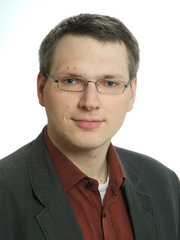
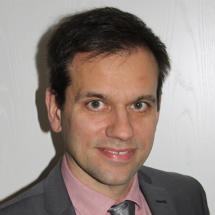
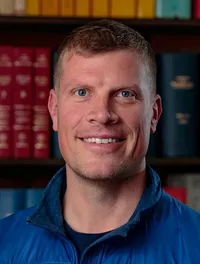
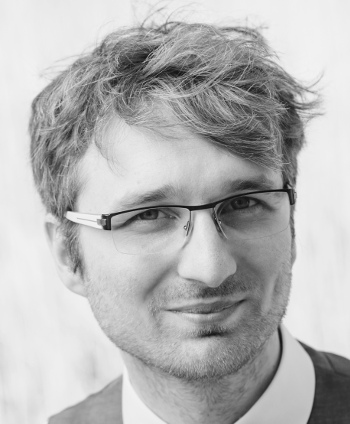
Björn Brandenburg is a researcher at the Max Planck Institute for Software Systems (MPI-SWS) in Kaiserslautern, Germany. His work focuses on real-time systems, scheduling algorithms, and operating system design, with a particular emphasis on predictable resource allocation and performance guarantees in multiprocessor and cyber-physical environments. His research interests include real-time response-time analysis (e.g., PROSA ), locking protocols for multiprocessor systems, side-channel mitigation in cloud environments, and the verification of real-time scheduling policies. He has contributed to foundational studies on deadline failure probabilities, self-suspending tasks, and predictable real-time Linux implementations. Scientific awards include recognition for outstanding papers on TimerShield (2017) Offline Equivalence (2017) . His work intersects with practical systems like LITMUSRT and ROS 2, aiming to bridge theoretical guarantees with real-world applications in safety-critical and distributed real-time systems.
Prof. Dr. Stefan Luther is a Max Planck Research Group leader (W2, tenured since 2013) at the Max Planck Institute for Dynamics and Self-Organization, Göttingen, and an Honorarprofessor at the Faculty of Physics, University of Göttingen. He holds adjunct roles as Adjunct Associate Professor at Cornell University (2009–2012) and Northeastern University (2016–2018), and serves as DZHK-Professor at the Institute of Pharmacology and Toxicology, University Medical Center Göttingen. His research focuses on nonlinear spatiotemporal dynamics in excitable biological media, particularly cardiac arrhythmias. He pioneered 4D imaging of heart function and developed algorithms for optogenetic and electrical control of arrhythmias. Translational efforts span basic research to preclinical and clinical studies. Education includes a Diplom in Physics (1997) and PhD (2000) from Georg-August-University, Göttingen. Postdoctoral training followed at the University of Twente (2001–2004) and Cornell University’s LASSP (2004–2006). His lab, the Biomedical Physics group, explores electromechanical coupling in cardiac systems and develops novel therapeutic approaches. Collaborations include work on computational modeling, uncertainty quantification in dynamical systems, and fluid dynamics of multiphase flows.
Bonnie Honig, Nancy Duke Lewis Professor at Brown University, holds joint appointments in Modern Culture and Media and Political Science , with courtesy roles in Religious Studies and Theater and Performance Studies . Her scholarly work intersects democratic theory , feminist critique , and cultural analysis , examining how inherited political narratives shape collective action. Education: PhD (Johns Hopkins, 1989), MSc (London School of Economics, 11981), BA (Concordia University, 1980) Central to her research is a reexamination of classical texts like Sophocles' Antigone and Euripides' Bacchae to develop agonistic democratic models . Her Antigone, Interrupted (2013) challenges heroic readings of Antigone, proposing instead a collective feminist politics rooted in textual counter-interpretations. Public Things: Democracy in Disrepair (2017) argues for shared objects as democratic orientation devices , while Emergency Politics (2009) analyzes crisis responses beyond Schmittian frameworks. The 2021 dual publications A Feminist Theory of Refusal and Shell Shocked: Feminist Criticism After Trump extend these themes through Trump-era analysis and queer theoretical lenses . Scientific Awards: 2023-24 Guggenheim Fellowship 2012 David Easton Prize 2012 Okin-Young Award 2007-08 American Philosophical Society Fellowship 1994 Scripps Prize Affiliated with the American Bar Foundation and Digital Democracy Group at Simon Fraser University, Honig's teaching spans feminist theory , Politics and Film , and advanced seminars on Arendt . Her Shell Shocked analysis of Trump-era disaster patriarchy connects classical feminist frameworks to contemporary political crises.
Aleksandar Bojchevski is a full professor of Computer Science at the University of Cologne, leading the Trustworthy Artificial Intelligence Lab (TAIL). His research focuses on developing robust, interpretable, and privacy-preserving machine learning models, particularly graph neural networks (GNNs). The lab emphasizes trustworthiness in high-stakes applications through methods that handle noisy, adversarial, or anomalous data. Bojchevski holds a PhD and PostDoc from the Technical University of Munich, advised by Stephan Günnemann. Previously, he was faculty at CISPA Helmholtz Center for Information Security. His work bridges theory and practice, addressing adversarial robustness, uncertainty quantification, and scalable GNN techniques. Research interests include: robustness certification for GNNs, conformal prediction, adversarial attack analysis, and privacy-aware machine learning. His lab actively collaborates with RWTH Aachen and organizes events like the Learning on Graphs Meet Up. Recent achievements include a teaching award for the Machine Learning lecture (SS 24) and NeurIPS 2024 acceptance of SVFT: Parameter-Efficient Fine-Tuning with Singular Vectors . Open positions are available in his group focusing on trustworthy ML topics. Key labs/teams: Trustworthy Artificial Intelligence Lab (TAIL), Center for Data and Simulation Science (CDS) as a core scientist.
Prof. Dr. Michael Klasen is a leading theoretical physicist at the Institute of Theoretical Physics at the University of Münster, where he heads his eponymous research group. His work bridges nuclear and particle physics, with significant contributions to quantum chromodynamics and physics beyond the Standard Model. His research focuses on Particle Physics , Quantum Chromodynamics , and Physics beyond the Standard Model , with particular emphasis on understanding the quark-gluon structure of atomic nuclei and dark matter phenomena. His innovative approach connects microscopic quark-gluon dynamics with nuclear binding phenomena, creating a crucial bridge between nuclear and particle physics. Prof. Klasen's recent work analyzing nucleon binding at the quark-gluon level was recognized as a "Breakthrough of the Year 2024" by Physics World. His research group's publication in Physical Review Letters demonstrated how quarks and gluons behave differently in nucleon pairs than in free nucleons, fundamentally advancing our understanding of nuclear binding. Breakthrough of the Year 2024 from Physics World Leadership of Research Training Group 2149 "Strong and weak interactions - from hadrons to dark matter" Supervision of award-winning doctoral research including the Infineon Dissertation Prize 2025 Prof. Klasen has successfully mentored numerous PhD students, with 20 of his group's graduates continuing their academic careers at prestigious institutions including CERN and Stanford University. His research has been supported by major funding bodies including the German Research Foundation (DFG), the Helmholtz Alliance for Astroparticle Physics, and BMBF collaborative research programs. The Klasen working group maintains active collaborations with international research networks including CTEQ, DM@NLO, and RESUMMINO.
Dr. Hilde Kuehne is a Professor at the University of Tuebingen and a key researcher at the Tuebingen AI Center. She holds affiliations with MIT-IBM Watson AI Lab and Goethe University Frankfurt, with a focus on computer vision, multimodal learning, and explainable AI. Her work bridges vision-language models, audio-visual alignment, and self-supervised methods. Co-organizer of the New Frontiers in Associative Memories workshop @ ICLR 2025 Member of the Scientific Advisory Board of the Carl-Zeiss-Foundation Contributor to CVPR 2025's UTD dataset for unbiased video benchmarks Her research addresses critical challenges in: Explainability for Vision Transformers (LeGrad) Fine-grained audio-visual alignment (CAV-MAE Sync) Zero-shot visual recognition automation (Meta-Prompting) Spatio-temporal grounding without annotations Recent collaborative work spans 15+ publications across CVPR, NeurIPS, ICCV, and ICLR, with emphasis on multimodal foundation models, dataset bias mitigation, and differentiable logic networks. She actively contributes to workshop organization and peer review as evidenced by her involvement in CVPR 2025 and ICLR 2025 program committees.
Chantal Pellegrini is a Lecturer and PhD student at the Chair of Computer Aided Medical Procedures (Prof. Navab) at Technical University of Munich (TUM). Her research focuses on Deep Learning applications in medical imaging, including explainable AI for radiology report generation and Vision-Language Models for clinical decision support. She actively contributes to the DHM, NARVIS Lab, and RobUSt research groups. Teaching responsibilities include courses such as 'Computer Aided Medical Procedures', 'Medical Augmented Reality', and 'Surgical Robotics'. She supervises student projects in medical AI and healthcare innovation, with recent projects involving multimodal report generation and graph pretraining for medical applications. Education: BSc/MSc Computer Science (TUM), current PhD student since 2022 Labs: DHM (German Heart Center), NARVIS Lab, RobUSt Robotics & Ultrasound Research Keywords: Medical Image Understanding, Radiology Reports, LLMs in Healthcare Her publications span surgical OR dataset development, reinforcement learning for clinical decisions, and explainable X-ray diagnosis systems. She mentors MA/BA students in medical AI and project management for healthcare applications.
Prof. Dr. Bernd Skiera holds the first chair for electronic commerce in Germany at Goethe University Frankfurt am Main since 1999. He serves on the board of efl - The Data Science Institute and the Schmalenbach Society, while representing Germany at the European Marketing Community (EMAC). Chair of Marketing, Goethe University Frankfurt am Main Board member, efl - The Data Science Institute National representative, European Marketing Community (EMAC) His research focuses on MarTech/SalesTech integration, customer value management, online advertising analytics, data-driven pricing models, and the economic implications of internet privacy regulations. He leads the ERC Advanced Grant project on cookie usage restrictions' economic consequences. Recent publications examine dynamic pricing in digital markets, competition visualization using big data, and AI applications in marketing analytics. The ERC Advanced Grant research has produced empirical analyses of GDPR impacts on advertising ecosystems. 2015 Journal of Marketing Best Paper Award 2013 International Journal of Research in Marketing Best Paper Award Multiple MSI/H. Paul Root Award recognitions He has mentored 17 doctoral students who became professors globally, including at London Business School and LMU Munich. His work bridges marketing analytics with financial valuation through customer equity modeling.
Thomas Grote is a Research Fellow at the University of Tübingen's Ethics and Philosophy Lab within the Cluster of Excellence 'Machine Learning: New Perspectives for Science'. His research focuses on philosophical and ethical dimensions of artificial intelligence, particularly interpretability, fairness, and reliability in medical and social contexts. He co-supervises the Carl-Zeiss-Stiftung-funded project 'Certification and Foundations of Safe Machine Learning Systems in Healthcare' and co-organizes the 'Philosophy of Science Meets Machine Learning' conference series. Research Focus Grote's interdisciplinary work bridges philosophy of science and applied AI ethics. Key areas include: Methodological foundations of AI ethics and epistemology Clinical reliability and safety of ML systems Fairness metrics in sociotechnical healthcare systems Interpretability requirements for medical AI Computational psychiatry and evolving mental health frameworks His recent publications demonstrate strong emphasis on healthcare applications, with critical analyses of reliability in foundation models, ethical paradigms for LLMs, and rethinking evaluation methodologies at the epistemology-ethics interface.
Markus Reichstein is a Professor for Global Geoecology at Friedrich Schiller University (FSU) Jena and Director of the Biogeochemical Integration Department at the Max Planck Institute for Biogeochemistry. His research focuses on ecosystem responses to climate variability, climate extremes, and the application of AI in Earth system science. He holds a PhD in Plant Ecology from the University of Bayreuth and has pioneered interdisciplinary approaches combining machine learning with environmental modeling. Key roles include leadership in the Michael-Stifel-Center Jena for Data-driven and Simulation Science and founding director of the ELLIS Unit Jena. He contributed to the IPCC Special Report on Climate Extremes and has received prestigious awards such as the Leibniz Prize. His work bridges ecology, hydrology, and atmospheric science, addressing critical global challenges like carbon cycle feedbacks and ecosystem resilience. Recent research emphasizes AI-driven early warning systems for climate risks, integrating observational data with mechanistic models. His team explores land-atmosphere interactions, soil-vegetation dynamics, and the impacts of climate extremes on societal systems. Notable projects include GartenDiv, a citizen science initiative for garden biodiversity, and advancements in global water cycle modeling using hybrid AI-physics frameworks. Awards include the Piers J. Sellers Award (2018), ERC Synergy Grant (2019), and Leibniz Prize (2020). He collaborates with international networks like ELLIS and Future Earth, advancing data-driven solutions for sustainability science.
Prof. Dr.-Ing. Lars Linsen is a full Professor of Computer Science at the Westfälische Wilhelms-Universität (WWU) Münster, leading the VISualization & graphIX (VISIX) group. His primary affiliation is the Institute of Computer Science within the Faculty of Mathematics and Computer Science. He holds adjunct professorships at Jacobs University, Bremen, and has held previous academic roles including Full Professor at Jacobs University (2012–2017) and Associate/Assistant Professor roles in Germany and the U.S. His research focuses on interactive visual analysis, medical visualization, and scientific visualization, with applications in life sciences and engineering. Education: PhD (Dr.-Ing.) in Computer Science from Universität Karlsruhe (2001), M.Sc. (Diplom) in Computer Science (1997), B.Sc. (Vordiplom) in Computer Science (1994). Awards: IEEE Visualization Design Contest Winner (2008, 2022, 2018), Preis des Fördervereins des Forschungszentrum Informatik (2002). Research Highlights: Develops visualization tools for medical imaging (e.g., mass spectrometry imaging, MRI data analysis) and physical simulations (e.g., wildfire spread analysis, asteroid impact modeling). Active in EU-funded projects like Pig-Pro-QuO (surface coatings) and cells-in-motion initiatives. Supervised over 20 PhD/MS advisees, including notable graduates in medical visualization and simulation ensemble analysis. Publications: Over 100 peer-reviewed articles in top venues like IEEE Transactions on Visualization and Computer Graphics, Computers & Graphics, and EuroVis. Key works include SciVis contest-winning wildfire analysis frameworks and medical visualization tools for stenosis detection. Teaching: Offers courses on visualization, computer graphics, and computational science. Actively involved in thesis supervision and curriculum development at both WWU Münster and Jacobs University. Grants & Collaborations: Principal investigator on DFG-funded projects (e.g., hemodynamics simulations, ensemble visualization) and industry collaborations (e.g., Tascon GmbH for coating quality analysis). Member of the Cells-in-Motion Interfaculty Centre and CDH board at WWU.
Prof. Mathias Drton holds the Chair of Mathematical Statistics at the Technical University of Munich (TUM), within the Department of Mathematics and School of Computation, Information and Technology. His research focuses on graphical models, algebraic statistics, causal inference, and multivariate data analysis. He has authored numerous publications in top-tier journals and conferences, including work on conditional independence, sparse factor analysis, and causal discovery in linear models. Drton has supervised a large number of theses, mentoring students in areas like high-dimensional statistics, graphical models, and causal inference. He is actively involved in teaching advanced courses such as 'Graphical Models in Statistics' and 'Fundamentals of Mathematical Statistics.' His academic contributions span theoretical developments in statistical methodology and computational tools, including R packages like SEMID and symRC . Drton collaborates internationally, contributing to projects like the TUM-ICL Mathematical Sciences Hub and Exzellenzcluster MCQST. His work bridges algebraic methods with statistical challenges, addressing identifiability in latent variable models and robust graphical modeling under non-Gaussian assumptions. Recent research emphasizes causal structure learning under partial homoscedasticity, distribution-free independence tests, and multi-domain causal representation learning. Drton’s lab actively explores applications in genomics, epidemiology, and machine learning, leveraging both theoretical rigor and practical computational methods.
Michael Schaub is a tenure-track Assistant Professor in the Department of Computer Science at RWTH Aachen University, specializing in Computational Network Science. His research focuses on analyzing complex systems through network and graph models, integrating dynamical systems, control theory, and machine learning. He leads the Computational Network Science group, advancing methodologies for higher-order network models like simplicial complexes and hypergraphs. Schaub holds a PhD from Imperial College London and has held postdoctoral positions at MIT and Oxford. He is an ERC Starting Grant recipient (2022) and a Marie Curie Fellow, recognized for contributions to network dynamics and topological data analysis. Education: PhD in Mathematics, Imperial College London (2011-2015) MSc in Biomedical Engineering, Imperial College London (2010) BSc in Electrical Engineering, ETH Zurich (2007-2010) Research Interests: Schaub’s work spans interdisciplinary applications of network science, including biological systems, social networks, and technical infrastructures. Key areas include: Higher-order network models (hypergraphs, simplicial complexes) Graph signal processing and dynamics on networks Community detection and dynamical systems analysis Topological data analysis and machine learning Grants & Awards: ERC Starting Grant (2022): HIGH-HOPeS project Marie Skłodowska-Curie Fellowship (2017-2019) Junior Fellow, German Informatics Society (GI) Member of Junges Kolleg (North Rhine-Westphalia Academy) Labs & Teams: Leads the Computational Network Science Lab at RWTH Aachen, collaborating internationally on projects like the ELLIS Society and the European Laboratory for Learning and Intelligent Systems (ELLIS). Active in organizing workshops (e.g., Toponets, SIAM MDS).
Dominik Schnaus is a PhD Student at the Computer Vision Group within the School of Computation, Information and Technology at the Technical University of Munich. His research focuses on computer vision and deep learning, particularly in vision-language correspondence and uncertainty estimation in neural networks. Research Interests: 3D/4D reconstruction, vision-language models, neural network uncertainty, robotics Contact: dominik.schnaus@tum.de
Prof. Dr. Markus Bachmayr is a full professor at the Institute for Geometry and Practical Mathematics, RWTH Aachen University, holding the chair for Applied Mathematics. His research focuses on nonlinear approximation, high-dimensional partial differential equations (PDEs), uncertainty quantification, and numerical methods in quantum chemistry. He leads the ERC Consolidator Grant project Computational Complexity of Highly Nonlinear Approximations (COCOA) and contributes to CRC 1481 Sparsity and Singular Structures, and RTG 2326 Energy, Entropy, and Dissipative Dynamics. His recent work emphasizes adaptive low-rank and sparse approximation techniques for parametric and stochastic PDEs, including applications in radiative transfer and poroviscoelastic flow modeling. He serves as Editor-in-Chief of Foundations of Computational Mathematics and Associate Editor for multiple journals. Scientific Awards: John Todd Award 2013 Borchers Plakette 2014 Erwin Wenzl Preis 2007 He has taught courses such as Numerische Analysis I/II, Numerische Mathematik für Elektrotechniker, and seminars on numerical methods and approximation theory.