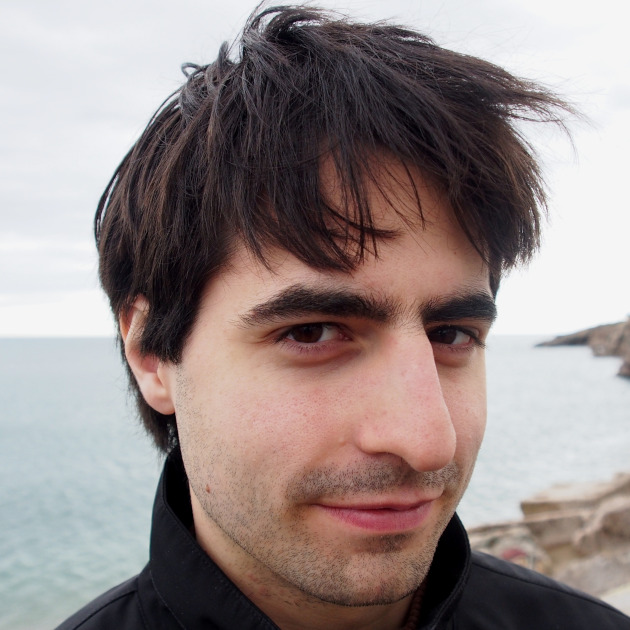
Niccolò Meneghetti is an Assistant Professor in the Department of Computer and Information Science (CIS) at the University of Michigan-Dearborn, affiliated with the Dearborn Artificial Intelligence Research (DAIR) Center and the Michigan Institute for Data Science (MIDAS) . He holds a PhD from SUNY Buffalo under the supervision of Prof. Jan Chomicki and Prof. Oliver Kennedy and previously worked at Vertica before joining UM-Dearborn. Research Interests: Focus on database systems, particularly probabilistic databases, statistical relational learning, and uncertain data management. Selected Publications: Include works on scalable probabilistic databases (SIGMOD, EDBT), skyline query optimization (SIGMOD, ACM SIGMOD Record), and ETL frameworks (PVLDB). Teaching: Areas include computer and information science, data science. Recent Talks: Presented StarfishDB at North East Database Day 2024 and 2023.
Mario Nascimento is a Professor at the University of Alberta 's Department of Computing Science within the Faculty of Science. He previously served as department Chair from 2014-2021 (with a 2019-2020 leave) and holds affiliations with institutions including the National University of Singapore , Aalborg University , and others. His current leave-of-absence status allows focusing on specific research initiatives.
Antoine Amarilli is an Associate Professor in Computer Science at Télécom Paris, part of Institut Polytechnique de Paris. Since September 2024, he has been on leave to work as an advanced researcher in the LINKS team at Inria Lille. His research spans theoretical computer science, focusing on query evaluation, probabilistic data, knowledge compilation, and computational logic. Member of DIG and LINKS research teams Part of LTCI (Information Processing and Communication Laboratory) Education: PhD in Computer Science (Télécom ParisTech, 2016) Habilitation (HDR) in Computer Science (Institut Polytechnique de Paris, 2023) Research Interests: He investigates efficient query evaluation on uncertain data, dynamic data maintenance, knowledge compilation techniques, and the interplay between circuits, automata, and logical languages. His work intersects database theory, graph theory, and computational complexity. Publications Trends: Recent articles address tractability of queries on probabilistic graphs, complexity classifications for MSO and regular path queries, and knowledge compilation frameworks for enumeration algorithms. Key subfields include probabilistic reasoning, graph constraints, and circuit-based optimizations. Awards: Best Paper at ICDT 2020 Best Paper at ICALP 2021 (Track B) Télécom Paris PhD Prize (2017) Beth Dissertation Award (2017) Teaching & Service: He taught competitive programming, algorithms, and data management at Télécom Paris and represented the institution on the MPRI master’s committee. He co-organized Highlights of Logic, Games, and Automata (2022) and served as a program committee member for ICDT, ICALP, and AAAI. Research Activism: Co-founded TCS4F (Theoretical Computer Scientists for Future) and No Free View? No Review! initiatives to address climate impact and open-access advocacy in academia.
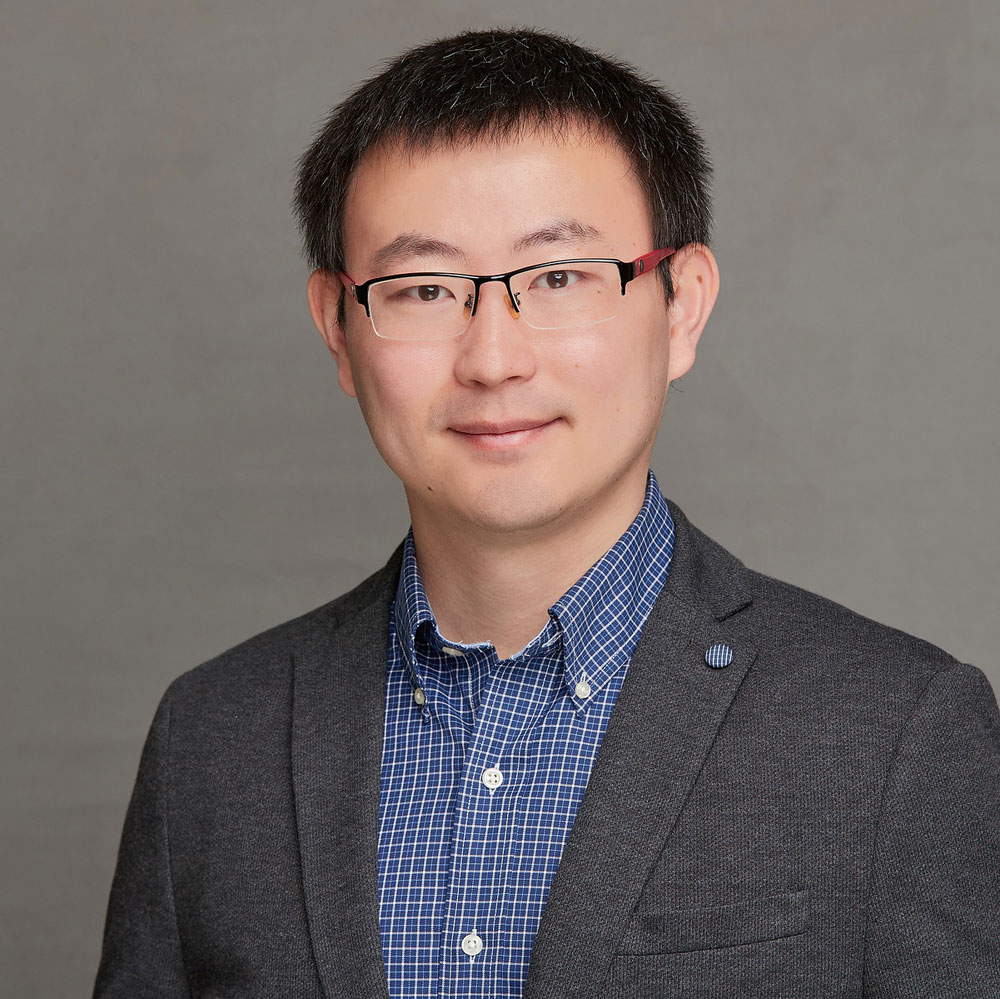
Xiaofei Zhang is an Associate Professor in the Department of Computer Science at the University of Memphis. His research focuses on developing efficient algorithms and toolkits for scalable data management, including graph databases and distributed computing systems. Dr. Zhang holds a PhD in Computer Science and Engineering from The Hong Kong University of Science and Technology (2013). Before joining the University of Memphis, he was a postdoctoral research fellow at the University of Waterloo's Cheriton School of Computer Science, and held postdoctoral positions at the Chinese University of Hong Kong and HKUST in 2014 and 2015. His research interests span novel storage models, query optimization (both exact and approximate), and distributed/parallel computing theory. Key areas include graph data management, query acceleration, and scalable systems for large-scale datasets. He has contributed to tools like Hu-fu for secure spatial queries and frameworks for graph sparsification using deep reinforcement learning. Recent work emphasizes machine learning integration in data management, such as reinforcement learning strategies for order fulfillment and quality-diversity optimization techniques. Dr. Zhang's publications address challenges in distributed systems, probabilistic data processing, and efficient query execution over large graphs. No scientific awards have been explicitly listed. His advising and grant activities are not detailed in the provided text, though his research indicates active involvement in collaborative projects. His work contributes to both theoretical advancements and practical systems for modern data management challenges.
Ali Al-Juboori is an Assistant Professor of Computer Science at Ramapo College of New Jersey, joining in 2021. He holds a Ph.D. and M.S. in Computer Science from Universiti Putra Malaysia. His research focuses on database systems (specifically uncertain/incomplete data), recommendation systems, data management, location-based social networks, and machine learning applications. He teaches courses including Computer Science I, II, and Database Design. His work involves developing efficient algorithms for skyline queries, super-resolution imaging, and healthcare monitoring systems. Education: Ph.D., Computer Science, Universiti Putra Malaysia M.S., Computer Science, Universiti Putra Malaysia Research Highlights: Dr. Al-Juboori's research emphasizes data management challenges in dynamic and incomplete environments. Notable areas include optimizing skyline queries for uncertain databases, enhancing energy efficiency in mobile networks, and applying AI for structural safety in photovoltaic systems. His work bridges theoretical computer science with practical applications in healthcare, cybersecurity, and sustainable systems. Publications: Recent works address super-resolution image reconstruction using Bayesian methods, risk assessment in Android applications, and fog-based healthcare systems. His contributions span journals like IEEE Access, Symmetry, and international conferences such as iiWAS. Advising & Grants: No students or grants explicitly listed in the profile. However, his teaching and research activities likely involve mentoring students through coursework and collaborative projects. Labs/Teams: Not explicitly mentioned, but his work aligns with the School of Theoretical and Applied Science's focus on interdisciplinary STEM research.
Jianwen Su is a Professor at the University of California, Santa Barbara, USA, with a distinguished career spanning over three decades in Computer Science , particularly in Database Systems , Business Process Management , and Web Services . Their research bridges theoretical foundations with practical applications, focusing on data-centric process modeling , formal verification , and spatio-temporal data analysis . Key contributions include the design of artifact-centric workflow models , temporal constraint languages , and query systems for uncertain data . Recent work integrates machine learning with proteomic analysis for stress biomarker discovery and LLM-based extraction of structured data from clinical reports. Notable scientific recognition includes the 2019 ACM PODS Alberto O. Mendelzon Test-of-Time Award . Collaborations span institutions globally, with frequent co-authorship in journals like Information Systems , ACM Transactions on Management Information Systems , and conferences such as BIBM and TIME .
Dr. Jinli Cao is a full-time Associate Professor in the Department of Computer Science and Information Technology at La Trobe University. She holds a BSc from Hebei University, China, and a PhD from the University of Southern Queensland, Australia (1997). Her research focuses on evolutionary computing, data privacy, deep learning for vulnerability assessment, and decision support systems. She has published over 150 papers in top venues such as VLDB and IEEE Transactions series. Dr. Cao leads an ARC-funded project on software vulnerability risk discovery and has secured three ARC grants. She has supervised 11 PhD, 2 Master’s, and 57 Honours students, many of whom work in academia and industries like Oracle and Commonwealth Bank. Teaching contributions include developing courses in databases, data warehouses, and artificial intelligence. Research Interests: Privacy-preserving data publishing and optimization Evolutionary algorithms for dynamic data partitioning Deep learning applications in cybersecurity and healthcare Graph-based machine learning for access control and anomaly detection Decision support systems and top-k query processing Her recent articles explore cutting-edge topics like privacy-preserving spatial crowdsourcing tasks, graph neural networks for traffic prediction, and cybersecurity frameworks for vulnerability prioritization. Awards include competitive ARC grants totaling $450,000 (2023-2025). She actively serves as an Associate Editor for Health Information Science and Systems and has examined over 100 PhD theses across Australian universities. Teaching highlights: Developed 20+ courses including Database Management Systems, Data Warehousing, and Artificial Intelligence. Coordinates units like Decision Support Systems and Intermediate Programming in Java.
Evgeny Kharlamov is a Senior Research Fellow at the Department of Computer Science, University of Oxford. His research focuses on semantic technologies, particularly addressing challenges in data integration and Big Data. He leads the EU-funded Optique project on scalable end-user access to Big Data, and has contributed to foundational data management projects like Webdam and ACSI. Education: PhD in Computer Science (2011) from the Free University of Bozen-Bolzano (FUB), with research conducted also at Télécom ParisTech. European M.Sc. in Computer Science (2006) from Dresden University of Technology and FUB. Alumni of Novosibirsk State University (Russia). Research interests include ontology evolution, knowledge representation, query answering over complex data models, and probabilistic data management. His work spans conferences like VLDB, ICDT, KR, and journals such as TODS and JCSS. Grants include EU projects Optique, Webdam, and ACSI. Collaborations with institutions like Inria Saclay (France), Edinburgh University, and Télécom ParisTech.
Işıl Dillig is an Associate Professor of Computer Science at the University of Texas at Austin, where she leads the UToPiA research group. Her academic career spans over a decade of significant contributions to programming languages research, particularly in program analysis, verification, and synthesis. Dr. Dillig received all her academic degrees (BS, MS, and PhD) from Stanford University before joining the faculty at UT Austin. Her educational background established the foundation for her innovative research approach that bridges theoretical computer science with practical applications. Her research focuses on developing techniques to make software systems more reliable, secure, and easier to build through advanced program analysis, verification, and synthesis methods. She has pioneered approaches that combine symbolic reasoning with machine learning to tackle complex software engineering challenges across multiple domains including security, databases, and programming language theory. Her work demonstrates exceptional depth in creating practical tools that address real-world software development problems while maintaining strong theoretical foundations. Analysis of Dr. Dillig's publication record reveals a consistent trajectory of innovation in program synthesis, with recent work expanding into neurosymbolic approaches that bridge neural networks with formal methods. Her research shows strong connections between theoretical foundations and practical applications, particularly in security-critical systems, database technologies, and blockchain applications. The evolution of her work demonstrates increasing sophistication in handling complex program structures while maintaining practical usability. Dr. Dillig has received prestigious recognition for her research contributions: Sloan Fellowship NSF CAREER award As a dedicated educator and research leader, Dr. Dillig has served in significant roles including Program Chair for PLDI 2022 and Steering Committee member for PLDI. She has mentored numerous students through her UToPiA research group, guiding research in program synthesis, verification, and analysis. Her work has been supported by substantial research grants that have enabled innovative projects at the intersection of programming languages and security. Dr. Dillig leads the UToPiA (UT Austin Programming, Languages, and Analysis) research group, which focuses on developing novel techniques for program analysis, verification, and synthesis. The group maintains strong collaborations with industry partners and academic institutions worldwide, translating theoretical advances into practical tools that address real software engineering challenges.
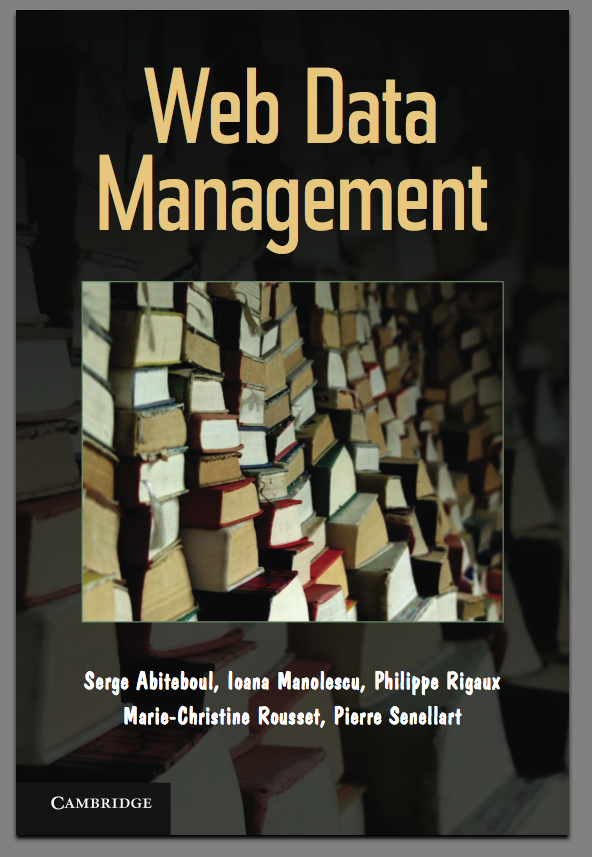
Marie-Christine ROUSSET is a Professor of Computer Science at the University of Grenoble Alpes (UGA) in France, where she is a member of the LIG (Laboratoire d'Informatique de Grenoble) in the SLIDE group. Previously affiliated with Paris-Saclay (LRI), she has established herself as a leading researcher in Knowledge Representation and Information Integration. She holds the distinguished position of Senior member of the Institut Universitaire de France (IUF) (2011-2016, renewed for 2016-2021) and serves as co-responsible for the chair Explainable and Responsible AI within MIAI Grenoble Alpes. Her research focuses on ontology-based data access, logic-based mediation between distributed data sources, query rewriting using views, data linkage, and distributed reasoning for the Semantic Web. She skillfully combines artificial intelligence and database techniques to address complex information integration challenges, with applications spanning biomedical informatics, educational technology, and trustworthy AI. Her work demonstrates consistent innovation from foundational research to practical implementations, as evidenced by her co-authorship of the book 'Web Data Management' published by Cambridge University Press. Professor ROUSSET's recent publications (2019-2022) reveal a growing emphasis on data privacy, RDF graph anonymization, and interactive ontology engineering, while maintaining her strong contributions to semantic web technologies and knowledge representation. Her research shows increasing attention to trustworthy AI concerns, aligning with her leadership roles in relevant projects. Scientific Recognition Senior member of Institut Universitaire de France (IUF) (2011-2016, renewed for 2016-2021) Junior member of Institut Universitaire de France (IUF) from 1997 to 2002 Chevalier de l'Ordre National du Merite (July 11, 2011) EurAI Fellow (nominated ECCAI Fellow in 2005) Best Paper Award at AAAI'96 for 'Verification of Knowledge Bases based on Containment Checking' Professor ROUSSET maintains an active role in the scientific community through editorial work and organizational leadership. She serves on the Editorial Board of Communications of the ACM (CACM) and has held significant roles including PC chair of EGC 2019, Workshops co-Chair of WWW 2018, and Area Chair of IJCAI 2017. Her consistent service on program committees of major international conferences demonstrates her standing in the field. Her laboratory, the SLIDE group within LIG, focuses on semantic web technologies, knowledge representation, and data integration. The group maintains strong connections with the international research community and participates in collaborative projects addressing cutting-edge challenges in artificial intelligence and data management, with particular emphasis on trustworthy and explainable AI systems.
Brice Chardin is an Associate Professor in Data Engineering at ISAE-ENSMA since 2013, affiliated with the LIAS (Laboratoire d'Ingénierie des Applications de la Connaissance et des Systèmes) Data and Model Engineering team. His work bridges academic research and industrial applications, focusing on data management solutions for critical systems. His research spans clustering algorithms under dissimilarity constraints , RDF query relaxation for explaining empty/overabundant results, pattern mining through the RQL language, and energy data management . Key projects include Chronos (a NoSQL system for industrial sensor data) and collaborations with energy companies SRD and Nexeya for predictive consumption analysis. Recent publications (2021-2024) emphasize constrained clustering techniques and cooperative query processing for RDF knowledge bases, revealing a strong trend toward practical solutions for industrial data challenges. His work integrates machine learning with database theory to address real-world data imperfections. PhD in Computer Science from INSA Lyon (2011) Postdoctoral position at LIRIS (2012-2013) on ANR DAG project Specialized in industrial data management since 2011 EDF collaboration Chardin actively supervises academic projects including drone simulation with Ardupilot and Smart Data mining initiatives. His industrial partnerships focus on energy sector applications, particularly predictive analysis for electricity distribution and storage systems. Current work involves developing clustering algorithms with error bounds and query relaxation frameworks for semantic web technologies.
Ibrahim Dellal is a Lecturer in Data Engineering at ISAE-ENSMA, France, affiliated with the LIAS laboratory. His research focuses on semantic web technologies, particularly query processing over uncertain RDF knowledge bases. He addresses critical problems like empty answers and overabundant query results through cooperative approaches that explain and refine unsuccessful queries, contributing significantly to knowledge representation and database systems. Education: PhD in Computer Science from ISAE-ENSMA (2019) on managing large knowledge bases with incomplete and uncertain data Research Interests: Data Engineering and Semantic Web Technologies Uncertainty Handling in Knowledge Bases Cooperative Query Processing Query Result Explanation and Refinement RDF Systems and Knowledge Representation His 2017-2020 publications demonstrate consistent focus on cooperative query answering for uncertain RDF knowledge bases, specifically tackling the empty answer problem through explanation generation and the overabundant answers problem via query refinement. These works advance semantic web and database research by bridging user interaction with automated query optimization under data uncertainty. He is an active member of the Data Engineering team at LIAS laboratory, which operates across ISAE-ENSMA's Chasseneuil campus and collaborates with teams in Automatic Control and Real Time systems for interdisciplinary engineering research.