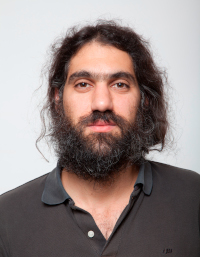
Pieris Andreas is an Assistant Professor at the Department of Informatics, University of Cyprus. He holds a D.Phil. in Computer Science from the University of Oxford (2011), following a B.Sc. in Computer Science from the University of Cyprus (2006) and an M.Sc. in Mathematics and Foundations of Computer Science from Oxford (2007). Prior to his current position, he served as an Assistant Professor at the University of Edinburgh (2016–2020), Associate Professor at Edinburgh (since 2020), and held postdoctoral roles at Vienna University of Technology (2014–2016) and Oxford (2011–2014). His research focuses on database theory, particularly uncertain data, knowledge representation, and logic in computer science. He contributes to leading conferences and journals in these fields and has served on technical committees for major database and AI conferences. No specific grants, advising roles, or lab affiliations are detailed in the provided text.
Professor Athena Stassopoulou is a faculty member at the University of Nicosia , serving as Head of the Department of Computer Science within the School of Sciences and Engineering. Her academic journey began with a BSc in Computer Science and Mathematics from the University of Manchester (UK) and a PhD in Artificial Intelligence from the University of Surrey (UK). She has held prestigious research roles at NASA Commercial Space Center, Ohio State University, and the National Imagery and Mapping Agency (USA), focusing on machine vision algorithms and image understanding. Education : BSc (University of Manchester), PhD (University of Surrey) Research Expertise : Uncertain reasoning, Bayesian Networks, Computer Vision, Machine Learning, Medical Informatics, Geographic Information Systems Her research spans decades, integrating Temporal Abstraction and Bayesian Networks for medical diagnosis, particularly in coronary heart disease. Recent work explores Adverse Drug Reaction Classification in Social Media and Dynamic Bayesian Network Models . Funded by NASA, EU, and Cypriot agencies, she has also contributed to web crawler detection and GIS-based decision-making systems. Notable collaborations include partnerships with Ohio State University and European institutions. Her career bridges theoretical AI with practical applications in healthcare and cybersecurity.
Nadia Charalambous serves as Associate Professor in the Department of Architecture at the University of Cyprus, where she conducts research on socio-spatial dynamics and architectural education. Previously, she held a 10-year tenure as Chair of the Department of Architecture at the University of Nicosia, teaching architectural composition and theory. Her academic credentials include: BSc in Architecture and Environmental Studies (Bartlett School of Architecture, UCL) MSc in Advanced Architectural Studies (Bartlett School of Architecture, UCL) Diploma in Architecture (Bartlett School of Architecture, UCL) PhD from National Technical University of Athens on Spatial Forms of Diversity: the Re-habitation of the Traditional Cypriot House Charalambous' research investigates the interplay between spatial formation, ethnicity, and social exclusion in residential and public urban spaces, with particular focus on Nicosia's divided landscape. Her work employs space syntax methodologies to analyze urban morphology while pioneering research through design approaches in architectural education. She examines how built environments reflect and reinforce social hierarchies, with emphasis on gender, age, and ethnic dimensions of public space accessibility. Analysis of her 15 most recent publications (2010-2019) reveals consistent thematic threads: urban segregation patterns in Cyprus, Ottoman-era spatial legacies, adaptive housing solutions, and pedagogical innovations. Her work bridges theoretical urban morphology with practical design applications, frequently contextualized within Mediterranean urbanism and conflict-affected cities. Charalambous has participated in architectural competitions with award-winning proposals, though specific accolades aren't documented in the source text. She has contributed to international research projects examining spatial accessibility and social exclusion in Nicosia, collaborating with institutions like University College London. Her teaching integrates research findings into architectural pedagogy, emphasizing design as an investigative tool for understanding societal challenges.
The Cyprus Institute of Neurology and GeneticsCyprus
Kyriaki Michailidou serves as Associate Professor at the CING Postgraduate School and Head of the Biostatistics Unit at The Cyprus Institute of Neurology and Genetics (CING), while maintaining a visiting researcher position at the Centre for Cancer Genetic Epidemiology, University of Cambridge. Her expertise bridges statistical genetics and clinical applications in cancer research. Her academic foundation includes: PhD in Genetic Epidemiology (2015) from the University of Cambridge, UK MSc in Applied Statistics (2009) from the University of Oxford, UK BA in Mathematics (2008) from Aristotle University of Thessaloniki, Greece Dr. Michailidou's research centers on statistical genetics and genetic epidemiology, with emphasis on breast cancer susceptibility. As a lead member of the Breast Cancer Association Consortium (BCAC) and Evidence-Based Network for the Interpretation of Germline Mutant Alleles (ENIGMA), she has pioneered the discovery of breast cancer risk variants, fine-mapping of genomic regions, and development of polygenic risk scores. Her work directly impacts clinical risk prediction models and classification of Variants of Uncertain Significance (VUS) in cancer genes, translating genomic findings into clinical practice. Analysis of her publication record reveals consistent focus on large-scale genomic studies of breast cancer, particularly estrogen-receptor-negative subtypes. Her research demonstrates progression from locus discovery (2013-2017) toward clinical application through polygenic risk modeling (2019), with increasing emphasis on subtype-specific risk prediction and variant classification. International consortia collaboration remains central to her methodology. Dr. Michailidou actively contributes to three major international research networks: Breast Cancer Association Consortium (BCAC) Consortium of Investigators of Modifiers of BRCA1/2 (CIMBA) Evidence-based Network for the Interpretation of Germline Mutant Alleles (ENIGMA) Through the Biostatistics Unit at CING, she leads computational genomics research while mentoring postgraduate students. Her current initiatives focus on refining polygenic risk scores, developing VUS classification frameworks, and discovering novel cancer biomarkers through international consortium data.
Assoc. Prof. Dr. Mehmet Bodur is a faculty member in the Computer Engineering Department at Eastern Mediterranean University . His research focuses on Data Mining, Robotics, Computational Intelligence, and Control Systems. He holds a Ph.D. in Electrical and Electronics Engineering from Middle East Technical University (1991) and has been affiliated with IEEE and ACM as a Senior Member since 2010 and 2020, respectively. His teaching interests include Embedded Systems, Robotics, and Artificial Intelligence. Recent research highlights include satellite image-based obstacle recognition for agricultural vehicles (2015–2016), fuzzy logic modeling (2006–2009), and autonomous vehicle control systems (2010–2012). He has contributed to over 20 publications spanning robotics, control systems, and data analysis. Prof. Bodur has supervised numerous theses at the graduate level and actively participates in academic committees and editorial roles. His work bridges theory and practice, with applications in smart home systems, precision agriculture, and mobile robotics.