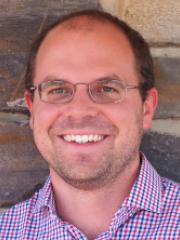
Dr. Ludovic Rapp is a Senior Research Fellow at the Research School of Physics , Australian National University (ANU) , and leads the High-Power Laser group at the Laser Physics Centre (LPC) . His expertise spans ultrafast laser interaction with matter , beam shaping , and laser-induced microexplosions for synthesizing super-dense material phases , including novel silicon allotropes. He is also the Laser Safety Officer for the Research School of Physics.
Professor Martijn de Sterke is a Professor in the Department of Physics at the University of Sydney and a member of the Sydney Nano Institute. He holds a MEng in Applied Physics from Delft University of Technology (1982) and a PhD in Optics from the University of Rochester (1987). His postdoctoral work at the University of Toronto (1988–1990) preceded his faculty appointment at the University of Sydney, where he has contributed significantly to the field of nonlinear optics. His research focuses on nonlinear optics, photonic crystals, soliton dynamics, and plasmonic systems. Notable contributions include studies on soliton microcombs, metamaterial-enhanced optical effects, and relativistic lightsail propulsion concepts. He has pioneered work on pure-quartic solitons and their applications in fiber lasers, as well as investigations into Förster resonance energy transfer in engineered metamaterials. Educations: MEng in Applied Physics, Delft University of Technology (1982) PhD in Optics, University of Rochester (1987) His publications span over 300 works, including key contributions to Optics Express as Editor-in-Chief from 2007–2012. He has received prestigious awards such as the Pawsey Medal (1999), Esther Hoffman Beller Medal (2017), and Beatty Steel Medal (2024). Current research activities include ARC-funded projects on optical microcombs and dispersion-engineered solitons. His work bridges theoretical models and experimental implementations, with applications in ultrafast optics, nanophotonics, and space propulsion systems leveraging optical forces.
Associate Professor Stefano Palomba is an experimental physicist specializing in nanophotonics and nanoplasmonics at The University of Sydney's School of Physics. He leads the Nanophotonics and Plasmonics Advancement Lab (NPAL) and serves as Deputy Director of the Institute of Photonics and Optical Science. His research focuses on developing next-generation integrated optical devices, leveraging advanced facilities like femtosecond-OPO lasers and near-field scanning optical microscopes. He is a domain leader in Sydney Nano and a member of the Net Zero Institute. His work bridges fundamental physics and applied technologies, with emphasis on nonlinear optics, plasmonic nanostructures, and biomedical applications of nanomaterials. Notable contributions include innovations in hybrid plasmonic circuits, carbon dot-based biosensors, and nanolasers for compact optical systems. Palomba has secured significant grants, including a 2022 NHMRC Ideas Grant for neurophotonics research and a 2024 grant for mobile optical sensing platforms. His lab's modular approach to plasmonic systems enables scalable solutions for telecommunications and healthcare. Recent projects include direct growth of MoS₂ monolayers on silicon waveguides and breakthroughs in sub-Poissonian photon emission using hexagonal boron nitride. Palomba collaborates internationally, advancing photonics applications in quantum technologies and environmental sensing. Grants include $23M+ for innovative health research (2022) and $31M+ for interdisciplinary photonics projects (2016). His publications span high-impact journals like Nanophotonics and Nanoscale Advances , reflecting contributions across plasmonics, nonlinear optics, and bio-nanotechnology.
Prof Jeffrey Davis is a Professor at Swinburne University of Technology, leading the ultrafast spectroscopy group within the School of Science, Computing and Emerging Technologies. His research focuses on quantum physics, nonlinear optics, and condensed matter systems, with particular emphasis on semiconductor nanostructures and strongly correlated materials like high-temperature superconductors. He holds a PhD from the University of Cambridge and a BSc(Hons) from Monash University. Research Interests: Davis explores photosynthetic light-harvesting mechanisms and advanced optoelectronic materials. His work utilizes multidimensional coherent spectroscopy to study excitonic dynamics, Floquet engineering, and defect engineering in 2D materials. Key applications include energy-efficient electronics, quantum computing components, and biomedical imaging. Grants & Collaborations: A Chief Investigator in the ARC Centre of Excellence for Future Low-Energy Electronics Technologies (FLEET), Davis has secured ARC Discovery Projects, Future Fellowships, and equipment grants. He leads a successful research group with over 16 doctoral students supervised since 2007. Teaching: Currently teaches PHY20004 Optics and PHY20007 Solid State Physics. His laboratories and collaborations drive innovations in ultrafast laser technology and quantum material characterization.
Prof Jodie Bradby is a Research Fellow in the Department of Materials Physics at The Australian National University. She holds a B. Appl. Sci and PhD in Physics. Her research focuses on high-pressure materials science, particularly phase transformations in silicon, carbon allotropes, and nanocrystalline materials under extreme conditions. Key areas include nanoindentation-induced phase changes, laser synthesis of novel phases, and structural analysis of materials like glassy carbon and diamond. Her work involves advanced techniques such as diamond anvil cells, transmission electron microscopy, and in-situ spectroscopy. Notable projects include synthesizing bc8-Si phases, exploring microtwinned diamond formation from glassy carbon, and studying pressure-induced polymorphs in silicon. Over 138 publications and 29 research projects highlight her contributions to understanding material behavior under compression, temperature extremes, and laser processing. Current projects focus on pressure-induced phase transitions, novel carbon phases, and functional nanomaterials. She collaborates widely, leveraging facilities like the Multiple Ion Beam Facility for microscopy and nanofabrication.
Alastair Stacey is a Professor in the School of Science at RMIT University, specializing in quantum physics, materials engineering, and nanotechnology. His research focuses on diamond-based quantum technologies, including quantum sensing, quantum computing, and biomedical applications. He leads projects on diamond nanoparticle engineering, quantum device fabrication, and surface functionalization for advanced sensing systems. Key research interests include nitrogen-vacancy centers in diamond, quantum microscopy, and nanoscale sensors for biomedical and energy applications. He supervises PhD/Masters students in areas like diamond synthesis for quantum devices and quantum sensing technologies. Recent work involves developing telecom-band emitters in diamond and optimizing diamond surface chemistry for enhanced electronic properties. Education: Not explicitly stated in provided texts. Affiliations: RMIT University, School of Science. Grants/Projects: Active in quantum technology and materials science research, supported by collaborative projects in diamond device fabrication. His articles (15 most recent) span quantum optics, diamond surface engineering, and applications in photovoltaics and biomedical interfaces. He collaborates widely on topics like quantum metrology and 2D materials integration with diamond.
Professor Ron White is the Dean of the College of Science and Engineering at James Cook University. Previously, he served as Head of the Physical Sciences Academic Group and Research Director for the College of Science, Technology and Engineering. His research focuses on low-temperature plasmas, antimatter applications in medical diagnostics, opto-electronic semiconductor properties, and NIR spectroscopy for agricultural and industrial technologies. He leads the Rapid Assessment Unit (RAU), a JCU-Queensland Department collaboration advancing non-invasive primary industry tools. Education : Not explicitly detailed in text. Research interests span plasma-liquid interfaces, positron interactions, and OLED material performance. He has secured continuous ARC funding since 2005, including Discovery Projects and Industrial Transformation Hubs, and contributed to the ARC Centre of Excellence for Antimatter-Matter Studies. Current projects include supercharging tropical aquaculture and sustainable food production via black soldier fly breeding. He edits Scientific Reports and Springer-Nature’s E Phys. Journal D . Recent articles explore electron scattering, OLED modeling, and positron transport. Grants total 62 awards (count mentioned, specifics not listed). Advises PhD students across all research areas and collaborates on interdisciplinary projects like the Advanced Ultrafast Laser Spectroscopy Facility.
Bill Corcoran is an Associate Professor and ARC Future Fellow at Monash University (Melbourne, Australia), specializing in optical communications and photonics. He leads the Monash Photonic Communications Laboratory and contributes to the UN Sustainable Development Goals through high-impact research in optical technologies. Education: PhD in Physics (University of Sydney, 2011) – focused on light-by-light control in silicon waveguides. Postdoctoral Research (Chalmers University of Technology, 2011–2013) – phase-sensitive parametric amplification. Research Interests: Development of photonic integrated circuits for high-capacity optical systems, including coherent comb sources, Brillouin processing, and ultra-dense wavelength division multiplexing. His work targets applications in quantum computing, ultra-fast fiber communications, and precision measurement. Awards: CISRA Postgraduate Prize (2009) Dean's Prize for Outreach (2008) Postgraduate Research Prize for Outstanding Academic Achievement (2009) Wanda Henry Prize (Best Student Paper) (2010) Advising & Grants: Accepting PhD students; leading major projects like Rainbows on Demand (coherent comb sources) and Needle in a Haystack (Brillouin-based optical filtering). Collaborates globally with institutions such as the University of Adelaide and Chalmers University. Labs & Teams: Monash Photonic Communications Laboratory, ARC Centre of Excellence in Optical Microcombs.
Professor Christopher Poulton serves as Discipline Leader for Physics at the School of Mathematical and Physical Sciences of the University of Technology Sydney (UTS). With a PhD from the University of Sydney (2000) and postdoctoral experience at institutions including the Karlsruhe Institute of Technology and Max Planck Institute for the Science of Light, he specializes in numerical and analytical methods in photonics, particularly focusing on electromagnetic/elastic wave propagation and light-sound interactions via Brillouin scattering. PhD, University of Sydney (2000) BSc (Hons), University of Sydney (1996) His research explores Brillouin scattering for applications in optical data storage, ultrafast acoustic dynamics, and nonlinear waveguide phenomena. He develops analytical models for photonic crystal fibers, metasurfaces, and optoacoustic devices, with recent work emphasizing machine learning integration for Brillouin microscopy data analysis and on-chip signal processing. Recent publications highlight trends in Brillouin-based memory systems , metasurface design , and nonlinear optoacoustic interactions . Methodologies span principal component analysis for biological imaging to quasi-soliton pulse dynamics in photonic waveguides, often combining numerical simulations with experimental validation. Professor Poulton actively supervises honors projects and teaches advanced mathematical topics including Complex Analysis , Vector Calculus , and Numerical Methods . He has contributed to On-chip photonics: principles, technology and applications as a book chapter author. His laboratory collaborates on projects like optoacoustic isolation and 3D hydrogel engineering under grants including ARC Discovery Projects DP200101893 and DP160101691 . Current infrastructure includes chalcogenide waveguide fabrication and Brillouin response measurement systems.
Dr. Renjie Gu is a Research Fellow at the University of Western Australia (UWA), affiliated with the Microelectronic Research Group (MRG) in the School of Electrical, Electronic and Computer Engineering. He holds an ARC Super Science Fellowship and specializes in molecular beam epitaxy (MBE) growth of semiconductor materials for infrared detectors, lasers, and solar cells. His work contributes to UN Sustainable Development Goals related to affordable and clean energy. Education: PhD in Semiconductor Materials (Chinese Academy of Sciences, 2012). Research focuses on MBE epitaxial growth, thin film characterization, and applications in optoelectronic devices. His recent publications (2024) highlight advancements in HgCdTe film growth, terahertz spectroscopy for carrier mobility analysis, and infrared sensing technologies. Awards: ARC Super Science Fellow (Microelectronic Research Group) Collaborations: Active research networks in Australia and globally, focusing on infrared materials and sensor technologies. Labs/Teams: Core member of UWA's Microelectronic Research Group (MRG), leading MBE-based semiconductor research initiatives.
Ondrej Kitzler is a Dr MQ Co-funded Fellow at Macquarie University's School of Mathematical and Physical Sciences. His research focuses on advanced laser systems, particularly in nonlinear optics and the generation of new wavelengths of light. He is actively involved in projects related to tunable terahertz radiation and high-power diamond Raman lasers. PhD in Physics, Macquarie University (2014) M.Sc. in Lasers and Optical Engineering, Czech Technical University in Prague (2010) Dr. Kitzler's research interests lie at the intersection of laser physics and applied optics. He specializes in nonlinear optical processes , including stimulated polariton scattering in crystals for tunable terahertz radiation , and power scaling and frequency control of diamond Raman lasers . His recent work extends into marine LiDAR systems for ocean temperature mapping using blue and gallium nitride laser diodes, demonstrating applications in environmental monitoring and remote sensing. The analysis of his recent publications (2020–2025) reveals a strong trend toward practical and environmental applications of advanced laser systems. His work spans terahertz generation , LIDAR-based oceanography , and high-power solid-state lasers . The keywords across these works include optics, remote sensing, photonics, and nonlinear frequency conversion, with subfields such as marine LiDAR, THz polariton lasers, and diamond-based laser systems. This indicates a shift from fundamental laser development to real-world sensing and measurement technologies. Scientific Awards and Recognition: h-index of 21 Over 1300 citations in Scopus Dr. Kitzler has advised or collaborated on multiple research projects funded by competitive grants. Notable projects include: Precision frequency spectrum diagnostic for pulsed lasers (2017–ongoing) Blue Ocean LiDAR for remote ocean temperature mapping (2024–2025) Kilowatt-class laser for physics, earth sciences and engineering research (2018) These projects highlight his role in interdisciplinary research with applications in earth sciences, engineering, and environmental monitoring. He collaborates with prominent researchers such as Richard Mildren, Helen Pask, and David Spence. Dr. Kitzler is part of a dynamic research network at Macquarie University focused on advanced laser technologies. His work is integrated within the broader context of the Laser Physics and Photonics Group , contributing to both fundamental and applied research in optical engineering and quantum technologies.
Adam Sharp is a Postdoctoral Research Fellow at the School of Mathematical and Physical Sciences, Macquarie University. His research focuses on laser physics, photonics, and advanced optical materials, with significant contributions in diamond Raman lasers, Brillouin lasers, and ultrafast pulse generation. Research Interests: His work spans nonlinear optics, laser-material interactions, and photonic device development. Key areas include high-power visible lasers, mid-infrared processing, and frequency comb generation. The research has applications in manufacturing, sensing, and communications. Publication Trends: Over the years, his publications reflect a consistent focus on laser engineering and optical materials. Recent works emphasize high-efficiency Raman and Brillouin systems, ultraviolet pulse generation, and thermal effects in composites under laser exposure. Projects: Establishing an advanced materials processing facility operating in the mid-infrared (2022, completed) Advising and Grants: While no formal students are listed, he collaborates extensively with senior researchers such as Prof. Richard Mildren and Dr. David Spence. His project funding supports advanced laser facility development. Labs and Teams: He is part of a leading photonics research group at Macquarie University, specializing in laser development and materials processing using novel optical systems.
Vladlen Shvedov is a Researcher at the Australian National University (ANU), affiliated with the ARC Centre of Excellence for Transformative Meta-Optical Systems and the Research School of Physics. His work focuses on advanced optics, nonlinear phenomena, and photonics. Key research areas include optical vortices, liquid crystals, metamaterials, and optical trapping technologies. He has contributed to projects such as photonics with structured light for applications in communication and nano-technologies (2016–2019). His research explores topics like laser-induced surface structures, phase change materials, and metasurface tuning using liquid crystals. Shvedov has published extensively, with notable contributions to optical solitons, ultrafast laser processing, and topological electromagnetic phenomena. His work bridges fundamental optics with applied technologies, including applications in materials science and nanophotonics. Shvedov's recent studies address tunable optoelectronic materials (Sb₂Se₃) and 3D metasurface modulation. He has also investigated vortex soliton dynamics in nematic liquid crystals and electromagnetic singularities. His research often involves collaborations on cutting-edge optical systems and their engineering applications.
Dr Martin Ploschner is a Senior Lecturer at the School of Electrical Engineering and Computer Science, University of Queensland, with a PhD from the University of St Andrews. His research bridges optical physics, biomedical engineering, and advanced imaging technologies, focusing on innovative applications of light manipulation. His research interests encompass optical imaging, biomedical optics, fiber optics, super-resolution microscopy, terahertz imaging, wavefront shaping, and multimode fiber optics. Ploschner's work particularly emphasizes developing novel optical techniques for biomedical applications, including deep-brain imaging through minimally invasive multimode fibers and super-resolution microscopy using upconversion nanoparticles. Analysis of his recent publications reveals a strong focus on spatial tomography of light across multiple dimensions (time, spectrum, polarization), multimode fiber characterization, and advanced imaging techniques. His work demonstrates a consistent trajectory toward developing practical optical tools for biomedical applications, particularly in endoscopic imaging and nanoscale manipulation. ARC Discovery Project: Deep brain neurovascular coupling analysis using multimode fibre endoscopes (2025-2027) ARC Future Fellowship: Investigating spatio-temporal instabilities in next-generation lasers (2024-2028) ARC Discovery Early Career Researcher Award: Seeing deeply inside the body with the world's smallest microscope (2019-2020) Dr Ploschner actively supervises multiple PhD students working on laser wavefront shaping, machine learning with optical waves, and applications of multi-plane light conversion. His research group collaborates closely with Associate Professor Joel Carpenter and Dr Mickael Mounaix, forming a strong team focused on optical wave manipulation through disordered media and multimode fibers. Their work has significant implications for minimally invasive medical diagnostics and telecommunications.
Dr. Andrew Martin is the Deputy Head of the Department of Physics at RMIT University's School of Science. His research focuses on developing advanced imaging techniques using X-rays and electrons, particularly at the Australian Synchrotron and international X-ray free-electron lasers. He specializes in diffraction-based methods for applications in condensed matter physics, biochemistry, cell biology, and materials science. Dr. Martin teaches undergraduate courses in Introductory Physics, Quantum Physics, and Scientific Programming, while also supervising postgraduate research. His work emphasizes classical and quantum coherence phenomena, with recent projects addressing crystal structure determination, ionic liquid behavior, and nanostructure analysis using cutting-edge X-ray and electron microscopy techniques. His research group collaborates with institutions globally, leveraging XFEL facilities to explore ultrafast dynamics and structural changes in materials. He is committed to advancing methodologies for real-time, high-resolution structural analysis in complex systems.