Professor Thomas Bein is affiliated with the Department of Chemistry at Ludwig-Maximilians-Universität München (LMU) , where he leads the Functional Nanosystems research group. His work focuses on synthesizing and characterizing nanostructured materials with applications in energy, catalysis, and biomedical delivery. Mesoporous nanoparticles for drug delivery Semiconductor nano-morphologies for photovoltaics Photoelectrochemical water splitting Metal-organic frameworks (MOFs) Electroactive networks His research emphasizes atomic-scale control of material architectures using self-assembly, hydrogen bonding, and covalent interactions, enabling precise tuning of electronic, optical, and catalytic properties. A review of his recent publications reveals cutting-edge investigations into covalent organic frameworks (COFs), perovskite-inspired solar materials, and functional nanoparticle systems. Key trends include optimizing energy conversion efficiency, enhancing stability in optoelectronic devices, and exploring bio-compatible nanocarriers for targeted therapies. Professor Bein’s group actively contributes to interdisciplinary projects at the intersection of chemistry, physics, and biomedical engineering, with ongoing collaborations in solar energy, sustainable materials, and nanomedicine.
Cherie Kagan serves as the Stephen J. Angello Professor at the University of Pennsylvania, holding primary appointment in the Department of Electrical and Systems Engineering within the School of Engineering and Applied Science, with secondary appointments in Chemistry and Materials Science and Engineering. Her interdisciplinary research bridges chemistry, materials science, and electrical engineering to develop novel functional materials and devices that integrate optical, electrical, magnetic, mechanical, and thermal properties. Professor Kagan's research group combines the flexibility of chemical synthesis and bottom-up assembly with top-down fabrication techniques to design innovative nanomaterials. They employ advanced characterization methods including spatially- and temporally-resolved optical spectroscopies, AC/DC electrical measurements, electrochemistry, and various microscopy techniques. Her recent work demonstrates particular strength in colloidal nanocrystals and quantum dots for applications in quantum information science, sensing technologies, and energy conversion devices. Scientific Recognition Induction to the American Academy of Arts and Sciences (2025) IEEE Fellow (2024) for contributions to colloidal nanocrystals and their integration in optical and electronic devices George H. Heilmeier Faculty Award for Excellence in Engineering (2024-25) Humboldt Research Award Fellowship (2024) MRS Fellow for distinguished research accomplishments in materials science National Academy of Inventors Fellow for innovation in nanomaterials Professor Kagan actively mentors PhD students across multiple departments, with recent graduates including Gary Chen, Chavez Lawrence, and Shobhita Kramadhati. Her research is supported by significant grants including the IoT4Ag project focused on precision agriculture sensing systems. She maintains active collaborations with Nobel Laureate Moungi Bawendi, her former PhD advisor at MIT, and works with institutions including the Max-Planck Institute for Chemical Physics of Solids through her Humboldt Fellowship. The Kagan Research Group operates comprehensive facilities for nanomaterials synthesis, characterization, and device fabrication, combining expertise across chemistry, physics, and engineering disciplines. Current team members include PhD students from Electrical and Systems Engineering and Chemistry departments, postdoctoral researchers like Anamika Singh and Akhila Mallavarapu, and undergraduate researchers supported through programs like CURF.
Dmitri N. Basov is the Higgins Professor of Physics at Columbia University, with a joint appointment as Professor of Physics at the University of California, San Diego. His research focuses on quantum materials, utilizing nano-optical techniques to investigate electronic phenomena and polaritonic systems. He leads the Basov Group at Columbia and has pioneered methods for imaging quantum materials at nanoscale resolutions. PhD in Physics, Lebedev Physics Institute (1991) Professor, Columbia University (2016–present) Professor, UC San Diego (2001–present) Postdoctoral Research, McMaster University (1992–1996) His work spans plasmonics , terahertz spectroscopy , and van der Waals heterostructures , with recent emphasis on polariton dynamics, superconductivity modulation, and moiré-driven electronic states. He employs cutting-edge tools like quantum scanning near-field optical microscopy (q-SNOM) and resonant inelastic X-ray scattering. Besides leading major grants such as the Gordon and Betty Moore Investigator award and Vannevar Bush Fellowship, Basov has received accolades like the National Academy of Sciences membership (2020), Ken Button Prize (2019), and Frank Isakson Prize (2012). His team explores novel quantum phases in 2D and topological materials.
Aleksei Zheltikov is a University Distinguished Professor at Texas A&M University's Department of Physics and Astronomy. He holds dual affiliations with the International Laser Center and Physics Department of M.V. Lomonosov Moscow State University, and the Russian Quantum Center. His research focuses on ultrafast nonlinear optics and biophotonics, addressing applications in imaging, laser filamentation, and strong-field physics. Zheltikov earned his PhD (1990) and Doctor of Science (1999) degrees from Moscow State University, becoming a full professor there in 2000 before joining Texas A&M in 2010. He leads a research team including Xinghua Liu and Ajithamithra Dharmasiri. Recipient of prestigious awards including the Russian Federation State Prize (1997), Lamb Award (2010), and Kurchatov Prize (2014), his work bridges fundamental optics research with medical diagnostics and quantum technologies. Key contributions include developing laser filament-based imaging techniques and advancing Raman scattering-based frequency conversion methods in hollow-core fibers.
Maiken Mikkelsen is the James N. and Elizabeth H. Barton Associate Professor of Electrical and Computer Engineering at Duke University, promoted to Professor in 2025. She holds a secondary appointment as Associate Professor of Physics (2023–present) within Trinity College of Arts & Sciences. Her research bridges Nanophotonics , Quantum Materials , and Ultrafast Spectroscopy , focusing on plasmonic nanostructures and nonlinear metasurfaces for quantum optics and optoelectronic applications. Education: Ph.D. in Physics (University of California, Santa Barbara, 2009), B.S. in Physics (University of Copenhagen, 2004), postdoctoral work at University of California, Berkeley. Her work explores Plasmonics and Quantum Optics to engineer nanoscale light-matter interactions, enabling transformative technologies in Single-Photon Sources , Ultrafast Photodetectors , and Active Metasurfaces . Recent projects include real-time tunable lasing and polarization-controlled nanocavity systems. Her 2016–2025 publications highlight breakthroughs in plasmonic fluorescence enhancement, hot electron dynamics, and room-temperature quantum devices. Grants include Nano Solutions On-Chip (Triad National Security, LLC, 2025–2029) and Meta-Imaging (Air Force Office of Scientific Research, 2021–2026). Her lab, jointly based in Electrical & Computer Engineering and Physics, has graduated PhD students Eunso Shin and Hengming Li, and actively engages in STEM outreach initiatives.
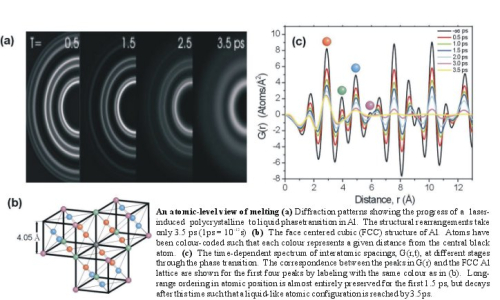
Bradley J. Siwick is an Associate Professor in the Department of Chemistry at McGill University, holding the Canada Research Chair in Ultrafast Science (Tier II). He specializes in developing ultrafast electron-based techniques to study atomic and molecular dynamics in materials and chemical systems. His work bridges chemical physics, materials science, and condensed matter physics, focusing on structural dynamics, phase transitions, and nonequilibrium states. Education: B.A.Sc. (Engineering Physics, University of Toronto, 1997), M.Sc. (Physics, 1998), Ph.D. (Physics, 2004). Postdoctoral training at FOM-AMOLF Amsterdam (2004–2006). Awards: NSERC Doctoral Prize (2005). Research interests include ultrafast electron diffraction/scattering, electron-phonon coupling, and imaging transient structural changes. Techniques developed in his lab combine electron microscopy with ultrafast laser spectroscopy to observe atomic motions on femtosecond timescales. Key areas of study are phase transitions in materials (e.g., VO₂, cuprates), nanocomposites, and extreme states of matter using facilities like the Advanced Laser Light Source (ALLS). Recent articles highlight advances in momentum-resolved phonon dynamics, polaron formation, and ultrafast imaging of 2D materials. His lab, based in Otto Maass and Rutherford buildings, collaborates on frontier projects in nonequilibrium materials science. Advising: Leads the Siwick Research Group, focusing on graduate students in chemical physics and materials science. Grants: Supported by NSERC and Canada Research Chairs funding. Labs and facilities: Otto Maass 25 laboratory and ALLS (Varennes, Quebec) for high-power laser experiments.
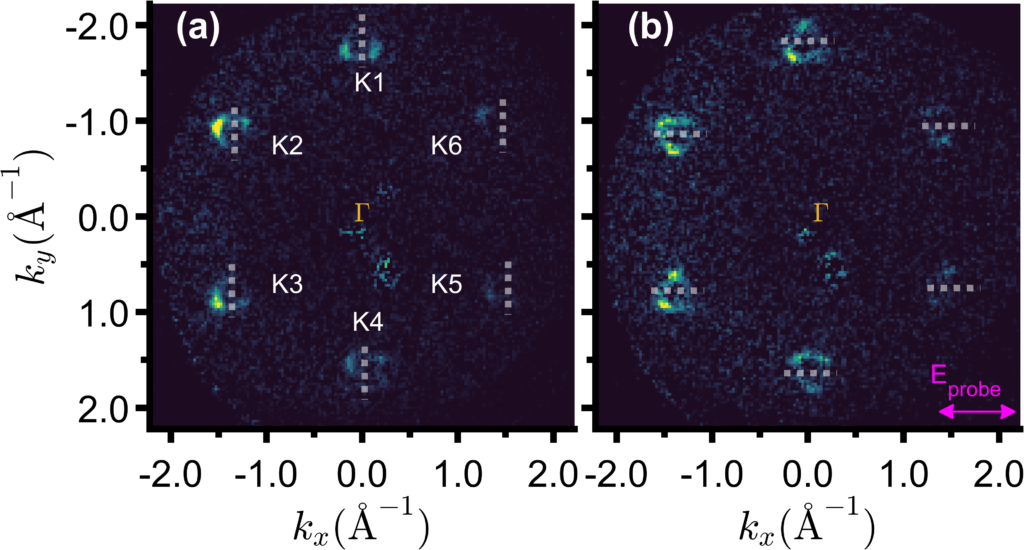
Professor Tom Allison leads an active research group at Stony Brook University focusing on ultrafast laser spectroscopy and nonlinear optics. His laboratory specializes in time- and angle-resolved photoemission spectroscopy (tr-ARPES) and frequency comb laser development for studying ultrafast dynamics in novel materials. His research interests center on understanding electron dynamics in two-dimensional materials, particularly graphene and transition metal dichalcogenides. Using sophisticated tr-ARPES instrumentation, his group investigates pseudospin dynamics, valley polarization, and exciton coupling with unprecedented momentum and energy resolution. The research bridges condensed matter physics, quantum materials, and ultrafast optical science. Professor Allison's recent publications demonstrate a strong focus on 2D materials physics, with particular attention to momentum-resolved phenomena in graphene and TMD heterostructures. His group combines cutting-edge experimental techniques with theoretical modeling to unravel complex ultrafast processes at the quantum level. Scientific Recognition: DOE Office of Science Highlight for work on valley polarization dynamics in monolayer WS2 NSF Major Research Instrumentation grant for developing high-power frequency combs Marie Skłodowskiej-Curie fellowship awarded to group member Grzegorz Professor Allison has successfully mentored multiple graduate students to completion of their degrees, including PhD candidates Jin Bakalis and Myles Silfies, and MS student Michael Wahl. His former postdoc Alice Kunin has secured an assistant professor position at Princeton University. Current research is supported by NSF funding for developing advanced frequency comb technology spanning from THz to soft x-ray regions.
Zenghu Chang is a Distinguished Professor of Physics and Optics at the University of Central Florida, leading the Institute for the Frontier of Attosecond Science and Technology. He holds the UCF Trustee Chair and Pegasus Professor titles. His research focuses on ultrafast laser science, attosecond phenomena, and high-order harmonic generation. Chang earned his PhD from the Chinese Academy of Sciences and has held academic positions at the University of Michigan and Kansas State University. Education: BSc from Xi’an Jiaotong University (1982), PhD from Xi’an Institute of Optics and Precision Mechanics (1988). Postdoctoral research at the Rutherford Appleton Laboratory (1991-1993) and the University of Michigan (post-1996). Research Interests: Attosecond science, terawatt femtosecond lasers, ultrafast atomic physics, coherent XUV/X-ray sources, high-order harmonic generation, and advanced laser technology. His work includes pioneering contributions like the Double Optical Gating technique and generating the world-record 67-attosecond laser pulse. Awards: APS Fellow, Pegasus Professor (2016), Mercator Professorship (2007), and multiple national and international honors. His publications exceed 150 articles in top journals like Optics Letters and Nature Communications . Advising & Grants: Supervised numerous PhD students in optics and physics. Active in securing research grants for attosecond science and laser development. Collaborates internationally on projects involving ultrafast X-ray sources and advanced laser systems. Labs/Teams: Directs the Florida Attosecond Science and Technology group and leads the Institute for the Frontier of Attosecond Science and Technology, advancing cutting-edge laser and X-ray technologies.
Hatice Altug is a Full Professor at EPFL's Institute of Bioengineering within the School of Engineering, where she leads the Bionanophotonic Systems Laboratory. Her research integrates nanophotonics, plasmonics, and microfluidics to develop advanced biosensors for real-time molecular diagnostics. She holds dual roles in EPFL's doctoral programs and academic committees. Education: PhD in Applied Physics, Stanford University (2000-2007) B.S. in Physics, Bilkent University (1996-2000) Her research centers on creating label-free, high-sensitivity optical biosensors using nanophotonic technologies. Key innovations include dielectric metasurfaces for mid-infrared spectroscopy, AI-enhanced detection platforms, and portable nanoplasmonic imagers for point-of-care diagnostics. Her work bridges fundamental light-matter interactions with clinical applications like sepsis monitoring and cancer biomarker detection. Her publications emphasize nanophotonic biosensor design, metasurface applications, and single-cell analysis. Recent trends show increased focus on AI integration, vibrational spectroscopy, and wafer-scale manufacturing for clinical translation. Awards & Honors: Optical Society Fellow (2020) Presidential Early Career Award (PECASE, 2011) ERC Consolidator Grant (2016) IEEE Photonics Society Young Investigator Award (2011) She mentors numerous PhD students and leads interdisciplinary teams developing optofluidic platforms. Her laboratory pioneers nanoplasmonic microarrays and collaborates globally on projects like neurodegenerative disease biomarker detection. She co-directs EPFL's doctoral program in photonics and champions women in STEM through executive roles in diversity initiatives.
Maiken H. Mikkelsen is the James N. and Elizabeth H. Barton Associate Professor in the Department of Electrical and Computer Engineering at Duke University, with a joint appointment in the Department of Physics . Her research focuses on quantum nanophotonics , plasmonics , and light-matter interactions in nanoscale materials, aiming to advance optoelectronics, quantum science, and biomedical diagnostics. Education B.S. in Physics, University of Copenhagen (2004) Ph.D. in Physics, University of California, Santa Barbara (2009) Postdoctoral Fellowship, University of California, Berkeley Her work explores nanophotonic engineering for quantum optics , spintronics , and ultrafast optoelectronics , with recent studies on nonlinear metasurfaces and plasmonic enhancement of immunoassays for point-of-care diagnostics. Publications highlight 2D semiconductor emission control , ultrafast single-photon sources , and metasurface-based photodetectors . Scientific Awards Maria Goeppert Mayer Award (2017) NSF CAREER Award (2015) Moore Inventor Fellow (2021) ONR/Air Force/Army Young Investigator Awards (2015-2017) Cottrell Scholar (2016) Stansell Family Distinguished Research Award (2021) She advises graduate students in Duke’s Electrical & Computer Engineering and Physics programs and leads the Mikkelsen Lab , which emphasizes ultrafast spectroscopy and quantum material development . The lab has graduated PhD students like Eunso Shin and Hengming Li (2025).
Mette Gaarde is the Les and Dot Broussard Alumni Professor of Physics at Louisiana State University (LSU), Department of Physics & Astronomy. She holds a Ph.D. from the University of Copenhagen (1997). Her research focuses on ultrafast atomic, molecular, and optical physics theory, particularly probing laser-matter interactions using attosecond and femtosecond pulses. She leads the LSU ultrafast AMO theory group, addressing dynamics in transparent solids, attosecond transient absorption, charge migration, and mid-infrared filamentation. Education: Ph.D., University of Copenhagen, Denmark (1997) Research Interests: Dr. Gaarde’s work bridges ultrafast AMO science and nonlinear optics. Key areas include high-harmonic generation (HHG) in solids, attosecond transient absorption spectroscopy (ATA), and charge migration in organic molecules. Her group employs time-dependent Schrödinger equation, density functional theory, and semiconductor Bloch equations to model quantum-classical interactions. Recent studies explore HHG in monolayer MoS₂, particle-like charge migration, and resonant XUV propagation. Selected Research Trends: Publications highlight advancements in HHG theory, charge migration control via strong-field ionization, and filamentation of mid-infrared laser pulses. Collaborations with experimental groups at SLAC, Ohio State University, and European institutions have advanced applications in solid-state spectroscopy and molecular dynamics. Awards: Les and Dot Broussard Alumni Professor of Physics (LSU) Advising & Collaborations: Her research involves postdocs and graduate students in interdisciplinary projects. Ongoing collaborations focus on high-harmonic spectroscopy, attosecond solitons, and nonlinear fiber optics. Labs/Teams: Leads the LSU ultrafast AMO theory group, affiliated with the Hearne Institute for Theoretical Physics.
Rupert Huber is a Professor at the Department of Experimental and Applied Physics, University of Regensburg, where he has held a chair since 2010. His research focuses on ultrafast quantum phenomena, terahertz science, and lightwave electronics, with a strong emphasis on nanoscale imaging and quantum materials. He leads the Huber group, which has launched the ERC project 'Orbital Cinema' and produced numerous high-impact publications in journals like Nature and Nano Letters . Chair for Experimental and Applied Physics, University of Regensburg (2010–present) Emmy Noether Group Leader, University of Konstanz (2007–2010) Alexander von Humboldt Fellow, UC Berkeley/Lawrence Berkeley National Lab (2004–2006) His research explores terahertz spectroscopy , quantum materials , and ultrafast nanoscopy , often combining experimental innovation with theoretical insights. Recent work includes groundbreaking studies on exciton dynamics in van der Waals magnets and subcycle imaging of electron wave motion. The group’s publications frequently appear as coverstories in Nature Photonics and Nano Letters . Huber has received prestigious awards such as the Gottfried Wilhelm Leibniz Prize (2019) , ERC Starting Grant (2012) , and OSA Fellowship (2018) . He has supervised numerous Ph.D. and Master’s students, including recent awardees like Joshua Mornhinweg (faculty dissertation prize, 2024) and Josef Riepl (best tutor award, 2024).
F. Ömer Ilday is a distinguished physicist and Alexander von Humboldt Professor at Ruhr University Bochum since July 2023, holding a joint appointment in the Faculty of Electrical Engineering and Information Technology and Faculty of Physics and Astronomy. His pioneering work in ultrafast laser technology has transformed non-linear laser-matter interactions, with applications spanning precision manufacturing, medical surgery, and nanofabrication. Education: PhD in Physics, Cornell University (2003) Postdoctoral Research Scientist, Massachusetts Institute of Technology (2003-2005) Ilday's research centers on ultrafast laser development and materials science, focusing on GHz-repetition-rate burst-mode systems, nonlinear laser lithography, and self-organization phenomena. His interdisciplinary approach bridges photonics, plasma physics, and materials engineering to enable breakthroughs in nanostructuring, silicon processing, and laser-based manufacturing. Current work emphasizes developing high-power laser sources and exploring fundamental laser-matter interaction mechanisms for next-generation applications. His recent publications (2023-2025) reveal dominant trends in high-repetition-rate burst-mode lasers (up to 50 GHz), ablation efficiency optimization, and nonlinear laser lithography for 3D silicon structuring. These works demonstrate strong convergence between fundamental physics and industrial applications, particularly in medical surgery, nanofabrication, and materials synthesis, with increasing emphasis on self-organization principles in laser systems. Scientific awards: Turkish Academy of Sciences Outstanding Young Scientist Award (2006) Marie Curie International Reintegration Grant (2006) ERC Consolidator Grant (2014) - Turkey's first ERC Advanced Grant (2022) Election to Academia Europaea Election to Turkish Academy of Sciences Membership in Turkish and American Physical Societies Ilday has secured major competitive grants including two ERC awards and a Marie Curie fellowship, directing research teams at Bilkent University's Ultrafast Optics & Lasers Laboratory (UFOLAB) which developed technologies adopted globally. At RUB, he is establishing the Center for Complex Laser-Matter Interactions as an interdisciplinary hub fostering collaborations between photonics, plasma research, and materials science, with explicit goals for spin-off company formation and transdisciplinary innovation in manufacturing technologies. As founding director of UFOLAB at Bilkent University, Ilday developed laser systems deployed by research institutions worldwide and established Turkey's first laser company. His RUB center integrates electrical engineering and physics expertise to advance complex laser-matter interaction research, focusing on self-organizing laser systems, nanostructuring techniques, and applications in semiconductor manufacturing and medical technology through close industry partnerships.
Prof. Dr. Ioachim Pupeza serves as Group Leader in the Department of Spectroscopy/Imaging at the Leibniz Institute of Photonic Technology (Leibniz-IPHT) in Jena, Germany. His research focuses on advanced optical measurement techniques, particularly in the field of field-resolved spectroscopy and precision optical measurements. Dr. Pupeza's research interests center around optical spectroscopy with a particular emphasis on field-resolved techniques that capture the complete electric field waveform of light-matter interactions. His work spans infrared spectroscopy , molecular fingerprinting , ultrafast laser technology , and precision optical measurements . He has made significant contributions to electro-optic sampling techniques, which enable characterization of electric-field waveforms across the terahertz to visible spectral range. His research also extends to mid-infrared light generation , terahertz spintronic emitters , and cavity-enhanced spectroscopy , with applications ranging from fundamental physics to medical diagnostics. Analysis of Dr. Pupeza's recent publications reveals a strong trend toward increasingly sophisticated field-resolved spectroscopy techniques with applications in both fundamental science and practical diagnostics. His work has evolved from basic measurement techniques to applications in cancer detection through molecular fingerprinting of biofluids. A consistent theme across his publications is the pursuit of higher precision, broader bandwidth, and improved sensitivity in optical measurements, often achieving attosecond-level precision. His research bridges physics, engineering, and medical applications, demonstrating how fundamental optical advances can translate to real-world diagnostic tools. Dr. Pupeza leads the research group "Field-Resolved Optical Precision Measurement Methods" at Leibniz-IPHT, which appears to collaborate extensively with other research institutions and groups. His work involves sophisticated laser systems including high-power Yb:YAG thin-disk oscillators, femtosecond enhancement cavities, and dual-oscillator systems for precision measurements. The group's research has implications for molecular spectroscopy, medical diagnostics, and fundamental studies of light-matter interactions at the most fundamental time scales.
Dr. Alexandre Mermillod-Blondin is a Principal Investigator heading a DFG-funded project on 'Micromachining with few-cycle pulses' at the Max Born Institute. His research focuses on fundamental laser-matter interactions and direct laser writing of 3D micro-optical systems in transparent materials. Key investigations include plasma formation mechanisms in dielectrics, relaxation dynamics, and applications in photonic device fabrication. His group utilizes phase-contrast microscopy and time-resolved techniques to characterize ultrafast processes.