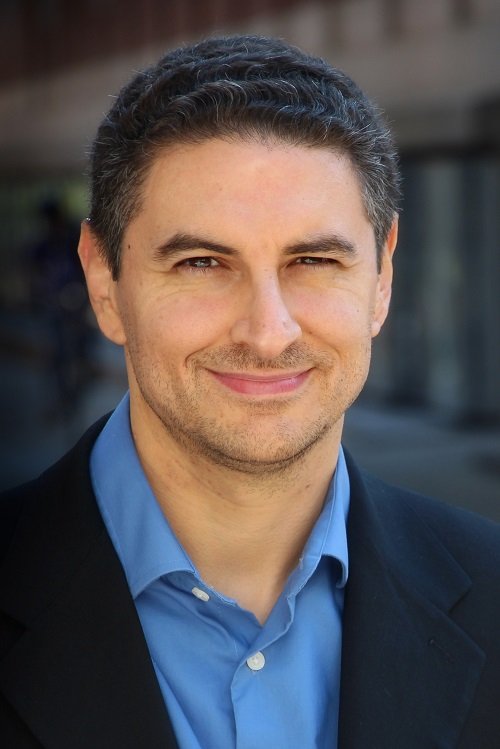
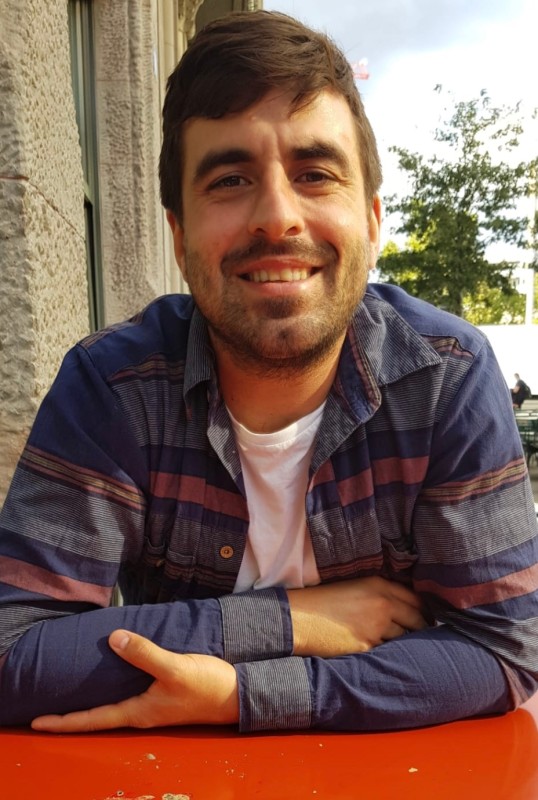
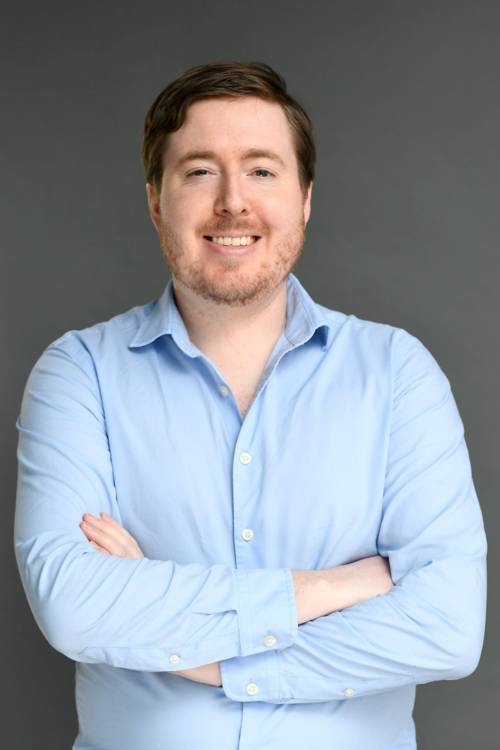
Michael McAlpine is a Professor in the Mechanical Engineering department at the University of Minnesota . He also holds affiliations with the Biomedical Engineering and Electrical and Computer Engineering departments. His research focuses on 3D printing functional materials & devices , Nanoscale inks , Biomedical devices , Bioelectronics , and Flexible Microsystems . Research Interests : 3D Printing, Biomedical Engineering, Nanotechnology, Flexible Electronics, Microfluidics Labs : ME 361/363 Contact : mcalpine@umn.edu , (612) 626-3303, ME 117 Recent Research Trends include 3D Printed Biomedical Devices , Flexible Electronics , and Bioprinting Applications . His work spans from Spinal Organoid Formation to Programmable Drug Release Capsules . Scientific Award : Circulation Research 2020 Best Manuscript Award
Ranjan Singh is a Professor at the Division of Physics, Nanyang Technological University (NTU) Singapore, specializing in terahertz photonics and metamaterials. He holds an elected fellowship from OPTICA (OSA) for pioneering work in ultrafast terahertz photonics, active metamaterials, and sensors. His research focuses on hybrid THz-electronic-photonic technologies for 6G communications, topological photonics, spintronics, quantum materials, and high-Tc superconductors. Education: B.Eng. in Telecommunications (Bangalore University, 2001); M.Tech in Photonics (Cochin University, 2004); Ph.D. in Photonics (Oklahoma State University, 2009). Postdoctoral research at Los Alamos National Laboratory (2009–2013). Research emphasizes on-chip THz topological photonics for next-gen communication systems, with notable achievements including a $7M grant for TERACOMM (on-chip THz topological photonics). His work integrates AI-driven beamforming, reconfigurable metasurfaces, and phase-change materials for adaptive THz systems. Key awards include the 2020 Web of Science 'Top 1% Highly Cited Researcher' distinction. His lab, TeraX Labs (founded 2013), develops cutting-edge technologies like THz brain-computer interfaces, quantum emitters, and spintronic sensors. Over $12M in competitive grants has fueled innovations in THz integrated circuits, tunable optical coatings, and ultra-sensitive biosensors. Advancing 6G/XG wireless, Singh's team designs topological beamformers, intelligent reflecting surfaces (IRS), and terahertz metamaterials for multi-link systems. His work bridges theoretical physics and applied engineering, with a focus on energy-efficient, reconfigurable photonic systems.
Shiyu Su is an Assistant Professor in the Department of Electrical and Computer Engineering at the University of Waterloo. His research focuses on high-speed data converters, wireless transceivers, digital phase-locked loops (PLL), and AI-assisted analog/mixed-signal design automation. He holds a Ph.D. from the University of Southern California (2019) and teaches courses such as ECE 340 (Electronic Circuits 2) and ECE 432 (Radio Frequency Integrated Devices and Circuits). Education: B.S. from Beijing University of Post and Telecommunication (China) and Queen Mary, University of London (UK), 2011; M.S. and Ph.D. from USC, 2013 and 2019, all in electrical engineering. Research Interests: High-speed ADCs/DACs RF/mm-wave transceivers Time-approximation filters (TAF) Analog/mixed-signal design automation Memristor-based computing Biomedical interfaces Key Awards: IEEE SSCS Predoctoral Achievement Award (2017–2018) Best Student Paper Award at IEEE RFIC (2022) Ming Hsieh Institute Scholar (2019–2020) Lab Focus: The Shiyu Su Lab develops integrated circuits for communications, sensing, and computing, with a focus on AI-driven methodologies and digital-analog co-design. Collaborations include work with Prof. Wei Wu (USC) on memristor-based systems.
Paul Prucnal is a Professor of Electrical and Computer Engineering at Princeton University, affiliated with the Princeton Materials Institute (PMI). He leads the Lightwave Communications Research Lab, focusing on ultrafast optical techniques for communication networks and neuromorphic photonics. His research spans optical security, CDMA networks, nonlinear signal processing, and photonic neurons. Education: Ph.D., Columbia University (1979) M.Phil., Columbia University (1978) M.S., Electrical Engineering, Columbia University (1976) A.B., Bowdoin College, summa cum laude (1974) Research Interests: Optical Network Security (eavesdropping/jamming countermeasures) Optical CDMA for broadband networks Silicon photonic neuromorphic computing RF interference cancellation in wireless systems Photonic spiking neurons mimicking biological organisms Awards: National Academy of Inventors Fellow (2017) 10+ teaching awards including Princeton's President's Award (2015) OSA/IEEE Fellowships (1992, 1997) Labs/Teams: Leads the Lightwave Communications Lab, collaborating with government/industry partners. Lab alumni like Prof. Bhavin Shastri have achieved international recognition. Grants/Publications: Over 350 journal papers, 22 U.S. patents. Authored/co-authored Neuromorphic Photonics (2017) and edited Optical Code Division Multiple Access (2019). Current projects include photonic tensor processors and real-time RF signal processing.
Jiwoong Park is Professor of Chemistry and Chair of the Department of Chemistry at the University of Chicago, and simultaneously Professor of Molecular Engineering in the Pritzker School of Molecular Engineering. His interdisciplinary research group, the Park Group, is jointly affiliated with the James Franck Institute and the Materials Research Science and Engineering Center (MRSEC) at UChicago, and operates from the Gordon Center for Integrative Science. Education & Training Ph.D., University of California, Berkeley (2003) B.S., Seoul National University (1996) Junior Fellow, Rowland Institute, Harvard University (2003–2006) Assistant → Associate Professor, Department of Chemistry and Chemical Biology, Cornell University (2006–2016) Research Interests Park’s research centers on the science and technology of precisely engineered nanomaterials, particularly atomically-thin two-dimensional (2D) crystals and van der Waals solids. Spanning chemistry, physics, materials science and electrical engineering, his group develops novel synthetic, imaging and characterization techniques to uncover new physical phenomena and translate them into scalable device technologies. Key thrusts include growth of wafer-scale molecular crystals, optical and transport spectroscopy of 2D semiconductors, mechanical behavior of polycrystalline nanomembranes, and integration of these materials into photonic, electronic and energy-harvesting devices. Scientific Awards Elected Fellow of the American Physical Society (2022) – “for the development of synthetic, imaging, and characterization techniques of atomically thin materials and the discovery of novel properties of van der Waals solids.” Clarivate Highly Cited Researcher (2023) – recognition for multiple papers ranking in the global top 1% by citations in Materials Science and Chemistry. Group & Collaborations The Park Group is an interdisciplinary team of postdocs, graduate researchers and undergraduates housed in the Gordon Center for Integrative Science. The group actively collaborates with colleagues across the Department of Chemistry, Department of Physics, and the Pritzker School of Molecular Engineering, leveraging shared facilities at the James Franck Institute and MRSEC to push the frontiers of 2D material science.
Dr. Ruzan Sokhoyan is a Nanophotonics Research Scientist specializing in plasmonics and active metasurfaces. Her work focuses on advancing optical imaging, communication, and computation through tunable photonic structures. Core research in metasurface design for beam steering and polarization control Collaborative contributions with Harry A. Atwater and other leading researchers Publications in high-impact journals like ACS Nano and Advanced Optical Materials Her research explores electro-optic modulation , high-power laser beam manipulation , and dynamic photonic devices , with applications in optical communication and imaging. Recent work emphasizes inverse design approaches and liquid crystal-based tunable metasurfaces , reflecting trends toward reconfigurable and multifunctional photonic systems.
Maiken Mikkelsen is the James N. and Elizabeth H. Barton Associate Professor of Electrical and Computer Engineering at Duke University, promoted to Professor in 2025. She holds a secondary appointment as Associate Professor of Physics (2023–present) within Trinity College of Arts & Sciences. Her research bridges Nanophotonics , Quantum Materials , and Ultrafast Spectroscopy , focusing on plasmonic nanostructures and nonlinear metasurfaces for quantum optics and optoelectronic applications. Education: Ph.D. in Physics (University of California, Santa Barbara, 2009), B.S. in Physics (University of Copenhagen, 2004), postdoctoral work at University of California, Berkeley. Her work explores Plasmonics and Quantum Optics to engineer nanoscale light-matter interactions, enabling transformative technologies in Single-Photon Sources , Ultrafast Photodetectors , and Active Metasurfaces . Recent projects include real-time tunable lasing and polarization-controlled nanocavity systems. Her 2016–2025 publications highlight breakthroughs in plasmonic fluorescence enhancement, hot electron dynamics, and room-temperature quantum devices. Grants include Nano Solutions On-Chip (Triad National Security, LLC, 2025–2029) and Meta-Imaging (Air Force Office of Scientific Research, 2021–2026). Her lab, jointly based in Electrical & Computer Engineering and Physics, has graduated PhD students Eunso Shin and Hengming Li, and actively engages in STEM outreach initiatives.
Romain Fleury is an Associate Professor at the Laboratory of Wave Engineering (LWE) , part of the École Polytechnique Fédérale de Lausanne (EPFL) School of Engineering and Institute of Electrical and Micro Engineering (IEL) . He earned a Ph.D. in Electrical and Computer Engineering from the University of Texas at Austin in 2015 under Andrea Alù, followed by a Marie-Curie Postdoctoral Fellowship at ESPCI Paris-Tech and CNRS Langevin Institute (2016). His research explores wave physics and engineering , focusing on topological insulators , nonreciprocal wave propagation , and time-modulated metamaterials . He has co-authored over 70 peer-reviewed articles in journals like Science , Nature , and Physical Review series, with recent work on topological acoustics , active metamaterials , and wave-based analog computing . Dr. Fleury received the Eccellenza Grant (2021) from the Swiss National Science Foundation and an ERC Starting Grant (2022) . He co-founded Minwave , a startup selling miniaturized microwave devices patented by his lab, which has garnered awards such as ESA-BIC CH , FIT , and Venture Kick . He has served as Technical Program Committee Chair for Eucap 2019 and on the Editorial Board of the New Journal of Physics . Recognized for teaching excellence with the STI Polysphere Award (2019) and IEL Best Teacher Award , he teaches courses including Electromagnetics , Antennas , and Advanced Photonics . His work bridges fundamental wave physics with applied technologies , emphasizing topological effects , nonlinear systems , and metamaterials . Collaborations span institutions such as ESPCI Paris , University of Texas at Austin , and University of Vienna , with applications in acoustic imaging , 5G antennas , and optical signal processing . His recent publications highlight ultrafast anti-lasing , reconfigurable metasurfaces , and disorder-assisted photonic crystals , reflecting a career dedicated to advancing wave engineering through topological and nonreciprocal designs .
Nuri Yazdani is a Lecturer at the Department of Information Technology and Electrical Engineering at ETH Zürich, Switzerland. Based at the Institute for Electronics (Institut für Elektronik) in Zurich, Dr. Yazdani contributes to both teaching and research in advanced materials and nanotechnology. His work spans multiple interdisciplinary areas connecting physics, chemistry, and electrical engineering, with particular emphasis on nanocrystal-based materials and their applications in electronics and optoelectronics. Dr. Yazdani's research focuses on the synthesis, characterization, and application of nanomaterials, particularly semiconductor nanocrystals and quantum dots. His work explores the fundamental physical properties of these materials, including exciton-phonon interactions, structural ordering in multicomponent systems, and charge transport mechanisms in nanocrystal assemblies. He investigates how nanoscale phenomena affect macroscopic material properties, with applications ranging from catalysis to optoelectronic devices. His approach combines experimental techniques like small-angle X-ray scattering with theoretical modeling to understand structure-property relationships in nanomaterials. Analysis of Dr. Yazdani's recent publications reveals a strong emphasis on perovskite and chalcogenide nanocrystals, with particular interest in how structural features like cation distribution, octahedral tilting, and surface chemistry affect optical and electronic properties. His work bridges fundamental physics with practical applications, spanning from quantum optics to energy conversion technologies. A recurring theme is the investigation of size-dependent phenomena and the role of phonons in determining material behavior at the nanoscale. Dr. Yazdani collaborates extensively with researchers across multiple institutions and disciplines, as evidenced by his authorship on numerous multi-investigator publications. His work appears in high-impact journals including Nature Communications, Journal of the American Chemical Society, and Nature Physics, reflecting the significance and interdisciplinary nature of his contributions to nanoscience and nanotechnology.
Babak Hassibi is a Professor of Electrical Engineering and Computing and Mathematical Sciences at the California Institute of Technology (Caltech). He obtained his B.S. from the University of Tehran (1989), M.S. and Ph.D. from Stanford University (1993, 1996), and has held positions at Caltech since 2001, including roles as Assistant Professor, Associate Professor, Professor, and Executive Officer. Education : University of Tehran, B.S. (1989) Stanford University, M.S. and Ph.D. (1993, 1996) Academic Roles : Assistant Professor, Caltech (2001–03) Associate Professor (2003–08) Professor (2008–13) Binder/Amgen Professor (2013–16) Bohn Professor (2016–) Executive Officer for Electrical Engineering (2008–15) Associate Director for Information Science and Technology (2010–12) Research Interests : Babak Hassibi’s work spans Communications , Signal Processing , Control Theory , and Machine Learning . He has contributed to wireless networks, genomic signal processing, multi-antenna systems, robust control, and high-dimensional statistics. His mathematical interests include Random Matrices and Group Representation Theory . Recent Publications highlight his focus on Adaptive Control , Stochastic Optimization , and Quantum Detection . Notable trends include Regret-Optimal Control , Stochastic Mirror Descent , and DNA Microarray Applications . Scientific Awards : Highly Cited Researcher Advising and Grants : He has advised numerous graduate students and postdocs, many of whom now hold prominent positions at institutions like MIT, USC, and Stanford. His research includes collaborations on patents and projects related to Wireless Communications and Genomic Technologies . Labs and Teams : Leads the Hassibi Group at Caltech, which explores nonlinear photonic systems, ultrafast optics, and quantum information processing.
Prof. Dr.-Ing. Andreas Thiede is a faculty member at the University of Paderborn , affiliated with the Faculty of Electrical Engineering, Computer Science and Mathematics and the Institute of Electrical Engineering and Information Technology . He serves as director of the High-frequency electronics (HFE) research group. Research Interests: High-frequency electronics and optoelectronics Quantum dots and exciton qubits Nonlinear photonics and ultrafast control Semiconductor device engineering Key Projects: Participates in TRR 142: Tailor-Made Nonlinear Photonics , focusing on functional structures for quantum and ultrafast systems. Teaching Roles: Analog CMOS circuits (does not apply) Analog CMOS ICs (cancelled) Contact Details: Email: andreas.thiede@uni-paderborn.de Phone: +49 5251 60-3040 Office: Pohlweg 47-49, 33098 Paderborn Space: P1.402.1
Dr. Louise Willingale is an Associate Professor in the Department of Electrical Engineering and Computer Science at the University of Michigan. Specializing in high-intensity laser-plasma interactions, she leads experimental research at facilities including the ZEUS laser system and OMEGA EP. Her work combines experimental diagnostics with numerical modeling to advance understanding of relativistic plasma physics and ion acceleration mechanisms. Education: PhD in Physics from Imperial College London (2007) Research Focus: Investigates relativistic laser-plasma interactions through ion acceleration, magnetic field generation, and direct laser acceleration of electrons. Her work spans underdense/near-critical density plasmas, shock formation physics, and extreme electromagnetic field generation in laboratory astrophysics contexts. Recent Publication Trends: 2024-2025 studies emphasize ZEUS laser facility development, optimization of acceleration mechanisms (direct laser acceleration, wakefield acceleration), and magnetic field dynamics in multi-PW laser-solid interactions. Common subfields include collisionless shocks, radiation-driven plasma instabilities, and advanced diagnostics for relativistic charge particles. Labs & Collaborations: Affiliated with the Center for Ultrafast Optical Science (CUOS) and the Center for High-Energy-Density Laboratory Astrophysics Research (CHEDAR), working closely with the ZEUS laser facility team.
Kevin P. O'Brien is an Associate Professor in the Department of Electrical Engineering and Computer Science (EECS) at the Massachusetts Institute of Technology (MIT), affiliated with the Research Laboratory of Electronics (RLE). He leads the Quantum Coherent Electronics (QCE) group, focusing on advancing superconducting quantum computing, microwave quantum optics, and quantum metamaterials. His research explores nonlinear and quantum-mechanical light-matter interactions using superconducting circuits, aiming to improve quantum technologies like qubits and amplifiers. Education: B.S. in Physics from Purdue University, Ph.D. in Physics from UC Berkeley, and postdoctoral research at UC Berkeley developing superconducting quantum processors. His group collaborates with MIT Lincoln Laboratory and institutions nationwide. Research Interests: Quantum computing hardware, superconducting circuits, parametric amplifiers, qubit measurement systems, and metamaterials for quantum applications. His work emphasizes scalable architecture design, noise reduction, and novel device concepts. Key projects include directional qubit readout resonators, Floquet-mode amplifiers, and quarton couplers for ultrafast readout. The group actively engages in training graduate students and postdocs, emphasizing open collaboration and problem-solving in quantum technologies. Advising & Grants: Supervises a dynamic team of graduate students and postdocs. Students like Bright Ye and Kaidong Peng have contributed to award-winning projects. The group receives support through fellowships (e.g., Jin Au Kong, NSF GRFP) and industry partnerships. Labs/Teams: Quantum Coherent Electronics Group at MIT, collaborating on quantum device fabrication, theoretical modeling, and experimental validation of quantum systems.
Maiken H. Mikkelsen is the James N. and Elizabeth H. Barton Associate Professor in the Department of Electrical and Computer Engineering at Duke University, with a joint appointment in the Department of Physics . Her research focuses on quantum nanophotonics , plasmonics , and light-matter interactions in nanoscale materials, aiming to advance optoelectronics, quantum science, and biomedical diagnostics. Education B.S. in Physics, University of Copenhagen (2004) Ph.D. in Physics, University of California, Santa Barbara (2009) Postdoctoral Fellowship, University of California, Berkeley Her work explores nanophotonic engineering for quantum optics , spintronics , and ultrafast optoelectronics , with recent studies on nonlinear metasurfaces and plasmonic enhancement of immunoassays for point-of-care diagnostics. Publications highlight 2D semiconductor emission control , ultrafast single-photon sources , and metasurface-based photodetectors . Scientific Awards Maria Goeppert Mayer Award (2017) NSF CAREER Award (2015) Moore Inventor Fellow (2021) ONR/Air Force/Army Young Investigator Awards (2015-2017) Cottrell Scholar (2016) Stansell Family Distinguished Research Award (2021) She advises graduate students in Duke’s Electrical & Computer Engineering and Physics programs and leads the Mikkelsen Lab , which emphasizes ultrafast spectroscopy and quantum material development . The lab has graduated PhD students like Eunso Shin and Hengming Li (2025).
Professor David R. Clarke is the inaugural Extended Tarr Family Professor of Materials at Harvard School of Engineering and Applied Sciences. He is a Senior Fellow of the Hong Kong Institute for Advanced Study (HKIAS) and member of the US National Academy of Engineering. PhD in Physics (University of Cambridge) B.Sc. in Applied Sciences (Sussex University) ScD (University of Cambridge) His research spans fundamentals and applications of ceramics, metals, semiconductors, and polymers, focusing on mechanical properties, thermal barrier coatings, dielectric elastomers, oxidation fundamentals, and microelectronics reliability. Recent work explores electro-adhesive forces and nanopore evolution in yttria-stabilized zirconia. With over 500 publications in journals like Nature and Advanced Materials, Clarke's work has been cited >50,000 times (h-index 107). He holds 13 patents and has advised students across MIT, UC Berkeley, and Harvard. 2008 Japanese NIMS Award 1993 Humboldt Senior Scientist Award Distinguished Life Member, American Ceramic Society Teaching includes undergraduate courses on heat transfer and materials design, plus graduate courses on dislocations and composites. His lab recently worked on quantum dot displays and fatigue crack sensing technologies.