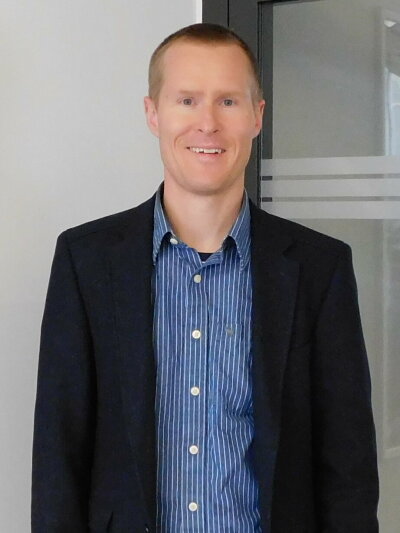
Prof. Dr.-Ing. Andreas Thiede is a faculty member at the University of Paderborn , affiliated with the Faculty of Electrical Engineering, Computer Science and Mathematics and the Institute of Electrical Engineering and Information Technology . He serves as director of the High-frequency electronics (HFE) research group. Research Interests: High-frequency electronics and optoelectronics Quantum dots and exciton qubits Nonlinear photonics and ultrafast control Semiconductor device engineering Key Projects: Participates in TRR 142: Tailor-Made Nonlinear Photonics , focusing on functional structures for quantum and ultrafast systems. Teaching Roles: Analog CMOS circuits (does not apply) Analog CMOS ICs (cancelled) Contact Details: Email: andreas.thiede@uni-paderborn.de Phone: +49 5251 60-3040 Office: Pohlweg 47-49, 33098 Paderborn Space: P1.402.1
F. Ömer Ilday is a distinguished physicist and Alexander von Humboldt Professor at Ruhr University Bochum since July 2023, holding a joint appointment in the Faculty of Electrical Engineering and Information Technology and Faculty of Physics and Astronomy. His pioneering work in ultrafast laser technology has transformed non-linear laser-matter interactions, with applications spanning precision manufacturing, medical surgery, and nanofabrication. Education: PhD in Physics, Cornell University (2003) Postdoctoral Research Scientist, Massachusetts Institute of Technology (2003-2005) Ilday's research centers on ultrafast laser development and materials science, focusing on GHz-repetition-rate burst-mode systems, nonlinear laser lithography, and self-organization phenomena. His interdisciplinary approach bridges photonics, plasma physics, and materials engineering to enable breakthroughs in nanostructuring, silicon processing, and laser-based manufacturing. Current work emphasizes developing high-power laser sources and exploring fundamental laser-matter interaction mechanisms for next-generation applications. His recent publications (2023-2025) reveal dominant trends in high-repetition-rate burst-mode lasers (up to 50 GHz), ablation efficiency optimization, and nonlinear laser lithography for 3D silicon structuring. These works demonstrate strong convergence between fundamental physics and industrial applications, particularly in medical surgery, nanofabrication, and materials synthesis, with increasing emphasis on self-organization principles in laser systems. Scientific awards: Turkish Academy of Sciences Outstanding Young Scientist Award (2006) Marie Curie International Reintegration Grant (2006) ERC Consolidator Grant (2014) - Turkey's first ERC Advanced Grant (2022) Election to Academia Europaea Election to Turkish Academy of Sciences Membership in Turkish and American Physical Societies Ilday has secured major competitive grants including two ERC awards and a Marie Curie fellowship, directing research teams at Bilkent University's Ultrafast Optics & Lasers Laboratory (UFOLAB) which developed technologies adopted globally. At RUB, he is establishing the Center for Complex Laser-Matter Interactions as an interdisciplinary hub fostering collaborations between photonics, plasma research, and materials science, with explicit goals for spin-off company formation and transdisciplinary innovation in manufacturing technologies. As founding director of UFOLAB at Bilkent University, Ilday developed laser systems deployed by research institutions worldwide and established Turkey's first laser company. His RUB center integrates electrical engineering and physics expertise to advance complex laser-matter interaction research, focusing on self-organizing laser systems, nanostructuring techniques, and applications in semiconductor manufacturing and medical technology through close industry partnerships.
Prof. Dr. Ioachim Pupeza serves as Group Leader in the Department of Spectroscopy/Imaging at the Leibniz Institute of Photonic Technology (Leibniz-IPHT) in Jena, Germany. His research focuses on advanced optical measurement techniques, particularly in the field of field-resolved spectroscopy and precision optical measurements. Dr. Pupeza's research interests center around optical spectroscopy with a particular emphasis on field-resolved techniques that capture the complete electric field waveform of light-matter interactions. His work spans infrared spectroscopy , molecular fingerprinting , ultrafast laser technology , and precision optical measurements . He has made significant contributions to electro-optic sampling techniques, which enable characterization of electric-field waveforms across the terahertz to visible spectral range. His research also extends to mid-infrared light generation , terahertz spintronic emitters , and cavity-enhanced spectroscopy , with applications ranging from fundamental physics to medical diagnostics. Analysis of Dr. Pupeza's recent publications reveals a strong trend toward increasingly sophisticated field-resolved spectroscopy techniques with applications in both fundamental science and practical diagnostics. His work has evolved from basic measurement techniques to applications in cancer detection through molecular fingerprinting of biofluids. A consistent theme across his publications is the pursuit of higher precision, broader bandwidth, and improved sensitivity in optical measurements, often achieving attosecond-level precision. His research bridges physics, engineering, and medical applications, demonstrating how fundamental optical advances can translate to real-world diagnostic tools. Dr. Pupeza leads the research group "Field-Resolved Optical Precision Measurement Methods" at Leibniz-IPHT, which appears to collaborate extensively with other research institutions and groups. His work involves sophisticated laser systems including high-power Yb:YAG thin-disk oscillators, femtosecond enhancement cavities, and dual-oscillator systems for precision measurements. The group's research has implications for molecular spectroscopy, medical diagnostics, and fundamental studies of light-matter interactions at the most fundamental time scales.
Lukas Seitner is a researcher at the Technical University of Munich (TUM), affiliated with the School of Computation, Information and Technology and the Department of Electrical Engineering. He operates within the Associate Professorship of Computational Photonics led by Prof. Christian Jirauschek, focusing on advanced modeling of quantum cascade devices and terahertz photonics systems. His research spans quantum cascade lasers (QCLs), terahertz frequency combs, optical solitons, and computational photonics. Seitner has developed sophisticated simulation frameworks including Maxwell-Bloch and density matrix approaches to study nonlinear dynamics in optoelectronic devices. Key contributions involve passive mode-locking mechanisms in THz QCLs, graphene-integrated saturable absorbers for pulse generation, and backscattering effects in ring-cavity soliton formation. His work bridges theoretical modeling with practical device engineering for next-generation terahertz sources. As an educator, Seitner serves as assistant lecturer for multiple courses including Computational Photonics Laboratory (5 PR), Partial Differential Equations for Electrical Engineering (4 VI), and Simulation of Quantum Devices (4 VI). He actively participates in doctoral candidate seminars and specialized courses on quantum engineering, demonstrating strong commitment to academic training in photonics and quantum device physics. His teaching integrates cutting-edge research concepts into practical computational exercises. Seitner maintains active collaboration within the EU Project QOMBS and contributes to TUM's Computational Photonics group research infrastructure. His technical expertise encompasses numerical methods for partial differential equations, semiconductor device simulation, and nonlinear optical modeling. Current projects focus on optimizing THz comb sources for spectroscopic applications and extending quantum walk models for novel frequency comb generation mechanisms.
Prof. Dr. Michael Horn-von Hoegen is a full professor in the Faculty of Physics at the University of Duisburg-Essen , Germany. His research focuses on ultrafast structural dynamics , surface physics , and 2D materials , particularly using electron diffraction and plasmonic imaging techniques. He leads the Horn-von Hoegen Group , which plays a central role in the Collaborative Research Center CRC 1242 Non-Equilibrium Dynamics of Condensed Matter in the Time Domain , where his team investigates driven phase transitions and phonon systems with sub-femtosecond temporal resolution. Location: Office Window MF260, Faculty of Physics, Lotharstr. 1-21, 47057 Duisburg Contact: Tel. +49 (203) 379 1439 | Fax +49 (203) 379 1555 His research spans ultrafast electron diffraction of photo-induced phase transitions in atomic wires and topological materials , with recent breakthroughs on Kibble-Zurek dynamics in the Si(001) surface and chiral plasmon polaritons . The group’s 15 most recent publications (2025-2022) address phenomena such as negative thermal expansion in 2D materials , electron-phonon coupling in Pb/Si heterostructures , and quantum pathway analysis in Bismuth films . These works are categorized under disciplines like Condensed Matter Physics , Nanooptics , and Ultrafast Dynamics , with subfields including Ising Model Transitions , Plasmon Focusing , and Time-Resolved Diffraction . Prof. Horn-von Hoegen serves as DFG Liaison Officer for the University of Duisburg-Essen, providing guidance on Deutsche Forschungsgemeinschaft (DFG) proposals . His group has mentored notable researchers including Dr. Simon Sindermann (postdoc at IBM), Dr. Anja Hanisch-Blicharski (Leopoldina Fellow), Dr. Hichem Hattab (Leopoldina Fellowship), and Dr. Marin Petrovic (Humboldt Fellow). The group’s laboratory facilities include advanced ultrafast electron diffraction and photoemission microscopy systems, enabling studies of atomic-scale processes such as molecular dynamics simulations of laser-excited surfaces and domain wall motion in Si(553)-Au systems .
Dr. David Ayuso is a researcher at the Max Born Institute for Nonlinear Optics and Short Pulse Spectroscopy in Berlin, Germany, associated with the Strongfield Theory Group. His work focuses on ultrafast phenomena in chiral molecules, attosecond physics, and nonlinear optics. He contributes to understanding electronic and nuclear dynamics under extreme light-matter interactions. Research interests include photoionization dynamics, chiral sensitivity detection, and the development of synthetic chiral light techniques for molecular imaging. His recent studies explore geometric magnetism effects, polarization control, and enantio-selective observables in ultrafast spectroscopy. Key collaborations involve international teams working on high harmonic generation, X-ray scattering in liquids, and theoretical modeling of chiral systems. His publications frequently appear in Science Advances , Nature Photonics , and Optics Express .
Prof. Ady Arie is a Professor of Electrical Engineering at Tel Aviv University, where he serves as the Head of the Tel Aviv University Center for Light-Matter Interaction and holds the Marko and Lucie Chaoul Chair in Nano-Photonics. He has been a faculty member at the Iby and Aladar Fleischman Faculty of Engineering since 1993, previously serving as Head of the School of Electrical Engineering (2013-2017) and Vice Dean of Research (2011-2013). His educational background includes: B.Sc. in Mathematics and Physics from Hebrew University of Jerusalem (1983) M.Sc. in Physics from Tel-Aviv University (1986) Ph.D. in Engineering from Tel-Aviv University (1992) Prof. Arie's research spans multiple frontiers of optics and photonics. His work in nonlinear optics focuses on advanced frequency conversion techniques and shaping of light parameters using nonlinear photonic crystals. In quantum optics , he develops quantum light sources based on spontaneous parametric down conversion and explores applications in quantum sensing and communication. His plasmonics research investigates manipulation of surface plasmon polaritons on metal surfaces. In electron optics , he studies electron-matter-light interactions and techniques for sculpting electron wave functions. His lab also explores hydrodynamics through quantum simulations with water waves, creating analogies to quantum mechanical phenomena. Analysis of Prof. Arie's recent publications (2023-2025) reveals a strong focus on quantum technologies, particularly in quantum light generation, quantum sensing, and quantum information processing. His work increasingly integrates concepts from nonlinear optics, electron microscopy, and quantum physics, with growing emphasis on practical applications in quantum communication and computation. The research shows sophisticated manipulation of light-matter interactions across multiple platforms including nonlinear photonic crystals, plasmonic structures, and electron beams. Prof. Arie has received significant recognition for his work: Kadar Foundation Award for Excellence in Research (2016) Fellow of the Optical Society of America Editorial roles including Topical Editor of Optics Letters (2008-2014) and Associate Editor of Optica (since 2018) Prof. Arie leads the Nonlinear Optics and Wave Propagation Laboratory at Tel Aviv University, where his team investigates diverse wave phenomena from light frequency conversion to electron beam manipulation. He has served as chair of the national steering committee of the Israeli Planning and Budgeting Committee on Quantum Science and Technology. His research has been supported by various grants enabling the development of novel optical technologies and quantum systems. While specific grant details aren't provided in the text, his extensive publication record and leadership positions suggest substantial research funding. Prof. Arie's laboratory focuses on the intersection of classical and quantum wave phenomena. The lab investigates light manipulation through nonlinear optical processes, plasmonic structures, and electron microscopy techniques. Current research directions include quantum light generation, electron-photon interactions, and hydrodynamic analogs to quantum systems. The lab appears well-equipped for advanced optical experimentation with capabilities spanning visible to infrared wavelengths, nonlinear crystal engineering, and electron beam characterization.
Paul Repgen is a Researcher in the Department of Nonlinearity Engineering at Ruhr University Bochum's Faculty of Electrical Engineering and Information Technology. His research focuses on ultrafast laser systems, fiber optics, and nonlinear amplification techniques, with a particular emphasis on high-repetition-rate pulse generation and environmental stability of laser systems. He collaborates closely with Prof. Dr. Ömer Ilday and contributes to advancing applications in industrial laser technology and photonics. His work integrates theoretical and experimental approaches to optimize laser performance, including harmonic mode-locking mechanisms and pulse stabilization strategies inspired by Brownian particle dynamics. Key contributions include record GHz repetition rate systems in burst mode and high-energy pulse generation through controlled Kerr nonlinearity. Paul Repgen's research has led to innovations in all-fiber laser oscillators, Mamyshev-based regenerators, and thulium-doped fiber systems, demonstrating exceptional stability and power scalability. His articles reflect a strong focus on advancing ultrafast laser technology for applications in materials processing, telecommunications, and fundamental optics research.
Willem Leterme is a Professor of High Voltage Technology at RWTH Aachen University, specializing in advanced power systems engineering. His research focuses on high-voltage direct current (HVDC) grids, fault protection mechanisms, and grid integration challenges. His work addresses critical issues such as DC fault mitigation, converter control strategies, and system resilience under fault conditions. He leads projects on HVDC grid protection algorithms, cable aging analysis, and interoperability solutions for multi-vendor systems. Key research themes include: DC grid protection and fault detection Modular multilevel converter (MMC) control High-frequency insulation testing Renewable energy grid integration Recent studies (2023-2025) emphasize: Advanced DC fault response modeling Hybrid AC/DC grid stability Multi-terminal HVDC interoperability Transformer insulation under harmonic stresses Publications highlight contributions to protection system design, DC cable testing methodologies, and grid-forming wind turbine applications. He collaborates on EU-funded initiatives for HVDC infrastructure development and standardization efforts.
Prof. Ömer Ilday is a distinguished physicist holding dual appointments at Ruhr University Bochum in the Faculty of Electrical Engineering and Information Technology and the Faculty of Physics and Astronomy since July 2023. Awarded Germany's most prestigious research prize—the Alexander von Humboldt Professorship in May 2024—he leads cutting-edge research in ultrafast laser technology and laser-matter interactions. His work bridges photonics, plasma research, materials science, and manufacturing engineering. His research focuses on ultrafast laser development and laser-matter interactions , with transformative applications in precision machining, laser surgery, nanostructuring, and material property modification. Recent work explores self-organization of laser light, burst-mode laser systems, and nonlinear laser lithography for 3D material sculpting. His publications reveal strong trends in GHz-repetition-rate pulse bursts, ablation efficiency optimization, and feedback-controlled pattern formation. Alexander von Humboldt Professorship (2024, €5M) ERC Advanced Grant (2022) ERC Consolidator Grant (2014, first to Turkey) Marie Curie International Reintegration Grant Outstanding Young Scientist Award (Turkish Academy of Sciences, 2006) Elected Member: Academia Europaea, Turkish Academy of Sciences Ilday directs the Ultrafast Optics & Lasers Laboratory (UFOLAB) at Bilkent University and founded Turkey's first laser company. At RUB, he is establishing the Center for Complex Laser-Matter Interactions as an interdisciplinary hub for photonics, plasma research, and materials science. His strategic vision includes developing startup ventures from research outputs while advancing fundamental understanding of dissipative self-assembly phenomena from quantum dots to biological systems.
Dr. Markus Lindemann is a Senior Researcher at Ruhr-University Bochum's Faculty for Electrical Engineering and Information Technology, working within the Photonics and Terahertz Technology department. His research focuses on advanced semiconductor laser technologies with particular emphasis on VCSELs (Vertical-Cavity Surface-Emitting Lasers) and their applications in high-speed optical communications and terahertz generation. Dr. Lindemann's research interests span photonics, terahertz technology, spintronics, and semiconductor laser physics. His work primarily investigates polarization dynamics in spin-VCSELs, birefringence engineering, and the development of coupled-cavity laser systems capable of ultra-high-frequency modulation. His research has significant implications for next-generation optical data transmission systems that require bandwidths beyond 100 GHz. Analysis of Dr. Lindemann's recent publications reveals a strong focus on advancing VCSEL technology through innovative cavity designs. His work on coupled-cavity VCSEL arrays demonstrates promising approaches for coherent terahertz generation and ultra-broadband optical communications. The research shows a clear trajectory toward overcoming bandwidth limitations in optical data transmission through sophisticated manipulation of laser polarization states and photon-photon resonance phenomena. Dr. Lindemann has published extensively in high-impact journals including Nature, IEEE Photonics Journal, and Applied Physics Letters, with numerous conference presentations at major international venues such as SPIE Photonics West and the IEEE Photonics Conference. His collaborative research approach is evident through his extensive co-authorship network across multiple institutions. Within the Photonics and Terahertz Technology team at Ruhr-University Bochum, Dr. Lindemann contributes to advancing laser technology research, particularly in developing novel VCSEL configurations for high-speed optical communications and terahertz applications. His work bridges fundamental semiconductor physics with practical applications in next-generation optical transmission systems.
Prof. Dr. Bert Hecht is a Professor and Head of Experimental Physics V at the University of Würzburg's Faculty of Physics and Astronomy. He leads the Nano-Optics and Bio-Photonics group within the Chair of Experimental Physics (Biophysics). His research focuses on plasmonics, quantum optics, and nanophotonics, with applications in nanoantenna design, nonlinear optics, and bioimaging. He is affiliated with the Department of Experimental Physics V and oversees activities in the P1 building (Room B-040a). Research interests include nanoscale optical manipulation, coherent light-matter interactions, and fabrication of advanced nanostructures using helium ion milling and two-photon polymerization. He collaborates on projects such as magnetic particle imaging and traveling wave MPI. His lab is equipped for ultrafast spectroscopy, photoemission electron microscopy (PEEM), and nanofabrication. Notable contributions include work on electrically driven optical antennas, quantum plasmonic circuits, and all-optical magnetic domain switching. He supervises graduate students like Robert Zürl and participates in international conferences like the 18th ICMRM. Contact details include bert.hecht@uni-wuerzburg.de and ORCID 0000-0002-4883-8676.
Prof. Dr. Martin Hofmann is Chairholder of Photonics and Terahertz Technology at Ruhr University Bochum (RUB), part of the Faculty of Electrical Engineering and Information Technology. He leads research in optical materials, semiconductor lasers, and THz technology. His academic journey includes a doctorate (1994) and habilitation (2000) from Philipps University of Marburg, followed by roles as Scientific Assistant and Head of the Optoelectronic Devices and Materials Group before assuming his current position in 2007. Research Interests: Focuses on THz radiation sources , semiconductor laser characterization , and biomedical optical applications . His work bridges fundamental physics with applied technologies like compact THz systems and photonics for industrial and medical use. Publications: Recent work emphasizes THz generation using VCSELs, mode-locked lasers, and holographic measurement techniques. Key themes include coherent THz systems, dispersive optics, and miniaturized photonic components. Affiliations: Active in RUB’s Photonics and Terahertz Technology department, contributing to projects like TopING doctoral program and Spin-off promotions. Lab activities involve developing compact THz instruments and advanced laser systems.
Dr. Martin Saraceno is a Senior Scientist at the Chair of Photonics and Ultrafast Laser Science, Ruhr University Bochum, Germany. He holds a Diploma and Ph.D. in Physics from ETH Zurich (2007, 2011). Prior roles include Researcher at Cyber Laser Inc. (2012–2013) and Senior Scientist at the University of Neuchatel (2013–2016). He specializes in ultrafast lasers, THz technology, and high-power laser systems. Education: Diploma in Physics, ETH Zurich (2007) Ph.D. in Physics, ETH Zurich (2011) Research interests focus on high-power ultrafast lasers, THz generation, and advanced laser technologies. His work emphasizes energy scaling of modelocked oscillators, nonlinear compression, and applications in terahertz systems. Recent publications highlight advancements in laser-driven THz sources, multipass cell compressors, and Kerr-lens modelocking. His contributions include developing high-average-power lasers and novel compression techniques, advancing fields like laser engineering and nonlinear optics. He is affiliated with the High Energy Laser Lab and collaborates on cutting-edge photonics research.
Prof. Mikhail Belkin is a Professor of Semiconductor Technology at the Technical University of Munich (TUM), holding a chair in the Department of Electrical and Computer Engineering and Walter Schottky Institute. He leads research in mid-infrared (mid-IR) and terahertz (THz) photonics, focusing on compact solid-state systems using semiconductor technologies. His work aims to replace bulky optical setups with integrated photonics and quantum cascade lasers. Belkin earned his PhD in Physics from UC Berkeley (2004) and completed postdoctoral research at Harvard University. He joined TUM in 2019 after serving on the faculty at the University of Texas at Austin. His academic career spans over two decades, with notable contributions to optoelectronics and nonlinear optics. Research Interests: Mid-IR and THz quantum cascade lasers Integrated photonics platforms Nonlinear optical metasurfaces Electrical tuning of polaritonic systems Awards: Fellow of SPIE (2018) Fellow of OSA (2016) Wilhelm Bessel Research Award (2015) NSF CAREER Award (2012) Key Contributions: Belkin’s group pioneered electrically tunable polaritonic metasurfaces for ultrafast optical switching and developed homogeneous photonic integration of mid-IR lasers. His work includes breakthroughs in THz difference-frequency generation and low-loss InP waveguides.