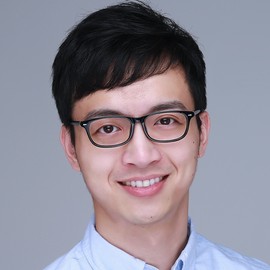
Michael McAlpine is a Professor in the Mechanical Engineering department at the University of Minnesota . He also holds affiliations with the Biomedical Engineering and Electrical and Computer Engineering departments. His research focuses on 3D printing functional materials & devices , Nanoscale inks , Biomedical devices , Bioelectronics , and Flexible Microsystems . Research Interests : 3D Printing, Biomedical Engineering, Nanotechnology, Flexible Electronics, Microfluidics Labs : ME 361/363 Contact : mcalpine@umn.edu , (612) 626-3303, ME 117 Recent Research Trends include 3D Printed Biomedical Devices , Flexible Electronics , and Bioprinting Applications . His work spans from Spinal Organoid Formation to Programmable Drug Release Capsules . Scientific Award : Circulation Research 2020 Best Manuscript Award
Sumeet Kumar Gupta is an Associate Professor in the Department of Electrical and Computer Engineering at Purdue University. His academic career spans from his current role to a prior Assistant Professorship at Pennsylvania State University (2014-2017) and an engineering position at Qualcomm Inc. (2012-2014). He holds a PhD in Electrical and Computer Engineering from Purdue University (2012), an M.S. from the same institution (2008), and a B.Tech in Electrical Engineering from IIT Delhi (2006). B.Tech, Electrical Engineering, IIT Delhi (2006) M.S., Electrical and Computer Engineering, Purdue University (2008) PhD, Electrical and Computer Engineering, Purdue University (2012) Dr. Gupta's research focuses on neuromorphic computing, low power variation-aware VLSI design in emerging nanotechnologies, device-circuit co-design, and nano-scale device modeling/simulations. His work addresses challenges in ferroelectric materials, crossbar arrays for deep neural networks, and energy-efficient AI hardware. Recent publications (2025-2024) highlight trends in: Ferroelectric HfO2/HZO thin films Compute-in-memory architectures Variability/stochasticity analysis Machine learning for device optimization Interconnect resistance/temperature effects AI hardware fault tolerance Scientific Awards & Recognitions: DARPA Young Faculty Award (2016) Early Career Professorship, Penn State (2014) 6th TSMC Outstanding Student Research Bronze Award (2012) Magoon Award (Purdue) Outstanding Teaching Assistant Award (Purdue, 2007) Intel PhD Fellowship (2009) His professional journey includes academic appointments at Purdue University (2020-present, Associate Professor) and Pennsylvania State University (2014-2017, Assistant Professor) after industry experience at Qualcomm Inc. (2012-2014). He maintains IEEE and EDS membership while publishing over 100 refereed works.
Kristofer Pister is a Professor in the Department of Electrical Engineering and Computer Sciences at the University of California, Berkeley. He co-directs the Berkeley Sensor and Actuator Center (BSAC) and the Ubiquitous Swarm Lab. His career spans groundbreaking innovations in Micro/Nano Electro Mechanical Systems (MEMS), Control Systems, and Low-Power Circuits, with a focus on Smart Dust and synthetic insects. Education: Ph.D. and M.S. in EECS from UC Berkeley (1992, 1989); B.A. in Applied Physics from UC San Diego (1986). His research areas include MEMS , Control Systems , Robotics , and Integrated Circuits , with recent work on self-powered micro-sensors, crystal-free radios, and interplanetary swarm networks. Key awards include the ISA Albert F. Sperry Founder Award (2009) , Alexander Schwarzkopf Prize (2006) , and the NSF CAREER Award (1996) . He has authored numerous influential publications in wireless sensor networks and microrobotics. His lab, Ubiquitous Swarm Lab , explores distributed robotics and swarm intelligence. Pister emphasizes open collaboration in research, ethical conduct in academia, and efficient resource utilization for graduate students.
Dr. Benjamin C.K. Tee is an Associate Professor at the National University of Singapore (NUS), affiliated with the College of Engineering and the Department of Materials Science and Engineering. He leads the Sensors.AI Labs, focusing on transforming materials science, mechanics, and biology into cutting-edge technologies for robotics and healthcare in the AI era. His research explores novel materials and fabrication techniques to develop flexible, stretchable electronic sensors. These innovations enable applications in human-machine interfaces, biomedical devices, and AI-driven robotic systems. Key areas include self-healing materials, large-scale tactile sensing, and wireless health monitoring. His work has garnered international acclaim, including the James Dyson Foundation Prize (International Winner, 2021), MIT TR35 Innovator (2015), and recognition as a World Economic Forum Young Scientist (2019). His inventions have been commercialized through co-founded startups Privi Medical (acquired in 2021) and Hannah Life Technologies. Scientific Awards: National Research Foundation Fellowship (2017) MIT TR35 Innovator (Global) (2015) World Economic Forum Young Scientist (2019) James Dyson Foundation Prize - International Winner (2021) IES Prestigious Engineering Award (2020) Stanford University Top 2% Scientists (2021)
Dr Brandon M Grainger is an Eaton Faculty Fellow and Associate Professor of Electrical and Computer Engineering at the University of Pittsburgh’s Swanson School of Engineering, where he also directs the Electric Power Technologies Laboratory, serves as Associate Director of the Energy GRID Institute, and co-directs Pitt AMPED. A key architect of Pitt’s electric power program since 2008, he focuses on advanced power conversion, high-voltage electronics, wide-band-gap semiconductors, and aerospace power systems. Education PhD, Electrical Engineering (Power Conversion), University of Pittsburgh, 2014 MS, Electrical Engineering, University of Pittsburgh, 2011 BS, Mechanical Engineering & Minor in Electrical Engineering, University of Pittsburgh, 2007 Executive Education Certificate, Tepper School of Business, Carnegie Mellon University, 2019 Research Focus Dr Grainger’s work lies at the intersection of power electronics, high-voltage engineering, and sustainable energy systems. He specializes in medium- and high-voltage power electronics (HVDC, STATCOM), resonant converters, and ultra-high-power-density designs leveraging SiC and GaN semiconductors. His investigations extend to electric-vehicle traction drives, solid-state transformers, optimized magnetics for aerospace applications, and resilient microgrids. He and his students routinely collaborate with NASA JPL, Johns Hopkins APL, Honeywell Aerospace, and the Naval Research Laboratory, leveraging Pitt’s NSF SHREC center to push the boundaries of power conversion in space and defense systems. Selected Research Themes High-frequency, high-density DC/DC converters for satellite power systems Radiation-tolerant GaN converters and point-of-load power stages Medium-voltage testbed development (13.8 kV, 5 MVA) Rare-earth-free permanent-magnet machine topologies Model-predictive control of multi-phase drives and microgrids Honors & Awards 2024 IEEE Region 2 Outstanding Educator Award 2024 Pitt STRIVE Outstanding DEI Service Award 2019 ESWP Engineer of the Year 2019 ASEE 2nd Place Best Paper Award 2019 SRI Undergraduate Best Mentor Award Richard K. Mellon Endowed Graduate Fellowship National Academies of Science & Engineering Ambassador Senior Member, IEEE Grants & Industry Partnerships Dr Grainger’s research has been continuously funded by federal agencies and industry partners including NASA JPL, Johns Hopkins APL, Honeywell Aerospace, the Naval Research Laboratory, Eaton, and the National Science Foundation through the SHREC Center. These awards support graduate students and post-docs working on next-generation power systems for aerospace, naval, and terrestrial applications. Laboratories & Teams Director, Electric Power Technologies Laboratory (EPTL) Associate Director, Energy GRID Institute Co-Director, Pitt AMPED (Advanced Multimodal Power and Energy Development) Faculty Affiliate, NSF SHREC Center
Professor Dragan Jovcic is the Chair in Engineering at the University of Aberdeen's School of Engineering , where he has been a faculty member since 2004 and a full professor since 2012. Concurrently he serves as Director of the Aberdeen HVDC Research Centre , a role he has held since 2015. Education: PhD in Electrical Engineering, University of Auckland, 1999 Diploma Engineer in Control Systems, University of Belgrade, 1993 Postgraduate Certificate in University Teaching, University of Ulster, 2003 Research Interests: Professor Jovcic’s research centres on high-power electronics and HVDC transmission systems , with particular emphasis on the development of DC transmission grids that will enable large-scale integration of offshore wind energy . His work spans DC/DC converters , DC circuit breakers , modular multilevel converters (MMC) , flexible AC transmission systems (FACTS) , and advanced power system modelling and control . The overarching goal is to underpin the transition from fossil-fuel generation to renewable-dominated power systems, especially in the North Sea and European contexts. Publication Trends: Recent publications (2020-2023) reveal a strong focus on DC protection technologies —notably circuit breakers and energy absorbers—and on modelling methodologies for HVDC grids and offshore wind integration. The works address both theoretical advances (phasor and state-space models) and experimental validation (kV-level prototypes), reflecting a balanced portfolio of fundamental research and practical demonstration. Scientific Awards & Recognition: IEEE Fellow (2021) IEEE PES Distinguished Lecturer (since 2015) IET Fellow (2019) and Chartered Engineer (2018) Research Funding & Supervision: With over £5.5 million in external research income, Professor Jovcic is principal investigator or work-package leader on numerous EU Horizon Europe and EPSRC projects. He has supervised 9 PhDs to completion and is currently mentoring 2 PhD students and 2 post-doctoral fellows . Major grants include the €35 million PROMOTioN project on multiterminal DC networks and the €4 million MoWiLife project on wide-bandgap power electronics. Laboratory & Facilities: The Aberdeen HVDC Research Centre hosts a 0.9 kV DC grid demonstrator , 30 kW thyristor- and IGBT-based DC/DC converters , and 5 kV, 2 kA DC circuit breaker test benches , providing a world-class platform for experimental research and student training.
Luo Mai is an Assistant Professor at the University of Edinburgh's School of Informatics , with an upcoming promotion to Associate Professor (UK Reader) in August 2025. He leads the Large-Scale Machine Learning Systems Group and co-leads the UK EPSRC Centre for Doctoral Training in Machine Learning Systems and an ARIA Project on Scaling AI Compute by 1000X . PhD in Computer Science (Imperial College London, 2018) MRes in Advanced Computing (Imperial College London, 2012) His research focuses on the intersection of computer systems , machine learning , and data management . Key contributions include award-winning systems like WaferLLM (wafer-scale LLM inference), Tenplex (elastic ML), and ServerlessLLM (serverless LLM serving), published at top venues (OSDI, SOSP, ICML, NeurIPS, JMLR). Recent publications demonstrate trends in GPU-based distributed systems , LLM optimization , and adaptive machine learning . His team has developed groundbreaking open-source projects including TensorLayer , TorchOpt , and ServerlessLLM . Awarded Microsoft Research StarTrack Scholar (2024) , secured ARIA grant (2024) with Imperial College & Cambridge University, and received Google Fellowship during PhD (2012-2016). As an educator, he designed Edinburgh's popular Machine Learning Systems course (150+ students). His group supervises multiple PhD students including Yao Fu (recognized as 2024 Rising Star in ML & Systems) and Leyang Xue .
Yonghyun Ha is an Associate Research Scientist in the Department of Radiology & Biomedical Imaging at Yale School of Medicine. His research focuses on advancing magnetic resonance imaging (MRI) technologies, particularly in low-field MRI systems, RF pulse design, and imaging hardware innovation. He collaborates with experts like Duy Phan, Haifan Lin, and Nikhil Malvankar, contributing to projects such as RF pulse distortion compensation and novel RF coil development. Research Interests: His work spans low-field MRI systems , RF engineering , imaging algorithm optimization , and hardware design . He explores applications like point-of-care imaging and cost-effective MRI solutions. Articles Trends: Recent publications address gradient-free imaging, field-cycling magnets, and deep learning for data compression. His work bridges engineering and clinical needs, emphasizing practical MRI advancements. Advising & Grants: No formal advisees are listed, but his collaborations suggest involvement in interdisciplinary research teams. No specific grants are mentioned, but his projects imply funding through institutional or NIH channels. Labs/Teams: Active in Yale’s Radiology & Biomedical Imaging department, contributing to MRI technology development and translational research initiatives.
Dr. Chang Lei is an ARC Discovery Early Career Researcher Award (DECRA) Fellow at the Department of Medical Sciences within the Faculty of Medicine and Health at The University of Sydney. She is also a member of The University of Sydney Nano Institute and the Charles Perkins Centre. With expertise in nanotechnology-based bioanalysis, mass spectrometry, lateral flow immunoassay, and tissue regeneration, Dr. Lei leads several innovative research projects focused on advancing healthcare through nanotechnology. Dr. Lei completed her PhD at the Australian Institute for Bioengineering and Nanotechnology (AIBN) at The University of Queensland (UQ). Her academic journey includes receiving the Queensland Government Advance Queensland Research Fellowship, the UQ Amplify Fellowship in 2021, and the prestigious ARC DECRA in 2024. Her research interests span across nanotechnology applications in healthcare, with particular focus on: Developing novel nanomaterials for single-cell metabolomics analysis Creating affordable and ultra-sensitive biomarker detection platforms Engineering silica bio-nanomaterials for stem cell differentiation and bone repair Advancing lateral flow immunoassay technologies using nanomaterials Applying nanotechnology to dental and craniofacial regeneration Dr. Lei's publication record demonstrates a strong focus on nanotechnology applications across multiple disciplines. Her recent work shows increasing emphasis on medical applications of nanomaterials, particularly in diagnostics, cancer therapy, and tissue regeneration. She has published in high-impact journals including Nature Science Review, Small, Biosensors and Bioelectronics, Angewandte Chemie, and Advanced Materials. Dr. Lei has received several notable awards and honors: 2024 ARC DECRA Fellow 2021 The University of Queensland Amplify Fellow 2020 GC Minimum Intervention Dentistry Research Award 2017 Advanced Queensland Research Fellow As a reviewer for scientific journals such as Science Advances, Journal of Nanobiotechnology, and Journal of Materials Chemistry B, and for ARC and NHMRC grants, Dr. Lei actively contributes to the scientific community. She also serves as an editor for Frontiers in Bioengineering and Biotechnology and Nano TransMed. Her current research projects are supported by grants including the ARC DECRA and the FMH Start-up Scheme. Dr. Lei is actively involved in several research groups and initiatives: Member of The University of Sydney Nano Institute Member of the Charles Perkins Centre Member of Australian and New Zealand Society for Mass Spectrometry Member of The Australian Materials Research Society Member of the Australian Nanotechnology Network
Ian Sellers is Professor in Electrical Engineering at University at Buffalo's School of Engineering and Applied Sciences. He specializes in next-generation solar cells and materials for space photovoltaics, with appointments including Marie Curie Fellow (2004-2006) and Visiting Academic Fellow at Oxford (2009-2012). His research examines: Novel photovoltaic materials and architectures Ultra-low power electronic systems MEMS-based sensors and energy harvesters Beyond-CMOS computing technologies Recent publications demonstrate advances in ultra-low power sensor design (MEMS accelerometers), energy-efficient computing (MESO technology), and miniaturized imaging systems. The work shows consistent focus on optimizing power efficiency through innovations in circuit design, materials integration, and system architecture. Before joining UB, Sellers held positions as Presidential Professor at University of Oklahoma and Senior Research Scientist at Sharp Labs of Europe. His international collaborations include extended research stays in France and the UK.
Oluwafemi Stephen Ojambati serves as Assistant Professor at the MESA+ Institute for Nanotechnology, University of Twente. His research bridges quantum optics and nanophotonics with strong emphasis on light-matter interactions in complex nanoscale systems. His research focuses on nanophotonic systems where light interacts with matter at sub-wavelength scales. Key interests include plasmonic nanocavities, quantum emitter control, and energy transport in disordered media. The fingerprint analysis reveals primary expertise in Media Physics (100%), Flux Density Physics (78%), and Light Physics (68%), with significant contributions to nanophotonics, diffusivity physics, and electromagnetic absorption phenomena. Recent publications demonstrate leadership in manipulating light at nanoscale dimensions, particularly through plasmonic structures and quantum emitters. His work shows consistent focus on Quantum optical effects in nanocavities Nanoscale energy conversion mechanisms Single-object detection below 15 nm Molecular transitions in confined electromagnetic fields Scientific Awards: 3rd Poster Prize at Complex Nanophotonic Science Camp (2015) Ojambati maintains active research collaborations across international borders as evidenced by the network visualization. His speaking engagements demonstrate thought leadership in controlling light in complex nanophotonic systems and efficient energy conversion . The MESA+ Institute provides the infrastructure for his experimental work in nanofabrication and optical characterization. His laboratory work centers on adaptive quantum optics within the MESA+ ecosystem, utilizing advanced nanofabrication techniques to create plasmonic nanocavities and photonic band gap crystals for probing fundamental light-matter interactions.
Professor Tobin J. Marks is the Vladimir N. Ipatieff Professor of Catalytic Chemistry, Professor of Materials Science and Engineering, Professor of Applied Physics, and Professor of Chemical and Biological Engineering at Northwestern University. He also serves as a Distinguished Adjunct Professor at Texas A&M Qatar University and is a Senior Fellow of the Hong Kong Institute for Advanced Study at City University of Hong Kong. Dr. Marks is a member of the US National Academy of Engineering, the US National Academy of Sciences, and a Fellow of the Royal Society of Chemistry, UK. Dr. Marks received his BSc in Chemistry from the University of Maryland in 1966 and his PhD in Inorganic Chemistry from MIT in 1970. His academic career at Northwestern began as an Assistant Professor of Chemistry in 1970, progressing to Associate Professor in 1974, Professor of Chemistry in 1978, Charles E. & Emma H. Morrison Professor of Chemistry from 1986-1999, Vladimir N. Ipatieff Professor of Catalytic Chemistry since 1999, Professor of Materials Science and Engineering since 1987, Professor of Applied Physics since 2009, and Professor of Chemical and Biological Engineering since 2017. Professor Marks' research spans numerous areas of chemistry and materials science. His work focuses on transition metal and f element organometallic chemistry, catalysis, vibrational spectroscopy, synthetic facsimiles of metalloprotein active sites, carcinostatic metal complexes, solid state chemistry and low-dimensional molecular metals, nonlinear optical materials, polymer chemistry, tetrahydroborate coordination chemistry, macrocycle coordination chemistry, molecular electro-optics, metal-organic chemical vapor deposition, polymerization catalysis, printed flexible electronics, solar energy, and transparent conductors. His research group consists of nearly 40 researchers working across four laboratories. Analysis of Professor Marks' recent publications reveals a strong focus on advanced materials for electronic and energy applications. His work spans organic electronics, flexible and stretchable devices, catalysis for sustainable chemistry, and novel materials characterization techniques. Key trends include the development of organic electrochemical transistors, high-efficiency organic solar cells, advanced catalysts for polymer recycling, and quantum materials for next-generation electronics. Professor Marks has received numerous prestigious awards throughout his career, including: US National Medal of Science American Chemical Society Joseph Priestley Medal Camille and Henry Dreyfus Prize in the Chemical Sciences Principe de Asturias Prize for Technical and Scientific Research US National Academy of Sciences Award in the Chemical Sciences Materials Research Society Von Hippel Award Harvey Prize in Science and Technology Karl Ziegler Prize from the German Chemical Society Professor Marks has mentored numerous students and postdoctoral researchers throughout his career, with his group currently consisting of nearly 40 researchers. He has received substantial research funding from multiple agencies including NSF, DOE, and DoD. His entrepreneurial spirit has led to the founding or co-founding of 15 startups, with technologies generating an estimated USD 100 billion in sales. Professor Marks leads several research teams focused on catalysis and organic electronic materials. His work has significant implications for sustainable chemistry, renewable energy, and next-generation electronic devices. He continues to be highly active in research, with numerous publications in 2025 demonstrating his ongoing scientific leadership.
Sinead O'Keeffe is a Research Fellow at the University of Limerick in the Faculty of Science and Engineering , specifically within the Department of Electronic and Computer Engineering . Her research bridges the technical domain of optical fiber sensor development with critical applications in radiation therapy and sports medicine. Primary Research Themes Medical radiation dosimetry using optical fiber sensors Brachytherapy dose monitoring systems Sports injury prevention in Gaelic football and running Mental health literacy in rural farming communities Key Technical Contributions Development of scintillation-based dosimeters Characterization of perfluorinated polymer fibers 3D printed sensor systems for clinical and rehabilitation applications Interdisciplinary Applications Prostate cancer radiotherapy dose measurement Mental health intervention programs for athletes Work-family conflict analysis in Irish farming Email: sinead.okeeffe@ul.ie
Dr. Muhammad Sheikh is a Visiting Professor in the Department of Information and Communications Engineering at Tampere University of Technology. He holds a Doctoral degree in Engineering and Technology from the same institution (2014). His research focuses on wireless communication systems, with emphasis on millimeter-wave and sub-THz technologies, backscatter communication, network optimization, and 5G/6G infrastructure. He has published over 41 articles since 2019, with notable works on channel characterization, polarization adaptation, and OneRAN mobile infrastructure. His research contributes to UN Sustainable Development Goals related to affordable and clean energy, industry innovation, and infrastructure development. Research Highlights: Explored integration of ambient backscatter IoT into cellular networks (2025) Developed polarization adaptation techniques for small cell networks (2024) Conducted sub-THz channel measurements in indoor environments (2023) Awards: Bronze Best Paper Award (2020) Second Best Paper Award (2019) His work spans theoretical and experimental studies, including ray tracing simulations and field measurements. Collaborations include projects on drone propagation analysis and urban macrocell path loss.
Zhangming Zhu is a Professor at Xidian University in the School of Microelectronics . He specializes in Microelectronics and Circuit Design , with a focus on Analog-to-Digital Converters (ADCs) , CMOS Technology , and Low-Power Electronics . His work addresses challenges in high-speed, high-precision, and energy-efficient circuit design. Research Interests: His publications highlight expertise in ADCs, PLLs, energy harvesting, biomedical sensors, and RF systems. Recent Publications: 2025 papers include a 12-bit 1.5-GS/s ADC , a 5-18-GHz Quadrature Receiver , and 20-bit SAR ADC with thermal error suppression. Collaborations: Frequently co-authors with Shubin Liu, Yi Shen, Ruixue Ding, and others. Applications: Work spans consumer electronics, IoT, biomedical devices, and energy-efficient systems.