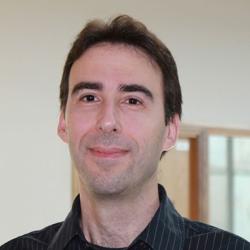
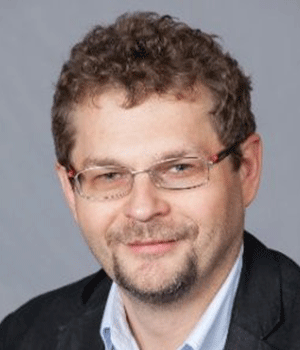
Dr. Jurgen Becque is an Associate Professor in Structural Engineering at the University of Cambridge's Department of Engineering. He specializes in cold-formed steel structures, stainless steel structural behavior, and stability analysis, with a focus on local-overall buckling interaction and innovative design methodologies. His work bridges experimental investigations with computational modeling and machine learning applications. Research Interests: Cold-formed steel structural systems Stainless steel column stability Local and overall buckling interaction Mechanics-based design optimization Machine learning for structural behavior prediction Recent publications demonstrate expertise in cross-sectional stability, connection mechanics, and composite systems like UHPC-confined stainless steel columns. His work addresses both monotonic and cyclic loading scenarios, contributing to Eurocode 3 design standards.
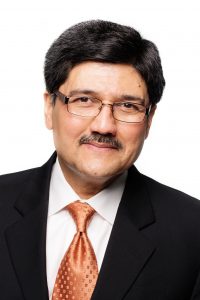
Micah Hale is a Professor and Department Head of Civil Engineering at the University of Arkansas, Fayetteville, and holds the Twenty First Century Endowed Leadership Chair in Civil Engineering. His work focuses on concrete materials, structural performance, and sustainable construction practices. Education: Ph.D., M.S., and B.S. in Civil Engineering from the University of Oklahoma. Dr. Hale’s research explores High-Performance Concrete , Bond Behavior of Prestressing Strands , and Mitigation of Alkali-Silica Reaction (ASR) . He also investigates Thermal Energy Storage applications for solar power systems and sustainable ultra-high-performance concrete (UHPC) development. His publications highlight advancements in concrete durability, prestressed girder analysis, and environmentally conscious material design. Recent studies emphasize calcium oxychloride formation , prestress transfer modeling , and self-consolidating concrete optimization. His scholarly output spans structural mechanics, chemical durability, and material sustainability. Awards: Twenty First Century Endowed Leadership Chair in Civil Engineering As an educator, Dr. Hale teaches Reinforced Concrete Design , Prestressed Concrete Design , and Concrete Materials and Mixture Proportioning . His contributions to engineering ethics education and student engagement further underscore his academic leadership.
Dr. Farhad Aslani is an Associate Professor in the Department of Civil, Environmental and Mining Engineering at the University of Western Australia (UWA), serving as Director of the Materials and Structures Innovation Group. He leads the $250M Australian Composites Manufacturing CRC and co-leads UWA's Engineering Materials Research Cluster. His research focuses on innovative construction materials, including self-sensing concrete, 3D-printed composites, and fire-resistant materials. He has secured over $20M in CRC funding and holds leadership roles in national/international conferences. Key awards include the 2024 Concrete Institute WA Rising Star Award and multiple citation milestones. His work aligns with sustainable development goals, emphasizing eco-friendly materials and infrastructure resilience. Education: PhD in Structural Engineering, University of Technology Sydney (2014) Certificates in Leadership, Research Commercialization, Public Policy, and Project Management from Curtin University, Queensland University of Technology, RMIT, and UTS. Research Interests: Smart materials, sustainable concrete technologies, additive manufacturing, blast/fire resistance, and composites for infrastructure. His lab develops self-sensing concretes, lightweight engineered composites, and electromagnetic shielding materials. Grants & Projects: $4.3M ACM CRC project on composite repairs ARC grants for nanocomposite coatings and fire facilities Main Roads WA funding for timber bridge strengthening Expertise: Structural design, composite materials, and industrial collaborations (e.g., Woodside, Holcim). He advises on major projects like the Morley Ellenbrook Rail Line and Forrestfield Airport Link. Awards: 2024 Concrete Institute WA Rising Star Highly Cited Scholar (ScholarGPS, 2024) Most Cited Paper Awards (2018–2020)
Kamal H. Khayat serves as the Jones Professor of Civil Engineering at Missouri University of Science and Technology and directs the Center for Infrastructure Engineering Studies (CIES), focusing on advancing concrete technology for sustainable infrastructure development. His research spans high-performance concrete (HPC), ultra-high-performance concrete (UHPC), self-consolidating concrete (SCC), and concrete rheology, with specialized expertise in 3D printing applications, fiber reinforcement systems, and shrinkage mitigation techniques. He investigates innovative materials like superabsorbent polymers and alternative binders to enhance durability and sustainability in concrete infrastructure. Analysis of his recent publications reveals dominant trends in digital fabrication of concrete, particularly 3D printing optimization and rheological modeling for structural build-up. His work increasingly integrates machine learning for material property prediction while emphasizing eco-friendly formulations using recycled aggregates and carbon-mineralization techniques. As Director of CIES, Khayat leads multidisciplinary research initiatives in infrastructure materials engineering, overseeing projects related to concrete rehabilitation, sustainable construction methods, and advanced material characterization techniques for civil infrastructure systems.
Weiwei Lin is an Associate Professor in the Department of Civil Engineering at Aalto University, specializing in structural engineering with a focus on bridge systems, composite materials, and structural health monitoring. His research explores fatigue behavior of steel structures, seismic performance of composite systems, and innovative repair techniques. He holds a PhD from Waseda University (2012), MSc from Southeast University (2009), and BEng from Southwest Jiaotong University (2006). Key research areas include: steel-concrete composites, bridge redundancy evaluation, replaceable energy dissipaters, and AI-driven infrastructure diagnostics. Lin leads projects like CCU Structure (EU Horizon Europe) and RCF Mobility initiatives, focusing on sustainable construction and material recyclability. He has published 120+ peer-reviewed articles and secured 6 major grants. Lin has received prestigious awards including the IABMAS Young Award (2014) and Outstanding Reviewing Award (2017). His lab collaborates globally, hosting researchers from institutions like Israel Institute of Technology and Tsinghua University. Current work emphasizes crowdsourcing-based bridge monitoring and physics-guided AI frameworks for infrastructure diagnostics.
Joshua D. Bard is an Associate Professor and Associate Head for Design Research at Carnegie Mellon University's School of Architecture. His work bridges traditional craft and cutting-edge robotics, focusing on human-machine collaboration in construction domains. He leads Archolab, an award-winning research group exploring digital fabrication methods like 'Morphfaux' (robotic plaster techniques) and 'Spring Back' (parametric steam bending). Education: M.Arch (Distinction) from University of Michigan; B.A. in Literature & Philosophy from Wheaton College. Professional affiliations include the Manufacturing Futures Institute and rob|arch. Research emphasizes reviving historical crafts through digital tools, such as augmented reality interfaces for architectural education and thermal-tuned concrete panels via robotic processes. His teaching includes generative modeling and architectural robotics labs. Awards: Architect Magazine R+D Award, Canadian Wood Council Merit Award Key Projects: Plaster ReCast AR app, Thermally Informed Robotic Concrete Panels Collaborators: Dana Cupkova, Garth Zeglin, Steven Mankouche Current courses include 62-225 Generative Modeling and 48-555 Introduction to Architectural Robotics. His work is featured in venues like the Carnegie Museum of Art and academic journals like International Journal of Architectural Computing .
Abdeldjelil Belarbi is the Hugh Roy and Lillie Cranz Cullen Distinguished Professor of Civil and Environmental Engineering at the University of Houston’s Cullen College of Engineering. He holds fellowships from the American Concrete Institute (ACI), Structural Engineering Institute (SEI), American Society of Civil Engineers (ASCE), and other leading organizations. His academic career spans over three decades, including roles as Department Chair (2009–2013) and faculty positions at the University of Missouri-Rolla (now Missouri S&T), where he contributed to research centers like the Intelligent Systems Center and Materials Research Graduate Center. Belarbi’s education includes a Ph.D. (1991) and M.S. (1986) in Civil/Structural Engineering from the University of Houston, and a B.S. (1983) from the University of Sciences and Technology of Oran, Algeria. His research focuses on sustainable infrastructure, corrosion-resistant materials, FRP-reinforced concrete, and seismic resilience. He has pioneered studies on prestressed concrete girders, bridge pile repair, and shape memory alloy confinement for columns. His 150+ publications emphasize FRP applications, structural durability, and innovative repair techniques. Awards include the Cullen Distinguished Professorship and recognition as a Fellow in multiple engineering societies. Belarbi has advised numerous students and led interdisciplinary projects on infrastructure sustainability and advanced materials. Awards: Cullen Distinguished Professorship, ACI Fellow, ASCE Fellow, IIFC Fellow Key Research: FRP-reinforced concrete, corrosion-resistant steels, bridge retrofitting, shape memory alloys Leadership: Department Chair (UH), Dean’s Teaching Scholar (MU-Rolla)
Dr. Khandaker M. Anwar Hossain is a Professor in the Department of Civil Engineering at Toronto Metropolitan University, specializing in sustainable construction materials and smart structural systems. His research focuses on self-healing concretes, geopolymer-based materials, and resilient infrastructure solutions. He holds a PhD from the University of Strathclyde (1995) and academic degrees from Bangladesh University of Engineering and Technology (BSc 1982, MSc 1990). Research Interests: Sustainable construction using recycled and volcanic materials High-performance concrete composites Smart self-healing materials for extended infrastructure lifespan Numerical modeling of structural systems Bridge and building rehabilitation techniques Professional Contributions: Editorial board member for Structural Engineering & Mechanics Reviewer for over 30 international journals Active member of ACI, CSCE, and PEO Collaborations with NSERC, MTO, and industry partners like Lafarge Canada Key Achievements: Recipient of ACI Wason Medal (2018), Dean’s Teaching Award (2011-2012), and Ontario Public Infrastructure Renewal Excellence Award (2005).
Norwegian University of Science And TechnologyNorway
Hakan Basarir is a Professor in the Department of Mining Engineering at the Norwegian University of Science and Technology (NTNU), Trondheim, Norway. His research and teaching focus on mining rock mechanics, rock mass characterization, underground support systems, and the application of soft computing methods in mining engineering. PhD in Mining Engineering (2002) 20+ years of research and teaching experience 60+ publications in journals and conferences Research Interests include rock mass property prediction using measurement while drilling (MWD) techniques, numerical modeling of mining structures, optimization of mine support systems, and sustainable material development. His work integrates machine learning and computational methods to address challenges in mining geomechanics and backfill design. Recent Publications highlight advancements in AI-driven lithology prediction, eco-concrete formulation, and backfill mixture optimization. He has also contributed to tunnel stability analysis and seismic rock slope modeling. Teaching includes advanced courses in mining engineering, mineral production modeling, and specialization projects in geotechnology.
Dr. Srishti Banerji is an Assistant Professor in the Department of Civil and Environmental Engineering at Utah State University and Director of the Systems, Materials, and Structural Health (SMASH) Lab. She leads research on advanced construction materials, structural resilience under extreme loads (particularly fire), sustainable infrastructure, and structural health monitoring. Her group focuses on experimental testing, numerical simulations, and developing design solutions for civil infrastructure. Education: PhD in Civil (Structural) Engineering, Michigan State University (2021) MS in Civil (Structural) Engineering, Concordia University (2016) BS in Civil Engineering, National Institute of Technology Silchar (2013) Research Focus: Her work spans: 1) Characterization of high-performance/sustainable materials (e.g., UHPC, recycled glass pozzolan), 2) Structural behavior under fire exposure, 3) Integration of electric charging systems in concrete pavements, 4) Non-destructive testing and structural health monitoring, and 5) Retrofitting techniques for infrastructure strengthening. She employs machine learning, thermo-mechanical modeling, and full-scale experimentation. Publication Trends: Her 13+ journal articles primarily analyze fire resistance of concrete/timber structures, UHPC material properties at high temperatures, sensor-based infrastructure monitoring, and sustainable material development. Recent works increasingly incorporate machine learning and electrification concepts. Awards & Honors: Teacher of the Year (USU, 2025) ASCE ExCEEd Faculty Teaching Fellowship (2023) Top Cited Article Award, Fire and Materials Journal (2023) SHMII-11 Early Career Grant (2022) NSERC Scholarship (2015) Best Conference Paper (SEC 2016) Current Projects & Teams: She leads 5+ funded projects including fire performance of polymer concrete, self-healing concrete for bridges, and Utah-sourced UHPC development. Mentees include 3 PhD students (Abdullah Al Sarfin, Mehrnoosh Nazari, Mahmoud Ali) and alumni working on sustainable materials and additive manufacturing.
Konstantin Sobolev is a Professor at the University of Wisconsin-Milwaukee's College of Engineering & Applied Science, holding the Lawrence E. Sivak '71 Faculty Fellowship in Civil and Environmental Engineering. His research focuses on nanotechnology applications in construction materials, superhydrophobic surfaces, and sustainable composites. Key research areas include: Development of nano-engineered superhydrophobic concrete Photocatalytic coatings for environmental applications Ultra-high-performance cement-based composites Computational modeling of particle packing Recent publications demonstrate innovations in nano-modified construction materials, with applications ranging from self-cleaning surfaces to high-strength composites. Sobolev has led numerous projects on sustainable infrastructure materials, including NSF-funded initiatives on nanotechnology in construction. His work has resulted in advanced materials with improved durability and functionality. Professor Sobolev serves on editorial boards including Scientific Reports and has co-authored influential reviews on nanotechnology in concrete. He collaborates internationally on sustainable material development and functional surface engineering.
Dr. Tathagata Bhaduri is a Lecturer in the Department of Civil and Environmental Engineering at Rensselaer Polytechnic Institute (RPI). He holds a Ph.D. in Civil Engineering from RPI (2021), an M.Tech. from the Indian Institute of Technology, Kanpur (2016), and a B.E. from the Indian Institute of Engineering, Science and Technology, Shibpur (2014). His research focuses on computational modeling of ultra-high-performance concrete (UHPC), particularly multi-scale techniques, fiber orientation effects, and failure modes in UHPC structures. He also explores smart systems for structural vibration control using bracing and fluid dampers. Dr. Bhaduri teaches core courses including Strength of Materials and Engineering Economics, and served as the course coordinator for Strength of Materials in Fall 2023. His professional involvement includes contributions to the American Concrete Institute (ACI) 239C committee, aiding in UHPC design guide development. His publications emphasize UHPC's mechanical properties, multi-scale modeling, and fiber-reinforced material behavior. Research trends highlight interdisciplinary approaches combining experimental and computational methods to address structural challenges in advanced materials.
Nemkumar (Nemy) Banthia is the University Killam Professor of Structural Materials Engineering at the University of British Columbia (UBC), holding the highest honor bestowed by the institution. He leads the Department of Civil Engineering within the Faculty of Applied Science, specializing in sustainable concrete infrastructure, advanced composites, and structural health monitoring. His research emphasizes nano-modified materials, ultra-high performance concrete (UHPC), waste recycling, and sensor-based monitoring systems. Dr. Banthia pioneered the India-Canada Centre for Innovative Multidisciplinary Partnerships (IC-IMPACTS) as its Scientific Director and CEO. He has advised over 75 doctoral/post-doctoral students and authored 525+ refereed papers, editing 20+ volumes. He serves as Editor-in-Chief of the Journal of Cement and Concrete Composites (Impact Factor 10.5). His awards include the 2024 BC Community Award, 2023 University Killam Professorship, 2022 Jacob Biely Research Prize, and 2020 IIT-Delhi Distinguished Alumni Award. He is a Fellow of the Royal Society of Canada, Canadian Academy of Engineering, and multiple international engineering societies. Research focuses include 3D-printed concrete, self-healing materials, and carbon-neutral construction. His work integrates nanotechnology and industrial byproducts to develop eco-friendly composites, with applications in earthquake-resistant infrastructure and infrastructure rehabilitation.
Philippe Kalmogo is an Assistant Professor in the Department of Civil and Environmental Engineering at the University of New Hampshire (UNH), part of the College of Engineering and Physical Sciences. His research focuses on structural reliability, concrete design, and advanced material applications in infrastructure rehabilitation. He teaches courses such as Statics for Civil Engineers, Reinforced Concrete Design, Pre-stressed Concrete, and Special Topics in Structural Reliability. Dr. Kalmogo's work emphasizes improving structural design methodologies for deep foundations and bridge systems using advanced materials like ultra-high-performance concrete (UHPC). His recent publications address interface shear capacity analysis, LRFD optimization for drilled shafts, and regional calibration challenges in geotechnical design. Office: Kingsbury Hall, Durham, NH 03824 | Email: Philippe.Kalmogo@unh.edu
Fatmir Menkulasi is an Associate Professor in the Department of Civil and Environmental Engineering at Wayne State University's College of Engineering. His research focuses on developing sustainable structural systems for buildings and bridges, with emphasis on concrete, steel, and composite materials. Current research explores novel material applications in structural design Specializes in computational modeling and experimental studies Active in infrastructure rehabilitation and structural health monitoring Recent publications highlight advancements in UHPC (Ultra-High Performance Concrete) systems, hybrid structural configurations, and deformation analysis. His work addresses critical challenges in urban infrastructure resilience and cost-effective engineering solutions. Scientific Recognition AASHTO Region 3 High Value Research Award (2024) MDOT Top 4 Project Recognition (2022) ASCE Outstanding Reviewer (2020) Multiple Professor of the Year awards at Louisiana Tech University Menkulasi teaches advanced courses in reinforced concrete design, bridge engineering, and prestressed concrete systems at both graduate and undergraduate levels.