Liane Margarida Rockenbach Tarouco is a researcher at the Federal University of Rio Grande do Sul in Porto Alegre, Brazil. Her work bridges network management and educational technology, focusing on innovative applications of virtual reality, IoT, and cloud computing. Key research areas: network management systems Key research areas: immersive educational environments Key research areas: IoT security frameworks Key research areas: cloud monitoring architectures While her publications often focus on technical implementations, she has pioneered the use of virtual worlds and chatbots in educational contexts, particularly for mathematics and algorithm training. Her collaborations span institutions and disciplines, with Lisandro Zambenedetti Granville and others.
Kazuya Murao is an active researcher in human-computer interaction , wearable computing , and sensor technology , affiliated with Osaka University's Department of Information and Computer Science . His work focuses on leveraging PPG sensors , accelerometers , and acoustic sensing for biometric authentication , gesture recognition , and physiological signal processing . Recent publications highlight his exploration of smart ring authentication (2025), PPG-to-EMG conversion (2023), and non-invasive sensor attacks (2023). His research combines signal processing , machine learning , and user perception manipulation through sEMG feedback and tactile stimuli (2022). Key subfields : Biometric authentication, Sensor data analysis, Wearable interface design, Human activity sensing, Gesture recognition, Physiological modeling
Francine Krief is a Professor with extensive research in network management , QoS optimization , and context-aware security across cognitive radio networks, IoT, and vehicular systems. Her work integrates blockchain and fuzzy logic for secure, efficient resource allocation. Key Research Areas : Network Security, Cognitive Radio, IoT, Edge Computing Collaborations : Active partnerships with researchers like Mohamed Aymen Chalouf, Badr Benmammar, and Tidiane Sylla Publication Trends : Over the past decade, Krief has focused on blockchain applications in IoT security (2021), energy-efficient cognitive radio (2019), and SDN-based vehicular networks (2019). Recent work (2025) addresses user-centric IoT service placement in edge infrastructures.
Viktor Kaptelinin is a Professor at the Department of Informatics, Umeå University, Sweden. His research focuses on Human-Computer Interaction (HCI) theory, user research methods, and human-robot interaction. He is affiliated with Umeå University’s Department of Informatics and actively contributes to projects involving socially intelligent systems and IoT-enabled interaction design. Current academic rank: Professor Institution: Umeå University Department: Department of Informatics His research explores HCI theory through frameworks like Activity Theory and Existential Inquiry , analyzing how users engage with technologies in social and physical contexts. Key areas include human-robot interaction , affordances , and designing technology-enhanced activity spaces . Recent publications highlight trends in proactive social robotics , contextual framing , and stress management applications . His work spans robotic telepresence , ambient smart objects , and user-driven interaction design . Projects include: Digital Companions as Social Actors (2020–2026): Developing stress management systems using social robotics Mobile Remote Presence in IoT-enabled environments (2016–2019): Addressing interaction design challenges Viktor collaborates with researchers across Europe, contributing to workshops and conferences like CHI , HRI , and NordiCHI . His methodological focus includes low-fidelity prototyping , collaborative reflective rescaling , and empirical user studies .
Jasleen Kaur is a Postdoctoral Research Fellow and Developer Manager at the UbiLab within the School of Public Health Sciences at the University of Waterloo. She also holds an Adjunct Assistant Professor position at the same institution. Her work bridges IoT, AI, and public health to address critical challenges. B.Tech, M.Tech, and PhD in Computer Science & Engineering from India Postdoctoral Research Fellowship at UbiLab, University of Waterloo Research Interests: Digital Health, IoT & AI in Healthcare, Wearable Technology Design, Health Data Analytics, and Big Data. Her research focuses on integrating IoT and AI for public health outcomes, including: Developing big data ecosystems for infodemic management using social media analytics Creating early warning systems for climate-related health impacts Designing lightweight operating systems for mhealth IoT devices Building interoperable APIs for antimicrobial resistance data Advancing centralized healthcare infrastructure via pervasive computing Selected Publications highlight her expertise in AI-driven misinformation detection, AMR surveillance systems, mental health data management, and pandemic analytics. She previously contributed to India's Antimicrobial Resistance initiatives and COVID-19 data management during the pandemic. Labs & Teams: She actively contributes to the UbiLab at the University of Waterloo, focusing on ubiquitous health technologies, and collaborates with institutions like the Indian Council of Medical Research (ICMR) .
Roberto Iglesias Rodríguez is an Associate Professor at the University of Santiago de Compostela, Spain, with a focus on robotics and machine learning. He holds a B.S. and Ph.D. in Physics from the same institution (1996, 2003). His work addresses lifelong robot learning, federated learning, and deployment of intelligent systems in heterogeneous environments. Current affiliation: University of Santiago de Compostela Academic rank: Associate Professor Education: B.S. and Ph.D. in Physics (1996, 2003) His research spans robotics, machine learning, and sensor fusion , emphasizing adaptive algorithms for non-IID data, concept drift, and real-time environmental interaction. Projects include service robots learning from humans, distributed control architectures, and federated learning strategies. Recent publications analyze continual learning , scene recognition , and human-robot collaboration . Key themes: robust navigation, multi-sensor systems, and explainable AI.
Professor Jacob O. Wobbrock is affiliated with the University of Washington , where he holds a position in the Information School and a courtesy role in the Paul G. Allen School of Computer Science & Engineering . He co-founded the DUB Group and MHCI+D degree , and serves as Interim Director of the MHCI+D program. As director of the ACE Lab and Founding Co-Director Emeritus of the CREATE Center , he leads research in human-computer interaction (HCI) and accessible computing . Education : B.S. in Symbolic Systems (1998), M.S. in Computer Science (2000), Ph.D. in Human-Computer Interaction (2006) Research Focus : Input techniques, performance modeling, mobile and accessible computing, VR, and gesture recognition Awards : ACM Fellow (2021), CHI Academy (2019), NSF CAREER (2010), ICMI/ASSETS/UIST Lasting Impact Awards His 15 most recent articles (2023-2025) explore AI-powered accessibility solutions, tactile 3D modeling, mobile reading adaptations, gesture recognition for motor impairments, and screen reader integration. These works span human-computer interaction , artificial intelligence , biomedical data analysis , and inclusive design in both academic and industry contexts. Scientific honors include the SIGCHI Social Impact Award and AMiner Most Influential Scholar rankings. As an entrepreneur , he co-founded AnswerDash (acquired by CloudEngage) and has contributed to patents and expert witness cases. His teaching and advising have produced doctoral graduates now at institutions like Harvard and CMU, though specific student names are not listed in this profile.
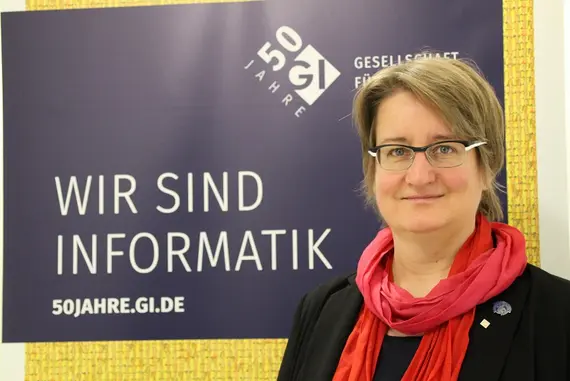
Prof. Dr. Daniela Nicklas is a full professor at the University of Bamberg, Germany, holding the Chair of Mobile Systems within the Faculty of Business Information Systems and Applied Computer Science since 2014. She serves as the degree program representative for B.Sc. Informatik, speaker of the Bamberg Graduate School for Smart City Science (founded November 2024), and ambassador for the Gesellschaft für Informatik. She is also an elected member of the Review Board for Computer Science at the German Research Foundation (DFG). Her research focuses on bridging the gap between physical and digital worlds through data management for sensor-based systems and context-aware applications. Her work emphasizes data stream management technologies applied to smart cities, precision farming, pervasive computing, and situational awareness. She has developed innovative approaches for quality-aware data stream processing, sensor data management, and context modeling. Her research demonstrates how mobile computing systems can transform urban environments and agricultural practices through real-world applications. Her recent publications reveal strong trends in privacy-preserving techniques for mobility data, smart city data quality challenges, anomaly detection in stream data, and IoT device management. These works reflect her ongoing commitment to addressing practical challenges in sensor-based applications while maintaining rigorous academic standards. IBM Exploratory Stream Analytics Innovation Award for 'Data Stream Technology for Future Energy Grid Control' (2009) Prof. Nicklas actively participates in academic service, having chaired numerous conferences including BTW 2025 as General Co-Chair and PerCom 2020 as Program Chair. She serves on the editorial boards of Datenbank-Spektrum and previously for International Journal of Pervasive Computing and Communications. She also serves as a reviewer for multiple funding organizations including DFG, DAAD, and Alexander von Humboldt Foundation. She manages the Smart City Research Lab Bamberg with Professors Marc Redepenning and Astrid Schütz, which serves as a test bed for smart city applications in real-world environments. Her leadership extends to the Living Lab Bamberg infrastructure, which provides a practical environment for exploring smart city research challenges in the wild. She frequently collaborates with international institutions, as evidenced by her invited talks at Osaka University, Nara Institute of Science and Technology, and other international venues in 2024.
Samuel Moore is a Lecturer at Ulster University within the Computer Science and Informatics department. His work spans research areas including Deep Learning , Internet of Things (IoT) , and Behavioral Analysis , with a focus on reliability, anomaly detection, and ethical AI. Research Trends : Recent publications emphasize Neural Network Forecasting for chaotic systems, Imbalanced Learning in data science, and Privacy-Preserving AI in financial crime detection. His work also explores interdisciplinary applications in Urban Mobility Modeling and Smart Home Analytics . Scientific Awards : Gen AI in Education Awards "Team of the Year" (2025) Grants & Collaborations : Active roles in projects like Slipping Through the Net: An AI Assisted Analysis of High Risk Clients (2024–2028) and BTIIC Phase 2 (2024–2028) with collaborators from institutions like Economic and Social Research Council (ESRC) and Invest Northern Ireland. Labs & Teams : Collaborates with research groups such as the PwC Advanced Engineering and Research Centre and BTIIC , focusing on IoT, AI ethics, and urban data integration.
Carsten Röcker serves as Professor for Human-Technology Interaction at TH OWL University of Applied Sciences and Arts and holds a leadership position on the Executive Board of the Institute Industrial IT (inIT). His institutional affiliations include the Fraunhofer Institute of Optronics, System Technologies and Image Exploitation (IOSB-INA) as Scientific Advisor, InnoZent OWL as Board Member, and the Graduate Institute OWL. He maintains active roles in the Graduate School for Applied Research in North Rhine-Westphalia and the International Graduate School on Intelligent Systems in Automation Technology. His research spans intelligent assistance systems, human-computer interaction, and technology acceptance, with particular emphasis on industrial applications. Key focus areas include inclusive design for disadvantaged workers , augmented reality in manufacturing , and AI-mediated communication frameworks . His work bridges theoretical foundations in psychology and social sciences with practical industrial implementations, evidenced by numerous publications on projection-based AR systems, cognitive assistance for assembly tasks, and ethical considerations in workplace technology. Röcker's scholarly contributions include over 150 publications and editorial work on 8 books. His research demonstrates consistent focus on Human-centered design for industrial automation Inclusive technologies for cognitively disabled workers Psychological well-being in technology-mediated workplaces Advanced interaction paradigms using AR/VR His extensive service includes reviewing for major funding agencies (Australian Research Council, Academy of Finland), journals (ACM Transactions, Personal and Ubiquitous Computing), and over 50 international conferences annually. He has organized numerous workshops on assistive environments and healthcare applications since 2009. As an educator, Röcker supervises graduate research through TH OWL's programs and contributes to the International Graduate School on Intelligent Systems. His technical leadership extends to directing the Human-Computer Interaction research group and co-leading the ProErgo and NextPlace research clusters focused on human-centered industrial systems.
Jussi Ängeslevä is a Professor at Berlin University of the Arts and Creative Director at ART+COM Studios, specializing in media art, interaction design, and digital materiality. His career spans academic roles including Visiting Professor at Royal College of Art (2011-2018), Honorary Professor at UdK Berlin (2011-present), and Assistant Professor at UdK Berlin (2005-2007). He holds an MA in Audio-Visual Media Culture from the University of Lapland (2004) and an MA in Interaction Design from the Royal College of Art (2002). His research explores the intersection of computational design, physical interfaces, and spatial communication, with notable interests in kinetic sculptures, caustic light systems, and hybrid museum experiences. Projects like 'RGB|CMY Kinetic' and 'Pinnannousu' demonstrate his integration of mechatronics, computational optics, and environmental interaction. Ängeslevä has received over 20 international awards including a D&AD Black Pencil (2009), Cannes Lions Gold (2009), and Prix Ars Electronica (2003). His contributions to academic discourse include publications on prototyping methodologies, digital materiality, and embodied interaction in venues like Springer and Cambridge University Press. He actively participates in juries for Ars Electronica, D&AD, and Siggraph. Collaborations with institutions like EPFL and Museum für Naturkunde highlight his interdisciplinary approach. Current projects include 'NuForm' (hybrid museum experiences) and 'Place of Remembrance' (data-driven memorials using organic materials). He maintains affiliations with the Hybrid Plattform Berlin and contributes to design education globally.
Bronagh Lanigan serves as a Research Fellow and Applied Researcher for AICC at Ulster University's School of Computing, Engineering and Intelligent Systems, Belfast campus. Her research spans cybersecurity, Internet of Things security, and neural network applications. Her research focuses on developing advanced cybersecurity frameworks for intrusion response systems and IoT environments. Key contributions include cost-based dynamic response methods for cyberattacks, neural network-based autoencoders for detecting algorithmically generated domains, and windowing approaches in dense sensing environments. Her work aligns with UN Sustainable Development Goals through cybersecurity advancements. Analysis of her publication trends (2018-2023) reveals consistent focus on cyber defense mechanisms, with increasing emphasis on IoT security and neural network applications. Her research integrates supervised machine learning with practical cybersecurity implementations, particularly in intrusion response verification and dynamic threat mitigation. Professional recognition includes ORCID profile ( 0000-0002-6161-3754 ) and collaborative work evidenced by patent references (3 patent family citations across publications). Her research demonstrates strong industry relevance through practical applications in cyber defense systems. Lanigan actively collaborates within Ulster University's Computer Science research group, contributing to the institution's recognition as Times Higher Education University of the Year 2024. Her current work focuses on metaverse computing applications and advanced intrusion response verification methodologies.
Miha Mraz serves as a Full Professor at the Faculty of Computer and Information Science, University of Ljubljana, where he teaches Computer Networks, Computer Systems Reliability, Unconventional Information Processing, and Computational Biology courses from office R3.59. His research spans Computational Biology (gene regulatory networks, circadian biology), Ubiquitous Computing , and Unconventional Computing (Quantum-dot Cellular Automata, fuzzy logic systems). He employs stochastic simulations, genetic algorithms, and multi-valued logic to model biological processes and optimize logistical systems. Analysis of his 2005-2015 publications reveals consistent interdisciplinary work at the computer science-biology interface, particularly in computational modeling of biological networks and novel computing architectures. Key themes include information processing in gene networks and quantum-dot cellular automata design for multi-valued logic systems. Professor Mraz leads current ARRS projects including hypoxia-cholesterol synthesis research (J1-50024, 2023-2026) and Ubiquitous Computing (P2-0359, 2023-2027), alongside past European initiatives like RFID F2F. As a core member of the Computer Structures and Systems Laboratory, he focuses on computer architecture reliability and unconventional computing platforms despite no listed advisees in available materials.
Rashid Kamal is a Lecturer in Computer Science at the School of Computing, Ulster University. His research focuses on Human-Computer Interaction, Behavioral Data Analysis, and Multiobjective Optimization, with applications in Mobile Computing and Healthcare Informatics. Education: BSc (2016) and MSc (2019) in Computer Science from Iqra and Comsats Universities (Pakistan), respectively. Prior Roles: Lecturer at Abasyn University's Faculty of Computing. His research interests emerge from projects like notification prioritization, healthcare activity recognition, and network optimization, utilizing Machine Learning and Algorithms. Recent publications from 2024-2025 emphasize context-aware mobile systems, multi-label classification, and AI-driven network traffic solutions. Earlier works (2019-2022) explore emotion detection, scheduling algorithms, and data preprocessing techniques. Scientific Awards: Best Researcher at Abasyn University (2018, 2019) He has secured four research grants from Pakistan's National Technology Fund (2019) and developed 300+ Android applications.
Rui João Peixoto José is an Assistant Professor with Habilitation at the Information Systems Department, School of Engineering, University of Minho. He holds a PhD in Computer Science from Lancaster University (2001) and teaches Ubiquitous Systems, Distributed Systems, Digital Innovation, Service Engineering, and Urban Informatics. As a Senior Researcher at Centro Algoritmi, he leads the Urban Computing R&D Group, focusing on Smart Cities, urban platforms, and locative services that blend digital information with physical/social settings. PhD in Computer Science (2001), Lancaster University Assistant Professor at University of Minho since [year] Senior Researcher at Centro Algoritmi Co-founder of 3 companies (2 University of Minho spin-offs) His research spans 150+ publications, including top journals (IEEE Computer, Sensors, Personal and Ubiquitous Computing) and conferences (Ubicomp, PerDis). Key areas: Smart Cities, urban platform design, pervasive computing, mobile payment systems, and public digital displays. Collaborations with Bosch Car Multimedia on soft smart mobility. Scientific Contributions : 98+ publications (h-index 12 in ResearcherID) 585+ Scopus citations (h-index 11) 1300+ Google Scholar citations (h-index 16) Leadership & Service : PI/co-PI in 9 projects (FP7, FET-OPEN, Portugal/CMU funded) 80+ Program Committee roles (Ubicomp, CHI, IEEE Transactions) Editorial Board member: RISTI and ADCAI journals General/TPC Chair of 2 international conferences Entrepreneurial Impact : Co-founded 3 companies, including 2 University of Minho spin-offs. Focus on pervasive computing and urban technology solutions.