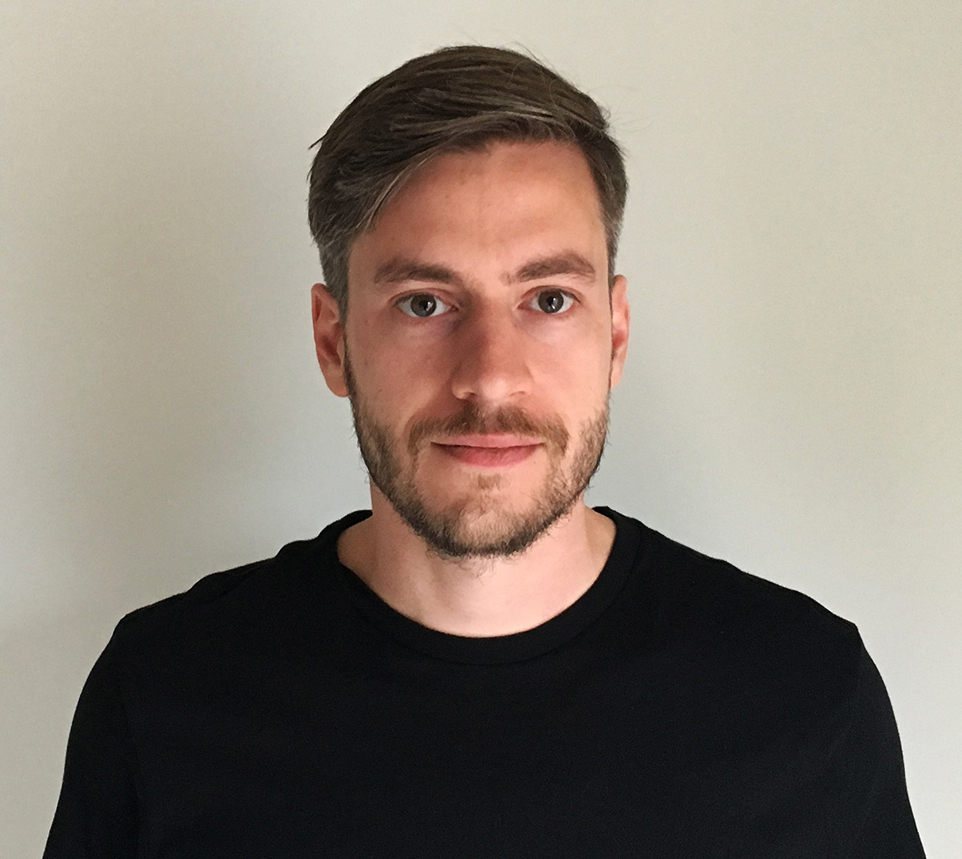
Mark W. Newman is an Associate Professor in the School of Information at the University of Michigan, with a joint appointment in the EECS Department. His research focuses on human-computer interaction, ubiquitous computing, and health informatics, emphasizing the design of technologies that integrate seamlessly into everyday life. He teaches courses on user experience research, programming, and application development, contributing to curriculum design efforts such as the User Experience Design track and programming curricula for undergraduate and graduate programs. His work spans smart home technologies, mobile health interventions, and collaborative health management systems. Notably, he collaborates across disciplines to address challenges in healthcare technology, including patient-generated data integration and sustainable energy solutions. Newman actively mentors students and leads design projects that prioritize user-centered approaches, such as the UX Research & Design Specialization on Coursera. His recent scholarship explores adaptive mHealth interventions, context-aware systems, and participatory design methods to enhance health equity.
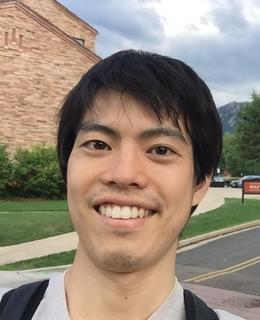
Ryo Suzuki is an Assistant Professor in the Department of Computer Science at the University of Calgary's Faculty of Science. His research focuses on Human-Computer Interaction (HCI) and robotics, particularly in tangible user interfaces, swarm robotics, and shape-changing interfaces. He holds a PhD in Computer Science from the University of Colorado Boulder (2020) and has conducted research internships at Stanford University, UC Berkeley, the University of Tokyo, and Adobe Research. His educational background includes advanced coursework in robotics and HCI, with a strong emphasis on interdisciplinary innovation. He teaches courses such as Human-Computer Interaction II, Human-Robot Interaction, and Special Topics in Mixed Reality Application Design. Research interests include designing novel interfaces for AR/VR/MR systems, haptic feedback mechanisms, and collaborative robotics. His work often bridges physical and digital spaces, such as through projects like LiftTiles (shape-changing building blocks) and RoomShift (room-scale haptic environments). Key awards include the UIST 2020 Honorable Mention Paper Award, DIS 2019 Best Paper Award, and the Ministry of Internal Affairs and Communications in Japan Innovation Award. His research has been featured in IEEE Computer Graphics and Applications, TechXplore, and Wired. He actively explores future work in symbiotic AI systems, AI-in-the-loop AR applications, and scalable shape-changing robotics. His lab emphasizes hands-on prototyping and user-centered design principles.
Steve Whittaker is Professor of Human-Computer Interaction at the University of California at Santa Cruz. He conducts interdisciplinary research at the intersection of social science and computer science, focusing on how technology affects human memory, communication, and personal information management. His current research explores human-centric AI systems, mental health technologies, and digital identity. His research interests center on designing interactive systems that support human needs in digital environments. He investigates how people manage digital information, remember personal experiences through lifelogging, and interact with conversational agents and social robots. His work emphasizes computational well-being, affective computing, and the social implications of technology use. He has made foundational contributions to the fields of personal information management (PIM), computer-mediated communication (CMC), and human-robot interaction. The recent publications reflect a strong trend toward mental health technology, human-AI interaction, and digital well-being. His work spans from theoretical models of emotion and memory to practical systems for mental health apps, chatbots, and immersive visualization. He frequently publishes in top-tier venues such as CHI, CSCW, and IUI, often in collaboration with researchers across disciplines. Lifetime Research Achievement Award from SIGCHI Fellow of the Association for Computational Machinery (ACM) Member of the CHI Academy Lasting Impact Award from ACM CSCW Best Paper Award at CSCW10 Best Paper Award at CHI07 Honourable Mention at ACM CHI 2020 Multiple best paper nominations at CHI, CSCW, and IUI MIT Siegel Prize Steve Whittaker has supervised numerous PhD and Master’s students, though specific names are not listed in the provided text. His research has been funded by major grants from NSF, NIH, and industry partners, enabling long-term studies on digital behavior and system development. He is Editor of the journal Human Computer Interaction and has authored over 200 peer-reviewed publications. His most recent book, The Science of Managing Our Digital Stuff (MIT Press), co-authored with Ofer Bergman, synthesizes decades of research on personal information management. He leads a vibrant research lab at UC Santa Cruz that focuses on human-centered computing, where students and collaborators work on projects involving AI, mental health, digital memory, and social interaction. The lab has produced influential work on lifelogging, email management, telepresence robots, and algorithmic transparency. The team employs mixed methods, combining qualitative studies with system design and evaluation.
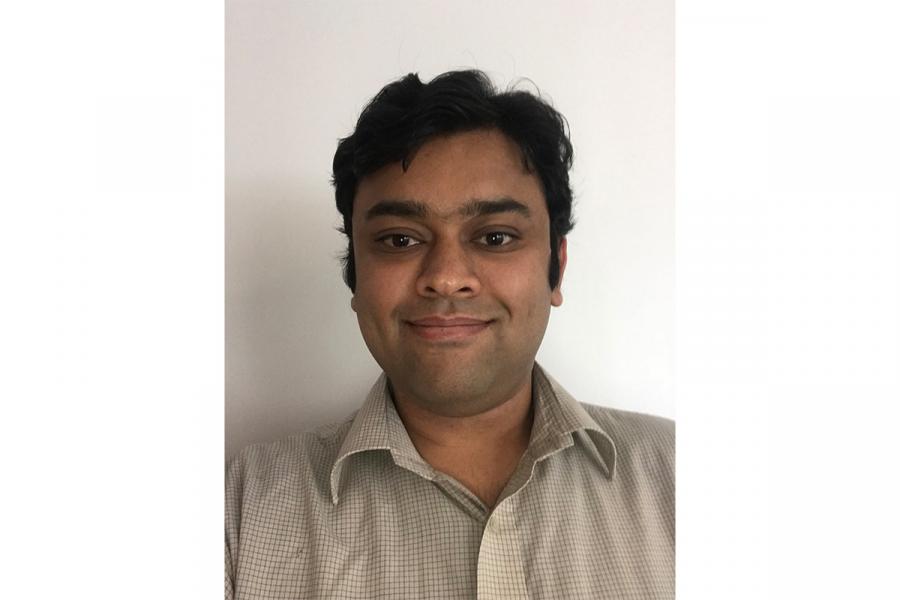
Shrirang Mare is an Assistant Professor in the Computer Science Department at Western Washington University (WWU), focusing on computer security and privacy with emphasis on usable security solutions for diverse user groups including low-literate individuals, the elderly, and cross-cultural populations. His research bridges human-computer interaction and cyber-physical systems to create accessible security mechanisms for emerging technologies. His educational background includes a PhD in Computer Science from Dartmouth College (2016), where his dissertation on seamless authentication for ubiquitous devices established his research trajectory. Dr. Mare's research interests encompass security and privacy, human-computer interaction, and cyber-physical systems, with specialized focus on security for low-literate users and developing regions. His work consistently addresses real-world applicability through field studies in countries like India and Pakistan, examining mobile payment systems, SMS fraud, and smart home privacy challenges. Analysis of his 15 most recent publications (2018-2024) reveals a dominant trend in wearable-based authentication systems (wristbands for desktops/smartphones) and privacy solutions for consumer IoT, particularly smart homes. His research uniquely combines technical security mechanisms with deep user-centered design principles, often targeting underserved populations in developing regions. No scientific awards or fellowships were mentioned in the provided documentation. Teaching responsibilities include Privacy Enhancing Technologies, Object Oriented Design, and Data Structures at WWU, with prior guest lectures at UC Berkeley and the University of Washington; no current advisees or grant funding details were specified. Dr. Mare operates within the Computer Science Department at WWU but no dedicated research lab or team structure was referenced in the source materials.
Prof. Michael Beigl is a faculty member at Karlsruhe Institute of Technology (KIT), serving as Professor of Pervasive Computing Systems (PCS) and head of the Telecooperation Office (TECO). He is a spokesperson for the KIT Center for Health Technologies (KITHealthTech) and coordinator of the Smart Data Innovation Lab (SDIL), a federally funded big data center. His work focuses on developing wearable sensor systems and AI-driven diagnostics for healthcare and industrial applications, collaborating across disciplines with medical experts and technology partners. Research interests include digital health technologies (e.g., gas sensors in headbands for respiratory monitoring), ubiquitous computing for remote patient tracking, and Smart Data solutions in medicine, energy, and Industry 4.0. His team integrates machine learning for optimized diagnostics and real-time data analysis.
David Lindlbauer is an Assistant Professor at Carnegie Mellon University's Human-Computer Interaction Institute (HCII), where he leads the Augmented Perception Lab and co-directs the CMU Extended Reality Technology Center. His research focuses on advancing Mixed Reality (MR) and Extended Reality (XR) interfaces through computational interaction methods that optimize spatial, temporal, and multimodal feedback.
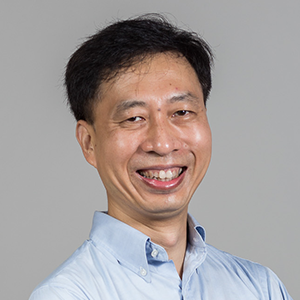
David Hsu is Provost's Chair Professor in the Department of Computer Science at the National University of Singapore (NUS) School of Computing, where he founded and directs the NUS Artificial Intelligence Laboratory (NUSAIL) and leads the Smart Systems Institute. His academic leadership includes chairing major conferences such as Robotics: Science & Systems (2015) and IEEE ICRA (2016), alongside editorial roles in IEEE Transactions on Robotics and the Journal of Artificial Intelligence Research. He earned a B.Sc. in Computer Science & Mathematics from the University of British Columbia and a Ph.D. in Computer Science from Stanford University. His research spans robotics, AI, and computational biology, with recent focus on robot planning under uncertainty and human-robot collaboration. Current work integrates machine learning with decision-theoretic planning to enable robust human-robot co-existence in unstructured environments. Analysis of his 2023-2025 publications reveals dominant trends in deformable object manipulation (e.g., clothes handling via semantic keypoints), open-world navigation using scene graphs, and LLM-driven multi-agent reasoning for complex tasks. Key innovations include perspective-aware visual grounding for human-centric interaction and functional object arrangement through compositional generative models, reflecting a strong emphasis on real-world applicability. His scientific contributions have earned prestigious recognition: IJCAI-JAIR Best Paper Prize (2022) for foundational AI research Robotics: Science & Systems Test of Time Award (2021) IEEE Fellowship (2018) for contributions to robotic planning RSS Best Systems Paper Award (2017) RoboCup Best Paper Award at IROS (2015) Humanitarian Robotics Award at ICRA (2015) As director of the Adaptive Computing Laboratory, Hsu drives research on fundamental computational frameworks for human-robot interaction. The lab's work on uncertainty-aware decision-making has secured significant research funding through grants from Singapore's National Research Foundation and industry partnerships with robotics firms. While specific student names aren't publicized, his leadership in the NUSAIL indicates extensive mentorship of doctoral candidates in AI and robotics.
Suining He is an Assistant Professor at the University of Connecticut (UConn)'s School of Computing, leading the Ubiquitous and Urban Computing Lab since 2019. Previously, he was a postdoctoral research fellow at the University of Michigan's Real-Time Computing Lab (2016–2019). He holds a Ph.D. in Computer Science from the Hong Kong University of Science and Technology (2016) and a B.Eng. in Mechanical Design from Huazhong University of Science and Technology (2012). His research focuses on Cyber-Physical Systems (CPS), Smart & Connected Communities, Human-Centered Computing, and Urban Computing Cyberinfrastructure, with emphasis on mobility, equity, and AI-driven solutions. He has received prestigious awards including the NSF CAREER Award (2023), Google Research Scholar Program Award (2021), and recognition as a Stanford Top 2% Scientist (2020–2024). His work spans interdisciplinary grants from NSF, USDA, Google, NVIDIA, and industry partners. Recent publications explore autonomous driving simulation, equity-aware mobility prediction, and urban crowd activity modeling. Teaching excellence is reflected in his 2020 UConn Provost Award. He advises on reinforcement learning, CPS, and mobile computing, with openings for 2025/2026 PhD students. His lab collaborates on socially-conscious AI, privacy-preserving learning, and location-based services with industrial impact.
Robin Kravets is a Professor in the Department of Computer Science at the University of Illinois at Urbana-Champaign, where she leads the Mobius research group. She earned her Ph.D. in Computer Science from the Georgia Institute of Technology in August 1999. Her office is located at 3114 Siebel Center for Comp Sci, and she can be contacted via email at rhk@illinois.edu or phone at (217) 244-6026. Courses Taught: CS 438 (ECE 438) - Communication Networks CS 498 WN3 (CS 498 WN4) - Wireless IoT Lab CS 591 PH2 (CS 591 PHD) - PhD Orientation Seminar CS 591 SCH - PhD Job Search Prep CS 591 WN - Wireless Networking Seminar ECE 439 (CS 439) - Wireless Networks ENG 572 - Professional Practicum Research Focus: Dr. Kravets specializes in wireless and mobile systems, with emphasis on IoT security, energy-efficient networking, and privacy-preserving protocols. Her work addresses challenges in dense network environments, vehicular communication, and low-power devices, often leveraging probabilistic models and adaptive protocols to enhance system resilience. Publication Trends: Her recent articles (2016-present) predominantly explore wireless IoT security (e.g., MAC randomization defenses, BLE optimization) and practical applications in environmental sensing/retail. Earlier work (2007-2015) established foundations in vehicular networks, disruption-tolerant communication, and energy-aware protocols. Leadership: She directs the Mobius Group, which develops solutions for mobile and IoT systems, including projects like IVP (Illinois Vehicular Project) and contributions to standards in pervasive computing.
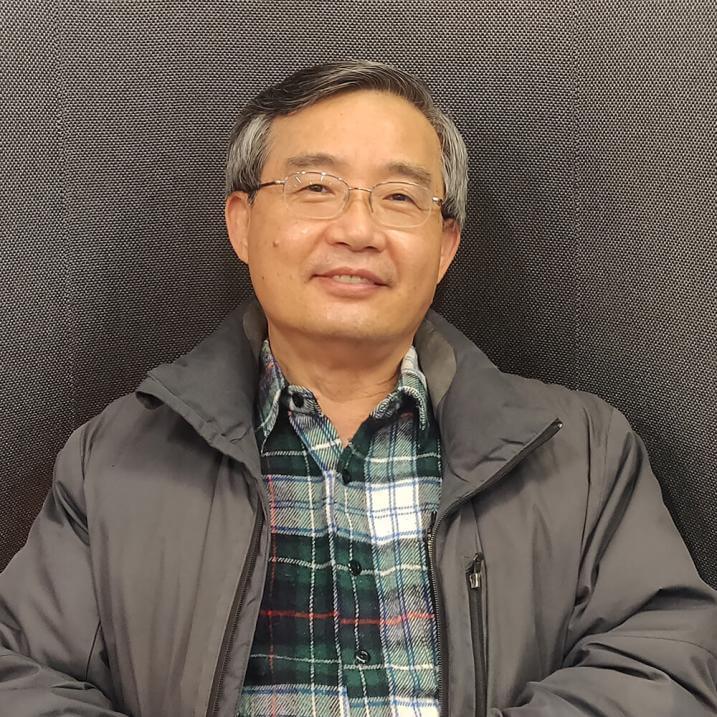
Professor Byung S. Lee is a distinguished faculty member in the Department of Computer Science at the University of Vermont's College of Engineering and Mathematical Sciences. He joined UVM in 1999 and continues to be actively engaged in teaching, research, and service. His office is located in Innovation Hall at the Burlington campus, where he maintains regular office hours and oversees his research lab. Professor Lee holds a Ph.D. from Stanford University, an MS from Korea Advanced Institute of Science and Technology, and a BS from Seoul National University. His educational background provided the foundation for his extensive career in computer science research and education. Professor Lee's research spans multiple domains within computer science, with a particular focus on database systems, data mining, and data science. His work increasingly integrates machine learning techniques with traditional database approaches, especially in the analysis of time series data. He has made significant contributions to graph theory applications, anomaly detection methods, and environmental data analysis. His research often bridges computer science with practical applications in healthcare, environmental science, transportation, and astrophysics through interdisciplinary collaborations. An analysis of his recent publications reveals a strong trend toward time series analysis and anomaly detection, particularly applied to environmental monitoring and healthcare data. His work demonstrates a consistent evolution from foundational database research to more applied machine learning approaches, with increasing emphasis on real-world problem solving across multiple scientific domains. Professor Lee has served as primary advisor for numerous graduate students across multiple cohorts, including PhD candidates, Master's students, and postdoctoral researchers. His advising portfolio reflects the breadth of his research interests, with students working on topics ranging from graph neural networks to medical informatics applications. He has also been actively involved in professional service, serving on program committees for major conferences including SAC, PAKDD, DASFAA, and CIKM. Professor Lee leads a vibrant research laboratory that focuses on cutting-edge data science methodologies and their applications. His team collaborates extensively with researchers in environmental science, hydrology, and healthcare, demonstrating the interdisciplinary nature of modern data science research. The lab maintains active projects in time series analysis, graph analytics, and environmental monitoring systems, often working with large-scale datasets from real-world applications.
Jim Torresen is a Professor at the Norwegian University of Science and Technology (NTNU), specializing in Computer Science, Artificial Intelligence, and Robotics. He earned his M.Sc. and Dr.ing. (Ph.D.) in computer architecture and design from NTNU in 1991 and 1996 respectively, followed by industry experience in hardware design before transitioning to academia in 1999. Research Interests: His work spans Machine Learning, Evolvable Hardware, and Ethical AI, with notable contributions to music technology, facial expression recognition, and healthcare monitoring systems. He actively explores interdisciplinary applications of AI in creative domains and clinical environments. Publications & Editorial Roles: Torresen has published extensively in journals like Frontiers in Artificial Intelligence and Genetic Programming and Evolvable Machines . He serves as a Topic Editor for Frontiers in Explainable AI and has editorial roles in robotics and biomedical AI domains.
Hamid Mansoor is an Assistant Professor in the Department of Computer Science at the University of Manitoba. He holds a PhD in Computer Science from Worcester Polytechnic Institute under Prof. Emmanuel Agu, and was part of the DARPA-funded WASH project. His research focuses on data visualization, digital health, and smartphone-based behavioral analysis. He previously served as a Postdoctoral Fellow at the VIXI Lab, University of Victoria, Canada, under Prof. Miguel Nacenta. Education: PhD in Computer Science, Worcester Polytechnic Institute Research Interests: Interactive data visualization frameworks for health monitoring Mobile and ubiquitous computing for behavioral analysis Smartphone-sensed human behavior and health informatics Visual representation of text-based and sensor data Publications highlight trends in visual analytics for healthcare, including tools like ARGUS and INPHOVIS for detecting bio-behavioral disruptions and smartphone-based phenotyping. His work integrates machine learning with visualization to address challenges in health data interpretation. Awards: Best short paper honorable mention (EuroVis 2020) His contributions span academic collaborations in health informatics and mobile computing, with a focus on bridging theory and practical applications in healthcare technology.
Dr. Thilina Halloluwa is a Teaching Focused Lecturer in the Department of Human-Centred Computing at The University of Queensland (UQ). He holds a PhD in Human-Computer Interaction from Queensland University of Technology (2019) and a Computer Science undergraduate degree from the Sri Lanka Institute of Information Technology. With over 15 years of academic and industry experience, his research emphasizes real-world impact in education technology, financial inclusion, smart agriculture, and HCI. Educational Background: PhD in Human-Computer Interaction, Queensland University of Technology (2019) Bachelor of Computer Science, Sri Lanka Institute of Information Technology Research Interests: Education for All: Leveraging technology to enhance collaborative learning and social experiences in education. Human Money Interaction: Designing ethical AI solutions for financial services, particularly for underserved communities. Smart Agro: Developing AI-driven tools for crop disease detection, yield optimization, and precision agriculture. Software Project Estimation: Improving effort estimation accuracy through explainable AI (Metrix project). Key Contributions: Developed UrbanAgro (tomato disease detection) and BellCrop (bell pepper disease datasets). Pioneered Dhana Labha , a financial management tool for rural Sri Lankan communities. Advanced online exam proctoring systems for low-resource settings. Previous Roles: Lecturer at University of Sydney (2023) Senior Lecturer at University of Colombo (2013–2023) Lab/Team Affiliations: Smart Agro Project: AI-driven agricultural solutions Metrix Initiative: Software project estimation frameworks
David Lindlbauer is an Assistant Professor at the Human-Computer Interaction Institute (HCII) within Carnegie Mellon University's School of Computer Science. He leads the Augmented Perception Lab and co-directs the CMU Extended Reality Technology Center (XRTC) . His research bridges Human-Computer Interaction, Computer Graphics, and Computer Vision to create adaptive interfaces that enhance human-digital interaction. Education : PhD (summa cum laude) from Technische Universität Berlin , MSc and BSc from University of Applied Sciences Upper Austria Previous Affiliation : Postdoctoral Researcher at ETH Zurich (2018-2020) David's research focuses on understanding human perception of digital information and developing computational approaches to optimize AR/VR interface usability. Key areas include: Context-aware adaptive interfaces Visual saliency and attention modeling Spatial audio-haptic systems Optimal placement algorithms Object manipulation in Remixed Reality Diminished/ambient MR interfaces His 15 most recent publications (2024-2025) span topics in adaptive XR interfaces, multimodal notifications, haptic systems, and spatial cognition. These works appear at venues like ACM CHI, ACM UIST, IEEE VR, and Frontiers in VR. Common themes include: Machine learning for interface adaptation Human factors in XR design Real-time environment analysis Privacy-aware display systems Collaborative MR interfaces Accessibility enhancements Scientific Recognition : Best Paper Honorable Mention Award (ACM CHI 2024) Best Paper Award (ACM ISS 2023) ETH Zurich Postdoctoral Fellowship Multiple best paper recognitions at CHI, UIST, and IEEE VR Teaching & Leadership : Course developer for CMU's "Interactive Extended Reality" Mentor for NASA SUITS Challenge team Co-chair roles at CHI and UIST Overseeing PhD students and research interns
Yuanbo Xiangli is a postdoctoral researcher at Cornell University , advised by Prof. Noah Snavely. Previously, he obtained his Ph.D. from the Multimedia Lab in the Department of Information Engineering at the Chinese University of Hong Kong (CUHK) , supervised by Prof. Dahua Lin. His research focuses on 3D computer vision and deep generative modeling for urban scene reconstruction. 3D scene reconstruction from sparse images Neural rendering and Gaussian splatting Deep generative modeling for urban environments Multi-source geospatial data processing City-scale modeling and synthetic datasets His recent work includes advanced NeRF extensions (BungeeNeRF, GridNeRF), Gaussian splatting enhancements (GSDF, Scaffold-GS), and urban scene datasets (MatrixCity, OmniCity). A pioneer in combining classical vision techniques with modern deep learning approaches. ICLR 2020 Spotlight Award Collaborates with leading researchers in photorealistic rendering, including Noah Snavely and Dahua Lin. Develops systems enabling efficient 3D reconstruction from diverse data sources like satellite imagery and street-level panoramas.