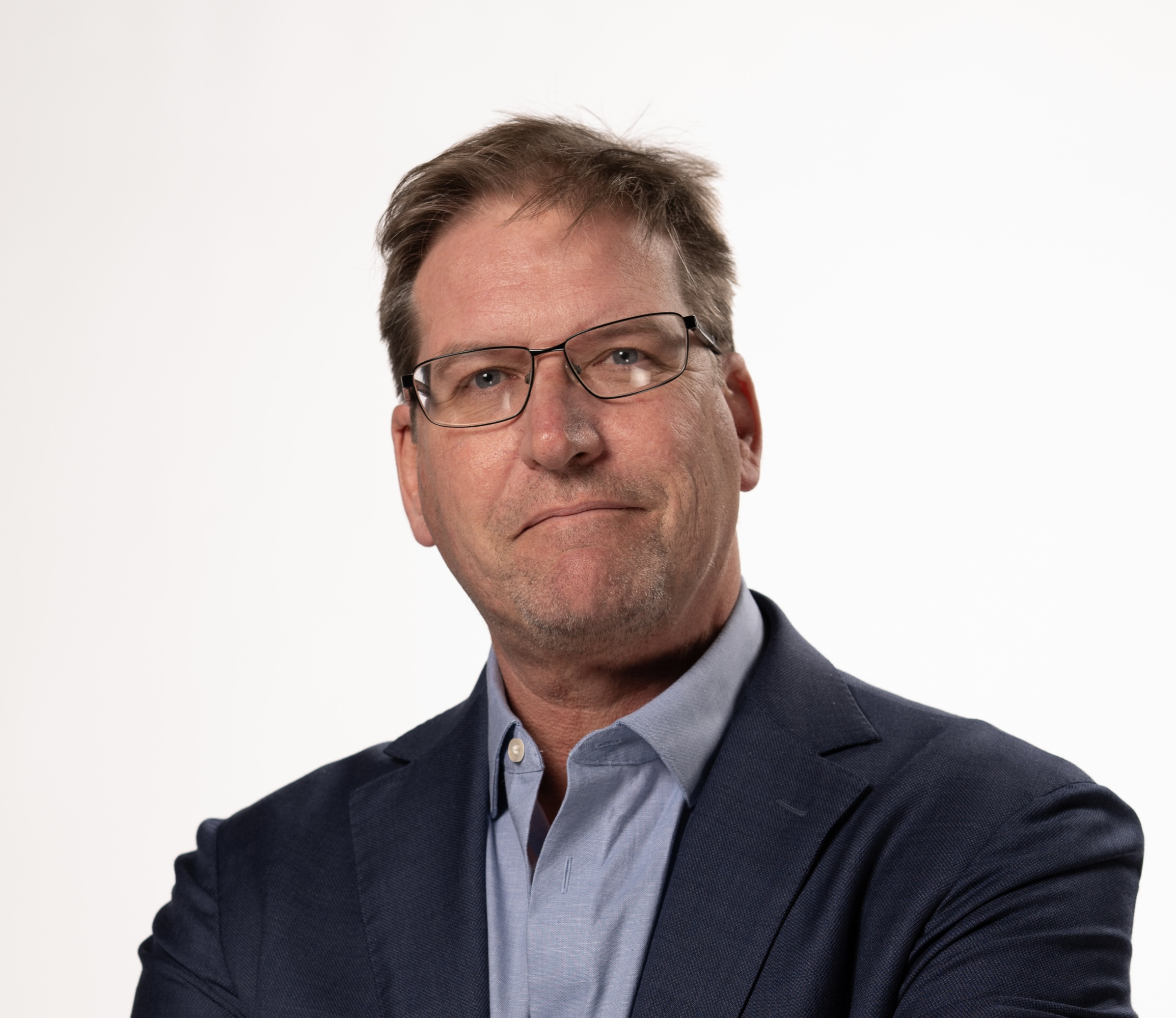
Dr. Gavin Mount is a researcher at UNSW Canberra , specializing in non-traditional security studies , ethnic conflict , and the sociopolitical implications of emerging technologies . His work bridges theoretical analysis with practical applications in conflict transformation and defense studies. Research Focus: Global politics of ethnic conflict, hybrid peace/war frameworks, and socio-political impacts of drone technology. Teaching: Courses like Ethnic Conflict in World Politics and Law, Force and Legitimacy , with a focus on military education and strategic studies. Publications: Recent work includes contributions to Thinking Swarms (2025) and Hybridity on the Ground in Peacebuilding and Development (2018). Grants: Leads the Curricula Integration of Student Wellbeing Resources project under HERDSA. Key Themes across his research include the intersection of technology and conflict, evolving defense paradigms, and pedagogical innovations in security studies.
Richard Caplan is Professor of International Relations at the Department of Politics and International Relations (DPIR), University of Oxford, and an Official Fellow of Linacre College. His academic career spans several decades with significant contributions to the field of international relations, particularly in the areas of international organizations, conflict management, and peacebuilding. Professor Caplan holds an MA and PhD from the University of London. His academic journey has included visiting positions at prestigious institutions including the European University Institute (EUI), University of Konstanz, University of Pavia, Princeton University, and Sciences Po (Paris). Professor Caplan's principal research interests focus on international organizations and conflict management, with particular emphasis on peacekeeping and post-conflict peace- and state-building. His work explores critical questions about how international institutions manage conflicts, the effectiveness of peacekeeping operations, and the complex processes of rebuilding societies after conflict. His research has significantly contributed to understanding the challenges of measuring peace, the dynamics of international administration in war-torn territories, and the recognition of new states in contested contexts. Professor Caplan has received considerable recognition for his scholarly contributions through fellowships and grants from leading organizations including the British Academy, the British Council, the Carnegie Corporation of New York, the Economic and Social Research Council (ESRC), the Folke Bernadotte Academy, the John Fell OUP Research Fund, the Leverhulme Trust, the MacArthur Foundation, the Oxford Martin School, and the US Institute of Peace. As a dedicated educator and mentor, Professor Caplan has supervised numerous graduate students including Ishrat Hossain, Ebenezer Azamati, Michaela Coplen, Lucy Maycox, John Helferich, Gwendolyn Whidden, Alejandro Posada Téllez, Colm Trant, Salma Daoudi, Nadila Ali, and Katharina Engel. His current research focuses on the aftermath of UN peacekeeping operations through the ESRC-funded "After Exit" project, which investigates conditions in countries following the withdrawal of large-scale UN peacekeeping missions. Professor Caplan leads the "After Exit" research team, which includes collaborators from Oxford, Cornell University, and the University of North Carolina at Wilmington. Previously, he contributed to the Oxford Martin Programme on Transboundary Resource Management, which explored cross-border cooperation on natural resource management in the eastern Nile River Basin and the Jordan River Basin.
Prof. Gjalt de Graaf is a Full Professor in the Department of Political Science and Public Administration at Vrije Universiteit Amsterdam, leading the New Public Governance (NPG) research group. He holds dual appointments in the Faculty of Social Sciences and Humanities, specializing in public governance quality, integrity, and value conflicts. His work addresses how social media, academic education, and whistleblowing impact governance practices. Research focuses on resolving public value conflicts, particularly in academia and public institutions. He explores governance through lenses like art’s role in policy-making and administrative traditions’ influence on professional ethics. Notable contributions include studies on Dutch justice policy under pressure and cross-national comparisons of academic integrity. Awarded the Best Article Award 2017 Public Integrity and the VU Faculty of Social Sciences Research Prize (2008) , his work aligns with UN SDGs on peace, justice, and strong institutions. He advises 4 PhD theses and leads projects like Veerkrachtige en zinvolle samenlevingen , addressing societal resilience and youth participation. Teaching includes courses on good governance, public administration ethics, and leadership in dynamic environments. He actively engages in media commentary on integrity issues and organizes conferences on anti-corruption and ethical leadership.
Mats Berdal is a Professor of Security and Development at King's College London's Department of War Studies, with affiliations as a Visiting Professor at The Norwegian Defence Command and Staff College and a Consulting Senior Fellow at the IISS. He serves on multiple editorial boards including International Peacekeeping and International Security . Education: BSc (London) DPhil (Oxford) His research focuses on the intersection of security and development, particularly in post-conflict settings. Key areas include international efforts to consolidate peace after war, UN operations during the Cold War transition, political economy of armed conflicts, evolution of NATO, and post-war violence dynamics. Professional Roles: Member, Academia Europaea Advisory Board, Institute for Post-Conflict and Development Law (Geneva) High-Level Advisory Panel, United Nations Association-UK
Andrea Ruggeri is a Professor of Political Science and International Relations at the University of Oxford, affiliated with Brasenose College and the Department of Politics and International Relations (DPIR). He previously served as Assistant Professor at the University of Amsterdam and earned his PhD from the University of Essex. His research focuses on civil wars, peacekeeping, and collective political violence, with a regional emphasis on Africa and the Middle East. Ruggeri has published in top journals like the British Journal of Political Science and International Security, and his book Composing Peace examines UN peacekeeping mission composition. His academic roles include directing the Centre for International Studies and serving on editorial boards of journals like the Journal of Peace Research. Ruggeri has advised on policy briefs for the UN and NATO, emphasizing data-driven approaches to peacekeeping effectiveness. He has supervised numerous students and contributed to teaching at both undergraduate and graduate levels, integrating quantitative methods through initiatives like the Oxford Q-Step Centre. Ruggeri’s awards include the 2022 Teaching Excellence Award and recognition for Composing Peace being shortlisted for a top literary award. His work bridges quantitative and qualitative methods, exploring themes like conflict management, human rights, and the impact of ideology on political violence.
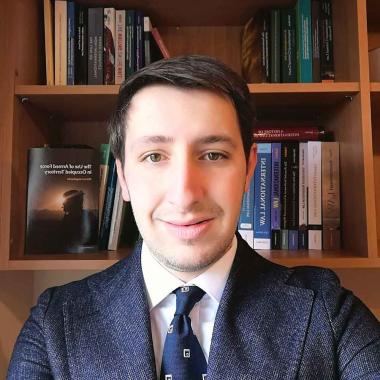
Dr. Marco Longobardo is a Reader in International Law (equivalent to Associate Professor) at the University of Westminster's School of Law. He holds a master's degree from the University of Messina (2012) and a PhD from Sapienza University of Rome (2016). In 2023, he served as a Visiting Professor at the University of Trento, University of Messina, and Université Libre de Bruxelles. He is a Fellow of the Higher Education Academy. His research specializes in Public International Law , with emphasis on International Humanitarian Law, International Criminal Law, Law of Armed Conflict, and Peacekeeping. Current projects examine military occupation, ICC jurisdiction, and ICJ procedures for community interests. His work is cited by the ICC Prosecutor, UN Special Rapporteurs, and national courts. Longobardo has published monographs with Cambridge University Press and articles in leading journals including the American Journal of International Law and European Journal of International Law . His scholarship analyzes trends in occupation law, IHL compliance, peacekeeping legitimacy, and human rights in conflict zones. Awards & Honors: Paul Reuter Prize (ICRC, 2021) Lieber Prize Honorable Mention (ASIL, 2023) Italian Society of International Law Prize (2021) Rosalyn Higgins Prize (Third Place, 2020) He mentors PhD students in international law topics and serves on editorial boards for the Journal of International Humanitarian Legal Studies and International Community Law Review . He is a member of the European Society of International Law and International Law Association.
Paul Kennedy is the J. Richardson Dilworth Professor of History at Yale University, Director of International Security Studies, and Distinguished Fellow of the Brady-Johnson Program in Grand Strategy. His research focuses on great power relations, military history, British foreign policy, and global security. Born in 1945 in England, he holds a BA from Newcastle University and a DPhil from the University of Oxford. He is a Fellow of the Royal Historical Society and numerous other academic societies, and was honored as Commander of the British Empire (C.B.E.) in 2000. His influential works include The Rise and Fall of the Great Powers (1987) and Engineers of Victory (2013). Kennedy’s monthly column on global issues is syndicated worldwide, and he has authored nineteen books. His academic leadership includes directing ISS programs funded by the Smith Richardson Foundation and contributing to UN policy reports. Awards highlight his contributions to historical scholarship, including election to the British Academy. Current projects involve seapower’s role in World War II transformations. Kennedy’s work bridges historical analysis with contemporary strategic challenges, emphasizing problem-solving approaches in global conflict and cooperation.
Antonios Tzanakopoulos is the Professor of Public International Law at the University of Oxford and a Fellow at St Anne’s College . He has held visiting positions at the Universities of Paris II, Paris X, Angers, King’s College London, National and Kapodistrian University of Athens, Bern, Hebrew University of Jerusalem, IDC Herzliya, and China University of Political Science and Law. He previously taught at University College London and the University of Glasgow. DPhil (Oxford), LLM (NYU), LLM/LLB (Athens) Researcher for the Hellenic Ministry of Foreign Affairs and United Nations Graduate Teaching Assistant at Oxford’s Faculty of Law His research interests span public international law, state responsibility, treaty law, international human rights, law of the sea, and international investment law. He has served as counsel in cases before the International Court of Justice , EU courts, and ICSID tribunals, including Cyprus v Russia and Ukraine v Russia. His recent ICJ involvement includes Malaysia’s advisory opinions on the Occupied Palestinian Territory. His scholarly output is evident in 15 recent articles addressing treaty-custom interaction, maritime jurisdiction, self-defence doctrine, sanctions accountability, ICJ provisional measures, and state reactions to international coercion. He co-edits major handbooks on treaty law and domestic judicial engagement with international law. Secretary-General of the International Law Association Joint Secretary of the ILA’s British Branch Editorial Board of Oxford Reports on International Law
Jaremey McMullin is a Senior Lecturer in the School of International Relations at the University of St Andrews, where he conducts research on post-conflict reintegration, youth peacebuilding, and veterans' politics. His work spans academic research, policy advising, and documentary filmmaking, with a focus on Liberia and the United States. Education: PhD in International Relations, University of Oxford (2006) Master of Studies in Forced Migration, University of Oxford (2001) MA in Comparative Ethnic Conflict, Queen's University Belfast (2000) BA in Government (International Relations) and Italian, Georgetown University (1999) His research centers on disarmament, demobilization, and reintegration (DDR), particularly how ex-combatant youth reintegrate through livelihoods like motorcycling in Liberia. He investigates veterans’ return, stigma, and peer support, employing qualitative and ethnographic methods. His 2013 monograph Ex-Combatants and the Post-Conflict State is a key contribution to the field. His recent work explores gendered dynamics in peace processes and youth-led peacebuilding narratives. McMullin’s publications span top journals such as Review of International Studies , Peacebuilding , and Conflict, Security & Development . His recent articles examine masculinities in peace processes, community dialogues in the Mano River Basin, and the role of documentary filmmaking in peace research. He integrates visual media into scholarship, producing acclaimed films like Silkies and Liberia: Legacies of Peace . Scientific Awards and Recognition: Award of Recognition, Close:Up Edinburgh Docufest (2020) Official Selection, Ethnografilm, Paris (2022) Official Selection, Film for Peace, Toronto (2020, 2021) Official Selection, MHSA Film Festival, Colorado (2021) He advises the United Nations on DDR programming, serving on the Research Working Group of the Integrated DDR Training Group. He has led multiple funded projects, including those supported by the Scottish Funding Council. He regularly delivers invited talks and participates in international policy workshops. He supervises graduate research and contributes to public discourse through media engagement and peer review. McMullin is actively involved in research networks and has contributed to public policy impacts, particularly in shaping UN approaches to ex-combatant reintegration. His work supports UN Sustainable Development Goals related to peace, justice, and strong institutions.
Noelle Higgins is an Associate Professor in Law at Maynooth University. She previously held academic roles at the Irish Centre for Human Rights (NUI Galway), the School of Law and Government (DCU), and served as Teaching and Learning Innovation Lead at ATU. Her academic qualifications include Master's degrees in Irish and Law, a Higher Diploma in Education, and a PhD from NUI Galway on 'Wars of National Liberation and Self-Determination.' Her research focuses on international human rights law, international humanitarian law, and international criminal law, with a current emphasis on cultural rights and cultural cleansing. She co-leads WG3 of the COST Action K-Peritia (cultural expertise in law) and is part of the Horizon2020 'ReCreating Europe' project on digital copyright law. She previously led an IRCHSS-funded project on international peace mediation. Her recent publications explore cultural heritage protection, indigenous rights, and the intersection of law and climate change. She has contributed extensively to legal education research, advocating for experiential learning tools like moot courts and field trips. Education: PhD (NUI Galway), LLM (International Human Rights Law), MA (Irish), Higher Diploma in Education Awards: None explicitly listed, but recognized for contributions to legal education and international law research Grants: Horizon2020 (2020), IRCHSS (2010) Labs/Teams: Member of the COST Action K-Peritia and ReCreating Europe Consortium.
Professor Ashley Jackson is a leading scholar in Imperial and Military History at King’s College London and a Visiting Fellow at Kellogg College, Oxford. His career spans academic roles including Director of Research, Vice Dean (Research), and external examiner for multiple universities. Jackson holds fellowships from the Royal Historical Society and Higher Education Academy. He specializes in British imperial history with a focus on wartime contexts, particularly in Africa, the Indian Ocean, and the Middle East. His research emphasizes colonial contributions to global conflicts and their underappreciated roles in World Wars. Educated at New College, Oxford, Jackson has authored over 15 books including The British Empire and the Second World War and Ceylon at War, 1939–1945 . Current projects explore the war’s impact on the British Empire and comparative global wartime experiences. He teaches at the Joint Services Command and Staff College and has lectured widely at military institutions and international forums like the Chalke Valley History Festival. Administratively, Jackson has led research strategy groups, managed doctoral fellowships, and served on peer review panels. His editorial roles include the Journal of African Military History and the Helion book series on South Asian military culture. He co-founded the British Empire at War Research Group and contributes to institutions like the Bodleian Library and the Soldiers of Oxfordshire Museum. His awards include British Academy grants and AHRC funding for collaborative projects. Jackson’s work bridges academia and practice, addressing contemporary security issues in post-conflict regions like Afghanistan and the Sahel. He regularly engages with policymakers on counterinsurgency, humanitarian engagement with armed groups, and climate adaptation in conflict zones.
Dr. Natasha Kuhrt is a Senior Lecturer in International Peace and Security at King's College London's Department of War Studies, housed within the School of Security Studies. Her academic affiliations include membership in BISA, Chatham House, ISA, ASEN, and BASEES. She holds a PhD from UCL and has taught extensively on international law, intervention, and security studies. Her research focuses on Russian foreign policy in Asia, regionalism in Eurasia/Asia-Pacific, nationalism, and the Responsibility to Protect (R2P). Education: BA (Hons) in Russian & German from School of Slavonic and East European Studies (UoL), MA in Soviet Studies (SoSlavonic), PhD (UCL) on Russian policy toward China/Japan. Research interests span Russian security policy, international law applications in conflict zones, and the nexus between memory discourse and foreign policy. She co-leads the BISA Working Group on Russian & Eurasian Security and collaborates on ESRC UK-Japan projects on populism. Current book projects include co-authored volumes on Russian foreign policy and Russia-China relations. Her work appears in outlets like Journal of Global Faultlines , Asian Survey , and Australian Journal of Defence and Strategic Studies . She advises multiple PhD students and engages in public commentary via BBC, Al Jazeera, and academic conferences on Ukraine-Russia dynamics, China-Russia relations, and UN peacekeeping. Labs/Teams: Co-director of War Crimes Research Group and Centre for Grand Strategy, focusing on historical conflict analysis and strategic diplomacy.
Felix Herbert is a Research Fellow at the Max Planck Institute for Comparative Public Law and International Law (MPIL) in Heidelberg, Germany, where he has been working since January 2021. He also serves as a Lecturer at the University of Heidelberg's Faculty of Law since 2024 and as Associate Editor for the Max Planck Encyclopedia of Public International Law since 2025. In April 2025, he began a legal clerkship (Rechtsreferendariat) at the Heidelberg Regional Court as part of his German legal education path. Herbert's research focuses primarily on the prohibition of the use of force under international law and peremptory norms (ius cogens), with significant scholarly contributions analyzing these principles in the context of Russia's war against Ukraine. His dissertation project examines The Prohibition of the Use of Force as a Peremptory Norm of General International Law (ius cogens) . His work demonstrates how fundamental principles of international law apply to contemporary conflicts and challenges in global security. Herbert's publications reveal a strong emphasis on the practical application of international legal principles to current geopolitical conflicts, particularly examining the Russia-Ukraine war through the lens of ius cogens. His scholarship bridges theoretical international law with pressing real-world security challenges, contributing significantly to ongoing debates about the enforcement of fundamental legal norms during armed conflicts. Otto Schmidt Prize for the Promotion of the Europeanization and Internationalization of Law (2nd Prize, December 2024) for his contribution on ius cogens and Russia's war against Ukraine As an educator, Herbert has taught Working Groups on International Law at the University of Heidelberg since the Winter Semester 2021/22 and has served as a coach for the Heidelberg Jessup Moot Court teams. He has also been a judge for the Philip C. Jessup International Law Moot Court Competition since 2022. Additionally, he serves as the Environmental Officer for the MPIL, focusing on sustainability initiatives within the institute's operations.
Dapo Akande is the Chichele Professor of Public International Law at the University of Oxford’s Faculty of Law and a Fellow of All Souls College. He is Co-Director of the Oxford Institute for Ethics, Law and Armed Conflict (ELAC) at the Blavatnik School of Government and has held visiting positions at Yale, Melbourne, and other institutions. Since January 2023, he has served as a Member of the United Nations International Law Commission. His academic background and research span public international law, with a focus on the law of armed conflict, international criminal law, human rights, law of international organizations, and cyber operations. He is a generalist with deep expertise in the regulation of armed conflict, humanitarian access, and accountability mechanisms. His recent scholarship addresses critical issues such as the crime of aggression, immunity of state officials, targeted killings by drones, and humanitarian relief in conflict zones. His work on the Oxford Guidance on the Law Relating to Humanitarian Relief Operations , commissioned by UN OCHA, has shaped policy and legal understanding globally. He co-authored the authoritative Oppenheim’s International Law: The United Nations , which won the 2019 ASIL Certificate of Merit. The trends in his publications reveal a sustained engagement with the evolving legal frameworks governing war, accountability, and state responsibility. His work bridges doctrinal analysis with practical policy impact, particularly in the areas of drone warfare, ICC jurisdiction, and humanitarian law compliance. Scientific awards and recognition include: Certificate of Merit, American Society of International Law (2019) Akande has served as legal adviser to the UK Parliament’s All Party Parliamentary Group on Drones and to multiple international bodies, including the UN Security Council, Human Rights Council, and ICRC. He has advised national courts (including the UK Supreme Court) and acted in cases before the ICJ, ICC, and ECtHR. He is founding editor of EJIL:Talk! and has held editorial roles in leading journals such as the American Journal of International Law and European Journal of International Law . He leads several research initiatives, including the Oxford Process on International Law Protections in Cyberspace, and previously co-directed the Oxford Martin Programme on Human Rights for Future Generations and the ERC-funded project on the Individualisation of War. He is actively involved in global policy through advisory roles with the US State Department, UK Ministry of Defence AI Ethics Panel, and the Ukrainian Government Working Group on war damage compensation.
Mauricio Tenorio Trillo serves as the Gustavus F. and Ann M. Swift Distinguished Service Professor of History at the University of Chicago and the College, while maintaining an affiliation as Profesor afiliado at Centro de Investigación y Docencia Económicas (CIDE) in Mexico City. With over two decades of scholarly work including thirteen years at Chicago, he remains actively engaged in research as evidenced by his upcoming research leave for Autumn 2025 and Winter 2026. Tenorio earned his PhD from Stanford University in 1992, establishing a foundation for his interdisciplinary approach that bridges historical methodology with linguistic analysis and urban studies. His academic trajectory demonstrates consistent engagement with Mexican and Latin American historical narratives across institutional contexts. Professor Tenorio's research explores the intricate relationships between language and historical understanding, urban development and national identity formation, and the conceptual frameworks that shape regional perceptions. His work critically examines how historical narratives are constructed, with particular focus on Mexico City's evolution and the conceptual construction of Latin America as a region. Recent scholarship increasingly addresses historical memory, monument culture, and the politics of historical representation, reflecting his evolving intellectual trajectory while maintaining core methodological commitments. Analyzing his publication trends reveals Tenorio's sustained commitment to conceptual history and the deconstruction of regional identities. His scholarship consistently demonstrates how historical narratives shape contemporary understandings of place and culture, with language serving as both medium and subject of historical inquiry. The interdisciplinary nature of his work bridges history with linguistics, urban anthropology, and cultural studies, creating a distinctive methodological approach that has influenced multiple fields. Professor Tenorio's scholarly contributions have been recognized through several prestigious awards: Honorary Mention for The Bolton-Johnson Prize from the American Historical Association (2013) Spiro Kostof Book Award from the Society of Architectural Historians (2015) Gordon J. Laing Prize from The University of Chicago Press (2015) Quantrell Award for Excellence in Undergraduate Teaching (2019) While specific details about current advising relationships aren't prominently featured, Tenorio's collaborative work such as 'El Porfiriato: Una propuesta y un balance' with Aurora Gómez demonstrates scholarly partnership. His extensive publication record and teaching recognition suggest significant student mentorship, with his work appearing in numerous academic journals and receiving translations that extend his scholarly impact beyond English-language academia. Professor Tenorio operates within a robust transnational scholarly network connecting the University of Chicago with Mexican academic institutions, particularly CIDE. This binational academic presence enables him to bridge North American and Latin American intellectual traditions, creating a distinctive conceptual space that informs his research on historical narratives and regional identity formation. His work exemplifies how transnational scholarly engagement can produce innovative historical methodologies and conceptual frameworks.