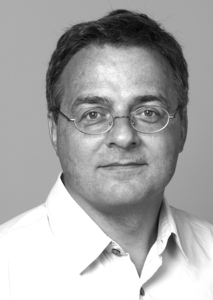
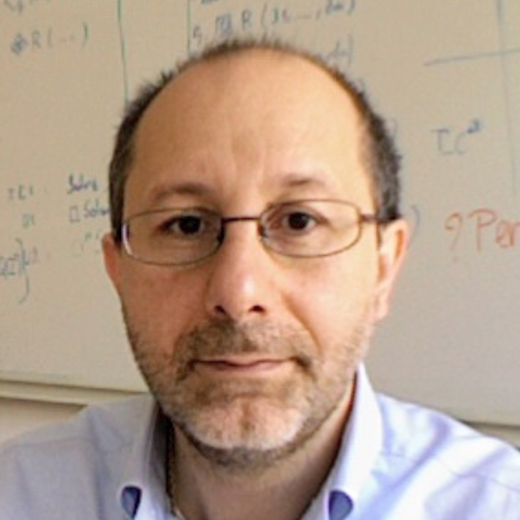
Dr. Lawrence Cabac is a Professor (acting) at the Department of Computer Science, University of Hamburg, within the Theoretical Foundations of Computer Science group. He holds a Ph.D. in Informatics and specializes in Petri Nets, Agent Systems, and Software Engineering. His research focuses on integrating Petri Nets with agent-oriented software development, workflow modeling, and distributed systems. Teaching includes courses on Petri Nets, Formal Foundations of Computer Science, and Agent Systems. He has led projects like Renew (a Petri Net tool), PAOSE (Petri Net-based Agent-Oriented Software Engineering), and Mulan/Capa frameworks. Active in academic service, he co-edits PNSE workshops and contributes to tool development for Petri Net applications. Research interests span formal methods, model-driven development, and distributed architectures. His work bridges theory and practice, emphasizing Petri Net applications in agent systems and software engineering.
Galina Paskaleva is a Researcher at the Institute of Information Systems Engineering within the Faculty of Informatics at Vienna University of Technology (TU Wien). She works as a Project Assistant (Projektassistentin) with engineering qualifications (Dipl.-Ing.in BSc) and is actively involved in the Business Informatics Group. Her office is located at HD0205 (Favoritenstrasse 9, 1040 Wien) and she can be contacted at galina.paskaleva@tuwien.ac.at. Her research focuses on the intersection of construction engineering and digital technologies, particularly in tunneling projects. She specializes in Building Information Modeling (BIM), Industry Foundation Classes (IFC), and digital transformation in the Architecture, Engineering & Construction (AEC) sector. Her work addresses practical challenges in conventional tunneling projects, aiming to improve documentation processes through digital solutions. Recent publications demonstrate her expertise in applying software engineering principles to tunnel construction challenges, with a focus on data modeling, automated translation of domain knowledge, and integration of architectural details into 3D models. Her research has practical applications for improving data exchange between project stakeholders in tunnel construction. Galina collaborates extensively with researchers across multiple institutions, particularly with colleagues at TU Wien including Marco Huymajer, Robert Wenighofer, Christian Huemer, and Alexandra Mazak-Huemer. Her work bridges the gap between theoretical modeling approaches and practical construction industry needs.
**Dominik Bork** is an Assistant Professor at the Department of Business Informatics within the Faculty of Informatics at TU Wien. His core research focuses on conceptual modeling, model-driven engineering, and the integration of artificial intelligence into enterprise systems. He leads projects such as the Network Lab and has coordinated initiatives like the Automatisiertes End-to-End-Testen von Cloud-basierten Modellierungswerkzeugen and MFP 4.2 Advanced Analytics for Smart Manufacturing . His work emphasizes GLSP-based web modeling tools , including the development of open-source platforms like BIGUML for UML modeling. He has published extensively on topics like knowledge graph transformation, accessibility in modeling tools, and AI-enhanced decision management. Bork actively contributes to academic communities through conference organizing roles and guest editorial work for journals like Enterprise, Business-Process and Information Systems Modeling . His research bridges theoretical advancements with practical applications in enterprise architecture and sustainable systems engineering. Education & Background : Holds titles including Dipl.-Wirtsch.Inf.Univ. and Dr.rer.pol., reflecting his interdisciplinary expertise in business informatics and economics. Key Contributions : - Developed CM2KGcloud , a web-based platform for conceptual model-to-knowledge graph transformation. - Pioneered EA ModelSet , a FAIR dataset advancing machine learning in enterprise modeling. - Authored influential papers on inclusive conceptual modeling for disability-aware tools. - Led efforts in model-based construction of enterprise architecture knowledge graphs . Grants/Projects : Automatisiertes End-to-End-Testen von Cloud-basierten Modellierungswerkzeugen (Principal Investigator) Digital Platform Enterprise (Principal Investigator) MFP 4.2 Advanced Analytics for Smart Manufacturing (Principal Investigator) Labs/Teams : Active in the Network Lab at TU Wien, focusing on cutting-edge research in modeling technologies and AI integration.
Dr. Philip Langer is a researcher at TU Wien's Institut für Information Systems Engineering, part of the Faculty of Informatics. His work focuses on model-driven engineering, semantic model differencing, and cloud-based software modernization. He contributed to frameworks like GLSP, ARTIST, and xMOF, emphasizing tool integration and collaboration in modeling environments. Research Areas: Model transformation, UML semantics, cloud migration, and search-based optimization Key Projects: ARTIST (cloud migration), GLSP (web modeling tools), xMOF (formal semantics) Publications highlight advancements in model differencing using execution traces, multi-objective model merging (MOMM), and semantic visualization techniques for web-based IDEs. His work bridges theoretical foundations with practical tool development, addressing challenges in collaborative modeling and legacy system modernization. Awards: No specific prizes mentioned, but recognized through prolific conference contributions and framework development. Grants/Advising: He collaborates extensively with peers like Tanja Mayerhofer and Manuel Wimmer, though specific grants or student advisement details are not explicitly stated. His research impacts both academic and industrial software engineering practices.
Manuel Wimmer is a Professor affiliated with the Department of Business Informatics at TU Wien's Faculty of Informatics. His main research area is Model-Driven Engineering , focusing on topics such as AutomationML, Cyber-Physical Systems (CPS), and industrial standards like IEC 62264 and ISA-95. He leads the Network Lab and contributes to interdisciplinary projects involving robotics, cloud computing, and blockchain applications. Research Interests: Model Transformation, Tool Interoperability, Industrial Automation, Educational Methodologies in Software Engineering. Key Technologies: UML, ATL, OPC UA, AutomationQL. Recent work emphasizes bridging metamodeling platforms (e.g., ADOxx/EMF integration) and adapting robotic mission planning systems. He has published extensively in workshops like MDE 2023 and conferences on model-driven engineering. Teaching activities include remote-learning strategies for software engineering education, as documented in his 2021 paper. No explicit awards are listed, but his contributions to standards like AutomationML reflect industry recognition.
Martina Seidl is a researcher and principle investigator at TU Wien's Institut für Softwaretechnik und Interaktive Systeme (E188). Her main affiliation is within the Faculty of Informatics. She leads the FAME Project (Formalizing and Managing Evolution in Model-Driven Engineering), focusing on advancing formal methods in software engineering. Her research interests include formal verification techniques, SAT/QBF solving algorithms, model-driven engineering, and automated reasoning. She has contributed to advancements in quantified Boolean formula (QBF) solving, parallel computing methodologies for logical problems, and formal methods in software model analysis. Her work spans theoretical computer science and practical applications in automated theorem proving and model checking. Notable contributions include expansion-based QBF solving approaches, parallel solving frameworks, and feature-based classifications of formal verification techniques. Seidl co-organized the QBF Gallery initiative, which curates benchmark suites for quantified Boolean formula competitions. She has also published extensively on clause redundancy optimization, blocked clause analysis, and the integration of formal methods in educational contexts like UML@Classroom.
Alexander Loeser is a researcher active in natural language processing (NLP) and its applications in clinical and financial domains. He has contributed to diverse areas including clinical outcome prediction, transformer-based reinforcement learning environments, domain knowledge integration, and information extraction from text. His recent work focuses on evaluating large language models' financial literacy via domain-specific languages and addressing data drift in clinical NLP tasks. Key Research Areas: Clinical decision support systems and outcome prediction Domain knowledge injection into transformer models Biased news article detection Interactive NLP systems for entity linking Methodological Focus: Reinforcement learning and attention mechanisms Multi-task and self-supervised learning Active sampling for annotation efficiency Topic segmentation and classification Loeser has collaborated extensively with researchers like Wolfgang Nejdl, Betty van Aken, Felix Gers, and Paul Grundmann, with publications spanning from 2012 to 2025. His work emphasizes interpretability, generalization, and practical deployment of NLP models in real-world domains.
Alessandro Artale is an Associate Professor in the Faculty of Computer Science at the Free University of Bozen-Bolzano, where he is affiliated with the KRDB Research Centre. His research spans theoretical and applied aspects of knowledge representation, ontologies, and temporal reasoning. He earned his PhD in Computer Science from the University of Florence in 1994 and has held research and academic positions at CNR-LADSEB, IRST (now FBK), and UMIST (University of Manchester). PhD in Computer Science, University of Florence, 1994 His research interests include: Description Logics Ontologies and Conceptual Modelling Temporal and Computational Logics Knowledge Representation and Databases Artificial Intelligence and Natural Language Semantics His recent scholarly activities are reflected in his participation in leading international conferences such as AAAI, IJCAI, ECAI, KR, DL, TIME, and FoIKS. These publications and committee roles highlight a consistent focus on formal methods in AI, particularly in the areas of description logics, temporal reasoning, and ontology-based systems. The research demonstrates a strong theoretical foundation with applications in semantic web technologies and knowledge-driven systems. Notable scientific contributions include: Principal Investigator of the EPSRC project on Temporal Databases using Description Logics (2001–2004) Member of the KnowledgeWeb Network of Excellence Member of the InterOp Network of Excellence Member of the ESPRIT DWQ project on Data Warehouse Quality Artale has advised numerous Master's and PhD students through project supervision and has organized academic events such as the TIME and DL workshops. He has served on the program committees of over 50 international conferences and workshops, demonstrating extensive engagement with the research community. His teaching includes core computer science courses in algorithms, formal languages, compilers, and discrete mathematics. He is actively involved in research labs and teams including: KRDB Research Centre, Free University of Bozen-Bolzano Collaborations with European research networks (KnowledgeWeb, InterOp)
Ivan Polášek is a part-time Associate Professor at the Department of Applied Informatics within the Faculty of Mathematics, Physics and Informatics at Comenius University in Bratislava. His institutional affiliations include membership in the Division of Theory and System Design. His research explores: Software modeling and visualization techniques Virtual/augmented reality applications in software engineering AI-driven optimization of software design and refactoring Collaborative development methodologies Design pattern analysis and anti-pattern detection Recent publications (2017-2024) demonstrate strong focus on VR-supported collaborative design, executable software models, and communication methodologies in team-based development environments. He teaches undergraduate courses in agile development and software architectures, while leading research seminars. No awards or supervised students are documented in available sources. Polášek contributes to the INNOVAITE research project and maintains collaborations with European institutions including researchers from the Netherlands, France, and Sweden.
Nalaka R. Dissanayake serves as a Senior Lecturer in the School of Computer Science and Engineering at the University of Westminster, where he contributes to the Software Systems Engineering Research Group. With 17 years of academic experience since 2007, he progressed from student instructor to his current senior position while completing his doctoral studies. His foundational education includes a B.Sc. in Information Technology from the Sri Lanka Institute of Information Technology (2007), an M.Phil. from the University of Colombo School of Computing (2017), and a Ph.D. from the University of Westminster (2024). Dr. Dissanayake's research centers on rich web-based applications engineering, where he has established significant contributions through architectural style development and design methodology formalization. His work introduces specialized concepts including RiWAArch Style, BAW-MVC, and delta communication principles that address core challenges in web application state management and communication efficiency. Current research frontiers actively explore prompt engineering techniques for integrating AI/ML capabilities into rich web applications, demonstrating adaptation to emerging technological paradigms while maintaining focus on architectural fundamentals. His publication portfolio reveals a clear research trajectory evolving from AJAX application foundations (2013-2014) through architectural pattern specification (2017-2020) toward comprehensive design methodology development (2023-2024). This progression demonstrates increasing theoretical sophistication while maintaining practical implementation relevance, with consistent output across journals like the Journal of Web Engineering and major conferences including FTC and ICTer. As an active academic contributor, Dr. Dissanayake serves as a reviewer for the Journal of Web Engineering and various conferences. His research group membership provides access to collaborative opportunities within the university's software engineering ecosystem, while his extensive teaching experience across multiple institutions offers valuable mentorship perspective for graduate students.