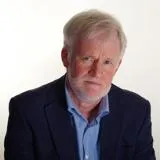
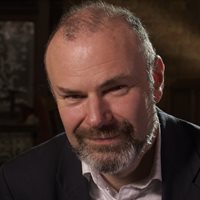
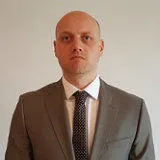
Dr Rod Thornton is a Senior Lecturer in Russian Defence and Security Studies at King’s College London, affiliated with the Defence Studies Department and School of Security Studies. He specializes in the Russian military's kinetic and sub-threshold warfare, with a focus on cyber capabilities, space warfare, and UK homeland resilience. His research includes recent British Academy-funded work on UK civil defense capacity during the pandemic, advocating for dedicated civil defense organizations. He has published extensively on Russian military tactics in Ukraine, AI-cyber integration, and space-based deterrence. Russian military cyber operations Space warfare dynamics UK resilience capacity gaps Scientific awards include a British Academy grant (2020). His students focus on asymmetric warfare, AI, cyber, and regional security issues. He teaches at the UK Defence Academy and has collaborated with institutions in Finland, South Korea, and the Freeman Air and Space Institute.
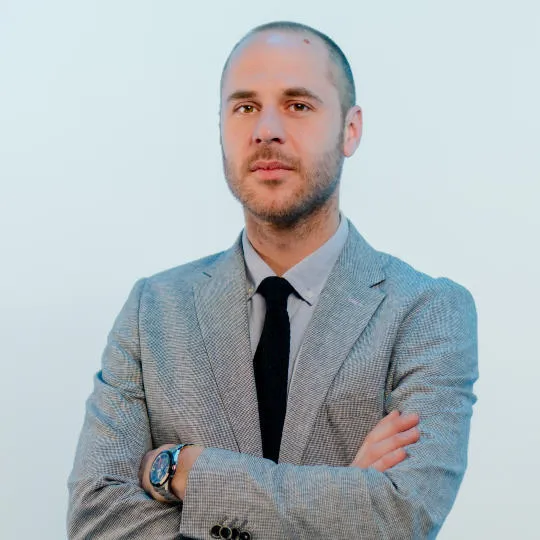
Dr. Hillary Briffa is a Senior Lecturer in National Security Studies and Assistant Director of the Centre for Defence Studies at King’s College London. She holds a Ph.D. in War Studies from King’s College London, focusing on small states’ grand strategy. Her roles include teaching National Security Studies, Small States and International Security at MA level, and leading BA3 Dissertation training. Research interests span small states’ security, climate security, grand strategy, and First World War propaganda. She leads the Climate Change and International Order portfolio at the Centre for Grand Strategy and co-organizes the annual U.S.-U.K. World Order summer school. Grants include maritime security for small states (with Georgetown University Qatar), national energy transitions, and foresight with the Estonian Defence Forces. Briffa advises the UK government on strategic reviews, international organizations, and defense policy. Awards include the U.S. State Department’s Emerging Young Leaders Award (2016), Hans J. Morgenthau Fellowship (2020/21), and Fellow of the Higher Education Academy (2023). She serves on King’s Academic Board, EDI committees, and chairs the Circle-U Climate Knowledge Hub. Her work bridges academia and policy, emphasizing small states’ strategic agency in global challenges. Publications include analyses of Maltese neutrality, Indo-Pacific maritime security, and small states’ pandemic responses. She co-authored sections in volumes on war studies, climate policy, and international order. Briffa’s research and outreach aim to enhance small states’ resilience and influence in evolving security landscapes.
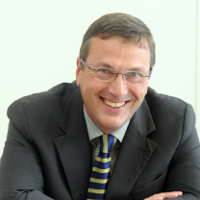
Dr Zeno Leoni is a Lecturer in the Defence Studies Department at King’s College London, based at the Joint Services and Staff College (JSCSC) of the Defence Academy of the UK. He is also an affiliate of the Lau China Institute, co-convening their policy brief series. His research focuses on US and Chinese grand strategies, US-China relations, AUKUS, and world order, with recent publications including a forthcoming book on the new Cold War. He leads a research group studying middle-power diplomacy in the Indo-Pacific and has advised Italian and UK government bodies on geopolitical trends. Teaching: Delivers courses on China for the Higher Command and Staff Course (HCSC) at the JSCSC, and lectures on International Security Studies, Airpower, and International Political Economy. Additionally teaches at Italy’s IASD defence institute. Key Research Areas: Specializes in US-China competition, AUKUS dynamics, and the evolving Indo-Pacific order. His work bridges academia and policy, with contributions to UK Parliament hearings on AUKUS and US defense policies. Leads research on middle powers’ strategies amid great power competition. Professional Activities: Executive Director of ITSS Verona, a non-profit focused on international security. Active in King’s research groups including Contemporary Marxism, Environmental Security, and Economic Conflict & Competition. Frequently contributes to media analyses for outlets like the Financial Times and BBC. Awards: While no specific prizes are listed, his extensive policy engagement and academic output reflect recognition in strategic studies circles. Collaborations include work with the EU, UAE, and other middle powers on geopolitical strategy.
Professor Göran Roos is a distinguished Swedish academic, author, and businessman known for his contributions to innovation management, industrial policy, and strategy. He is a founder of modern intellectual capital science and currently holds a visiting professorship at the University of Adelaide. His global advisory work spans governments and organizations, with visiting roles in Australia, the UK, and Norway. Affiliations: University of Adelaide (Visiting Professor), SA Zero Partner. His research focuses on decarbonisation strategies, industry hubs, and green defence. He recently led a roundtable discussion on decarbonisation models in Europe and presented a public lecture titled "Accelerating Decarbonisation Through Industry Hubs: Lessons from Europe’s Experience" , emphasizing practical strategies for net-zero transitions. No specific scientific awards or grants are mentioned in the text. He advises on global sustainability initiatives but no student names or lab affiliations are provided.
Dr. David Jordan is a Senior Lecturer in Defence Studies at King's College London, based at the Defence Academy of the UK. He serves as Co-Director of the Freeman Air and Space Institute and holds roles such as Academic Director (Air) for the Advanced Command & Staff Course. His research focuses on air and space power, military history, and strategic studies, with notable works including Understanding Modern Warfare . He has contributed to radio/TV commentary on air power and defence matters and is a Fellow of the Royal Aeronautical Society, Royal Historical Society, and Royal Society of Arts. Education: Doctorate in relevant field (not explicitly stated). Affiliations: RAF Centre for Air & Space Power Studies (RAFCASPS) Chief of the Air Staff’s Air Power Workshop His teaching includes modules on air power theory, the Falklands War, and Royal Air Force history. He supervises PhD students researching topics like space power theory, air power doctrine, and British military history since 1914. Recent research highlights include analyses of air power in the Falklands Conflict, RAF maritime operations, and space strategy. He has authored over 30 publications, including peer-reviewed articles on historical battles and contemporary military operations. Grants and projects involve collaboration with institutions like the Freeman Air and Space Institute, focusing on independent research into air and space power issues. His work often intersects with policy analysis, such as NATO operations and defense reviews.
Henri van Soest is a Professor of Policy Analysis at the RAND School of Public Policy and a Senior Analyst at RAND Europe. He is based at RAND, a global policy research organization, where he leads studies on energy security, artificial intelligence governance, critical infrastructure protection, and European Union policy. His work supports key institutions including the European Union, UK government, and Dutch government. His research focuses on the intersection of technology and policy, particularly in energy systems and AI. Key areas include: AI governance and trustworthy AI tools Energy security and digitalisation of the power grid Critical undersea infrastructure protection Cybersecurity in energy systems Space technology regulation Societal resilience and national security The trend in his recent publications shows a growing emphasis on the dual-use nature of AI in critical infrastructure, balancing innovation with security and resilience. His work combines technical analysis with policy recommendations, often using modeling and expert elicitation. Much of his research addresses transatlantic and European policy challenges, especially in energy and security domains. Scientific contributions and policy impact are evident through frequent publications and expert submissions to governmental bodies. Notable outputs include evidence submissions to the UK Parliament and reports for the U.S. Department of Energy. While no formal awards are listed, his influence is reflected in high-level policy engagement. He has advised on grants and policy studies involving global teams, particularly in energy transition, AI infrastructure, and resilience planning. His prior experience includes energy policy research at the University of Oslo, cleantech analysis, and corporate governance in banking. He holds a Ph.D. from the University of Cambridge and a joint LL.M. from KU Leuven and the University of Zurich. Henri van Soest leads research within RAND Europe’s multidisciplinary teams focusing on science, technology, and security policy. His work often involves collaboration across international experts and institutions, particularly on EU and NATO-related security issues. He contributes to projects involving horizon scanning, Delphi studies, and quantitative modeling in policy contexts.
Stuart Croft is Vice-Chancellor & President of the University of Warwick and Professor of International Security in the Department of Politics and International Studies (PAIS). Since joining Warwick in 2007 he has served as Pro-Vice-Chancellor for Research (Arts & Social Sciences), Provost, and since February 2016 as the University’s chief executive, leading 5,500 staff across all disciplines. Education & Career: 18 years at the University of Birmingham, latterly Professor of International Relations and Head of the School of Social Sciences. Appointed Professor of International Security, University of Warwick, January 2007. Pro-Vice-Chancellor for Research (Arts & Social Sciences) 2011-2013. Provost 2013-2016. Vice-Chancellor & President from February 2016. Research Interests: Professor Croft’s scholarship lies at the intersection of security studies and political culture, using constructivist and narrative approaches to analyse how identities and discourses shape security policy. He has published extensively on the War on Terror, NATO transformation, European security governance, and the securitisation of Islam in Britain. His work combines large-scale funded empirical projects with theoretical innovation in International Relations. Publications & Grants Trend: Over the past two decades his output has clustered around three themes—cultural narratives of terrorism and counter-radicalisation, institutional governance of Euro-Atlantic security (NATO/EU), and arms-control regimes—moving from traditional strategic studies toward critical security approaches that foreground identity, discourse and governance. Scientific Awards & Fellowships: Academician, Academy of Social Sciences (2006) Fellow, Royal Society of Arts (2006) International Studies Association – International Security Section Book Award short-list 2007 Doctoral Supervision & Mentoring: He has successfully supervised 21 PhD students at Birmingham and Warwick, examined 25 UK PhDs as external examiner, and currently supervises 6 doctoral researchers. He has mentored 9 ESRC, EU and British Academy post-doctoral fellows. Editorial & Professional Leadership: Editor of the Palgrave ‘New Security Challenges’ book series since 2005; co-editor of Contemporary Security Policy 1989-2004; editorial board member of Critical Studies on Terrorism and Dynamics of Asymmetric Conflict . Chair (2009-2011) and President (2011-2013) of the British International Studies Association.
Mats Berdal is a Professor of Security and Development at King's College London's Department of War Studies, with affiliations as a Visiting Professor at The Norwegian Defence Command and Staff College and a Consulting Senior Fellow at the IISS. He serves on multiple editorial boards including International Peacekeeping and International Security . Education: BSc (London) DPhil (Oxford) His research focuses on the intersection of security and development, particularly in post-conflict settings. Key areas include international efforts to consolidate peace after war, UN operations during the Cold War transition, political economy of armed conflicts, evolution of NATO, and post-war violence dynamics. Professional Roles: Member, Academia Europaea Advisory Board, Institute for Post-Conflict and Development Law (Geneva) High-Level Advisory Panel, United Nations Association-UK
Professor Matthew Jones is Professor of International History at the London School of Economics and Political Science (LSE), where he joined in 2013. He previously held academic positions at the University of Nottingham and Royal Holloway, University of London. He was appointed Cabinet Office official historian for the UK strategic nuclear deterrent in 2008. University: London School of Economics and Political Science School: Department of International History Academic Rank: Professor Email: m.c.jones@lse.ac.uk Office: SAR.3.09 Office Hours: Wednesday 1-2pm, Thursday 4-5pm Education: Undergraduate Degree: University of Sussex DPhil in Modern History: St Antony’s College, Oxford Professor Jones’s research focuses on 20th-century international history, particularly Post-WWII British Foreign and Defence Policy , Cold War Nuclear History , and British Decolonization in Southeast Asia . His work explores Anglo-American relations, nuclear strategy in Asia, and the political history of the UK’s nuclear deterrent. He has a sustained interest in the Vietnam War and US foreign relations after 1941. His recent publications reveal a strong trend in official historical analysis of nuclear policy, especially through his two-volume Official History of the UK Strategic Nuclear Deterrent , based on full access to classified government records. His scholarship combines diplomatic, strategic, and political history with deep archival research, often uncovering new insights into high-level decision-making during the Cold War. Scientific Awards and Recognition: Appointed Cabinet Office official historian of the UK strategic nuclear deterrent and Chevaline programme (2008) Recipient of grants from the Arts and Humanities Research Council, British Academy, JFK Library, LBJ Library, Gilder Lehrman Institute, and Eccles Centre Professor Jones has supervised multiple PhD students, including Grant Golub, Alexandra Penler, and William King. His research is supported by major grants from national and international funding bodies. He has also served as Head of the Department of International History at LSE from 2017 to 2020. He is actively involved in public engagement, having delivered talks at institutions such as the Woodrow Wilson Center, Los Alamos National Laboratory, and the Royal United Services Institute. His work bridges academic scholarship and policy-relevant historical analysis.
David Betz is Professor of War in the Modern World within the Department of War Studies at King's College London. His academic profile centers on strategic analysis of contemporary warfare, civil-military relations, and defense reform with regional expertise in Eastern Europe and Asia-Pacific. With 57 research outputs and 344 citations, he maintains an active scholarly presence in military strategy and information-age conflict studies. His research spans military strategy, contemporary warfare paradigms, civil-military dynamics, and defense institutional reform, with particular emphasis on counter-insurgency, small wars, and the impact of information technology on modern conflict. The research fingerprint reveals deep engagement with 21st-century warfare concepts, information society dynamics, and strategic imperatives across multiple conflict domains including urbicide and asymmetric threats. Recent publications (2024-2025) demonstrate thematic continuity in examining fortification evolution, urban destruction in warfare, and strategic realities in active conflicts like Ukraine. These works collectively analyze how industrial limitations challenge Western military assumptions while exploring historical strategic aesthetics and emerging warfare patterns in the information age. No scientific awards were specified in the source material. Betz has supervised 22 research students and led five major externally funded projects including AHRC research on Rwandan genocide military strategies and interdisciplinary studies on borderlands, fortification history, and networked social movements. His professional activities include organizing the 'Reviewing UK Army COIN Doctrine' workshop and delivering keynotes at the UK Defence Academy and Ministry of Defence courses. He actively contributes to the KCL Insurgency Research Group and maintains collaborative networks through conference participation and strategic analysis workshops focused on asymmetric conflict and terrorism.
Dr David B Roberts is a Reader in International Security and Middle East Studies at King’s College London, leading the Arabic and English Master of Research (MRes) programme in the School of Security Studies. He holds adjunct faculty roles at Sciences Po’s Paris School of International Affairs (PSIA), and is a Non-Resident Fellow at the Arab Gulf States Institute and the Middle East Policy Council. His primary research focuses on Middle East security, foreign policy analysis, and military capability development in Gulf monarchies. He authored Security Politics in the Gulf Monarchies: Continuity Amid Change (Columbia UP, 2023) and uses Foucault’s dispositif concept to analyze military innovation. Dr Roberts has supervised PhD students including Sara Al Mahri and Ali Al-Maadeed. His work explores ontological security, US-Gulf relations, and the impact of Iranian activity on UK interests. He founded the Cambridge Elements in Middle East Politics book series and previously directed RUSI Qatar. His research group on Environmental Security bridges security studies and environmental issues. Recent publications analyze US retrenchment in the Gulf, UAE military development, and Qatar’s evolving foreign policies. He actively engages with policy debates through events like the 2024 discussion on Gulf monarchies’ security roles. Grants and collaborations include work with RAND Corporation and King’s College think-tanks.
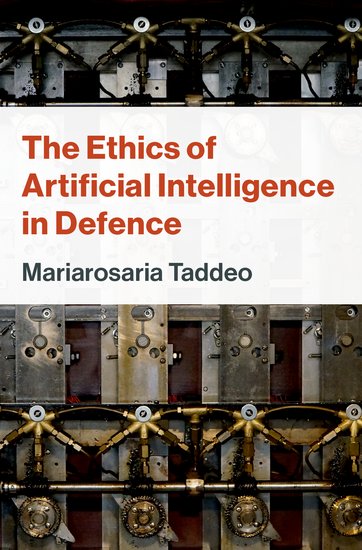
Mariarosaria Taddeo is Professor of Digital Ethics and Defence Technologies at the Oxford Internet Institute (University of Oxford) , where she also serves as DPhil Programme Director for Information, Communication and the Social Sciences. She is a Senior Research Fellow at the Alan Turing Institute and holds advisory roles at institutions including the Ministry of Defence (UK) Ethics Advisory Panel , the BRAID Programme , and the Leonardo Foundation . Education PhD (Doctor Europeus) in Philosophy from University of Padua Mariarosaria Taddeo’s research spans Digital Ethics, Philosophy of Technology, Cybersecurity Ethics, and AI Governance , with a focus on national defence applications. Her work addresses trust in AI , cyber conflict regulation , and ethical frameworks for autonomous weapons . She has published extensively in journals like Nature , Science , and Minds and Machines , including studies on data philanthropy , digital well-being , and quantum technology ethics . Scientific Awards 2010 Simon Award for Outstanding Research in Computing and Philosophy 2016 World Technology Award for Ethics 2018 InspiringFifty: Top 50 Italian women in technology ORBIT listings (2018, 2020) of top 100 women in AI Ethics 2020 Women’s Forum for Economy and Society: Outstanding Rising Talents ComputerWeekly Top 100 Influential Women in UK Technology (2020, 2023) Her projects include the UK MOD-funded AI Ethics Principles initiative, the NATO Cooperative Cyber Defence Centre of Excellence ethical guidance project, and contributions to the PETRAS IoT Research Hub . She advocates for ethical AI implementation in defence and digital governance, influencing EU policy through the CEPS Task Force on AI and Cybersecurity .
Nicole Jackson is an Associate Professor in the School for International Studies at Simon Fraser University (SFU), Vancouver. Her research focuses on foreign and security policy, particularly Russian foreign policy, post-Soviet Central Asia, securitization, and hybrid challenges. She holds a Ph.D. from the London School of Economics (LSE) in Government, an MSc in Comparative Government from LSE, and a BA (Hons) in Political Science from the University of Toronto's Trinity College. Her career includes prior roles as Assistant Professor at the University of Warwick (UK) and current research on NATO's approaches to nuclear and information warfare risks. She is the 2025 NATO Defence College Fellow, focusing on strengthening responses to disinformation and hybrid threats through multilateral cooperation. Her work spans empirical studies on Russian policy, Canadian foreign policy responses, and theoretical debates on securitization. Education: Ph.D., Government, London School of Economics MSc, Comparative Government, London School of Economics BA (Hons), Political Science, University of Toronto Research themes include Russian military actions in post-Soviet conflicts, securitization frameworks, and Canada/NATO strategies against hybrid warfare. She has published extensively on these topics, including her 2003 book Russian Foreign Policy and the CIS and recent articles on disinformation and deterrence. Her 2024 MINDS/NDC Fellowship in Rome aims to address NATO’s responses to manipulated information threats. Teaching includes courses on Russian foreign policy, global security governance, and special topics in governance and conflict. She supervises graduate students on Eurasian security and Canadian foreign policy, with alumni in government agencies like Global Affairs Canada and CSIS.
Maria Garcia holds the position of Senior Lecturer at the University of Bath, affiliated with the Politics, Languages & International Studies school. Her work focuses on the intersection of trade policy, economic governance, and geopolitical strategies, particularly in the context of the European Union’s evolving international engagements. Her research interests include the politics of trade agreements, Brexit’s impact on UK-EU relations, and the EU’s strategic partnerships with Latin America, Asia, and Australasia. She also explores new trade frameworks like TTIP, TPP, and RCEP, emphasizing how values and sustainability intersect with trade policy. Dr. Garcia has led three significant research projects: EUinLAC: A Jean Monnet Project exploring the EU’s reconfiguration in Latin America (led by Nuremberg University, status: Not started). GW4 AF10-005: Wales and South West responses and preparations for Brexit and UK trade policy (March 2019 – November 2019). Transformations in Global Economic Governance: Integration via Free Trade Agreements (Economic and Social Research Council, December 2014 – December 2016). Her recent collaborations span geopolitical analyses of trade patterns in the USA, Asia, and Latin America. She actively contributes to understanding post-Brexit trade dynamics and global governance challenges.
Alan Hunter is a Professor in Autonomous Systems at the University of Bath's Department of Mechanical Engineering. He serves as Deputy Head of Department for Workload and Wellbeing and is affiliated with the Water Innovation & Research Centre (WIRC) and the UKRI CDT in Accountable, Responsible and Transparent AI. His research focuses on underwater acoustics, signal processing, imaging, and machine intelligence, with applications in sonar-based remote sensing and marine robotics. Education: B.E. (Hons I) in Electrical and Electronic Engineering from the University of Canterbury (2001), PhD in Synthetic Aperture Sonar (SAS) from the same institution (2006). Career highlights include roles at the University of Bristol (2007-2010), TNO Netherlands (2010-2014), and NATO CMRE (2014). He has led projects on sub-sediment imaging, autonomous mine-hunting systems, and precision navigation algorithms. Research Interests: • Underwater Acoustics & Sonar Imaging • Autonomous Underwater Vehicles • Machine Learning for Acoustic Data Analysis • Non-Destructive Inspection via Ultrasound • Sustainable Coastal Protection (via UN SDG contributions) Active Projects (2023-2025+): - Noise Network Plus : Engineering a Quieter Future (EPSRC) - TESSMEX SR 4 : Naval Mine-Hunting Technology (Defence Lab) - Decision-Making with Ambiguities : Legal AI for Robotics (EPSRC) Professional Affiliations: • Senior Member, IEEE • Associate Editor, IEEE Journal of Oceanic Engineering • Collaborations with NATO, TNO, and UK Defence Orgs. Labs & Teams: • Robotics and Autonomous Systems Lab • Centre for Space, Atmospheric and Oceanic Science • WIRC @ Bath (Water Innovation Hub)