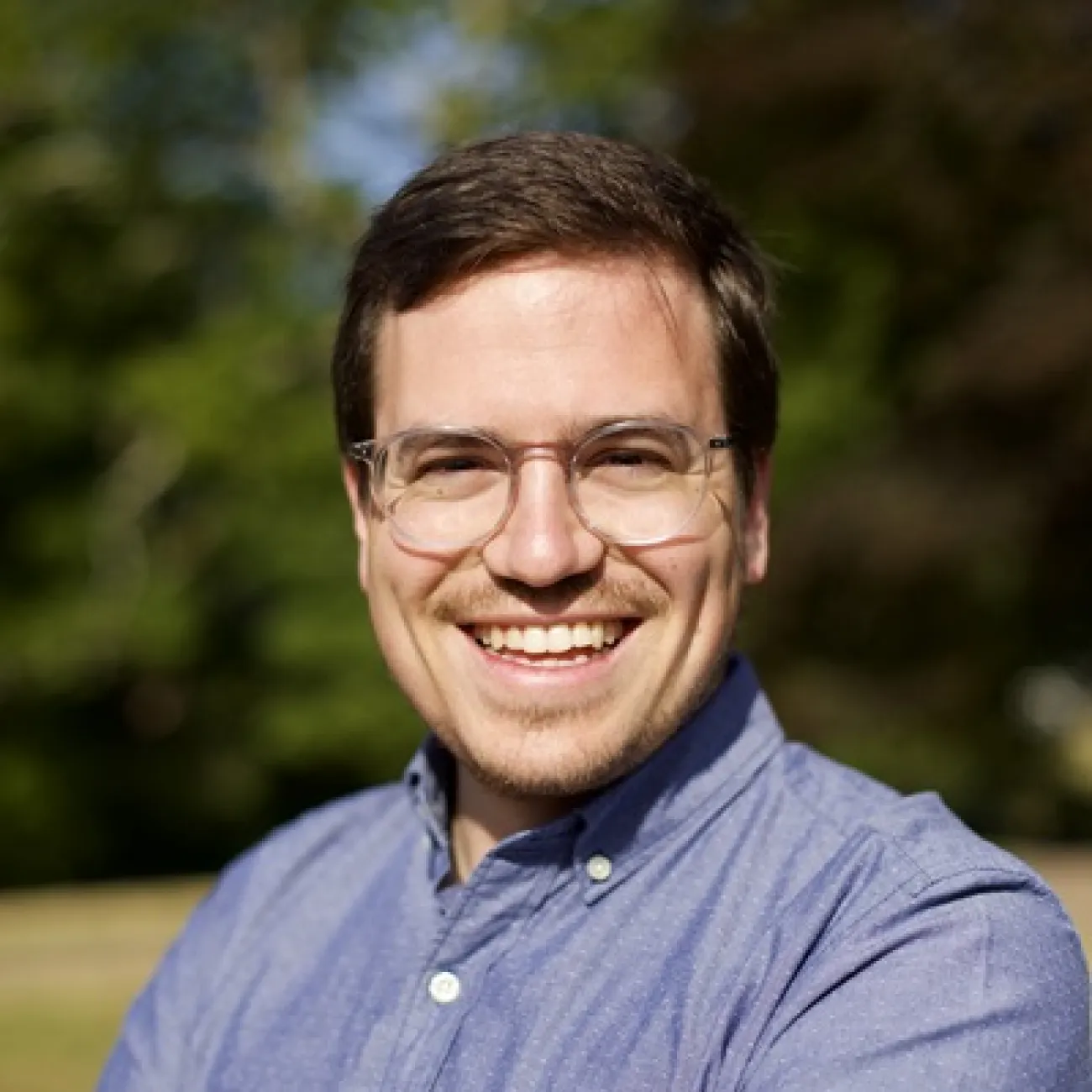
Heikki Kauhanen is a researcher at Aalto University's Department of Built Environment. His work focuses on photogrammetry, remote sensing, and 3D modeling applications in urban environments. Collaborates on projects involving UAV photogrammetry and LiDAR Develops 3D visualization tools for environmental analysis Specializes in integrating geospatial datasets for urban vegetation monitoring Recent projects include biomass estimation for urban trees in Helsinki, multitemporal change detection in built environments, and cost-efficient survey drone development. His research bridges computational methods with practical urban planning challenges.
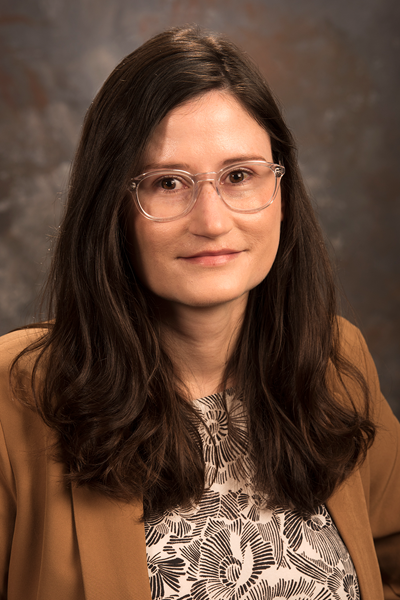
Professor Zdenka Babić is a full professor at the Department of General Electrical Engineering, Faculty of Electrical Engineering, University of Banja Luka. With a prolific research career spanning over two decades, she has established herself as a leading expert in signal processing, computer vision, and biohybrid systems. Her work bridges electrical engineering with biological applications, particularly in the innovative field of using honeybees for landmine detection. Professor Babić's research interests focus on signal processing applications, image analysis, machine learning, and embedded systems. Her pioneering work in biohybrid systems has gained international recognition, especially her research on using honeybees as biosensors for explosive detection. She has led numerous research projects exploring the intersection of electrical engineering and biological systems, developing sophisticated monitoring platforms for bee activity and environmental parameters. Her recent publications demonstrate a strong focus on practical applications of computer vision and signal processing, with emphasis on UAV video analysis, sensor fusion, and IoT-based monitoring systems. The research shows a clear trajectory toward increasingly sophisticated biohybrid systems that combine traditional engineering approaches with biological sensing mechanisms. Professor Babić has secured significant research funding from various national and international sources, including NATO Science for Peace and Security, European Commission programs, and the Ministry for Science, Technology Development and Higher Education of Republika Srpska. Her projects consistently involve interdisciplinary collaboration across engineering and biological sciences. She has been instrumental in developing electronic systems for remote monitoring of environmental parameters in bee yards, creating novel methods for honeybee counting and activity tracking, and establishing frameworks for biohybrid systems that leverage natural biological processes for security applications. Her work on bee-based landmine detection represents a unique intersection of entomology, electrical engineering, and humanitarian demining efforts.
Prof. Turan SÖNMEZ serves as a faculty member in the Department of Forest Engineering within the Faculty of Forestry at Bursa Technical University. His expertise spans Geographic Information Systems in Forestry, Forest Growth Models, Forest Yield, and Dendrometry, with active contributions to forest management practices in Türkiye's Mediterranean and Marmara regions. His research focuses on developing advanced forest growth and yield models for species like Calabrian pine and Turkey oak, integrating Geographic Information Systems (GIS) and remote sensing technologies for precision forest monitoring. Key areas include UAV-based inventory systems, land-cover change analysis using elevation and settlement proximity metrics, and honey forest potential mapping. His methodological innovations in competition index development and single/double-entry volume equations have enhanced forest management planning accuracy. Prof. SÖNMEZ's publication record shows consistent output over 15+ years, with 31 articles accumulating 242 citations and an H-index of 8. Recent work demonstrates increasing integration of deep learning (e.g., U-Net architectures) with traditional forestry techniques, particularly in Istanbul and Bursa forest directorates. His research bridges theoretical modeling and practical forest management applications across Mediterranean ecosystems. His academic service includes developing spatial databases for forest management plans and contributing to national standards for forest inventory methodologies in Türkiye.
Dr. Dayi Zhang is a postdoctoral researcher in the Department of Electronic and Electrical Engineering at the University of Strathclyde. He holds a PhD in Autonomous Unmanned Aerial Vehicle for Non-Destructive Testing (awarded May 2019) and contributes to the UN Sustainable Development Goals, particularly Quality Education and Industry Innovation. As a topical advisory panel member for Drones Journal (since 2024), he bridges UAV technology with industrial applications. Research interests focus on unmanned aerial vehicles for non-destructive testing , with expertise in ultrasonic inspection , eddy current sensing , and force-torque sensor integration . His work addresses challenges in pipeline monitoring , metallic structure assessment , and autonomous robotic positioning , often combining sensor fusion and remote sensing techniques. Key research areas include UAV-deployed sensor systems Structural health monitoring Electromagnetic acoustic resonance Capacitive and pressure sensor design Photogrammetric and LiDAR-based localization Scientific recognition includes the 2024 IEEE TIM Outstanding Reviewer and Innovator of the Future (2025) awards. Collaborations span nuclear facilities, aerospace, and manufacturing domains, with ongoing editorial contributions to Discover Sensors and Drones journals.
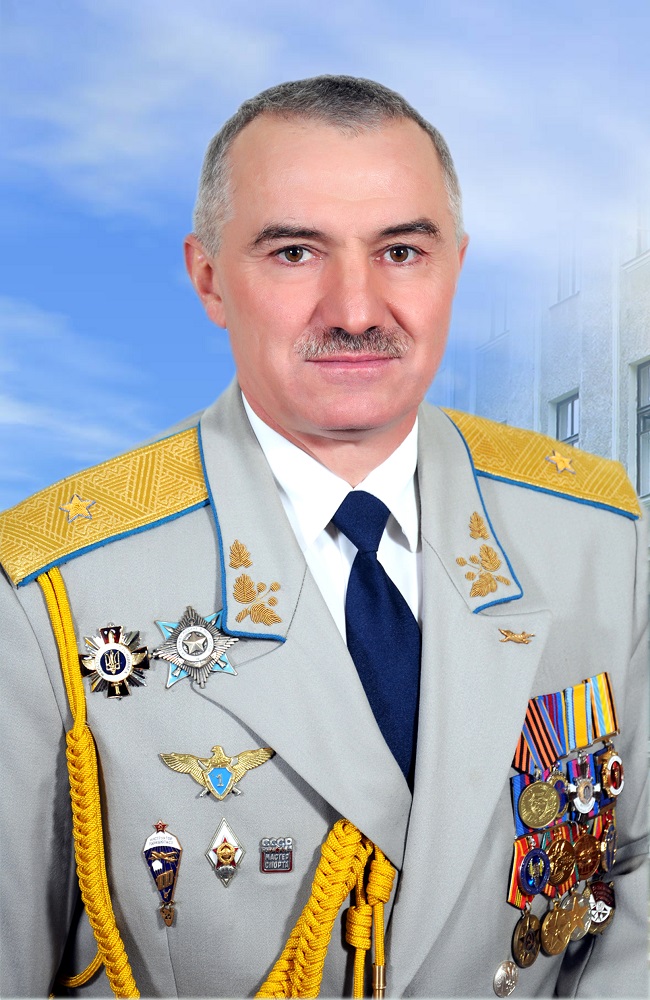
Kotov Oleksiy Borisovich is a Professor at the Department of Transport Technologies within the Faculty of Transport at Zaporizhzhia Polytechnic University. He commenced his activities at the university in 2021 and holds the academic title of Professor with a Doctor of Technical Sciences degree. His educational background includes higher education in 'Command and Staff Operational and Tactical Air Force' from Yuri Gagarin Air Force Academy (1988), and in 'State Military Administration' from Ivan Chernyakhovsky National University of Defense of Ukraine (2013). He defended his Candidate's thesis in 2008 at the National Defense Academy of Ukraine and his Doctoral dissertation in 2014 at the National Technical University 'Kharkiv Polytechnic Institute'. Kotov's scientific interests focus on avionics, multimodal transportation, and air transport. His research spans sustainable aviation technologies, alternative energy applications in transport, intelligent transportation systems, and UAV development. He has published 57 scientific works including 2 monographs, 2 textbooks, and 8 educational manuals. His recent publications demonstrate a strong trend toward addressing Ukraine's transportation challenges through innovative technological solutions, with particular emphasis on sustainable practices, multimodal integration, and military-civilian technology transfer in the transport sector. He teaches courses in History of aviation, Warehouses and warehouse complexes, and Vehicles. His work bridges military expertise with civilian transportation applications, creating unique interdisciplinary research approaches. Kotov is fluent in Ukrainian and Russian, with intermediate English proficiency. His office is located in room 164 at the university's campus on 64 Zhukovsky Street, Zaporizhzhia.
Dana Caulton is an Assistant Professor in the Department of Atmospheric Science at the University of Wyoming within the College of Engineering and Applied Science . Education : B.S. in Chemistry (Indiana University, 2010), Ph.D. in Analytical Chemistry (Purdue University, 2014), Postdoc in Civil and Environmental Engineering (Princeton University, 2015-2018) Research Interests focus on greenhouse gas emissions from fossil fuel operations, urban environments, and agricultural sources. She specializes in aircraft flux measurements , carbon cycle dynamics , and dispersion modeling to improve emission estimates through uncertainty analysis and field validation. Recent Publications highlight advancements in airborne methane monitoring, ammonia transport modeling, and emission characterization from unconventional natural gas sites and agricultural operations. Her work spans climate change mitigation , air quality assessment , and environmental sensing technology . Current Projects include: GROWS (Global to Regional: Origins of Water Stress): NASA-funded climate modeling and water vapor transport analysis in the Mountain West TRANS2Am (Transport and Transformation of Ammonia): NSF-funded ammonia emission quantification from CAFOs ASIA-AQ (Asian Satellite Investigation of Air Quality): International collaboration for multi-perspective air quality analysis in Southeast Asia Methodologies include: Aircraft Eddy Covariance for regional flux measurements Mass Balance Techniques for emission rate calculations Dispersion Modeling with Gaussian plume and LES frameworks Development of Lightweight Gas Sensors for UAVs and aircraft platforms
Emmanuel Cledat is an Associate Professor of photogrammetry at the National Institute of Geographic and Forest Information (IGN) and lecturer at the ENSG (National School of Geographic Sciences), where he teaches courses in sensor technology, mathematics for photogrammetry, and applied photogrammetry. As a member of the UMR Lastig research unit and ACTE research team, he conducts interdisciplinary work spanning photogrammetry, geomatics, and transportation safety. His research interests focus on photogrammetry , sensor calibration , and measurement of risks faced by cyclists . Dr. Cledat specializes in macro-photogrammetry of small objects, drone-based mapping systems, and GNSS-denied environment navigation. His methodological expertise includes camera calibration models, 3D reconstruction, and fusion of photogrammetric and LiDAR data. Dr. Cledat's publication record demonstrates consistent contributions to photogrammetry and geospatial sciences since 2016, with recent work exploring AI applications in geomatics and historical bridge modeling. His research shows a clear trajectory from foundational work on drone photogrammetry calibration to more applied projects addressing transportation safety and cultural heritage preservation. ISPRS Best Young Author Award 2020 As principal investigator, Dr. Cledat leads the CycloSafe project which quantifies cycling risks using LIDAR-equipped bicycles, and the EntrePonts project focused on 3D modeling of historical bridge models from the 17th-19th centuries. His teaching portfolio spans undergraduate and graduate courses in photogrammetry fundamentals, underwater photogrammetry, and climate change workshops. His laboratory work centers around the UMR Lastig research unit, with projects involving drone mapping systems, 3D TOF camera calibration, and photogrammetric fieldwork methodologies for both small objects and large-scale environmental mapping.
Roman Modlinger is a Researcher at the Faculty of Forestry and Wood Technology (Czech University of Life Sciences Prague) with primary academic focus in Forest Entomology , Forest Protection , and Remote Sensing Applications in Forestry . His work addresses critical forest health challenges, particularly bark beetle ( Ips typographus ) infestations in Central European spruce forests. His research integrates: Entomology : Behavioral and genetic studies of bark beetles Remote Sensing : UAV-borne multispectral imagery and LiDAR for forest monitoring Microbial Ecology : Gut microbiome analysis in forest pests Chemical Ecology : Application of semiochemicals for pest control Forest Resource Management : Impact assessment and mitigation strategies Roman Modlinger has contributed to 15 recent articles (2023-2024) focusing on: Bark beetle outbreak modeling and prevention Machine learning applications for multispectral forest analysis Microbial community dynamics in forest pests Wood quality assessment post-infestation Chemical repellent formulations Sniffer dog applications in forest monitoring He has also developed innovative software (PHENIPS) for bark beetle development prediction and leads practical forest protection methodologies. His work includes significant collaboration with European researchers on climate change impacts on forest ecosystems.
Dr. Sergi Palleja Cabre is a Royal Academy of Engineering Research Fellow at the Institute of Sound and Vibration Research, within the Faculty of Engineering and Physical Sciences at the University of Southampton. He is a member of the Rolls-Royce University Technology Centre in Propulsion Systems, focusing on understanding and modeling propeller installation noise in novel aircraft architectures and noise reduction technologies. His educational background includes a PhD from the University of Southampton (2017-2020) as a Marie Skłodowska Curie Early Stage Researcher, an MSc in Aerospace Dynamics from Cranfield University (2016-2017), and an MEng in Aeronautical Engineering from UPC BarcelonaTech, Spain (2015-2017). Dr. Palleja Cabre's research focuses on aeroacoustics, particularly propeller interaction noise in Unmanned Aerial Vehicle (UAV) and Urban Air Mobility (UAM) sectors, fan broadband noise reduction through innovative treatments like 'downstream porosity', and duct acoustics for noise reduction in compact ducted propellers. His work combines fundamental research with practical applications, leading to significant noise reduction technologies including patented approaches. Analysis of Dr. Palleja Cabre's recent publications reveals a consistent focus on aeroacoustic noise sources and suppression techniques. His research spans propeller noise in UAVs and UAM, turbulence-aerofoil interaction noise, and ducted fan noise. A significant portion of his work investigates Over-Tip-Rotor liners as a noise reduction technology, alongside innovative approaches using porous materials and flexible aerofoil sections. Dr. Palleja Cabre has received recognition for his research, including: 2021 AIAA Aeroacoustics Best Student Paper Award As an educator, Dr. Palleja Cabre teaches Fluid Mechanics (module FEEG2003), organizes the Boundary Layer Lab, and supervises undergraduate and MSc research projects. He is actively accepting PhD student applications and has been co-supervising research projects since 2021. His research is supported by the Royal Academy of Engineering and Rolls-Royce through the University Technology Centre in Propulsion Systems. Dr. Palleja Cabre is a member of the Acoustics Group at the Institute of Sound and Vibration Research, collaborating with industry partners like Rolls-Royce to develop noise reduction technologies for next-generation aircraft propulsion systems.
Fabrizio Giulietti is a Full Professor of Flight Mechanics at the Department of Industrial Engineering, University of Bologna. He has been head of the Flight Mechanics Laboratory since 2006 and has served as Coordinator of the Master's Degree Course in Aerospace Engineering since October 1, 2018. His research focuses on: Flight mechanics and aircraft dynamics Control systems for atmospheric and spacecraft Unmanned Aerial Vehicles (UAVs) for civil applications Formation flight control of UAVs Spacecraft control systems, particularly for Low Earth Orbit missions Multi-rotor aircraft performance and applications Professor Giulietti has led several national and international projects including FP7-AAT-2008-RTD-1 (Personal Plane), FP7-SEC-2011-1 (AEROCEPTOR), and ESA-funded projects ESEO and ARMADA. His work has resulted in over 70 scientific publications with 766 citations and an h-index of 14 (Scopus). He serves as a reviewer for prominent journals including: Journal of Guidance, Control, and Dynamics (AIAA) Aerospace Science and Technology (Elsevier) The Aeronautical Journal (Royal Aeronautical Society) Transactions on Aerospace and Electronic Systems (IEEE) Professor Giulietti has been teaching in the field of atmospheric flight mechanics and aircraft design since 2004, including courses in Aircraft Design (2004-2006), Flight Mechanics (2006-present), and Flight Dynamics (2007-present). Since 2013, he has also served as a Visiting Professor at KU Leuven in Belgium. He coordinates the Flight Mechanics Laboratory at the University of Bologna, where his team works on UAV development for volcano monitoring, Earth Magnetic Field data acquisition in Antarctica, and other applications requiring advanced guidance, navigation, and control systems.
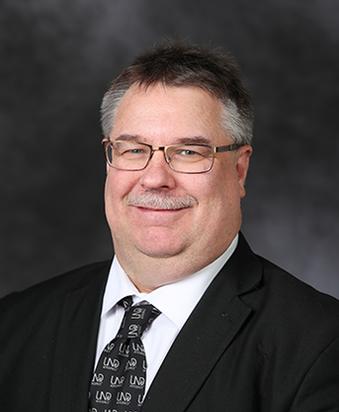
David James Delene is a Research Professor in the Department of Atmospheric Sciences at the University of North Dakota , with a secondary appointment as Aerospace Research Fellow at the John D. Odegard School of Aerospace Sciences. His expertise spans Cloud Physics , Atmospheric Aerosols , and Airborne Measurements , with a focus on Scientific Programming and Open Source Software development. He has taught advanced courses in Atmospheric Chemistry and Measurement Systems since 2006 and led significant research initiatives including the IMPACTS and FATIMA field campaigns. Education : Ph.D. in Atmospheric Science (University of Wyoming), MS in Geophysics (Michigan Tech), BS in Applied Physics (Michigan Tech) Research Interests center on airborne measurement systems, cloud microphysics, aerosol dynamics, and machine learning applications in meteorology. He develops open-source tools like ADTAE and adpaa_readplot_ccncdata for atmospheric data analysis. His work bridges Remote Sensing with Statistical Analysis to improve weather modification techniques. Scientific Awards include: UND's Spirit Faculty Achievement Award (2014) Golden Remer Awards (2007, 2013) Biggest Techie Award (2009) Delene advises both undergraduate capstone projects and graduate students in Atmospheric Sciences, with recent master's advisees including Kendra Sand (2024) and Joseph O'Brien (2023). He manages the Ballooning Laboratory and maintains the department's Atmospheric Sciences Wiki , contributing to UNIDATA and NASA EPSCoR programs.
Riku Jäntti is a Professor in the Department of Information and Communications Engineering at Aalto University. His research focuses on wireless communications, 5G/6G technologies, and backscatter communications systems. He leads research in areas including radio resource management, cognitive radio, machine type communications, and cloud radio access networks. Professor Jäntti's research interests span several key areas in modern wireless communications: Wireless Communications and 5G/6G technologies Backscatter and Ambient IoT communications Radio Resource Management and Cognitive Radio UAV and Drone communications networks Physical layer security and secure communications Machine Type Communications and Internet of Things His recent publications (2023-2025) demonstrate a strong focus on next-generation wireless technologies, particularly in backscatter communications, UAV networks, and 6G development. His work shows a trend toward integrating AI techniques with wireless communications, enhancing security in low-power networks, and developing practical solutions for real-world wireless challenges. His research has significant implications for the future of energy-efficient wireless communications and the Internet of Things. Professor Jäntti has received numerous awards for his research contributions: Most downloaded paper of IEEE Journal of Radio Frequency Identification (Dec 2024) IEEE TCGCC Best Conference Paper Award (Jan 2019) Second Best Paper Award (Jan 2019) Bronze best paper award (Jan 2020) Best Paper Award at COCORA 2011 Best Paper Award at WCNC 2013 Supervisor/manager of the year at Helsinki University of Technology, 2009 Professor Jäntti has supervised numerous students and researchers throughout his career, contributing to the development of next-generation wireless communication experts. His work has attracted significant research funding, particularly in the areas of 5G/6G technologies and IoT communications. He actively collaborates with industry partners to translate research findings into practical applications. He leads the Communication Engineering research group at Aalto University, which focuses on cutting-edge wireless communications research. The group works on multiple projects related to future wireless networks, including 6G development, backscatter communications, and UAV-based wireless systems.
Xiumin Diao is an Associate Professor at Purdue University's School of Engineering Technology, specializing in robotics and mechatronic systems for healthcare and manufacturing applications. His work emphasizes human-robot interaction, control algorithms, and energy-efficient UAV designs. Education: Ph.D. in Mechanical Engineering (2007, New Mexico State University) M.S. in Measurement Technology and Automatic Device (2003, Beihang University) B.S. in Mechanical Design and Manufacturing (2000, Yantai University) Research focuses on cable-driven parallel robots , reinforcement learning , and intention prediction using neural networks. Recent publications explore stiffness analysis, UAV arm rotation efficiency, and hybrid control strategies. Key trends in his work include: Advancing adaptive control for robots with unknown dynamics Optimizing energy efficiency in aerial robotics Applying deep learning to human motion understanding His lab develops hardware-in-the-loop microgravity simulators and rehabilitation devices, with applications in disaster exploration and satellite docking.
Dr. Alexander Ferworn is an Adjunct Professor in the Faculty of Computing and Software at McMaster University, specializing in computer science applications for public safety and emergency response systems. His work bridges robotics, human-computer interaction, and blockchain technology to address challenges in urban search and rescue, disaster relief, and medical data processing. His research focuses on integrating drones, haptic navigation systems, and virtual reality simulators to enhance emergency responder capabilities. Key contributions include frameworks for IED neutralization training ( Universal Simulation Platform ), blockchain-based aid delivery systems, and haptic feedback mechanisms for hazardous environments. He has extensively collaborated on projects involving canine-assisted technology and 3D disaster scene reconstruction. Dr. Ferworn’s scholarly activity spans 25 years with 126 publications in venues like IEEE International Conference on Safety, Security, and Rescue Robotics, IEEE GEM Conference, and Simulation & Gaming . His work has been referenced in patents and adopted by institutions like the Health Information Systems Research Centre . While specific teaching details remain unmentioned, his research portfolio demonstrates sustained engagement with disaster response systems since 1999.
Calvin Coopmans is affiliated with Utah State University in the Department of Electrical and Computer Engineering , contributing to UAV technology and remote sensing. His work focuses on low-cost unmanned systems, flight control, and safety mechanisms. Key research themes include fractional order controllers for UAV stabilization, multi-sensor fusion for attitude estimation, and cost-effective remote sensing platforms . His publications emphasize open-source UAV development and heterogeneous system integration. Notable collaborations include work with YangQuan Chen and other researchers on AggieAir projects. While no explicit scientific awards are listed, his contributions to UAV flight control and radiation field mapping demonstrate technical expertise.