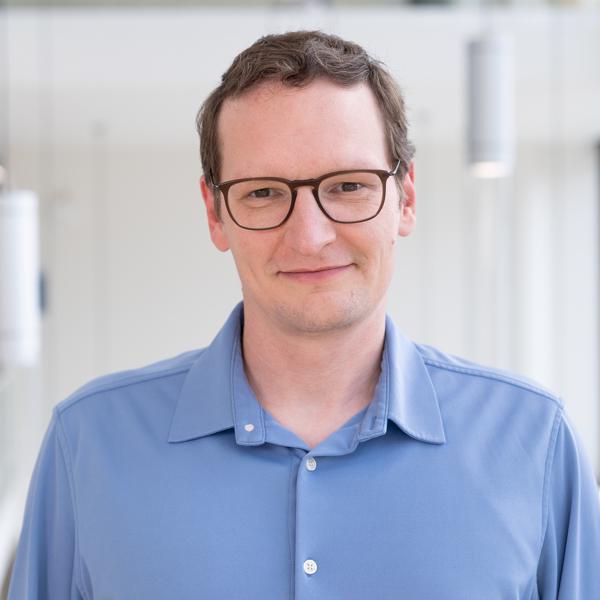
Amin Hammad is a Professor at the Concordia Institute for Information Systems Engineering, with an additional appointment as Affiliate Professor in Building, Civil, and Environmental Engineering at Concordia University. His research focuses on advancing construction technology through digital transformation, automation, and AI integration. He leads work in BIM applications, 4D simulation, robotic systems, and sustainable infrastructure management. His interdisciplinary approach bridges civil engineering with computer science and data analytics. Key research areas include: Automation and robotics in construction (Construction 4.0) BIM and digital twin lifecycle management AI-driven defect detection and inspection systems Occupational safety through exoskeleton performance evaluation Multi-purpose utility tunnel optimization Energy-efficient building systems Recent work emphasizes applying machine learning to construction equipment activity recognition, UAV path optimization for infrastructure inspection, and ontology development for integrated systems. His research addresses industry challenges in productivity, safety, and sustainability through data-driven solutions.
Miroslav Pajic serves as a Professor in the Department of Electrical and Computer Engineering at Duke University's Pratt School of Engineering. He also holds joint appointments as Associate Professor in the Thomas Lord Department of Mechanical Engineering and Materials Science and Associate Professor of Computer Science. As Director of Master's Studies, he oversees the graduate program in Electrical and Computer Engineering and teaches numerous courses spanning embedded systems, cyber-physical systems design, and robotics. Education: Ph.D. in Electrical and Computer Engineering from University of Pennsylvania (2012) Miroslav Pajic's research focuses on the design and analysis of cyber-physical systems (CPS) with varying levels of autonomy and human interaction. His work spans the intersection of embedded systems, artificial intelligence, machine learning, control theory, formal methods, and robotics. He specializes in developing high-assurance autonomous systems with applications in robotics, automotive systems, and medical devices, with particular emphasis on CPS security and resilient autonomy. His research addresses fundamental challenges in creating systems that can operate reliably in uncertain environments while maintaining security against potential cyber attacks. Analysis of Pajic's recent publications reveals a strong interdisciplinary research program bridging theoretical foundations with practical applications. His work spans secure sensor fusion for distributed autonomy, medical applications of CPS (particularly deep brain stimulation for neurological disorders), and innovative sensing technologies for autonomous vehicles. A significant portion of his research addresses security challenges in cyber-physical systems, including stealthy GPS attacks on UAVs and methods for attack-resilient state estimation. His publications increasingly integrate machine learning techniques with traditional control theory to create more adaptive and robust autonomous systems. Pajic actively mentors graduate students and leads research groups focused on cyber-physical systems security and high-assurance autonomy. His research is supported by multiple grants, including the NSF AI Institute for Edge Computing (Athena), which he co-leads. He has received funding from various sources to support his work on secure and resilient cyber-physical systems, medical device security, and autonomous vehicle technologies. Pajic collaborates extensively with medical researchers on applications of cyber-physical systems in healthcare, particularly in deep brain stimulation for neurological disorders. His work bridges the gap between theoretical control systems and practical implementations in safety-critical domains, with a growing emphasis on translating research into real-world applications that improve system security and reliability.
Ki-Woong Park is a tenure-track full Professor in the Department of Computer and Information Security at Sejong University. He leads the System Security and Computer Engineering Research (SysCore) Lab, which focuses on system security research with numerous ongoing projects funded by major Korean research institutions including IITP, NRF, and KRIT. Sejong University, Department of Computer and Information Security System Security and Computer Engineering Research (SysCore) Lab Leader Member of IEEE, IEEE Computer Society, and ACM Education: Ph.D. in Electrical Engineering & Computer Science, KAIST (Advisor: Prof. Kyu-Ho Park) M.S. in Electrical Engineering & Computer Science, KAIST (Advisor: Prof. Kyu-Ho Park) B.S. in Computer Science, Yonsei University (Summa Cum Laude) Exchange Student at University of California, Los Angeles (UCLA) Professor Park's research focuses on designing, building, and analyzing secure systems, particularly for cloud computing, networked systems, and embedded systems. His work often involves reevaluating existing security mechanisms and actual system implementations with subsequent evaluation in real computing environments. He has made significant contributions to areas including cloud security, IoT security, ransomware detection, moving target defense, and metaverse security. His research approach emphasizes both theoretical foundations and practical implementation, with numerous publications in top-tier security and systems venues. His recent publications (2023-2024) demonstrate a strong focus on emerging security challenges in modern computing environments, particularly in metaverse platforms, UAV systems, and edge computing. These works span both theoretical security frameworks and practical implementations, with an emphasis on visualization techniques, hardware-based security mechanisms, and AI-enhanced security analysis. His research shows a clear progression from traditional cloud and network security toward next-generation security challenges in immersive virtual environments and cyber-physical systems. Scientific Awards: Microsoft Research Fellowship (2009-2010) Best Poster Gold Award at WISA 2020 Best Paper Award at MobiSec'18 Professor Park actively mentors numerous graduate and undergraduate students through the SysCore Lab, with current members including Ph.D. students, MS students, and undergraduate researchers. His research is supported by multiple significant grants, including the NRF Outstanding Researcher-Mid-career Researcher project, IITP Information Security Core Source Technology Development, and Defense Technology Advancement Research Institute projects. These grants total tens of billions of Korean won and address critical national security challenges in cyber defense, cloud security, and metaverse technologies. The SysCore Lab, under Professor Park's leadership, maintains a strong industry and government collaboration network, with part-time researchers from organizations including Hyundai Duty Free, Astron Security, Korea University, and various military cyber commands. This unique structure enables the lab to address both theoretical security challenges and practical implementation issues in real-world systems.
Dongwoo Kim is a researcher affiliated with Hanyang University, ERICA Campus (Department of Electronics and Communication Engineering) and has previously collaborated with institutions like POSTECH , Chungnam National University , and Microsoft . His work spans interdisciplinary domains in Computer Science and Engineering . Hanyang University, ERICA Campus - Department of Electronics and Communication Engineering POSTECH - Power Analog Electronics & Semiconductor Devices Lab Microsoft Chungnam National University Kim's research focuses on formal verification of automotive control software, deep learning applications in environmental monitoring, 3D modeling for indoor positioning, and machine learning for signal processing. His recent publications highlight advancements in graph neural networks (GNNs), including analyzing oversmoothing and gradient dynamics, as well as developing geometric vision-language models with domain-agnostic encoders. His 15 most recent articles (2023-2025) address topics like: Optimizing hybrid electric vehicle engine performance 3D modeling for indoor localization GNN training stability UAV-based environmental monitoring Algorithm difficulty prediction for programming problems Millimeter-wave antenna design Kim collaborates with researchers in software engineering , signal processing , and environmental science domains. His work intersects formal methods , applied machine learning , and embedded systems research.
Dr. Vishal Sharma is a Senior Lecturer in the School of Electronics, Electrical Engineering and Computer Science at Queen's University Belfast. His research focuses on Cyber-Physical Systems (CPS), 5G/6G Security, Unmanned Aerial Vehicles (UAVs), Blockchain, and Digital Twins. He has held roles at institutions like Singapore University of Technology and Design (SUTD) and Soonchunhyang University, South Korea. Notable achievements include Best Paper Awards at ICCMIT 2017, IEEE SITE 2024, and HUCAPP/VISIGRAPP 2025. He leads the Innovation-by-Design Lab and is a Fellow of the Higher Education Academy (FHEA). Research Interests: Cyber Defence, UAV Security, Secure Computing, Network Security, and Sustainable Edge Computing. He has collaborated on projects like RapidRANDefender (QRICSec) and Traceable Procurement for Net-Zero Processes. Awards include the Royal Society International Exchanges Committee appointment (2025) and QUB's Individual Performance Award (2024). Grants and Projects: Principal Investigator for projects such as Exploring Operational Capabilities of Arm Morello for UAV Security (2023) and TUDOR: Ubiquitous 3D Open Resilient Network (2023). Active in editorial roles for IEEE Communications Magazine and IET Networks. His work aligns with UN Sustainable Development Goals (SDGs) related to climate action and innovation. Publications span 150+ articles in top journals/conferences, with a focus on secure communication, edge computing, and UAV networks. Supervises PhD students in cyber defence, AI security, and distributed ledger technologies.
Yang Wang is a Professor of Information Science and Computer Science (courtesy) at the University of Illinois at Urbana-Champaign (UIUC), where he co-directs the SALT lab and is part of the Interactive Computing group and Security and Privacy Research at Illinois (SPR@I). He holds affiliations with the Institute of Software Research (ISR) at UC Irvine and advises Conviva. His research spans AI governance, privacy, security, and inclusive technologies, focusing on marginalized populations such as people with disabilities and non-Western communities. Education: Ph.D. from the University of California, Irvine (UCI), under advisors Dr. Alfred Kobsa, Dr. André van der Hoek, and Dr. Gene Tsudik. Previous roles include Assistant Professor at Syracuse University and Research Scientist at Carnegie Mellon University’s CyLab. He has collaborated with institutions like Alcatel-Lucent Bell Labs, Intel Research, and Tsinghua University. Research interests include AI safety for children (aisafety4kids.org), inclusive privacy mechanisms, accessible authentication for visually impaired users, and policy implications of AI. Notable projects include Inclusive.AI (funded by OpenAI), privacy in smart homes, and drone privacy studies. Awards and grants include NSF SaTC awards, NSF CAREER, and industry partnerships with Meta/Facebook, Google, and OpenAI. His work has been featured in outlets like the New York Times and Wall Street Journal. Current PhD advisees include Smirity Kaushik and Yaman Yu, with notable alumni such as Dr. Yaxing Yao (now at Johns Hopkins) and Dr. Tanusree Sharma (Penn State). Labs/Teams: Co-director of the SALT lab, part of SPR@I and the Interactive Computing group at UIUC. Collaborates with industry and policy bodies, including the FTC.
Luca Iocchi is a Full Professor at Sapienza University of Rome, where he teaches in the Master in Artificial Intelligence and Robotics program. He is affiliated with the Department of Computer, Control, and Management Engineering and the Faculty of Engineering of Information, Computer Science and Statistics. Iocchi serves as an Associate Editor for Artificial Intelligence Journal and has been the scientific coordinator of Spoke of PNRR project FAIR (Future AI Research). His educational background includes: Master in Engineering in Computer Science (Laurea in Ingegneria Informatica) cum Laude, Sapienza Università di Roma, 1995 PhD in Engineering in Computer Science (Dottorato in Ingegneria Informatica), Sapienza Università di Roma, 1999 Professor Iocchi's research focuses on cognitive robotics, task planning, multi-robot coordination, robot perception, robot learning, human-robot interaction, and social robotics. His work has significant applications in security, surveillance, and environmental monitoring. He has published over 200 referred papers with an h-index of 46 (Google Scholar). His research bridges theoretical AI with practical robotic systems operating in real-world environments, with a particular emphasis on developing intelligent systems that can interact effectively with humans. His recent publications show a strong trend toward multi-agent reinforcement learning, trust modeling in human-AI teams, UAV coordination, and planning systems. There's a clear focus on making robotic systems more reliable, efficient, and capable of operating in complex real-world scenarios like healthcare facilities and smart cities. His work increasingly integrates formal planning approaches with machine learning techniques. Professor Iocchi has received numerous scientific awards: 1999 Top Paper Award WebNet'99 2006 Best Paper Award RoboCup 2006 2008 Best Robotics Demo Award AAMAS 2008 2014 Best Paper Award For Engineering Contribution RoboCup 2014 2017 RoboCup@Home SSPL 2017 - 3rd place 2018 Canada-Italy Innovation Award 2019 Best Paper Award For Engineering Contribution RoboCup 2019 As an academic advisor, Iocchi has directed the PhD Program in Engineering in Computer Science from 2020 to 2023. He has been Principal Investigator for numerous research projects including SciRoc (European Robotics League), AI4EU (European AI project), BUBBLES, AIPlan4EU, ROSITA, Trust Your Agents, and FAIR. His research has been supported by EU H2020 programs, national grants, and industry collaborations, demonstrating strong connections between academia and practical applications. Professor Iocchi is actively involved with the Cognitive Cooperating Robots Lab (LabRoCoCo) and is a key member of the RoboCup Federation, having served as Vice-President from 2019 to 2024. He has played a significant role in benchmarking domestic service robots through RoboCup@Home and the European Robotics League Service Robots (ERL-SR), which he helped establish. His leadership in organizing international scientific robot competitions has been instrumental in advancing the field of service robotics.
Jonas Anderegg is a Lecturer at the Department of Environmental Systems Science, ETH Zurich. He holds a PhD and MSc from ETH Zurich in Agricultural Sciences. His research focuses on crop disease phenotyping, precision agriculture, and host-pathogen interactions. Current projects include automated image analysis for disease detection and quantification of Zymoseptoria tritici under field conditions. He has held postdoc positions in Plant Pathology (Institute of Integrative Biology) and Crop Science (Institute of Agricultural Sciences) at ETH Zurich. His work involves developing scalable imaging and deep learning methods for field phenotyping, with applications in quantitative resistance assessment and crop disease management. Education: PhD, Group of Crop Science, ETH Zurich (2016-2020) MSc in Agricultural Sciences, ETH Zurich (2015) Research interests emphasize high-throughput phenotyping, automated disease detection, and integrating imaging technologies into agricultural practices. Key contributions include datasets like SYMPATHIQUE and FIP 1.0, which provide foundational resources for crop disease research. Grants and advising: While no formal student advisees are listed, his postdoc roles and collaborative projects likely involve mentoring junior researchers. His work aligns with ETH Zurich's focus on sustainable agriculture and technological innovation in plant sciences. Labs and teams: Active member of the Crop Disease Phenotyping group, leveraging UAVs, thermal imaging, and deep learning for field-scale monitoring of crop health and senescence dynamics.
Zhenhong Li is a Lecturer in Robotics and Control at the University of Manchester, holding an EPSRC Fellowship in physical human-robot interaction. He earned his B.Eng. from Huazhong University of Science and Technology (2013), and M.Sc. and Ph.D. in Control Engineering from the University of Manchester (2014 and 2019). Before joining Manchester in 2023, he was a Research Fellow in Rehabilitation Robotics at the University of Leeds (2019–2023). His research focuses on control technologies for human-robot systems, with applications in healthcare and industry. Key areas include physical human-robot interaction for rehabilitation, brain-computer interfaces, and neuromusculoskeletal modeling. He leads the Neurorobotics Lab (NRL) at Manchester and collaborates with healthcare professionals, industries, and designers via EPSRC/STFC/Wellcome Trust funding. Notable achievements include the 2019 Best Paper Award for Unmanned Systems and the 2020 EPS International Academic Pump-priming Award. In 2025, he was elected as a Senior Member of the IEEE. He actively organizes conferences and special issues, including the 2025 IEEE UK Robotics Conference and a Frontiers special issue on intelligent rehabilitation technology. Dr. Li supervises PhD candidates in robotics and control, emphasizing interdisciplinary approaches to human-robot interaction. His lab develops cutting-edge technologies like assistive exoskeletons and adaptive control systems for healthcare and industrial applications.
Dr. Mao Shan is a Senior Research Fellow at the Australian Centre for Robotics, part of The University of Sydney. He holds a PhD from The University of Sydney (2014) and has held research positions at Nanyang Technological University (2016-2017) and the Australian Centre for Robotics (2014-2016). His research focuses on autonomous systems, V2X communication, cooperative perception, and sensor fusion. Current students include Yaoqi HUANG, Henry LYU, Zhenxing MING, Nguyen TRAN, Tzu-yun TSENG, and Yupeng WANG. His work spans robotics, intelligent transportation systems, and control systems. Recent publications emphasize 3D object detection, cooperative perception frameworks, and autonomous navigation. He has contributed to the development of the University of Sydney Campus Dataset for robust autonomy testing and led cooperative perception projects funded by iMOVE CRC (2018). His research bridges theoretical advancements with practical applications in autonomous vehicles and multi-robot systems. Labs and affiliations include the Australian Centre for Robotics and the Intelligent Transport Systems Group. His interdisciplinary approach integrates probabilistic modeling, sensor fusion, and machine learning to address challenges in autonomous systems.
Georges Kaddoum is a Professor at École de technologie supérieure (ÉTS) , specializing in Electrical Engineering. He holds the Canada Research Chair in Unlocking the Power of IoT 6G-Networks and the LACIME – Communications and Microelectronic Integration Laboratory affiliation. His work bridges wireless communications, IoT, and machine learning. Research Interests include wireless communication systems, physical layer security, machine learning for networking, and 6G technologies. He focuses on optimizing network performance in challenging environments (impulsive noise, underwater, non-terrestrial networks) and developing AI-driven solutions for jamming mitigation, resource allocation, and secure IoT frameworks. Recent Publications highlight 6G-enabled vehicular networks, quantum-safe blockchain integration, federated learning for transportation systems, and deep learning-based receivers for chaotic communication systems. His work emphasizes semantic communication, interference management, and digital twin applications. Awards IEEE TCSC Award for Excellence in Scalable Computing (2022) Prix d’excellence de la relève (Université du Québec, 2018) Prix d’excellence en recherche (ÉTS, 2018) Multiple IEEE Exemplary Reviewer and Best Paper Awards (2014–2022) Supervision includes 15+ PhD/Master’s students working on topics like index modulation, physical layer security, UAV communications, and intelligent resource management. Research Units Ultra Research Chair on Intelligent Tactical Wireless Networks LACIME Laboratory Canada Research Chair in IoT 6G-Networks
Nils Ole Tippenhauer is a faculty member at the CISPA Helmholtz Center for Information Security , leading the SCy-Phy research group . His academic journey includes an Assistant Professorship at the Singapore University of Technology and Design (SUTD) (2014–2018), a PhD in Computer Science from ETH Zurich (2012), and a Diploma in Computer Engineering from Hamburg University of Technology (2007). He also holds an exchange study year at the University of Waterloo (2004–2005) supported by a DAAD scholarship. Research Interests focus on practical systems security , particularly Security of Cyber-Physical Systems Industrial Control Systems (ICS) and Industrial IoT (IIoT) Physical-Layer Security and Wireless Security Privacy-Preserving Technologies (e.g., DP3T project) Embedded Systems Security Threat Detection & Defenses His work integrates both theoretical and applied approaches, addressing vulnerabilities in critical infrastructures like water systems and power grids. Recent Publications highlight trends in Anomaly detection evasion in industrial networks Microarchitectural side-channel defenses Localization techniques in cellular networks Security analysis of ICS protocols Data-driven vulnerability assessments for robotics Cyber-physical simulation for infrastructure security Scientific Awards include Best paper at DIMVA'23 Distinguished Paper at ACSAC 2022 Best paper at CPSIOTSEC 2022 Best paper at CPSS 2017 K-H Ditze Award for diploma thesis (2007) SG Mark Institution award (2016) Runner-Up at smart energy hackathon (2013) Advising and Grants feature PhD defenses of Daniele Antonioli and Hamid Reza Ghaeini (2022), co-organizing conferences like WiSec and CPSS , and leading projects such as the National Science Experiment (NSE) with 50,000 mobile sensors in Singapore. He also contributed to the DP3T project for privacy-preserving contact tracing. Labs and Teams include the SCy-Phy research group at CISPA and the development of testbeds like SWaT (Secure Water Treatment), WADI (Water Distribution), and EPIC (Electric Power and Industrial Control) at SUTD. These platforms enable hands-on security research in realistic industrial environments.
Petteri Nurmi is a Professor of Computer Science at the University of Helsinki, affiliated with the Department of Computer Science and the Helsinki Institute of Sustainability Science (HELSUS). His research focuses on IoT systems, environmental monitoring, AI-driven solutions, and sustainable computing. He leads projects such as the NordForsk-funded initiative (2024-2028) and the Team Finland Knowledge programme (2024-2026), emphasizing large-scale IoT deployments and quantum computing integration. Key research interests include drone-based air quality monitoring, low-cost sensor networks, and AI applications in environmental science. Nurmi has published extensively in top venues like IEEE IoT Journal and ACM workshops. His work bridges technical innovation with societal challenges, such as urban pollution reduction and sustainable resource management. He supervises doctoral students in the Computer Science program and collaborates internationally on projects like underwater plastic detection (SEAGULL) and smart city infrastructure. Nurmi’s contributions to edge computing and pervasive sensing have been recognized through grants totaling over €2M. His lab develops tools for data-intensive systems, including thermal imaging for energy efficiency analysis and AI-driven sensor fusion frameworks.
Jeff Shamma is the Department Head and Professor of Industrial and Enterprise Systems Engineering (ISE) at the University of Illinois at Urbana-Champaign, holding the Jerry S. Dobrovolny Chair. He is also courtesy Professor in Aerospace Engineering and Mechanical Science and Engineering. Formerly, he held the Julian T. Hightower Chair at Georgia Institute of Technology and faculty positions at KAUST. Dr. Shamma earned his PhD in Systems Science and Engineering from MIT (1988) and a BS in Mechanical Engineering from Georgia Tech (1983). He is a Fellow of IEEE and IFAC, recipient of the IFAC High Impact Paper Award, AACC Donald P. Eckman Award, and NSF Young Investigator Award. His research spans Decision and Control , Game Theory , and Multi-Agent Systems , focusing on human-machine networks, distributed autonomy, and adaptive robotic systems. Recent work examines crowd dynamics, risk-sensitive control, and feedback linearization for constrained optimization. Jeff has served as Editor-in-Chief of IEEE Transactions on Control of Network Systems (2020–2024) and held editorial roles in journals like Annual Reviews in Control and IEEE Transactions on Robotics . His 15 most recent publications (2024–2025) analyze learning dynamics, multi-agent optimization, and UAV-crawler systems, reflecting trends in autonomous systems, game-theoretic modeling, and industrial inspection technologies. Scientific distinctions include: Fellow of IEEE and IFAC IFAC High Impact Paper Award (2020) AACC Donald P. Eckman Award (1996) NSF Young Investigator Award (1992) Mohammed Dahleh Distinguished Lecture Award (2013) Dr. Shamma advises current PhD students Hassan Abdelraouf, Aya Hamed, and Nawaf Otaibi, with former advisees including Sarah Toonsi (2025) and Fat-hy Rajab (2025). His lab integrates theoretical research with applied projects like FalconScan, a UAV-crawler system for industrial inspection, and develops magnetic legs for curved surface UAV landing.
Dr. Azadeh Ghari-Neiat is a Senior Lecturer in Software Engineering at the University of Queensland's School of Electrical Engineering and Computer Science. She completed her PhD in Computer Science from RMIT University in 2018. Prior to joining UQ, she held academic positions at Deakin University as a Senior Lecturer and at the University of Sydney as a postdoctoral research fellow. Her research focuses on the intersection of Internet of Things (IoT), Mobile Computing, Crowdsourcing, and Cybersecurity. She develops innovative solutions for enhancing connectivity and security in modern computing environments through crowdsourced approaches. Key areas include service composition in sensor clouds, trust management frameworks, and optimization of drone-as-a-service systems. Her publications demonstrate consistent focus on IoT service ecosystems, with recent work exploring blockchain applications and machine learning techniques for dynamic systems. The research trends show evolution from fundamental service composition to AI-driven optimization in distributed environments. Dr. Ghari-Neiat leads projects involving energy service crowdsourcing and secure architectures for cyber-physical systems. Her work maintains strong emphasis on practical applications in delivery systems, UAV networks, and IoT marketplaces.