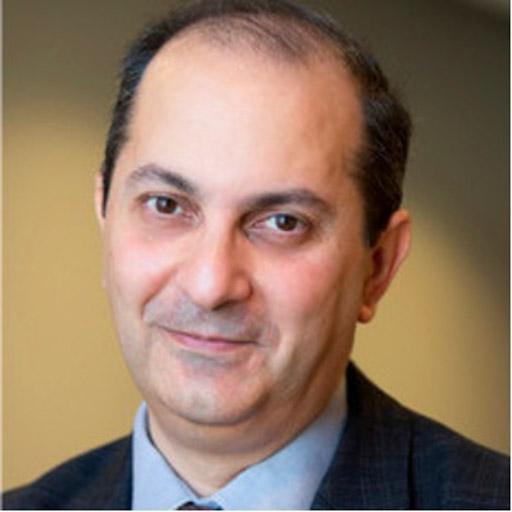
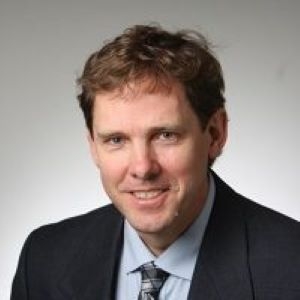
Amin Hammad is a Professor at the Concordia Institute for Information Systems Engineering, with an additional appointment as Affiliate Professor in Building, Civil, and Environmental Engineering at Concordia University. His research focuses on advancing construction technology through digital transformation, automation, and AI integration. He leads work in BIM applications, 4D simulation, robotic systems, and sustainable infrastructure management. His interdisciplinary approach bridges civil engineering with computer science and data analytics. Key research areas include: Automation and robotics in construction (Construction 4.0) BIM and digital twin lifecycle management AI-driven defect detection and inspection systems Occupational safety through exoskeleton performance evaluation Multi-purpose utility tunnel optimization Energy-efficient building systems Recent work emphasizes applying machine learning to construction equipment activity recognition, UAV path optimization for infrastructure inspection, and ontology development for integrated systems. His research addresses industry challenges in productivity, safety, and sustainability through data-driven solutions.
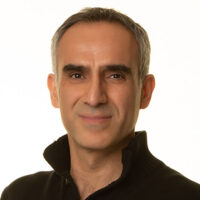
Georges Kaddoum is a Professor at École de technologie supérieure (ÉTS) , specializing in Electrical Engineering. He holds the Canada Research Chair in Unlocking the Power of IoT 6G-Networks and the LACIME – Communications and Microelectronic Integration Laboratory affiliation. His work bridges wireless communications, IoT, and machine learning. Research Interests include wireless communication systems, physical layer security, machine learning for networking, and 6G technologies. He focuses on optimizing network performance in challenging environments (impulsive noise, underwater, non-terrestrial networks) and developing AI-driven solutions for jamming mitigation, resource allocation, and secure IoT frameworks. Recent Publications highlight 6G-enabled vehicular networks, quantum-safe blockchain integration, federated learning for transportation systems, and deep learning-based receivers for chaotic communication systems. His work emphasizes semantic communication, interference management, and digital twin applications. Awards IEEE TCSC Award for Excellence in Scalable Computing (2022) Prix d’excellence de la relève (Université du Québec, 2018) Prix d’excellence en recherche (ÉTS, 2018) Multiple IEEE Exemplary Reviewer and Best Paper Awards (2014–2022) Supervision includes 15+ PhD/Master’s students working on topics like index modulation, physical layer security, UAV communications, and intelligent resource management. Research Units Ultra Research Chair on Intelligent Tactical Wireless Networks LACIME Laboratory Canada Research Chair in IoT 6G-Networks
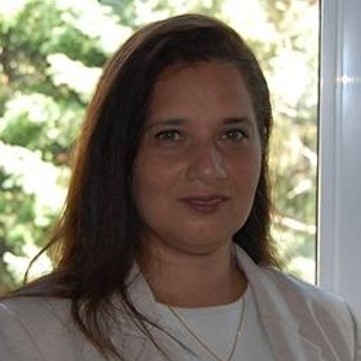
Mustafa Gül is a Professor in the Department of Civil and Environmental Engineering at the University of Alberta’s Faculty of Engineering. He also serves as Director of Internationalization at the Faculty of Engineering’s Deans Office. His research focuses on smart, sustainable, and resilient cities, with an emphasis on infrastructure monitoring and energy-efficient systems. Education: PhD in Civil Engineering (University of Central Florida, 2009), MSc in Electrical Engineering (University of Central Florida, 2011), MSc in Civil Engineering (Boğaziçi University, 2004), BSc in Civil Engineering (Boğaziçi University, 2002). Dr. Gül’s research spans two primary domains: Crowdsensing-based Monitoring of Built and Natural Environments (CoMBiNE) using AI, signal processing, and data analytics for infrastructure health; and Energy-Efficient Smart Cities through solar PV integration, IoT applications, and net-zero energy homes. His work bridges structural engineering, machine learning, and sustainable urban development. Recent publications highlight advancements in smartphone-based damage detection, UAV-assisted disaster assessment, and AI-driven energy systems. His team’s work on crowdsensing bridges, solar PV optimization, and smartphone analytics has been widely recognized in journals like Structural Control and Health Monitoring and Energy and AI . Notably, his 2017 paper earned the Best Paper Award at ISARC. Students supervised include Azim, R. , Keskin, M. , and Do, N. T. , among others. Scientific Awards: Best Paper Award, 34th International Symposium on Automation and Robotics in Construction (ISARC 2017) Dr. Gül’s projects often involve interdisciplinary collaboration, leveraging sensor networks, computer vision, and optimization algorithms to address urban resilience and energy sustainability. His leadership extends to course CIV E 779 and ongoing research initiatives in Alberta, Canada.
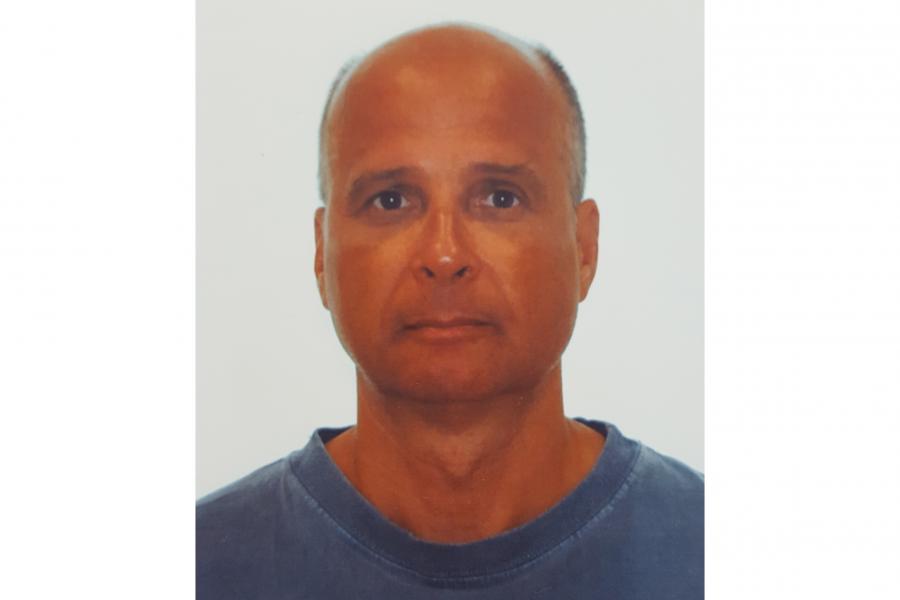
Anup Basu is a Professor in the Department of Computing Science at the University of Alberta. His research focuses on computer graphics, computer vision, and multimedia communications. He holds an B.S. in Math & Statistics from the Indian Statistical Institute (1980), an M.E. in Computer Science from the Indian Statistical Institute (1983), and a Ph.D. in Computing Science from the University of Maryland (1990). His work emphasizes Quality of Service (QoS) in multimedia delivery for e-commerce and telelearning, adaptive bandwidth monitoring, and 3D visualization tools. He pioneered foveated image compression and stereo visualization techniques, contributing to MPEG-4 coding standards. He leads major initiatives like the ASRA/TelePhotogenics/IBM 3D Medical Imaging project ($2M+ funding) and developed patented SHR Stereo/3D scanning technologies. Awards include the American Neurological Association Fellowship. He has held leadership roles as General Chair for IEEE International Conferences on SMC (2017), Multimedia & Expo (2013), and SMC (2014). His research integrates interdisciplinary collaborations across universities and industry partners, leveraging advanced equipment like the CAVE system for immersive visualization.
Dr. Jayshri Sabarinathan is an Associate Professor in the Department of Electrical and Computer Engineering at Western University's Faculty of Engineering, and a Faculty Member with the Institute for Earth and Space Exploration. She joined Western University in Fall 2003, received the NSERC University Faculty Award in 2004, and was promoted to Associate Professor in 2010. She previously served as Associate Director of Training (2019-2022) with the Institute for Earth and Space Exploration. Education: Ph.D. in Electrical Engineering, University of Michigan, Ann Arbor (2003) M.S.E. in Electrical Engineering, University of Michigan, Ann Arbor (1999) B.S.E. in Electrical Engineering and Engineering Physics, University of Michigan, Ann Arbor (1997) Her research focuses on developing novel nano-photonic sensors and miniature remote sensing instrumentation, with expertise spanning photonic crystals, plasmonic sensors, and CubeSat technology. Her work integrates nanofabrication techniques with practical applications in precision agriculture, geology, and space exploration. She has extensive experience with nanofabrication facilities including the University of Michigan Solid State Electronics Laboratory and Western's nanofabrication facility. Analysis of her 15 most recent publications reveals strong emphasis on plasmonic sensing technologies, photonic crystal applications, and nanoscale optical phenomena. Her research consistently bridges fundamental photonics with practical sensor development, particularly for environmental monitoring and space applications. The publications demonstrate progression from basic photonic crystal research to applied space instrumentation. Scientific Awards: NSERC University Faculty Award (2004) US Patent 8839683 for Photonic Crystal Pressure Sensors (2014) OSA (Optica) Senior Member Co-founder of LightSail Ltd space startup Dr. Sabarinathan actively mentors graduate students through her Nanophotonic Sensors Engineering (NPSE) and Remote Sensing Instrumentation (RSI) research groups. She has secured significant funding including Canadian Space Agency projects, notably as PI for the Western University-Nunavut Arctic College CubeSat Project Ukpik-1. Her research has resulted in three patents for micro photonic-sensors and multi-spectral camera innovations. Her labs focus on two primary research thrusts: the NPSE group developing hybrid photonics micro/nano-sensors including IR/THz plasmonic sensors and bio-photonic sensors, and the RSI group creating multispectral camera imagers for UAV/mobile robots with XRD instrumentation miniaturization for Mars rovers.
Dr. Ken Ferens is an Assistant Professor in the Department of Electrical and Computer Engineering at the Price Faculty of Engineering, University of Manitoba. He serves as the Computer Engineering Champion in the Centre for Engineering Professional Practice and Engineering Education and directs the Applied Cognitive Intelligence (ACI) Research Group. Dr. Ferens is a senior member of the Institute of Electrical & Electronics Engineers (IEEE), Chair of the EduManCom Chapter of the IEEE, Vice-Chair of the Computer and Computational Intelligence Chapter of the IEEE, and Chair of the Industry, Teaching Assistants, and Student Forums for Engineering Curriculum Review and Improvement. Ph.D. (Computer Engineering), University of Manitoba, 1996 M.Sc. (Computer Engineering), University of Manitoba, 1991 B.Sc. (Electrical Engineering), University of Manitoba, 1989 Dr. Ferens has over 33 years of research experience in computational intelligence, focusing on cognitive machine learning, artificial intelligence, cognitive computational intelligence, chaos theory applications, agent-based models, and various optimization algorithms including simulated annealing, genetic algorithms, artificial neural networks, and particle swarm optimization. His research applies these techniques to develop software and hardware intrusion detection systems for cybersecurity applications. He teaches graduate-level courses on Computer Network Security and Applied Computational Intelligence, providing students with theoretical background and hands-on experience in state-of-the-art security methods. Analysis of Dr. Ferens' recent publications reveals a strong focus on applying cognitive and chaotic computational techniques to cybersecurity challenges, particularly malware detection and network intrusion detection. His work increasingly integrates complexity theory, fractal analysis, and hybrid optimization approaches to enhance security systems' effectiveness. There's a clear progression toward more sophisticated machine learning architectures applied to increasingly complex security scenarios, with growing emphasis on real-world IoT and network security applications. Best Paper Award at IEEE International Conference on Cognitive Informatics and Cognitive Computing (ICCI*CC 2022) Best Paper Award at IEEE International Conference on Cognitive Informatics and Cognitive Computing (ICCI*CC 2015) Best Journal Paper Award for 2013 (Journal of ICT Research and Applications) Best Poster Award at 12th International Conference on e-Health Networking, Application & Services (2010) Best Paper Award at IASTED International Conference on Computer, Electronics, Control, and Communication (1991) Dr. Ferens collaborates with national and international industry partners including the Department of Advanced Information Management, Content Technology Canadian Tire Corporation (CTC), and Magellan Aerospace. His research group has received funding supporting the Cyber-security Research Program, developing practical applications of computational intelligence for security systems. He has supervised numerous graduate students in the Electrical and Computer Engineering department, focusing on research at the intersection of machine learning and cybersecurity. Dr. Ferens leads the Applied Cognitive Intelligence (ACI) Research Group within the Department of Electrical and Computer Engineering, which focuses on applying cognitive, chaotic, and computationally intelligent algorithms to build intrusion detection systems. The group collaborates with industry partners to develop practical security solutions while providing students with hands-on research experience in cutting-edge security technologies. Their work spans both theoretical algorithm development and practical hardware implementation for real-world security applications.
Alexis Lussier Desbiens is an Associate Professor at the Université de Sherbrooke in the Department of Mechanical Engineering , Faculty of Engineering. He co-founded several research labs and initiatives including NSERC CREATE CoRoM (Collaborative Robotics in Manufacturing) and NSERC CREATE UTILI (Uninhabited Aircraft Systems Training). His work bridges robotics, mechanical design, and sports equipment innovation. PhD in Mechanical Engineering (Stanford University, 2012) BEng in Mechanical Engineering (Université de Sherbrooke, 2005) Postdoctoral Research (Harvard University, 2013) His research focuses on robotics and automation , particularly unmanned aerial vehicles (UAVs) with bioinspired design principles for mechanical intelligence. Key areas include: Autonomous UAV perching and climbing Hybrid locomotion systems Sports equipment dynamics (skis, hockey sticks) Magnetorheological actuator applications Conservation biology tools via aerial sampling Recent publications highlight interdisciplinary work in robotics , sports engineering , and ecological monitoring . His projects often integrate mechanical design with environmental or human-centric applications. Scientific recognition includes: Best Student Paper (IEEE SMC, 2021) Best Poster (ISEA, 2020) National Geographic Explorer (2020) CSME Gold Medal (2005) Current grants (2020-2023) include: $339,000 - High-performance UAV for power line interactions $1.65M - NSERC CREATE UTILI training program $120,000 - Intelligent hockey stick development He also leads the CREATEK Research Lab and maintains global collaborations with institutions like Harvard University, Stanford University, MIT, and EPFL.
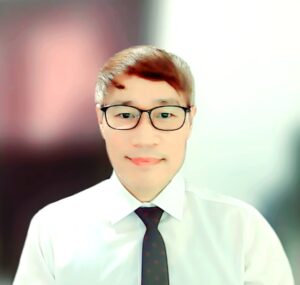
Keunhyun (Keun) Park is an Assistant Professor of Urban Forestry at the University of British Columbia (UBC), affiliated with the Department of Forest Resources Management . He also holds an Adjunct Professor position at Utah State University in the Department of Landscape Architecture and Environmental Planning. Education: BSc and MSc in Landscape Architecture from Seoul National University; PhD in Urban Planning and Design from the University of Utah Research Lab: Faculty lead of the Urban Nature Design Research Lab ( under_lab ) His research focuses on designing healthy, just, and resilient cities through urban nature , with particular emphasis on: Environmental justice and equitable access to urban green spaces Human behavior in public spaces using drone/sensor/VR technology Smart growth urban design impacts on public health and ecological systems Recent publications demonstrate expertise in GIS applications , pedestrian behavior analysis , and urban planning across 20+ studies from 2013-2025. Collaborations include the Vancouver Park Board , Metro Vancouver , and Wasatch Front Regional Council .
Dr. Christopher Morton is an Associate Professor in the Department of Mechanical Engineering at McMaster University, specializing in fluid-structure interaction, UAV technology, and energy systems. His research focuses on aerodynamics, flow control, and sustainable energy solutions, with applications in aerospace and environmental engineering. Education background includes a BASc in Mechatronics Engineering (University of Waterloo, 2008), MASc (2010), and Ph.D. (2014) in Mechanical Engineering from the same institution. His work bridges experimental and computational methods, particularly in flow estimation and control using advanced diagnostics like PIV and spectral analysis. His research interests span vortex-induced vibrations (VIV), unsteady aerodynamics, and energy harvesting through fluid-structure interactions. Recent publications highlight innovations in flow field reconstruction, sensor-based monitoring, and turbulence control. His work has been recognized through awards such as the Departmental Research Excellence Award (2021-2022) and multiple teaching accolades, reflecting his dedication to both research and education. Dr. Morton currently teaches MECH ENG 4FM3 (Advanced Instrumentation for Thermo-Fluids) and MECH ENG 723 (Flow Induced Vibrations), emphasizing hands-on experimental techniques and theoretical analysis. He actively supervises graduate students and collaborates with industry partners like Atlantis Research Labs and Plains Midstream Canada. Key Research Clusters: Advanced Materials & Manufacturing, Digital & Smart Systems, Energy, and Environment. Teaching Excellence: Awarded “Professor of the Year” multiple times and recognized for outstanding teaching performance.
Dr. Young-Jin Cha is a tenured full Professor in the Department of Civil Engineering at the University of Manitoba, affiliated with the Price Faculty of Engineering. He holds a PhD from Texas A&M University and has postdoctoral experience at MIT. His research focuses on deep learning-based structural health monitoring (SHM), autonomous UAVs for infrastructure inspection, and smart transportation systems, with over 100 peer-reviewed publications and $1.2M in grants. He is a Fellow of ASCE and has received notable awards including the 2021 Merit Award and 2022 International Association of Advanced Materials Scientist Award. His work has been cited over 9,200 times globally. Research interests include automated SHM with UAVs, nonlinear system identification, unsupervised deep learning for damage detection, and sustainable infrastructure design. He serves as an editor for journals like Structural Control & Health Monitoring and Engineering Reports . His lab, the Laboratory for Infrastructure Science and Technology (LIST), develops advanced technologies for infrastructure resilience. Key achievements include pioneering deep learning-based SHM with UAVs, top-cited papers in civil engineering journals, and leadership in organizing international conferences. He actively seeks graduate students for research in AI-driven infrastructure solutions.
Matthew Johnson is Professor in Mechanical and Aerospace Engineering at Carleton University, where he directs the Energy & Emissions Research Lab (EERL). His research focuses on quantifying and mitigating methane and black carbon emissions from energy systems. Research includes developing optical measurement technologies like VentX for unsteady methane sources and sky-LOSA for black carbon emissions. Current projects involve aerial methane quantification, flare combustion efficiency, and techno-economic analysis of emission reduction strategies. As Scientific Director of the NSERC FlareNet Strategic Network, he coordinates multi-institutional research on oil and gas flaring impacts across Canada.
Craig Coburn is a Full Professor in the Department of Geography and Environment at the University of Lethbridge, where he has served since 2002 with promotions to Associate Professor in 2009 and Full Professor in 2019. His research centers on remote sensing physics, specializing in bidirectional reflectance properties and the development of low-cost remote sensing instrumentation for environmental monitoring and satellite calibration. Dr. Coburn's academic foundation includes: B.Sc. (Honours) in Geography from the University of Saskatchewan (1994) M.Sc. in Geography from the University of Alberta (1996) Ph.D. in Geography/Remote Sensing from Simon Fraser University (2002) His work spans instrument design to data processing algorithms, with emphasis on surface bidirectional reflectance. He pioneered world-leading goniometers and low-cost camera systems deployed via aircraft, UAVs, and high-altitude balloons for agricultural monitoring, biological system analysis, and global satellite validation. His research bridges theoretical physics with practical environmental applications. Analysis of his 2017-2021 publications reveals sustained focus on radiometric calibration, BRDF characterization, and sensor development. Key trends include interdisciplinary collaborations in atmospheric science (airborne metals), ecology (riparian systems), and soil science (erosion detection), alongside growing emphasis on UAV platforms and low-cost sensor validation for democratizing remote sensing. No scientific awards were specified in the source material. Dr. Coburn holds Principal Investigator status for the Prairie Farm Rehabilitation Administration-funded cattle wintering sites project ($45,000) and contributes as Co-Investigator to Alberta Ingenuity Centre for Water Research initiatives totaling $568,000. His grant portfolio spans riparian ecology, watershed analysis, and historical projects including National Land and Water Information System (Agriculture Canada) and Mountain Pine Beetle monitoring. His laboratory innovations include robotic goniometers for surface reflectance measurement and thermal imaging systems deployed globally for satellite calibration, supporting both research objectives and hands-on student training in remote sensing physics.
Shahin Sirouspour is a Professor in the Department of Electrical and Computer Engineering at McMaster University. His research focuses on robotics, autonomous systems, control systems, and optimization, with applications in aerial robotics, teleoperation, haptics, medical robotics, and smart energy grids. He is affiliated with the Telerobotics, Haptics and Computational Vision Laboratory and teaches courses such as Non-linear Control Systems and Electrical Systems Integration Project. He holds a Ph.D. from the University of British Columbia and has supervised numerous graduate students. His lab includes advanced equipment like multi-axis robotic manipulators, haptic interfaces, and real-time computing systems. Education: B.Sc. and M.Sc. from Sharif University of Technology (Iran), Ph.D. from University of British Columbia (Canada). Current roles include accepting graduate students and leading research clusters in Digital & Smart Systems, Energy, and Transportation. Awards include the McMaster President's Award for Excellence in Graduate Supervision. His work bridges theoretical control systems with practical applications in healthcare, energy, and autonomous systems. Research highlights include developing control strategies for multi-agent robotic systems, smart grid optimization, and medical robotics. Collaborations with institutions like MacAUTO and industry partners (e.g., MDA Space Missions) enhance translational impact. His lab supports projects on asymmetric teleoperation, deformable tissue simulation, and microgrid energy management.
Octavia A. Dobre is a full Professor and Canada Research Chair Tier-1 in Ubiquitous Connectivity at Memorial University's Faculty of Engineering and Applied Science. Her research focuses on wireless, optical, and underwater communications, integrated sensing and communication systems, and AI-driven network innovations. She leads over 500+ journal/conference publications and holds positions like VP Publications of IEEE Communications Society. Education: Dipl.-Ing. and PhD from Politehnica University of Bucharest Roles: Editor-in-Chief of IEEE Open Journal of Communications Society, former Editor of IEEE Communications Letters Her work spans IEEE standards development, conference leadership (e.g., General Chair, Technical Chair), and industry partnerships with entities like Huawei and DRDC. Recognized globally with awards like IEEE Fellow (2020), Fellow of the Canadian Academy of Engineering (2021), and Top 2% Global Scientist (Stanford, 2020-2024). Her lab explores cutting-edge topics including quantum networks, reconfigurable surfaces, and 6G innovations.
Naglaa Elagamy is an Associate Teaching Professor in the Department of Mechanical and Manufacturing Engineering at Ontario Tech University. She holds a Ph.D. in Mechanical Engineering from Carleton University (2015), an M.A.Sc. in Engineering from Alexandria University (2002), and a B.Sc. in Engineering from the same institution (1994). As a licensed Professional Engineer (P.Eng.) in Ontario (2016–present) and a Certified SolidWorks Associate (CSWA), her expertise spans advanced composite materials, micro-CT imaging, stress simulation, and fatigue assessment of composite structures. Her research focuses on predicting progressive damage in materials and applying micro-CT for quantitative and qualitative damage analysis in carbon fiber reinforced polymers (CFRP). She has also explored aerodynamic performance optimization of small unmanned aerial vehicles (UAVs) through propeller design studies. Elagamy’s publications and presentations emphasize interdisciplinary approaches, combining experimental techniques like micro-CT with computational methods such as the Cohesive Zone Model and Finite Element Analysis. Her work addresses challenges in composite material durability, structural integrity, and multi-mode fatigue behavior. Beyond research, she contributes to teaching core mechanical engineering courses, including Kinematics and Dynamics of Machines, Statics, Solid Mechanics, and Computer-aided Design. Her professional recognitions include the Carleton University Development Grant (2014) and the AUD Recognition for Services (2018). Her advising and grants activities are not explicitly detailed here, but she has secured funding for her research at Carleton University. She is affiliated with the Faculty of Engineering and Applied Science and collaborates with industry and academic conferences such as SAMPE and CAMX. While specific lab affiliations are not mentioned, her research aligns with cutting-edge structural and materials analysis within the department.