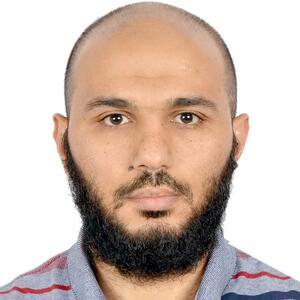
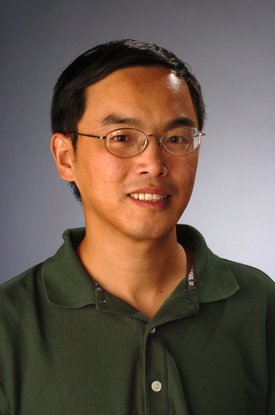
Chris Fuller, Ph.D., is the Samuel Langley Distinguished Professor of Engineering at the College of Engineering , Virginia Tech. He leads the Vibrations and Acoustics Laboratory (VAL) , focusing on active/passive noise control systems, metamaterials, and their application to aerospace, medical devices, and industrial machinery. Education: Ph.D. (1979) and B.E. (1974) from the University of Adelaide, Australia. Research Interests: Structural acoustics, adaptive materials, machine learning in noise prediction, and biomedical acoustics (e.g., neonatal incubators). Awards: ASME Rayleigh Award (2017), NASA Team Achievement Award (1996), and Fellow of the Acoustical Society of America. Recent Publications: Highlight advancements in drone noise reduction using neural networks, metamaterials for HVAC systems, and poro-elastic materials for low-frequency noise control.
Asunción Gómez Pérez is a Spanish computer scientist and Full Professor at the Technical University of Madrid (UPM) . She currently serves as Vice-Rector for Research, Innovation and Doctoral Studies at UPM and holds a seat at the Real Academia Española . She has authored over 300 publications and accumulated 20,000 citations. Education : PhD in Computer Science (UPM, 1993), MBA (Comillas Pontifical University) Leadership Roles : Director of the Department of Artificial Intelligence (2008–2016), Academic Director of AI Master’s/PhD programs (2009–2016), Executive Director of UPM’s Artificial Intelligence Lab (1995–1998) Her research focuses on Semantic Web and Ontology Engineering , with applications in knowledge representation, machine-machine communication, and multilingual data integration. She pioneered methods for ontology validation, metadata licensing, and AI-driven social inclusion. Key publication trends include: Ontology evaluation frameworks (e.g., OOPS!) Linked Data quality models and validation tools Multilingual and cross-lingual AI applications Interoperability solutions for smart cities and healthcare Machine Learning for social exclusion prediction Ontology-driven library and lexicography systems Scientific Awards Fellow of the European Academy of Sciences Ada Byron Prize She has led projects like the NeOn Methodology for ontology development and contributed to the European framework for linked data rights (LD Terms). Her work bridges theoretical research with practical implementations in AI and Semantic Technologies.
Roya Nasimi, Ph.D., is an Assistant Professor in the Department of Engineering at California State University, East Bay, where she joined in Fall 2023. Her expertise spans structural engineering, computer vision, and artificial intelligence, with a focus on developing innovative solutions for infrastructure monitoring and safety. Dr. Nasimi's educational background includes: Ph.D. with distinction in Structural Engineering from the University of New Mexico Master’s degree in Structural Engineering from the University of Tabriz Bachelor’s degree in Civil Engineering from the University of Tabriz Her research focuses on structural health monitoring using advanced technologies. She integrates computer vision , artificial intelligence , and machine learning to develop systems for monitoring aging infrastructure, particularly bridges. Her work includes designing low-cost and high-end sensor systems, conducting full-scale bridge experiments, and collaborating on interdisciplinary projects to enhance infrastructure safety and resilience. Her recent publications (2021-2025) demonstrate a strong emphasis on non-contact monitoring techniques using drones, lasers, and computer vision. Key trends include the application of deep learning for displacement measurement, digital twinning for infrastructure, and rockfall prevention through machine learning. Her work bridges civil engineering with cutting-edge technology to address critical infrastructure challenges. Dr. Nasimi's research is supported by multiple grants: U.S. Army Corps of Engineers Transportation Research Board (TRB) Transportation Consortium of South-Central States (Tran-SET) New Mexico Consortium She serves on two TRB standing committees and mentors students in structural health monitoring and infrastructure technology. Dr. Nasimi leads interdisciplinary research teams focused on infrastructure monitoring, utilizing drones, lasers, and computer vision systems. Her work involves field experiments on bridges and rail systems, often in collaboration with government agencies and research consortia.
Hongbo Jiang is a Distinguished Professor and Vice Dean of the College of Computer Science and Electronic Engineering at Hunan University, China. He holds concurrent roles as Director of the Trusted Systems and Networking Key Laboratory of Hunan Province and Director of the Hunan International Technical Cooperation Base for High-Performance Computing and Distributed Systems. His academic journey includes tenures as a Professor at Huazhong University of Science and Technology and a Hong Kong Scholar Research Fellow at The Chinese University of Hong Kong. Education: PhD in Computer Science (Case Western Reserve University, 2008), B.S./M.S. in Mathematics (Huazhong University of Science and Technology, 2002). Research Interests: Distributed systems, mobile computing, smart sensing, wireless networks, IoT, and edge computing. Ongoing projects include mobile/wireless applications, data science in IoT, and edge computing platforms. His work emphasizes practical implementations such as DriverSonar for driving safety and SmileAuth for biometric authentication. Key Achievements: Elected Member of Academia Europaea (2022), Fellow of AAIA, IET, and BCS. Notable awards include the Wu Wenjun Science and Technology Award (2020) and multiple best paper recognitions. Over 100+ publications in top venues like ACM MobiCom, IEEE/ACM Transactions. Professional Contributions: Editorial roles across 8+ journals including IEEE Transactions on Mobile Computing and ACM Transactions on Sensor Networks. Conference leadership includes co-founding ACM TURC and EAI ICECI. Active in technical committees for INFOCOM, MOBIHOC, and ICDCS. Labs/Teams: Leads research groups focused on networking, IoT, and edge computing. Current openings for PhD/MSc students and PostDoc researchers with strong mathematical and systems backgrounds.
Professor Quanmin Zhu is a Professor in Control Systems at the School of Engineering, University of the West of England (UWE), Bristol, UK, holding this position since 2004. His academic career spans over four decades, including roles as Lecturer at Qiqihar University (China, 1983-1986), Post-doctoral Researcher at University of Sheffield (UK, 1989-1994), Lecturer at University of Brighton (UK, 1994-1997), and Lecturer/Reader at Aston University (UK, 1997-2004). His educational background includes: MSc in Engineering from Harbin Institute of Technology, China (1980-1983) PhD from University of Warwick, UK (1986-1989) Professor Zhu's research centers on dynamic system modeling, identification, control, and simulation, with pioneering contributions to nonlinear control systems, robust control methodologies, and U-model based control frameworks. His work bridges theoretical advances with practical applications in robotics, renewable energy systems, and industrial automation, emphasizing model-free and adaptive control solutions for complex nonlinear dynamics. Analysis of his 2021-2025 publications reveals a dominant focus on robust control for uncertain nonlinear systems, with significant contributions to sliding mode control, multi-agent coordination, and cyber-physical security. His research increasingly integrates machine learning techniques (e.g., actor-critic reinforcement learning) while maintaining core expertise in optimization-based control algorithms applied to UAVs, robotic manipulators, and wind energy systems. His professional honors include: Chartered Engineer (CEng) Fellow of the Institution of Engineering and Technology (FIET) Fellow of the Higher Education Academy (FHEA) As an academic leader, Professor Zhu serves as President/Founder of the International Conference on Modelling, Identification and Control (ICMIC), Editor/Founder of Elsevier's Book Series on Emerging Methodologies in Modelling and Control, and University Ambassador for UK-China educational collaboration. His research group secures substantial grants in control theory applications, with ongoing projects in U-model control platforms and international partnerships. He leads the Control Systems research group at UWE, driving innovation in the U-control platform and its industrial applications. His team maintains strong international collaborations, particularly with Chinese institutions, and actively develops the Elsevier Book Series as a key publication channel for emerging control methodologies.
Trym Vegard Haavardsholm is a 20% part-time Lecturer at the University of Oslo (UiO) within the Section for Autonomous Systems and Sensor Technologies. He also serves as Principal Scientist at the Norwegian Defence Research Establishment (FFI) and is a PhD candidate at the Department of Engineering Cybernetics, NTNU. His research focuses on computer vision, machine learning, robotics, and image analysis, with a particular emphasis on multispectral imaging systems and unmanned aerial vehicles (UAVs). Haavardsholm has contributed to advancements in sensor technologies for tactical reconnaissance, autonomous navigation, and real-time data processing. His work spans applications in defense, environmental monitoring, and emergency response systems. Research Interests Haavardsholm’s research integrates interdisciplinary approaches to develop innovative sensor systems and algorithms. Key areas include compact multispectral imaging for small UAVs, in-operation camera calibration, and anomaly detection in hyperspectral data. His contributions emphasize practical applications such as urban feature classification, collaborative indoor navigation, and bioaerosol detection. His work bridges theoretical computer science with applied engineering, addressing challenges in autonomous systems and sensor fusion. Publications His publications highlight trends in multispectral sensor design, UAV imaging, and real-time georeferencing. Recent work includes compact sensor systems for tactical use and advancements in pushbroom image rectification. Earlier research explored band selection algorithms for target detection and GPU-accelerated anomaly detection. Professional Roles As a lecturer, Haavardsholm contributes to academic supervision and teaching in autonomous systems. His dual role at FFI and UiO reflects his commitment to translating academic research into practical defense and civilian applications. His PhD candidacy at NTNU underscores his ongoing academic engagement in engineering cybernetics.
Professor Yue Rong is a Full Professor at Curtin University's Department of Electrical and Computer Engineering, within the School of Electrical Engineering, Computing and Mathematical Sciences. He holds editorial roles at IEEE Transactions on Signal Processing and IEEE Wireless Communications Letters. His research focuses on signal processing for communications, underwater acoustic systems, wireless networks, and healthcare IoT. Rong has authored over 140 journal and conference papers and received multiple awards, including the 2010 Young Researcher of the Year Award. Education: B.E. (Electrical Engineering), Shanghai Jiao Tong University (1999) M.Sc. (Electrical Engineering), University of Duisburg-Essen (2002) Ph.D. (Electrical Engineering), Darmstadt University of Technology (2005) Research Interests: Rong's work spans cooperative MIMO communications, underwater acoustic systems, OFDM modulation, radar-based healthcare monitoring, and secure wireless protocols. His innovations include adaptive modulation schemes for underwater environments and radar-based vital signs detection. Recent trends in his publications emphasize AI-driven signal processing for healthcare IoT and underwater optical communication systems. Awards: Best Paper Awards (WCSP 2011, APCOMM 2010) Chinese Government Award (2004) DAAD/ABB Fellowship (2001-2002) Grants & Labs: His research is supported by grants focusing on UAV-enabled data collection and underwater network optimization. He leads projects in the Distributed Data Fusion and Emerging Technologies (DDFE) lab, advancing radar-cardiography and wearable health monitoring systems.
Hesham ElSawy is an Assistant Professor in the Department of Systems and Networks at the School of Computing, Faculty of Arts and Science, Queen's University. His work focuses on advancing next-generation wireless systems, with particular emphasis on federated learning, IoT networks, and edge computing. He is affiliated with Ingenuity Labs Research Institute, Queen's University, and contributes to interdisciplinary research at the intersection of communication theory and network optimization. His research interests span stochastic geometry modeling, energy-efficient protocols for massive IoT deployments, and resilient federated learning frameworks. ElSawy explores novel paradigms in aerial wireless networks, UAV-assisted communication, and network security through percolation theory applications. Recent publications highlight his contributions to system-level analysis of parallel computing at extreme edges, UAV-enabled federated learning architectures, and energy-as-a-service models for RF-powered networks. His work emphasizes practical implementations and large-scale network validation. ElSawy holds no listed awards or grants in the provided text but maintains active collaborations through Ingenuity Labs. His research addresses critical challenges in 5G/6G networks, including latency optimization, resource allocation, and heterogeneous network integration.
Vijay K. Shah is an Assistant Professor in the Electrical and Computer Engineering Department at North Carolina State University, leading the NextG Wireless Lab. His research focuses on advancing wireless communication and network technologies for beyond 5G/6G systems, including O-RAN architecture, spectrum management, and AI-driven network optimization. Education: Ph.D. in Computer Science, University of Kentucky (2019) Bachelor's in Computer Science and Engineering, National Institute of Technology, Durgapur (2013) Research emphasizes open radio access networks (O-RAN), mmWave testbeds, and cross-layer optimization. Recent work highlights include ORAN-Bench-13K (LLM benchmarking), ZT-RIC (zero-trust security frameworks), and Milli-O-RAN (reconfigurable mmWave networks). His contributions span O-RAN applications (xApps/rApps), satellite-terrestrial coexistence, and AI-driven positioning systems. Experimental validations include 3GPP-compliant 5G positioning and adversarial attack defenses. Publications reflect expertise in O-RAN architecture evolution, spectrum policy tools (ASCENT), and UAV-based network coordination (GLIDE). Current projects explore LEO satellite constellations and resilient disaster response networks. Labs/Teams: Head of the NextG Wireless Lab at NC State, focusing on prototype development in O-RAN, 6G, and secure AI-driven networks.
Peng Gao is a Professor in the Department of Geography and the Environment at Syracuse University, affiliated with the Maxwell School of Citizenship and Public Affairs. His work bridges river geomorphology and urban geospatial analysis, leveraging GIS, remote sensing, and UAV technologies to address environmental and social challenges. Education: Ph.D., Physical Geography, State University of New York at Buffalo (2003) M.S., Physical Geography, Lanzhou University (1993) B.S., Solid Mechanics, Lanzhou University (1990) Professor Gao specializes in river morphodynamics—particularly in the Qinghai-Tibet Plateau—and geospatial applications for urban planning. His research examines braided/meandering river systems, peatland hydrology, and how urban built environments influence social inequities and public health outcomes through spatial analysis. His 2020-2024 publications reveal a dual focus: (1) fluvial processes in high-altitude regions (e.g., neck cutoff dynamics, braided river discharge estimation using Landsat), and (2) urban applications (e.g., green building design, lead poisoning exposure mapping). This reflects a strategic integration of field geomorphology with computational geospatial modeling. Professor Gao actively mentors through SOURCE undergraduate research grants and PhD committees. Current funded projects include peatland mapping in the Andean Altiplano, I-81 Viaduct impact analysis in Syracuse, and studies on urban built environments affecting childhood lead poisoning. His work utilizes UAVs for BVLOS operations and collaborates with Syracuse CoE on urban environmental simulations, emphasizing technical innovation in geospatial data acquisition and analysis.
Yuyu Zhou is a Professor in the Department of Geography at The University of Hong Kong. With an extensive publication record of 301 papers and over 18,000 citations, Dr. Zhou is a leading researcher in urban environmental studies, climate change, and sustainability science. Dr. Zhou received their PhD in Environmental Science from the University of Rhode Island (2004-2008) and previously worked as a Research Scientist at Pacific Northwest National Laboratory's Joint Global Change Research Institute (2010-2015). They currently serve as Chief Editor for Earth System Science Data (Copernicus Publications), Associate Editor for Ecological Processes, and Section Editor for All Earth. Dr. Zhou's research focuses on the intersection of urbanization, climate change, and environmental sustainability. Their work spans several key areas including urban heat island effects, vegetation phenology in urban environments, energy modeling, and sustainable urban development. Through innovative remote sensing approaches and spatial analysis, Dr. Zhou investigates how urban environments respond to and influence global environmental change. Analysis of Dr. Zhou's recent publications reveals a strong emphasis on urban environmental challenges, with particular attention to urban heat islands, vegetation dynamics, and climate change impacts in cities. Their work combines remote sensing data with ground observations to develop high-resolution models of urban environmental processes. Recent research has focused on urban greening effects, building energy use under climate change, and environmental justice issues related to urban heat exposure. Dr. Zhou has received significant recognition for their work, as evidenced by the high citation count of their publications. Their research has important implications for urban planning, climate adaptation strategies, and sustainable development policies worldwide. As an educator and mentor, Dr. Zhou advises numerous graduate students and collaborates with researchers globally. Their work with international teams has resulted in significant contributions to understanding urban environmental systems across different geographical contexts.
Professor Lyudmila Mihaylova is a distinguished academic at the University of Sheffield's School of Electrical and Electronic Engineering, where she holds the position of Professor of Signal Processing and Control. She has established herself as a leading researcher in the fields of signal processing, Bayesian methods, and autonomous systems, with significant contributions to particle filtering techniques for intelligent transportation systems. Her work bridges theoretical developments with practical applications across multiple domains including transportation, healthcare, and industrial automation. Prof. Mihaylova's research interests center on nonlinear filtering, sequential Monte Carlo methods, statistical signal processing, and sensor data fusion. Her work spans both theoretical advancements and practical implementations, with particular focus on high-dimensional problems including vehicular traffic flow estimation, image processing, and localization in sensor networks. She has extensive experience with various image modalities such as optical, thermal, LIDAR, SAR, and hyperspectral imaging. Her group actively develops novel methods for autonomous intelligent systems focusing on sensing, tracking, decision making, and machine learning applications. Analysis of Prof. Mihaylova's recent publications reveals a strong trend toward uncertainty quantification in machine learning models, particularly for safety-critical applications. Her work increasingly integrates traditional signal processing techniques with modern deep learning approaches, with applications spanning sewer inspection robotics, medical diagnostics (particularly sleep apnea detection), UAV swarm tracking, industrial manufacturing, and autonomous vehicle systems. A significant portion of her recent research focuses on developing robust methods that can handle incomplete or outlier-corrupted data while providing reliable uncertainty estimates. Among her notable professional achievements: President of the International Society of Information Fusion (ISIF) Senior member of the IEEE Signal Processing Society Associate Editor for IEEE Transactions on Aerospace and Electronic Systems Associate Editor for Elsevier Signal Processing Journal Prof. Mihaylova has successfully mentored numerous PhD students and postdoctoral researchers, many of whom have gone on to prominent academic and industry positions. Her research has been supported by major funding bodies including EPSRC, EU, MOD/DSTL, and industry partners, with recent projects including 'Protecting Environments with UAV Swarms' (InnovateUK, 2022-2024), 'ShiRAS: Towards Safe and Reliable Autonomy in Sensor Driven Systems' (NSF-EPSRC, 2019-2023), and 'Confident safety integration for Cobots' (Lloyd's Register Foundation, 2019-2020). Her research group follows a collaborative approach with the philosophy 'We share knowledge, we grow.' Prof. Mihaylova maintains active research collaborations with institutions worldwide and has held previous academic positions at Lancaster University (2006-2013) and University of Bristol (2004-2006), along with research visiting positions at the University of Ghent, Katholic University of Leuven, and the Bulgarian Academy of Sciences.
Harpreet S. Dhillon is the W. Martin Johnson Professor of Engineering and Associate Dean for Research and Innovation at Virginia Tech's College of Engineering. He holds appointments in the Bradley Department of Electrical and Computer Engineering. His research focuses on wireless communications, stochastic geometry, machine learning, and next-generation network systems. Education: Ph.D., University of Texas at Austin (2013); M.S., Virginia Tech (2010); B.Tech., Indian Institute of Technology Guwahati (2008). Research Interests: Communication Theory, Stochastic Geometry, Machine Learning for Communication Systems, Heterogeneous Networks, IoT, and Energy Harvesting. He leads projects on vision-aided localization, LEO satellite systems, and RIS-aided networks. Key Awards: IEEE Fellow (2023), AAIA Fellow (2022), IEEE Heinrich Hertz Award (2016), and numerous early-career recognitions. His work has resulted in over 150 journal/conference publications. Advising: Supervises Ph.D. students in cutting-edge research areas like 6G localization and RIS optimization. His advisees have won awards such as the VT ECE Blackwell Award for Best Dissertation. Labs/Teams: Head of the research group focusing on communication theory and localization. Collaborates on projects funded by agencies like NSF and industry partners.
Patrick Henkel is a Professor at the Technical University of Munich (TUM) affiliated with the TUM School of Engineering and Design and the Chair of Communication and Navigation. He holds a professorship in Satellite Geodesy under Prof. Hugentobler. His research focuses on advanced positioning technologies, including Global Navigation Satellite Systems (GNSS), autonomous systems, and sensor fusion. He develops algorithms for precise positioning in challenging environments such as urban areas, alpine regions, and indoor spaces. His work also extends to environmental applications, such as snow hydrology and climate monitoring using GNSS signals. Henkel’s contributions include innovations in real-time kinematic (RTK) positioning, UAV navigation, and multi-sensor integration for robotics and autonomous vehicles. His research is supported by collaborations with industry and academic partners, addressing both theoretical and applied challenges in geodesy and navigation. Henkel leads projects on GNSS signal processing, satellite-based environmental monitoring, and autonomous driving technologies. He has contributed to the Galileo HAS service and developed methodologies for snow water equivalent estimation using multi-frequency GNSS signals. His expertise spans hardware-software co-design for navigation systems and algorithm optimization for high-precision positioning in dynamic environments. He actively publishes in top-tier journals and conferences, with a focus on advancing the reliability and accuracy of navigation systems across various domains. His advising and grants include funding for projects on sensor fusion, UAV-based measurements, and satellite receiver development. He collaborates with teams at TUM’s Navigation Lab and the Professur für Satellitengeodäsie, contributing to both academic and industrial applications. His work on low-bandwidth RTK dissemination and laser-tracker verified UAV positioning highlights his commitment to bridging theoretical advancements with real-world implementation.
Dr. Young-Jin Cha is a tenured full Professor in the Department of Civil Engineering at the University of Manitoba, affiliated with the Price Faculty of Engineering. He holds a PhD from Texas A&M University and has postdoctoral experience at MIT. His research focuses on deep learning-based structural health monitoring (SHM), autonomous UAVs for infrastructure inspection, and smart transportation systems, with over 100 peer-reviewed publications and $1.2M in grants. He is a Fellow of ASCE and has received notable awards including the 2021 Merit Award and 2022 International Association of Advanced Materials Scientist Award. His work has been cited over 9,200 times globally. Research interests include automated SHM with UAVs, nonlinear system identification, unsupervised deep learning for damage detection, and sustainable infrastructure design. He serves as an editor for journals like Structural Control & Health Monitoring and Engineering Reports . His lab, the Laboratory for Infrastructure Science and Technology (LIST), develops advanced technologies for infrastructure resilience. Key achievements include pioneering deep learning-based SHM with UAVs, top-cited papers in civil engineering journals, and leadership in organizing international conferences. He actively seeks graduate students for research in AI-driven infrastructure solutions.

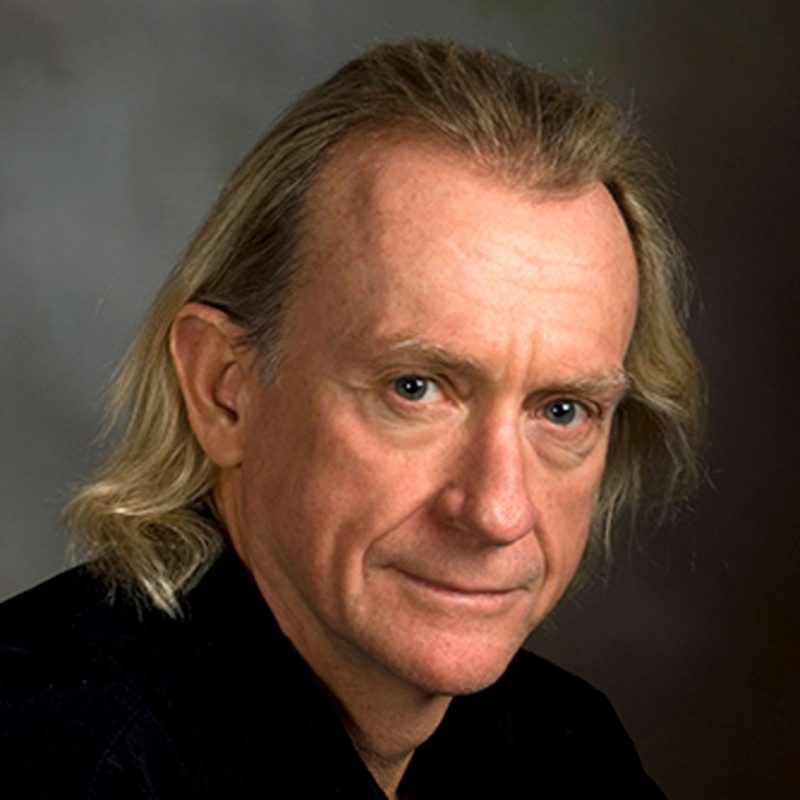
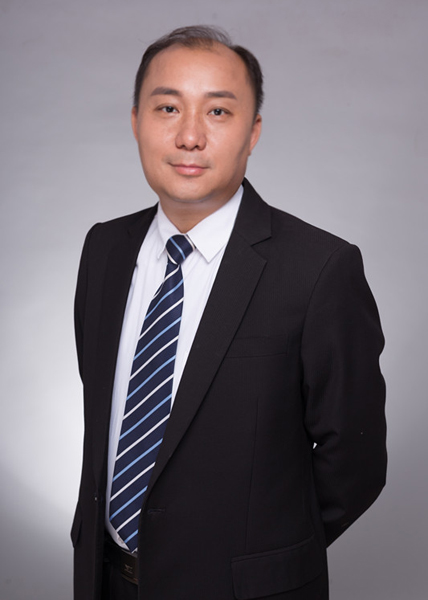
/trymh/trym.jpg)