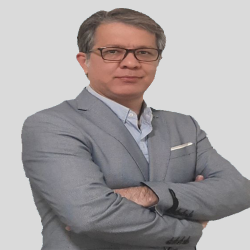
Joseph Mhango is a Senior Lecturer in Applied Data Science at Harper Adams University's Department of Agriculture and Environment. His research focuses on leveraging big data from satellite imagery, unmanned aerial vehicles (UAVs), and proximal soil sensors to develop predictive models for agricultural decision support. He specializes in high-throughput plant phenotyping, deep learning for precision agriculture, and automation of agricultural perception tasks. His research is conducted through the Centre for Agricultural Data Science. He actively engages with the scientific community via Twitter/X (@josemhango), sharing insights on potato research, precision agriculture, and machine learning applications in agriculture. Mhango's work bridges computer science and agriculture, emphasizing interdisciplinary approaches to solve crop productivity challenges. His publications span crop management, remote sensing, and machine learning-driven agricultural analytics.
Dr. Seyed Ahmad Soleymani is a Research Fellow at the University of Surrey's Institute for Communication Systems and part of the 5G/6G Innovation Centre. His research focuses on cybersecurity, edge computing, IoT, UAV systems, and 5G/6G networks. He has contributed to secure authentication protocols for medical and industrial IoT systems, UAV-assisted edge computing optimization, and multi-target tracking algorithms using Q-learning. His work emphasizes energy efficiency, data security, and real-time applications in smart manufacturing and vehicular networks. Research interests include secure communication in UAV networks, sustainable edge node deployment, and privacy-preserving authentication schemes. He has explored applications such as flood forecasting via UAV-assisted sensors and energy-efficient building systems. His publications span IEEE journals and conferences, addressing challenges in edge computing resource allocation, intrusion detection systems, and trust management in 5G-IIoT environments. Collaborations involve institutions like the University of Electronic Science and Technology of China and Universiti Teknologi Malaysia. Notable contributions include the MI3SE encryption scheme for outdoor IIoT devices and the TRUTH trust scheme for 5G industrial IoT. His work combines machine learning (e.g., SAC, Q-learning) with network optimization to address latency, security, and scalability in modern communication systems. He has also developed frameworks for cybertwin-based 6G networking and secured target tracking in O-RAN environments.
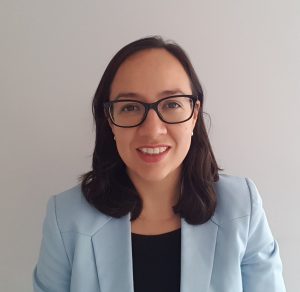
Dr. Veronica Escobar-Ruiz is a Researcher in the Department of Meteorology at the University of Reading. Her work focuses on advancing meteorological and environmental sciences through innovative applications of remote sensing technologies, hydrological modeling, and atmospheric studies. She is actively involved in projects related to radar and LiDAR systems, agricultural land use impacts on catchments, and climate intervention techniques like cloud seeding. Her research integrates interdisciplinary approaches, including field campaigns (e.g., the 2023 Al Ain Campaign), laboratory experiments, and computational modeling. Key areas include forest canopy backscatter analysis, charge emission systems for weather modification, and the evaluation of agricultural changes on sediment and flow dynamics in UK catchments. Dr. Escobar-Ruiz collaborates with institutions and observatories such as the Dr Carbon Atmospheric Observatory at Reading, contributing to data-driven insights into atmospheric processes and environmental systems. Her work emphasizes practical applications, such as improving weather prediction models and mitigating environmental impacts through technological innovations.
Dr. Wei Zhang is a Researcher at the Complex Systems and Data Science group within The University of Sydney. Her work focuses on network science, evolutionary dynamics, and complex systems, with an emphasis on modeling social systems and analyzing meso-scale structures in social networks. She combines theoretical approaches, data-driven modeling, and web-based experimental methods to study emergent collective phenomena. Dr. Zhang holds a PhD in Network Science from ETH Zurich. Her research spans interdisciplinary topics including data science applications to complex systems and the detection of structural patterns in social networks. Recent projects include exploring domain adaptation techniques in machine learning and developing methods for 3D object detection and model compression. Her publications reflect expertise in computer vision, machine learning, and environmental science. Key themes include domain adaptation networks, 3D reconstruction, and LiDAR-based forestry analysis. While no specific awards are mentioned, her work demonstrates significant contributions to theoretical and applied data science. Dr. Zhang collaborates on projects involving interdisciplinary teams, though specific grants or lab affiliations are not detailed in the provided text. Her current research continues to bridge complex systems theory with modern data-driven methodologies.
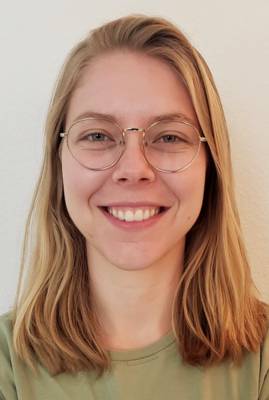
Dr. Anna Miller is a Researcher affiliated with the Professorship for Environmental Chemistry at ETH Zürich, Switzerland. Her work focuses on atmospheric processes, particularly ice nucleation mechanisms, cloud physics, and environmental chemistry applications. She is actively involved in the CLOUDLAB project, utilizing uncrewed aerial vehicles (UAVs) for cloud seeding experiments and aerosol measurements to study microphysical ice processes in supercooled stratus clouds. Her research integrates experimental fieldwork with advanced computational modeling, addressing topics like silver iodide (AgI) seeding efficiency, surface-active macromolecules' roles in ice nucleation, and the Wegener-Bergeron-Findeisen process. She collaborates with remote sensing and radar technology experts to analyze polarimetric signatures and liquid water content dynamics in clouds. Key contributions include developing the FINC freezing ice nuclei counter, analyzing agricultural and natural ice-nucleating particle emissions, and advancing UAV-based ice accretion monitoring. Miller's work bridges environmental chemistry with climate engineering, emphasizing practical applications for weather modification and climate intervention strategies. Despite no listed awards, her extensive publication record reflects impactful contributions to atmospheric science and environmental technology. She advises on projects involving aerosol sampling, cloud dynamics modeling, and CLOUDLAB infrastructure development, contributing to both academic and applied climate research initiatives.
Dr. Nan Yu is a Senior Lecturer/Associate Professor at the University of Edinburgh's School of Engineering, serving as Deputy Director of the MSc Digital Design and Manufacture program. He holds visiting appointments at University College Dublin (2021-2026) and Osaka University (2022-2024). Dr. Yu's expertise spans precision manufacturing, plasma technologies, and additive manufacturing, with over £1M in grant funding as PI, 50+ peer-reviewed publications, and multiple awards including the Marie Curie Fellowship (2018-2020) and Royal Academy of Engineering Industrial Fellowship (2023-2024). He earned a PhD in Precision Engineering (Cranfield University, 2017), MSc in Mechanical Manufacturing (Harbin, 2013), and BSc in Mechanical Engineering (Harbin, 2011). His professional qualifications include Fellowships from the Royal Society of Art (2022) and Higher Education Academy (2023), alongside memberships in the European Society for Precision Engineering and CIRP. Research focuses on plasma-based precision machining, additive manufacturing sustainability, and digital twin frameworks. Key contributions include innovations in plasma polishing for optics, UAV swarm strategies, and edge computing sensors. Teaching includes courses on digital manufacturing, metrology, and mechanical design projects. He chairs the 12th CIRP Global Web Conference (2024) and has delivered 10 invited/keynote talks globally. His work emphasizes interdisciplinary collaboration, bridging advanced manufacturing with emerging technologies.
Harry Owen is a Postdoctoral Research Associate at the Department of Geography, University of Cambridge , working with Dr. Emily Lines. His research focuses on remote sensing and forest ecology , with an emphasis on 3D data analysis using techniques like terrestrial laser scanning (TLS) and UAV imagery. He holds an MSc in Environmental Monitoring from King's College London and a BSc in Geography from the University of Plymouth. His work explores forest-landscape dynamics , tree species classification, and the impacts of climate change on forest structure. He has contributed to benchmarking datasets like FOR-species20K and developed frameworks for canopy segmentation using deep learning. Key methodologies include integrating TLS and satellite data to assess vegetation health, biodiversity, and ecosystem vulnerability. Notable projects include studying ash dieback detection via UAV-derived metrics and reimagining forest ecology through 3D remote sensing. His research bridges ecological theory with applied conservation, emphasizing scalable solutions for monitoring global forests. Collaborations with institutions like the Institute of Zoology highlight his interdisciplinary approach to environmental challenges.
Adrian Law Wing Keung is a Professor in the Department of Civil and Environmental Engineering at the National University of Singapore (NUS), serving since 2024. He holds a PhD and MSc from the University of California, Berkeley, specializing in coastal and hydraulic engineering, and a BEng (Civil) from the University of Hong Kong. His academic roles include Editor-in-Chief of the Journal of Hydro-environment Research and leadership in international committees like the IAHR/IWA Joint Committee on Marine Outfall Systems and ASEAN Hydroinformatics Data Centre. He has extensive consulting experience for water infrastructure projects and focuses on applying research to real-world solutions through his RDTA (Research-Development-Translation-Application) philosophy. Education: PhD in Civil and Environmental Engineering, University of California, Berkeley, USA (1991) MSc in Civil and Environmental Engineering, University of California, Berkeley, USA (1985) BEng (Civil Engineering), University of Hong Kong (1984) Research Interests: Coastal and hydraulic engineering, environmental hydraulics, remote sensing, data-driven process control, machine learning optimization in water systems, and coastal renewable energy. His work emphasizes translating fundamental research into practical applications, such as monitoring coastal environments under climate change and optimizing solar/wind energy systems. Awards: Top-2% Global Scientist by Stanford University (2023) Karl Emil Hilgard Hydraulic Prize (ASCE, 2014) UPS Foundation Visiting Professorship at Stanford (2001-2002) Wesley Horner Award (ASCE, 2000) Professional Activities: Council member of the International Association of Hydro-environment Engineering and Research, editorial board roles in technical journals, and advisory roles for major water infrastructure projects globally. His research outputs span 100+ peer-reviewed articles, with a focus on numerical modeling, remote sensing, and sustainable engineering solutions.
Kasey Laurent is an Assistant Professor at Syracuse University's Department of Mechanical and Aerospace Engineering within the College of Engineering and Computer Science. She holds a Ph.D. in Theoretical and Applied Mechanics (Cornell University, 2023) and a B.S. in Aerospace Engineering and Mechanics (University of Minnesota – Twin Cities, 2017). Her research focuses on turbulence and fluid dynamics, exploring bio-inspired solutions for UAV performance and aerodynamic adaptations in animals. Key projects include studying golden eagle flight dynamics in turbulent environments and developing advanced experimental methods like the Maximum Likelihood Filtering technique for particle tracking. Dr. Laurent leads the Laurent Fluid Dynamics Lab, which investigates fluid mechanics in biological systems and man-made machines. Current projects include drag reduction inspired by shark skin, UAV performance optimization in wind, and collaborations with companies like OpB Data Insights. Recent grants include SOURCE funding for undergraduate research (2023–2025). Notable collaborations include work on turbulence filtering with OpB Data Insights, published in Experiments in Fluids (2024). Undergraduate mentoring spans projects on flapping wing forces, low-speed flow visualization, and car drag reduction. Publications highlight interdisciplinary approaches, linking avian flight, granular dynamics, and turbulence measurement. Outreach includes STEM programs and public lectures on aerodynamics.
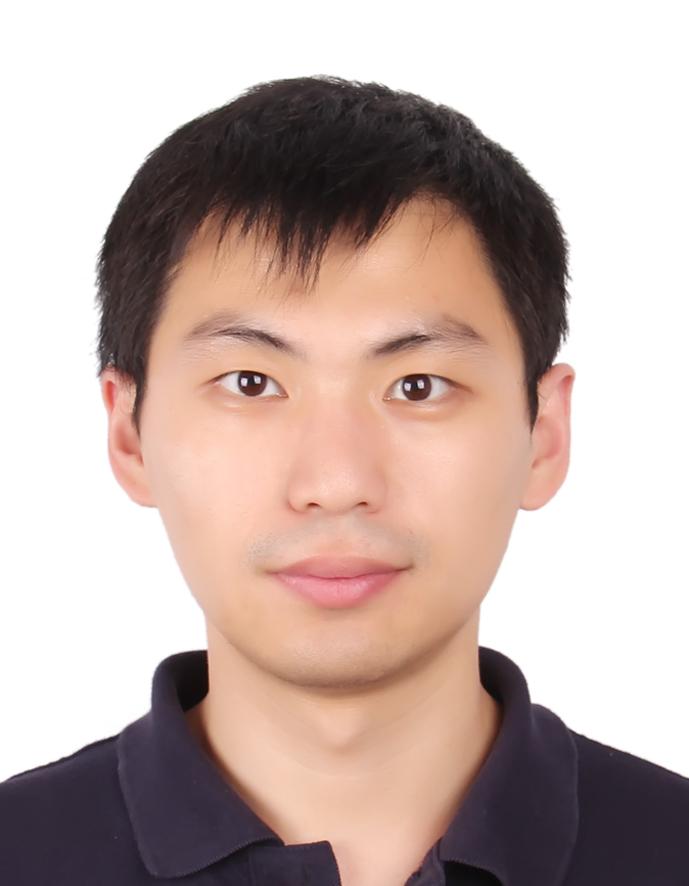
Xufei Yang is an Assistant Professor in the Department of Agricultural and Biosystems Engineering at South Dakota State University (SDSU), concurrently serving as an SDSU Extension Environmental Quality Engineer. His work bridges environmental engineering and agricultural systems, focusing on air quality solutions for livestock operations and precision agriculture innovations. He teaches Agricultural Waste Management and leads research in bioaerosol mitigation, sustainable waste-to-resource systems, and cyberinfrastructure development for smart farming. Education: Ph.D., University of Illinois; M.S. & B.S., Tsinghua University. His professional experience includes roles in environmental management outreach targeting South Dakota livestock producers, emphasizing practical solutions for reducing emissions and optimizing resource use. Research Interests include: Development of cost-effective air quality monitoring technologies for agricultural environments Optimization of algal-based bioremediation systems using photobioreactors Cybersecurity frameworks for agricultural IoT systems Wastewater nutrient recovery and energy-efficient treatment processes Grant Activities: Current projects include a $500k FFAR-funded study on bioaerosol characterization in swine facilities, a $250k SD Cyber-Ag-Law initiative for LPWAN-based precision systems, and multiple industry collaborations addressing feed waste reduction and soybean byproduct utilization. Past work includes noise exposure studies in forestry operations and UAV-based methane monitoring systems. Labs/Teams: Leads SDSU's Agricultural Environment and Energy Lab, collaborating with interdisciplinary teams on biofilter design, microbial fuel cell sensors, and smart agriculture infrastructure. Active in extension programs delivering environmental management training to producers across South Dakota.
Dr. Tashnim Chowdhury is a Professor in the Department of Computer Science at Capitol Technology University. He holds a Ph.D. in Information Systems (AI and Machine Learning) from the University of Maryland Baltimore County, an M.S. in Electrical Engineering from the University of Toledo, and a B.S. in Electrical and Electronics Engineering from Chittagong University of Engineering and Technology. His research focuses on Machine Learning, Deep Learning, Computer Vision, and Natural Language Processing, with applications in disaster damage assessment and large language models. He has published extensively on topics like UAV-based semantic segmentation for natural disaster analysis and high-resolution aerial imagery datasets for post-flood scene understanding. Dr. Chowdhury has over 3 years of industry experience as a Machine Learning Engineer and Software Engineer at companies such as Comcast, Intel, and Fluence Automation. His work bridges academic research with practical applications in AI, generative models, and environmental monitoring. He has advised students in academic settings and contributes to dataset development for critical infrastructure analysis.
Šlapak Eugen is an Assistant Professor at the Technical University of Košice. His research focuses on autonomous driving systems, edge computing, and network optimization, with a particular emphasis on applying neural networks and blockchain technologies in vehicular and 5G networks. Eugen Šlapak holds a PhD in [specific field not explicitly stated, likely Engineering/Computer Science] and an Ing. (engineer) degree. His academic background combines technical expertise in telecommunications and computer science. His research interests span autonomous driving technologies, including simulation and control systems, as well as edge computing and metaverse integration. He also explores blockchain applications in vehicular networks, resource allocation in 5G and beyond, and the use of graph neural networks for network optimization. His work intersects machine learning, robotics, and telecommunications to address challenges in modern communication systems and intelligent transportation. Recent publications highlight advancements in neural radiance fields for industrial robotics, distributed edge video compression for autonomous driving, and blockchain-based resource allocation in connected vehicles. Earlier work includes optimization of UAV-assisted networks and HetNet topology design using machine learning clustering methods. While no formal awards are listed, his contributions to vehicular networks, edge computing, and AI-driven network design reflect significant scholarly impact. Advising details are not documented here, but his research collaborations likely involve cross-disciplinary teams focusing on autonomous systems and 5G infrastructure. No lab affiliations or teams are explicitly mentioned, though his teaching role in the course Stochastické modelovanie a analýza dát (SMaAD) suggests involvement in data analysis and stochastic modeling initiatives.
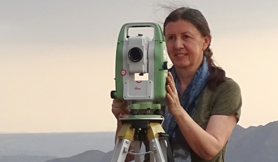
Christiane Richter is a Laboratory Engineer at the Faculty of Spatial Information, HTW Dresden, specializing in remote sensing, photogrammetry, and cultural heritage conservation. She leads the NascaGIS project, digitizing the UNESCO World Heritage Nasca Lines. Her work integrates GIS, astronomical analysis, and archaeological research to preserve ancient Peruvian geoglyphs. She co-authored over 50 publications and presented at international conferences like CIPA and ISPRS. Richter also serves as President of the 'Dr. Maria Reiche' association, promoting Nasca's cultural heritage. Her recent projects include documenting ancient aqueducts in Peru using UAVs and GPS. She holds an M.Sc. in Geoinformatics and has collaborated with institutions like TU Prague and UNESCO. Affiliations: HTW Dresden, TU Prague, UNESCO projects Education: M.Sc. Geoinformatics (University of Salzburg), Diploma in Surveying (HTW Dresden) Key Projects: NascaGIS, Nasca Aqueducts Survey, DAI Erbil Project Research Interests: Combining geospatial technologies with archaeology to solve mysteries of ancient landscapes. Recent focus on 3D modeling of geoglyphs and analyzing Nasca's irrigation systems.
Dr. Marcin Pawlik is a Researcher at the Post-Mining Research Center of the Georg Agricola University of Technology since 2020. He holds a Doctorate (2021) from the Technical University of Bergakademie Freiberg's Faculty of Geosciences, following a Master's (2019) and Engineer degree (2018) in Geodesy and Cartography from Wrocław University of Technology. His research focuses on Earth observation, geodata management, and geomonitoring, particularly in post-mining environments. He is affiliated with societies like the German Geological Society (DGGV) and the European Association of Geoscientists and Engineers (EAGE). His work emphasizes innovative monitoring methods combining multispectral UAV/satellite data and digital twin technologies for post-mining rehabilitation. Key projects include long-term geomonitoring frameworks for the Prosper-Haniel Mine, vegetation index development for environmental assessment, and risk management strategies for underground surveys. Over 20 peer-reviewed articles reflect his contributions to sustainable georesource management and environmental monitoring technologies. Publications highlight advanced applications of remote sensing, geoinformatics, and data fusion techniques. Current research trends include integrating digital twins with geospatial data for real-time environmental impact analysis, as well as developing indices for water and vegetation monitoring in post-mining landscapes. Pawlik collaborates with institutions on projects like the Prosper-Haniel Mine case study, focusing on subsidence analysis and ecological recovery. His research bridges geosciences and engineering to address challenges in sustainable resource management and environmental restoration.
Hala ElAarag is a Professor of Computer Science at Stetson University, located in Deland, Florida. She holds a PhD from the University of Central Florida (2001) and MS/BS degrees from Alexandria University (1991/1989). Her research focuses on computer networks, machine learning, cybersecurity, and computer science education. She has authored over 70 publications and 11 edited books, including her notable work Web Proxy Cache Replacement Strategies Simulation, Implementation, and Performance Evaluation . ElAarag has served in leadership roles, such as President of the Consortium of Computing Sciences in Colleges (2016-2018) and Vice President (2014-2016). She has also been active in organizing conferences, including co-chairing the Communication and Networking Simulation Symposium and Spring Simulation Multiconference. Her teaching philosophy emphasizes hands-on learning, reflected in her development of 15 computer science courses, including core and specialized subjects like Computer Networks and Algorithms Analysis. Her research trends span algorithm optimization, network security, and autonomous systems, with recent work in AI-driven password cracking and quadrotor modeling. Awards include the IEEE Region 3 Biedenbach Award (2022) and multiple teaching and service recognitions. She has mentored numerous students and contributed to STEM outreach through initiatives like the Tech Trek Coordinator for middle school girls (2021-2023). ElAarag’s contributions extend to editorial roles in journals like Journal of Computing Sciences in Colleges and Simulation: Transactions of SCS . Her work bridges academic research and practical application, emphasizing pedagogical innovation and interdisciplinary collaboration.