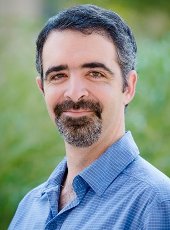
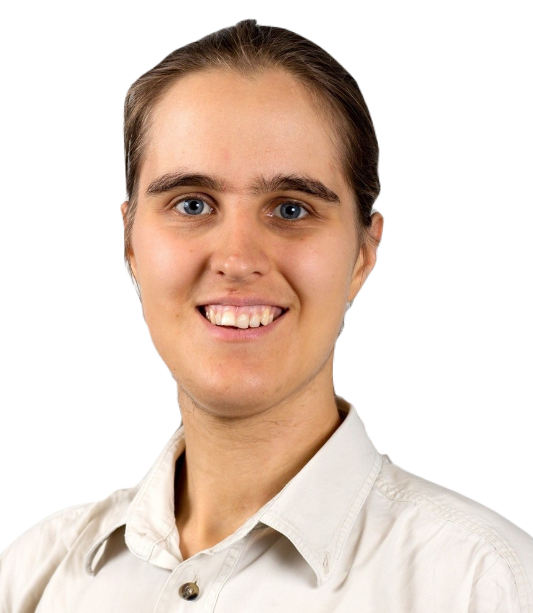
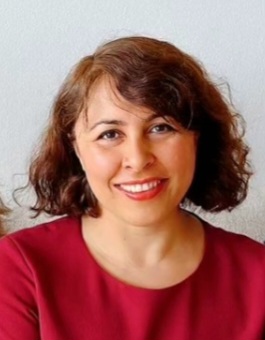
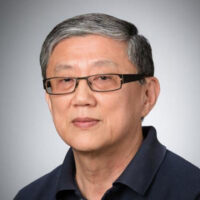
Ezequiel Medici is an Adjunct Assistant Professor at the Department of Mechanical and Aerospace Engineering, Michigan Technological University. His work bridges numerical and experimental research across multiple disciplines. Research Focus: Modeling phase change and heat/mass transport in porous media and cryogenic systems. Key Applications: PEM fuel cells, volcanic eruption dynamics, cryogenic propellant management, and industrial fluid transport. Publications Trends highlight expertise in: Multi-scale modeling (continuum and pore-network approaches) Cryogenic fluid behavior (liquid hydrogen, supersonic jets) Geophysical shock wave propagation Industrial applications (diapers, heat pipes, oil recovery)
Dr. Svetlana Tkachenko is a Post-Doctoral Research Fellow at the University of New South Wales (UNSW) Faculty of Engineering, Department of Mechanical Engineering. She specializes in computational fluid dynamics and heat transfer modeling with applications in renewable energy systems, building ventilation, and automotive aerodynamics. Her work bridges theoretical modeling with practical industrial applications through collaborations with various industry partners. Education: PhD in Mechanical Engineering, UNSW, Australia (2018) Dr. Tkachenko's research focuses on numerical modeling of fluid flow and heat transfer in renewable energy systems, particularly photovoltaic technologies and building-integrated applications. Her work spans passive cooling techniques for solar panels, building ventilation systems, and thermal management in automotive applications. She employs computational fluid dynamics (CFD), multi-phase modeling, and machine learning techniques to optimize system performance and energy efficiency. Her research has significant implications for improving the efficiency of solar energy systems and building thermal performance. An analysis of her recent publications reveals a consistent focus on heat transfer enhancement in photovoltaic systems, particularly through passive cooling techniques. Her work demonstrates increasing sophistication in modeling approaches, incorporating machine learning for weather data analysis and spectral modeling of PV surfaces. The research trajectory shows progression from fundamental fluid dynamics studies toward practical applications with industry partners. Scientific Recognition: Finalist, 2022 GUD Excellence Awards at the Royal Automobile Club of Victoria in Melbourne for collaboration with Disc Brakes Australia on thermodynamic simulations in brake rotor development Dr. Tkachenko actively supervises research students, currently mentoring two thesis students in renewable energy topics and one in disk brake modeling. She has contributed technical advice to numerous undergraduate and postgraduate theses on topics including photovoltaic cooling, building ventilation, and automotive aerodynamics. She serves as a Chief Investigator on an Australian Renewable Energy Agency (ARENA) grant titled 'Research boost for solar panel efficiency and cost reduction' (2020-2023). Her industry collaborations include partnerships with Disc Brakes Australia, 5B, and international collaborators in France and the UK. Dr. Tkachenko's research group utilizes advanced computational resources including ANSYS, OpenFOAM, and high-performance computing facilities at UNSW's Katana and NCI's Gadi. Her work on smart coatings for PV systems involves collaboration with A&B Smart Materials, an Oxford University-based venture developing novel materials for the photovoltaic industry.
Dr. Maryam Ghodrat is a Senior Lecturer in Mechanical Engineering at the School of Engineering and Technology, UNSW Canberra. She specializes in thermal fluid systems, combustion science, and fire safety engineering. Her research focuses on mitigating fire damage to infrastructure through advanced design strategies, materials, and computational models. She leads two research teams: Heat Transfer and Combustion and Adaptive Design for Resilient Structures , overseeing 5 PhD students, 1 research assistant, and 7 honor students. Education: Doctor of Philosophy (2014), University of New South Wales, Sydney Master of Engineering (2010), University of New South Wales, Sydney Research Interests: Smouldering combustion, lithium-ion battery fire safety, urban infrastructure resilience, CFD modeling, and climate change impact on thermal systems. Her work includes developing fire-resistant materials, optimizing energy-efficient thermal systems, and advancing predictive models for wildfire behavior. Key Achievements: Established the Pyrometric Lab at UNSW Canberra for flame behavior testing Recipient of Goldstar Awards (2022–2024) and recognition as a top 2% global scientist (Stanford/Elsevier) Principal Investigator on multiple competitive grants (Category 1 and 2) Teaching Roles: Course Coordinator for Heat Transfer and Refrigeration (ZEIT37010) and Engineering Mechanics (ZEIT1503) Instructor for Introduction to Mechanical and Aeronautical Engineering (ZEIT1504) Labs & Teams: Leads the Pyrometric Lab, Heat Transfer and Combustion Lab, and the Adaptive Design for Resilient Structures group, focusing on material fire performance, scalable fire safety solutions, and disaster-resilient infrastructure.
Prof. Christian Stemmer is a Professor of High-Speed Aerodynamics at the Technical University of Munich (TUM), affiliated with the TUM School of Engineering and Design and the Department of Aerodynamics and Fluid Mechanics. His research focuses on hypersonic flows, boundary layer transition, thermal and chemical nonequilibrium phenomena, and research data management. Stemmer holds a Dr.-Ing. habil. and has extensive international experience, including postdoctoral work at Stanford University and NASA Ames. Career highlights: Appointment as extraordinary professor in 2019, leadership roles in the Collaborative Research Center TRR40 (SFB/TRR40), and membership in editorial boards such as Advances in Aerodynamics . Awards: 2020 NATO AVT Panel Excellence Award for contributions to hypersonic flow research. Key projects: Investigation of hypersonic boundary layer transition under high-enthalpy conditions, development of numerical models for rocket combustion chambers, and leadership in national and international research consortia. His work bridges fundamental fluid mechanics with aerospace engineering applications, emphasizing high-performance computing and data-driven methodologies. Recent contributions include studies on roughness-induced instabilities, shock-wave interactions, and metadata extraction frameworks for HPC workflows.
Professor Chan Y. Ching is affiliated with the Department of Mechanical Engineering at McMaster University's Faculty of Engineering. His research focuses on thermo-fluid sciences, particularly in multiphase flows, gas turbine aerodynamics/heat transfer, near-wall turbulence, and electrohydrodynamic pumps for electronics cooling applications. Education: B.S. (1980) from University of Peradeniya, Ph.D. (1992) from Syracuse University Research Interests: His work spans advanced materials & manufacturing, energy systems, and turbulent flow phenomena. Specific projects include studies on flow accelerated corrosion for nuclear applications and pressure drop/void fraction in two-phase piping systems. Contact: Office located in JHE 103 (mail to JHE 310A), Phone: 905-525-9140 ext. 24998, Email: chingcy@mcmaster.ca
Carmela Bernardo is a Research Fellow in the Department of Engineering at Università degli Studi del Sannio (UNISANNIO). Her academic work focuses on opinion dynamics, consensus algorithms, and multi-agent systems within the field of control theory. She teaches 'LEARNING FOR DYNAMICS AND CONTROL' for the Master's Degree program in Electronics Engineering for Automation and Sensing, with office hours held on Wednesdays from 10:00 to 12:00 at PalaUNISANNIO. Dr. Bernardo's research centers on mathematical modeling of social dynamics, particularly exploring the Hegselmann-Krause opinion dynamics model and bounded confidence frameworks. Her work investigates how confidence thresholds affect opinion clustering, develops mixed logical dynamical models for opinion evolution, and examines consensus achievement in systems with stubborn agents. She has made significant contributions to understanding finite-time convergence in asymmetric models and the synchronization properties of Kuramoto oscillators under bounded confidence constraints. Her publication record demonstrates a clear progression from theoretical foundations to practical applications, with recent work including comprehensive surveys that synthesize knowledge in bounded confidence opinion dynamics. The most recent publications show expansion into experimental verification of theoretical models and applications to complex real-world scenarios. Dr. Bernardo maintains an active collaboration network with researchers including Francesco Vasca, Claudio Altafini, and Trisha Srivastava. Her work appears in high-impact journals such as AUTOMATICA, IEEE TRANSACTIONS ON AUTOMATIC CONTROL, and NATURE COMMUNICATIONS, reflecting the interdisciplinary nature of her research that bridges control theory with social dynamics.
Prashant V. Kamat is the Rev. John A. Zahm, C.S.C., Professor of Science at the University of Notre Dame, with concurrent appointments in the Department of Chemical and Biomolecular Engineering. His career spans over four decades of pioneering research in physical chemistry and materials science, focusing on semiconductor nanomaterials for light energy conversion. Ph.D. in Physical Chemistry from Bombay University (1979) Postdoctoral research at Boston University (1979-1981) and University of Texas at Austin (1981-1983) Joined Notre Dame faculty in 1983 Dr. Kamat's research bridges photocatalysis, graphene chemistry, and electrochemistry to advance solar cells, hydrogen generation, and chemical sensors. His work emphasizes time-resolved spectroscopy to unravel charge transfer mechanisms in perovskite nanocrystals and hybrid systems. Key themes include bandgap engineering, triplet energy transfer, and electron storage in 2D materials. Recent publications highlight breakthroughs in halide perovskite stability, Mn-doping for triplet state control, and photocatalytic membranes . His group has resolved energy transfer pathways, phase segregation dynamics, and intercalation-induced property modulation in MoS 2 and AgInS 2 systems. Scientific recognition includes the Henry H. Storch Award (2024), Smalley Award (2022), and multiple fellowships (ECS, ACS, AAAS, MRS). As Editor-in-Chief of ACS Energy Letters , he shapes global discourse in energy materials. His leadership in solar photochemistry encompasses DOE-funded programs and industry collaborations, with over 500 peer-reviewed papers (85,000+ citations, h-index 146).
Nima Atabaki is an Associate Professor of Teaching at the Department of Mechanical Engineering , University of British Columbia . He holds a B.Sc. from Sharif University of Technology , an M.A.Sc. from École Polytechnique de Montréal , and a Ph.D. from McGill University . His academic credentials are complemented by his P.Eng. professional designation . Research Interests: His work focuses on experimental and theoretical studies in heat and mass transfer, with applications to energy conversion, storage, and utilization. Key areas include loop heat pipes (LHPs) , two-phase fluid flow , and thermal conductivity in fluid-saturated sintered materials. He also explores HVAC systems and thermal management in institutional settings during environmental stressors like wildfire smoke events. Publications: His research output spans 15 years of work on thermofluid models, heat transfer in residential systems, and hybrid numerical approaches. Collaborations with researchers like B.R. Baliga and M. Bernier highlight his interdisciplinary focus. Teaching: He instructs MECH 473: HVAC and MECH 375: Heat Transfer , emphasizing practical applications in mechanical engineering education. Awards: Killam Teaching Award (2016)
Paolo Ricci is a Full Professor and Director at the Swiss Plasma Center (SPC) at École Polytechnique Fédérale de Lausanne (EPFL) since October 2023. He previously held the Tenure Track Assistant Professor position (2010) and Associate Professor position (2016) at EPFL. His academic affiliations include leadership roles in multiple SPC sub-groups, such as Theory, Low Temperature Plasma Physics and Applications, International Installations, Tokamak Physics, Material Group, Plasma Processing, Applied Superconductivity, Edge Plasma Physics, and Administration. Politecnico di Torino (Italy): Master's in Nuclear Engineering (2000) Los Alamos National Laboratory: Doctoral studies in kinetic simulation of magnetic reconnection Dartmouth College: Postdoctoral research in gyrokinetic simulations of Z pinch plasmas Ricci's research focuses on plasma turbulence and instabilities, numerical simulations of laboratory and fusion plasmas, and computational methods for plasma physics. His work spans tokamak and stellarator boundary layer dynamics, scrape-off layer turbulence, fast ion transport, and validation of plasma simulation codes like GBS. His recent publications emphasize global fluid simulations in diverted geometries, snowflake magnetic configurations, and theoretical scaling laws for scrape-off layer widths. His scientific awards include the 2016 Section de Physique Teaching Prize, 2021 Craie d'Or (EPFL physics bachelor students), and 2021 Polysphère d'Or (AGEPoly). Ricci has supervised numerous Ph.D. theses on topics ranging from gyrokinetic moment-based models to scrape-off layer simulations, and actively collaborates with institutions on plasma turbulence validation projects.
Dr. Sabine Schilling is a Lecturer at the Lucerne School of Business, part of Lucerne University of Applied Sciences and Arts, affiliated with the Institute of Tourism and Mobility (ITM). She holds a PhD in Theoretical Particle Physics from the University of Zurich and studied physics at the University of Heidelberg. Her research focuses on interdisciplinary applications of statistics , machine learning , and numerical simulations , with particular emphasis on biomedical challenges like intracranial aneurysm analysis. Key areas include: Morphological quantification of vascular structures Hemodynamic modeling of blood flow Genome-wide association studies for neurological disorders Development of computational biology frameworks She maintains active software development contributions, including the R package visStatistics for automated statistical test visualization. Her teaching portfolio includes courses in descriptive statistics.
Yue Jin is an Assistant Professor in the Department of Mechanical and Aerospace Engineering at the University of Missouri (Mizzou), where he also serves as the director of the Advanced Flow and Heat Transfer Lab (AFHTL). He previously held a postdoctoral research associate position at MIT before joining Mizzou in 2022 as part of a cohort of 14 new faculty members. His work is closely tied to the MU Research Reactor (MURR), the highest-powered university research reactor in the U.S., which provides a unique platform for his research in nuclear thermal hydraulics and clean energy systems. PhD, Pennsylvania State University (2019) MS, Shanghai Jiao Tong University BS, Xi’an Jiaotong University Dr. Jin's research focuses on thermal-fluid sciences and nuclear engineering, particularly in fluid flow, heat and mass transfer, reactor thermal hydraulics, and the modeling of advanced energy systems such as compact heat exchangers and next-generation nuclear reactors. He is deeply involved in the development and validation of multi-scale, multi-physics numerical tools enhanced by artificial intelligence and machine learning. His lab conducts high-resolution experiments using advanced imaging techniques like S-PIV/LIF and laser diagnostics to study phenomena such as critical heat flux (CHF), droplet dynamics during reflood transients, and two-phase flow behavior in rod bundles. His recent publications reveal a strong trend toward integrating physics-informed machine learning with traditional thermal-hydraulic modeling to improve prediction accuracy in complex systems. Topics include CHF modeling, reflood safety analysis, accident-tolerant fuels, and thermal striping in advanced reactors. His work bridges experimental validation with code development, particularly using tools like COBRA-TF and TRACE. Development of Innovative Physics-Informed Data-Driven Model for COBRA-TF CHF Prediction (MU Research Council) Advanced Reflood Thermal-Hydraulics for Uncertainty Resolution (NRC/Penn State) Midwest Industrial Assessment Center (Department of Energy) Massive Reflood Data Evaluation Using Machine Learning (NRC/Penn State) Dr. Jin actively collaborates with researchers at MIT, Penn State, and General Atomics. He mentors graduate students and welcomes both graduate and undergraduate researchers to his lab. His research contributes to the global effort in clean energy sustainability and next-generation nuclear safety.
Maria Elena Fragala is an Associate Professor of General and Inorganic Chemistry at the Department of Chemical Sciences, University of Catania, Italy. With over two decades of experience in both academic and industrial R&D environments, she specializes in nanostructured materials fabrication and characterization through chemical vapor deposition methodologies. Key research areas include hybrid organic-inorganic materials, supramolecular self-assembly, and photocatalytic applications Expert in advanced characterization techniques: XPS, XRD, AFM, SEM-EDX, UV-Vis Teaches General and Inorganic Chemistry to undergraduate and graduate students Research Highlights : Her work bridges semiconductor industry expertise with academic innovation, focusing on environmentally-friendly precursor development, surface functionalization strategies, and hierarchical assembly processes. Recent publications emphasize 4H-SiC defect engineering, melanin-based chiral films, and ZnO nanorod applications for environmental remediation. Collaborative Network : Active in international collaborations spanning materials synthesis (metal-organic CVD), optofluidics (3D-printed sensors), and biomedical applications. Supervises research projects involving electrospun nanofibers for water purification and plasmonic sensing platforms.
Baba Musa Abbagoni is a Researcher in the Department of Engineering at the University of Huddersfield's School of Computing and Engineering. With a career spanning multiple research domains, he specializes in ultrasonics, two-phase flow dynamics, and sensor technology. He actively supervises PhD students and collaborates on interdisciplinary projects related to sustainable energy, fluid mechanics, and advanced measurement techniques. Institution: University of Huddersfield School: School of Computing and Engineering Department: Department of Engineering Academic Rank: Researcher Research Interests His work focuses on: Ultrasonic Doppler sensor development for multiphase flow analysis Gamma ray densitometer applications in flow measurement Energy harvesting from fluid dynamics Machine learning in flow regime classification Sustainable building systems thermal characterization Environmental impact reduction in energy systems Publication Trends Over 8 years, his research has evolved from fundamental two-phase flow classification (2016) to advanced applications in energy harvesting (2018, 2022) and sustainable building systems (2024). His work increasingly incorporates machine learning (2016) and environmental impact analysis (2023). Key collaborations include researchers in mechanical engineering, energy systems, and sensor technology. Supervision Currently accepting PhD students for projects related to concrete radiator systems and energy harvesting applications. Contact Email: b.m.abbagoni@hud.ac.uk Phone: 01484 258815
Brian S. Thurow is the W. Allen and Martha Reed Associate Professor in the Department of Aerospace Engineering at Auburn University’s Samuel Ginn College of Engineering. He has been a core faculty member since 2005, contributing significantly to research, teaching, and graduate education. He leads the Advanced Flow Diagnostics Laboratory (AFDL) and holds an endowed professorship, reflecting his academic excellence. Education: Ph.D., Mechanical Engineering, The Ohio State University (2005) M.S., Mechanical Engineering, The Ohio State University (2001) B.S., Mechanical Engineering, The Ohio State University (1999) Research Interests: Dr. Thurow specializes in experimental fluid dynamics, with a focus on developing and applying advanced optical diagnostics for measuring complex flows. His work emphasizes high-speed, high-resolution techniques such as MHz-rate particle image velocimetry (PIV) and plenoptic (light field) imaging for 3D flow visualization. He investigates compressible flows, turbulence, aero-optics, and shock-boundary layer interactions, with applications in aerospace propulsion and flow control. Recent Research Trends: His recent publications reflect a strong emphasis on 3D imaging of turbulent and compressible flows using plenoptic cameras and background-oriented Schlieren (BOS). Projects span from fundamental turbulent boundary layer studies to high-temperature jet diagnostics, often funded by AFOSR, ARO, ONR, and NSF. The integration of computational imaging with fluid mechanics is a recurring theme, enabling non-intrusive, volumetric flow field measurements. Scientific Awards: SGA Outstanding Faculty Member Award (2006, 2008, 2009, 2012, 2013) AIAA Most Outstanding Faculty Member Award (2009, 2012, 2013) William F. Walker Teaching Award for Excellence (2009) Auburn Alumni Engineering Council Research Award (2009) Provost’s Award for Supporting Graduate Scholarship (2011) W. Allen and Martha Reed Endowed Professorship (2010) Invited to National Academy of Engineering’s U.S. Frontiers of Engineering Symposium (2013) National Defense Science and Engineering Graduate Fellowship (2001) Advising and Grants: Dr. Thurow is a dedicated mentor, supervising numerous graduate and undergraduate students in cutting-edge research. He has secured significant funding from the Air Force Office of Scientific Research, Army Research Office, Office of Naval Research, and National Science Foundation. He serves as co-PI on a $2.7M AFOSR grant studying 3D shock-boundary layer interactions. He founded the graduate student recruitment and fellowship committee and the council of engineering graduate students, significantly enhancing graduate education at Auburn. Labs and Teams: He founded and directs the Advanced Flow Diagnostics Laboratory (AFDL), which develops and applies state-of-the-art optical techniques for fluid dynamics. The lab collaborates with institutions like the University of Illinois, University of Texas-Austin, and the National Center for Physical Acoustics.
Luca Brandt is a Full Professor in the Department of Environment, Land and Infrastructure Engineering (DIATI) at Politecnico di Torino, Italy. His research is centered on computational fluid dynamics (CFD), multiphase flows, and high-fidelity numerical simulations. He teaches both undergraduate and graduate courses in Fluid Mechanics and Multiphase Flows and serves on the academic collegia for Mechanical, Aerospace, and Environmental Engineering programs. His research interests include: Computational Fluid Dynamics (CFD) Fluid Mechanics and Turbulence Multiphase and Particle-Laden Flows Heat and Mass Transfer Numerical Algorithm Development Environmental and Biological Fluid Mechanics The recent publications highlight a strong focus on interface-resolved simulations of complex flows involving bubbles, droplets, particles, and biofluids. His work spans fundamental fluid dynamics, environmental modeling (e.g., microplastics), biomedical applications (e.g., blood flow), and industrial systems (e.g., fusion reactors, separation devices). The recurring themes are turbulence modulation, interfacial dynamics, and efficient numerical methods. His scientific awards include: ERC Consolidator Grant (2013) Outstanding Young Researcher Award, Swedish Research Council (2014) International Panetti-Ferrari Prize and Golden Medal, Accademia dei Lincei (2022) Luca Brandt actively supervises PhD students, including Chang Xu in Civil and Environmental Engineering, and leads the EU-funded FluxBEATS project (2024–2027). His work contributes to SDGs related to clean energy, sustainable cities, and industry innovation. He is involved in developing open scientific codes and models for multiphase systems. He leads research in the Hydraulics area at DIATI and collaborates across disciplines in environmental, mechanical, and biomedical engineering.