Faik Hamad is an Associate Professor in Engineering at Teesside University's School of Science, Engineering and Design. His expertise spans multiphase flow systems, heat transfer enhancement, and computational fluid dynamics (CFD) applications. Research focuses on: Development of microbubble generation and application technologies Optimization of phase separation systems in industrial processes Solar thermal system performance enhancement CFD modeling of filtration and multiphase flow phenomena His work has applications in water treatment, energy systems, and industrial process optimization. Recent projects integrate machine learning with fluid dynamics for bubble classification and separator design. Hamad serves as external PhD examiner for multiple UK universities and collaborates on industrial projects involving filtration systems and multiphase flow meters.
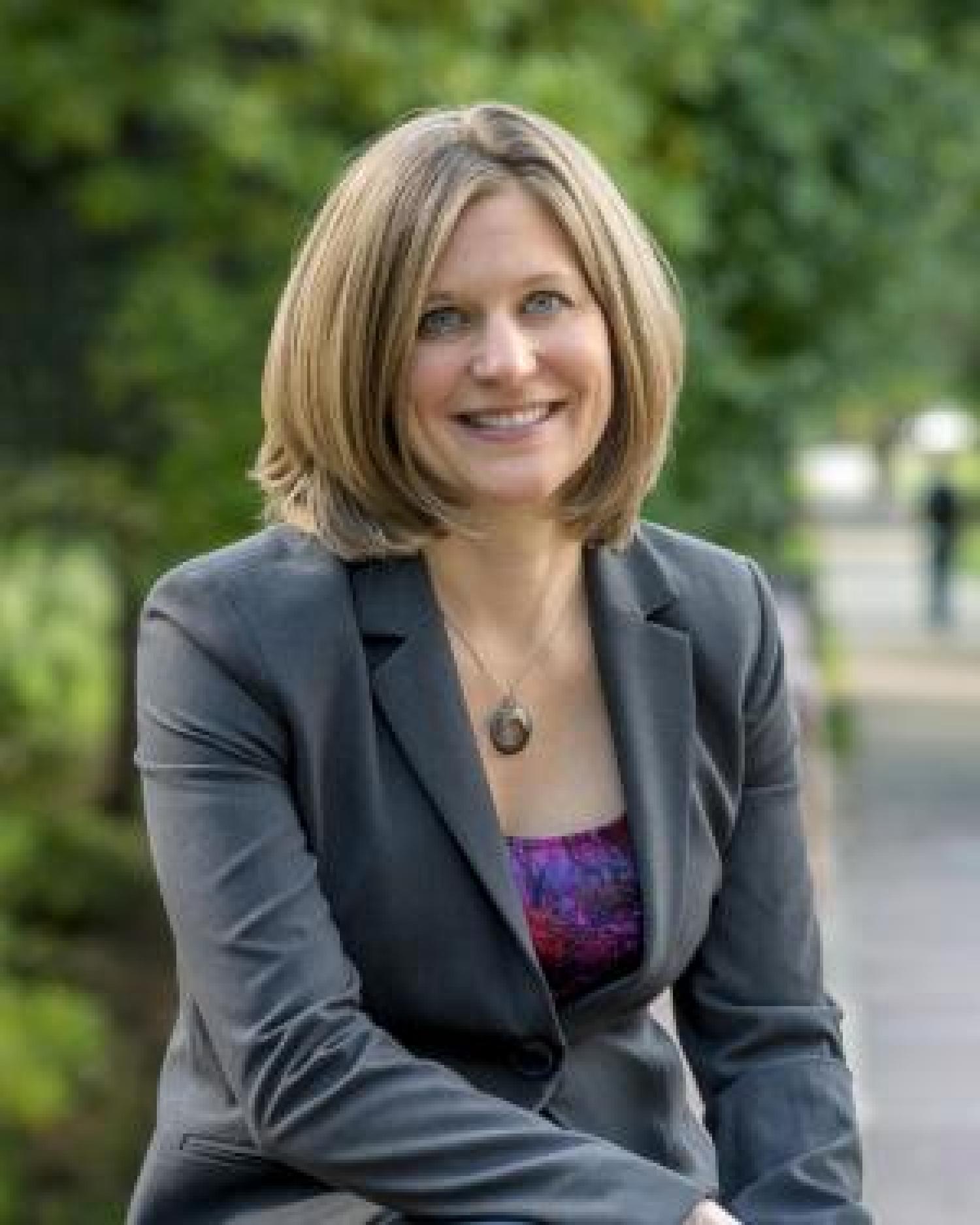
Dr. Julie Steinbrenner is an Associate Teaching Professor in Mechanical Engineering at the University of Colorado Boulder since 2012, holding the Stockman Family Faculty Fellowship and serving as Associate Chair of the Undergraduate Program. Her research focuses on engineering education, thermal-fluid sciences, and student professional development. She specializes in experimental design of thermal-fluid systems, with experience in labs across the US and Europe studying energy systems like solar-thermochemistry, fuel cells, and phase-change printing technologies. Dr. Steinbrenner teaches courses in fluids, heat transfer, and thermodynamics, emphasizing active learning techniques to enhance conceptual understanding and problem-solving skills. Her research contributions include pioneering studies on two-phase flow phenomena in microchannels, thermal management systems, and fluid dynamics optimization. Notable honors include the Stockman Family Faculty Fellow designation. She mentors students through senior design projects and actively engages in curriculum development for undergraduate engineering education. Dr. Steinbrenner's work bridges foundational research and practical educational strategies, fostering both technical expertise and professional readiness in her students.
Dr. Laura Curtin is an Lecturer affiliated with the Faculty of Applied Sciences and Technology and the Department of Applied Science . Her work focuses on analytical chemistry and pharmaceutical science, particularly in developing chromatographic methods for drug analysis. Research Interests : Liquid chromatography, pharmaceutical impurity profiling, and method validation. Publications : She has published two peer-reviewed articles on rapid liquid chromatographic techniques for analyzing itraconazole and ketorolac tromethamine impurities, contributing to pharmaceutical quality control. Citations : Her work has accumulated 11 citations, with an h-index of 2.
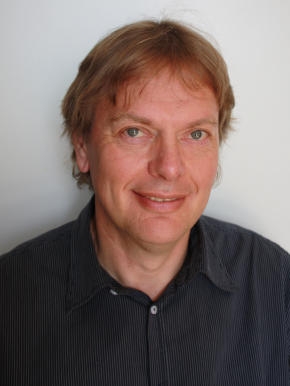
Prof. Dr. Daniel Weiss is a Lecturer at the University of Applied Sciences Northwestern Switzerland (FHNW), affiliated with the Institute of Thermal and Fluid Engineering within the FHNW School of Engineering and Environment . He is responsible for the Energy and Environment profile in the Master of Science in Engineering (MSE) program. His teaching focuses on advanced simulation, computational fluid dynamics (CFD), fluid mechanics, and student project supervision across bachelor and master levels. Dr. Weiss’s research emphasizes application-oriented R&D, including projects like ConforMJet (waterjet technology innovation) and Autarky (off-grid sewage treatment), funded by the CTI (Commission for Technology and Innovation) and Aargau Research Foundation. His work spans multiphysics modeling, thermal energy management, two-phase flows, and additive manufacturing applications in fluid systems. His publications explore fluid dynamics, spray systems, and energy systems, with a focus on CFD-driven analysis of phenomena like cavitation, ultrasonic manipulation, and phase-change material behavior. He collaborates with industry and academic partners, contributing to sustainable engineering solutions and advanced manufacturing techniques. Dr. Weiss advises student projects and has secured grants for projects addressing environmental and energy challenges. His lab, within the Institute of Thermal and Fluid Engineering, integrates experimental and numerical methods to advance fluid mechanics and environmental engineering practices.
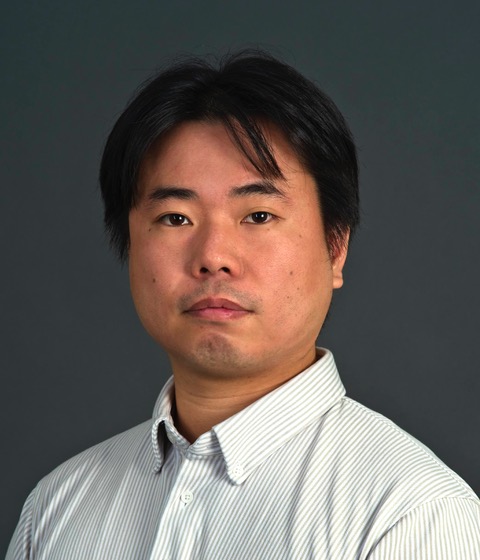
Dr. Kei Nagai is an Assistant Professor in the Department of Physics and Materials Science at the University of Memphis since 2024. His research focuses on nuclear physics, particularly nucleon structure and non-perturbative aspects of Quantum Chromodynamics (QCD). He is actively involved in experiments at national accelerator laboratories, such as Fermilab’s SeaQuest collaboration, probing proton internal structure via Drell-Yan processes. Education: B.S., M.S., and Ph.D. in Physics from the Tokyo Institute of Technology (2012-2017). Prior to his current role, he served as a Research Scientist at Duke University (2024), a Postdoctoral Researcher at Los Alamos National Laboratory (2020-2023), and a Postdoctoral Research Fellow at Academia Sinica (2017-2020). Research Interests include nucleon structure, quark-gluon dynamics, and proton collisions. His work explores three-dimensional nucleon structure functions and flavor asymmetry in the proton’s sea quarks. Publications highlight contributions to Drell-Yan dimuon studies, elliptic flow measurements, and quark-gluon plasma dynamics. His research has appeared in journals like Physical Review C , Nature , and Physical Review Letters . Dr. Nagai collaborates with the SeaQuest experiment, contributing to detector development and data analysis for high-energy physics.
Narendra Dev is a researcher at the Fluid Mechanics and Acoustics Laboratory (LMFA - UMR 5509) affiliated with Claude Bernard Lyon 1 University in Lyon, France. He works within the Mechanical Engineering department, focusing on experimental fluid dynamics with particular emphasis on bubble phenomena and multiphase flow systems. His research interests center around fluid mechanics, specifically bubble dynamics, multiphase flow systems, jet impingement phenomena, and hydrodynamics. Dev's work demonstrates a strong experimental focus, utilizing advanced laboratory techniques to investigate complex fluid interactions. His research has significant applications in industrial fluid systems, environmental flow modeling, and multiphase transport phenomena. Dev's publication record shows a consistent focus on bubble cloud dynamics and jet-related phenomena, with two notable recent publications in high-impact fluid mechanics journals. His 2024 paper in the Journal of Fluid Mechanics examined the balance between liquid inertia and bubble cloud buoyancy in circular plunging jet systems, while his 2025 work in the International Journal of Multiphase Flow investigated bubble cloud generation through multi-plunging jet configurations. These studies represent significant contributions to understanding complex multiphase flow behaviors. As a researcher at LMFA, Dev collaborates with prominent fluid dynamics experts including J. John Soundar Jerome, Hélène Scolan, and Jean-Philippe Matas. His work appears to be supported by the laboratory's extensive experimental facilities for fluid mechanics research, including specialized equipment for multiphase flow visualization and measurement.
Prof. Dr. Helmut Geistlinger is the Head of the Working Group 'Experimental Simulation and Modeling' at the Helmholtz Centre for Environmental Research (UFZ) in Halle, Germany. He holds a Diplom-Physiker (Dipl.-Phys.), Doktor-rerum naturalium (Dr.-rer.nat.), and Doktor-habilitation (Dr.-Ing. habil.). His professional experience spans from 1980, including roles as a Research Assistant at the University of Leipzig, Postdoc in quantum-field methods, Head of the 'Chemical Sensors' group at TU Leipzig, and Assistent of the Scientific Director of UFZ since 1992. Since 1997, he leads his current group and is Hon.-Prof. at TU Freiberg. His research focuses on multiscale-multiphase modeling of flow and transport in porous media, linking experiments with conceptual models using deterministic and stochastic approaches. Key interests include capillary trapping, fluid displacement dynamics, and CO₂ sequestration. His work integrates experimental visualization, numerical modeling, and field data analysis, addressing environmental challenges like groundwater remediation and subsurface energy storage. Geistlinger's expertise spans 40+ years with over 80 publications (2025–1996), addressing topics like evaporation in micromodels, pore-scale heterogeneity effects, and geoelectrical monitoring. His team collaborates with institutions globally, advancing understanding of subsurface processes critical for sustainable resource management.
Prof. Uwe Hampel serves as the Director of the Institute of Fluid Dynamics at the Helmholtz Center Dresden-Rossendorf (HZDR). His research focuses on multiphase flow dynamics, heat transfer, and fluid mechanics in industrial and energy systems. He leads projects on thermal energy storage, bioreactor hydrodynamics, and advanced imaging techniques for multiphase flows. His work integrates experimental methods with computational fluid dynamics (CFD) simulations to address challenges in energy systems, environmental engineering, and process optimization. Key research areas include bubble column hydrodynamics, nucleate boiling heat transfer, and sensor development for real-time flow measurement. He collaborates on facilities like the CARBOSOLA sCO2 power-to-storage system and has pioneered techniques such as Lagrangian Sensor Particles for tracking flow heterogeneities in large-scale bioreactors. His contributions span academic publications, technology transfer initiatives, and industrial partnerships aimed at advancing renewable energy and sustainable processes. Key Projects: CARBOSOLA facility for CO₂-based energy storage, PKL thermal-hydraulic analysis, and DATIV aerosol monitoring systems. Facilities: HZDR’s Dresden High Magnetic Field Laboratory, CASUS Center for Advanced Systems Understanding. Techniques: Ultrafast X-ray tomography, wire-mesh sensors, electrical impedance spectroscopy.
Moongyu Park is a Visiting Assistant Professor of Mathematics at Purdue University's Department of Mathematics, part of the College of Science. His research focuses on stochastic processes, fractional differential equations, mathematical biology, and numerical computation. Specific interests include anomalous diffusion, renormalization groups, and applications in porous media modeling. His work spans theoretical developments in fractional calculus and numerical methods, such as finite element approaches for two-sided fractional equations and neural network methods for integral fractional Laplace equations. He also explores interdisciplinary topics like network worm attack propagation models and material science applications in carbon-nanotube electrodes. Key areas of contribution include upscaling techniques for heterogeneous media, stability analysis of numerical methods, and stochastic modeling of complex systems. His research bridges pure mathematics with practical applications in fluid dynamics, cybersecurity, and materials engineering.
Anatoly Konechny is an Associate Professor in the School of Mathematical & Computer Sciences at Heriot-Watt University, with a primary affiliation to the Department of Mathematics. His research focuses on Mathematical Physics, particularly two-dimensional conformal field theory, renormalization group flows, string theory applications, and non-commutative geometry. He holds a Ph.D. in pure mathematics from UC Davis (1999) and has held postdoctoral positions at UC Berkeley (1999–2002), Hebrew University (2002–2004), and Rutgers University (2004–2006). His work contributes to UN Sustainable Development Goals through theoretical advancements in physics and mathematics. Education Diploma in Mathematical Physics, Independent University of Moscow (1995) Ph.D. in Pure Mathematics, UC Davis (1999) Research Interests Dr. Konechny’s research explores foundational aspects of theoretical physics, including: Two-dimensional conformal field theory (CFT) and its boundary conditions. Renormalization group (RG) flows and their applications to critical phenomena. World-sheet methods in string theory, focusing on D-branes and non-commutative geometry. Mathematical structures in quantum field theories, such as fixed points and topological defects. Research Trends Recent publications highlight studies on RG interfaces, boundary flows, and defects in two-dimensional systems. His work bridges abstract mathematical frameworks with physical phenomena, emphasizing interdisciplinary connections between geometry, topology, and quantum physics. Awards & Grants No specific awards are listed, but his sustained research output (46 publications) reflects consistent academic engagement. His current role at Heriot-Watt University includes teaching and mentoring in advanced mathematical physics. Labs & Collaborations Collaborations include co-authored works on boundary and defect conformal field theories, reflecting participation in international theoretical physics networks.
Associate Professor Jean-Pierre Hickey at the University of Waterloo specializes in multiphysics simulations, turbulence modeling, high-speed aerothermodynamics, and acoustics. His research focuses on LES/DNS simulations, supercritical mixing, and thermoacoustic coupling. He holds a Ph.D. in Mechanical Engineering from the Royal Military College of Canada and has postdoctoral experience at Stanford University's Center for Turbulence Research and the German Aerospace Center (DLR). Education: 2012: Ph.D., Mechanical Engineering, Royal Military College of Canada 2007: M.Sc., Computational Mechanical Engineering, TU-Darmstadt 2004: Bachelor's, Mechanical Engineering, École Polytechnique de Montréal His research interests span turbulent flows, hypersonic aerodynamics, and combustion processes. He has authored over 50 publications, including studies on shock-turbulence interaction, transpiration cooling, and particle clustering in turbulent flows. His work bridges computational fluid dynamics (CFD), experimental validation, and machine learning for aerospace and environmental applications. In 2019, he received an award for excellence in teaching and scholarship. He teaches advanced fluid mechanics courses (ME 351, ME 566, ME 664) and mentors graduate students in experimental and computational fluid dynamics. His lab (www.mpilab.ca) focuses on developing novel methodologies for turbulence modeling and flow control. Awards: 2019 University Excellence Award for Teaching and Scholarship Current research includes in-situ resource utilization for space applications, deep learning for acoustic source localization, and turbulence modeling for hypersonic flows. He collaborates on projects funded by NASA and the Canadian Space Agency, aiming to advance propulsion systems and thermal protection technologies.
Dr. Ali Uğur Sazaklıoğlu is an Assistant Professor in the Department of Space Engineering at Turkish Aeronautical Association University with additional affiliations at Near East University and Peoples Friendship University of Russia. His academic career demonstrates consistent research activity from 2013 through 2024, with a primary focus on inverse problems in partial differential equations. His research interests include: Inverse source identification problems Numerical solutions of parabolic differential equations Stability analysis of difference schemes Semilinear and nonlinear partial differential equations Backward parabolic equations and time-dependent problems Mathematical modeling of fluid flow in capillaries Dr. Sazaklıoğlu's publication record reveals a methodical progression from fundamental existence and uniqueness theory to increasingly complex numerical implementations. His recent work (2022-2024) focuses on extending numerical methods to multidimensional nonlinear parabolic equations, demonstrating both theoretical rigor and practical computational applications. His research often bridges abstract mathematical analysis with engineering applications, particularly in fluid dynamics. His collaborative work with researchers including Allaberen Ashyralyev and Abdullah Said Erdogan has produced significant contributions to the field of numerical analysis for inverse problems. While specific awards are not documented in the available information, his consistent publication record in reputable journals indicates professional recognition. As a faculty member in the Space Engineering Department, Dr. Sazaklıoğlu likely contributes to both theoretical and applied mathematics education, with his research directly informing advanced coursework in numerical methods and differential equations. His current research trajectory suggests continued development of numerical techniques for challenging inverse problems with practical applications in science and engineering.
Vitor Heitor Cardoso Cunha is a Postdoctoral Fellow in the Department of Chemistry at the Norwegian University of Science and Technology (NTNU), working with PoreLab research center. Originally from Rio de Janeiro, Brazil, he integrates computational chemistry and physics to study interfacial phenomena across multiple scales, with particular focus on liquid-vapor phase transitions in sub-micron systems. His research expertise spans several interconnected domains: Fluid Mechanics and Thermodynamics of phase transitions Computational Chemistry and Physics methodologies Scientific Machine Learning applications in fluid dynamics Density Functional Theory and Molecular Dynamics simulations Interfacial phenomena in solid-liquid-gas systems Dr. Cardoso Cunha employs phase field methods to capture diffuse interfaces between liquid and vapor phases, which is essential for investigating evaporation and condensation in droplets and ultrathin films. He also utilizes density gradient theory to characterize temporal evolution of surface processes. A significant innovation in his recent work involves neural operators that can learn interface evolution from thermodynamic principles while offering computational efficiency through super-resolution capabilities. His publication record demonstrates expertise in modeling droplet dynamics across multiple contexts, with recent works examining curvature effects on mass flux, phase change effects on droplet motion, and numerical methods for simulating suspended droplet evaporation. These contributions combine classical modeling approaches with emerging machine learning techniques to advance understanding of complex interfacial phenomena. His scientific contributions include: Development of phase field methods for evaporating droplet analysis Investigation of wettability gradient effects on droplet motion Creation of space-time numerical methods for droplet evaporation Exploration of neural operators for fluid mechanics applications Dr. Cardoso Cunha maintains an active computational research profile with multiple GitHub repositories focusing on porous media flow, mesh generation, and thin liquid sheet dynamics. His interdisciplinary approach bridges traditional computational fluid dynamics with modern machine learning techniques to address fundamental challenges in interfacial science.
Dr. Rebecca Jones is a Senior Lecturer in Plant Science at the University of Tasmania, affiliated with the School of Natural Sciences and the Eucalypt Genetics Group. She holds a PhD in Plant Biology (2009) and has over two decades of experience in eucalypt research, combining teaching and research roles. Her work focuses on conservation genetics, genomics, and evolutionary biology, particularly in Tasmanian eucalypts. Her research addresses critical issues such as species hybridization, climate change adaptation, and the genetic basis of developmental traits like flowering. She has led and contributed to major projects funded by organizations like the Australian Research Council and the Department of Environment. Notable achievements include organizing international eucalypt genetics conferences and securing a Churchill Fellowship to advance genomic research. Teaching spans undergraduate and postgraduate levels, emphasizing hands-on learning and field excursions. She supervises PhD, Master’s, and Honours students, fostering skills in genetic analysis and fieldwork. Key collaborations include the ARC Centre of Excellence for Plant Success and the Tasmanian Institute of Agriculture. Awards include the Churchill Fellowship (2010), recognizing her contributions to global eucalypt genome research. Her work bridges fundamental science and applied conservation, with a focus on endangered species like Eucalyptus morrisbyi.
Dr. Rahul Barthwal is a Researcher at the University of Stuttgart, affiliated with the Institute of Applied Analysis and Numerical Simulation and the Chair of Applied Mathematics. His research focuses on fluid dynamics, relativistic magnetohydrodynamics, and hyperbolic conservation laws. He has contributed to studies on thin film flows, particularly involving anti-surfactant dynamics, and relativistic transonic flow problems. His work often involves constructing solutions to complex Riemann problems and analyzing boundary value scenarios in fluid systems. Education: Dr. Barthwal holds a PhD in Applied Mathematics. His academic background equips him to tackle interdisciplinary problems at the intersection of mathematical theory and physical modeling. Research Interests: Thin film flow dynamics and anti-surfactant behavior Relativistic magnetohydrodynamics and astrophysical plasmas Hyperbolic conservation laws and Riemann problem solutions Computational methods for nonlinear PDEs Teaching: In 2025, he taught Numerical Methods for Differential Equations and its associated exercises, reflecting his expertise in computational approaches to applied mathematics. Affiliations: Institute of Applied Analysis and Numerical Simulation Chair of Applied Mathematics, University of Stuttgart