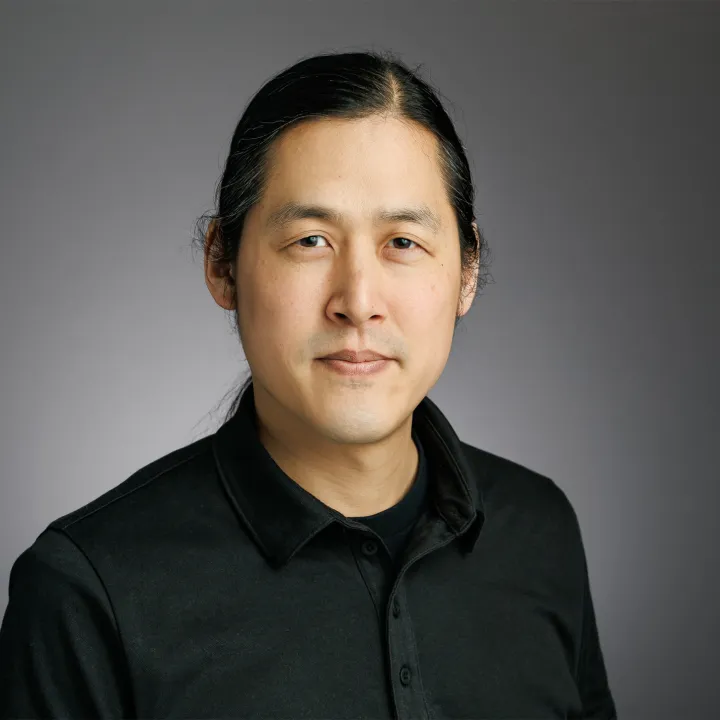
Dr. Nicolas Francois is an Associate Professor in the Department of Materials Physics at Australian National University (ANU), specializing in experimental geomaterials physics, soft matter, and fluid hydrodynamics. He leads the X-ray Tomography and Applications Research Group, combining curiosity-driven and applied research in out-of-equilibrium systems. ARC Industry Fellow (2024-2030): Improving Australian iron ore comminution for green steel production ARC DECRA Fellow (2016-2018): Biofilms in two-dimensional turbulent flows His research spans fundamental questions in: Fragmentation of solid materials Autonomous devices powered by chaotic flows Hydrodynamic waves Stochastic thermodynamics Granular matter Polymer rheology and applied areas in: Comminution of geomaterials Mechanics of fractured rocks Wave-energy conversion Environmental fluid mechanics Publications reveal a trajectory focused on X-ray tomography applications, granular dynamics, and turbulence-driven systems. He utilizes advanced imaging techniques to study material failure mechanisms and fluid-structure interactions, contributing to fields ranging from green steel production to biofilm dynamics. Current student projects and grants emphasize sustainable resource processing and fundamental fluid physics.
Alexandros Kontogiannis is a research fellow at the University of Cambridge, Department of Engineering, specializing in fluid dynamics and applied mathematics. His work combines Bayesian inference, machine learning, and physics-informed algorithms to solve inverse problems in magnetic resonance velocimetry (MRV) and fluid-structure interaction. EPSRC National Fellow in Fluid Dynamics Member of Energy, Fluids and Turbomachinery Division Research Focus: Development of digital twin frameworks that integrate MRV data with Navier-Stokes equations to reconstruct flowfields, infer rheological parameters in non-Newtonian fluids, and estimate hidden quantities like pressure and wall shear stress. Key innovations include: Physics-informed compressed sensing for sparse MRV data Simultaneous boundary shape and flowfield estimation Bayesian turbulence model parameter learning Scientific Awards: ASME Fluids Engineering Division Graduate Student Scholar (2021) Technical Chamber of Greece (TEE) Award (2018) Limmat Foundation Academic Excellence (2017) Mentzelopoulos Scholarship for international studies (2017) Greek State Scholarships Foundation Award (2012) Key Contributions: Algorithms for 3D flow reconstruction with adaptive discretization, viscous signed distance field regularization, and multi-objective aerodynamic shape optimization. His methodologies enable 27x reductions in MRI scanning time while maintaining diagnostic accuracy.
Prof. Dr. Ferdinand Evers is a Chair of Computational Condensed Matter Theory at the Institute of Theoretical Physics , University of Regensburg. His research spans quantum transport , spintronics , molecular electronics , and many-body localization , with a focus on ab initio and DFT-based modeling of nanostructures and low-dimensional systems . Key Research Areas: Quantum transport in molecular junctions Spin-orbit coupling and chiral effects Multifractality at quantum phase transitions Electronic structure of topological materials Ultrafast laser-driven electron dynamics Anderson localization and disorder Recent Article Trends (2021–2024): High-harmonic generation in topological insulators Spin-selective transport in chiral systems Mechanical torque in molecular rotors Self-consistent GW methods for molecular electronics Quantum interference in graphene nanoribbons Teaching: Lecturer for Theoretical Physics I-IV , Advanced Quantum Mechanics , and Scientific Perspectives courses at the University of Regensburg Focus on statistical mechanics , quantum transport , and computational nanoscience
Dr. Magdalena Schreter-Fleischhacker works at the Technical University of Munich within the Professorship of Simulation for Additive Manufacturing . Her research focuses on physics-based computational modeling of coupled liquid-powder-gas dynamics in metal additive manufacturing, including melt pool dynamics and powder-gas interactions . She specializes in multi-phase flow modeling using cut-element and diffuse interface methods with continuous/discontinuous Galerkin schemes . She also develops constitutive models for quasi-brittle materials like 3D printed concrete and rock, incorporating anisotropy , gradient-enhanced damage mechanics , and micropolar continua . Her computational work leverages matrix-free algorithms and parallel computing , with significant contributions to the deal.II finite element library . Research Interests Physics-based computational modeling of coupled liquid-powder-gas dynamics in additive manufacturing Multi-phase flow simulation using sharp/diffuse interface methods Advanced constitutive modeling for quasi-brittle materials (rock, soils, 3D printed concrete) High-performance computing and matrix-free algorithms Notable Contributions Development of consistent diffuse-interface models for melt-vapor dynamics Improvements to continuum surface flux models in additive manufacturing Formulation of gradient-enhanced damage-plasticity models for geological materials Principal contributor to the deal.II library (version 9.6) Supervised Student Projects Johannes Resch (2024): DG-based thermo-hydrodynamic melt pool simulations Julian Brotz (2024): DEM-FEM coupling for fluid-powder interaction Andreas Ritthaler (2024): Matrix-free cutDG formulation for complex flows Tinh Vo (2023): Laser modeling for melt pool simulations Scientific Awards ERC Starting Grant recipient
Olivier Coutier-Delgosha is a Professor and Assistant Department Head for Graduate Studies in the Department of Aerospace & Ocean Engineering at Virginia Tech. He holds a Ph.D. and MS from the Institut National Polytechnique de Grenoble (INPG), France, and a BS from Ecole Nationale Supérieure de l'Energie. His research focuses on cavitation, multiphase flow dynamics, and propulsion systems, particularly in rotating machinery and environmental fluid mechanics. He leads the Cavitation, Propulsion & Multiphase Flow Lab and collaborates with organizations like SNECMA and CNES. Education: Ph.D., Mechanical Engineering, Institut National Polytechnique de Grenoble (2001) MS, Mechanical Engineering, Institut National Polytechnique de Grenoble (1997) BS, Ecole Nationale Supérieure de l'Energie (1997) Research interests include cavitating flow modeling, environmental fluid dynamics (oil spills), and thermal effects in cavitation. His work combines experimental methods (X-ray imaging, PIV) with advanced CFD simulations. Notable projects include a 400k€ SNECMA-funded study on rocket engine inducers and a NICOP ONR project on cavitation erosion. Publications span 20+ years, emphasizing cavitation instabilities, turbulence modeling, and multiphase flow regimes. Awards include a Fulbright Grant and leadership roles in ISROMAC conferences. He serves as an Associate Editor for the Journal of Fluids Engineering and reviews for multiple top journals. Labs and teams: Cavitation, Propulsion & Multiphase Flow Lab; Center for Research and Engineering in Aero/Hydrodynamic Technologies (CREATe).
Professor Dinos Arcoumanis FREng is a distinguished academic at City, University of London, where he has served as Professor since 2000. He previously held academic positions at Imperial College London from 1988-2000, progressing from Lecturer to Reader and ultimately to Professor of Internal Combustion Engines. At City University, he has held significant leadership roles including Head of the Aeronautical, Civil and Mechanical Engineering Department, Dean of the School of Engineering & Mathematical Sciences, Pro-Vice-Chancellor for Research and International Links, and Deputy Vice-Chancellor (Research & International) until August 2014. He remains actively involved in research and academic leadership, currently serving as Director of the International Institute of Cavitation Research and Coordinator of the World Cities World Class (WC2) University Network. Professor Arcoumanis holds undergraduate and graduate degrees in Physics, Engineering and Mechanical Engineering from the Aristotelian University of Thessaloniki, Greece (1973), the University of California at Irvine, USA (1980), and the Imperial College of Science, Technology and Medicine, London (1984), respectively. His primary research focuses on internal combustion engines, with specific expertise in combustion, exhaust emissions, and engine lubrication. Professor Arcoumanis has pioneered the application of laser diagnostics and computational fluid dynamics to study internal combustion engines, with particular interest in automotive fuels including renewable and alternative fuels. His work bridges fundamental fluid mechanics with practical engine applications, addressing critical environmental engineering challenges in the transportation sector. His recent research has expanded into cavitation phenomena, fuel cell technology, and the development of sustainable propulsion systems for future transportation needs. Professor Arcoumanis's extensive publication record demonstrates a clear evolution in research focus, beginning with fundamental studies of diesel engine combustion and progressing toward advanced fuel injection systems, alternative fuels, and environmental sustainability. His work consistently bridges theoretical fluid mechanics with practical engine applications, with recent emphasis on cavitation phenomena in fuel systems and the integration of renewable energy technologies with traditional combustion systems. The interdisciplinary nature of his research connects mechanical engineering principles with environmental science, materials science, and energy systems engineering. Professor Arcoumanis has received numerous prestigious awards and honors throughout his career: 1991 Dugald Clerk Prize of IMechE 1995 and 1998 Arch T. Colwell Merit Award of the Society of Automotive Engineers Elected Fellow of the Royal Academy of Engineering (FREng) in 2001 Honorary doctorate from St. Petersburg State Polytechnic University of Russia (2009) Professor Arcoumanis has made significant contributions to academic leadership and professional service. He founded the International Journal of Engine Research (JER) in 1999 and serves as its Editor for Europe. He has coordinated the World Cities World Class (WC2) University Network since 2010, which brings together international institutions in major cities to address research challenges in transport, global health, business, and cultural industries. He has also served as a consultant to Brussels (DG17) and Bechtel Ltd. on the Auto-oil II European Programme (1998-2000), and was appointed Ambassador-at-Large of the Hellenic Republic for Energy Policy and New Technologies in September 2012. His research has been supported by various funding bodies including the Lloyd's Register Educational Trust, which funds the International Institute of Cavitation Research that he directs. Professor Arcoumanis leads the International Institute of Cavitation Research, a partnership between City University London, Loughborough University, and Delft University of the Netherlands. He has established collaborative research teams focused on engine combustion, fuel injection systems, and alternative propulsion technologies. His research group has developed advanced experimental facilities for studying fuel spray dynamics, combustion processes, and cavitation phenomena in engine systems. These teams regularly collaborate with automotive industry partners and international research institutions to address cutting-edge challenges in engine technology and sustainable transportation.
Corrado Maurini is a Professor in Mechanics at Sorbonne University , Paris, France. He leads two international master programs: Mécanique des Solides (Solid Mechanics) and Computational Mechanics .
Nikita Kavokine serves as Tenure Track Assistant Professor at École Polytechnique Fédérale de Lausanne (EPFL) within the School of Basic Sciences . His dual appointments span the Institute of Chemical Sciences and Engineering (ISIC) and the School of Chemical Sciences and Engineering (SCGC) , where he leads the Quantum Plumbing Lab (LNQ) and contributes to graduate teaching. Based at Building CH A2 398 in Lausanne, he maintains active research and instructional roles across EPFL's chemistry and chemical engineering programs. His research pioneers quantum nanofluidics and nanoscale transport phenomena , focusing on electron-ion coupling mechanisms in confined geometries. Key investigations include quantum friction in water-carbon interfaces, hydroelectric energy conversion through nanochannels, and plasmon-hydron resonances in two-dimensional materials. His work bridges condensed matter physics, electrochemistry, and fluid dynamics to develop fundamental principles for next-generation nanofluidic devices and quantum sensors. Analysis of his 15 most recent publications (2023-2025) reveals three dominant research thrusts: quantum-enhanced energy conversion (evident in hydroelectric drag and electron cooling studies), non-classical ion transport (including ionic Coulomb blockade and interaction confinement), and emergent quantum hydrodynamics (momentum tunneling, collective modes). These publications consistently integrate advanced numerical methods with nanoscale experimental systems, establishing new paradigms for solid-liquid quantum interactions. Kavokine currently supervises three PhD students: Gispert Peter , Lu Hao , and Rigaux Killian David . His teaching portfolio includes graduate courses in Statistical Mechanics for Chemistry and Nanofluidics , emphasizing theoretical frameworks for many-particle systems and nanoscale fluid dynamics. Research funding supports his laboratory's exploration of quantum effects in nanofluidic channels, though specific grant details are not provided in source materials. The Quantum Plumbing Lab (LNQ) operates at the forefront of nanoscale quantum transport research, utilizing advanced nanofabrication and characterization techniques to probe electron-ion coupling phenomena. The lab's interdisciplinary team combines expertise in quantum physics, electrochemistry, and fluid dynamics to investigate fundamental limits of energy conversion and transport at atomic scales, with particular focus on graphene-based systems and angstrom-scale confinement.
Ronan Vicquelin is a University Professor (1st Class) at CentraleSupélec, Paris-Saclay University, affiliated with the EM2C Laboratory (CNRS). He serves as Head of the Department of Aeronautics, Space and Transport and co-supervises the High Performance Computing Mésocentre. His academic appointments include previous roles as University Professor (2nd class) and Head of Aerospace programs. Education includes Habilitation (University of Rouen Normandy, 2018), PhD in Energetics (École Centrale Paris, 2010), M.Sc. in Mechanical Engineering & Aerospace (École Centrale Paris, 2006), and Engineering Diploma (École Centrale Paris, 2006). Research focuses on turbulent reacting flows with emphasis on: numerical simulation of combustion systems, LES/DNS methodologies, uncertainty quantification, hydrogen combustion dynamics, conjugate heat transfer, and radiative energy transfer. Current investigations explore flame stabilization mechanisms, multi-physics coupling, and high-performance computing applications for aerospace propulsion systems. Publications predominantly address combustion science, with recent works (2021-2025) emphasizing hydrogen flame dynamics, NOx emission control, advanced numerical methods for reactive flows, and experimental validation of turbulent combustion models. Thermal radiation effects and multi-phase flow interactions constitute emerging themes. Advises multiple PhD candidates with projects funded by ANR, EU programs (ACHIEVE, SOPRANO), and industry partnerships (Safran, Air Liquide). Research grants include PEPR OXY3C, ANR HyMaX, and ANR OXYTEC focusing on zero-emission combustion technologies. Leads experimental and computational research at EM2C Laboratory, coordinating teams working on turbulent combustion diagnostics, high-fidelity simulations, and development of the Mésocentre HPC infrastructure for large-scale CFD.
Theodore Kim is a Professor of Computer Science at Yale University, where he co-leads the Computer Graphics Group with Julie Dorsey and Holly Rushmeier. His research focuses on physics-based simulation, including fluid dynamics, solid mechanics, and fractal growth structures. He holds a PhD from the University of North Carolina at Chapel Hill and has held academic positions at UCSB and the University of Saskatchewan. His work has been applied in over two dozen films, earning him SciTech Oscars in 2012 and 2022. He previously served as a Senior Research Scientist at Pixar, contributing to projects like *Cars 3*, *Coco*, and *Incredibles 2*. Education: Ph.D., Computer Science, University of North Carolina at Chapel Hill (2006) M.S., Computer Science, University of North Carolina at Chapel Hill (2006) B.S., Computer Science, Cornell University (2001) Research Interests: Kim’s work bridges academia and industry, emphasizing practical applications of physics-based simulation. Notable areas include hair and skin simulation for animation, fluid dynamics, and the historical context of computer graphics innovations. His research also addresses racial biases in graphics, such as in hair and skin modeling. Articles Trends: Recent work emphasizes diverse representation (e.g., Black hair simulation), biomechanical accuracy (feather modeling), and historical analysis of technical contributions (e.g., Búi Tướng Phong’s legacy). Earlier publications focus on fluid subspace methods, wavelet turbulence, and efficient simulation techniques. Awards: Academy Award for Scientific and Technical Achievement (2012, 2022) NSF CAREER Award (2013–2018) UCSB Harold J. Plous Award (2015) Best Paper Awards at SCA (2011, 2016, 2018) Grants & Labs: Leads Yale’s Critical Computing Initiative and directs undergraduate studies in CS. His lab collaborates with industry (e.g., Pixar) and emphasizes open-source software. Current projects include fractal design tools and anti-racist graphics research.
Rajinder Pal is a Professor at the University of Waterloo, specializing in rheology of complex fluids, colloidal systems, and transport phenomena. His research focuses on the rheological behavior of suspensions, emulsions, and nanomaterials, with particular emphasis on non-Newtonian fluid dynamics, interfacial phenomena, and exergy analysis of multiphase flows. He has contributed extensively to understanding the viscosity modeling of concentrated suspensions and emulsions, nanoparticle-stabilized dispersions, and thermodynamic optimization of industrial processes. Key research areas include the development of novel viscosity models for asphaltene nanoaggregates, cellulose nanocrystals, and starch nanoparticles in industrial applications. His work bridges fundamental fluid mechanics with practical engineering challenges, addressing topics such as catastrophic phase inversion in Pickering emulsions, drag reduction in turbulent flows, and exergy destruction in pipeline systems. Pal also investigates the integration of nanomaterials into energy storage systems, such as graphene-based supercapacitors stabilized by ionic liquid/surfactant complexes. His publications span over two decades, demonstrating sustained contributions to chemical engineering, material science, and colloid science. Notable recent work includes studies on rheology of high internal phase emulsions (HIPEs), nanocomposite mechanical properties, and the thermodynamic analysis of cyclic processes using the Gouy-Stodola theorem. Pal's research has implications for food processing, pharmaceuticals, oil recovery, and sustainable materials development. While no formal awards or grants are explicitly listed in the provided materials, his extensive publication record reflects significant academic impact. He advises on graduate research in rheology and colloids but no specific student names are mentioned. Pal's work often emphasizes practical applications of fundamental fluid mechanics principles, with a focus on energy-efficient systems and nanotechnology-driven solutions.
Dr. Lateef Akanji is a Senior Lecturer in the Department of Petroleum Engineering at the School of Engineering, University of Aberdeen, where he has been contributing since 2014. He previously served as Lecturer and Head of the Petroleum Technology Research Group at the University of Salford, Assistant Professor at King Saud University, and Visiting Lecturer at the University of Leoben. His academic journey includes a PhD from Imperial College London and degrees from the University of Ibadan. University: University of Aberdeen School: School of Engineering Position: Senior Lecturer, Petroleum Engineering Email: l.akanji@abdn.ac.uk Education: PhD, Petroleum Engineering, Imperial College London M.Sc., Petroleum Engineering, University of Ibadan B.Sc. (Honours), Petroleum Engineering, University of Ibadan DIC (Diploma of Imperial College) Research Interests: Dr. Akanji's research centers on multiphase flow in porous and permeable media, with applications in enhanced oil recovery (EOR) in clastic, carbonate, and unconventional shale reservoirs. His work integrates theoretical, experimental, and computational fluid dynamics, utilizing platforms like Python, C++, and Fortran. He is pioneering the application of artificial intelligence in petroleum engineering, particularly in EOR screening and production optimization. His research includes pore-scale modeling, gas-lift systems, and nuclear reactor flow dynamics. Publication Trends: His recent publications (2025–2021) reflect a strong focus on fluid displacement in porous media, shale reservoir characterization, AI applications in energy, and nuclear safety. Notable themes include computational modeling of multiphase flow, biosurfactant EOR, and advanced numerical methods for reservoir simulation. Scientific Awards and Honors: Fellow of the Higher Education Academy (FHEA) Chartered Engineer (CEng) Chartered Petroleum Engineer European Engineer (Eur Ing) Member of the Energy Institute (MEI) Advising and Grants: Dr. Akanji supervises numerous PhD students in areas such as AI-based production optimization, permeability upscaling, and biosurfactant EOR. He leads research funded by PTDF, TETFUND, Sonangol, and Elphinstone, focusing on high-pressure high-temperature flow loops, gas-lift pilot rigs, and neuro-fuzzy screening systems. His collaborative projects involve institutions in the UK, Austria, and Australia. Laboratories and Research Platforms: He contributes to the development of the Complex System Modelling Platform (CSMP++), a C++-based API for simulating multi-physics flow in porous systems, co-developed with ETH Zurich and Montanuniversität Leoben. He also leads a technology innovation platform for EOR, including experimental rigs for biosurfactant screening and gas-lift stability testing.
Hari Sundar is an Associate Professor in the Department of Computer Science at Tufts University, holding the Ada Lovelace Associate Professorship. Previously, he served as an Associate Professor at the Kahlert School of Computing, University of Utah. His research focuses on developing parallel algorithms for computational sciences and high-performance computing, addressing challenges in biosciences, geophysics, computational fluid dynamics, and computational relativity. He leads efforts in adaptive mesh refinement, geometric multigrid methods, and scalable scientific computing frameworks like Dendro-GR for numerical relativity. Education: Ph.D. in Computer Science from the University of Pennsylvania (2009), and a Bachelor of Engineering from the University of Delhi (2000). Postdoctoral work at the Oden Institute, University of Texas at Austin. Research Interests: Parallel algorithms, high-performance computing architectures, computational relativity (binary black hole simulations), multiphase flow modeling, and domain-specific languages for scientific computing. His work emphasizes scalability and efficiency on modern supercomputers. Key Contributions: Development of the Dendro-GR platform for gravitational wave simulations, scalable PDE solvers, and GPU-optimized algorithms for phonon transport and genomic sequence alignment. His recent work includes advancements in gravitational waveform modeling for LISA space missions and thermodynamically consistent two-phase flow simulations. Grants & Collaborations: Active in NSF-funded projects on computational relativity, multiphase flow algorithms, and scalable PDE solvers. Collaborates across disciplines in astrophysics, materials science, and bioinformatics.
Davide Cassi serves as Associate Professor of Physics of Matter at the University of Parma's Department of Mathematical, Physical and Computer Sciences since 2001, following his appointment as Researcher in Theoretical Physics (1995-2001). With over 30 years of academic service, he teaches Condensed Matter Physics, Soft Matter Physics, and Physics Applied to Gastronomy across undergraduate and graduate programs in Physics and Gastronomic Science. His educational background includes: Ph.D. in Physics, University of Parma (1988-1992) Master’s degree in Materials Science and Technology, University of Parma (1986-1988) Degree in Physics, University of Parma (1982-1986) Cassi's research integrates statistical mechanics with real-world applications through two primary lenses: complex network theory for ecological and social systems, and soft matter physics applied to culinary processes. His work on biodiversity loss prediction in agricultural networks and food preservation technologies demonstrates exceptional interdisciplinary reach. Recent publications reveal a strategic pivot toward AI-driven biodiversity conservation and network robustness modeling. Analysis of his 15 most recent publications (2023-2025) shows dominant themes in network vulnerability analysis (68% of works) and food-physics applications (27%), with emerging focus on machine learning integration for ecological modeling. His research bridges theoretical physics with practical solutions in food safety and ecosystem management. Key recognitions include: Grand Prix de la Science de l'Alimentation from Académie Internationale de la Gastronomie (2012-2013) Dual National Scientific Qualifications for Full Professorship (2022) in Theoretical Physics of Fundamental Interactions and Matter Cassi's academic contributions extend beyond publications to two international patents in food preservation technology and editorial leadership since 2007 for World Scientific's Series on Advances in Statistical Mechanics . His research program demonstrates consistent translation of theoretical physics into practical applications across gastronomy and ecology, with growing emphasis on AI-enhanced network analysis for sustainability challenges.
Miroslav Bulíček is an Associate Professor at the Mathematical Institute of the Faculty of Mathematics and Physics, Charles University in Prague, Czech Republic. He has been with Charles University since 2006, progressing from Researcher to Senior Assistant Professor (2012-2021) and currently serving as Associate Professor since January 2022. He is also a Senior Researcher at the University Center for Mathematical Modeling, Applied Analysis and Computational Mathematics (MathMac) since 2014. His educational background includes a habilitation in Mathematics-Mathematical Analysis from Charles University (2021), a Ph.D. in Mathematical and Computational Modeling from Charles University (2003-2006), and a Master's degree in Mathematical modeling in physics and technology from Charles University (1998-2003). Bulíček's research focuses on Partial differential equations, Continuum thermodynamics, and Mathematical modelling . His work primarily addresses the mathematical analysis of nonlinear systems describing flows of incompressible fluids, with particular emphasis on thermodynamically compatible models, implicit constitutive relations, and viscoelastic rate-type fluids. He has made significant contributions to the understanding of existence, uniqueness, and regularity of solutions to complex fluid models, especially those describing far-from-equilibrium systems in continuum thermodynamics. His recent publications demonstrate a strong focus on advanced mathematical analysis of fluid models with applications in material sciences. The research trends show increasing sophistication in handling non-Newtonian fluids, stress-diffusion phenomena, and thermodynamically consistent models. His work bridges pure mathematical analysis with practical applications in continuum mechanics, particularly in the analysis of viscoelastic rate-type fluids with stress diffusion. NEURON Fund for Support of Science Award (2012) for the project "Qualitative analysis of incompressible Navier-Stokes-Fourier equations" Czech Mathematical Society Award for young researchers (2014) for publications during 2009-2013 Bulíček has successfully supervised multiple PhD students including Mark Dostalík, Michael Zelina, Michal Bathory, and Tomáš Los. He serves as principal investigator for the GAČR project 20-11027X "Mathematical analysis of partial differential equations describing far-from-equilibrium open systems in continuum thermodynamics" (2020-present). His research has been supported by various grants including GAČR project 18-12719S, GAČR 16-03230S, and ERC-CZ no. LL1202, demonstrating sustained funding for his research program. He is actively involved in the University Center for Mathematical Modeling (MathMac) and has organized several international conferences and workshops, including the "Modelling, partial differential equations analysis and computational mathematics in material sciences" conference in Prague (2024) and the "Mathematical Aspects of Fluid Flows" EMS School in Kácov (2024), contributing significantly to the mathematical community in fluid dynamics and partial differential equations.