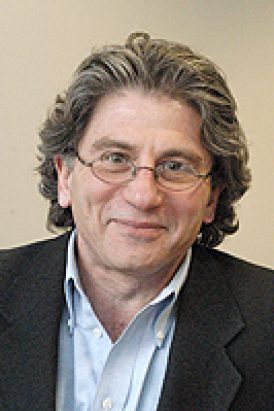
Federico Bonetto is a Professor at the School of Mathematics , Georgia Institute of Technology. His research spans equilibrium and non-equilibrium statistical mechanics , chaotic systems , and mathematical physics . Research Themes : Fermi surfaces in interacting fermion systems Chaos and large deviations in billiards Fourier's law in anharmonic oscillators Game theory applications to economic models Teaching : Regular instructor of courses like Partial Differential Equations , Linear Algebra , and Probability & Statistics since 2002. Publications : Over 40 works since 1995, focusing on Kac models, thermostatted systems, and statistical mechanics of coupled maps. Recent articles (2019-2025) explore non-equilibrium entropy decay , fermionic criticality , and monetary policy experiments .
Mario Dipoppa is an Assistant Professor in the Department of Neurobiology at the University of California, Los Angeles. His research focuses on computational neuroscience, cortical adaptation, and neural circuit dynamics. Position: Assistant Professor, Neurobiology Email: mdipoppa@g.ucla.edu Research Interests: Mario's work explores how neural populations in the visual cortex adapt to sensory input, with a particular emphasis on the interplay between neural oscillations, synchrony, and cognitive functions like working memory. His recent studies investigate optimal coding strategies in visual adaptation, contextual modulation mechanisms, and the role of transcriptomic diversity in cortical interneuron function. Publications Trends: His research spans computational modeling of cortical networks, visual neuroscience, and neurogenetic analyses of brain circuits. Early work (2013-2016) focused on working memory mechanisms and neural oscillations, while recent studies (2022-2025) emphasize visual cortex adaptation, population coding, and cross-species circuit comparisons.
Jin Hu is an Associate Professor in the Department of Physics within the College of Arts & Sciences at the University of Arkansas. His research focuses on quantum materials, particularly topological semimetals, low-dimensional materials, and magnetic systems. He maintains active research labs and collaborates with multiple national facilities. Hu received his PhD in Physics from Tulane University in New Orleans and earned his BS in Physics from the University of Science and Technology of China. His educational background has provided a strong foundation for his work in condensed matter physics and quantum materials research. Dr. Hu's research centers on Topological Quantum Materials , where his group investigates Dirac, Weyl, and Majorana fermions in emergent quantum materials including topological insulators and semimetals. His lab also explores Low Dimensional Materials , focusing on novel properties in 2D systems like graphene and transition metal dichalcogenides, with emphasis on topological materials in low dimensions and 2D magnets. Additionally, his group studies Other Quantum Systems including superconductors, frustrated magnetism, and correlated materials. Analysis of his recent publications reveals a strong focus on topological semimetals and quantum transport phenomena. His work frequently examines the interplay between topology, symmetry, magnetism, and electronic correlations. There's a clear progression toward studying more complex quantum materials systems with multiple competing interactions, particularly in 2D van der Waals magnets and magnetic topological semimetals. Dr. Hu's research is supported by multiple major funding agencies including the Department of Energy (DOE), Office of Naval Research (ONR), National Science Foundation (NSF), Air Force Office of Scientific Research (AFOSR), Arkansas Research Alliance (ABI), and the University of Arkansas. His group participates in several major initiatives including the DOE EFRC μ-ATOMS, NSF Research Traineeship on 2D Quantum Materials, and the NSF Quantum Materials Foundry for 2D Quantum Materials and Devices (2D-QMaPs). Dr. Hu actively mentors graduate and undergraduate students, with recent PhD completions including Gokul and Nabi. His lab maintains two research facilities at the University of Arkansas where they synthesize single crystals and characterize their electronic, magnetic, and thermal properties. He also contributes to the Experimental Materials Property Database, making research data accessible to the broader scientific community.
Peng Chen is an Associate Professor at the Shenzhen-Hong Kong Institute of Microelectronics, Southern University of Science and Technology, Shenzhen, China. He has served in this position since December 2022, following his role as an Assistant Professor from September 2021 to December 2022 at the same institution. Educational Background: Ph.D. (2010-2016), Institute of Physics, Chinese Academy of Sciences, China Bachelor (2006-2010), Department of Physics, Northwestern University, China Dr. Chen's research focuses on developing high-performance two-dimensional semiconductor information devices and integration technologies for the post-Moore era. His work spans the development of new materials, novel device principles, and high-performance integrated circuits based on 2D electronic devices. By exploring the fundamental physics of 2D materials and their heterostructures, his research aims to overcome the performance limitations of conventional micro- and nanoelectronic devices and circuits. His publication record demonstrates expertise across multiple domains of 2D materials research, with particular emphasis on transition metal dichalcogenides like WS2 and WSe2. His work spans from fundamental material synthesis to device physics and practical applications in electronics and optoelectronics, reflected in publications in high-impact journals including Nature, Science, and Nature Materials. Scientific Awards: National High-level Young Talent Program (2022) Shenzhen High-level Talent Program (2021) First Prize of Science and Technology Award of China Materials Research Society (2020) Director Scholarship of Institute of Physics, Chinese Academy of Sciences (2015, 2013) Three Good Students of Chinese Academy of Sciences (2014, 2013) Dr. Chen serves as a Doctoral Supervisor with an impressive publication record of over 40 papers in top international journals, including 2 Nature, 1 Science, and 1 Nature Materials papers. His work has been cited over 4,000 times with an H-index of 29. He has secured funding through the National Natural Science Foundation of China's High-level Young Talent Program, a general program, and projects from the Shenzhen Municipal Science and Technology Innovation Commission. He actively serves as a reviewer for multiple journals and as a fund reviewer. Dr. Chen leads a research group focused on high-performance and new principle logic and sensing devices, exploring applications in next-generation information and life health technologies. The group maintains a strong academic atmosphere and welcomes postdoctoral fellows and graduate students with backgrounds in microelectronics, physics, materials science, and biology.
Pasquale Scarlino is a Tenure Track Assistant Professor in the Institute of Physics at École Polytechnique Fédérale de Lausanne (EPFL), where he founded and leads the Hybrid Quantum Circuits (HQC) Laboratory. He holds a dual appointment with the School of Basic Sciences (SB) and the Physics Section (SB-SPH), conducting research at the intersection of semiconductor and superconducting quantum technologies. His laboratory develops hybrid quantum hardware for advanced quantum information processing. His educational background includes a Master's degree in Physics from the University of Salento (Italy, 2011), where he was a student of Scuola Superiore ISUFI, followed by a Ph.D. from TU Delft (2016) in the Spin Qubits group of Prof. L.M.K. Vandersypen at the Kavli Institute of Nanoscience-Qutech. His doctoral work focused on Si/SiGe spin qubits in collaboration with the M. Eriksson Group at Wisconsin University. Scarlino's research centers on experimental quantum physics using hybrid superconductor/semiconductor devices with electrostatically defined quantum dots coupled to high-impedance microwave resonators. He investigates light-matter interactions in unconventional regimes, quantum transport in low-dimensional systems, and spin/charge qubit implementations. His work aims to merge semiconductor and superconducting platforms to expand quantum information capabilities, with applications in quantum computing, quantum optics, and analog quantum simulation. Early career achievements include establishing the first coherent interface between superconducting and semiconducting quantum systems using high-impedance resonators. His publication record shows strong focus on microwave photon-mediated interactions between quantum systems, with recent work exploring quantum acoustics, topological band engineering, and criticality-enhanced sensing. The articles demonstrate increasing specialization in hybrid quantum hardware, with a shift toward germanium-based systems and advanced resonator designs in the latest publications. Scarlino has advised eleven Ph.D. students at EPFL and teaches courses including General Physics (Electromagnetism), Solid State Systems for Quantum Information, and Introduction to Quantum Science and Technology. His teaching emphasizes experimental quantum hardware approaches and critical assessment of quantum computing platforms. The Hybrid Quantum Circuits Laboratory operates within EPFL's Institute of Physics, utilizing state-of-the-art nanofabrication facilities and cryogenic measurement setups. The team collaborates extensively with leading quantum research groups worldwide, maintaining strong ties with previous institutions including ETH Zurich, TU Delft, and Microsoft Station Q Copenhagen.
Professor Tobin J. Marks is the Vladimir N. Ipatieff Professor of Catalytic Chemistry, Professor of Materials Science and Engineering, Professor of Applied Physics, and Professor of Chemical and Biological Engineering at Northwestern University. He also serves as a Distinguished Adjunct Professor at Texas A&M Qatar University and is a Senior Fellow of the Hong Kong Institute for Advanced Study at City University of Hong Kong. Dr. Marks is a member of the US National Academy of Engineering, the US National Academy of Sciences, and a Fellow of the Royal Society of Chemistry, UK. Dr. Marks received his BSc in Chemistry from the University of Maryland in 1966 and his PhD in Inorganic Chemistry from MIT in 1970. His academic career at Northwestern began as an Assistant Professor of Chemistry in 1970, progressing to Associate Professor in 1974, Professor of Chemistry in 1978, Charles E. & Emma H. Morrison Professor of Chemistry from 1986-1999, Vladimir N. Ipatieff Professor of Catalytic Chemistry since 1999, Professor of Materials Science and Engineering since 1987, Professor of Applied Physics since 2009, and Professor of Chemical and Biological Engineering since 2017. Professor Marks' research spans numerous areas of chemistry and materials science. His work focuses on transition metal and f element organometallic chemistry, catalysis, vibrational spectroscopy, synthetic facsimiles of metalloprotein active sites, carcinostatic metal complexes, solid state chemistry and low-dimensional molecular metals, nonlinear optical materials, polymer chemistry, tetrahydroborate coordination chemistry, macrocycle coordination chemistry, molecular electro-optics, metal-organic chemical vapor deposition, polymerization catalysis, printed flexible electronics, solar energy, and transparent conductors. His research group consists of nearly 40 researchers working across four laboratories. Analysis of Professor Marks' recent publications reveals a strong focus on advanced materials for electronic and energy applications. His work spans organic electronics, flexible and stretchable devices, catalysis for sustainable chemistry, and novel materials characterization techniques. Key trends include the development of organic electrochemical transistors, high-efficiency organic solar cells, advanced catalysts for polymer recycling, and quantum materials for next-generation electronics. Professor Marks has received numerous prestigious awards throughout his career, including: US National Medal of Science American Chemical Society Joseph Priestley Medal Camille and Henry Dreyfus Prize in the Chemical Sciences Principe de Asturias Prize for Technical and Scientific Research US National Academy of Sciences Award in the Chemical Sciences Materials Research Society Von Hippel Award Harvey Prize in Science and Technology Karl Ziegler Prize from the German Chemical Society Professor Marks has mentored numerous students and postdoctoral researchers throughout his career, with his group currently consisting of nearly 40 researchers. He has received substantial research funding from multiple agencies including NSF, DOE, and DoD. His entrepreneurial spirit has led to the founding or co-founding of 15 startups, with technologies generating an estimated USD 100 billion in sales. Professor Marks leads several research teams focused on catalysis and organic electronic materials. His work has significant implications for sustainable chemistry, renewable energy, and next-generation electronic devices. He continues to be highly active in research, with numerous publications in 2025 demonstrating his ongoing scientific leadership.
Tehseen Raza serves as a Lecturer in the Department of Electrical and Computer Engineering within Clemson University's College of Engineering, Computing and Applied Sciences. She joined the faculty in 2020, holding a Ph.D. in Electrical and Computer Engineering from Purdue University (2010) and a B.S. in Electrical Engineering from the University of Engineering and Technology, Lahore, Pakistan (2001). Her educational background includes: Ph.D. in Electrical and Computer Engineering, Purdue University, 2010 B.S. in Electrical Engineering, University of Engineering and Technology, Lahore, Pakistan, 2001 Dr. Raza's research spans cutting-edge domains in nanoscale electronics and education. Her primary interests include: Semiconductor Devices Spintronics Nanoelectronics NanoEducation Electronics Microelectronics Her foundational work on NEGF-based tight-binding models for magnetic heterostructures during her Ph.D. directly informs her current investigations into spin-polarized transport and magnetic tunnel junctions. Analysis of her 15 most recent publications reveals a strong interdisciplinary trajectory blending theoretical modeling with educational innovation. Key research thrusts include quantum transport in magnetic heterostructures (particularly Fe/MgO/Fe systems), nanoscale memory devices using graphene contacts, and the development of computational tools for nanotechnology education. Her work consistently bridges fundamental physics with practical applications in spintronics and nano-education. Scientific Awards: No awards listed in available documentation Regarding academic mentorship and funding, the available information does not specify any graduate students under her supervision or details about research grants. Her teaching portfolio demonstrates significant contribution to core electrical engineering education through courses in Semiconductor Devices, Circuit Analysis, Microelectronics, and Electromagnetic Theory. No dedicated research laboratories or specialized teams are mentioned in the provided materials, though her publications indicate collaborative work in computational nanoelectronics and educational tool development.
David M. Ceperley is a Founder Professor in Physics and Research Professor at the University of Illinois at Urbana-Champaign, where he has been a faculty member since 1987. He maintains his office in the Engineering Sciences Building and is affiliated with the Department of Physics within the College of Engineering. His distinguished career has established him as a leading authority in computational quantum physics. Professor Ceperley received his BS in physics from the University of Michigan in 1971 and his Ph.D. in theoretical physics from Cornell University in 1976. Following postdoctoral appointments at the University of Paris and Rutgers University, he worked as a staff scientist at both Lawrence Berkeley and Lawrence Livermore National Laboratories before joining the UIUC faculty. From 1987 until 2012, he also served as a staff scientist at the National Center for Supercomputing Applications. Ceperley's research focuses on developing and applying quantum Monte Carlo methods to study quantum many-body systems. His most significant contribution is his calculation of the energy of the electron gas, which provides fundamental input for electronic structure calculations. He pioneered path integral Monte Carlo methods for quantum systems at finite temperature, particularly for superfluid helium and hydrogen under extreme conditions. His current research encompasses electron fluids, metalization of hydrogen at high pressure, temperature-dependent simulations of solids and liquids, and cold atom systems. Analysis of Ceperley's publication record reveals a consistent trajectory from foundational method development to increasingly complex applications in condensed matter physics. His recent work demonstrates a strong emphasis on high-pressure physics, particularly the behavior of hydrogen and related systems under extreme conditions. The integration of quantum Monte Carlo with other computational approaches represents a significant evolution in his research methodology. B. J. Alder CECAM Prize (2016) Member International Academy of Quantum Molecular Sciences (2013) Blue Waters Professor (2014) Center for Advanced Studies Professor (2009) Founder Professor of Engineering (2006) National Academy of Sciences (2005) Fellow, American Academy of Arts & Sciences (1999) Rahman Prize in Computational Physics (1998) Feenberg Medal (1994) Professor Ceperley has mentored numerous graduate students and postdoctoral researchers throughout his career, contributing significantly to the training of computational physicists. His research has been consistently supported by major funding agencies including the National Science Foundation and Department of Energy. He has taught courses including MSE 485 (Atomic Scale Simulations) and PHYS 460 (Condensed Matter Physics), demonstrating his commitment to education alongside research. His work has positioned him as a leader in computational quantum physics, developing methods that can find exact properties of many-body systems and apply them to diverse materials. His research group continues to advance computational techniques for studying materials under extreme conditions, with particular emphasis on high-pressure hydrogen physics and quantum phase transitions.
Dr. Greis Julieth Kim Reyes serves as Assistant Professor of Physics in the Department of Physics and Astronomy at SUNY New Paltz, where she conducts computational research on semiconductor materials and defects. Her work bridges theoretical physics and practical materials design for energy applications. Her educational journey includes a Ph.D. in Physics from University at Buffalo (2024), Master's in Physics from Universidad Nacional de Colombia (2014), and Bachelor's in Physics-Education from Universidad Distrital Francisco José de Caldas (2010). This international background informs her interdisciplinary approach to materials science. Dr. Reyes specializes in computational exploration of intermediate band semiconductors, defect engineering, and magnetic materials using density functional theory (DFT) and machine learning. Her research reveals how atomic-scale defects create novel electronic properties, particularly in 2D materials like C 3 N/C 3 B bilayers and perovskite oxides. She employs iterative Kohn-Sham methods to simulate electronic behavior and optical responses, with recent work focusing on excitonic effects for solar energy applications. Analysis of her 15 most recent publications shows consistent emphasis on computational discovery of materials with tailored optical and electronic properties. Key trends include defect-enabled photocatalysis, interlayer exciton engineering in van der Waals heterostructures, and Jahn-Teller effects in doped semiconductors - all targeting next-generation energy technologies. Her scholarly recognition includes: Bahethi Scholarship (SUNY Buffalo, 2022) Silvestro Scholarship (SUNY Buffalo, 2022) Marshall Plan Foundation grant (Johannes Keppler Universität, 2018) As an educator, Dr. Reyes develops interactive quantum mechanics curricula using Mathematica simulations, as evidenced by her GitHub repository. She teaches General Physics and Quantum Physics courses while integrating computational tools to build student intuition for quantum materials. Though specific research students aren't listed, her teaching philosophy emphasizes critical thinking through problem-solving sessions and real-world applications. Her computational laboratory work focuses on first-principles simulations of materials, with active development of educational resources for quantum mechanics instruction. Current projects explore machine learning pipelines for materials discovery and defect-property relationships in emerging semiconductor systems.
Li Yang is the Albert Gordon Hill Professor of Physics at Washington University in St. Louis, specializing in theoretical condensed matter physics and computational materials science. His research combines quantum mechanical modeling with large-scale simulations to investigate electronic structures and quantum phenomena in novel materials. Current projects explore topological quantum materials, Bose-Einstein condensates, and nanoscale quantum effects for next-generation technologies. Yang's group develops computational methods to predict electronic, optical, and topological properties of quantum materials. Their work addresses fundamental questions about electron interactions, quasiparticle dynamics, and quantum confinement effects. Recent publications focus on Josephson effects in ultracold atomic systems, quantum algebra representations, and topological phases in reduced-dimensional structures. His contributions to predicting many-electron excitations in two-dimensional semiconductors were recognized as Physical Review B 50th Anniversary Milestones. Yang has received multiple honors including the NSF CAREER Award and Albert Gordon Hill Professorship. He directs an active research group advancing computational approaches to quantum material design.
Rudolf Bratschitsch is a Professor at the Physics Institute of the University of Münster, where he leads an active research group focused on ultrafast phenomena in solid-state nanosystems. His research spans multiple cutting-edge areas of condensed matter physics and nanotechnology with strong connections to international collaborators. His primary research interests include: Ultrafast quantum optics with solid state nanosystems Ultrafast magnetism and THz spectroscopy Ultrafast (magneto-)plasmonics Ultrafast spintronics Two-dimensional materials and transition metal dichalcogenides Spin-wave dynamics and magnonics Bratschitsch's recent publications demonstrate significant contributions to understanding exciton dynamics in 2D materials, spin-wave propagation in magnetic insulators like yttrium iron garnet (YIG), and quantum optical phenomena in hexagonal boron nitride. His work bridges fundamental physics with potential applications in quantum information processing and advanced optical technologies. His group has received substantial funding, including the Collaborative Research Center CRC 1459 'Intelligent Matter' which was extended for four years by the German Science Foundation in December 2024. They have also organized international conferences such as EDISON22 on Electron Dynamics in Semiconductors, Optoelectronics and Nanostructures. Bratschitsch mentors numerous students: PhD Students: Jannis Bensmann, Akhilesh Dubey, Vedhanth Senthiappan Vellaiappan Uthayasurian Master Students: Janne Oskar Becker, Ahmad El Kadri, Pabin Rai, Devika Sivankutty, Richard Sliwka Bachelor Students: Paul Großerhode, Sven Niehues His group has won several awards, including a poster prize for Master's student Janne Becker at the Münster Nanofabrication Facility Day 2024, highlighting the quality of research and training provided.
Shuolong Yang is an Assistant Professor of Molecular Engineering at the University of Chicago’s Pritzker School of Molecular Engineering. His research focuses on experimental condensed matter physics, quantum materials engineering, and ultrafast photoemission spectroscopy. He leads the Yang Lab, which develops advanced tools like the MASTER platform to study quantum materials at atomic and femtosecond scales. Education: B.S. in Physics (Stanford University), Ph.D. in Applied Physics (Stanford University) Previous Position: Kavli Postdoctoral Fellow at Cornell University Research interests include topological insulators, interfacial superconductivity, and spintronics. His lab integrates molecular beam epitaxy (MBE) with advanced spectroscopic techniques to explore quantum phenomena. Key achievements include DOE Early Career and NSF CAREER awards, as well as recent recognition via the NASA Early Career Faculty award (2024). Recent work highlights include AI-driven MBE growth of quantum materials and wafer-scale fabrication of topological insulator films. The lab’s instrumentation, such as the MASTER platform, enables multi-dimensional probing of quantum materials. Awards: DOE Early Career Award, NSF CAREER Award, NASA Early Career Faculty Award Grants: NSF Future Manufacturing Seed Grant, MRSEC Seeding Grant (collaboration with Zhong group) Labs/Teams: Yang Lab, collaborating with Prof. K. Levin (University of Chicago) on BEC-BCS crossover studies and Prof. Chong Liu on electric-field-driven material synthesis. The lab supports undergraduate researchers (e.g., Bill Zheng, Jess) and postdocs (e.g., Dr. Qiang Gao).
Roberto Merlin is a Peter A. Franken Collegiate Professor of Physics and Professor of Electrical Engineering and Computer Science (EECS) at the University of Michigan. Born in Buenos Aires, Argentina, he earned an M.S. in 1973 from the University of Buenos Aires and a Ph.D. in 1978 from the University of Stuttgart under Manuel Cardona. After postdoctoral work at the University of Illinois, he joined the University of Michigan Physics faculty in 1980 and holds a joint appointment in EECS since 2000. He has held visiting positions at institutions including Max-Planck-Institut FKF, Hong Kong University of Science and Technology, and ETH Zurich. Merlin's research focuses on experimental condensed matter physics, particularly ultrafast optical techniques like spontaneous and impulsive Raman spectroscopy. His work spans coherent phonon dynamics, metamaterials for subwavelength focusing, and light-induced phase transitions in quantum materials. Recent publications address magnetophononics, phonon Bloch oscillations, and radiation-less interference in evanescent-field plates, reflecting his interdisciplinary interests in optics, quantum mechanics, and materials science. His scientific contributions have been recognized by fellowships from the American Physical Society (1996), Optical Society of America (2000), and Simons Foundation (2013), along with the Frank Isakson Prize (2006) and Ellis R. Lippincott Award (2017). He has served in leadership roles for APS committees and conference chairs, and his editorial work includes Physical Review Letters and Solid State Communications.
Professor Andrey Sukhorukov is affiliated with the Australian National University (ANU) , working in the Department of Electronic Materials Engineering . His research focuses on photonics , metasurfaces , and nonlinear optics , with applications in quantum imaging and flat optics . He contributes to cutting-edge projects like the ARC Centre of Excellence for Transformative Meta-Optical Systems and collaborates globally on nanophotonic devices and quantum information processing . Academic Rank: Professor Department: Electronic Materials Engineering University: Australian National University Research Interests: Sukhorukov specializes in metasurface engineering , dielectric nanophotonics , and quantum optical systems . His work bridges fundamental physics and applied engineering , particularly in light manipulation at the nanoscale and quantum imaging technologies . Article Trends: Recent publications emphasize quantum imaging , metamaterial design , and integrated photonic systems . Topics include nonlinear metasurfaces , dielectric waveguide engineering , and two-photon interference in chip-based platforms. Supervision: Registered to supervise research students, Sukhorukov contributes to advancing next-generation optical technologies through mentorship and collaborative projects. Labs & Collaborations: He collaborates with institutions like Optica Publishing Group and IEEE, and is involved in multi-institutional initiatives, including the ARC Centre of Excellence for Transformative Meta-Optical Systems .
Jani Kotakoski is a Full Professor at the University of Vienna's Faculty of Physics, leading the Physics of Nanostructured Materials research group. He additionally holds an adjunct professorship at the University of Helsinki since May 2011. Education: Ph.D. in Physics, University of Helsinki (2007). Dissertation: Irradiation-mediated tailoring of carbon nanotubes Research Focus: Kotakoski pioneers atomic-scale manipulation of 2D materials using electron and ion beams. His work centers on defect engineering in graphene, carbon nanotubes, and transition metal dichalcogenides to control electronic, mechanical, and catalytic properties. Key methodologies include scanning transmission electron microscopy (STEM), slow highly charged ion irradiation, and in situ characterization within integrated vacuum systems. His fingerprint reveals dominant expertise in graphene (100%), two-dimensional materials (27%), carbon nanotubes (26%), and scanning transmission electron microscopy (20%). Publication Trends: Recent works (2024-2025) demonstrate a strategic shift toward functional applications: pore-engineered MoS 2 for hydrogen evolution catalysis, corrugation-controlled mechanical properties in graphene, and metal atom chains at graphene edges. His group increasingly combines defect creation with advanced imaging techniques like ptychography to resolve atomic structures of dopants and vacancies. Research Leadership: MECS (2023-2028): Materials for Energy Conversion and Storage Quantum Centers in Diamond (2021-2025): Creating quantum emitters DCAFM (2020-2025): Doctoral College for Advanced Functional Materials training Laboratory Infrastructure: His group operates an integrated vacuum system coupling graphene growth, manipulation, and atomic-resolution STEM imaging, enabling real-time observation of beam-induced dynamics from pristine to amorphous structures.