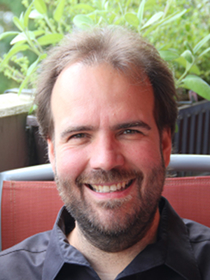
Tao Yang is a Marie Skłodowska-Curie Postdoctoral Fellow at the Chair of Vibroacoustics of Vehicles and Machines, Technical University of Munich (TUM School of Engineering and Design, Department of Engineering Physics and Computation). His research addresses urban noise pollution through innovative textile-based metamaterials for broadband low-frequency sound absorption, targeting the critical Research focuses on integrating acoustic and textile disciplines to overcome limitations of current metamaterials (narrowband absorption) and traditional absorbers (impractical size requirements). Key interests include acoustic metamaterial design, fibrous material characterization, and numerical simulation techniques for sound absorption optimization in polyester-based nonwovens and fiber assemblies. Publications from 2018-2020 demonstrate consistent expertise in experimental and computational analysis of porous materials, with emphasis on homogeneity assessment, airflow resistivity modeling, and multi-component fiber systems for noise control applications. Scientific recognition: Marie Skłodowska-Curie Postdoctoral Fellowship Dr. Yang serves as assistant lecturer for "Numerical Acoustics in Python" at TUM (Summer term 2025). His fellowship-funded project emphasizes two-way knowledge transfer through training and presentations, enhancing both technological innovation in noise reduction and professional development.
Prof. Dirk Heberling is a Universitätsprofessor at RWTH Aachen University, leading the Institute for High Frequency Technology. His research focuses on advanced antenna systems, radar technology, and electromagnetic field exposure assessment in 5G/6G networks. He specializes in high-frequency components, including leaky-wave antennas, reconfigurable intelligent surfaces, and robot-based antenna measurement systems. His work addresses challenges in antenna design, signal processing, and environmental compliance for next-generation communication infrastructure. Key research areas include: Development of wideband antennas for IoT and smart building applications Numerical analysis of near-field antenna measurements and phase recovery techniques Assessment of radio frequency exposure from massive MIMO base stations using digital twins Integration of radar systems with automotive technologies for self-localization and object detection Optimization of antenna arrays to mitigate grating lobes and phase synchronization issues His lab operates a state-of-the-art robot-based mm-wave test system capable of spherical near-field measurements and real-time auralization of aircraft noise. This infrastructure supports both fundamental research and industry collaborations in telecommunications, automotive radar, and environmental monitoring. Current projects emphasize: Exposure modeling for 6G networks considering increased base station utilization Generative adversarial networks for radar data synthesis Calibration techniques for polarimetric radar systems
Katherine Storrs is a Senior Lecturer in the School of Psychology at the University of Auckland, New Zealand. She leads the Computational Perception Lab, where she combines computational modeling and psychophysical experiments to study visual perception. Her research is supported by a Marsden Fast Start grant, and she is actively involved in teaching and academic service. She earned her PhD in Psychological Science from the University of Queensland in 2015 and has held postdoctoral positions at Justus-Liebig University (Germany) and the MRC Cognition and Brain Sciences Unit (Cambridge, UK). She also worked as a Data Scientist at Twitter in London. Dr. Storrs' research focuses on how the visual system interprets material properties such as gloss, shape, and reflectance. She uses unsupervised deep learning models to simulate and predict human perception, particularly in ambiguous or complex visual environments. Her work bridges cognitive science, neuroscience, and artificial intelligence. Her most recent publications explore topics such as gloss perception, mental rotation, face similarity, and the role of statistical learning in shape encoding. These works frequently appear in high-impact journals like Nature Human Behaviour , PNAS , and Current Biology , demonstrating a strong trend toward using computational models to explain perceptual phenomena. Marsden Fast Start Grant (2021) Humboldt Research Fellowship (2019) UK National Finalist, FameLab (2017) Editorial Board Member, Nature Communications Psychology (2023–) Editorial Board Member, OpenMind (2022–) Social Media Editor, Perception and i-Perception (2020–) She supervises graduate students and teaches courses including PSYCH 306 (Research Methods), PSYCH 775 (Visual Perception in Brains and Machines), and PSYCH 109. She also mentors students in honours, master's, and PhD programs. Her lab is actively involved in interdisciplinary collaborations, particularly with researchers in machine learning and computational neuroscience. The lab is funded by the Marsden Fund and supported by access to high-performance computing resources for training deep neural networks.
Wolfgang Mathis is a Lecturer at Leibniz University Hannover within the Faculty of Electrical Engineering and Computer Science , specifically affiliated with the Department of Didactics of Electrical Engineering and Computer Science . His academic work bridges theoretical electrical engineering with historical and pedagogical perspectives. Email: mathis@tet.uni-hannover.de Phone: +49 511 762 3403 Web: https://www.dei.uni-hannover.de His research spans two primary domains: theoretical electrical engineering and historical analysis of scientific disciplines . Key areas include nonlinear circuit analysis, electromagnetic field theory, and the interdisciplinary legacy of engineers like Johannes von Kries. He frequently employs Carleman linearization for modeling nonlinear systems and contributes to educational frameworks for electrical engineering. Wolfgang Mathis' recent publications reflect a dual focus on circuit design methodologies and historical studies . Articles on Kirchhoff's laws, Wilhelm Cauer, and Heinrich Hertz highlight his interest in the evolution of engineering concepts. Simultaneously, his technical work explores RF mixer circuits, LC tank oscillators, and bifurcation-based amplifiers, often integrating mathematical rigor with practical applications. Position: Lecturer Institution: Leibniz University Hannover Department: Didactics of Electrical Engineering and Computer Science He leads the Didactics of Electrical Engineering and Computer Science Section, focusing on educational materials and interdisciplinary studies. His work on stochastic waveguides and power amplifier design demonstrates a commitment to both foundational and applied research.
Ingolf Steffan-Dewenter is Professor and Chair of the Department of Animal Ecology and Tropical Biology (Zoology III) at the Biocenter of the University of Würzburg, Germany. With over two decades of academic leadership, he directs a research group focused on understanding ecological processes across multiple scales, from local habitat management to global environmental change. His work bridges fundamental ecological research with practical applications for sustainable land use and biodiversity conservation. Dr. Steffan-Dewenter's research spans animal ecology, population and community dynamics, agroecology, and tropical landscape ecology. His work examines how habitat fragmentation, land use intensification, climate change, and invasive species affect insect diversity and their biotic interactions, particularly focusing on plant-pollinator relationships. He investigates biodiversity-ecosystem functioning relationships across spatial and temporal scales, with special emphasis on pollination services, biological pest control, and sustainable agricultural practices. His research combines field experiments, long-term monitoring, and advanced statistical modeling to address critical questions in conservation biology and ecosystem management. Analysis of Steffan-Dewenter's recent publications reveals a strong focus on pollinator conservation under global change, with particular attention to climate change impacts on pollinator communities, landscape management for biodiversity conservation, and sustainable agricultural systems that support both production and ecological integrity. His work increasingly integrates multi-trophic perspectives, examining how changes at one trophic level cascade through ecosystems. The research demonstrates a shift toward more interdisciplinary approaches, combining ecological field studies with social science components to develop practical conservation strategies. Professor Steffan-Dewenter leads multiple significant research initiatives including BetaFor (forest biodiversity), ANDIV (Andean insect diversity), SAFEGUARD (wild pollinator conservation), BeeConnected (honeybee colony monitoring), BayÖkotox (ecotoxicology), UPSCALE (sustainable agriculture in Africa), VILLAGES BEES (pollinator promotion), DIFFCacao (cacao diversification), FARMS4Biodiversity (agroecological research), and LANDKLIF (climate change effects). These projects involve extensive international collaborations across Europe, Africa, and South America, securing substantial research funding from various national and international sources. His laboratory operates within the Department of Animal Ecology and Tropical Biology at the University of Würzburg's Biocenter, featuring state-of-the-art facilities for ecological research. The department maintains long-term research sites across Germany, Tanzania (Mount Kilimanjaro), and Peru, enabling comparative studies across different biomes and climate zones. The research group includes numerous PhD students, postdoctoral researchers, and technical staff working on diverse aspects of insect ecology, landscape ecology, and conservation biology.
Dr. Nour Ali serves as a Professor and Vice-Dean of Education in the College of Engineering, Design and Physical Sciences at Brunel University London, where she co-heads the Brunel Software Engineering Lab. With a PhD in Software Engineering from Universidad Politecnica de Valencia and a Computer Science degree from Bir-Zeit University, she brings extensive international experience from previous positions at University of Brighton, Lero (Irish Software Engineering Research Centre), and Politecnico di Milano. PhD in Software Engineering, Universidad Politecnica de Valencia, Spain Major in Computer Science, Bir-Zeit University, Palestine PG Certificate in Teaching and Learning in Higher Education, University of Brighton Fellow of the Higher Education Academy (HEA) Her research focuses on developing software architecture techniques for distributed, mobile, and adaptive systems, with particular expertise in microservice architecture recovery and visualization. With over 70 publications spanning two decades, her work bridges theoretical architecture principles with practical implementation challenges. Recent research demonstrates a strong focus on microservice architecture recovery tools like MiSAR and analysis of service granularity adaptation. Dr. Ali has made significant contributions to the software engineering community through editorial roles including Deputy Editor in Chief of IET Software, committee memberships for major conferences like ICSE and ASE, and reviewer positions for EPSRC and other funding bodies. Her publications reveal consistent contributions across architecture consistency, microservice systems, and adaptive requirements engineering, with recent work increasingly focusing on practical tool development for architecture recovery. External Examiner, York St John University (2021-2025) Deputy Editor in Chief, IET Software Committee member for ICSE, ASE, EASE, ICSA, MOBILESoft conferences EPSRC Full College Member (2018-present) Reviewer for Dutch Research Council (NWO), UK UNESCO Newton Prize As an educator, Dr. Ali leads CS3100 Software Project Management and contributes to multiple undergraduate and postgraduate courses. Her teaching philosophy integrates research insights with practical software engineering skills, supported by her PG Certificate in Teaching and Learning and HEA Fellowship. She actively supervises PhD students and contributes to curriculum development as Vice-Dean of Education for her college.
Leander Siegle is a Researcher at the 4th Physics Institute, University of Stuttgart, specializing in Large Size 3D Printed Optics. His work focuses on advanced optical engineering, materials science, and biomedical applications. He contributes to projects involving femtosecond laser writing, interferometry, and micro-optic fabrication. Education: Holds an M.Sc. degree (specific program details not provided). Research Interests: Siegle's research spans 3D printing technologies for optics, laser-based material processing, and precision engineering. He explores applications in biomedical devices and nanostructured materials through innovative fabrication techniques like grayscale lithography and two-photon polymerization. Publications Trends: His recent work emphasizes 3D-printed micro-optics, phase retrieval methods, and biomedical integration of optical components. Key areas include shape accuracy measurements via lateral shear interferometry and conductive nanostructures using PEDOT:PSS materials. Labs/Teams: Part of the 4th Physics Institute team at Stuttgart, contributing to interdisciplinary projects in photonics and additive manufacturing.
Rukmani Bai is a Researcher at the Institute for Theoretische Physik III (Institute for Theoretical Physics III), specializing in quantum simulation with ultracold atomic systems. Her work bridges theoretical modeling and experimental quantum physics, focusing on complex quantum phases in engineered lattice systems. Her research centers on quantum many-body phenomena in optical lattices, particularly dipolar bosonic mixtures and Rydberg atom arrays. Key interests include topological phases (fractional Chern insulators, quantum Hall states), supersolids, Bose glass transitions, and artificial gauge field effects. She employs advanced theoretical frameworks to predict experimentally accessible quantum states, with strong emphasis on connections to cold atom experiments. Article analysis reveals evolving expertise: early work (2018-2020) established foundational understanding of dipolar quantum gases and gauge field effects, while recent publications (2022-2024) target topological matter and multi-component phase transitions. This trajectory shows increasing focus on experimentally viable quantum simulation schemes for exotic topological states. Bai actively contributes to the Institute's research ecosystem through collaborations with experimental groups led by H.P. Büchler, T. Lahaye, and A. Browaeys. She has taught core theoretical physics tutorials including Quantum Mechanics, Electrodynamics, and Statistical Mechanics across multiple academic years (2019-2024), demonstrating consistent institutional engagement.
Prof. Dr. Gunnar Teege is a faculty member at the Institute for Computer Engineering within the Faculty of Computer Science at Bundeswehr University Munich. His career spans over two decades, focusing on distributed systems, virtualization, and formal verification of operating system components. He has led numerous research projects, including collaborations with institutions like the Runder Tisch GIS eV and the Bavarian State Office for Surveying and Geoinformation. Education: Diploma in Computer Science from Technical University of Munich (1985), Doctorate in Computer Science from TUM (1991) Affiliations: Member of GI (Gesellschaft für Informatik) and ACM (Association for Computing Machinery) Research interests include formal verification of software components for secure systems, virtualization frameworks, distributed systems, military communications, geospatial data interoperability via OpenGIS standards, computer-supported cooperative work (CSCW), and E-Learning platforms. His work often bridges theoretical and applied domains, particularly in defense IT systems and education technology. He has contributed to projects like Targeteam (XML-based adaptable teaching materials), HoBIT (high-security embedded systems), and MiKscHA (microkernel applications for high-security environments). His publications emphasize modularity, tailorability, and security in software design. Teaching activities at Bundeswehr University Munich include courses on operating systems, distributed systems, virtualization, and cybersecurity. Previously, he taught problem-based learning in computer science at TU Munich and developed virtual lectures for the Virtual University of Bavaria (vhb) from 2001–2005.
Prof. Dr. Peter-Michael Kaul is a Professor of Physics, Statistics and Measurement Technology at the University of Applied Sciences Bonn-Rhein-Sieg (H-BRS), where he serves as Research Professor and Founding Director of the Institute for Security Research (ISF). He is also a member of the University Council and the Research Commission of H-BRS. His academic career spans over two decades at the university, with significant leadership roles including Vice Dean of the Department of Biology, Chemistry and Materials Engineering (1999-May 2002), Prorektor für Lehre (Vice President for Teaching and Studies) (May 2002-Oct 2005), and Dean of the Department of Applied Natural Sciences (Oct 2005-Nov 2007). Since November 2010, he has been deputy director of the Institute for Detection Technologies, and since January 2011, he has served as Director of the Institute for Security Research. Prof. Kaul's research interests focus on: Sensor technology and actuation systems Microsensors and mass-sensitive sensors Chemical and biosensors for gaseous and liquid media Sensor signal processing and multisensor systems Intelligent sensor systems Explosives detection technologies and Counter-IED methods Laser drilling and gas analytics for security applications Instrumental analytics for explosive and odor component detection His recent publications demonstrate a strong focus on advanced sensor technologies for security applications, particularly in the detection of explosives and hazardous materials. His work spans from fundamental sensor development (such as semiconductor gas sensors, Raman spectroscopy, and SERS substrates) to practical applications in security screening and explosives detection. A significant portion of his research involves the development of specialized detection systems for triacetone triperoxide (TATP) and other energetic materials, often using innovative approaches like laser initiation and acoustic monitoring. His team also works on improving the reliability of explosives detection dogs and developing algorithms for sensor data validation. Prof. Kaul has received funding for numerous research projects, including: TeamUP: Addressing CBRN-E events (Chemical, Biological, Radiological, Nuclear, and Explosive hazards) DigitalTwin-4-Multiphysics-Lab: Urban digital twins and multiphysics twins for industry NAkSU: New analysis methods for complex security and environmental data WireLife: Lifetime of new aluminum wires in power electronics SYNergie: Detection and inactivation of Synchytrium endobioticum in potatoes ReDeX: Reductive treatment method for removal of disinfection by-products from drinking water PräventinS: Prevention strategy for invasive pests like the Asian longhorned beetle ALBERO: Safe integration of alternative vehicles in roll-on/roll-off ferry traffic FHInvest: Field emission electron microscope with computed tomography for materials development Prof. Kaul leads the Institute for Security Research and has been instrumental in establishing security research as a key focus area at H-BRS. His work bridges fundamental sensor research with practical security applications, particularly in the areas of explosives detection and counter-terrorism technologies. He collaborates extensively with industry partners, government agencies, and international research institutions to develop innovative security solutions.
Prof. Dr.-Ing. Jörg-Henry Schwabe is a Professor of Gear Technology and Machine Dynamics at the Department of Mechanical Engineering, Ernst Abbe Hochschule Jena. He serves as Vice Dean and holds the academic rank of Professor. His work focuses on technical acoustics, gear technology, and machine dynamics with applications in concrete production machinery. He earned his PhD in 2002 from TU Chemnitz with a dissertation on vibration design of concrete pipe systems. Education: 1988–1993: Mechanical Engineering (Applied Mechanics) at TU Chemnitz 2002: Doctorate on 'Schwingungstechnische Auslegung von Betonrohrfertigern' Research interests include optimization of industrial machinery components, vibration analysis, and acoustics in mechanical systems. He has authored/co-authored 27 journal articles and two technical books on concrete production technologies. His patents (22 inventions) reflect innovations in manufacturing processes and equipment design. No scientific awards are explicitly listed, though his extensive publication and patent portfolio indicates significant contributions to the field. He leads research teams in gear dynamics and acoustics, with ongoing collaborations in material testing and industrial machinery development.
Prof. Dr. Volker Christian Behr serves as an Associate Professor at the University of Würzburg's Faculty of Physics and Astronomy, where he leads the Magnetic Particle Imaging group within the Chair of Experimental Physics (Biophysics). Located in Building P1, Room F-076 at the Am Hubland campus in Würzburg, Germany, Prof. Behr contributes significantly to the advancement of medical imaging technologies with expertise in Magnetic Particle Imaging and Magnetic Resonance Imaging. Prof. Behr's research focuses on Magnetic Particle Imaging (MPI), a novel medical imaging technique that detects superparamagnetic iron oxide nanoparticles with high sensitivity and specificity within the human body. His work explores the nonlinear magnetization function of these particles to develop marker-based applications that avoid radioactive nuclides, offering significant potential for clinical applications. He has contributed to the development of MPI-MRT hybrid systems where MPI captures the marker signal while MRT provides the anatomical background. His research extends to scanner technology, wave propagation in high-field MRI, and applications in non-destructive material testing. Prof. Behr's publications over the past two decades demonstrate a consistent focus on medical imaging technologies, with particular emphasis on Magnetic Particle Imaging since 2009. His work spans from fundamental scanner components and hardware to novel reconstruction techniques and clinical applications. The evolution of his research shows progression from general MRI technology (2003-2011) to specialized MPI development (2015-2018), reflecting the emergence of MPI as a distinct field within medical imaging. Prof. Behr leads the Magnetic Particle Imaging research group within the larger Magnetic Resonance Imaging group at Experimental Physics 5. His team works on advancing MPI technology, developing novel reconstruction techniques, and exploring clinical applications of magnetic particle imaging. The group is part of the Chair of Experimental Physics (Biophysics) at the University of Würzburg, which maintains strong connections with medical researchers for translational applications of imaging technologies.
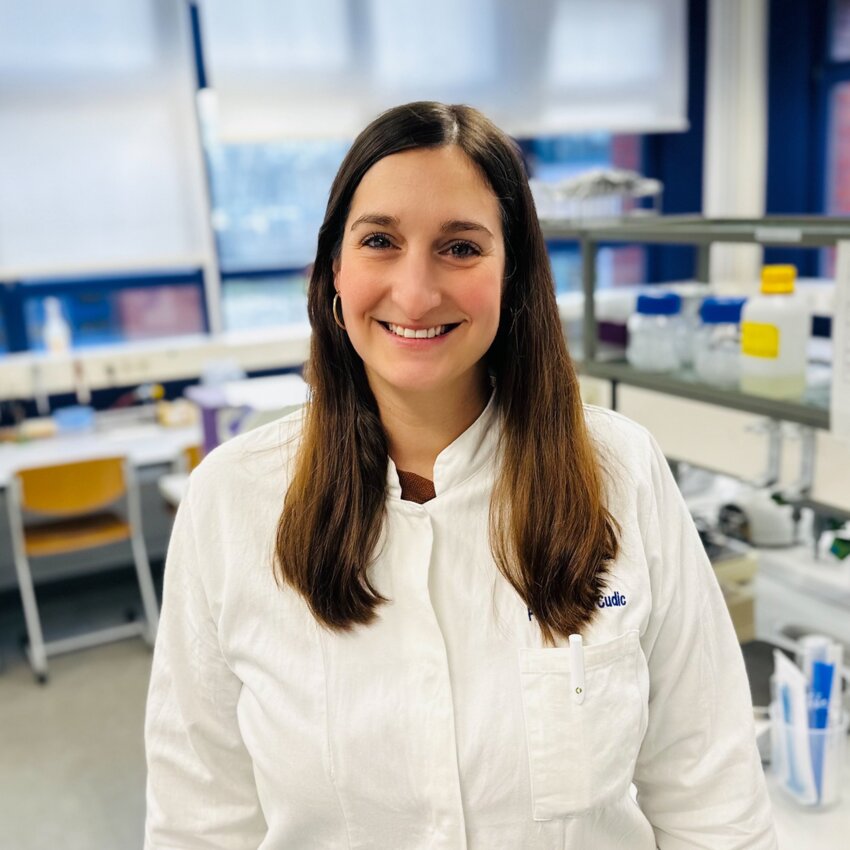
Prof. Dr. Emina Cudic is a Professor of Food Microbiology and Biotechnology at Hochschule Bremerhaven, leading the Institute of Applied Microbiology and Biotechnology. They teach in Food Science (FSB), Biotechnology of Marine Resources (BMR), and Sustainable Energy and Environmental Technology (NEW) programs. Their research focuses on bacterial two-component signaling systems affecting biofilm formation during food processing and genetic optimization of Escherichia coli for metabolite/biomass production. Publications emphasize understanding stress responses in E. coli, particularly Cpx and Arc systems' roles in antibiotic treatment effects, acid stress, and potassium sensing. Research bridges microbiology fundamentals with biotechnological applications in food safety and environmental systems. No scientific awards listed. Advising PhD/Master students not explicitly mentioned. The lab focuses on applied microbiology with strong proteomics and genetic engineering components.
Nils Surkamp is a Researcher at Ruhr University Bochum's Faculty of Electrical Engineering and Information Technology, working within the Photonics and Terahertz Technology department. His work bridges semiconductor laser physics with practical applications in terahertz spectroscopy and photonic manufacturing. Key research areas: Terahertz technology, mode-locked diode lasers, photonic integrated circuits, two-photon polymerization, optical metrology Recent trends: Focus on compact and portable THz systems, monolithic laser integration, high-precision manufacturing applications Cooperations: International collaborations with institutions in France, Japan, and the USA
Christoph Schuster is a Faculty member at the Technische Universität Dresden under the Institute of Process Engineering and Environmental Technology , specifically in the Chair of Hydrogen and Nuclear Energy . He serves as Head of the Thermohydraulics Research Area and has led the Thermohydraulics Working Group from 2008 to 2020. His academic role as a Researcher focuses on Thermal Hydraulics and Nuclear Reactor Safety . PhD in Nuclear Energy Technology (1992) Studies in Energy System Technology (1982-1987) Research Interests include: Thermal Hydraulics of nuclear reactors Passive safety system effectiveness Spent fuel pool safety analysis Two-phase flow in natural circulation loops Reactor accident scenario modeling Article Trends show a consistent focus on Thermal Hydraulics , Nuclear Safety , and Two-Phase Flow , with recent work emphasizing Spent Fuel Pool Dynamics and Passive Safety Systems . Teaching Activities include courses on: Basics of nuclear energy technology Thermohydraulics of nuclear reactors Nuclear safety methods Transient power output in nuclear plants