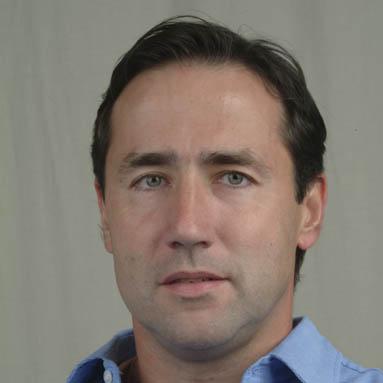
Sebastian Cioaba is a Professor in the Department of Mathematical Sciences at the University of Delaware (UD), part of the College of Arts & Sciences. His research focuses on spectral graph theory, algebraic combinatorics, and their applications. He earned his Ph.D. from Queen’s University (2005) and joined UD in 2009 after postdoctoral work at UC San Diego and the University of Toronto. Cioaba has advised 8 Ph.D., 4 M.Sc., and numerous undergraduate researchers, with current advisees including John Byrne and Isabel Byrne. His work is supported by NSF, NSA, and international grants. Education - B.Sc. Mathematics & Computer Science, University of Bucharest (Undergraduate) - Ph.D. Mathematics, Queen’s University (2005) Research & Awards - 2024 College of Arts & Sciences Award - Co-editor of Discrete Mathematics and Linear Algebra and its Applications - Over 70 publications and two books: A Bridge to Advanced Mathematics (2023) and A First Course in Graph Theory and Combinatorics (2022, 2nd ed.) Teaching & Service - Organized conferences in discrete mathematics - Supervised over 25 undergraduate and high school students in research projects Advising - Current Ph.D. students: John Byrne, Isabel Byrne, Colby Sherwood - Notable past advisees include Vishal Gupta (Ph.D. 2025, Rochester) and Dheer Noal (Ph.D. 2022, Memphis postdoc)
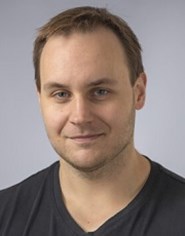
Ross J. Kang is a Canadian mathematician currently serving as an Associate Professor at the Korteweg–de Vries Institute for Mathematics within the Faculty of Science at the University of Amsterdam since 2022. He is an active member of the Discrete Mathematics and Quantum Information group and the NETWORKS consortium. Previously, he held positions as Assistant/Associate Professor at Radboud University Nijmegen (2014-2022), Assistant Professor at Utrecht University (2013), and Researcher at Centrum Wiskunde & Informatica (2012-2013). His academic journey includes postdoctoral positions at Durham University (2010-2012) and McGill University (2008-2010), where he was advised by Bruce Reed and Louigi Addario-Berry. DPhil in Mathematics, University of Oxford (2008) - Thesis: 'Improper colourings of graphs', advised by Colin McDiarmid BSc (Hons) in Mathematics and Computer Science, University of Victoria (2003) - Governor General's Silver Academic Medal recipient Ross J. Kang's research focuses on probabilistic and extremal combinatorics, random discrete structures, graph coloring, geometric graphs, and algorithms. His work bridges theoretical mathematics with practical applications, exploring fundamental questions in discrete mathematics. He has made significant contributions to understanding graph coloring problems, particularly in the contexts of list coloring, distance coloring, and strong coloring. His research often employs probabilistic methods to establish bounds and structural properties in graph theory. Kang's work on the hard-core model, local occupancy method, and triangle-free graphs has advanced our understanding of the interplay between local constraints and global structure in discrete systems. Analysis of his recent publications reveals a strong emphasis on graph coloring problems, particularly list coloring variants and their extensions. His work frequently explores the relationship between graph structure (such as degree constraints, girth, or forbidden subgraphs) and coloring properties. A notable trend is his development and application of the local occupancy method to establish improved bounds for chromatic numbers in various graph classes. His research also demonstrates a consistent interest in extremal problems, seeking optimal configurations under specific constraints, particularly in the context of triangle-free graphs and geometric representations. NWO Open Competition M-1 grant entitled 'Asymptotic triangle-free structure (3Free)', 2022-2026 NWO Vidi grant entitled 'On the edge: theory and techniques at the frontiers of edge-colouring', 2017-2023 NWO Veni grant entitled 'Generalised colouring for random graph models', 2012-2015 Van Gogh travel grants (2020-2021 with Marthe Bonamy; 2016-2017 with Louis Esperet) Governor General's Silver Academic Medal (2003) Ross J. Kang has successfully supervised multiple PhD students including Eoin Hurley (defending May 2025), Stijn Cambie (defended April 2022), and François Pirot (winner of 2020 prix Charles Delorme). His research is supported by significant grants from the Netherlands Organisation for Scientific Research (NWO), including the prestigious Open Competition M-1 grant. Kang is actively involved in the academic community through his editorial role at Combinatorial Theory, co-organization of conferences like the Dutch Days of Combinatorics, and leadership in initiatives such as Innovations in Graph Theory, a diamond open access journal he helped launch in August 2023. As a member of the Discrete Mathematics and Quantum Information group at the University of Amsterdam and the NETWORKS consortium, Kang collaborates with researchers across various institutions. He has established strong international connections through his Van Gogh travel grants and participation in collaborative projects like the Sparse (Graphs) Coalition sessions. His research group focuses on theoretical aspects of discrete mathematics with connections to quantum information science, and he maintains active collaborations with researchers across Europe and North America.
Maria Axenovich is a Professor at the Department of Mathematics , Karlsruhe Institute of Technology (KIT). Her research focuses on graph theory and combinatorics , emphasizing unavoidable structures in graphs, Ramsey-type problems, Turán densities, and extremal graph theory. Education : Undergraduate in Novosibirsk, Russia; Ph.D. at the University of Illinois at Urbana-Champaign under Zoltan Füredi. Positions : Previously at Iowa State University; since 2012 at KIT. Editorial Roles : Editor-in-Chief of the Electronic Journal of Combinatorics (2020–present); Associate Editor of Order (2016–present). Recent Research Trends : Her 2023–2025 publications address hypercubes , poset Ramsey numbers , interval colorings , extremal subgraphs , and canonical Ramsey theorems . Collaborations span institutions in the US, UK, Hungary, and Germany. Students and Collaborations : Supervises Ph.D., Master’s, and Bachelor students. Current advisees include Dingyuan Liu , Christian Winter , and Lea Weber . Former students like Jonathan Rollin and Torsten Ueckerdt have contributed to extremal graph theory and hypergraphs. Courses : Teaches Linear Algebra , Combinatorics , and Graph Theory at KIT. Leads seminars on Extremal Set Theory and Discrete Mathematics .
Hemanshu Kaul is an Associate Professor of Applied Mathematics at Illinois Institute of Technology (IIT), part of the College of Computing. He serves as Co-Director of the M.S. in Computational Decision Science and Operations Research (CDSOR) program. His expertise spans Discrete Mathematics, Operations Research, Graph Theory, and Network Optimization, with applications in transportation, computer science, and engineering. Education: PhD in Mathematics from the University of Illinois at Urbana-Champaign (UIUC), MS in Mathematics from the Indian Institute of Technology Bombay. He has held roles including Distinguished Teaching Fellow (2016–2018) and AMS Project NExT Fellow (2007–2008). Research Interests : Focus on Graph Packing, DP-coloring, List Coloring, and algorithmic solutions for discrete optimization problems. His work bridges theoretical foundations with practical applications such as transportation networks and computer science systems. Publications & Grants : Over 50 publications in combinatorics and optimization, including NSF/NSA-funded projects like the EXCILL III Conference (2016–17). Recent work explores spectral Turán problems, DP-coloring algorithms, and longitudinal network models. Awards : Board of Trustees Award for Excellence in Teaching (2019) Excellence in Teaching Award (2017, College of Science, IIT) Interdisciplinary Research Grant (2009–2010, Transportation Networks) Advising & Leadership : Co-advisor for IIT's SIAM Student Chapter. Led restructuring of the Applied Math M.Sc. program (2018–19). Advised teams in the Mathematical Contest in Modeling (MCM), including a 2019 Meritorious Winner team for a disaster response system design. Labs & Collaborations : Involved in interdisciplinary projects combining applied math with computer science and engineering, including work on equitable public transit systems and network optimization.
Arindam Roy is an Associate Professor in the Department of Mathematics and Statistics at the University of North Carolina at Charlotte. He serves as the Director of the Math and Stat Honors Program and is affiliated with research in analytic number theory, algebraic number theory, and graph theory. Current Position: Associate Professor, UNC Charlotte (2025–) Previous Positions: Assistant Professor, UNC Charlotte (2018–2025); G.C. Evans Instructor, Rice University (2015–2018) His research focuses on zeros of the Riemann zeta-function and L-functions, partial sums of zeta functions, divisor problems, integral transforms, and graph theory. Recent work explores value distributions, Turán inequalities, and connections to Ramanujan's theories. Key trends in his publications include analytic number theory, special functions, and the interplay between modular forms and graph theory. His articles often address critical line behavior, approximation techniques, and arithmetic functions.
Jeffry Kahn is a Professor of Mathematics at Rutgers, The State University of New Jersey, within the Department of Mathematics. His research focuses on discrete mathematics and related areas, with particular emphasis on combinatorics, graph theory, and probability. He holds an office in Hill Hall (HLL-728) on the Busch Campus. His work spans foundational contributions to extremal combinatorics, random graph theory, and probabilistic methods. Kahn has co-authored influential papers on threshold phenomena, phase transitions in statistical mechanics models, and structural properties of discrete systems. Notable contributions include resolving Borsuk's conjecture and advancing understanding of random matrix singularity probabilities. He teaches advanced courses such as Combinatorics II (642.583), emphasizing problem-solving and rigorous proofs. His research interests exhibit a cohesive thread in exploring combinatorial structures under probabilistic and extremal frameworks. Recent works address Shamir’s Problem asymptotics, maximal independent sets in hypercubes, and threshold conjectures. His articles often intersect with theoretical computer science, revealing interdisciplinary insights. Despite no explicitly listed awards, his publications in top journals like Annals of Mathematics and Combinatorica underscore his academic impact. His advising focuses on graduate-level combinatorial research, with courses structuring students via problem sets requiring precise, efficient solutions.
Kirill Simonov is an Associate Professor in the Department of Informatics at the University of Bergen. His research focuses on parameterized complexity, algorithm design, and graph theory, with particular emphasis on clustering algorithms, graph modification problems, and algorithmic graph theory. He has contributed to foundational work in fair clustering, approximate algorithms for graph cycles, and structural analysis of sparse graphs. His notable contributions include studies on coresets for fair clustering, algorithmic extensions of Dirac's theorem, and techniques for building large k-cores from sparse graphs. His work is supported by the Research Council of Norway (Project 314528). He frequently collaborates with leading researchers like Fedor Fomin and Petr Golovach on topics such as parameterized algorithms and combinatorial optimization. Simonov's publications span venues like the Journal of Computer and System Sciences and Leibniz International Proceedings in Informatics. His research bridges theoretical computer science with practical algorithmic solutions for graph problems and data clustering challenges.
Martí Farré is a faculty member in the Department of Mathematics at the Faculty of Mathematics and Statistics, Universitat Politècnica de Catalunya (UPC). He is actively involved in the COMBGRAPH research group (Combinatorics, Graph Theory, and Applications) and the OMGRAPH subgroup focusing on optimization methods in graphs. His research spans theoretical and applied aspects of discrete mathematics. Research Interests: Martí's work centers on Combinatorics and Graph Theory , with particular emphasis on extremal problems, connectivity, matching theory, independence number, and spectral graph properties. His research often investigates structural and optimization properties of graphs under constraints such as fixed diameter, degree sequences, or matching numbers. The analysis of his recent publications reveals a consistent focus on extremal graph theory, where he derives bounds and characterizes graphs maximizing or minimizing certain parameters (e.g., edges, diameter, connectivity) under given constraints. Key themes include vulnerability and robustness of networks, spectral properties, and combinatorial optimization on graphs. Scientific Awards and Recognition: Premi o reconeixement (Recognition or Prize) Advising and Grants: Martí has contributed to competitive R&D+i projects and innovation initiatives in education. He has supervised doctoral theses, indicating an active role in mentoring graduate students, although specific student names are not listed in the provided data. Labs and Research Teams: He is a key member of the COMBGRAPH research group at UPC, a leading team in combinatorics and graph applications, and participates in the OMGRAPH subgroup dedicated to optimization on graphs, contributing to both theoretical advances and real-world applications.
Oleg Pikhurko is a Professor of Mathematics at the University of Warwick, affiliated with both the Mathematics Institute and DIMAP (the Centre for Discrete Mathematics and its Applications). His office is located in room B2.12 at the University of Warwick in Coventry, UK. Pikhurko has established himself as a prominent researcher in combinatorics with significant contributions to extremal combinatorics, graph theory, and related fields. His research interests span a wide range of topics in discrete mathematics including extremal combinatorics and graph theory, descriptive combinatorics, graph limits, random structures, and algebraic, analytic and probabilistic methods in discrete mathematics. Pikhurko's work bridges theoretical foundations with practical applications, often employing sophisticated mathematical techniques to solve challenging problems in combinatorial structures. The analysis of Pikhurko's recent publications reveals a consistent focus on extremal combinatorics, particularly Turan-type problems, hypergraph theory, and graph limits. His work demonstrates increasing sophistication in handling complex combinatorial structures, with recent papers exploring connections to measure theory, geometry, and coding theory. Notably, his research shows a progression from classical combinatorial problems toward more abstract and interdisciplinary approaches, including measurable versions of combinatorial theorems and applications to high-dimensional spaces. ERC Advanced Grant 'Finite and Descriptive Combinatorics' (2022-2026) Pikhurko has successfully supervised numerous PhD students including Teresa Sousa (2006), David Offner (2009), Zelealem Yilma (2011), Matthew Fitch (2019), and Matteo Mazzamurro (2023). He currently co-advises Irene Gil Fernández and Zhuo Wu, both expected to complete their PhDs in 2025. His research group focuses on 'Finite and Descriptive Combinatorics,' reflecting his dual interest in finite combinatorial structures and their descriptive (measurable) counterparts. The ERC Advanced Grant awarded in 2022 has provided significant funding to support this research program through 2026. Beyond traditional research, Pikhurko founded the Hedgehog Fund, which encourages innovative proofs of mathematical results presented in his lectures. He also maintains an Erdos Lap Number of 2, having sat on the lap of Barbie Freidin (Erdos Lap Number 1) who herself sat on Paul Erdos's lap.
Petr Golovach is a Research Professor at the Department of Informatics, University of Bergen. His research focuses on Discrete Mathematics and Theoretical Computer Science, particularly graph theory, algorithms, parameterized complexity, and clustering. He has held academic positions at Syktyvkar State University (1991–2007), Durham University (2009–2011), and currently teaches advanced courses like Advanced Algorithms Techniques and Enumeration Algorithms at the University of Bergen. His research interests include graph algorithms, parameterized complexity, matroid theory, and algorithmic enumeration. He has organized notable events like the Dagstuhl Seminar 2018 and serves on program committees for STACS, IPEC, and SWAT. Notable contributions include work on hybrid clustering algorithms, graph cuts under matroid constraints, and parameterized tractability of path and cycle problems. He has supervised PhD students like Nidhi Purohit and master’s students including Øyving Stette Haarberg and Andreas Steinvik. His publications span over 200 peer-reviewed papers in top venues such as Journal of the ACM and conferences like SODA and ICALP. His research bridges extremal combinatorics with algorithm design, emphasizing practical and theoretical advancements in graph-based problems.
Dr. Robert Johnson is a Senior Lecturer in Pure Mathematics at Queen Mary University of London, affiliated with the School of Mathematical Sciences. He leads the Communication and Public Engagement for the Centre for Combinatorics, Algebra and Number Theory. His research focuses on extremal combinatorics, graph theory, and probabilistic combinatorics, with particular emphasis on extremal problems on graphs, set systems, permutations, and discrete hypercube structures. Robert Johnson earned his PhD from the University of Cambridge in 2003 and joined Queen Mary in 2004 after a postdoctoral position at the London School of Economics. His work has contributed significantly to combinatorial optimization, Ramsey theory, and hypercube graph analysis. He has supervised multiple PhD students, including Trevor Pinto (2016), A Nicholas Day (2017), and Natalie Behague (2020), with current advisees Belinda Wickes and Asier Calbet Ripodas. His research explores topics such as resistor network optimization, synchronizing automata, and extremal set systems, with applications in discrete mathematics and theoretical computer science. Notable contributions include studies on multicolour Ramsey numbers of odd cycles and Turán properties in hypercube intersection graphs. Johnson's publications span over two decades, covering areas like permutation correlation, hypercube saturation, and Kneser graph Hamiltonicity. He is actively involved in mentoring and welcomes inquiries from prospective PhD candidates. His affiliations include the Combinatorics group at Queen Mary’s School of Mathematical Sciences and the Centre for Combinatorics, Algebra and Number Theory, where he drives public engagement initiatives.
Asaf Shapira is a Professor at the School of Mathematical Sciences, Tel-Aviv University. His research focuses on combinatorics, graph theory, and extremal problems, with notable contributions to Ramsey theory, probabilistic methods, and algorithmic applications. He has authored over 50 publications in top-tier journals and has taught advanced courses such as Extremal Graph Theory and Probabilistic Methods in Combinatorics. His research interests include extremal combinatorics, hypergraph theory, and structural graph theory. Recent work includes advancements in removal lemmas, partition properties, and algorithmic testing of graph properties. Shapira has also contributed to foundational results in property testing and combinatorial optimization. His teaching spans undergraduate and graduate levels, covering topics like combinatorial analysis, algebraic methods, and advanced algorithms. While no explicit awards are listed, his extensive publication record reflects significant scholarly impact.
Gabor N Sarkozy is a Professor in the Department of Computer Science at Worcester Polytechnic Institute (WPI). He holds a PhD from Rutgers University (1994) and completed a postdoc at the University of Pennsylvania (1994-1996). His research focuses on graph theory, discrete mathematics, and theoretical computer science, particularly the structure of large graphs and Ramsey-type problems. Education: BS, Eötvös University (1990); MS, PhD, Rutgers University (1994); Postdoc, University of Pennsylvania (1994-1996) His scholarly work spans over 100 publications, with notable collaborations with Endre Szemerédi, János Komlós, and András Gyárfás. Key contributions include algorithmic applications of the Blow-up Lemma, monochromatic cycle partitions, and advancements in Ramsey theory for hypergraphs and planar graphs. Professional highlights include the Good Teaching Award (1995) and the Doctor of the Hungarian Academy of Sciences (2009). He founded the Budapest Project Center, WPI's first project center in Eastern Europe, and remains actively engaged in educational data mining projects. Scientific Awards Good Teaching Award, 1995 Doctor of the Hungarian Academy of Sciences, 2009 His research trends over the past two decades show a transition from classical Ramsey theory and graph decomposition (1995-2010) to interdisciplinary applications in time series analysis and educational data mining (2011-2024), while maintaining core contributions to combinatorial graph theory. Advising and grants are not explicitly detailed in the provided texts, though his collaborative nature is evident through extensive co-authorships. He maintains active research groups at WPI and the Rényi Institute, with ongoing projects in Ramsey-type problems and algorithmic applications.
Patrick Morris is a postdoctoral researcher in the GAPCOMB group at Universitat Politècnica de Catalunya (UPC) in Barcelona, funded by a Marie Curie fellowship. He holds a PhD in Combinatorics and Graph Theory from Freie Universität Berlin (2021), a Master's from the same institution, and a 4-year MSci from the University of Bristol. His research focuses on Extremal and Probabilistic Combinatorics with applications to Discrete Probability, Number Theory, and Algebraic Group Theory. Notably, his work on canonical Ramsey theorems earned a Best Paper Award at LAGOS 2023. His studies often explore structural properties of graphs and hypergraphs under random perturbations, with emphasis on Hamiltonicity, bootstrap percolation, and transversal problems. Collaborations include projects with Prof. Guillem Perarnau and Prof. Tibor Szabó, yielding impactful results in combinatorial theory. Education: PhD in Mathematics (2021), Freie Universität Berlin Master's in Combinatorics & Graph Theory (Freie Universität Berlin) MSci in Mathematics (University of Bristol, 2015) Research Interests: Extremal Combinatorics Probabilistic Combinatorics Bootstrap Percolation Hypergraph Theory Random Graphs Ramsey-Turán Theory Key Contributions: Over 15 peer-reviewed papers in top journals (e.g., Random Structures & Algorithms , Journal of Combinatorial Theory ), with focus on Hamilton cycles, clique factors, and canonical Ramsey-type theorems. His work bridges combinatorial structure and probabilistic methods, often addressing open problems in graph theory.
Istvan Tomon is an Associate Professor in the Department of Mathematics and Mathematical Statistics at Umeå University in Sweden. His research focuses on discrete mathematics, extremal and probabilistic combinatorics, and geometry. He leads research in combinatorial structures and graph theory, with recent work exploring hereditary families, symmetric chain decompositions, and Zarankiewicz problems. His publications demonstrate broad expertise in combinatorial optimization, hypergraph theory, and geometric combinatorics. Recent articles show consistent focus on extremal problems in set systems, matrix combinatorics, and incidence geometry.