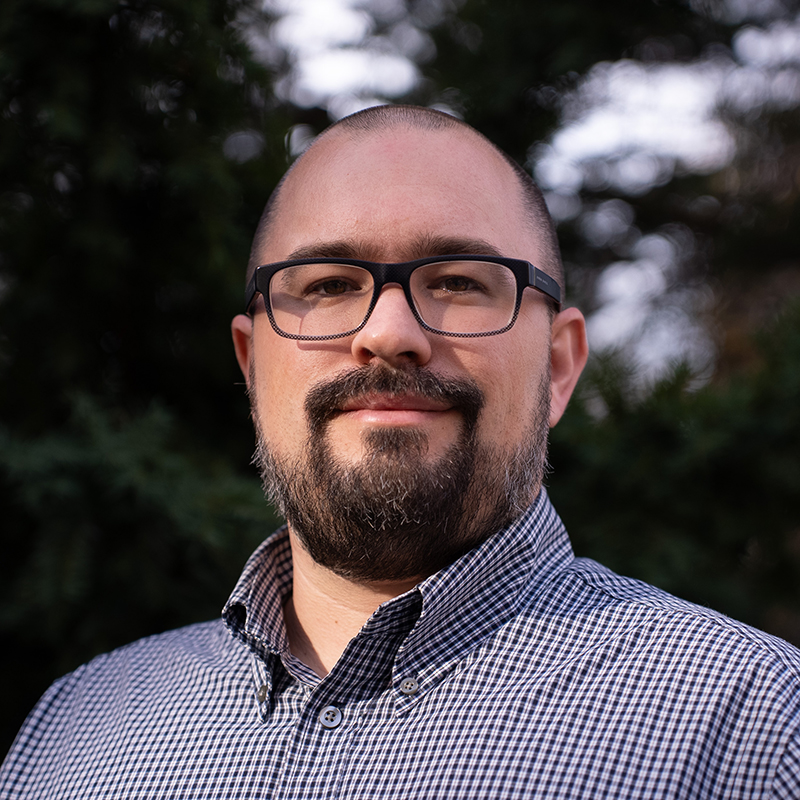
Ryan Schott is an Assistant Professor in the Department of Biology at York University, affiliated with the Centre for Vision Research and the Connected Minds initiative. His research focuses on understanding how vertebrate visual systems evolve and adapt to environmental pressures, combining comparative genomics, transcriptomics, and experimental approaches. He leads the Schott Lab, which explores topics such as photoreceptor evolution, fossorial adaptation, and developmental mechanisms in amphibians, squamates, and turtles. His work integrates ecological, genetic, and developmental perspectives to address questions about visual system diversification. Current projects include studying visual evolution in amphibians, the molecular basis of novel photoreceptor types, and convergent adaptations in fossorial vertebrates. Schott collaborates internationally with experts in evolutionary biology, genomics, and ecology. Publications highlight his contributions to understanding opsins, lens morphology, and retinal adaptations across species. He is active in training graduate and undergraduate students, offering opportunities in evolutionary and developmental research. His lab also develops bioinformatic tools for genomic analyses.
Simon K.A. Robson is a Professor at James Cook University, specializing in entomology, behavioral ecology, and social insect biology. His research focuses on ants, particularly their social organization, ecological adaptations, and responses to environmental changes. He has contributed extensively to understanding ant behavior, nest architecture, and the ecological implications of climate change on tropical species. Key research interests include the physiological and behavioral adaptations of ants, the evolution of complex social structures, and the application of molecular tools in ecological studies. His work spans topics like ant vision, microstructure analysis, and conservation biology in tropical ecosystems. Robson has collaborated widely, contributing to over 80 publications in peer-reviewed journals. His studies often integrate field observations with laboratory analyses, addressing questions about biodiversity patterns, invasive species, and the impact of environmental variables on insect communities. No specific awards or grants are mentioned in the provided texts, though his prolific publication record indicates sustained academic engagement. His research often involves interdisciplinary approaches, bridging entomology, genetics, and conservation.
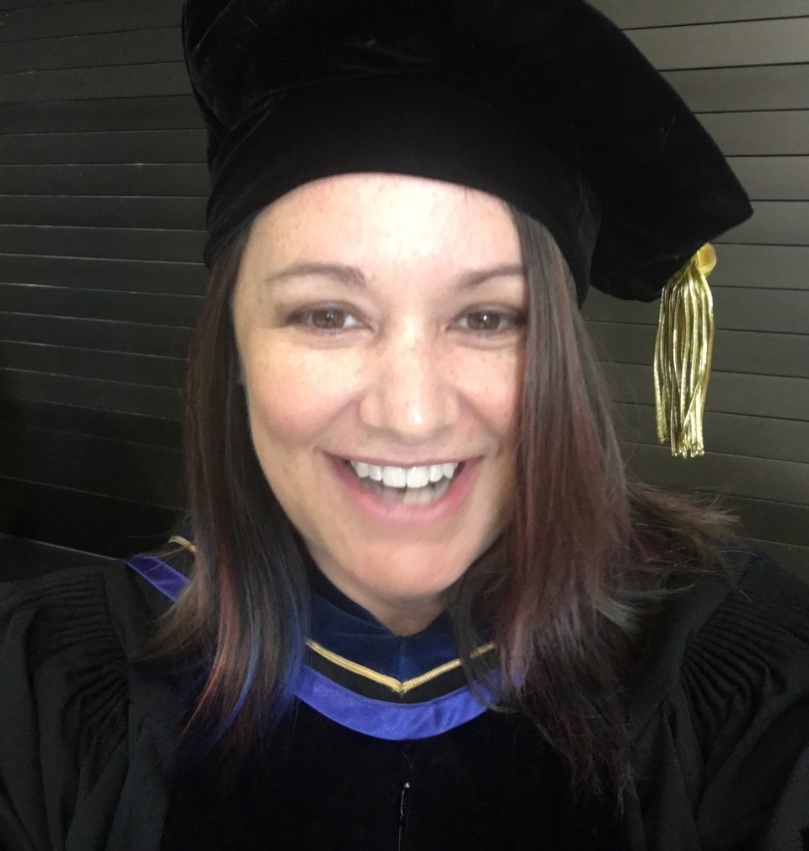
Sharyn Marks is a Professor of Zoology and Department Chair at the Department of Biological Sciences, California Polytechnic Humboldt State University. She earned a BA from the University of Chicago (1987) and a PhD from the University of California, Berkeley (1995). Her research focuses on Herpetology , Conservation Biology , and Evolutionary Developmental Biology , integrating ecological studies with natural resource management to address global declines in amphibian and reptile biodiversity. She investigates factors regulating amphibian activities, species distribution modeling, and life-cycle habitat requirements. Recent publications emphasize Herpetological ecology Conservation strategies Evolutionary genetics Ecological niche modeling Forest and desert habitat studies Hydrological impacts on wildlife and have been published in journals like Herpetological Conservation and Biology and Molecular Ecology . She has mentored numerous graduate and undergraduate students, including current advisees Sabrina Horrack, Mary Mackey, and Stacie Nunes. Her work has secured funding for student projects and received recognition, such as the 2013 Best Student Paper in Herpetology by Copeia for co-authored research on Western Pond Turtles.
Heidi Lyn, Ph.D., is an Associate Professor and Joan M. Sinnott Chair of Psychology at the University of South Alabama. She holds a Ph.D. in Psychology (Comparative Animal Communication and Cognition) from Georgia State University (2001), an M.A. in Psychology from Georgia State University (1998), and dual B.A./B.S. degrees in Linguistics and Computer Science Engineering from the University of Pennsylvania (1992). Her research focuses on nonhuman animal cognition and communication, including studies of intelligence in animals, neural-behavioral correlates in primates, and communication in dolphins, sea mammals, and primates. Notable contributions include over 25 articles on topics such as cognitive differences in dogs, environmental influences on ape social behavior, and cross-species symbolic development. Her work has been featured in Scientific American , Science , and media outlets like the Today show. Dr. Lyn has held positions at UCLA, the New York Aquarium, St. Andrews University, and the University of Southern Mississippi. She actively advises graduate students and contributes to marine mammal welfare research. Her lab explores cognitive mechanisms in sea turtles, enrichment programs for bottlenose dolphins, and comparative studies of animal communication across species. Recent projects include investigations into spatial memory in dogs, vocal communication in dolphins, and the role of socio-communicative environments on ape cognition. She has presented at major conferences such as the Evolution of Language and the Comparative Cognition Conference, and her edited works include The Evolution of Language: Proceedings of EVOLANG10 . Labs/Teams: Her research involves collaborations with institutions like the Gulf Coast Research Laboratory and the Institute for Marine Mammal Studies, focusing on marine and terrestrial animal cognition.
Vimoksalehi Lukoschek is a Research Fellow at James Cook University, affiliated with the ARC Centre of Excellence for Coral Reef Studies. Her work focuses on coral reef ecology, marine biodiversity, and conservation genetics. She held the ARC DECRA Fellowship (2013-2017) and Smart Futures Research Fellowship (2010-2013). Her research integrates molecular genetics with ecological studies to address connectivity, resilience, and conservation challenges in marine systems. Key research interests include coral population genetics, seascape genetics, and the phylogeography of marine species such as sea snakes and turtles. Her work emphasizes understanding larval dispersal patterns, genetic diversity preservation, and the impacts of climate change on reef ecosystems. Education: PhD in Molecular Ecology (James Cook University, 2007) Postdoctoral Research: University of California, Irvine (2007-2009) Her publications span coral reef recovery dynamics, sea snake conservation, and biophysical modeling of marine connectivity. Awards include prestigious fellowships recognizing her contributions to marine biodiversity science. Current projects explore larval dispersal models for Great Barrier Reef corals and the conservation implications of genetic diversity in threatened species. She collaborates widely, contributing to global assessments of reptile biodiversity and climate change impacts.
Camila Mazzoni is a group leader at the Leibniz Institute for Zoo and Wildlife Research (IZW) in Berlin, Germany. She co-leads the BeGenDiv initiative and serves as Chair of the European Reference Genome Atlas (2020–2023). Her research focuses on conservation genomics, population genomics, and phylogenomics , utilizing whole genome sequencing and environmental DNA analysis to address biodiversity challenges. Education PhD, Molecular and Cellular Biology, Oswaldo Cruz Institution (Fiocruz), Brazil (2003–2006) MSc, Molecular and Cellular Biology, Oswaldo Cruz Institution (Fiocruz), Brazil (2001–2003) BSc, Biological Sciences, University of Rio de Janeiro State, Brazil (1997–2001) Mazzoni’s work spans hybridization/introgression studies (e.g., sea turtles, grasshoppers), bioinformatics pipeline development for non-model organisms, and mitogenomic/environmental DNA applications . Her recent publications highlight advancements in long-read sequencing , RADseq methods , and cross-species transmission analysis . Projects include Biodiversity Genomics Europe , Genotropics , and contributions to the Earth BioGenome Project . Collaborative efforts involve teams at IZW, BeGenDiv, and international consortia like the European Reference Genome Atlas.
Marianna Lazar is an Assistant Professor of Japanology at the Department of Japanology, Institute of Oriental Languages and Cultures, Faculty of Humanities and Social Sciences, Károli Gáspár Reformed University in Hungary. She also serves as a Lecturer at ELTE BTK (Eötvös Loránd University Faculty of Humanities) Department of Japan starting in 2025. Her academic career bridges Hungarian and Japanese scholarly traditions, with extensive research experience in both countries. Her educational background includes a PhD in Cultural History from Ryukoku University in Kyoto, Japan (2018), with a dissertation titled 'The development of the Four Gods cult in East Asia - A study of the Japanese Four Gods cult.' She earned her MA in Japanology from Károli Gáspár Reformed University (2013) with studies also at Kobe University's Graduate School of Humanities in Japanese Art History (2012-2013). Her BA degree is in Oriental Languages and Cultures with Japanese specialization from Károli Gáspár Reformed University (2006-2010). In 2024, she obtained an Intermediate Level Examination in Japanese Archaeology (Kōko kentei chūkyū) from Nihon Bunkazai Hogo Kyōkai. Dr. Lazar specializes in ancient Japanese history (3rd-8th centuries), Japanese archaeology focusing on decorated mound tombs, ancient Japan-Korea-China relations, the Four Gods belief system in East Asia, and cultural-historical aspects of early Onmyōdō practices. Her research demonstrates how continental cultural elements were transmitted to and adapted within Japanese society, particularly examining ritual objects, ceremonial flags, and tomb art. She has published extensively on the integration of Chinese cosmological concepts into Japanese religious and cultural practices, with particular attention to the Four Gods symbolism across historical periods. Her scholarly output reveals consistent focus on the transmission and transformation of East Asian cultural elements, particularly examining how Chinese cosmological concepts were adapted within Japanese religious and cultural practices. Her work spans from ancient tomb murals and numismatics to ceremonial objects and ritual practices, showing remarkable interdisciplinary breadth while maintaining focus on cultural transmission patterns. The articles demonstrate increasing sophistication in methodology, combining archaeological evidence with textual analysis and comparative approaches. Köztársasági ösztöndíj (KRE, 2011) Kutatói (M.A.) ösztöndíj (Japanese Government/MEXT, 2012-2013) Kutatói (Ph.D.) ösztöndíj (Japanese Government/MEXT, 2014-2016) Érdi Tudományos Díj (Érd City Government, 2023) The Asiatic Society of Japan - Young Scholars' Programme (Hugh E. Wilkinson Foundation, 2023) Szenczi Molnár Albert Senior Prize (KRE, 2025) While Dr. Lazar has not served as a primary doctoral supervisor according to the available documentation, she has been actively involved in doctoral examinations as an opponent for numerous dissertations at ELTE, covering topics ranging from Buddhist cosmology to Edo period legal texts and modern Japanese society. Her academic service includes organizing TDK (Scientific Students' Association) conferences since 2020, serving as TDK leader for Japanese, Korean, and Chinese specializations, and participating in curriculum development including the creation of Korean Language and Culture specialization courses (2022-2024). She has also been a member of the Quality Assurance Committee at KRE Faculty of Humanities and Social Sciences since 2022. Dr. Lazar is an active participant in multiple international research networks, including The Asiatic Society of Japan, European Association for Asian Art and Archaeology, European Association for Japanese Studies, and the Hungarian Academy of Sciences Committee on Oriental Studies. Her research connects Hungarian scholarship with broader East Asian academic communities through regular participation in international conferences across Europe and online presentations for Japanese institutions. Her work bridges archaeological, historical, and art historical approaches to understanding premodern Japanese culture and its continental connections.
Alison E. Moyer is Assistant Teaching Professor in Drexel University's Department of Biology, specializing in molecular paleontology and STEM education. She earned her Ph.D. in Biology from North Carolina State University (2016) and B.S. from Drexel (2008). Her interdisciplinary research combines paleontology with molecular biology to study soft tissue preservation in fossils. She leads the SEA-PHAGES program (HHMI/Pitt partnership) where undergraduates discover and sequence bacteriophages, resulting in multiple GenBank genome submissions. Recognized as a Top 40 Under 40 innovator, she implements evidence-based teaching strategies developed during her CASTLE postdoc. Paleontological contributions include: Keratin preservation studies in fossil feathers/claws Analyses of dinosaur soft tissues and melanosomes Co-discovery/description of the titanosaur Dreadnoughtus schrani Her pedagogy research focuses on inclusive, research-centered STEM curricula for large courses.
James Gibbs is a Distinguished Professor in the Department of Environmental Biology at the State University of New York College of Environmental Science and Forestry. He holds a B.S. in Wildlife Management from the University of Maine (1986), M.A. in Biological Sciences from the University of Missouri (1988), and Ph.D. in Forestry & Environmental Studies from Yale University (1995). His research spans conservation biology and herpetology, with significant focus on: Galápagos giant tortoise ecology and conservation Urban-rural evolutionary gradients in mammals Vernal pool conservation thresholds Indigenous ecological knowledge integration Wildlife responses to environmental contamination Recent work explores evolutionary impacts of urbanization on squirrel coat color, conservation thresholds for vernal pool ecosystems, and rewilding effects of giant tortoises on island landscapes. His publications demonstrate strong interdisciplinary approaches combining genetics, stable isotope analysis, and field ecology. Dr. Gibbs advises graduate students including Brayden Nichols and teaches Conservation Biology (EFB 413) and Herpetology (EFB 485). He has led significant restoration initiatives in the Galápagos Islands, including tortoise reintroduction programs that demonstrate ecosystem engineering effects on plant communities.
John D. Zardus serves as Professor of Marine Biology and Department Head at The Citadel's Department of Biology within the Swain Family School of Science and Mathematics. He has been at The Citadel since 2005, following post-doctoral work in Boston and Hawaii. His research focuses on marine invertebrate biology, particularly the symbiotic relationship between barnacles and sea turtles, molecular evolution, and deep-sea biology. Dr. Zardus is recognized for his work published in high-impact journals including Proceedings of the Royal Society B, with findings featured in Science and The Scientist. He serves as a subject editor for Marine Biology Research and supervises graduate students through the College of Charleston's Graduate Program in Marine Biology. Dr. Zardus teaches Introduction to Biology, Marine Biology, and Invertebrate Zoology, emphasizing hands-on learning through his co-instruction of a Tropical Rainforest and Reef Ecology field course in Central America each Maymester. Dr. Zardus received his Ph.D. in Biology from Northeastern University in 1998, following Master's and Bachelor's degrees in Zoology from Brigham Young University. His educational background has shaped his expertise in marine biological systems and evolutionary processes. His recent publication on turtle barnacle locomotion represents a significant contribution to understanding evolutionary adaptations in marine symbiosis, demonstrating how these organisms have developed directed movement capabilities over 500 million years of evolution. As Department Head, Dr. Zardus oversees all academic and research activities within the Biology Department, maintaining strong connections with regional marine research institutions and fostering collaborative research opportunities for students and faculty.
Gareth R. Hopkins is an Associate Professor in the Department of Biology at Western Oregon University. His research focuses on ecological and evolutionary responses of animals to environmental change, particularly invertebrates, amphibians, and reptiles. He emphasizes conservation contexts, including habitat restoration and anthropogenic stressors like light pollution and salinity. He teaches courses such as Biology of Insects, Animal Behavior, and Introductory Biology, integrating active learning and research. His work spans global collaborations, including with institutions like the University of Melbourne and Oregon State University. Key projects include restoring Garry Oak habitats, studying urban reptile populations, and exploring light pollution's effects on invertebrates. He mentors undergraduates in field, lab, and data analysis work. His research highlights the interplay between individual physiology, population dynamics, and community ecology. Recent trends involve urban ecology, invasive species management, and the physiological mechanisms enabling species to adapt to stressors. Collaborations with computer scientists and ecologists enhance his interdisciplinary approach, including a community-science app for turtle tracking. Grants include funding from the Oregon Conservation and Recreation Fund. He actively recruits students for lab projects and emphasizes hands-on fieldwork. His work bridges ecological theory and practical conservation, with a focus on educating future scientists through immersive research experiences.
Stephen G. Mech, Ph.D., is a Professor of Biology at Albright College in Reading, PA, where he has held roles including Department Chair (2011–2017) and Coordinator of Casa de Gratitude in Costa Rica (2015–present). His academic journey includes a Ph.D. in Zoology (Washington State University, 1999), M.S. in Statistics (WSU, 1998), and B.S. in Biology (Boise State University, 1992). He has also held postdoctoral fellowships and visiting professorships at institutions like the University of Memphis and Washington State University. His research focuses on human impacts on ecosystems, particularly how animals adapt to climate change and urban-rural gradients. Key interests include small mammal ecology, population genetics, and conservation biology. He has organized symposiums like the 2019 PAS Symposium on science communication and led student projects on topics such as road-crossing behavior of small mammals and the effects of periodical cicadas on Peromyscus populations. Dr. Mech has published extensively in journals like Conservation Genetics and Ecology Letters, with a focus on salamander conservation, bear morphology, and hybrid zones in birds. His work integrates field studies, genetic analysis, and behavioral experiments. He advises undergraduate researchers and collaborates on projects in managed forests, wildlife exclosures, and Costa Rican bat monitoring. Outside academia, his hobbies include hiking, cycling, nature photography, and homebrewing beer.
Brian Kreiser is a Professor at the University of Southern Mississippi, specializing in population genetics, phylogeography, and evolutionary biology. He teaches courses including Genetics, Population Genetics, Evolution, Conservation Biology, and Principles of Biological Sciences II. His research focuses on genetic diversity in endangered species, particularly freshwater turtles, fish, and sturgeon, emphasizing conservation strategies and habitat impacts. His work spans topics such as population genetics of gopher tortoises, hybridization in gar species, and mitochondrial genome characterization of imperiled fish. Recent publications highlight critical habitat expansions for Gulf sturgeon and cryptic species discoveries in turtles. He employs molecular techniques like microsatellite loci and low-coverage sequencing to address conservation challenges. Though no awards are explicitly listed, his extensive research portfolio demonstrates significant contributions to biodiversity conservation and evolutionary biology. His grants and advising activities are not detailed here.
Mehmet Zülfü YILDIZ is a Professor of Biology at Adıyaman University's Faculty of Arts and Sciences. He has held academic positions at Harran University and has served as an editorial board member or editor for journals including Kommagene Biology Journal , Biharean Biologist , and Acta Biologica Turcica . His research focuses on herpetology, ecology, and vertebrate systematics with emphasis on population dynamics, biodiversity conservation, and venom research. Received his BSc from Harran University in 2001 (top 3 rank) Completed MSc at Harran University in 2004 with thesis on antioxidant effects in experimental retinal ischemia Obtained PhD from Ege University in 2010 under Prof. Bayram Göçmen, focusing on population dynamics of a frog species Completed 8-month postdoctoral research at University of Kentucky in 2012 Recipient of the Uluslararası Yayın teşvik (International Publication Incentive) award His research interests span herpetofaunal biodiversity of Turkey, particularly in Eastern and Southeastern Anatolia regions. He investigates venom properties of Anatolian snakes, population genetics of threatened species, and ecological impacts of environmental factors such as microplastics. Major contributions include studies on Rana holtzi , Macrovipera lebetina , and Neurergus barani . Over 68 peer-reviewed articles and 34 completed projects reflect his work in Rana holtzi population studies, snake venom cytotoxicity, and biodiversity inventories. Notable projects include species action plans for endangered reptiles like the Van Lizard and Desert Varan , and ecological assessments for natural protected areas in southeastern Anatolia. He has advised numerous projects including the National Biodiversity Inventory and Monitoring Project for Ağrı and Van provinces, and served as principal investigator for venom research and conservation initiatives funded by institutions like TANAP and YÖK. Active in laboratory work involving vertebrate systematics and molecular phylogeny, he teaches courses on herpetology, ecology, and vertebrate anatomy at both undergraduate and graduate levels. His work combines field surveys with molecular techniques to advance conservation strategies for Turkey's unique herpetofauna.
Ari Berkowitz is a Presidential Professor and Director of Graduate Studies for biology programs at the University of Oklahoma's School of Biological Sciences. He also directs the Cellular & Behavioral Neurobiology Graduate Program. His research focuses on how the nervous system selects and generates appropriate behaviors, using the turtle spinal cord as a model to study rhythmic limb movements like scratching and swimming. Education: Ph.D., Neurosciences, Washington University (1993) A.B., Chemistry, University of Chicago (1984) Research Interests: Berkowitz investigates spinal cord networks controlling limb movements in turtles, focusing on how multifunctional and specialized neurons coordinate behaviors. His work reveals shared and distinct neural circuits for swimming, scratching, and flexion reflexes. Awards & Grants: President's Associates Presidential Professorship (2015-present) Multiple NSF and Oklahoma Center awards for spinal interneuron research Capranica Foundation Award in Neuroethology (1995) Teaching: Teaches courses like Behavioral Neurobiology, Human Physiology, and Diversity of Biological Sex Characteristics. Engages in outreach through neuroscience demonstrations at museums. Labs/Teams: Leads the Berkowitz Lab, focusing on spinal cord neural circuitry and motor behavior control.