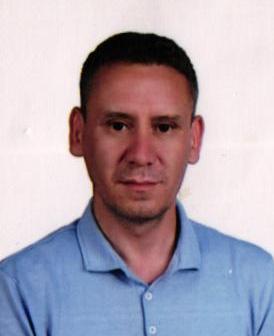
Prof. Dr. Sakibe Nalan BÜYÜKKANTARCIOĞLU is a Professor at Çankaya University, Faculty of Arts and Sciences, Department of Translation and Interpreting Studies (English). She previously served as Professor (2007–2019), Associate Professor (2000–2007), and Assistant Professor (1997–2000) at Hacettepe University, Department of English Linguistics. PhD in English Linguistics (Hacettepe University, 1991) MA in English Language Teaching (Middle East Technical University, 1985) BA in English Teaching (Istanbul University, 1978) Her research spans Linguistics, Cognitive Linguistics, Discourse Analysis, Psycholinguistics, Sociolinguistics, Translation Studies , with a focus on figurative language, interjections, political discourse, and endangered languages. She received the European Language Award (2011) and has supervised numerous PhD and MA theses, including work on Turkish idioms, gender representation, and language awareness. A prolific editor and conference participant, she has contributed to interdisciplinary projects and publications on Turkish sociolinguistics.
Gül Şen is a Senior Lecturer and Privatdozentin at the Institute of Oriental and Asian Studies, University of Bonn, and also serves as a Lecturer at the University of Heidelberg. Her academic work focuses on premodern Ottoman history, historiography, and the dynamics of dependency, particularly in maritime contexts such as galley slavery and war captivity. She is actively involved in major research programs including the DFG-Priority Program 'Transottomanica' and the Bonn Center for Dependency and Slavery Studies. Her research areas include: Premodern Ottoman historiography and narrative strategies Legitimacy of rule and political transitions Maritime unfree labor and galley slavery War captivity and captivity narratives in the 18th century Dependency and asymmetrical power relations in the early modern Mediterranean Her recent publications reveal a strong thematic trend centered on the interplay between narrative construction and social power, particularly in contexts of slavery and captivity. She investigates how historical actors used storytelling to assert legitimacy, cope with crises, and negotiate identity. Her work bridges literary analysis with social history, offering nuanced understandings of agency within systems of dependency. She frequently collaborates with leading scholars like Stephan Conermann and contributes to major edited volumes and series in Ottoman studies. Her scientific awards include: DAAD Award for outstanding academic achievements (2012) Postdoctoral Scholarship from the Fritz Thyssen Foundation (2012–2013) Postdoctoral Fellowships at the Annemarie Schimmel Kolleg (2015–2016, 2018–2019) Postdoctoral Scholarship from the University of Bonn (2019–2020) She has supervised numerous B.A. and M.A. theses at the University of Bonn and Heidelberg and has secured third-party funding, including a DFG project (€192,000) from 2016–2018 and Fritz Thyssen Foundation grants. She is co-editor of the 'Ottoman Studies' and 'Otto Spies Memorial Series' book series, and holds leadership roles in the Society for Turkic, Ottoman and Turkish Studies (GTOT) and the International Association for Ottoman Social and Economic History (IAOSEH). Her academic activities are deeply embedded in collaborative and interdisciplinary research environments. She is affiliated with the Bonn Center for Dependency and Slavery Studies and contributes to the DFG-Priority Program 'Transottomanica,' where she examines mobility dynamics and captivity narratives. Her work is supported by a strong network of international collaborations and editorial engagements.
İbrahim Dağılma is a Lecturer in Zaza Language and Literature at Bingöl University's Faculty of Arts and Sciences since 2013. He holds a Master's (2017) and PhD (2021) in Zaza Language and Literature from Bingöl University's Living Languages Institute. He previously served as a Turkish Language teacher in the Ministry of National Education and authored/co-authored Zazaki textbooks for grades 5-8 published by MEB between 2018-2019. He currently chairs the Zaza Language and Literature department and teaches courses like Modern Zaza Literature and Comparative Literary Analysis. Education: Bachelor's in Turkish Education, Dicle University (1997) Uncompleted Journalism studies at Istanbul University (2010) Master's and PhD in Zaza Studies (2017-2021) Research focuses on Zaza language preservation, modern literary movements, folklore documentation, and comparative studies between Zaza and other languages. He has published 11 books including 'Edebiyato Modern ê Zazaki' and 'Süleyman Hilmi Tunahan', and frequently presents at international conferences on topics like Zaza cultural identity and migration narratives. His recent academic work explores linguistic comparisons between Zaza and Farsi, analysis of traditional Zaza texts, and the role of folklore in educational materials. He has advised 18 undergraduate theses and participated in numerous thesis juries. His research has been published in refereed journals like Bingöl Araştırmalar Dergisi and The Journal of Mesopotamian Studies.
Professor Emily So serves as Deputy Head of the School of Arts and Humanities at the University of Cambridge and directs the Cambridge University Centre for Risk in the Built Environment (CURBE). A chartered civil engineer with extensive field experience, she holds leadership roles in the Open-Oxford-Cambridge AHRC Doctoral Training Partnership and chairs the Faculty EDI Committee. Her research focuses on urban risk and resilience , particularly in earthquake-prone regions. Combining structural engineering with epidemiological approaches, she develops innovative casualty estimation models and engages directly with affected communities worldwide. Her work spans seismic safety, disaster epidemiology, and remote sensing applications for rapid damage assessment. Professor So's publication trends reveal strong emphasis on machine learning for disaster risk modeling , with recent work featuring graph neural networks, deep clustering for urban morphology, and LSTM-based population forecasting. Her research bridges engineering, social sciences, and data science to address resilience in developing nations. 2010 Shah Family Innovation Prize (Earthquake Engineering Research Institute) Fellow of the Institution of Civil Engineers (FICE) Scientific Advisory Group for Emergencies (SAGE) member advising UK government As Director of CURBE, she leads interdisciplinary collaborations with EEFIT, Global Earthquake Model (GEM), World Bank, and USGS. Her field investigations following major earthquakes inform practical solutions for vulnerable communities, notably contributing to the 2017 World Building of the Year design in China. Current work includes sabbatical research for 2025-2026 focused on decolonizing architectural approaches to disaster resilience. Professor So maintains active roles in professional organizations and international disaster response frameworks, with her CURBE team developing methodologies now implemented globally for seismic safety improvements.
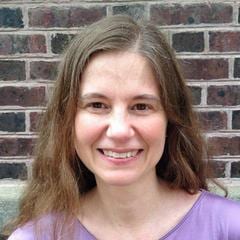
Lisa L. Wynn is Professor in the School of Social Sciences (Discipline of Anthropology) at Macquarie University in Sydney, Australia. She serves as Associate Editor of American Ethnologist (2022-2027) and previously held leadership positions including President of the Australian Anthropological Society (2020) and membership on the AAS Executive Committee (2018-2021). Wynn earned her PhD in 2003 from Princeton University's Anthropology Department, followed by postdoctoral positions at Princeton's Office of Population Research and Center for Health and Wellbeing. Her research program centers on gender, reproductive health technologies, sexuality, and religion, with continuous fieldwork in Egypt since 1998. More recently, she has expanded her work to examine ethics review bureaucracies, lay understandings of infectious disease, and young adult vaping behaviors in Australia. Her methodological approach combines deep ethnographic engagement with critical analysis of how power structures intersect with medical technologies and bodily experiences, particularly among marginalized communities. Analysis of her recent publications reveals an evolving trajectory that maintains her foundational interest in Middle Eastern contexts while increasingly addressing digital spaces (as seen in studies of online fatwas) and contemporary health crises (including pandemic responses and vaping culture), with consistent attention to bodily autonomy and reproductive justice. Her significant scholarly contributions have been recognized through multiple prestigious awards: Vice Chancellor's Teaching Excellence Award from Macquarie University (2009) Australian Award for Teaching Excellence (2012) OLT National Teaching Fellowship (2012-2014) Leeds Honor Prize from the Society for Urban, National, and Transnational/Global Anthropology (2008) Wynn actively mentors graduate researchers specializing in gender, sexuality, medicine and technology, with particular emphasis on sexual and reproductive health. Her research program has received substantial funding from the Social Science Research Council, Australian Research Council, Office of Learning and Teaching, and Hort Innovation. Notably, she co-led a major international project to develop multilingual sexual and reproductive health resources that have reached millions of users across 208 countries. She also created a free online ethics training program for humanities and social sciences researchers at Macquarie University. Through collaborations with Cambridge Reproductive Health Consultants and other partners, Wynn has successfully translated academic research into accessible public resources, including evidence-based information on medication abortion available in six languages (English, Spanish, French, Arabic, Turkish, and Farsi).
Duran Icels serves as an Associate Professor in the Department of Western Languages and Literatures at Kirikkale University's Faculty of Humanities and Social Sciences, specializing in French language and literature studies. His academic career spans appointments at Zonguldak Bülent Ecevit University (1997), Hacettepe University (2000-2007; 2014-2017), and current service at Kirikkale University since 2008, including roles as Erasmus-Farabi Coordinator (2009-2013) and Deputy Director of the School of Foreign Languages (2013-2016). Educational background: BA in French Language and Literature, Hacettepe University (1994) MA in French Language and Literature, Hacettepe University (1999) PhD in French Language and Literature, Hacettepe University (2005) Research focuses on French literary traditions, cross-cultural comparative analysis, and Turkish-French poetic dialogues. His scholarship examines structural and thematic intersections between Francophone and Turkish literary canons, with particular emphasis on translation theory and poetic form evolution across cultural boundaries. Academic leadership includes developing international exchange programs through Erasmus-Farabi coordination and administrative oversight as Deputy Director of Foreign Languages. He has supervised master's theses in translation studies while maintaining active bilingual (Turkish-French) scholarly engagement.
Associate Professor Mustafa GulTekin serves at Gaziantep University in the Faculty of Arts and Sciences , affiliated with both the Department of Turkish Language and Literature and the Department of Turkish Folklore . He holds a Doctorate in Turkish Folklorics (2010) from Ege University and has been teaching since 2004. Education: PhD in Turkish Folklorics, Ege University (2004-2010) MA in Turkish Language and Literature, Gaziantep University (2002-2004) Bachelor in Turkish Language and Literature, Balikesir University (1997-2001) Research Focus: Specializes in Turkic world fairy tales, oral literature analysis, minstrelsy traditions, and intangible cultural heritage. His work intersects folklore methodology with performance studies and cultural anthropology. Projects: Led/managed national projects including TUBITAK-funded research on Diyarbakir Alevi ocaks (2013-2016), Uzbek cultural studies in Gaziantep (2012-2015), and applied Karagöz education programs (2009-2010). Administrative Roles: Head of Department (2014-2017, 2012-present) Deputy Head of Department (2017-present, 2011-2012) Director of Research and Application Center (2012-2016)
Murat FİDAN serves as an Associate Professor in the Department of Economics at Kastamonu University's Faculty of Economics and Administrative Sciences, where he has been a full-time faculty member since 2020. Previously, he held academic positions at Gaziantep University and Kilis 7 Aralık University, specializing in Ottoman economic history and price dynamics. His career spans over two decades of teaching and research in Turkish higher education. His academic credentials include a PhD in Islamic History and Arts from Ondokuz Mayıs University (2003), a Master's in Islamic Law from İnönü University (1996), and a BA in Theology from Ankara University (1993). His foreign language proficiency includes English (YÖKDİL score 60, 2017). FİDAN's research centers on Ottoman economic structures, with particular expertise in price history, trade relations, and institutional analysis. His work bridges Ottoman history with economic methodology, examining narh (price control) records, guild systems, and international trade dynamics. He has published extensively on Kastamonu's regional economy, Ottoman-Russian commercial relations, and the evolution of monetary systems, contributing significantly to understanding pre-modern economic mechanisms through primary source analysis. His publication portfolio shows consistent output with 43 total works including 19 journal articles, 14 conference papers, 2 books, and 8 book chapters. The research demonstrates chronological depth from 2004 to 2024, with recent focus on waqf (endowment) institutions, comparative economic thought, and Eastern Mediterranean maritime history. Methodologically, he combines archival research with economic analysis, primarily using Ottoman-era price records and customs tariff documents. FİDAN has successfully supervised 13 master's theses focusing on Ottoman economic history, Turkish women's labor participation, and regional price dynamics. His sole research project (2016-2018) examined price movements in Kastamonu between 1673-1806 using narh records. He maintains active collaborations with scholars like Serkan Dilek and Tolga Ulusoy, co-authoring multiple publications on economic history topics.
Julie Anne Legate is Professor and Chair of Linguistics at the University of Pennsylvania's Department of Linguistics. She earned her PhD from the Massachusetts Institute of Technology in 2002. Legate co-directs the Penn Syntax Lab and served as Editor-in-Chief of Natural Language & Linguistic Theory for 10 years. Her research focuses on syntactic theory, morphosyntax, and syntax-semantics interfaces, with specialization in endangered/understudied languages. Key interests include passives, impersonals, causatives, null subjects, case theory, and locality domains. She maintains secondary research interests in language acquisition. Legate's publications demonstrate extensive work on voice systems (especially passives), ergativity, case theory, recursion, and cross-linguistic analysis of languages including Acehnese, Warlpiri, and Lithuanian. Her research frequently combines theoretical innovation with empirical fieldwork. Awards include the LSA’s Best Paper in Language Award (2020) for On Passives of Passives . She has advised multiple PhD students including Faruk Akkuş (2021), Milena Šereikaitė (2020), Ava Irani (2019), Helen Jeoung (2018), and Einar Freyr Sigurðsson (2017). Current projects include: syntactic islands (with Charles Yang), Mandarin bridge verbs (with Jiayi Lu and Charles Yang), null subjects in Brazilian Portuguese (with Gesoel Mendes), and passive agent binding.
Przemysław Kordos is a Professor at the University of Warsaw , affiliated with the Faculty of Liberal Arts , where he serves as Coordinator for the Development of the Modern Greek Philology Program . He holds two PhDs in Humanities (2007, 2019) and was awarded the Loukis Papaphilippou Seat of Advancement in Modern Greek scholarship. Education: MA in Ethnology and Cultural Anthropology (University of Warsaw, 2001) MS in Sociology (University of Warsaw, 2002) PhD in Humanities (University of Warsaw, 2007) Second PhD in Humanities (University of Warsaw, 2019) His research interests span: Contemporary Modern Greek and Cypriot literature Polish-Greek cultural relations (philhellenism) Social and ethnographic issues in Greece and Cyprus Travel literature analysis Fantasy literature's cultural implications His scientific work reveals a focus on linguistic assimilation in foreign language learning (via fMRI studies), historical parallels between Polish and Greek independence movements, and critical analyses of Cypriot folk culture's politicization. Key scientific awards include: Loukis Papaphilippou Seat (University of Warsaw) Internships at EKPA and IKY (Greece) Scholarships at IMXA (Greece) and MUNI (Czech Republic) His academic contributions include cataloging 60+ Polish travel accounts to Greece, analyzing the shift from travel literature to tourism discourse, and examining the Hellene-Romios dichotomy's role in modern Greek identity construction.
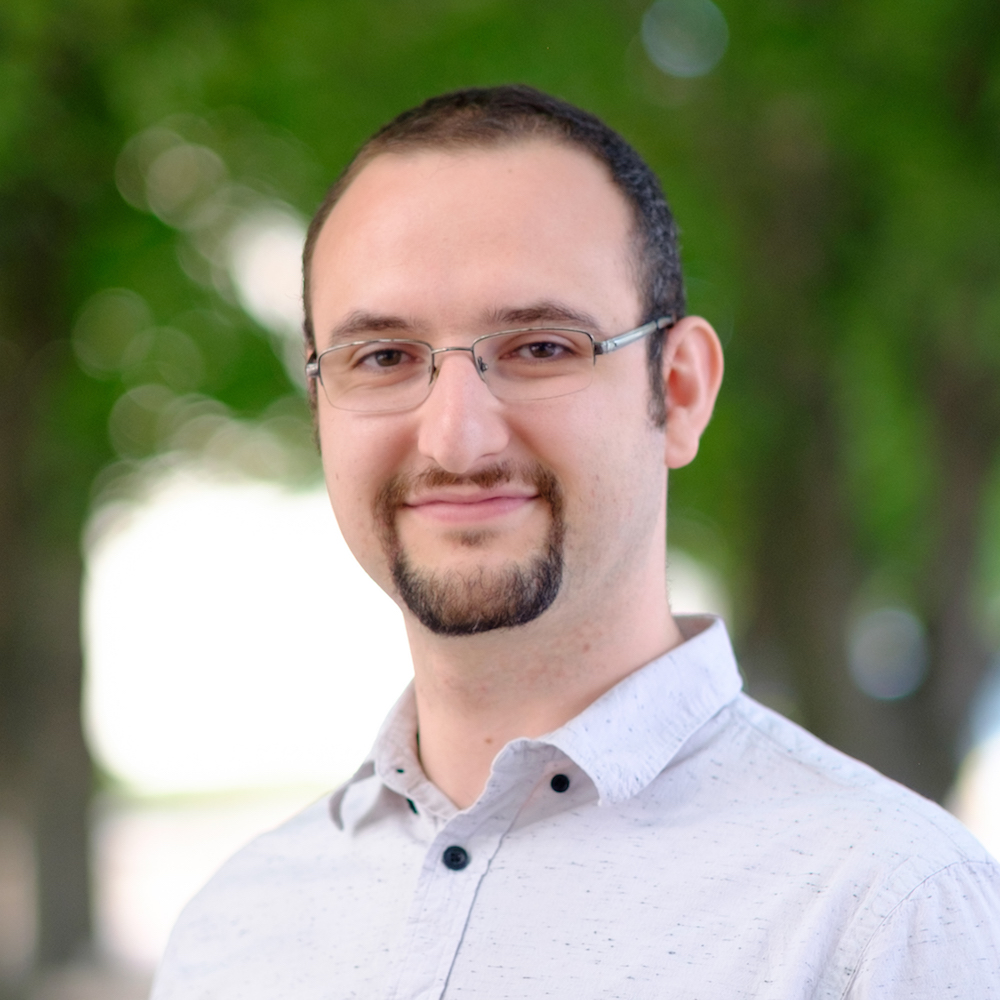
Onur Varol is an Assistant Professor at Sabanci University's Computer Science Department and leads the VIRAL Lab, which focuses on computational social science, network science, and machine learning. He has affiliations with the Center of Excellence for Data Analytics. His research spans social bot detection, misinformation analysis, and online behavior modeling.
Assoc. Prof. Dr. Yusuf Aydoğdu is an academic at Bingöl University's Faculty of Arts and Sciences, Department of Turkish Language and Literature. He holds academic rank of Associate Professor since 2023. His expertise spans Modern Turkish Literature, Postmodernism in Literature, and Socialist Realism in Poetry. Education: Bachelor's (2003–2008): Turkish Language and Literature Teaching, Dokuz Eylül University Master's (2008–2011): İzmir Dokuz Eylül University, thesis on 'Socialist Realist Elements in Kemal Özer's Poetry' PhD (2012–2016): Atatürk University, thesis on 'Postmodern Elements in Murathan Mungan's Fiction' Research interests include modern Turkish literary movements, postmodern narrative techniques, and cultural identity studies. His 15 most recent articles (2014–2024) explore themes such as postmodern historiography, socialist realism in poetry, and hermeneutic literary criticism. Notable works include analyses of Murathan Mungan's short stories and Namık Kemal's existential narratives. He is a referee for journals like Bingöl Üniversitesi Sosyal Bilimler Enstitüsü Dergisi and has authored/co-authored books on postmodern Turkish literature and literary criticism.
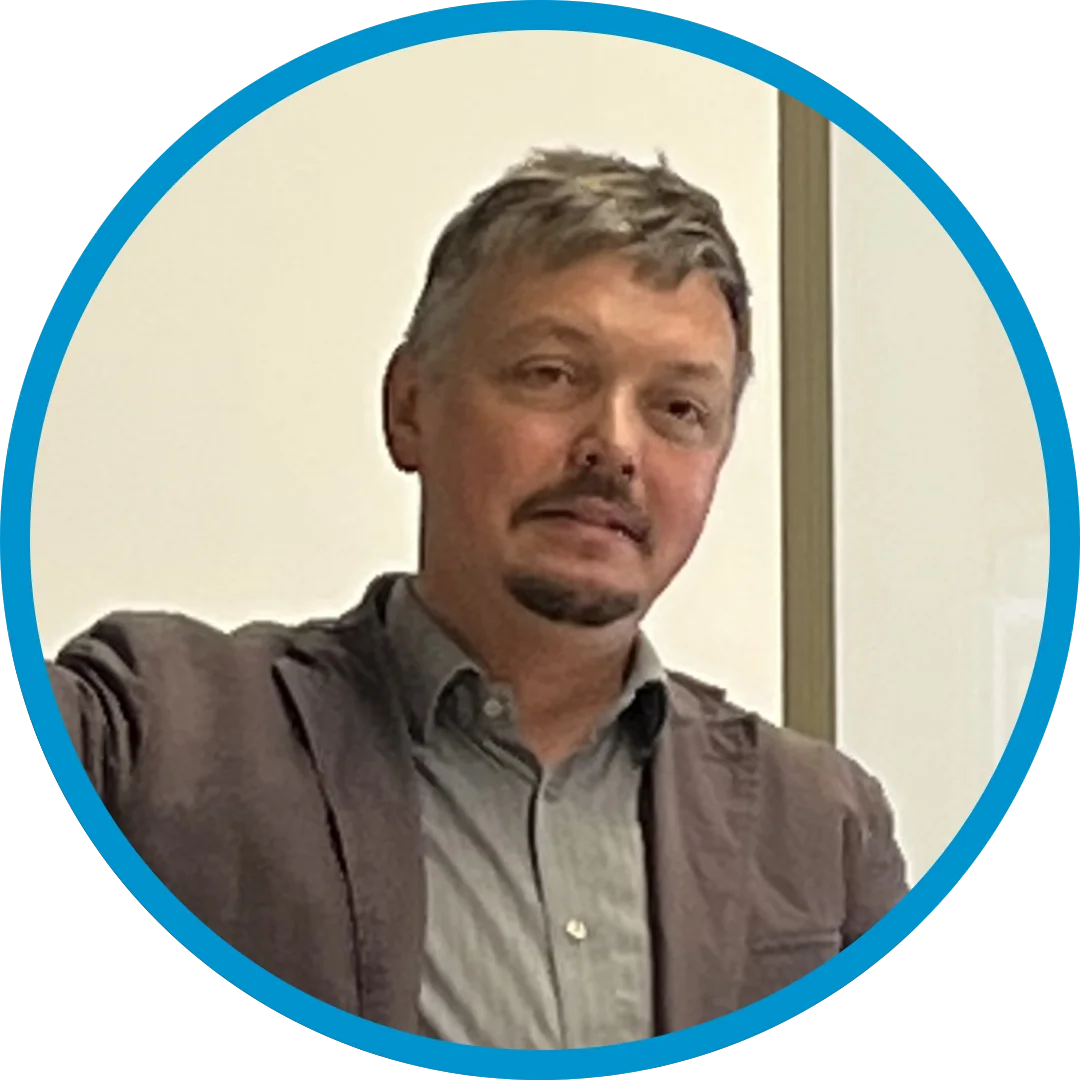
Adeeb Khalid is the Jane and Raphael Bernstein Professor of Asian Studies and History at Carleton College, where he has been a faculty member since 1993. His scholarship bridges Central Asian history, Soviet studies, and postcolonial theory, with a focus on cultural transformations under imperial and revolutionary contexts. PhD and MA from University of Wisconsin-Madison President of Central Eurasian Studies Society (2005-06) Executive Board, Association for Slavic, East European, and Eurasian Studies (2013-15) Key research areas include: Modern Central Asian history (1860s-present) Islam under Russian/Soviet rule Nation-building and colonialism Comparative imperial formations Language and identity politics Anticolonial movements in Eurasia His publications have been translated into Russian, Chinese, Turkish, and Korean. Recent articles examine: Post-Soviet Islamic historiography Colonial Turkestan's exclusion/inclusion dynamics Decolonizing Central Asian national identities Methodological debates in area studies Scientific recognitions: Wayne S. Vucinich Book Prize (2008) Reginald Zelnik Book Prize (2016) Honorable Mention, Joseph Rothschild Prize Active in international academic collaborations, Khalid has held visiting positions at Maison des Sciences de l'Homme in Paris and the Library of Congress's Kluge Center. He teaches courses on Russian Empire, Soviet Revolution, and Middle Eastern cultural history.
Reynaldo Romero serves as Associate Professor in the Department of History, Humanities and Languages at the University of Houston-Downtown, where he has maintained active teaching and research since at least 2012. His academic foundation spans linguistics, public health, and translation studies across multiple institutions. His educational background includes: Ph.D. in Spanish Linguistics from Georgetown University (Dissertation: Structural Consequences of Language Shift: Judeo-Spanish in Istanbul) M.P.H. in Community Health Practice from UTHealth (Dissertation: Beliefs on COVID-19 vaccination among Hispanic day laborers) M.A. in Translation from Kent State University Multiple B.A. degrees in French, General Linguistics, and Spanish Language/Linguistics from Rice University Romero's research creates critical intersections between linguistic theory and real-world applications. His work on Spanish for the Professions establishes frameworks for medical and legal interpreting while addressing systemic language access barriers. The scholarship on endangered languages—particularly Judeo-Spanish and Afro-Hispanic varieties—combines rigorous documentation with urgent revitalization efforts. His healthcare access research directly engages Houston's linguistic minorities through community-based projects like the Medical Translation Project with HISD. Recent publications reveal three dominant trajectories: (1) advancing methodologies in Afro-Hispanic linguistics through collaborative edited volumes; (2) developing social justice frameworks for marginalized language communities; and (3) documenting endangered linguistic varieties with innovative digital approaches. These threads converge in his community-engaged scholarship that bridges academic research and practical language access solutions. Professional recognition includes: Certified Translator status from the American Translators Association Advanced Professional Analytic Linguist certification Specialized medical and legal interpreter credentials Online teaching certification with digital tools specialization Romero's grant activity demonstrates sustained commitment to practical applications of linguistic research. Current projects include 'Promoting the Critical and Responsible Use of Digital Tools and AI in Written Tasks' (2024-2025), while past work developed medical interpreter training during disaster relief and language access protocols for healthcare settings. His service learning initiatives—like the Medical Translation Project with Houston ISD—create tangible community impact while advancing pedagogical innovation. Through the Medical Translation Project and language access advocacy, Romero cultivates collaborative spaces where academic research directly serves Houston's linguistic minorities. His work with heritage speakers and endangered language communities establishes frameworks for linguistic empowerment beyond traditional academic boundaries.
Julia Behrman serves as an Associate Professor of Sociology at Northwestern University, where she conducts internationally recognized research on family change in global contexts. Her work examines how family structures interact with major societal forces including educational expansion, environmental change, women's labor force participation, and migration patterns, with particular attention to power dynamics within households and their implications for social inequality. Dr. Behrman earned her PhD from New York University in 2017 following a Postdoctoral Prize Research Fellowship at Nuffield College, University of Oxford. Her methodological expertise combines advanced quantitative techniques with comparative demographic analysis across diverse geographical settings. Her research program centers on family sociology, gender studies, and demography, with significant contributions to understanding how events like natural disasters, migration, and policy changes alter family power structures. She investigates whether evolving family forms mitigate or reinforce inequalities both between and within households, addressing critical questions about who holds decision-making authority in families and how crises reshape these dynamics. Analysis of her recent publications reveals a strong methodological emphasis on quantitative analysis of large-scale datasets, with thematic focus on reproductive health preferences, migration impacts, and family size norms across the United States, France, and Sub-Saharan Africa. Her work consistently bridges demographic trends with sociological theory to explain household-level responses to macro-level social changes. Her scholarly excellence has been recognized through multiple prestigious awards: American Sociological Association Section on Education Award American Sociological Association Section on Population Award American Sociological Association Section on Development Award Society for the Study of Social Problems Award Population Association of America Award Sociologist AIDS Network Award Dr. Behrman has secured competitive research funding from the National Science Foundation and South African Medical Research Council to support her investigations into family and demographic change. As an educator, she teaches undergraduate courses including "Gender and Society" and graduate-level courses in "Research Design" and "Regression II," while actively mentoring PhD students through a structured advising process that emphasizes methodological rigor and theoretical innovation.