
Prof. Dr. Sakibe Nalan BÜYÜKKANTARCIOĞLU is a Professor at Çankaya University, Faculty of Arts and Sciences, Department of Translation and Interpreting Studies (English). She previously served as Professor (2007–2019), Associate Professor (2000–2007), and Assistant Professor (1997–2000) at Hacettepe University, Department of English Linguistics. PhD in English Linguistics (Hacettepe University, 1991) MA in English Language Teaching (Middle East Technical University, 1985) BA in English Teaching (Istanbul University, 1978) Her research spans Linguistics, Cognitive Linguistics, Discourse Analysis, Psycholinguistics, Sociolinguistics, Translation Studies , with a focus on figurative language, interjections, political discourse, and endangered languages. She received the European Language Award (2011) and has supervised numerous PhD and MA theses, including work on Turkish idioms, gender representation, and language awareness. A prolific editor and conference participant, she has contributed to interdisciplinary projects and publications on Turkish sociolinguistics.
جستوجوی استاد و پژوهشگر
استاد راهنما، استاد دانشگاه یا پژوهشگر مناسب برای مسیر پژوهشیتان را پیدا کنید و با او ارتباط بگیرید.
نمایش ۱-۱۵ از ۳۴۵ استاد راهنما
اطلاعات این پروفایلها از صفحات عمومی دانشگاهها جمعآوری شده و ممکن است بهروز نباشد.

İbrahim Dağılma is a Lecturer in Zaza Language and Literature at Bingöl University's Faculty of Arts and Sciences since 2013. He holds a Master's (2017) and PhD (2021) in Zaza Language and Literature from Bingöl University's Living Languages Institute. He previously served as a Turkish Language teacher in the Ministry of National Education and authored/co-authored Zazaki textbooks for grades 5-8 published by MEB between 2018-2019. He currently chairs the Zaza Language and Literature department and teaches courses like Modern Zaza Literature and Comparative Literary Analysis. Education: Bachelor's in Turkish Education, Dicle University (1997) Uncompleted Journalism studies at Istanbul University (2010) Master's and PhD in Zaza Studies (2017-2021) Research focuses on Zaza language preservation, modern literary movements, folklore documentation, and comparative studies between Zaza and other languages. He has published 11 books including 'Edebiyato Modern ê Zazaki' and 'Süleyman Hilmi Tunahan', and frequently presents at international conferences on topics like Zaza cultural identity and migration narratives. His recent academic work explores linguistic comparisons between Zaza and Farsi, analysis of traditional Zaza texts, and the role of folklore in educational materials. He has advised 18 undergraduate theses and participated in numerous thesis juries. His research has been published in refereed journals like Bingöl Araştırmalar Dergisi and The Journal of Mesopotamian Studies.

Duran Icelsمشاهده پروفایل
دانشیار
Duran Icels serves as an Associate Professor in the Department of Western Languages and Literatures at Kirikkale University's Faculty of Humanities and Social Sciences, specializing in French language and literature studies. His academic career spans appointments at Zonguldak Bülent Ecevit University (1997), Hacettepe University (2000-2007; 2014-2017), and current service at Kirikkale University since 2008, including roles as Erasmus-Farabi Coordinator (2009-2013) and Deputy Director of the School of Foreign Languages (2013-2016). Educational background: BA in French Language and Literature, Hacettepe University (1994) MA in French Language and Literature, Hacettepe University (1999) PhD in French Language and Literature, Hacettepe University (2005) Research focuses on French literary traditions, cross-cultural comparative analysis, and Turkish-French poetic dialogues. His scholarship examines structural and thematic intersections between Francophone and Turkish literary canons, with particular emphasis on translation theory and poetic form evolution across cultural boundaries. Academic leadership includes developing international exchange programs through Erasmus-Farabi coordination and administrative oversight as Deputy Director of Foreign Languages. He has supervised master's theses in translation studies while maintaining active bilingual (Turkish-French) scholarly engagement.
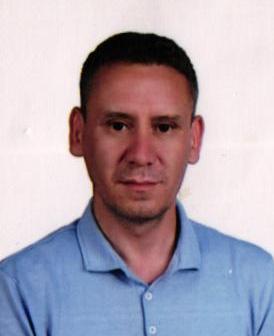
Associate Professor Mustafa GulTekin serves at Gaziantep University in the Faculty of Arts and Sciences , affiliated with both the Department of Turkish Language and Literature and the Department of Turkish Folklore . He holds a Doctorate in Turkish Folklorics (2010) from Ege University and has been teaching since 2004. Education: PhD in Turkish Folklorics, Ege University (2004-2010) MA in Turkish Language and Literature, Gaziantep University (2002-2004) Bachelor in Turkish Language and Literature, Balikesir University (1997-2001) Research Focus: Specializes in Turkic world fairy tales, oral literature analysis, minstrelsy traditions, and intangible cultural heritage. His work intersects folklore methodology with performance studies and cultural anthropology. Projects: Led/managed national projects including TUBITAK-funded research on Diyarbakir Alevi ocaks (2013-2016), Uzbek cultural studies in Gaziantep (2012-2015), and applied Karagöz education programs (2009-2010). Administrative Roles: Head of Department (2014-2017, 2012-present) Deputy Head of Department (2017-present, 2011-2012) Director of Research and Application Center (2012-2016)
Murat FİDANمشاهده پروفایل
دانشیار
- Ottoman History
- Russian History
- Maritime History
- +۳ مورد دیگر
Murat FİDAN serves as an Associate Professor in the Department of Economics at Kastamonu University's Faculty of Economics and Administrative Sciences, where he has been a full-time faculty member since 2020. Previously, he held academic positions at Gaziantep University and Kilis 7 Aralık University, specializing in Ottoman economic history and price dynamics. His career spans over two decades of teaching and research in Turkish higher education. His academic credentials include a PhD in Islamic History and Arts from Ondokuz Mayıs University (2003), a Master's in Islamic Law from İnönü University (1996), and a BA in Theology from Ankara University (1993). His foreign language proficiency includes English (YÖKDİL score 60, 2017). FİDAN's research centers on Ottoman economic structures, with particular expertise in price history, trade relations, and institutional analysis. His work bridges Ottoman history with economic methodology, examining narh (price control) records, guild systems, and international trade dynamics. He has published extensively on Kastamonu's regional economy, Ottoman-Russian commercial relations, and the evolution of monetary systems, contributing significantly to understanding pre-modern economic mechanisms through primary source analysis. His publication portfolio shows consistent output with 43 total works including 19 journal articles, 14 conference papers, 2 books, and 8 book chapters. The research demonstrates chronological depth from 2004 to 2024, with recent focus on waqf (endowment) institutions, comparative economic thought, and Eastern Mediterranean maritime history. Methodologically, he combines archival research with economic analysis, primarily using Ottoman-era price records and customs tariff documents. FİDAN has successfully supervised 13 master's theses focusing on Ottoman economic history, Turkish women's labor participation, and regional price dynamics. His sole research project (2016-2018) examined price movements in Kastamonu between 1673-1806 using narh records. He maintains active collaborations with scholars like Serkan Dilek and Tolga Ulusoy, co-authoring multiple publications on economic history topics.
Onur Varolمشاهده پروفایل
استادیار
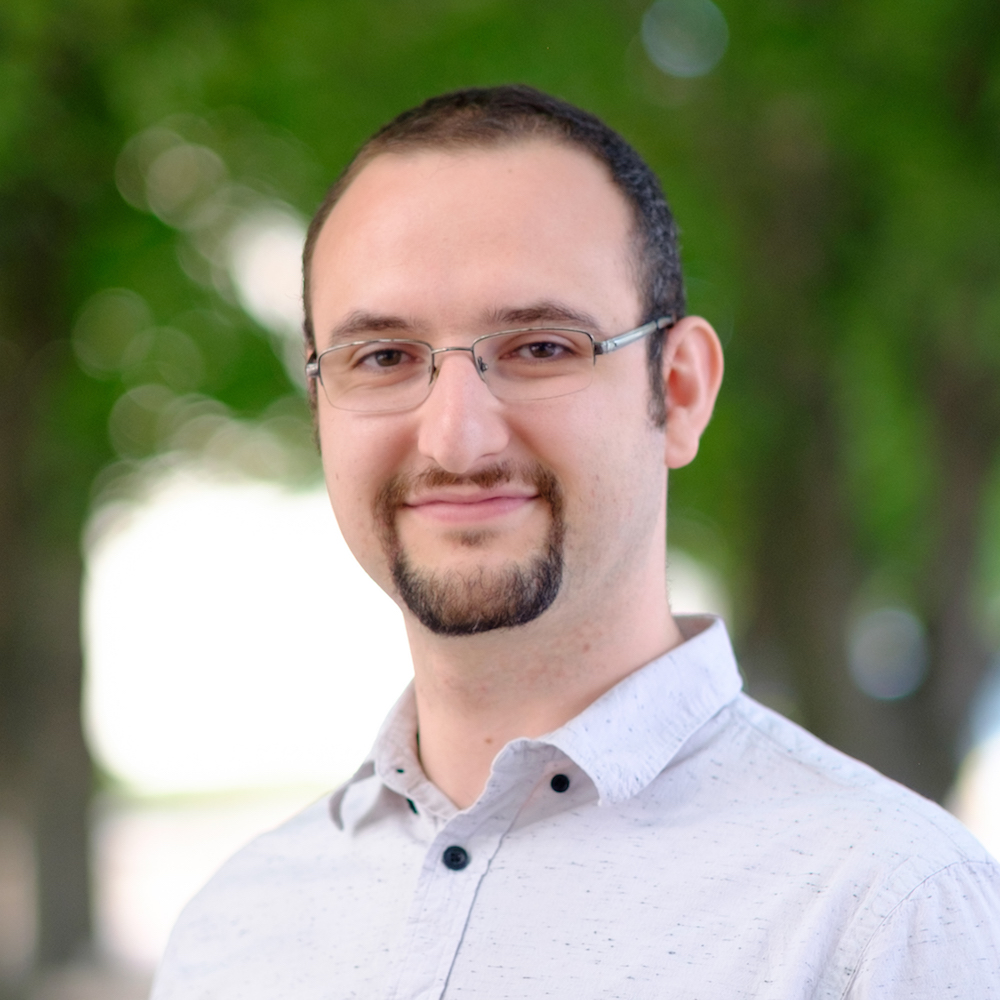
Onur Varol is an Assistant Professor at Sabanci University's Computer Science Department and leads the VIRAL Lab, which focuses on computational social science, network science, and machine learning. He has affiliations with the Center of Excellence for Data Analytics. His research spans social bot detection, misinformation analysis, and online behavior modeling.

Yusuf Aydoğduمشاهده پروفایل
دانشیار
Assoc. Prof. Dr. Yusuf Aydoğdu is an academic at Bingöl University's Faculty of Arts and Sciences, Department of Turkish Language and Literature. He holds academic rank of Associate Professor since 2023. His expertise spans Modern Turkish Literature, Postmodernism in Literature, and Socialist Realism in Poetry. Education: Bachelor's (2003–2008): Turkish Language and Literature Teaching, Dokuz Eylül University Master's (2008–2011): İzmir Dokuz Eylül University, thesis on 'Socialist Realist Elements in Kemal Özer's Poetry' PhD (2012–2016): Atatürk University, thesis on 'Postmodern Elements in Murathan Mungan's Fiction' Research interests include modern Turkish literary movements, postmodern narrative techniques, and cultural identity studies. His 15 most recent articles (2014–2024) explore themes such as postmodern historiography, socialist realism in poetry, and hermeneutic literary criticism. Notable works include analyses of Murathan Mungan's short stories and Namık Kemal's existential narratives. He is a referee for journals like Bingöl Üniversitesi Sosyal Bilimler Enstitüsü Dergisi and has authored/co-authored books on postmodern Turkish literature and literary criticism.
MUSTAFA KESKİNمشاهده پروفایل
دانشیار
- Arabic Language
- Rhetoric
- Islamic Theology
- +۴ مورد دیگر
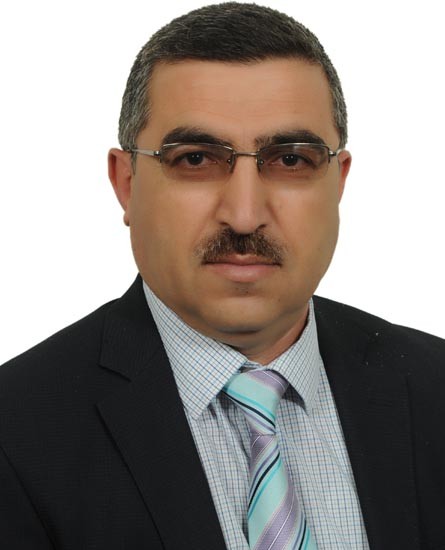
MUSTAFA KESKİN serves as an Associate Professor in the Department of Arabic Language and Rhetoric within the Faculty of Theology at Gaziantep University, Turkey. Appointed to this position in 2021 after serving as a Doctor Lecturer since 2013, his academic career is deeply rooted in Islamic theological studies with specialized expertise in Arabic linguistics and rhetoric. His institutional affiliation spans both the Department of Fundamental Islamic Sciences and the specialized Department of Arabic Language and Rhetoric, reflecting his dual focus on theological scholarship and linguistic analysis. His educational trajectory includes: Doctorate (2013-2017): Gaziantep University, Institute of Social Sciences, Department of Basic Islamic Sciences Master's (2011-2013): Harran University, Institute of Social Sciences, Tafsir (Thesis) Licence (2008-2010): Ankara University, Faculty of Theology, Theology Undergraduation Completion (Distance Education) Associate Degree (2006-2008): Anadolu University, Faculty of Open Education, Department of Theology Licence (1995-2002): Anadolu University, Faculty of Business Administration Professor Keskin's research centers on the intersection of Arabic linguistic structures and Islamic theological texts, with particular emphasis on rhetorical devices in the Quran and Hadith literature. His work explores how classical Arabic grammatical frameworks inform Quranic exegesis, analyzes historical linguistic schools like the Baghdad tradition, and investigates poetic devices in early Islamic literature. This scholarship bridges philological precision with theological interpretation, revealing how linguistic choices shape religious meaning in foundational Islamic texts. His publications consistently demonstrate methodological rigor in applying classical Arabic linguistic theories to theological source materials. Analysis of his 15 most recent publications (2018-2024) reveals three dominant scholarly trajectories: systematic examination of rhetorical devices in Quranic surahs (particularly tibāq and metaphor), critical engagement with classical Arabic grammatical treatises (including works by Müberred and al-Fārisī), and historical studies of Islamic scholarly networks connecting Anatolia and Syria. His work demonstrates growing international collaboration, with increasing co-authorship in Arabic-language publications alongside Turkish and English outputs. The research consistently applies linguistic analysis to theological questions, creating a distinctive niche in Quranic stylistics and classical Arabic rhetoric. No scientific awards were documented in the source materials. Professor Keskin has supervised 15 graduate students across doctoral and master's programs, with thesis topics reflecting his core research interests. Doctoral work includes semantic analysis of Quranic roots (e.g., 'krm') and classical rhetorical poetry, while master's research spans prophetic traditions in poetry, Quranic command structures, and human values in early Arabic poetry. His editorial work on 6 academic volumes complements this mentoring role, particularly in publishing classical Arabic texts with contemporary commentary. Conference presentations (9 international venues) demonstrate active scholarly engagement, though specific research grants were not documented in the source materials. No dedicated research laboratories or formal research teams were mentioned in the institutional documentation.
Osman KABADAYIمشاهده پروفایل
دانشیار
Osman Kabadayı is an Associate Professor at Kırşehir Ahi Evran University's Faculty of Arts and Sciences, Department of Turkish Language and Literature. Born in 1981, he completed his education at Kırıkkale University (BA, 2003), Erciyes University (MA non-thesis, 2004), Kırıkkale University (MA thesis, 2007), and earned his PhD from Gazi University in 2020. His international experience includes a five-year position at Abay Kazakh National Pedagogical University and research at the Kazakh Academy of Sciences. His research focuses on North-Western (Kipchak) Turkish Dialects and Literatures , with emphasis on historical linguistics, Kazakh language evolution, manuscript studies, and Turkic cultural heritage. He employs comparative methods to analyze linguistic features across Turkic languages, particularly examining lexical development and grammatical structures in historical contexts. Secondary interests include folklore documentation, orthographic reforms, and digital preservation of Turkic manuscripts. Publications demonstrate strong focus on Kazakh philology (45% of recent works), historical linguistics (30%), and manuscript studies (25%), with recurring examination of equestrian terminology, funerary inscriptions, and Islamic texts. Research consistently bridges ancient Turkic traditions with contemporary linguistic phenomena. Awards & Recognition: Science Encouragement Award (Kırşehir Ahi Evran University, 2023) Certificate of Appreciation from Kazakh Embassy (2021) Plaque for academic service (Ahi Evran University, 2010) Academic Leadership: Advises six PhD students on topics including Kazakh philology and linguistic anthropology. Secured multiple grants: Archaeographic Research in Kazakhstan (2025) Turkic Renaissance intellectual history project (2021-2022) National Library of Kazakhstan manuscript cataloging (2018-2019) Co-authored 6-volume Common Turkic History (2018-2019)
Asst. Prof. Hilal Öztürk Baydere serves in the Department of Western Languages and Literatures at Karadeniz Technical University's Faculty of Arts and Humanities since 2021, advancing to Assistant Professor in 2024 after beginning her academic career at the university's School of Foreign Languages in 2013. Her institutional trajectory reflects deep integration within Turkey's translation studies community. Her academic foundation includes: Doctorate in Translation Studies (2016-2022) from Istanbul University's Institute of Social Sciences Postgraduate degree in English Translation and Interpretation (2011-2015) from Hacettepe University Undergraduate degree in English Language and Literature (2007-2011) from Hacettepe University Her research centers on Translation Studies with acute focus on machine translation's disruption of literary translation practices. She investigates translator competence evolution in AI-driven environments, creativity preservation in machine-assisted workflows, and historical/cultural dimensions of translation. Her work bridges theoretical linguistics with practical technological applications, particularly examining lexical diversity and stylistic integrity in neural machine translation outputs. Publication analysis reveals three dominant research vectors: (1) Machine translation evaluation frameworks for literary texts (25% of output), (2) Historical/cultural memory representation through translation (33%), and (3) Translator identity and competence in digital ecosystems (42%). Recent work increasingly incorporates large language models while maintaining strong philological grounding in English-Turkish translation contexts. She actively supervises student research on AI translation applications including subtitle translation effectiveness and e-commerce review sentiment analysis. Her TUBITAK-funded doctoral scholarship (2017-2022) and current membership in the European 'Language in the Human-Machine Era' research consortium demonstrate significant grant acquisition and international collaboration. Conference participation spans 8+ annual international symposia since 2017, primarily KTUDELL and NALANS events. Her ongoing projects with the European Cooperation in Science and Technology group indicate future research directions exploring human-AI symbiosis in translation pedagogy and professional practice, particularly regarding creativity metrics and cultural adaptation in neural machine translation systems.

Duygu Yavuzمشاهده پروفایل
استادیار
Dr. Duygu Yavuz is an Assistant Professor at Yeditepe University's Faculty of Arts and Sciences, Department of Turkish Language and Literature. Her academic journey includes a PhD in Turkish Language and Literature from Sakarya University (2011-2017), MA in Old Turkish from Mimar Sinan Fine Arts University (2009-2011), and BA in Turkish Language and Literature from the same institution (2005-2009). Education: PhD: Turkish Language and Literature, Sakarya University (2011-2017) MA: Old Turkish, Mimar Sinan Fine Arts University (2009-2011) BA: Turkish Language and Literature, Mimar Sinan Fine Arts University (2005-2009) Her research focuses on historical linguistics, Turkic dialectology, metaphorical semantics, and loanword adaptation in Old Turkish texts. She has extensively analyzed Turkic conceptual systems through light and fire metaphors, verb morphology, and reduplication patterns in folklore. Recent publications examine Harezm Turkish, Uyghur texts, and compounding mechanisms in Turkic languages. She has presented at international conferences on topics like dialectal variations and cultural symbolism in historical linguistics. Teaching Experience: Turkish Language History (EDTR 121, TLL 113) Old Turkish (EDTR 211-212, TLL 219-220) Contemporary Turkish (EDTR 261-262, TKL 201-202) Teacher Training (PTUR 402-403) Previously worked at the Turkish Ministry of National Education (2014) teaching Turkish Language and Literature. Affiliated with academic societies tracked through memberships in indexing services like TR DİZİN, MLA, and SOBIAD.
Hacer Atar Yıldız is an Associate Professor at the Department of Electronics and Communication Engineering, Faculty of Electrical and Electronics Engineering at Istanbul Technical University (ITU). She holds a B.Sc. (1997) and M.Sc. (2000) in Electronics Engineering from Karadeniz Technical University, and a Ph.D. (2015) in Electronics Engineering from ITU. Her research focuses on analog circuit design, integrated circuits, analog filters, memristor structures, and graphene sensors. Education: Ph.D. in Electronics Engineering (2015), Istanbul Technical University M.Sc. in Electronics Engineering (2000), Karadeniz Technical University B.Sc. in Electronic Communication Engineering (1997), Karadeniz Technical University German Language Education (2001), Munich Technical University Research Interests: Her work emphasizes innovative analog circuit solutions, including memristor-based systems, neural networks, and sensor technologies. Notable contributions include memcapacitor/meminductor emulator circuits and cryogenic bandgap designs. She also explores applications in plant identification using copula models and thermal compensation for microbolometers. Professional Experience: Associate Professor at ITU (2022–present) Researcher at Virginia University (2018) Expert Engineer at Türk Telekom (2003–2009) Intern at Marco GmbH (Munich, 2001–2002) Teaching: She has taught courses such as Introduction to Electronics, Electronic Design, and Analog Circuits at both undergraduate and graduate levels. Recent courses include EHB 222E and EHB 335. Languages & Hobbies: Fluent in English and German. Enjoys swimming, long-distance running, Turkish folk music, and outdoor activities.
Ayşe Hilal KALKANDELEN is an Associate Professor in the Department of Turkish Islamic Literature at Atatürk University's Faculty of Theology. She specializes in Persian and Turkish Islamic literature, medieval literary traditions, and cultural studies. Her career began in 1995 as an instructor and she earned her doctorate in 2001 with a study on Ali Şir Nevai's poetry. Holding over three decades of academic experience, she has advised 12 theses and conducted 33 research projects. Education: B.A. in Persian Language and Literature (1990), M.A. on "Katibi and Gazelleri" (1994), Ph.D. on "Ali Şir Nevai and Content Analysis of His Persian Divan" (2001). Research focuses on Persian literary heritage, Ottoman-Turkish cultural intersections, and mystical themes in poetry. Her work spans analyses of poets like Attar, Omar Khayyam, and Mahtumkulu, with recent studies exploring book history and censorship narratives (e.g., Fahrenheit 451 contextualizations). Over 50 publications include seminal studies on Sufi poetry, historical literary figures, and cultural identity. Active in both traditional and contemporary literary research, her work bridges historical analysis with modern interdisciplinary approaches.
Nusret YILMAZمشاهده پروفایل
دانشیار
Assoc. Prof. Nusret YILMAZ, affiliated with Iğdır University's Faculty of Science and Letters, Department of Modern Turkish Literature, is a prominent scholar focusing on Turkish literary criticism, poetry analysis, and thematic studies. His work bridges philosophical inquiry with socio-cultural contexts, particularly in modern and contemporary Turkish literature. Doctorate (2013-2017): Atatürk University, Institute of Turkish Studies, New Turkish Literature Master (2011-2013): Caucasus University, Social Sciences, New Turkish Literature Bachelor (1992-1996): Atatürk University, Faculty of Kazım Karabekir Education, Turkish Language and Literature Teaching His research spans phenomenological criticism, archetypal imagery, and metaphysical themes in Turkish poetry and novels. Articles highlight his exploration of socio-political narratives, historical contexts, and interdisciplinary methodologies like semiotics and feminist critique. He has analyzed works by poets such as İlhan Berk, Ahmet Muhip Dıranas, and Cahit Koysak, emphasizing symbolic representation and cultural discourse. TAKDİR BELGESİ (2020) from Iğdır University for academic contributions He has supervised master's theses on authors like Refik Durbaş, Gülten Dayıoğlu, and Alper Akçam, reflecting his mentorship in Turkish literary studies. His administrative role as Deputy Dean at Iğdır University (2018-2019) underscores his institutional engagement.

Beyza EKENمشاهده پروفایل
استادیار
- Software Defect Prediction
- Natural Language Processing
- Machine Learning in Software Engineering
- +۲ مورد دیگر
Beyza Eken serves as Assistant Professor in the Department of Software Engineering at Sakarya University's Faculty of Computer and Information Sciences, teaching core courses including Software Project Management, Natural Language Processing, and Graduation Projects while maintaining active research in software engineering and AI applications. Her academic credentials include: Doctorate in Computer Engineering from Istanbul Technical University (2015), thesis: "Software Defect Prediction" Master's in Computer Engineering from Istanbul Technical University (2011-2015), thesis: "Entity Name Recognition in Short Texts" Bachelor's in Computer Engineering from Sakarya University (2007-2011) Dr. Eken's research integrates machine learning with software engineering, specializing in defect prediction models that incorporate personalized developer factors and industrial deployment challenges. Her work bridges natural language processing for Turkish social media analysis with software quality assurance, demonstrating expertise in both theoretical modeling and practical implementation in industrial settings. Recent expansions include neuro-symbolic AI for test oracle generation and MLOps frameworks. Publication trends reveal consistent focus on empirical software engineering from 2018-2021 (defect prediction, community smells, industrial deployment), evolving into cutting-edge domains by 2023-2025 (neuro-symbolic testing, employee feedback analysis, MLOps). Her work shows strong industry-academia collaboration patterns with increasing methodological sophistication. Dr. Eken actively contributes to academic service as reviewer for ACM Transactions on Software Engineering and Methodology (2024) and IEEE Transactions on Software Engineering (2023). She leads research projects including "Developer-specific error prediction modeling" (2020) and the Mevlana exchange project with Ryerson University on data mining for defect prediction (2018), while supervising graduation projects and research area courses that develop student expertise in software engineering practices. Her international research engagement includes participation in the ASTERIx project at Università della Svizzera Italiana's Software Testing and Analysis Research Group (2023), demonstrating ongoing commitment to global collaboration in software engineering advancements.