Rex Thorpe is a Professor of Chemical Engineering at the University of Surrey 's School of Chemistry and Chemical Engineering. His work spans multiphase flow analysis, energy optimisation in wastewater treatment, and innovative chemical recycling technologies. Former Head of Chemical and Process Engineering (2008-2015), he has pioneered research in anaerobic digestion flexibilisation and membrane technology for water treatment. Key research areas: multiphase flows in industrial systems Energy recovery from sewage sludge Advanced plastic recycling methods Volatile organic compound (VOC) abatement His recent publications focus on direct contact heat exchangers , dynamic biogas systems , and salinity effects on membrane permeability . The studies frequently combine experimental validation with mathematical modelling across scales from pilot plants to full municipal operations. Scientific accolades include: Fellow of the Institution of Chemical Engineers (FIChemE) Chartered Engineer (CEng) Fellow of the Higher Education Academy (FHEA) As an educator, he teaches Energy and Industrial Systems and Process Equipment Design modules. His legacy includes foundational work on pipe bend forces, fluidised bed conveying, and computational fluid dynamics (CFD) calibration techniques.
Dr. Lei Xing is a Lecturer in Digital Chemical Engineering at the University of Surrey, where he also serves as a Fellow of the Institute for Sustainability and the Institute for People-Centred AI. He joined the Department of Chemical and Process Engineering in September 2022, following postdoctoral research positions at Oxford University, Purdue University, and the University of Birmingham. Dr. Xing earned his PhD in Chemical and Process Engineering from Newcastle University. His academic journey has equipped him with expertise spanning chemical engineering, energy systems, and artificial intelligence, enabling his interdisciplinary research approach. His research focuses on sustainable industrial-agri-food systems through industrial decarbonization and AI-based digitalization within circular economy frameworks. Key areas include electrochemical energy conversion (fuel cells, electrolysers), carbon capture and utilisation, AI-enabled multi-criteria assessment, and model predictive control. He specializes in multi-physics and multi-phase flow modeling, multi-objective optimisation, and techno-economic analysis of renewable energy systems, with particular emphasis on practical applications for achieving Net Zero targets. Dr. Xing's recent publications demonstrate a strong integration of artificial intelligence with traditional chemical engineering approaches. Many studies develop digital twin models for electrochemical systems, optimize carbon capture processes, and advance sustainable hydrogen production technologies. His work consistently bridges theoretical modeling with practical engineering applications, incorporating life cycle assessment and techno-economic analysis to evaluate environmental and economic viability of energy solutions. Chartered Member of IChemE (MIChemE) Fellow of Higher Education (FHEA) Associate Editor for Fuel Cells and Frontiers in Energy Research Editorial Board Member for Energy and AI, CCST, and Energies Dr. Xing actively supervises multiple PhD students working on cutting-edge projects at the intersection of AI and sustainable energy systems. His research is supported by significant grants totaling over £1.2 million from EPSRC, Royal Society, Horizon Europe, and other funding bodies. These projects address critical challenges in decarbonizing hard-to-abate sectors, developing circular economy approaches for fertilizer production, and advancing CO2 electrolysis technologies. He leads research initiatives within the Sustainable Energy and Materials group at Surrey, collaborating with colleagues across chemistry, mechanical engineering, electrical engineering, and computer science disciplines. His work on the OLINWASTE project represents a major EU-funded effort to transform olive mill waste into valuable bioproducts, while his C-Cir project focuses on accelerating the commercial translation of CO2 electrolysers.
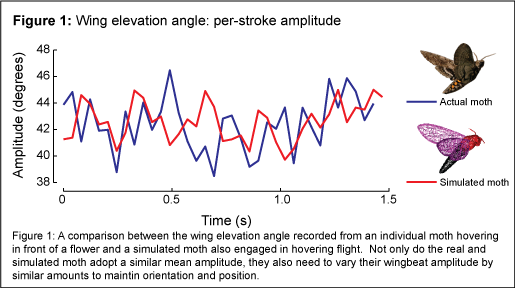
Tyson L. Hedrick is a Professor in the Department of Biology at the University of North Carolina at Chapel Hill, where he also serves as Associate Chair for Space. His research focuses on the biomechanical and aerodynamic principles underlying animal flight, integrating experimental and computational approaches to understand how organisms achieve robust locomotion in dynamic environments. Key research areas include the aerodynamics of bird and insect flight, neuromuscular control mechanisms, and computational modeling of organismal biomechanics. His work explores how biological systems like the Manduca sexta moth or red-tailed hawks stabilize flight amid perturbations, leveraging both empirical data and advanced simulations. Recent studies highlight his team's investigations into flight efficiency in groups (e.g., flocking birds), wind gradient exploitation by foraging skimmers, and the interplay between sensory input and motor output in flight control. Hedrick's lab employs cutting-edge techniques such as multi-camera videography and reduced-order modeling to dissect flight dynamics. He has secured grants including the NSF EAGER/Collaborative Research project on insect flight stability. His lab website details ongoing projects on topics ranging from dragonfly chase dynamics to gliding lizard biomechanics.
Jens H. M. Fransson is a Professor of Experimental Fluid Mechanics at KTH Royal Institute of Technology, Sweden, and holds a part-time professorship in Indoor Environment at the University of Gävle. He earned his master's degree in Engineering Physics (1999) and PhD in Fluid Mechanics (2004) from KTH, followed by promotion to Associate Professor (2007) and Full Professor (2013). His research focuses on experimental flow control, boundary layer transition, and turbulence, with applications in automotive and wind energy aerodynamics. Affiliations: Department of Mechanics, KTH Royal Institute of Technology; Part-time Professor, University of Gävle Education: PhD in Fluid Mechanics (KTH, 2004), MSc in Engineering Physics (KTH, 1999) Fransson's work emphasizes delaying turbulence in boundary layers using innovative methods such as miniature vortex generators and spanwise velocity modulations. His ERC-funded AFRODITE project advanced passive flow control strategies. He has been awarded the Göran Gustafsson Prize twice (2005, 2008) and holds an ERC Starting Grant for AFRODITE. His research has revealed that strategically placed surface features can suppress turbulence, reducing drag and emissions. Key areas include wind turbine wakes, bluff body flows, and canopy flows. Fransson teaches courses in fluid mechanics, aerodynamics, and vehicle design at KTH.
Patricia Sujar Garrido is a Researcher at the Department of Fluid Mechanics at KTH Royal Institute of Technology, Stockholm. Her work focuses on experimental fluid dynamics, with expertise in PIV measurements, actuator fabrication, and hands-on experimentation. She teaches Thermodynamics (SG1216) and assists in Fluid Mechanics courses for engineers and basic fluid mechanics programs. Research interests include flow control using plasma actuators, turbulence dynamics, and aerodynamics optimization. Her studies involve manipulating turbulent flows downstream of backward-facing steps, controlling shear layers, and optimizing vortex generators for bluff bodies. Experimental methods like PIV and numerical simulations drive her investigations into flow separation, reattachment, and energy-efficient solutions for drag reduction. Publications emphasize plasma actuator applications in modifying shear layers, stabilizing turbulent flows, and enhancing aerodynamic performance. No scientific awards are listed, but her contributions highlight innovation in active flow control techniques. She collaborates on projects involving unsteady blowing systems and DBD plasma actuators to address complex fluid dynamics challenges.
Stefan Wallin is a Researcher at the FLOW MECHANICS department of KTH Royal Institute of Technology in Stockholm, Sweden. His work focuses on turbulence modeling, computational fluid dynamics (CFD), and aerodynamic flow control. He teaches courses such as Applied Fluid Mechanics Calculations and Turbulence , and leads research in the FLOW Turbulence Lab. His research emphasizes Reynolds stress models, large eddy simulation (LES), and hybrid RANS-LES approaches for complex flows. Key research areas include wind energy systems, atmospheric boundary layer dynamics, and flow separation control. He has contributed to improving turbulence closure models for high-Reynolds number flows and wind turbine wake interactions. His work bridges experimental validation with CFD, addressing challenges in scale effects, variable resolution simulations, and machine learning-enhanced turbulence modeling. Wallin collaborates on projects involving morphing high-lift devices, climate modeling impacts of turbulence parameterization, and vortex generator jet flow control. His research has applications in renewable energy, aircraft design, and environmental fluid dynamics. He maintains an active publication record in journals like Physical Review Fluids and Boundary-layer Meteorology , with ongoing exploration of anisotropy-resolving subgrid models and hybrid simulation techniques.
Wojciech J. Miloch is a Professor at the Department of Physics, University of Oslo, affiliated with the Faculty of Mathematics and Natural Sciences. His research focuses on plasma physics, space physics, and numerical methods, with expertise in plasma simulations and ionospheric studies. He holds a PhD in Astrophysics from the University of Oslo (2009) and an MSc in Physics (2006), alongside a Magister in Slavic Studies from the University of Gdańsk (2005). **Education:** PhD in Astrophysics, University of Oslo (2009) MSc in Physics, University of Oslo (2006) MA in Slavic Studies (Magister of Philology), University of Gdańsk (2005) **Research Interests:** Plasma simulations (e.g., particle-in-cell method), plasma-solid interactions, spacecraft charging, complex plasma, and space weather effects. He collaborates with institutions such as Kobe University (Japan), University of Sydney (Australia), and the Max Planck Institute for Extraterrestrial Physics (Germany). **Projects and Grants:** Leads initiatives like the Troll Observing Network (TONe) in Antarctica, contributes to ESA’s Swarm mission (IPIR data product), and investigates ionospheric irregularities via the Swarm satellites. Active in strategic research initiatives like 4DSpace and Grand Challenge (Cusp). **Labs/Teams:** Member of the Plasma and Space Physics research group at UiO, involved in international collaborations to study ionospheric dynamics and space weather phenomena.
Henrik Ström is an Assistant Professor in Fluid Dynamics at Chalmers University of Technology, specializing in multiphase flow modeling, reactive flow analysis, and rarefied flow simulation. His research spans molecular to continuum levels, emphasizing interdisciplinary collaboration. He has contributed to over 160 publications, focusing on automotive catalysis, bubble dynamics, biomass conversion, and CFD-DEM modeling. Research Interests: Multiphase flow dynamics, computational fluid dynamics (CFD), reactive flow modeling, automotive exhaust systems, and biomass thermochemical processes. He explores phenomena such as lift forces on deformable bubbles, soot generation in gasifiers, and flow distribution optimization in catalytic converters. Projects include advanced modeling of catalytic converters, particle-fluid coupling in biomass conversion, and carbon capture technologies. He collaborates on automotive pollution control, heat exchanger design, and nanoscale catalytic systems. His work integrates experimental validation with high-resolution numerical simulations.
Qingping Zou is a Professor of Coastal Dynamics at Heriot-Watt University, affiliated with The Lyell Centre for Earth and Marine Science and Technology and the Institute for Infrastructure and Environment within the Global Research Institutes. She holds a PhD from Scripps Institution of Oceanography (USA) and a B.S. from Nanjing University (China). Her research focuses on physical oceanography, coastal engineering, environmental fluid mechanics, and marine renewable energy, with emphasis on coastal resilience, sediment transport, and marine pollutants. She supervises PhD students and is actively involved in interdisciplinary projects aligning with UN Sustainable Development Goals. Education: Ph.D., Physical Oceanography, Scripps Institution of Oceanography, UC San Diego, USA B.S., Electric Engineering/Physics, Nanjing University, China Research Interests: Coastal flooding and climate adaptation Fluid-structure interactions and scour processes Nature-based solutions for coastal protection Transport of marine plastics and pollutants Wave-current-tide interactions Marine renewable energy systems Advising & Grants: Accepts CSC and self-funded PhD students in coastal dynamics, marine engineering, and environmental fluid mechanics. Prior roles include tenure at University of Plymouth (UK) and University of Maine (USA). Labs/Teams: Active at The Lyell Centre and collaborates internationally on coastal resilience and marine technology projects.
Benjamin Bugeat is a Lecturer in the School of Engineering at the University of Leicester. His research focuses on Fluid Dynamics, particularly the stability and transition to turbulence in shear flows. He employs computational and theoretical methods such as modal/non-modal stability analysis, resolvent analysis, and direct numerical simulation. His academic background includes a PhD from Sorbonne University (on compressible boundary-layer flows stability) and postdoctoral roles at the University of Cambridge (jet noise modeling) and TU Delft (stratified shear flow stability). Education: PhD in Fluid Dynamics, Sorbonne University Research Interests: Stability of shear flows, turbulence mechanisms, computational fluid dynamics, and applications to aerodynamics and environmental flows. His work bridges theoretical analysis and high-fidelity simulations to understand flow instabilities. Professional Background: Research Associate, University of Cambridge (201X–201X) Research Associate, TU Delft, Netherlands (201X–201X)
Jennifer Duan is a Professor with a joint appointment in the Department of Hydrology and Atmospheric Sciences and the Department of Civil Engineering and Engineering Mechanics at the University of Arizona. Her research focuses on hydraulics, sediment transport, and fluvial geomorphology, with expertise in experimental studies and computational modeling of turbulent flow, sediment transport dynamics, and channel morphological processes. Dr. Duan holds a PhD in computational hydroscience and engineering from the University of Mississippi. She leads research initiatives addressing water quality modeling, surface-groundwater interactions, and the application of advanced technologies like drone-based monitoring for discharge estimation. Her work integrates field experiments, numerical simulations, and machine learning to solve complex environmental and engineering challenges. Notably, she has pioneered studies on post-wildfire hydrological impacts, sediment transport in vegetated channels, and pathogen resuspension in irrigation systems. She also actively mentors early-career professionals through initiatives like the Mentoring Institute for Sediment Transport (MIST). Dr. Duan’s contributions span interdisciplinary applications, including flood fragility analysis for infrastructure resilience and net-zero urban water systems. Her research has direct implications for sustainable water management, environmental restoration, and disaster mitigation.
Jacob Andersen is an Assistant Professor at Aalborg University's Department of the Built Environment within The Faculty of Engineering and Science. He specializes in offshore renewable energy systems, particularly in optimizing floating offshore wind turbine foundations and wave energy conversion technologies. His research focuses on reducing costs through advanced numerical modeling and experimental validation. Andersen holds a Ph.D. in Civil Engineering from Aalborg University. His work contributes to UN Sustainable Development Goals, emphasizing affordable and clean energy. Key projects include the OESA Alliance for ocean energy scale-up and COmposites research for wave energy converters. His research interests span hydrodynamic modeling, computational fluid dynamics, and experimental benchmarking. Recent studies involve wave propagation over submerged bars, detached-eddy simulations of flat plates, and comparative hydrodynamic simulations of floating offshore wind platforms. He has collaborated extensively with international teams on projects funded by EUDP and regional initiatives. Andersen has contributed to public media discussions on offshore wind energy advancements and cost reduction strategies for monopile foundations. His work bridges theoretical models with practical applications in marine engineering.
Prof. Jinyu Sheng is a Professor in the Department of Oceanography at Dalhousie University, affiliated with the Faculty of Science. His primary research focuses on physical oceanography and atmospheric science, with expertise in numerical modeling of coastal and shelf sea dynamics, climate change impacts, and biogeochemical processes. Education: BEng, East China Technical University MSc, Memorial University PhD, Memorial University Research Interests: Coastal and shelf sea circulation Extreme weather-ocean interactions Climate change projections for marine systems Numerical modeling of coupled physical-biogeochemical processes Tidal and storm surge dynamics Key Contributions: Developed advanced coupled circulation-ice-biogeochemistry models for the Northwest Atlantic Explored impacts of tropical cyclones on air-sea CO2 exchanges Studied tidal effects on dissolved oxygen variability Investigated storm-induced circulation changes in estuaries Awards & Recognition: 2011 Second Award, Ministry of Water Resources (China) 2000 Canada Foundation for Innovation Researcher 2013 HRM & Nova Scotia Provincial Volunteer Awards Grants & Collaborations: NSERC-Industry Fellowships CFI infrastructure grants International collaborations on ocean modeling Labs & Teams: Leading Dalhousie's coastal circulation modeling group Participates in Northwest Atlantic modeling initiatives
Dr. Jafar Al-Zaili is a Lecturer in Power and Propulsion at City, University of London, and Programme Director for Mechanical Engineering. He holds a PhD in Aerospace Engineering from Cranfield University and has extensive experience in engineering roles including design, R&D, and project management. His research focuses on micro gas turbines for renewable energy, thermal energy storage, low-carbon propulsion, and energy policy dynamics. He teaches modules on Gas Turbine Engineering, Distributed Generation, and Aerodynamics/Propulsion. Education: PhD in Aerospace Engineering, Cranfield University (2012) MSc in Aerospace Propulsion, Sharif University of Technology (2001) BSc in Mechanical Engineering, Sharif University of Technology (1999) Postgraduate Certificate in Academic Practice, City, University of London Research Interests: His work addresses optimizing micro gas turbines for solar applications, pollution reduction in combustion systems, and the integration of distributed generation in urban areas. He explores thermal storage systems, hydrogen fuel utilization, and policy impacts on low-carbon technologies. Publications: Recent contributions include studies on hydrogen-methane combustion, privacy-preserving data-sharing schemes, and microgrid dynamic pricing. Over 30 peer-reviewed articles and chapters highlight his interdisciplinary impact. Awards: Fellow of the Higher Education Academy Official Nominator for VinFuture Prize Professional Activities: Session organizer for Cycle Innovations since 2015 Member of ASME TurboExpo 2020 Local Liaison Committee Guest Editor for Energies journal special issue on solar thermal power Conference Advisory Board member for International Gas Turbine Conference Labs/Teams: Part of the Turbomachinery and Energy Systems Research Group, collaborating on projects such as solar-powered microturbine systems and hydrogen-based propulsion.
Yoshihiro Nakayama is an Assistant Professor of Engineering at Dartmouth College's Thayer School of Engineering, specializing in polar oceanography and ice-ocean interactions. His academic cluster focuses on the Changing Polar Regions. He received his BS in Mechanical and Aerospace Engineering from Nagoya University (2009), MA in Environmental Science from Hokkaido University (2011), and PhD in Natural Sciences from the University of Bremen (2015). His research emphasizes observational and numerical modeling approaches to study Southern Ocean dynamics, sea ice, and ice shelf interactions. Research Interests: Polar ocean observations Numerical modeling of ocean circulation Model-data synthesis and data assimilation Ice-ocean interactions and submarine melting Selected Awards: 2025 MEXT Young Scientists' Award 2024 AGU Cryosphere Early Career Award His work integrates field observations (e.g., helicopter-based ocean measurements in Antarctica) with high-resolution simulations to project future ice-ocean dynamics. Current projects explore Antarctic bottom water production, submesoscale eddies' impact on ice shelves, and adjoint-based ocean state estimation. The Nakayama Research Group includes 1 doctoral and 3 master's students, focusing on atmosphere-ocean dynamics. Teaching includes ENGS 3.1: Elementary Oceanography. He actively recruits graduate students and postdocs for projects combining fluid mechanics, programming, and Antarctic expeditions.