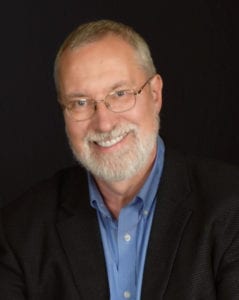
Professor Wasiu O Popoola is a Professor of Communications Engineering and Director of Electronics and Electrical Engineering at the School of Engineering, University of Edinburgh . With over 150 publications and a RAEng/Leverhulme Trust Research Fellowship (2022), his work focuses on optical wireless communication systems including VLC/LiFi, FSO, and underwater optical communications. BSc (First Class Hons), MSc (Distinction), PhD in optical communications (Northumbria University) Professional memberships: Fellow of Higher Education Academy (FHEA), Fellow of IET (FIET), Senior Member IEEE Research Interests span Indoor/Outdoor/Underwater Optical Wireless Communication , Modulation Techniques , and LiFi Applications . His 2025 articles explore underwater turbulence mitigation and hybrid RF-water communication systems . Earlier works include Best Poster Award at IEEE ICSAE 2016 and top-downloaded IEEE Xplore article (2008). Scientific Awards include: 2022 RAEng/Leverhulme Trust Research Fellowship 2016 IEEE ICSAE Best Poster Award 2009 'Xcel Best Engineering and Technology Student' (PhD) He contributes to editorial work as Associate Editor (IEEE Access) , Guest Editor (Optik Journal) , and peer reviewer for Physics World . Recent projects involve BOLD (Defence Science and Technology Laboratory) and TITAN Extension (University of Strathclyde) focusing on diffuse optical wireless systems and UAV swarm networks .
Dr Stuart Cameron is a Senior Research Fellow in the School of Engineering at the University of Aberdeen, where he has been contributing to research since 2007. His work is centered on environmental fluid mechanics, with a focus on open-channel flows, turbulence, sediment transport, and bio-inspired hydrodynamics. He is affiliated with a series of high-impact interdisciplinary research projects involving advanced experimental and theoretical fluid dynamics. His research interests include: Open-channel flow turbulence structure Sediment entrainment and transport mechanisms Flow-biota interactions in aquatic ecosystems Development and error analysis of Particle Image Velocimetry (PIV) techniques Hydrodynamics of bioinspired surfaces and fish-shaped bodies The most recent publications highlight a strong trend in analyzing complex turbulent flows over rough beds, secondary currents, and bio-inspired surface morphologies. His work frequently involves high-resolution experimental techniques and theoretical modeling, often in collaboration with leading researchers such as V. Nikora. Articles span topics from drag forces on sediment particles to hydrokinetic turbine performance and field-based PIV studies in natural water bodies. Notable scientific contributions have been supported by major grants from EPSRC, NERC, and the European Commission. These include projects such as: "Secondary currents in turbulent flows over rough walls" (EPSRC, 2021–2024) "River flow regulation, fish behaviour and status – RIBES" (European Commission, 2020–2023) "Field stereoscopic PIV system for freshwater and marine ecosystems" (NERC, 2019–2020) "Bed friction in rough-bed free-surface flows" (EPSRC, 2014–2017) "HYTECH" (Marie Curie ITN, 2013–2016) "High-resolution numerical and experimental studies of turbulence-induced sediment erosion" (EPSRC & DFG, 2010–2014) Dr Cameron has not advised any named students in the available data, but he collaborates extensively within research teams focused on environmental hydraulics and experimental fluid mechanics. He is involved in the development of advanced measurement systems and theoretical frameworks for understanding complex flows in natural and engineered environments. He is actively engaged in laboratory and field-based research, contributing to both fundamental fluid mechanics and applied environmental engineering challenges. His work bridges engineering, ecology, and physics, particularly in the context of river systems and aquatic habitats.
Dr. Yinghe Qi is a Professor in the Department of Experimental Fluid Dynamics at ETH Zürich, Switzerland. His research focuses on multiphase flows, turbulence, and free-surface dynamics, with applications in aerospace, marine engineering, and computational fluid dynamics. He has contributed extensively to understanding bubble dynamics, flow instabilities, and turbulence modulation through experimental and phenomenological studies. Research Interests: Dr. Qi’s work addresses complex phenomena in multiphase flow instabilities free-surface turbulence deformable bubble dynamics supersonic jet interactions vortex-induced fragmentation machine learning in fluid dynamics Recent Publications: His recent studies (2023–2025) explore multiscale bubble deformation, free-surface turbulence structure, and supersonic jet-plume interactions. Key themes include turbulent fragmentation, vortex-bubble coupling, and novel computational methodologies. Laboratory Affiliations: He collaborates with the Coletti Group, Jenny Group, and Supponen Group at ETH Zürich, advancing experimental and computational techniques in fluid dynamics.
Dr Sean Anderson is a Senior Lecturer at the Department of Automatic Control and Systems Engineering , University of Sheffield , with over 15 years of experience in interdisciplinary research spanning robotics, control systems, and computational biology. He earned his MEng and PhD from the University of Sheffield, focusing on control systems and chemical engineering. Education: MEng in Control Systems Engineering, University of Sheffield (2001) PhD in Chemical and Process Engineering, University of Sheffield (2005) Research Interests include: Bioinspired robotics Adaptive and optimal control in biological systems Nonlinear system identification Computational neuroscience Acoustic and visual sensor fusion for localization His recent publications highlight innovations in robotic localization in hazardous environments, interpretable deep learning for control systems, acoustic sensing technologies, and data-driven modeling of complex systems. Key projects involve autonomous navigation in pipe networks, turbulence modeling, and biomedical signal processing. Grants and Funding: He has secured major grants from EU H2020 (£4M), EU FP7 (£2.9M), and EPSRC (£5.7M), focusing on bioinspired control algorithms, robotic safety, and infrastructure assessment. Teaching: He leads the ACS61011 Deep Learning module, emphasizing practical applications in robotics and signal processing.
Omid Mahian is a professor at Ningbo University, Ningbo, China, with significant contributions to thermal engineering, renewable energy, and nanotechnology. His research focuses on optimizing heat transfer mechanisms in systems like supercritical CO 2 cycles, printed circuit heat exchangers, and photovoltaic thermal modules. He has over 14,597 documents cited, with an h-index of 81 and 287 publications on Scopus. Key research areas: Thermal Load, Surface Roughness, Microchannel Flow, Exergy Destruction, Renewable Energy, Forced Convection. Recent work explores advanced cooling techniques (e.g., wicked heat pipes, grooved copper foam) and nanofluid applications for atmospheric water harvesting and CO 2 absorption. His studies address energy efficiency in off-grid systems, including predictive dispatch strategies for hybrid renewable energy, supersonic separation for carbon capture, and thermal management in electric vehicle motors. Omid Mahian has authored 180 articles on ScienceDirect, with a focus on improving energy systems through innovative designs and materials. His collaborations span numerous disciplines, emphasizing sustainability and technological feasibility.
Boris Svistunov is a Professor in the Department of Physics at the University of Massachusetts Amherst . His research focuses on Theoretical Condensed Matter Physics , particularly on quantum fluids and superconductivity phenomena. Research Interests His work explores fundamental aspects of superfluidity , superconductivity , and quantum phase transitions . Key topics include: Transverse quantum fluids and their statistical features Bipolaronic superconductivity mechanisms Quantum dynamics of topological defects Monte Carlo studies of strongly correlated systems Phonon-modulated electron interactions Publications (2024-2025 Trends) Recent articles emphasize quantum hydrodynamics , Cooper flow precursors , and diagrammatic Monte Carlo approaches. Key themes include: Emergent phenomena in multi-component superfluids Unconventional pairing mechanisms in low-dimensional systems Critical behavior in disordered quantum systems Quantum plasticity and defect-mediated superfluidity Renormalization approaches to superconductivity Contact Details Email: svistunov@physics.umass.edu Phone: (413) 545-4428 Office: Hasbrouck Laboratory 408, 666 N Pleasant St, Amherst, MA 01003-9300
Mohamed-Slim Alouini is a Professor of Electrical Engineering and Associate Dean of the Computer, Electrical and Mathematical Science and Engineering (CEMSE) Division at King Abdullah University of Science and Technology (KAUST) in Saudi Arabia. He also serves as the Associate Vice President for Research and holds the UNESCO Chair in Education to Connect the Unconnected. With over 500 journal publications and more than 46,000 citations, he is a world-renowned expert in wireless communications who was elected IEEE Fellow in 2009 at the age of 39. Education: PhD in Electrical Engineering, California Institute of Technology (Caltech), 1998 MS in Electrical Engineering, Georgia Institute of Technology (Georgia Tech), 1995 Diplôme d'Etudes Approfondies (DEA) in Electronics, Université Pierre & Marie Curie (Sorbonne University), 1993 Diplôme d'Ingénieur, École Nationale Supérieure des Télécommunications (Télécom Paris Tech), 1993 Habilitation, Université Pierre & Marie Curie (Sorbonne University), 2003 Dr. Alouini is a world-renowned expert in wireless communication and networking with research interests spanning diversity combining techniques, MIMO systems, multi-hop/cooperative communications, optical wireless systems, cognitive radio, UAV communications, and advanced modulation schemes. His current focus addresses the technical challenges of uneven information and communication technology distribution, particularly targeting rural, low-income, disaster-prone, and hard-to-reach areas through integrated ground-airborne-space networks. His work bridges theoretical foundations with practical implementations to solve real-world connectivity problems. His recent publications (2020-2024) demonstrate a clear research trajectory toward integrated communication networks combining terrestrial, aerial, and space components. There's growing emphasis on UAV communications, satellite systems, optical wireless technologies, and rural connectivity solutions, with increasing integration of machine learning techniques for network optimization. His work shows consistent focus on addressing the digital divide, with several publications specifically targeting 6G challenges for connecting underserved populations and recycling existing infrastructure for enhanced rural connectivity. Scientific Awards: Member of the European Academy of Sciences and Arts (2019) Fellow of the African Academy of Sciences (2018) IEEE Fellow (2009) Abdul Hameed Shoman Award for Arab Researchers (2016) OIC Science & Technology Achievement Award (2017) Multiple recognitions as Highly Cited Researcher NSF CAREER Award (1999) Dr. Alouini has mentored numerous successful students and post-doctoral fellows who have secured positions at top institutions worldwide including Harvard, Caltech, Imperial College, and faculty positions at Korea University, Hanyang University, and universities across the Middle East. His December 2018 PhD graduate Qurrat-Ul-Ain Nadeem received the prestigious Marconi Society Paul Baran Young Scholars award, while post-doctoral fellows have won IEEE ComSoc Young Professionals Best Innovation Award and attended the Lindau Nobel Meeting. His Communication Theory Lab at KAUST drives significant research in wireless communications with funding supporting extensive publication output and innovative projects. Dr. Alouini leads the Communication Theory Lab at KAUST and holds the UNESCO Chair in Education to Connect the Unconnected, focusing specifically on technical solutions for connecting underserved communities. His lab works on integrated ground-airborne-space networks to bridge the digital divide, with particular emphasis on rural, low-income, and hard-to-reach areas. The team develops practical solutions using UAVs, satellite communications, and recycled infrastructure to provide cost-effective connectivity where traditional approaches fail.
Dr. Liang Cui is an Associate Professor at the University of Surrey , affiliated with the School of Sustainability, Civil and Environmental Engineering and Institute for Sustainability . With a PhD from University College Dublin (2006) and BE (1st honor) from Tsinghua University (2002) , his career spans geotechnical research and education since joining Surrey in 2009. Key roles: Undergraduate Programme Leader (2020-2022, 2023-on), MSc Programme Leader for Advanced Geotechnical/Civil/Structural Engineering (2022-2023) Professional memberships: Chartered Engineer (CEng), Member of Institution of Civil Engineers (MICE), Fellow of Higher Education Academy (FHEA) His primary research focuses on numerical modeling (DEM/FEM) for geotechnical applications including offshore wind foundations , geothermal energy systems , methane hydrate exploitation , and extra-terrestrial soil mechanics . Secondary interests involve material characterization of polymeric foams , porous media , and biological tissues . Recent 15 publications (2023-2025) demonstrate expertise in soil-structure interaction for renewable energy infrastructure, thermal feedback in groundwater heat pumps, and hypothesis-driven DEM simulations for lunar/martian environments. Collaborative projects span institutions including Tsinghua University , University of Bristol , and Indian Institute of Technology Bhubaneswar . Scientific Awards: Sustainability Fellow (University of Surrey, 2023) Chartered Engineer (CEng) and MICE FHEA for educational contributions Dr. Cui supervises 7 postgraduate researchers and contributes to teaching modules in soil mechanics and energy geotechnics. His work addresses challenges in hybrid marine energy systems , needleless drug delivery , and seismic resilience of critical infrastructure.
Prof. Eric Loth is the Rolls-Royce Commonwealth Professor of Engineering and Director of the Fluids Research Innovation Lab (FRIL) at the University of Virginia. His research focuses on extreme-scale wind turbines, energy storage systems, multiphase flow, and aerospace propulsion. He has authored over 200 journal papers, holds 10 patents, and led $16M in research funding. His work has been covered by major media outlets and he has given invited talks at prestigious institutions like Harvard, MIT, and Cambridge University. Education: B.S. in Aerospace Engineering, West Virginia University M.S. in Aerospace Engineering, Pennsylvania State University Ph.D. in Aerospace Engineering, University of Michigan Research Interests: Loth’s work spans wind energy systems, aerodynamics of propulsion, turbulence mechanics, and fluid-solid interactions. He pioneered designs for 25–50 MW offshore turbines and co-developed energy storage frameworks integrating wind systems. His recent projects include icephobic coatings for turbine protection and novel particle separation technologies. Awards & Recognition: Fellow of ASME and AIAA Yip Visiting Fellow, Magdalene College, Cambridge Panel Chair for NAE Energy Research (IMECE) and NAE Aerospace Research (AIAA Sci Tech) Advising & Grants: Loth has advised numerous students and secured major grants from agencies like ARPA-E, NREL, and the Department of Energy. His lab (FRIL) collaborates with industry leaders like Rolls-Royce and the U.S. Navy. Labs & Teams: Director of the Fluids Research Innovation Lab (FRIL), co-leads the SUMR (Sustainable, Ultra-Mega-Rotor) initiative, and oversees the SpiderFLOAT offshore wind platform project. His team focuses on interdisciplinary challenges in renewable energy and fluid dynamics.
Nicolas Binder is a Professor and Head of the Turbomachinery and Propulsion Research Group at ISAE-SUPAERO . His research focuses on turbomachinery aerodynamics, unsteady flow analysis, and innovative propulsion systems for aerospace applications. Member of EuroTurbo executive committee ASME Member Associate Editor, Journal of Turbomachinery Research expertise in off-design operations and windmilling flows Research Interests : Aerodynamics of turbomachinery in severe off-design conditions Unsteady flow dynamics in turbines Innovative propulsion methods including magneto-hydrodynamics Flow analysis techniques for compressors and fans Recent publications (2024-2021) emphasize transient flow modeling in turbines, windmilling operation optimization, and variable geometry turbine performance. Articles span experimental validation of numerical models, shock wave interactions, and novel propulsion concepts like plasma-thrusters for drones.
Ajay B. Limaye is an Assistant Professor in the Department of Environmental Sciences at the University of Virginia. His research spans terrestrial and planetary landscapes, focusing on fluvial geomorphology, quantitative stratigraphy, and planetary surface processes. He employs remote sensing, geospatial analysis, numerical modeling, and laboratory experiments to study river dynamics, sedimentary deposits, and climate records on Earth, Mars, and Titan. His work integrates NSF and NASA-funded projects, including the development of a Landscape Evolution Laboratory with a 7m×3m experimental basin for controlled landscape modeling. His research explores feedbacks between landslides and ecology in central Virginia, Martian deltaic deposits, and submarine channel systems. He teaches courses in geomorphology, planetary geology, and fundamental geosciences. NSF CAREER Award (2023) : "GLOW: Sequencing rivers with machine learning and bioinformatics" Keck Institute Fellowship (2010) : High-resolution stratigraphy of Mars polar deposits Recent publications analyze braided river dynamics (e.g., Brahmaputra-Jamuna River), meander bend geometry, landslide-vegetation interactions, and planetary hydrology. His experimental work on autogenic fluvial terraces and turbidity maximum zones in estuaries demonstrates interdisciplinary methodological rigor.
Eun-jin Kim is a Professor at Coventry University's Research Centre for Fluid and Complex Systems. Her work bridges theoretical physics and applied systems, focusing on non-equilibrium processes, turbulence, and self-organisation in plasmas, fluids, and biosystems. She holds a PhD from the University of Chicago and previously held roles at the University of Sheffield, University of Leeds, and others. Education: PhD in Physics (University of Chicago), BSc in Physics (Yonsei University) Her research explores complexity in systems like fusion plasmas, cardiovascular dynamics, and stellar magnetic fields using statistical mechanics and information theory. Recent work includes studies on plasma turbulence, cardiac homeostasis breakdown, and solar magnetic field evolution. She has supervised over 15 PhD students and postdoctoral researchers. Key contributions include developing the information length framework to model system complexity and advancing non-equilibrium statistical theory for fusion plasmas. Awards: 2020 Exceptional Performance Award, 2023 EPSRC Fellowship Active in international collaborations, her lab focuses on plasma confinement optimization and multiscale biosystem modeling. Current projects include cardiac dynamics control and fractional calculus applications in transport phenomena.
Rosanna Cole is a Senior Lecturer in Sustainable Supply Chain Management at the Department of Business Analytics and Operations, Surrey Business School, University of Surrey. She holds roles as Deputy Head of the Department of Business Analytics and Operations, Sustainability Fellow at the Institute for Sustainability, and Deputy Head of Business Transformation (2019-2020). Her research focuses on sustainable supply chain management, socially responsible purchasing, modern slavery eradication, and blockchain applications in supply chains. Previously, Cole worked at Roehampton Business School (2008-2016) and Deloitte LLP. She is a Senior Fellow of the HEA, Sustainability Fellow, and completed the Advanced Management Programme (2024). Her awards include Surrey Business School’s EC Researcher of the Year (2019). Research interests include supply chain intermediary roles, blockchain adoption, labor exploitation mitigation, and sustainable procurement practices. She collaborates with institutions like the University of Manchester, Lancaster University, and Cranfield University. Her work addresses global challenges such as refugee integration into supply chains and supply chain turbulence linked to geopolitical issues. Teaching includes modules on sustainable operations, supply chain governance, and ethics. She has advised PhD students at institutions like Deusto Business School and the University of Gloucestershire. Key projects include ROADS UK (asphalt sustainability), Syrian refugee workforce integration, and blockchain in healthcare device reverse logistics. Her articles span risk matrix improvements, labor exploitation governance, and temporal production dynamics.
Glenn Boreman is a Professor and Chair of the Department of Physics and Optical Science at the University of North Carolina at Charlotte (UNC Charlotte). He also serves as Director of the Center for Optoelectronics & Optical Communications. His academic journey includes a BS in Optics from the University of Rochester and a PhD in Optics from the University of Arizona. Previously, he spent over 27 years at the University of Central Florida, supervising 25 PhD students to completion. His research focuses on infrared antennas, metamaterials, frequency-selective surfaces, and nano-scale optical phenomena. Notable contributions include pioneering work on antenna-coupled infrared sensors and the design of advanced optical systems. He has authored/co-authored over 190 journal articles and four textbooks, including Infrared Detectors and Systems and Modulation Transfer Function in Optical & Electro-Optical Systems . Prof. Boreman holds prestigious fellowships from SPIE, IEEE, the Optical Society of America, and the Military Sensing Symposium. His awards include the 'Best Paper' honor at the 2001 AIAA/BMDO meeting. His lab, the Infrared Systems Lab, actively explores nanofabrication, high-resolution lithography, and advanced sensor technologies. Current doctoral students include Matthew Potter and Frances Bodrucki, both researching infrared devices and metamaterials. He directs interdisciplinary projects involving collaborators from materials science, electrical engineering, and astrophysics.
Elias N. Glytsis is a Professor at the National Technical University of Athens (NTUA), affiliated with the Department of Electromagnetic Applications, Electro-Optics and Electronic Materials. He previously held a Professorship at the Georgia Institute of Technology (USA) from 1988 to 2003. His research focuses on electromagnetic theory, diffractive devices, optical interconnects, quantum heteromaterials, and numerical methods for electromagnetic problems. Glytsis has published over 115 journal articles, 95 conference papers, and holds 17 U.S. patents with an h-index of 31 (as of 2017). Education: Diploma in Electrical Engineering (NTUA, 1982), M.S. and Ph.D. (Georgia Tech, 1984–1987). Professional memberships include IEEE (Senior Member), Optical Society of America (Fellow), and EURATOM-Hellenic Republic. Research highlights include work on holographic gratings, optical fiber gratings, and plasma-edge RF scattering. He has developed optimization methods for photonic devices and contributed to stochastic modeling via polynomial chaos expansions. Glytsis teaches courses on electromagnetic fields, optical science, and integrated optics at both undergraduate and postgraduate levels. Key technical contributions span microwave interconnects, quantum device modeling, and fusion plasma physics. His methodologies address challenges in material variability, waveguide design, and electromagnetic compatibility.