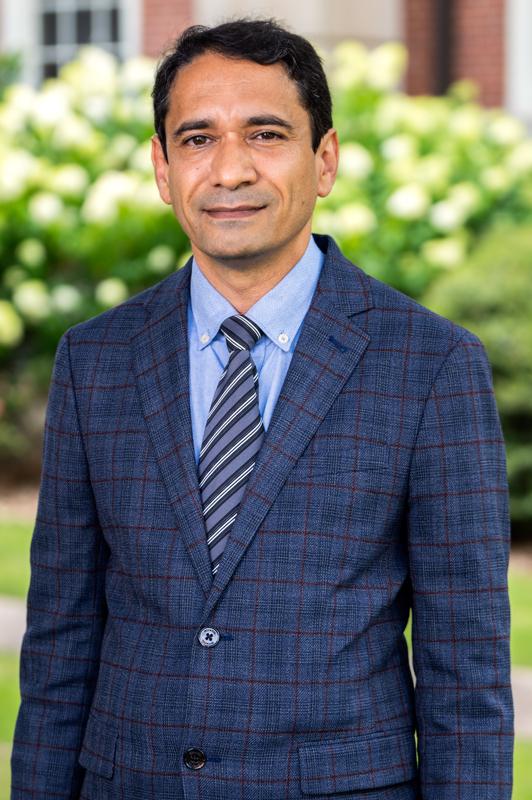
Lars Eirik Bakken is a Professor at NTNU's Department of Energy and Process Engineering, where he leads research in thermal turbomachinery. His expertise encompasses gas turbine technology, turbocompressor design, turboexpanders, multiphase pumping systems, and wet gas compression. He directs the Thermal Energy Group's research on turbomachinery thermo-fluid dynamics, focusing on energy conversion efficiency and mechanical design optimization for industrial applications.
Hassan Khodaei serves as an Assistant Research Professor in the Biosystems Engineering program at Auburn University. His academic foundation includes a PhD in Mechanical Engineering from Edith Cowan University (ECU), complemented by an MS from K.N.Toosi University of Tehran and a BS from the University of Kerman. His research bridges mechanical engineering principles with sustainable biosystems applications, focusing on thermal conversion processes for renewable energy solutions. Education PhD in Mechanical Engineering, Edith Cowan University (ECU) MS in Mechanical Engineering, K.N.Toosi University of Tehran BS in Mechanical Engineering, University of Kerman Research Interests Dr. Khodaei specializes in biomass thermal conversion , biofuel and biocarbon production , and advanced computational fluid dynamics (CFD) modeling. His work develops innovative pathways for converting biomass and waste streams—such as construction debris and plastic waste—into biochar, biofuels, and energy. He employs high-fidelity CFD simulations to optimize reactor designs and operational parameters across scales, from laboratory experiments to industrial plants, with emphasis on emission reduction and process efficiency. Publication Trends His 16-year publication record reveals a strategic evolution from refinery energy systems (2009-2014) toward biomass thermochemical conversion (2015-2025). Recent work demonstrates increasing sophistication in multiphase CFD modeling of pyrolysis and gasification reactors, with growing emphasis on circular economy applications like plastic-biomass co-processing. The consistent integration of experimental validation with simulation across his portfolio highlights a rigorous methodology for industrial-scale sustainable technology development. Scientific Awards No scientific awards were documented in the provided materials. Advising and Grants While specific student mentorship or grant details were not disclosed, his role as Assistant Research Professor implies active participation in research supervision and funding acquisition within Auburn University's engineering ecosystem.
Amir Rahbarimanesh is a Lecturer in Engineering Project Management at the University of Manchester's School of Engineering. He holds a BSc (First Class) in Industrial & Systems Engineering (2008), an MSc in Project Management (2010, University of Birmingham), and a PhD in Management of Projects (2015, University of Manchester). His roles include External Lecturer at Oxford Saïd Business School, Guest Lecturer at Alliance Manchester Business School and Liverpool Management School, and External Examiner at Staffordshire University. He also advises RS Group plc on innovation strategy. Education: BSc Industrial & Systems Engineering (First Class), 2008 MSc Project Management (University of Birmingham), 2010 PhD Management of Projects (University of Manchester), 2015 Research Interests: Strategic Management, Innovation Management (Industry 4.0), Project Management (megaprojects, risk, governance), Project Education (T&L tools), Maintenance Engineering, and Technology Applications (AI, Quantum Computing). His work aligns with UN Sustainable Development Goals, particularly climate action and industry innovation. Awards: 2025 SU Academic Awards: Excellence in Student Development & Assessment Feedback 2025 Highly Commended: Teaching for Employability & Lecturer of the Year (2021) Teaching & Supervision: Leads courses on Project Management with ICT, Innovation Management, and Engineering Foresight. Supervises PhD/MSc/Undergraduate projects in Engineering and Business Schools. Serves as internal examiner for PhD progress reports. Service: Member of BiNDT International Advisory Committee, Fellow of HE Academy, and conference session chair (e.g., CM2023). Collaborates on AI/Quantum Technology in Port Environments (2024).
Paolo Oresta serves as an Associate Professor within the Department of Mechanics, Mathematics & Management at the Polytechnic University of Bari, Italy, with primary contact via paolo.oresta@poliba.it and departmental address at Via Orabona 4, 70125 Bari. His research program centers on fluid mechanics and thermal engineering, with core expertise in nanofluid thermal conduction, turbulent convection phenomena, energy recovery systems, and fluid machinery design. He investigates heat transfer enhancement mechanisms, multiphase flow dynamics, and thermal energy storage optimization through computational modeling and experimental validation. Analysis of his 15 most recent publications (2023-2017) reveals consistent focus on nanoscale heat transfer in fluid suspensions, 3D flow reconstruction techniques, and Industry 4.0 applications for industrial plants. His work bridges theoretical fluid dynamics with practical energy systems engineering, particularly in thermal storage and pressure recovery devices, demonstrating strong interdisciplinary integration across mechanical, thermal, and computational domains.