Barbara Simpson is an Assistant Professor in the Department of Civil & Environmental Engineering at Stanford University. Her work focuses on structural engineering design, natural hazards mitigation, and climate-resilient infrastructure. She earned her undergraduate degree in architectural engineering from the University of Kansas, where she was drawn to the problem-solving aspects of structural engineering. Education: B.S. in Architectural Engineering (University of Kansas) Her research explores how structures respond to dynamic forces like earthquakes, tsunamis, and climate-driven disasters. Recent projects include studying floating offshore wind turbines and accelerating structural simulations using graphics processors for real-time analysis. She aims to integrate these insights into building codes to improve infrastructure resilience against extreme events. While no specific articles or awards are detailed here, her work emphasizes tangible practical outcomes and fostering innovative design methods. Current projects prioritize computational advancements to model complex urban systems and climate impacts. Advising and grants are not explicitly mentioned in the provided text. Her research aligns with interdisciplinary efforts to address global environmental challenges through engineering solutions.
Christopher Kitts is the William and Janice Terry Professor of Mechanical Engineering at Santa Clara University's School of Engineering, where he also serves as Associate Dean of Research and Faculty Development and Faculty Director of the Ciocca Center for Innovation and Entrepreneurship. His external appointments include Associate Researcher at the Monterey Bay Aquarium Research Institute (MBARI) and Visiting Researcher at Lawrence Livermore National Laboratory, reflecting his interdisciplinary work in field robotics. He earned his Ph.D. and M.S. in Mechanical and Aerospace Engineering from Stanford University, M.P.A. in International & Defense Policy from the University of Colorado, and B.S.E. in Mechanical & Aerospace Engineering from Princeton University. Prof. Kitts' research centers on field robotics for scientific discovery and education, with key focus areas: Multi-robot systems design and coordination Collaborative Human/Cobot Control architectures Model-Based Anomaly Management for spacecraft Advanced robotic platforms for underwater, terrestrial, aerial, and space environments His recent publications (2022-2025) demonstrate growing emphasis on human-robot interaction through transformer networks and emotion detection, alongside continued innovation in marine robotics and adaptive navigation for environmental monitoring. Scientific recognition includes: ASME Fellow and AIAA Associate Fellow Multiple Santa Clara University awards across teaching, research, and service NASA Group Achievement Awards (8 total) Industry honors including Edison Innovation Award and AIAA National Award His program has secured tens of millions in funding from government agencies and industry partners for student-operated NASA spacecraft missions and MBARI marine robotics projects, resulting in documented scientific discoveries like tsunami wave evidence in Lake Tahoe. He directs the Robotic Systems Laboratory and Santa Clara's Maker Lab, creating hands-on educational frameworks that integrate entrepreneurial thinking with engineering practice.
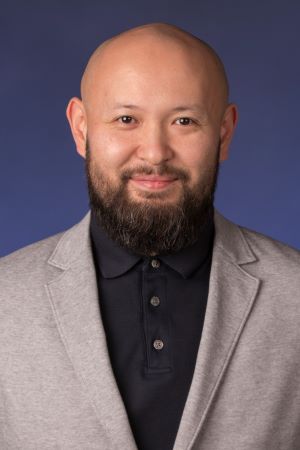
Sayan Kaishibayev, MD serves as Program Evaluator for the Brooklyn Initiative to Develop Geriatric Education (BRIDGE) at SUNY Downstate Health Sciences University within the Department of Psychiatry. Previously a Clinical Instructor at SUNY Downstate, he held academic and clinical positions in Kazakhstan including Assistant Professor of Neurosurgery at Kazakh Medical University of Continuing Education. His education includes: MD from Kazakh National Medical University, Almaty, Kazakhstan Pediatric Surgery Internship at Kazakh National Medical University, Almaty, Kazakhstan Clinical Residency in Neurosurgery at Russian Academy of Postgraduate Education, Moscow, Russia Dr. Kaishibayev's research centers on geriatrics and dementia with deep expertise in neurology, stroke management, and medical education. He pioneers mobile health applications for neurologists and develops educational programs for neurological disorder diagnosis using advanced technology. His work bridges clinical neurosurgery with innovative geriatric care solutions to address the 'silver tsunami' of aging populations. His publications reveal critical trends in pharmacogenetically-informed treatment for neurocognitive disorders, self-assessment tools for schizophrenia in elderly patients, and urban tele-education models like Project ECHO for dementia care. These works emphasize practical clinical translation over theoretical research. As Program Evaluator, he directs assessment for two major grants: the HRSA-funded Geriatric Workforce Enhancement Program ($3.75M over 5 years) enhancing Brooklyn's interprofessional geriatrics education, and the NYS Department of Health Center of Excellence for Alzheimer’s Disease (2016-2020) improving clinical care across NYC. His Takeda Pharmaceutical grant developed a cross-platform mobile application for post-stroke patient management. He actively collaborates with the BRIDGE program team and SUNY Downstate's psychiatry faculty on dementia education initiatives while advancing data science skills through ongoing coursework.
William Richard Peltier is a Professor in the Department of Physics at the University of Toronto, where he directs the Centre for Global Change Science and serves as Scientific Director of the SciNet High-Performance Computing facility. His research spans atmospheric physics, climate science, geophysical fluid dynamics, and paleoclimate reconstruction, with a focus on glacial isostatic adjustment and Earth system modeling. Education: B.Sc. in Physics (University of British Columbia, 1967), M.Sc. in Physics (University of Toronto, 1969), Ph.D. in Physics (University of Toronto, 1971). Dissertation: Thermal Stability of non-Boussinesq Configurations under Professor C.O. Hines. Research Focus: Peltier's work integrates geophysical fluid dynamics, mantle convection theory, and climate system evolution. Key areas include: 1) Atmospheric/oceanic turbulence and wave dynamics; 2) Glacial isostatic adjustment (GIA) modeling (e.g., ICE-6G/ICE-7G frameworks); 3) Snowball Earth climate bifurcations; and 4) Abyssal ocean mixing processes. His models reconcile space-geodetic data with paleoclimate proxies to constrain mantle viscosity and ice-age terminal deglaciation. Publication Trends (2016-2017): Recent articles emphasize glacial isostatic adjustment validation, turbulent mixing efficiency in oceans, Neoproterozoic climate thresholds, and Holocene sea-level change. Methodologies combine high-resolution GCMs, geodetic observations (GPS/tide gauges), and theoretical fluid dynamics to address climate stability and cryosphere-ocean interactions. Awards & Honors: Vetlesen Prize (2004) for geophysical research Milutin Milankovic Medal (2008) CAP Gold Medal for Physics (2009) Fellow of Royal Society of Canada, AGU, and AMS 25+ major awards including Guggenheim Fellowship and Bancroft Award Leadership: Principal Investigator of the CFCAS Polar Climate Stability Network; Associate Editor of Geophysical and Astrophysical Fluid Dynamics ; Developed foundational GIA models (ICE-5G/6G/7G) used globally for sea-level projections.
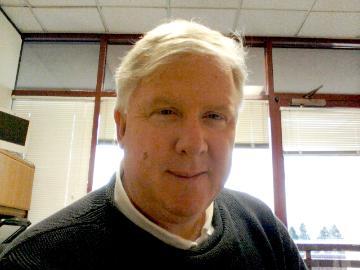
Tim Cook is a Research Professor and Lecturer in the Department of Earth, Geographic, and Climate Sciences at the University of Massachusetts Amherst since 2018. Previously, he served as an Associate Professor at Worcester State University. He holds a Ph.D. in Geology from UMass (2009), an M.S. in Oceanography from the University of Delaware (2004), and a Sc.B. in Geological Sciences from Brown University (2001). His research focuses on paleoclimate, Arctic systems, and lacustrine sedimentology, with emphasis on human and climatic impacts on sedimentary processes and environmental change. Key projects include studies of New England lake sediments, Arctic climate variability, and organic carbon burial in Labrador lakes. Research interests span sedimentary archives, extreme weather impacts on watersheds, and the interplay between climate change and human land-use. His work integrates field data, remote sensing, and historical records to reconstruct past environmental conditions. Notable recent projects include analyzing Kamikaze typhoon deposits in Japan and sedimentological evidence for unprecedented hydroclimatic shifts in Svalbard. No scientific awards or major grants are explicitly listed in the provided materials. Advising records remain unspecified. Cook maintains active fieldwork in Arctic and temperate regions, contributing to interdisciplinary studies of Earth surface processes and geohazards.
Dr. Jean-Luc Loizeau is a Senior Lecturer in the Department of Earth Sciences at the Faculty of Sciences, University of Geneva. He has been a core academic and researcher since 1999, with a long-standing focus on environmental sedimentology, geochemistry, and the historical pollution of lacustrine systems such as Lake Geneva, Lake Annecy, and international sites in Romania and Argentina. His work integrates field studies, laboratory analyses, and modeling to understand contaminant transport and sediment dynamics. University: University of Geneva School: Faculty of Sciences Department: Department of Earth Sciences Position: Senior Lecturer Email: jean-luc.loizeau@unige.ch His research centers on environmental sedimentology, particularly the transport and fate of contaminants in lake systems using radioisotopes and particle analysis. He manages the environmental radioactivity and particle/colloid grain-size laboratories at the Institut F.-A. Forel. Key areas include mercury cycling, colloid-mediated pollutant transport, eutrophication, and sediment chronology. He has led multiple SNF and EU-funded projects such as NEAR and SEDFATE, and contributes to international monitoring efforts like CIPEL. The recent publications highlight a strong trend in mercury biogeochemistry, pharmaceutical pollution, and sediment-based environmental reconstruction. His work spans from molecular toxicology in aquatic organisms to large-scale hydrological impacts of climate change, reflecting an interdisciplinary approach grounded in sediment records and long-term monitoring. Scientific Awards and Professional Service: Treasurer, Swiss Commission for Oceanography and Limnology (Swiss Academy of Sciences), 2000–present Scientific Committee, CIPEL (International Commission for the Protection of Lake Geneva), 2011–present Member, Federal Commission for Protection against Radiation, 2013–present Reviewer for journals: Applied Geochemistry, Environmental Science & Technology, Water Research, Sedimentology, and others Dr. Loizeau actively supervises Master’s and PhD students and has directed numerous theses on aquatic ecosystems. He has also managed the joint diploma in Natural Environmental Sciences at the Universities of Geneva and Lausanne (1993–2007) and served as ERASMUS coordinator for environmental sciences. His research projects involve collaborations with EPFL, Smithsonian Institution, and international teams in Romania and Italy. He leads and co-leads major research initiatives including: Water Dynamics and Contaminant Transfer Processes in Mid-sized Lakes (SNF) NEAR Network for Environmental Assessment and Remediation SED-FATE: Sediment Fate in the Anthropocene MERCURO: Mercury Threat in Romanian Water Bodies He also manages the environmental radioactivity and colloid analysis laboratories at the Institut F.-A. Forel, supporting both research and teaching.
Dr. Martin Jutzeler is a Senior Lecturer in Volcanic Processes at the University of Tasmania's School of Natural Sciences. His research focuses on submarine eruptions, tsunami hazards, and volcaniclastic deposits, with expertise in marine geoscience and sedimentology. He has led multiple international drilling projects (e.g., IODP Expeditions 340, 350, 398) and contributed to studies of submarine volcanism in regions like the Kermadec Arc, Izu-Bonin-Mariana Arc, and the Macquarie Arc. Dr. Jutzeler has advised doctoral students on topics including submarine caldera formation and volcanic facies architecture. His work integrates advanced methodologies like machine learning for volcanic stratigraphy analysis and 3D geological modeling. He holds grants totaling over $5 million, addressing submarine landslide risks and volcanic hazard mitigation. Co-authored over 70 peer-reviewed articles, his research bridges geology, geophysics, and environmental science to advance understanding of underwater volcanic processes and their global impacts. Education: Doctorate in Volcanology (not explicitly stated, inferred from academic role). Research Interests: Subaqueous eruption dynamics, pumice rafts, submarine landslide tsunami potential, volcanic facies analysis, and IODP drilling outcomes. Innovates techniques like crystal size distribution analysis using machine learning. Collaborates internationally on projects such as the Cowal Igneous Complex 3D modeling and Hunga Volcano eruption studies. Recent Article Trends: Focus on modern submarine eruptions (e.g., Havre 2012, Hunga 2022), machine learning applications in geology, and hazard mitigation strategies for submarine volcanic events. Highlights the interplay between volcanic processes and marine environments. Grants & Supervision: Secured grants for tsunami risk mitigation, volcanic architecture studies, and IODP analyses. Supervised research on Tarawera eruption reconstruction, Kermadec calderas, and Cowal Igneous Complex stratigraphy. Collaborations include Evolution Mining for geological modeling.
James Foster is a Professor at the University of Stuttgart, affiliated with the Chair of Geodetic Spatial Methods within the Faculty 6: Aerospace Engineering and Geodesy. His research focuses on geodetic techniques applied to climate research, tsunami detection, and atmospheric water vapor analysis. He leads projects like ST3TART-FO, enhancing satellite altimetry validation, and develops ship-based GNSS networks for early tsunami warnings. Foster’s work integrates geophysical, oceanographic, and climatological insights to address global challenges like disaster mitigation and environmental monitoring. His contributions span over two decades, with significant publications in journals such as Journal of Geophysical Research and Geophysical Research Letters . He collaborates internationally on missions like Sentinel-3 and GRACE/GRACE-FO, emphasizing interdisciplinary approaches to Earth system science.
Marcelo H. Kobayashi is a Professor in the Department of Mechanical Engineering at the University of Hawaii at Manoa . He holds dual PhDs in Mechanical Engineering (1994) and Mathematics (2003) from the Technical University of Lisbon/IST, Portugal. His research spans Computational Fluid Dynamics (CFD) , Fluid Mechanics , and Multidisciplinary Design Optimization (MDO) , integrating advanced numerical methods and genetic algorithms to solve complex engineering problems in aerospace, biomechanics, and defense applications. CFD: Stream function methods, finite volume schemes for Navier-Stokes equations, and Padé approximations. Fluid Mechanics: Stokes flows, particle dynamics in rotating systems, and acoustic wave propagation in shear layers. MDO: Hybrid genetic programming for metamaterials, cellular division optimization for control surfaces, and bio-inspired designs for micro aerial vehicles. His recent publications reflect the application of evolutionary algorithms , topological optimization , and aeroelastic modeling to challenges in air vehicle design , thermal management , and biological systems . He has led projects funded by AFOSR , NSF , and US Army , including grants for tsunami debris impact analysis and nanosat thermal control systems. As Director of the Hawaii Open Supercomputing Center , he contributes to computational research infrastructure. His teaching includes graduate courses in Computational Fluid Dynamics , Numerical Methods , and Advanced Aerodynamics .
Professor Mathilde Bøttger Sørensen leads geophysics research at the Department of Geosciences , University of Bergen. Her work spans geohazards, earthquake seismology, and risk communication. Research Group Leader for Geophysics Director of national geohazard course GEOV217 Research Focus : Arctic seismology and CO2 storage risks Tsunami and landslide hazard modeling Historical earthquake analysis in Norway and Europe Teaching : Developed Norway's first national geohazard course Advocates student-active learning environments Awarded Outstanding Teacher (2021) and Learning Environment Award (2017) Scientific Contributions : Over 15 peer-reviewed publications (2024-2004) Project leader for climate-seismicity studies and Arctic monitoring
Professor Yusuke Yokoyama is affiliated with the University of Tokyo at the Atmosphere and Ocean Research Institute , focusing on Geochemistry , Biogeochemistry , and Earth Surface System Studies . He employs advanced Radioisotope dating techniques, particularly radiocarbon analysis, to reconstruct Paleoclimate and Paleoenvironmental changes. Research Themes : Paleoclimate studies, Organic carbon stabilization in mangroves, Volcanic gas emission, North Pacific climate variability Key Tools : Mass Spectrometry, Radioisotope dating, Geochronological modeling His work spans critical areas like sea level fluctuations , ocean acidification , and tsunami disaster resilience , with significant contributions to understanding the Holocene Temperature Conundrum and Anthropocene definitions. Notable scientific awards include: Grant-in-Aid for Scientific Research (A) Grant-in-Aid for Scientific Research (B) International Collaborative Research grants JSPS Fellowship
Gary Mitchum serves as Professor and Associate Dean for Research at the University of South Florida's College of Marine Science, where he has been a faculty member since 1996 after directing the University of Hawaii Sea Level Center. His research integrates satellite remote sensing and in situ data to advance understanding of sea level rise, climate change, and ocean physics phenomena. Education: Ph.D., Florida State University, 1984 Research Focus: Professor Mitchum specializes in sea level rise dynamics, El Niño impacts, ocean eddies, tidal analysis, and tsunami propagation. His work examines 20th-century sea level trends while applying ocean physics principles to fisheries management and climate adaptation. Current investigations leverage satellite altimetry to quantify ocean circulation changes and coastal vulnerability. Publication Trends: Recent publications (2023-2025) reveal concentrated efforts on global sea level monitoring systems, reprocessed altimetry datasets (TOPEX/Jason/Sentinel-6), and climate assessment contributions. Key thematic areas include sea level rise acceleration detection, tsunami warning network optimization, and integration of multi-mission ocean altimeter data for climate research, prominently featured in State of the Climate reports. Leadership & Collaboration: As Associate Dean, he directs research strategy while participating in international frameworks like the Global Sea Level Observing System (GLOSS). His technical expertise informs tide gauge benchmark monitoring standards and operational sea level networks critical for climate adaptation and disaster response. Infrastructure Contributions: Mitchum has shaped sustained ocean observing systems including the University of Hawaii Sea Level Center legacy and modern networks for tsunami science. His current work enhances real-time sea level data integration for coastal resilience and climate service applications.
Chen Chen is an Assistant Professor in the Fire and Emergency Management program at Oklahoma State University's College of Engineering, Architecture and Technology. His research focuses on infrastructure resilience, disaster response, and human behavior in complex systems, with interdisciplinary collaborations in psychology, public policy, and engineering. He teaches courses in emergency management, hazard assessment, and simulation modeling. Ph.D. in Transportation Engineering from Oregon State University Former ORISE Postdoctoral Fellow at U.S. Army Corps of Engineers Research spans tsunami evacuation modeling , risk communication systems , and micromobility in disaster contexts , utilizing agent-based simulations and empirical analysis of evacuation behaviors. Key publications examine evacuation logistics, warning dissemination, and human decision-making under rapid-onset hazards. Current projects address NSF-funded community resilience networks , Maui wildfire investigations , and informal warning system modeling . His work integrates social science , engineering , and transportation systems to enhance disaster preparedness.
Carla Silva is a researcher at the Department of Environmental Science and Engineering, MARE, at NOVA School of Science and Technology. She holds a PhD in Marine Science, Technology, and Management from the University of Aveiro, specializing in Ecotoxicology, with earlier degrees in Biology and Applied Biology from the same institution. Education: Bachelor's in Biology (University of Aveiro) Master's in Applied Biology (Toxicology and Ecotoxicology) (University of Aveiro) PhD in Marine Science, Technology, and Management (Ecotoxicology) (University of Aveiro, 2021) Her research focuses on assessing environmental impacts of emerging pollutants like microplastics and toxic plastic additives in aquatic ecosystems. She has participated in projects at CIIMAR, University of Minho, and Polytechnic of Leiria. Her recent work spans diverse fields, including environmental science, biotechnology, psychiatry, and health economics. Carla contributes to the Marine and Environmental Sciences Centre (MARE), advancing studies in pollution, sustainable development, and ecological risk mitigation. Her interdisciplinary approach bridges environmental science with public health and engineering challenges.
Brice ANSELME serves as a Lecturer at University of Paris 1 (Panthéon-Sorbonne) within the PRODIG Research Center (UMR 8586), specializing in geographic information sciences. Based at Campus Condorcet's South Research Building in Aubervilliers, he leads the Master's program in Remote Sensing and Geomatics Applied to the Environment (M2 Pro TGAE) since 2011 and teaches specialized courses in remote sensing, GIS applications, and environmental modeling across multiple universities including Paris 1 and Paris 7. His research focuses on coastal risks , environmental dynamics , and geospatial technologies , with particular expertise in marine submersion risks, coastal vulnerability assessment, and multi-agent modeling for environmental management. His work spans multiple continents including France, Pacific islands, West Africa, and Brazil, addressing critical issues related to climate change impacts on coastal zones and environmental resources. Analysis of his publication record (2004-2011) reveals a strong focus on coastal hazard mapping , environmental monitoring through remote sensing , and spatial modeling of territorial dynamics . His research consistently bridges technical geospatial methods with practical environmental management applications, particularly in vulnerable coastal regions facing climate change impacts. Much of his work involves collaborative international research addressing real-world environmental challenges through innovative geospatial approaches. Dr. ANSELME has participated in numerous research programs including AGEPAR (Brazilian wetlands), BARCASUB (Arcachon basin), PREPARTOI (tsunami risk), and SAVARID (biodiversity in savannah ecosystems). His administrative responsibilities include heading the Master's program in Remote Sensing and Geomatics Applied to the Environment, reviewing for scientific journals (Vertigo, EchoGéo), and serving on the Paris Doctoral School of Geography committee since 2007. His laboratory work centers on geomatics applications for environmental monitoring, particularly utilizing satellite remote sensing, GIS, and multi-agent modeling to study coastal risks and environmental dynamics. His research frequently involves field studies in coastal regions across multiple continents, collaborating with international research teams to address pressing environmental challenges through advanced spatial analysis techniques.