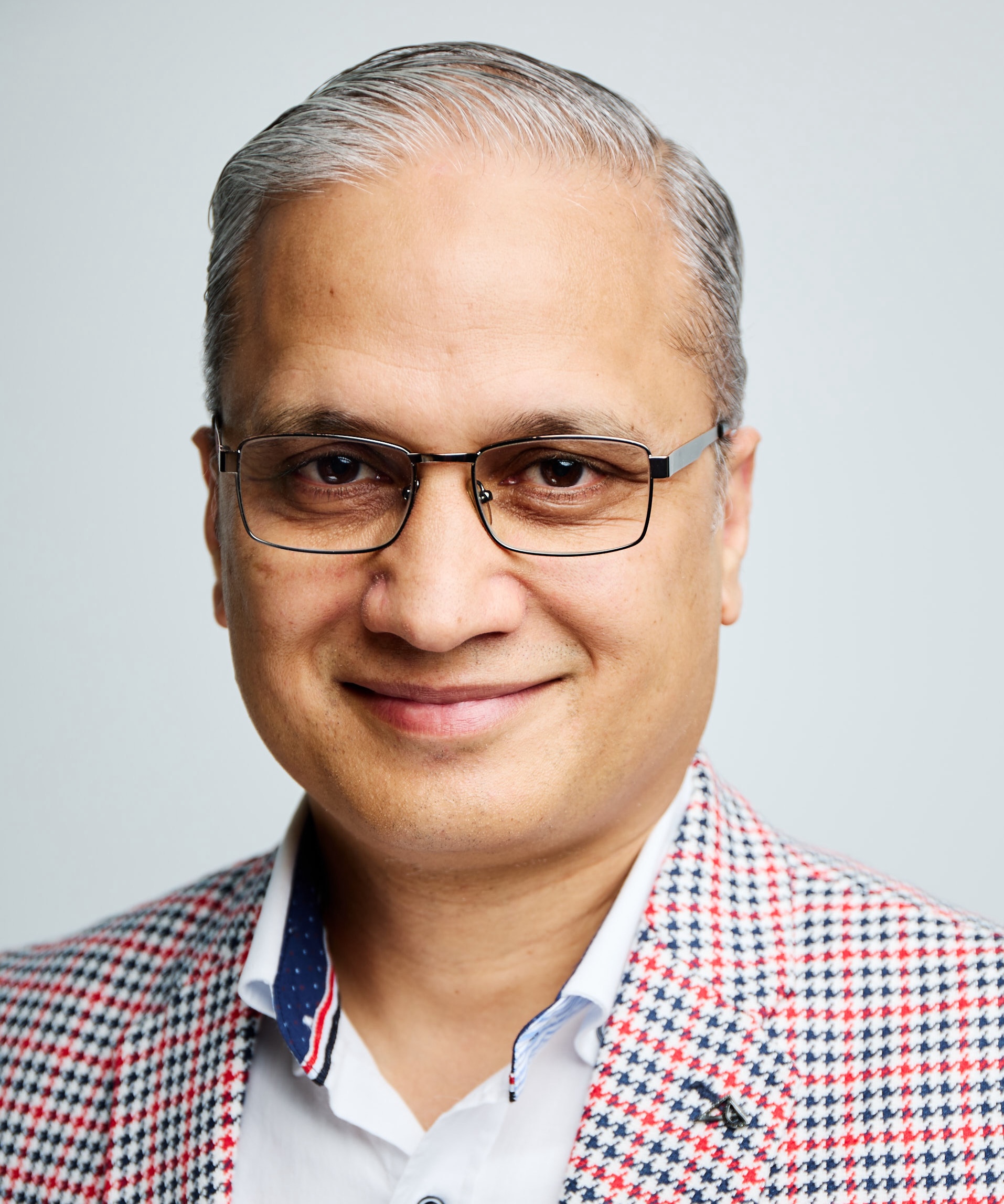
Dr. Zhibao Mian is a Lecturer in the School of Computer Science at the University of Hull, UK, and previously held an Associate Professor position at Northwest Normal University. He specializes in trustworthy AI, machine learning, and intelligent maintenance systems. His research integrates AI with IoT, blockchain, and digital twins in Industry 4.0/5.0 contexts. He leads projects on predictive maintenance for offshore wind turbines and AI-driven sustainable energy solutions. Dr. Mian holds a PhD from the University of Hull and an MSc from the University of Nottingham. Research interests include AI ethics, model-based safety analysis, and RCM. He has secured grants such as the CPHC-funded study on AI in software education and oversees multiple PhD scholarships. Notable roles include Editorial Board member of the American Journal of Artificial Intelligence and Reviewer for high-impact journals/conferences like JSS and IEEE. He is a Senior Fellow of the Higher Education Academy and received the Royal Academy of Engineering's 2024 Exceptional Talent designation. Recent publications (2023-2025) focus on ordinal networks, outlier detection, Belt and Road trade analysis, and carbon emissions modeling. He actively advises PhD students on topics like UAV-based anomaly detection and predictive maintenance frameworks.
Jiaoyan Chen is a Lecturer (Assistant Professor) in the Department of Computer Science at The University of Manchester, set to become a Senior Lecturer (Associate Professor) from July 2025. Previously, she served as a Senior Researcher at the University of Oxford and held postdoctoral roles at Heidelberg University. Her research focuses on neural-symbolic knowledge representation, ontology engineering, and integrating large language models with knowledge graphs. Education: PhD in Knowledge Reasoning and Predictive Analytics (Zhejiang University, 2011-2016) and BEng in Computer Science (Zhejiang University, 2007-2011). She also spent time as a visiting scholar at Zurich University (2014-2015). Research Interests include: Knowledge Graphs, Ontologies, Large Language Models, Retrieval Augmented Generation, and Machine Learning applications in knowledge-aware systems. She leads major grants such as the EPSRC New Investigator Award (EP/Y017706/1) and collaborates internationally through initiatives like the Manchester-Melbourne-Toronto Fund. Teaching: Leads units like 'Data Engineering Technologies' and 'Advanced Topics in Knowledge Representation'. She actively advises PhD students and co-develops tools like OWL2Vec* and DeepOnto. Service roles include Associate Editor of Transactions on Graph Data and Knowledge (TGDK), membership in the EPSRC Peer Review College, and leadership in ontology alignment initiatives like OAEI Bio-ML Track.
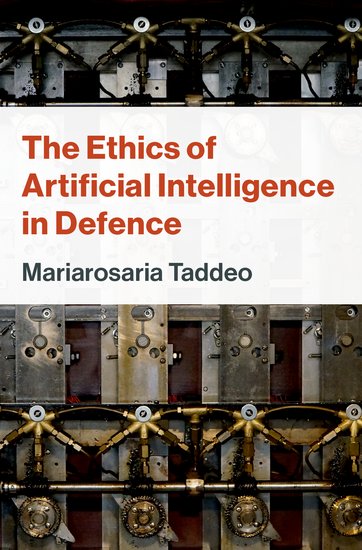
Mariarosaria Taddeo is Professor of Digital Ethics and Defence Technologies at the Oxford Internet Institute (University of Oxford) , where she also serves as DPhil Programme Director for Information, Communication and the Social Sciences. She is a Senior Research Fellow at the Alan Turing Institute and holds advisory roles at institutions including the Ministry of Defence (UK) Ethics Advisory Panel , the BRAID Programme , and the Leonardo Foundation . Education PhD (Doctor Europeus) in Philosophy from University of Padua Mariarosaria Taddeo’s research spans Digital Ethics, Philosophy of Technology, Cybersecurity Ethics, and AI Governance , with a focus on national defence applications. Her work addresses trust in AI , cyber conflict regulation , and ethical frameworks for autonomous weapons . She has published extensively in journals like Nature , Science , and Minds and Machines , including studies on data philanthropy , digital well-being , and quantum technology ethics . Scientific Awards 2010 Simon Award for Outstanding Research in Computing and Philosophy 2016 World Technology Award for Ethics 2018 InspiringFifty: Top 50 Italian women in technology ORBIT listings (2018, 2020) of top 100 women in AI Ethics 2020 Women’s Forum for Economy and Society: Outstanding Rising Talents ComputerWeekly Top 100 Influential Women in UK Technology (2020, 2023) Her projects include the UK MOD-funded AI Ethics Principles initiative, the NATO Cooperative Cyber Defence Centre of Excellence ethical guidance project, and contributions to the PETRAS IoT Research Hub . She advocates for ethical AI implementation in defence and digital governance, influencing EU policy through the CEPS Task Force on AI and Cybersecurity .
Prof. Hatice Gunes is a Full Professor of Affective Intelligence and Robotics at the University of Cambridge's Department of Computer Science and Technology, leading the Affective Intelligence and Robotics Lab (AFAR Lab). She holds an EPSRC Fellowship and is an EPSRC Fellow. Her research focuses on multimodal affective and social intelligence for AI systems, particularly embodied agents and robots, integrating Machine Learning, Affective Computing, and Human Nonverbal Behaviour Understanding. Key projects include the CHANSE initiative (2025–2028) for child mental health assessment via social robotics, the EPSRC Fellowship on robotic EQ for wellbeing (2019–2025), and the EU Horizon 2020 WorkingAge project. Prof. Gunes has pioneered systems like the EU SEMAINE project's SAL system, recognized with Best Demo and Paper Awards, and co-founded SensingFeeling, a spin-out company from the Innovate UK Sensing Feeling project. Her work emphasizes ethical AI and fairness, earning awards like the Best Paper Award in Responsible Affective Computing (IEEE ACII'23). She has delivered keynote talks at IEEE FG’19 and ICPR’22 and collaborates with the Department of Psychiatry and wellbeing professionals. Education: PhD in Computer Science from University of Technology Sydney (UTS) under Australian Government IPRS Scholarship Postdoctoral Research at Imperial College London (SEMAINe project) Research Interests: Multimodal affective computing, social robotics for mental wellbeing, fairness in AI systems, human-robot interaction (HRI), and ethical deployment of AI technologies. Her lab develops robots for workplace wellbeing coaching and child mental health assessment, with over 700 media coverages and partnerships with industry and healthcare sectors. Notable Achievements: Runner-up Collaboration Award (2023 VC Research Impact) Better Future Award (2023 Hall of Fame) Finalist RSJ/KROS Interdisciplinary Research Award (2021) Shortlisted Sony Women in Technology Award 2025 Labs & Teams: AFAR Lab drives interdisciplinary research in Cambridge, focusing on socially intelligent robots and AI systems that address critical societal challenges in wellbeing and mental health.
Adrian Weller is a Director of Research in Machine Learning at the University of Cambridge and Head of Safe and Ethical AI at The Alan Turing Institute, where he also serves as a Turing Fellow. He additionally directs the Trust and Society programme at the Leverhulme Centre for the Future of Intelligence. His career includes senior roles in finance and advisory positions for governmental AI ethics bodies. His research integrates technical and societal dimensions of artificial intelligence, with major foci including: Foundational ML : Statistical methods, high-dimensional inference, causality, and Monte Carlo techniques Trustworthy AI : Fairness, privacy, bias mitigation, and algorithmic transparency Applied Domains : Computer vision, reinforcement learning, and bio-applications of ML Socio-technical Systems : Policy frameworks, human perceptions of algorithms, and ethical deployment Notable recognition includes an MBE (2022) for pioneering contributions to digital innovation. His work actively informs UK and EU AI policy discussions.
Shahid Raza is a Professor of Cybersecurity at the University of Glasgow's School of Computing Science. He previously led the RISE Cybersecurity Unit in Sweden, establishing it as a leading research group. His expertise spans IoT Security, PKI, AI-driven cybersecurity solutions, and hardware/data security. Raza holds a PhD and Docentship from Uppsala University, alongside a Bachelor's with a Gold Medal for academic excellence. Education: B.Sc. (Computer Science, 3.99/4.0 CGPA, Gold Medal), Licentiate, PhD, and Docentship in Cybersecurity from Sweden. He leads EU-funded projects like H2020 CONCORDIA and Horizon Europe CUSTODES, coordinating initiatives such as the Cyber Node and Cyber Range. Active in cybersecurity policy, he serves on the EU SCCG, ECSO, and EARTO Security & Defence Research working groups. Research Interests Public Key Infrastructure (PKI) for IoT AIAgent-Driven Cybersecurity Solutions IoT Certification Standards Hardware Security for Low-Power Devices Grants & Projects Coordinator: Horizon Europe CUSTODES Technical Leader: H2020 Arcadian-IoT Founder: RISE Cyber Range (Sweden's largest cybersecurity test facility) Awards & Memberships IEEE Senior Member Gold Medal for Academic Excellence (Bachelor's)
Mirella Lapata is a Professor of Computer Science at the University of Edinburgh , affiliated with the School of Informatics and the EdinburghNLP group. Her research focuses on developing AI systems that reason, generalize, and handle long contexts, with specific interests in compositional generalization, cross-lingual transfer, and verifiable generation. She leads projects funded by UKRI and ERC , including the UKRI AI Centre for Doctoral Training in Responsible NLP and Turing AI Fellowship for human-like reasoning in models. Research Emphasis : Coarse-to-fine decoding in semantic parsing, parameter-efficient LLMs, collaborative writing frameworks, and multimodal summarization. Advising : Supervises current PhD students and has mentored 23 PhD graduates since 2007, including notable alumni like Li Dong and Siva Reddy. Labs & Teams : Co-leads the Generative AI Laboratory (GAIL) and contributes to the Edinburgh Laboratory for Integrated Artificial Intelligence (ELIAI). Her recent work addresses hallucinations in generative models, cross-lingual semantic parsing, and structured reasoning in text-to-SQL tasks. She has co-authored 15+ publications in 2024 alone, spanning journals like TACL , NeurIPS , and ACL .
Zohreh Shams is a Visiting Fellow at the Computer Laboratory, University of Cambridge, and Chief Scientific Officer at Leap Labs. Previously, she served as a Senior Research Associate at the University of Cambridge and held roles at Babylon Health as a Senior ML Scientist. Her research focuses on ML interpretability, explainable AI, knowledge discovery, and automated reasoning with applications in healthcare and safety-critical systems. Dr. Shams completed her PhD in Artificial Intelligence at the University of Bath, specializing in explanatory decision-making in multi-agent systems using Argumentation Theory. Her work bridges cognitive science and AI, collaborating with institutions like the University of Brighton on projects such as Accessible Reasoning with Diagrams , which explores explainable ontology reasoning systems. Her research interests include generative modeling, concept-based representations, and the integration of domain knowledge into AI systems. Notable contributions include developing frameworks like CGXplain for neural network explanations and REM for healthcare data analysis. Her publications span venues such as ECCV, AAAI, and TMLR. Shams has contributed to interdisciplinary projects, including the Integrated Cancer Medicine initiative, and maintains affiliations with Wolfson College as a former Junior Research Fellow. Her work emphasizes ethical AI practices, clinician collaboration, and the societal impact of explainable AI systems.
Francesco Fabiano is a Research Fellow at the Department of Computer Science, University of Oxford, and an Affiliated Faculty Member at New Mexico State University. He previously served as Assistant Professor at New Mexico State University (2023–2024) and held Adjunct Professor roles at Saint Joseph’s University and University of Parma. His research spans neuro-symbolic AI, multi-agent systems, epistemology, and autonomous planning. Postdoctoral Research Associate at University of Oxford (2025–present) Ph.D. in Computer Science from University of Udine (2018–2021) Master’s Degree in Computer Science from New Mexico State University (2017–2018) Bachelor’s Degree in Computer Science from University of Parma (2013–2016) His work focuses on neuro-symbolic architectures that integrate formal logic with machine learning, particularly for multi-agent epistemic planning and ethical decision-making frameworks . He explores hybrid systems combining System-1/System-2 cognitive paradigms to enhance AI trustworthiness. Recent publications analyze knowledge representation in neuro-symbolic systems, the role of large language models in planning, and heuristic optimization in multi-agent epistemic solvers like EFP. His work also addresses ethical AI and explainable data-to-text frameworks . Best Ph.D. Thesis Award by GULP (2022) He collaborates with IBM Watson Research Lab on cognitive theory-inspired AI paradigms and contributes to open-source planning tools like EFP. His teaching experience includes courses in Applied Machine Learning , Automated Planning , and LaTeX programming .
Dr Rita Borgo is a Professor in Data Visualization and Head of the Human Centred Computing Group at King's College London's Department of Informatics. She holds a leadership role within the Faculty of Natural, Mathematical & Engineering Sciences and is affiliated with the Centre for Urban Science and Progress (CUSP) London. Her research focuses on interdisciplinary visualization challenges, including human-computer interaction, AI trust calibration, and epidemiological modeling. Education details are not explicitly stated in the provided text. Her work spans over 58 publications, emphasizing visualization techniques for large datasets, trust in AI systems, and urban science applications. Key projects include RAMPVIS (visual analytics for pandemic response) and Trusted Autonomous Systems Hub (AI ethics and human-machine partnerships). Research interests include data visualization, human factors, generative AI, and policy simulation. Recent articles explore trust calibration in AI, time-series visualization, and ethical clinical decision support systems. She has led grants totaling £multi-million, including EPSRC-funded initiatives. Collaborations with organizations like ContactEngine Limited highlight her industry engagement. Labs/Teams: Leads the Human Centred Computing Group and contributes to CUSP's urban data initiatives. Supervised student work includes a notable BSc thesis by Munkhtulga Battogtokh. Current projects address visualization in nuclear policy, social media mental health correlations, and trustworthy autonomous systems.
Adam Harkens is a Lecturer in Public Law at the University of Strathclyde. He holds a PhD in Law from Queen's University Belfast, funded by the Leverhulme Interdisciplinary Network on Cybersecurity and Society (LINCS). His research focuses on the intersection of public power, digital decision-making tools, and constitutionalism, addressing issues like algorithmic policing, surveillance, and AI governance. He is a founding member of the Strathclyde Centre for Doctoral Training (SCDT) in Human Rights-Based Decision-Making and the LEADS Lab at the University of Birmingham. Teaching includes modules on constitutional law, administrative law, and digital regulation at both undergraduate and postgraduate levels. Professional activities include advising bodies like the Office for AI and the Dutch Raad van State. He co-leads the SCDT project (2023–2027) and contributed to the FATAL4JUSTICE? Programme (2019–2022). His upcoming monograph, The Algorithmic State: Power, Constitutionalism and the Future of Administrative Law , explores these themes further. Research interests emphasize preventing power abuse via algorithmic systems, engaging legal theory, human rights, and interdisciplinary collaboration. Recent projects include workshops on predictive policing regulation and EU AI accountability frameworks.
Lukasz Szpruch serves as Professor at the University of Edinburgh's School of Mathematics and Programme Director for Finance and Economics at The Alan Turing Institute. He leads the FAIR research programme on responsible AI adoption in financial services and co-investigates the UK Centre for Greening Finance & Investment (CGFI), directing partnerships with the National Office for Statistics, Accenture, Bill & Melinda Gates Foundation, and HSBC. He maintains affiliations with the Oxford-Man Institute for Quantitative Finance. His research focuses on probability theory , stochastic analysis , and theoretical machine learning , with current investigations into deep learning foundations, mean-field models, reinforcement learning, game theory, multiagent systems, and computational optimal transport. These theoretical frameworks are rigorously applied to financial economics problems including market dynamics, risk modeling, and regulatory compliance, emphasizing mathematical precision in AI system design. Recent publications reveal a strategic shift toward responsible AI deployment in finance , addressing large language model governance, synthetic data privacy, and non-asymptotic sampling theory. His work consistently bridges abstract mathematics with financial sector applications, particularly through the FAIR programme's industry collaborations that translate theoretical advances into practical frameworks for trustworthy AI adoption. As Principal Investigator of FAIR and CGFI co-Investigator, Szpruch manages significant research funding streams focused on AI ethics in financial services and sustainable finance. His academic leadership drives cross-sector initiatives where theoretical research directly informs regulatory policy development and industry best practices, though specific student mentoring details remain unspecified in source materials. Szpruch operates at the nexus of three critical research ecosystems: the FAIR programme's industry partnerships, CGFI's sustainability-focused finance research, and the Oxford-Man Institute's quantitative finance initiatives. These interconnected teams combine mathematical rigor with real-world financial applications, developing frameworks for AI assurance, green finance metrics, and synthetic data validation that address systemic challenges in modern financial systems.
Novi Quadrianto is a Professor of Machine Learning at the School of Engineering and Informatics, University of Sussex, where he joined as a Lecturer in February 2014. He is currently a Principal Investigator on three active EU grants: BayesianGDPR (ERC), TANGO (EU Horizon RIA), and Act.AI (ERC Proof of Concept). He also holds an Adjunct Professor position in Data Science at Monash University, Indonesia, and serves as Strategic Lab co-Leader of the BCAM Severo Ochoa Strategic Lab on Trustworthy Machine Learning in Bilbao, Spain. His educational background includes a PhD in Machine Learning from the Australian National University (2012) and a BEng in Electrical and Electronics Engineering from Nanyang Technological University, Singapore. During his PhD, he conducted research at multiple international institutions including HIIT-Finland, Yahoo! Research-US, University of Alberta-Canada, Fraunhofer IAIS-Germany, and IST Austria. From 2012-2014, he was a Newton International Fellow of the Royal Society at the University of Cambridge. Professor Quadrianto directs the Predictive Analytics Lab (PAL) since 2017, which focuses on "Responsible AI" research developing AI models that embed fairness, accountability, transparency, and trustworthiness. His research spans algorithmic fairness, federated learning, and computer vision, with applications in sustainable development, healthcare, and finance. His work has been funded by prestigious organizations including the European Research Council, EPSRC, and HM Treasury. His publications reveal a strong focus on addressing challenges in AI fairness, robustness, and privacy, particularly in dynamic environments and heterogeneous data settings. Recent work explores performative prediction, diversity-driven learning, and efficient vision transformer inference, demonstrating his leadership in cutting-edge machine learning research. European Research Council ERC Proof of Concept Grant (2023) Guarantor Researcher for BCAM Severo Ochoa Excellence Accreditation (2023) European Lab for Learning and Intelligent Systems (ELLIS) Scholar/Fellow (2020) European Research Council ERC Starting Grant (2019) Newton International Fellowship (2012) Microsoft Research Asia Fellowship (2009) Professor Quadrianto currently supervises six PhD students and five postdoctoral researchers. He has served as Action Editor for Transactions on Machine Learning Research since 2022 and as Associate Editor for IEEE Transactions on Pattern Analysis and Machine Intelligence since 2016. He has also been an Area Chair for major conferences including NeurIPS, ICML, and AAAI. His PAL laboratory hosts a team of 15 members focused on inter-disciplinary AI research with domain experts across various sectors. The PAL Lab operates three innovation strands: AI for Sustainable Development (supporting UN SDGs), AI for Healthcare (transforming health outcomes), and AI for Finance (personalized loan decision-making). The lab also leads initiatives in Diversity & Inclusion in AI and offers Pro-Bono Office Hours to organizations seeking guidance on machine learning aspects.
Eoin Delaney is a Lecturer in the School of Computer Science and Statistics at Trinity College Dublin (as of Spring 2025). Previously, he was a Postdoctoral Researcher at the Oxford Internet Institute (OII), University of Oxford (October 2023 – March 2025), focusing on Trustworthiness Auditing in AI. His research spans Explainable AI, algorithmic fairness, computer vision, and sustainable AI applications. He holds a PhD from University College Dublin (UCD), advised by Dr. Derek Greene and Prof. Mark T. Keane, where he developed counterfactual explanations for time series and image data. His work bridges technical AI research with societal impact, including collaborations with Accenture Labs and the VistaMilk SFI Research Centre. Key achievements include developing the OxonFair toolkit (accepted to NeurIPS 2024), winning the 2022 AI Ireland Award for Best Application of AI in a Student Project, and authoring papers in top venues like NeurIPS, AIJ, and IJCAI. He is actively involved in academic service, serving on program committees for FAccT 2025 and AAAI workshops. Eoin has supervised students at the University of Oxford and organizes workshops on AI accountability, such as the Auditing Accountability in Trustworthy Artificial Intelligence in personalized medicine. His teaching and outreach efforts include promoting STEM education through initiatives like an educational website for children, emphasizing cryptography and probability. He continues to explore fairness in AI systems, user-centric explanations, and scalable machine learning frameworks (PyTorch, TensorFlow).
Professor Emil Lupu is a Professor of Computer Systems at the Department of Computing , Imperial College London. He leads the Resilient Information Systems Security Group and serves as Co-Director of the National Research Institute in Trustworthy Inter-Connected Cyber-Physical Systems (RITICS) . As a Security Science Fellow at Imperial’s Institute for Security Science and Technology, his work bridges academic research with real-world security challenges. Education: PhD in Computing, Imperial College London (1994–1998) His research focuses on security and resilience of cyber-physical systems (CPS) , with emphasis on defending against data spoofing attacks , adversarial machine learning , and IoT vulnerabilities . He pioneered the Ponder policy systems for access control and the Self-Managed Cell framework for autonomic computing, and developed Bayesian Attack Graphs for scalable risk assessment in CPS. Recent publications highlight trends in adversarial robustness (2025–2022), including LIDAR spoofing defense for autonomous vehicles, LLM security , and attack graph analysis for IoT. His work explores the intersection of safety and security , applying model-checking to identify adversarial threats in train control, microgrids, and aviation systems. Scientific Awards: Security Science Fellowship, Imperial College London (2011–present) As co-founder of the PETRAS National Centre of Excellence in IoT Cybersecurity (2016–2021), he advanced security methodologies for interconnected systems. His collaborations with institutions like the Cyber Security Body of Knowledge (CyBoK) demonstrate his leadership in shaping cybersecurity research standards. Current projects include the RITICS Institute , focusing on trustworthy cyber-physical systems, and exploring generative AI for security poisoning with practical defenses against adversarial ML.