Lorenzo M. Polvani is the Maurice Ewing and J. Lamar Worzel Professor of Geophysics at Columbia University, with dual appointments in the Department of Applied Physics and Applied Mathematics and the Department of Earth and Environmental Sciences. He has taught at Columbia for over 30 years and received multiple teaching awards. PhD in Physical Oceanography, MIT/Woods Hole Joint Program (1988) MSc and BSc in Physics, McGill University His research spans Atmospheric Science , Climate Modeling , and Arctic Studies , focusing on geophysical fluid dynamics, radiative forcing, and climate sensitivity. Recent work examines nonlinear climate responses to CO2 variations, Arctic amplification mechanisms, and volcanic aerosol impacts. Scientific publications reveal trends in radiative forcing , Arctic sea ice dynamics , stratospheric ozone effects , and climate feedback interactions . Key tools include the ClimKern Python package for radiative feedback analysis. Notable research includes: Nonlinear precipitation responses to volcanic eruptions High CO2 forcing effects on North Atlantic Oscillation Cloud feedbacks reducing hydrological sensitivity Arctic amplification through radiative-advective equilibrium Stratospheric ozone impacts on tropical climate patterns
Hugo de Boer is a Professor at the Copernicus Institute of Sustainable Development , Faculty of Geosciences, Utrecht University. He serves as scientific lead for the Delta Climate Center in Vlissingen and coordinates MSc programs in Water Science and Management and Water Management for Climate Adaptation . His research explores climate-ecosystem interactions, focusing on plant ecophysiology, ecosystem dynamics, and nature-inclusive climate adaptation in deltas. Research Themes: Future Deltas, Pathways to Sustainability, Integrative Bioinformatics Projects: LEMONTREE, CloudRoots, 'From losers to winners' (ancient plant lineages under elevated CO2) Teaching Expertise: System thinking for sustainability, quantitative statistics, plant ecophysiology Research Trends emphasize interdisciplinary approaches to climate change impacts on ecosystems, with publications spanning plant-cloud processes, CO2 acclimation, and eco-evolutionary optimality models. His work bridges biogeochemistry, land-atmosphere interactions, and sustainable development frameworks. Projects & Collaborations include experimental studies on ancient plant lineages (Equisetum) and integrative field campaigns in Amazon and temperate forests. He contributes to modeling climate-vegetation feedbacks, pesticide emission scenarios, and social-ecological system transitions.
Jan Dirk Wegner is an Associate Professor at the University of Zurich, holding the chair in 'Data Science for Sciences' and leading the EcoVision Lab. He previously served as a Postdoc (2012–2016) and senior scientist (2017–2020) at ETH Zurich's Photogrammetry and Remote Sensing Group, following his PhD (with distinction) from Leibniz University Hannover (2011). His research bridges machine learning, computer vision, and remote sensing to address environmental and geoscience challenges, focusing on large-scale environmental data analysis, vegetation monitoring, and climate change mitigation. Education: PhD (with distinction) in Geodesy, Leibniz University Hannover (2011) Postdoc, ETH Zurich (2012–2016) Senior Scientist, ETH Zurich (2017–2020) Research Interests: Machine Learning, Computer Vision, Remote Sensing, Environmental Science, Climate Science, Geosciences, Explainable AI, Uncertainty Quantification, and Applications in Sustainability. The EcoVision Lab develops data-driven methods for global-scale environmental monitoring, including vegetation parameter mapping, flood prediction, forest degradation detection, and AI-driven ecological modeling. Awards: ETH Postdoctoral Fellowship (2012–2016) Science Prize of the German Geodetic Commission WEF Young Scientist Class 2020 (Top 25 globally under 40) Advising & Leadership: Director of the University of Zurich's Doctoral School in Data Science, leading the EcoVision Lab, and coordinating the CVPR EarthVision Workshops. His roles include Vice President of ISPRS Technical Commission II, member of the ETH AI Center, ELLIS, and UN-ETH Partnership. Labs/Teams: EcoVision Lab focuses on interdisciplinary AI applications for environmental challenges, collaborating with NGOs, governments, and industry to translate research into societal impact.
Sarah Kang is the Director of the Department of Climate Dynamics at the Max Planck Institute for Meteorology in Hamburg, Germany, a position she has held since August 2023. She leads the Director's Research Group (CDY) focusing on fundamental climate dynamics. Prior to this, she served as Professor in the Department of Urban and Environmental Engineering at Ulsan National Institute of Science and Technology (UNIST) in South Korea from 2011-2023, progressing through assistant, associate, and full professor ranks. Her research examines complex climate system dynamics, with emphasis on: Large-scale atmosphere and ocean circulation patterns Tropical-extratropical climate interactions Hydrological cycle responses to climate change Mechanisms of polar amplification Teleconnections between ocean basins and climate zones Analysis of her recent publications reveals dominant research themes: Ocean-atmosphere coupling mechanisms Radiative forcing and climate sensitivity Hemispheric climate asymmetries Tropical precipitation dynamics Polar warming impacts on global circulation with consistent methodology employing high-resolution climate modeling and observational verification. Major scientific recognitions include: AGU Atmospheric Sciences Ascent Award (2022) AOGS Kamide Lecture Award (2018) Editor's Citation for Excellence in Refereeing (GRL 2018) UNIST Teaching Excellence Award (2012) NCAR Advanced Studies Fellowship (2009) She maintains extensive professional engagement as: Co-chair of CLIVAR Climate Dynamics Panel Science Steering Committee member for CFMIP Associate Editor for Frontiers in Climate Editor for AGU Advances Board member of Korean Meteorological Society
Prof. Douglas Sheil is a Chairholder in Forest Ecology and Forest Management at Wageningen University & Research. He holds a MA in Natural Sciences from Cambridge and an MSc in Forestry from Oxford. His career includes roles at the University of Oxford, CIFOR (Indonesia), the Institute for Tropical Forest Conservation in Uganda, and the Norwegian University of Life Sciences (NMBU). His research focuses on tropical forest ecology, biodiversity conservation, and human-forest interactions, with over 200 publications. He co-authored the influential textbook Tropical Rain Forests: Ecology, Diversity, and Conservation (2010). Awards include the Biotropica Prize (2004) and the Queen’s Award for Forestry (2015). Education: MA (Natural Sciences, Cambridge), MSc (Forestry, Oxford) Key Roles: Director of Institute for Tropical Forest Conservation (2008–2012), Professor at NMBU (2013–2020) Research Interests: Tropical forest dynamics, climate change impacts, conservation strategies, and the socio-ecological dimensions of forest management. His work spans field studies in Africa, Southeast Asia, and Oceania, emphasizing interdisciplinary approaches to address deforestation, biodiversity loss, and sustainable land use. Recent Trends in Articles: Focus on mycorrhizal networks, oil palm impacts, lightning disturbance, and mammal population responses to human activity. He explores mechanisms linking forest structure to ecosystem services, such as carbon sequestration and water regulation, often integrating remote sensing and global datasets. Awards: Biotropica Prize, Queen’s Award for Forestry Grants/Projects: Studies on lightning effects in African forests, camera trap mammal surveys, and policy analyses for vegetable oil sustainability. Labs/Teams: Leads interdisciplinary groups at Wageningen, collaborating with CIFOR and international networks. Active in IUCN committees to translate science into conservation policy.
Univ.-Prof. Aiko Voigt is a Professor and Head of the Department of Meteorology and Geophysics at the University of Vienna. Her research focuses on climate dynamics, cloud physics, and atmospheric processes. She leads the Environment and Climate Research Hub and teaches advanced courses like 'Climate Modelling Lab' and 'Cloud Physics.' Her work explores cloud-radiative interactions, climate change impacts, and extreme weather dynamics. Recent studies analyze energy imbalances, high-cloud feedbacks, and tropical precipitation patterns. Voigt's contributions bridge climate modeling with observational data, emphasizing high-resolution simulations and interdisciplinary approaches. Teaching includes courses such as 'Climate System of the Earth,' 'Scientific Communication,' and 'Introduction to Computational Meteorology.' Her research spans from present-day climate to Snowball Earth scenarios, addressing both modern and paleoclimatic challenges. Publications highlight advancements in radiative transfer algorithms, cyclone dynamics under warming, and uncertainties in climate model predictions. Her work underscores the critical role of clouds in amplifying climate sensitivity and reshaping atmospheric circulation patterns.
Richard P. Allan is a Professor of Climate Science in the Department of Meteorology at the University of Reading, United Kingdom. He is affiliated with the National Centre for Earth Observation (NCEO) and the Walker Institute, and has previously worked at NCAS Climate and the Met Office. He served as a lead author for the Intergovernmental Panel on Climate Change (IPCC) Sixth Assessment Report. His research focuses on Earth's energy budget, climate change, and the global water cycle, utilizing Earth Observation data to assess climate models and understand atmospheric processes. Key areas include radiative forcing, cloud dynamics, precipitation extremes, and ocean warming. He has led significant projects such as the NERC DEEP-C consortium. The 15 most recent publications highlight sustained contributions to understanding climate system responses, particularly in energy imbalance, water vapor trends, aerosol-cloud interactions, and precipitation variability. Articles appear in high-impact journals like Nature , Science , and Geophysical Research Letters , reflecting broad expertise in climate modeling, satellite remote sensing, and hydrological impacts. Lead Author, Intergovernmental Panel on Climate Change (IPCC) Sixth Assessment Report Richard P. Allan has supervised numerous PhD and Master’s students, though specific names are not listed in the provided texts. He has secured major research grants, including from NERC, and leads collaborative projects involving climate modeling and satellite data analysis. His work is instrumental in linking observations to climate predictions and policy-relevant science. He is affiliated with the National Centre for Earth Observation, the Walker Institute, and has been Principal Investigator on projects including NERC DEEP-C, DACCIWA, SMURPHS, and SINATRA, focusing on climate extremes, African weather systems, and Earth’s energy budget.
Andrew Gettelman is a distinguished climate scientist at Pacific Northwest National Laboratory whose research spans atmospheric sciences, climatology, and climate modeling. With a D-index of 91 and over 32,652 citations across 343 publications, he ranks 422nd globally and 194th nationally in Environmental Sciences. His research interests focus on fundamental climate processes including cloud microphysics, aerosol-cloud interactions, stratospheric dynamics, and climate model development. Gettelman has made significant contributions to understanding Arctic climate feedbacks, particularly how clouds respond to sea ice loss, and has advanced the representation of aerosols in climate models through his work on the Community Atmosphere Model (CAM). Analysis of his publication trends reveals a consistent focus on improving climate model representations of atmospheric processes, with recent work emphasizing climate sensitivity in the Community Earth System Model (CESM2) and bounding global aerosol radiative forcing. His research bridges fundamental atmospheric science with practical applications for understanding climate change. Among his recognitions, Gettelman has been named to the World's Best Scientists 2025 list. His highly cited works include foundational papers on cloud microphysics schemes and aerosol representation in climate models. Gettelman maintains extensive collaborative networks, frequently working with researchers from the National Center for Atmospheric Research, University of Colorado Boulder, and other leading climate institutions. His research has been instrumental in advancing climate modeling capabilities used in major international climate assessments.
Paul O'Gorman is a Professor at the Department of Earth, Atmospheric and Planetary Sciences (EAPS) at the Massachusetts Institute of Technology. He currently serves as the Faculty Chair of the EAPS Committee on Education and as the EAPS Graduate Officer. His research focuses on understanding how climate change affects atmospheric circulation and precipitation patterns, particularly extreme events. Education: BA in Theoretical Physics, Trinity College Dublin MSc in High-Performance Computing, Trinity College Dublin PhD in Aeronautics with Minor in Applied Mathematics, California Institute of Technology Research Interests include atmospheric dynamics, hydrological cycle responses to climate change, moist convection, and the application of machine learning to climate modeling. His work addresses regional variability in extreme precipitation, vertical warming profiles in the tropics, and the fluid dynamics of land-ocean warming contrasts. Scientific Awards : Bernhard Haurwitz Memorial Lectureship (2023), American Meteorological Society MIT School of Science Graduate Teaching Prize (2018) Recent Contributions include co-leading the MIT Climate Grand Challenges flagship project "Preparing for a new world of weather and climate extremes" , which develops tools for predicting climate extremes and transitioning to low-carbon resources. He has also explored the asymmetrical generalization capabilities of machine learning algorithms in climate models under warming versus cooling scenarios.
Tom Beucler is a Conditional Pre-Tenure Assistant Professor in Geo-Environmental Data Science at the University of Lausanne’s Institute for Earth Surface Dynamics (IDYST). He holds a Master’s degree in Science and Mechanics from École Polytechnique (2014) and a PhD in Atmospheric Science from MIT (2019). Postdoctoral research at Columbia University and UC Irvine focused on machine learning applications in climate science under Professors Pierre Gentine and Michael Pritchard. Research Interests: Climate informatics, atmospheric physics, fluid dynamics, tropical meteorology, and integrating machine learning into climate models for extreme weather prediction and hydrological cycle modeling. Collaborations: Works with environmental scientists and computer engineers to improve climate models using neural networks and causal discovery methods. Initiatives: Organizes weekly brainstorming sessions to promote machine learning adoption in environmental sciences. Publications span climate-invariant machine learning, data-driven parameterizations, and hybrid AI-climate modeling frameworks like ClimSim. His work emphasizes causal consistency and generalizability across climate conditions.
Alessandro Battaglia is an Associate Professor at the Department of Environmental, Land and Infrastructure Engineering (DIATI) at the Polytechnic University of Turin. He specializes in microwave remote sensing of clouds and precipitation, with expertise in Doppler radar, cloud and snow microphysics, and microwave radiometer technology. His research spans atmospheric physics, meteorology, and climate science with applications in Earth observation from space. Dr. Battaglia's research interests focus on remote sensing of atmospheric phenomena, particularly using advanced radar technologies. His work encompasses cloud microphysics, precipitation measurement, and wind observation from space. He is particularly known for his contributions to the development of spaceborne Doppler radar systems for measuring in-cloud winds, which represents a significant advancement in atmospheric observation capabilities. His research bridges engineering, physics, and meteorology to improve our understanding of Earth's atmospheric processes and climate systems. His recent publications demonstrate a strong focus on the WIVERN (Wind Velocity Radar Nephoscope) mission, with research spanning cloud microphysics, snowfall measurement, wind field reconstruction, and innovative radar signal processing techniques. These works highlight the interdisciplinary nature of his research, connecting atmospheric science, engineering, and computational methods to advance space-based Earth observation capabilities. NASA Group Achievement Award (2015) Fellow of the National Center for Earth Observation, UK (2014-present) Dr. Battaglia actively mentors several PhD students including Marco Coppola, Francesco Manconi, Riccardo Rabino, Susmitha Sasikumar, Aida Galfione, and Paolo Martire across Civil and Environmental Engineering and Aerospace Engineering programs. He serves as Principal Investigator for multiple research projects funded by ESA (3 projects), UK-NERC (1 project), UK-NCEO (1 project), and the US Department of Energy (1 project). His current research focuses on the WIVERN mission, EarthCARE mission, and NASA's INCUS mission, with particular emphasis on developing algorithms for spaceborne Doppler radar systems. He leads research teams working on cutting-edge remote sensing technologies for atmospheric observation, with particular focus on developing the next generation of spaceborne instruments capable of measuring in-cloud winds—a capability that has been missing from Earth observation systems until now.
Soroosh Sorooshian is a Professor at the Samueli School of Engineering , University of California, Irvine, with joint appointments in Civil and Environmental Engineering and Earth System Science . He serves as Founding Director of the Center for Hydrometeorology and Remote Sensing (CHRS) and holds the Samueli Endowed Chair in Engineering . His expertise spans hydrometeorology, climate-water interactions, remote sensing applications, and water resource management in arid regions. Education : Ph.D. in Engineering (1978), Engineer Degree in Systems Engineering (1977), M.S. in Operations Research (1973), B.S. in Mechanical Engineering (1971). Leadership & Affiliations : Member of US National Academy of Engineering , International Academy of Astronautics , and multiple scientific bodies (AAAS, AGU, AMS, IWRA). Former advisor to NASA, NOAA, and UNESCO initiatives. Recent research focuses on machine learning integration for hydrological modeling , satellite precipitation product development , and climate change impact assessments . Key trends include deep learning for bias correction , multi-sensor precipitation fusion , and atmospheric river hydrology in California. Awards include the AGU Horton Medal , NASA Distinguished Public Service Medal , and Prince Sultan Bin Abdulaziz International Water Prize . He consults on urban flooding and surface hydrology challenges. Scientific Honors : Chinese Academy of Sciences Einstein Professorship (2014) UNESCO Great Man-Made River Water Prize (2007) AMS Walter Orr Roberts Lecturer (2009) Multiple Distinguished Educator Awards Advisory Roles : Served on committees for NASA, DOE, and World Climate Research Programme's Hydrology Commission.
Dr. Michael P. Byrne is an Associate Professor at the School of Earth and Environmental Sciences , University of St Andrews, and a Marie Skłodowska-Curie Research Fellow at the Atmospheric, Oceanic and Planetary Physics Group , University of Oxford. His research focuses on climate dynamics, monsoons, land-climate interactions, and the water cycle. He leads the Climate Dynamics Lab at St Andrews, exploring topics like cloud feedbacks, tropical climate change, and continental-ocean temperature contrasts. He completed his PhD at MIT under Paul O’Gorman. His work bridges theory, models, and observations to address fundamental climate questions, including monsoon dynamics, intertropical convergence zone behavior, and extreme temperature amplification over tropical land. Key contributions include studies on ITCZ width impacts, elevation-dependent warming, and biases in precipitation projections. Education: PhD from Massachusetts Institute of Technology (advisor: Paul O’Gorman) Research Highlights: Cloud feedback mechanisms in tropical climates Land-ocean warming contrasts and their societal impacts ITCZ dynamics and global climate modeling Awards: Marie Skłodowska-Curie Fellowship (Oxford) Labs/Teams: Climate Dynamics Lab (St Andrews), ITCZ-MIP collaboration
Ulrich Pöschl is Director of the Multiphase Chemistry Department at the Max Planck Institute for Chemistry and Professor in the Department of Chemistry, Pharmacy and Geosciences at Johannes Gutenberg University (JGU) in Mainz, Germany. He has held leadership roles at MIT, the Max Planck Society, and the Technical University of Munich, and is a globally recognized expert in atmospheric and multiphase chemistry. Education: PhD (Doctor technicae) in Chemistry, Technical University of Graz (1995) Habilitation in Geochemistry, JGU Mainz (2007) Habilitation in Chemistry, Technical University of Munich (2006) Research Interests: His research centers on multiphase processes at the interface of atmosphere, biosphere, and hydrosphere. Key areas include aerosol chemistry, climate interactions, oxidative stress, protein modification, and the health impacts of air pollution. His work integrates field observations, laboratory experiments, and modeling. Publication Trends: His recent research spans atmospheric new particle formation in the Amazon, health effects of air pollution, open access science, and the role of bioaerosols in disease transmission. The work is highly interdisciplinary, bridging environmental science, chemistry, public health, and climate science. Scientific Awards: Highly Cited Researcher (Web of Science, 2014–2024) AGU Union Fellow (2023) Copernicus Medal (2015) Pius XI Gold Medal (2012) EGU Union Service Award (2005) Advising and Grants: Pöschl has mentored numerous PhD and postdoctoral researchers, many of whom now hold senior academic positions worldwide. He leads major international collaborations and has secured significant research funding. He is a strong advocate for open science, having founded the journal Atmospheric Chemistry and Physics and co-leading the OA2020 initiative. Labs and Teams: He leads the Multiphase Chemistry Department at MPIC, overseeing a large interdisciplinary team conducting cutting-edge research on aerosols, climate, and health. His group collaborates globally and uses advanced analytical, experimental, and computational methods.
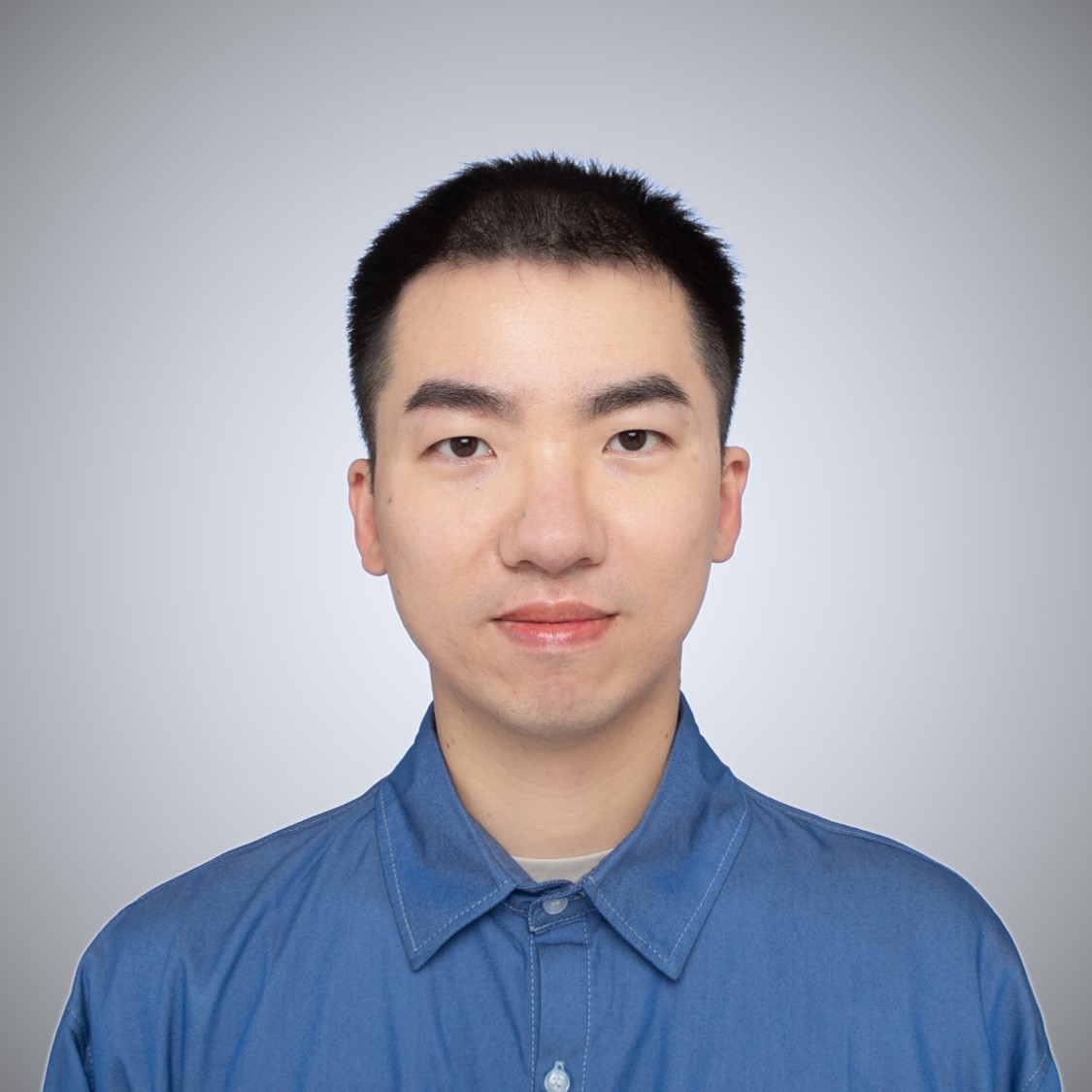
Prof. ZHUANG Yizhou is an Assistant Professor in the Department of Geography at Hong Kong Baptist University. His research focuses on weather and climate extremes, climate change attribution, and land-atmosphere coupling. With a Ph.D. in Meteorology from Peking University and extensive postdoctoral experience at UCLA, he brings significant expertise in atmospheric sciences to his academic role. Dr. Zhuang's educational background includes: 2019-2024: Postdoctoral Scholar, University of California, Los Angeles (UCLA), USA 2017: Visiting Graduate Researcher, University of California, Los Angeles (UCLA), USA 2015-2017: Visiting Research Scholar, University of Texas at Austin, USA 2013-2019: Ph.D., Meteorology, Peking University, China 2009-2013: B.S., Atmospheric Sciences (Remote Sensing Focus), Nanjing University of Information Science and Technology, China Dr. Zhuang's research spans multiple critical areas in climate science. His work on weather and climate extremes examines phenomena like wildfires, droughts, and floods. In climate change attribution , he investigates the human influence on extreme weather events, with several publications in PNAS demonstrating how anthropogenic warming has altered drought mechanisms and fire risks. His research on land-atmosphere coupling explores the complex feedback mechanisms between Earth's surface and the atmosphere. Additionally, he applies machine learning techniques and remote sensing technologies to analyze cloud formations and precipitation patterns. Analysis of Dr. Zhuang's recent publications reveals a consistent focus on drought mechanisms and fire weather risk in western North America. His work frequently employs advanced statistical methods like self-organizing maps and canonical correlation analysis to understand complex climate phenomena. A notable trend is his investigation of how anthropogenic climate change is fundamentally altering the nature of droughts, shifting from precipitation-deficit dominated to temperature-driven events, with significant implications for water resource management. Dr. Zhuang has received several prestigious awards for his research contributions: JIFRESSE Outstanding Leadership/Service Award, UCLA, 2023 Richard P. and Linda S. Turco Exceptional Research Publication Award, UCLA, 2023 China Scholarship Council (CSC) Joint Ph.D. Scholarship, 2015-2017 As an academic mentor, Dr. Zhuang supervises graduate students, with evidence of at least one student (G. Wang) whose work has been published under his supervision. He serves as a reviewer for numerous high-impact journals including Proceedings of the National Academy of Sciences (PNAS), Earth's Future, and Geophysical Research Letters. Additionally, he has mentored students in the UCLA Joint Institute for Regional Earth System Science and Engineering (JIFRESSE) Summer Internship Program, with his mentee Annie Rosen winning the 2024 Best JSIP Presentation Award. Dr. Zhuang maintains an active research group, as indicated by his personal website www.zhuangyz.org. His team focuses on climate extremes, attribution studies, and land-atmosphere interactions, with ongoing projects examining drought mechanisms, fire weather risks, and precipitation variability across different regions of the United States, particularly the western states and Great Plains.