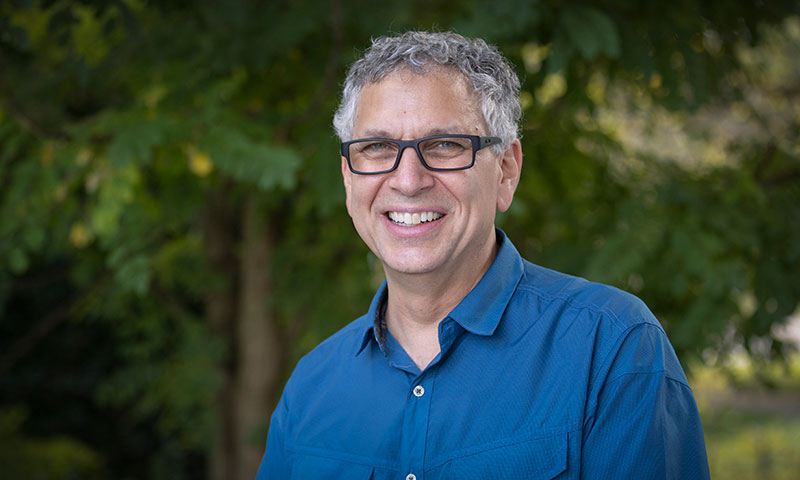
Dr. Leanne Archer is a Researcher in the School of Geographical Sciences at the University of Bristol, specializing in hydrology and climate change impacts. Her work focuses on flood risk assessment in Small Island Developing States, extreme rainfall events, and the application of convection-permitting climate models. She collaborates with experts like Prof. Paul Bates and Dr. Jonty Rougier on interdisciplinary projects addressing tropical cyclone hazards and climate adaptation strategies. Her research interests include analyzing flood exposure in vulnerable regions, soil moisture dynamics in urban flooding, and improving global flood forecasts for humanitarian operations. Archer’s publications emphasize the implications of climate change on rainfall-driven disasters, particularly in Puerto Rico and East Africa, using high-resolution climate projections to evaluate future risks under 1.5° C and 2° C warming scenarios. Recent work explores innovations like the Surface Water Ocean Topography Mission for flood modeling and evaluates the suitability of TanDEM-X data for inundation studies in island nations. Her contributions bridge environmental science with policy, aiming to enhance disaster preparedness and resilience in climate-sensitive regions.
Bei Wang Phillips is an Associate Professor in the School of Computing and a faculty member at the Scientific Computing and Imaging (SCI) Institute at the University of Utah. She holds a Ph.D. in Computer Science from Duke University and an undergraduate degree from the University of Bridgeport. Her research focuses on Topological Data Analysis (TDA), data visualization, computational topology, and machine learning, with applications in scientific data exploration and analysis. She has received prestigious awards including the NSF CAREER Award (2022) and the PECASE Award (2025). Her work spans projects funded by NSF, NIH, and DOE, including multiparameter TDA and topology-aware data compression. She advises numerous students and collaborates on interdisciplinary initiatives in astrophysics, climate science, and AI fairness. Education: Ph.D. in Computer Science, Duke University (2010) B.S. in Computer Science and Mathematics, University of Bridgeport (2003) Research Interests: Topological techniques for large-scale data analysis Integration of topological, geometric, and machine learning methods Applications in visualization, bioinformatics, and network analysis Key Projects: NSF-funded TDA research (DMS-2301361, OAC-2313124) DOE project on topology-preserving data compression Collaborations with NASA, Argonne National Lab, and Carnegie Institution of Washington Awards: Presidential Early Career Award for Scientists and Engineers (2025) NSF CAREER Award (2022) DOE Early Career Research Program (2020) Advising and Grants: Mentored over 30 students and postdocs Recipient of multiple NSF and DOE grants totaling millions
Dr. Tetsu Hara is a Professor at the University of Rhode Island's Graduate School of Oceanography (URI GSO), specializing in Physical Oceanography. With a lifelong fascination for ocean surface waves, his research bridges civil engineering principles with ocean dynamics to study air-sea interactions under extreme conditions like hurricanes. Ph.D., Civil Engineering, Massachusetts Institute of Technology, 1990 M.S., Civil Engineering, University of Tokyo, 1986 B.S., Civil Engineering, University of Tokyo, 1983 Dr. Hara's work focuses on ocean turbulence, wave dynamics, and their role in air-sea energy exchange. He investigates how surface waves influence hurricane intensity predictions, climate modeling, and coastal processes through numerical simulations and field observations. His research emphasizes the importance of sea state (wave height, wind-wave alignment) in determining heat fluxes, drag coefficients, and gas exchange rates critical for climate science. His publications reveal trends in tropical cyclone modeling, Langmuir turbulence, and wave-current interactions. By combining satellite data with computational models, he explores discrepancies between wind strength and wave behavior, advancing understanding of ocean mixing mechanisms that impact climate change predictions. Dr. Hara has received continuous National Science Foundation grants since 2003, including collaborative projects on hurricane modeling (2018-2020), wind-wave turbulence (2015-2020), and storm surge impacts (2016-present). He previously secured funding from the Office of Naval Research (2009-2012) and U.S. Department of Homeland Security (2016). Mentored 15+ graduate students in hurricane dynamics, wave modeling, and air-sea interaction Co-developed advanced courses on geophysical fluid dynamics and tropical cyclone modeling Collaborates closely with Dr. Isaac Ginis (URI GSO) and Dr. Tobias Kukulka (University of Delaware)
Ann B. Lee is a Professor and Co-Director of the PhD Program in Statistics at Carnegie Mellon University , with a joint appointment in the Department of Statistics & Data Science and the Machine Learning Department. Prior to joining CMU, she held positions as a J.W. Gibbs Assistant Professor at Yale University and a visiting research associate at Brown University. PhD in Physics, Brown University MSc/BSc in Engineering Physics, Chalmers University of Technology, Sweden Her research focuses on statistical methodology for complex data in the physical sciences , emphasizing trustworthy inference, uncertainty quantification, and integration of classical statistics with machine learning. Recent work includes likelihood-free inference, calibrated forecasting, and diagnostics for generative models. The STAMPS research group , which she co-founded in 2018, hosts weekly meetings and public webinars. In Fall 2024, STAMPS will transition into a CMU Research Center. Recent publications span likelihood-free inference , climate modeling , and astronomy . Notable collaborations include applications to hurricane intensity guidance , galaxy redshift estimation , and cosmological parameter biases . She mentors PhD students and has advised multiple award-winning researchers, including ASA Best Student Paper Award winners. Her teaching includes advanced courses on probability, regression, and AI for climate sciences.
Jim Hall is a Professor of Climate and Environmental Risk at the University of Oxford's School of Geography and the Environment, and serves as Director of Research there. He is also a Visiting Fellow at Linacre College and holds leadership roles including Chair of the Science Advisory Committee at IIASA, and Expert Advisor to the UK's National Infrastructure Commission. His work focuses on systemic risk analysis, infrastructure resilience, and policy implications of climate change adaptation. Prof Hall has pioneered methodologies like the National Infrastructure Systems Model (NISMOD) and chairs the Data and Analytics Facility for National Infrastructure (DAFNI). His research spans flood risk management, energy systems decarbonization, and transboundary water resource conflicts in regions such as the Eastern Nile Basin and the Caribbean. Key research areas include robust decision making under uncertainty, info-gap theory applications, and integrated assessments of human-environmental systems. He has contributed to major international assessments, including the IPCC's Fourth Assessment Report, and developed frameworks for multi-hazard stress testing of infrastructure networks. Scientific Awards: George Stephenson Medal (2001), Prince Sultan Prize for Water (2018), Royal Academy of Engineering Fellowship (2010) His advising and grants work includes mentoring a DPhil student Erin Canning and leading projects like MARIUS and ENHANCE. He has also developed innovative modeling tools for coastal erosion prediction and probabilistic assessments of global shipping fuel transitions. Prof Hall’s research groups actively engage in interdisciplinary projects, including the Oxford Martin Programme on Resource Stewardship and the UK Infrastructure Transitions Research Consortium. His work emphasizes bridging scientific analysis with actionable policy solutions for climate adaptation.
Sai Ravela is a Principal Research Scientist in the Department of Earth, Atmospheric and Planetary Sciences (EAPS) at the Massachusetts Institute of Technology (MIT). His research focuses on nonlinear stochastic dynamics, coherent fluid systems, uncertainty quantification, and autonomous observing technologies. He specializes in developing data-driven methodologies for natural hazard detection, climate change impacts, and environmental risk assessment. Ravela’s work integrates computational science with geophysical applications, including storm surge modeling, extreme rainfall analysis, and geothermal exploration. He pioneers techniques like neural dynamical systems and adversarial learning to improve predictive accuracy in nonstationary climate regimes. His contributions span environmental monitoring systems, autonomous aircraft resilience frameworks, and policy-informed climate vulnerability assessments. Key research areas include: Coastal flood risk in Bangladesh and Vietnam Dynamic data-driven applications systems (DDDAS) Machine learning for geosciences and environmental systems Uncertainty quantification in complex fluid dynamics He leads interdisciplinary projects at MIT’s Computational Science and Engineering (CSE) program, advancing methods for data assimilation, surrogate modeling, and real-time environmental observatories. His innovations bridge theoretical frameworks with practical solutions for climate adaptation and disaster resilience.
Erhan Kutanoglu is an Associate Professor in the Operations Research and Industrial Engineering Graduate Program at The University of Texas at Austin's Cockrell School of Engineering. He joined the faculty in 2002 and received a National Science Foundation Early Career Development Award that year. His research focuses on integrating predictive models with stochastic optimization to address challenges in disaster resilience, humanitarian logistics, and semiconductor manufacturing. Key areas include hurricane mitigation, power grid resilience, and supply chain optimization. Education: PhD in Industrial Engineering from Lehigh University (1999). Research Interests: Applied operations research for manufacturing/service logistics, disaster resilience decision-making, semiconductor cycle time optimization, and inventory modeling. Recent work emphasizes hurricane evacuation planning, flood mitigation for critical infrastructure, and equity considerations in grid resilience. Publications: Over 50 peer-reviewed articles in journals like IEEE Transactions, European Journal of Operational Research, and Annals of Operations Research. Notable work includes models for power grid resilience, patient evacuation strategies, and semiconductor manufacturing efficiency. Awards: NSF CAREER Award (2002), recognized for contributions to service logistics optimization and stochastic modeling. Advising & Grants: Advised graduate students on projects involving hurricane preparedness and semiconductor scheduling. Active in collaborative research with industry partners to streamline manufacturing processes and enhance disaster response systems. Labs/Teams: Engaged with the Cockrell School's infrastructure resilience research groups and interdisciplinary teams addressing climate adaptation challenges.
Mingfang Ting is a Professor of Climate at the Columbia Climate School , affiliated with the Lamont-Doherty Earth Observatory . She co-directs the M.S. in Climate program and serves as Co-Senior Director for Education at the Columbia Climate School. Her research focuses on climate variability, extremes, Asian monsoons, Arctic sea ice, and climate change impacts on agriculture and health. Education: Ph.D. in Climate Dynamics (Princeton University, 1990), M.S. and B.S. from Peking University (1985, 1983). She has taught climate science at Columbia since 2004. Research Interests: Investigates weather/climate extremes in a warming world, Asian monsoon dynamics, Arctic sea ice variability, decadal climate modes, and hydroclimate impacts. Recent work emphasizes heatwaves, drought-flood linkages, and climate model projections. Key Projects (2020–2023): Advancing predictive understanding of North American drought Asian monsoon response to climate change Causal mechanisms of dry/humid heat extremes Arctic transport pathways and sea ice loss Scientific Contributions: Authored/co-authored over 200+ peer-reviewed articles. Her 2022 analysis of the 2021 North American heatwave and 2022 Pakistan floods exemplifies climate attribution science. Awards: AMS Distinguished Scientific Award (2021) AGU Fellow (2022) NSF CAREER Award (1995) Reuters' World’s Top Climate Scientists (2021) Leadership: Former Co-Editor-in-Chief of Journal of Climate (2020–2023). Active in climate education and global resilience initiatives through the Decarbonization Network. Labs/Teams: Leads interdisciplinary teams at LDEO focusing on climate dynamics and extreme event analysis. Collaborates internationally on monsoon systems and Arctic research.
David M. Higdon is a Professor and Department Head of the Department of Statistics at Virginia Tech within the College of Science. He specializes in Bayesian statistical modeling of environmental and physical systems, focusing on integrating physical observations with computer simulations for prediction and inference. Previously, he spent 14 years at Los Alamos National Laboratory as a scientist and group leader in the Statistical Sciences Group. Education: Ph.D. in Statistics, University of Washington, 1994 M.A. in Mathematics, University of California San Diego, 1989 B.A. in Mathematics, University of California San Diego, 1987 Research Interests: Higdon’s work spans space-time modeling , inverse problems in hydrology and imaging , statistical modeling in ecology and environmental science , and multiscale models . He develops methods for parallel processing in posterior exploration , statistical computing , and Monte Carlo simulations . His research addresses critical challenges in uncertainty quantification (UQ), including climate modeling, nuclear density functional theory, and geophysical imaging. Publications Trends: His recent articles emphasize Bayesian methodologies applied to complex systems, such as climate forecasting, materials science, and cosmology. A recurring theme is the development of emulators and surrogate models to handle computationally intensive simulations. Awards: Fellow of the American Statistical Association Advising & Grants: While no specific advisees are listed, Higdon has contributed to interdisciplinary collaborations in UQ and statistical modeling. His work has been supported by grants from agencies such as the National Science Foundation and Department of Energy. Labs/Teams: He leads the Statistics Department’s efforts in UQ and computational statistics, fostering collaborations across engineering, environmental science, and physics.
Univ.-Prof. Aiko Voigt is a Professor and Head of the Department of Meteorology and Geophysics at the University of Vienna. Her research focuses on climate dynamics, cloud physics, and atmospheric processes. She leads the Environment and Climate Research Hub and teaches advanced courses like 'Climate Modelling Lab' and 'Cloud Physics.' Her work explores cloud-radiative interactions, climate change impacts, and extreme weather dynamics. Recent studies analyze energy imbalances, high-cloud feedbacks, and tropical precipitation patterns. Voigt's contributions bridge climate modeling with observational data, emphasizing high-resolution simulations and interdisciplinary approaches. Teaching includes courses such as 'Climate System of the Earth,' 'Scientific Communication,' and 'Introduction to Computational Meteorology.' Her research spans from present-day climate to Snowball Earth scenarios, addressing both modern and paleoclimatic challenges. Publications highlight advancements in radiative transfer algorithms, cyclone dynamics under warming, and uncertainties in climate model predictions. Her work underscores the critical role of clouds in amplifying climate sensitivity and reshaping atmospheric circulation patterns.
Prof. Flavio Anselmetti is a Full Professor of Quaternary Geology and Paleoclimatology at the University of Bern , where he has been employed since 2012. He also serves as the Managing Director of the Institute of Geological Sciences . Prior to this, he held significant roles at ETH Zurich, including SNSF Assistant Professor, and at EAWAG Dübendorf as Head of the Sedimentology Group, while remaining a Titular Professor at ETH Zurich until 2012. His academic training includes a Diploma in Geology (1990) from the University of Basel , followed by a PhD (1994) from ETH Zurich and University of Miami (USA) . He spent three years as a Postdoctoral Fellow and Research Associate at the University of Miami between 1994 and 1997. Paleoseismology : Using lacustrine and marine sediments to reconstruct earthquake and tsunami records Climate Change Studies : Investigating Holocene and Pleistocene climate shifts through sediment cores Sediment Dynamics : Analyzing source-to-sink systems and glacial sediment properties His recent publications focus on sedimentary archives in Science Advances , Quaternary Research , and Environmental Modelling and Software , with an emphasis on deep learning applications in sediment analysis , multi-proxy paleoenvironmental reconstructions , and human impact assessments over millennia. He has contributed to major projects in the Alpine foreland and Caribbean regions . Prof. Anselmetti leads the Quaternary Geology and Paleoclimatology Research Group and collaborates with international teams on ICDP-DOVE drilling campaigns and multibeam bathymetry mapping in Swiss lakes. His work extends to geohazard assessment , carbonate-siliciclastic shelf dynamics , and subaqueous fault analysis in active tectonic zones.
David Henderson is the Director of the Cyclone Testing Station (CTS) in the School of Engineering and Physical Sciences at James Cook University, Australia. He has over two decades of experience as a research engineer specializing in the performance of low-rise buildings under extreme wind conditions. He previously served as the CTS Research Fellow and Manager, and was seconded as a Postdoctoral Researcher at the University of Western Ontario, Canada, working on full-scale house testing under simulated wind loads. His work bridges engineering research, disaster assessment, and policy development. David's research focuses on wind engineering, structural resilience, and disaster mitigation. His key interests include cyclonic wind loading, internal and external pressure dynamics in buildings, fatigue failure of structural connections, and the vulnerability of housing to severe wind events. He has conducted post-disaster surveys across Australia and Canada, assessing damage from cyclones, tornadoes, and earthquakes. His research has direct applications in building codes, retrofitting strategies, and community risk reduction. The recent publications highlight a strong trend in understanding and mitigating wind-induced damage to residential structures, particularly through full-scale testing, modeling of pressure dynamics, and fragility assessment of roofing systems. His work spans experimental, theoretical, and policy-oriented domains, with a growing emphasis on climate change adaptation and community resilience. Topics such as internal pressure design, load sharing in roof frames, and retrofitting for wind resistance are central to his contributions. 14 research awards (specific names not listed) Active member of Standards Australia code committees Invited speaker at national and international conferences Media contributor on storm damage and building safety David has led multiple research projects funded by councils and agencies focused on extreme wind mitigation, data systems (SWIRLnet), and community risk reduction. While formal student supervision is not explicitly listed, he collaborates extensively with researchers such as John Ginger, Korah Parackal, and Daniel Smith. He has contributed to major studies involving wind load testing, housing vulnerability modeling, and climate adaptation planning. David is a key figure in the Cyclone Testing Station, leading its full-scale testing program and contributing to the development of software for controlled load and measurement systems. His team conducts wind risk assessments for communities and large installations, incorporating terrain analysis and retrofitting evaluations. The CTS serves as a national resource for wind engineering research and disaster resilience innovation.
David Finkelstein is an Associate Professor in the Department of Geosciences at Hobart and William Smith Colleges, where he has been a faculty member since 2013. He earned his Ph.D. from the University of Illinois at Urbana-Champaign and holds advanced degrees from the University of Massachusetts, Amherst. His academic affiliations include prior roles as a Research Assistant Professor and Lab Manager at the University of Massachusetts and as an Assistant Professor at the University of Tennessee. Ph.D., University of Illinois at Urbana-Champaign M.S., University of Massachusetts, Amherst B.S., University of Massachusetts, Amherst Dr. Finkelstein's research centers on limnogeology and biogeochemistry , with a focus on the chemical evolution of lake systems, stable isotope geochemistry, and microbial life in extreme environments. His work integrates aqueous geochemistry, organic molecular analysis, and microbiological methods to reconstruct paleoenvironments and climate change across geological timescales, including the Holocene, Pleistocene, Cretaceous, and Triassic periods. He has extensively studied lake sediments, wildfires, and the environmental impacts of the 2010 Gulf of Mexico oil spill. His recent publications show a strong trend in using biogeochemical proxies and isotopic signatures to understand past climate variability, human-environment interactions, and extreme environmental conditions. His research often involves multidisciplinary collaborations and field-based studies in diverse regions such as Russia, Iran, and Central America. Dr. Finkelstein is actively involved in scientific communities, with affiliations including: International Association of Limnogeology American Geophysical Union Geological Society of America Geochemical Society SEPM (Society for Sedimentary Geology) He has advised numerous research projects and mentored students in geoscience, though specific names are not listed. His teaching includes courses such as Stable Isotope Geochemistry, Limnology, and Environmental Geochemistry, reflecting his expertise in both theoretical and applied aspects of earth sciences. Dr. Finkelstein has not received any explicitly listed scientific awards in the provided text, but his publication record in high-impact journals demonstrates significant scholarly contributions. He does not appear to lead a named laboratory or research center, but his work is deeply embedded in field and laboratory-based geochemical analysis.
Professor Liz Stephens is a faculty member at the University of Reading's Department of Meteorology, specializing in flood forecasting, climate variability, and disaster risk management. Her work focuses on improving hydrological and meteorological models to enhance flood preparedness and climate adaptation strategies globally. Research Interests: Probabilistic flood forecasting Climate impacts on extreme events Enhancing forecast communication for decision-makers Applications in data-scarce regions like Kenya and Uganda Key Projects: Global Flood Awareness System (GloFAS) World Weather Attribution studies Probabilistic forecast evaluation frameworks Her research bridges academic analysis with practical implementation, collaborating with international organizations like ECMWF and humanitarian agencies to translate scientific insights into actionable disaster preparedness measures.
Thomas Wernberg is a Professor in the School of Biological Sciences at The University of Western Australia (UWA), affiliated with the UWA Oceans Institute. His research focuses on ecological interactions in coastal marine habitats, particularly kelp forests, and their responses to climate change, marine heatwaves, and invasive species. He has held roles including Chair of UWA's Boating & Diving Safety Committee and Editor-in-Chief of Aquatic Botany . Wernberg has contributed to over 267 publications and secured 53 grants, including projects on kelp restoration and blue carbon management. He is a recipient of multiple 'Highly Cited Researcher' awards and has advised on initiatives like Seaforester . His work bridges sub-cellular to macro-ecological scales, addressing climate mitigation through marine ecosystem services. Education: MSc from Roskilde University (RUC). Previous Positions: ARC Future Fellow (2011–2015), Senior Lecturer (2015–2021), and various postdoctoral roles at UWA and other institutions. Research Themes: Climate change impacts, marine heatwaves, kelp restoration ( Green Gravel ), blue carbon, and biodiversity conservation. His lab explores resilience thresholds, ecological costs of stress, and genetic diversity's role in adaptation. Collaborations span global institutions, with active research in Arctic/Subarctic regions and Australian marine ecosystems. Grants & Projects: Includes operational upscaling of seaforestation, hydrodynamic energy attenuation studies, and blue carbon management. He leads initiatives to protect 4 million hectares of kelp forests by 2040. Awards: 2019–2022 Highly Cited Researcher (Web of Science), 2022 Senior Research Award (UWA School of Biological Sciences). Labs/Teams: Collaborates with the Great Southern Reef Foundation, Uluu Scientific Advisory Board, and international networks like the Green Gravel Action Group .