Dr. Dan Raphaeli is a faculty member at the School of Electrical Engineering within the Iby and Aladar Fleischman Faculty of Engineering at Tel Aviv University. His research focuses on advanced communication systems and signal processing techniques. Trellis Coded Modulation Decoding algorithms and Turbo codes Maximum likelihood equalization analysis Noncoherent detection methods for coded modulation Carrier tracking in mobile communications Multipath fading mitigation Spread spectrum systems and Multiuser CDMA OFDM receiver design Contact: daniraf@tauex.tau.ac.il
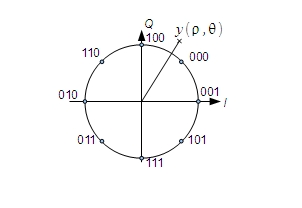
Professor Emmanuel Boutillon holds a position at Université de Bretagne Sud (UBS) within the Lab-STICC (UMR 6285), specializing in VLSI architectures and communication systems. His academic career includes roles as an Assistant Professor at Telecom ParisTech (1997-2000) and research engineer positions at institutions like ENST and Philips Research. He has supervised over 25 PhD students, focusing on topics such as LDPC codes, Turbo codes, and hardware implementation. Education: Engineering degree from Telecom ParisTech (1986-1990). Research Interests: Non-binary LDPC codes, QCSP transmission, AI-aided FEC decoding, and high-speed communication architectures. Key projects include the French ANR-funded AI4Code (2021-2024) and QCSP (2019-2023) initiatives. His industry collaborations involve companies like Turbo-Concept and Orange Labs, with emphasis on real-time encoder/decoder solutions. He has published extensively on topics like trellis aggregation and 8PSK demapper design.
Catherine Douillard is a Professor in the Department of Mathematical and Electrical Engineering at IMT Atlantique. She holds an engineering degree from École Nationale Supérieure des Télécommunications de Bretagne (1988), a doctorate in electronics from the University of Western Brittany (1992), and accreditation to supervise research from the University of Southern Brittany (2004). Her research focuses on digital communications, error-correcting coding, iterative decoding, and coded modulations for multi-antenna and NOMA systems. She led the 'Coding, Constellations and Interleaving' group in DVB-NGH standardization (2010–2012) and received the IEEE/SEE Glavieux Award (2009) for industrial impact in coding. She chairs major coding symposiums like ISTC and leads projects such as NF-PERSEUS (5G networks) and AI4CODE (AI-driven FEC design). Her work emphasizes resource allocation in IoT, NOMA, and full-duplex systems. Key contributions include optimizing non-binary turbo codes for IoT, applying machine learning to interleaver design, and exploring full-duplex relay architectures. She supervises interdisciplinary teams across IMT Atlantique, Lebanese University, and international partners. Current projects address 6G challenges like low-latency decoding and coexistence of eMBB/URLLC services. Research awards include the Glavieux Prize and leadership in European initiatives (EPIC, FANTASTIC-5G). She contributes to standardization bodies (DVB) and chairs conferences, bridging academia and industry through projects like Beyond5G (sovereign 5G networks) and QCSP (NB-code for IoT).
Prof. Georg Schmidt is a Professor at Esslingen University of Applied Sciences since 2011, specializing in communication systems, digital technology, and coding theory. He holds a PhD in algebraic decoding of Reed-Solomon codes and has extensive industry experience, including roles at Ubidyne GmbH and the University of Ulm's Institute of Telecommunications Technology. His research interests span digital signal processing, embedded systems security, and error-correcting codes. He lectures on advanced channel coding and serves on the DV and Foreign Affairs Committees. Education: 1994–2000: Studied Electrical Engineering at the University of Ulm, focusing on systems engineering, communications, and network technology. Doctorate: Algebraic decoding of Reed-Solomon codes over half the minimum distance (University of Ulm). Research Focus: Communication systems and digital signal processing. Coding theory (e.g., Reed-Solomon codes, expander codes). Data security and embedded systems. Motor control and delta-sigma modulation techniques. Recent Publications Trends: Recent work emphasizes practical applications like Bluetooth Low Energy systems, energy harvesting, and advanced motor control algorithms, complementing foundational research in coding theory and error correction. Awards & Grants: No specific awards or grants listed. Active in patenting (e.g., antenna arrays, calibration methods, and energy systems). Advising & Labs: No student advisees listed. Engaged in collaborative projects on coding and industrial communication at Esslingen’s engineering faculty.