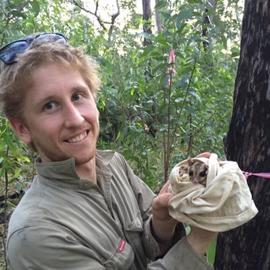
Dr. Hugh Davies is a Senior Research Fellow at the University of New England's School of Environmental and Rural Science. His research focuses on biodiversity conservation, feral animal management, and fire ecology in Australian ecosystems. He holds a PhD from the University of Melbourne and a Bachelor of Environmental Science (First Class Honours) from Monash University. His research interests include: Biodiversity conservation in northern Australian savannas Impacts of feral cats and foxes on native mammals Fire regime optimization for ecosystem health Indigenous engagement in land management He leads major grants including: ARC Linkage Grant: 'Cat management guided by Country' ($578,317) ARC Discovery Grant: 'Is dispersal the key to maximising threatened species conservation under contemporary fire regimes?' ($417,000) Resilient Landscapes NESP Hub: 'Best practice fox control in Booderee National Park' ($691,600) His publications primarily focus on conservation biology, fire ecology, and invasive species management, utilizing field studies, genetic analysis, and simulation modeling to address mammal declines in northern Australia. He currently supervises 4 PhD students.
Roger Schneiter is a Professor at the Department of Biology within the Faculty of Science and Medicine at the University of Fribourg. His research focuses on fundamental mechanisms of lipid metabolism, organelle biogenesis, and host-pathogen interactions, with particular emphasis on lipid droplets and CAP superfamily proteins. He leads multiple Swiss National Science Foundation (SNSF)-funded projects investigating lipid storage disorders, membrane biology, and pathogen virulence mechanisms. Research Interests: Schneiter's work spans lipid droplet formation/turnover, sterol transport, and the role of CAP-domain proteins in plant immunity and fungal pathogenesis. His group employs yeast genetics, biochemical assays, and multi-omics approaches to study: Molecular mechanisms of lipid droplet biogenesis at ER subdomains Regulation of neutral lipid storage and mobilization Pathogenesis-related (PR) proteins in plant defense and microbial virulence Lipid-binding functions of CAP/SCP/TAPS protein superfamily members Research Trends: Analysis of recent publications reveals three interconnected themes: (1) Structural and functional characterization of proteins regulating lipid droplet dynamics (perilipins, seipin); (2) Mechanistic studies of CAP-domain proteins in sterol binding, pathogen defense, and cellular signaling; (3) Stress adaptation mechanisms in plants and yeasts using integrated omics approaches. The work consistently bridges basic membrane biochemistry with biomedical and agronomic applications. Major Grants: SNSF Project 10000909: 'Unveiling the Function and Mechanisms of Pathogenesis-Related Proteins' (2024-2027) SNSF Project: 'Biogenesis and Turnover of Lipid Droplets' (2022-2026) SNSF Project: 'Deciphering functions of FITM2 in lipodystrophy' (2021-2025) SNSF Project: 'Lipid Storage, Binding, and Export' (2017-2022) Laboratory & Teams: Leads the SchneiterLab with extensive international collaborations. Research integrates yeast genetics, structural biology, plant pathology, and advanced microscopy to study lipid metabolism across model systems. Current projects involve characterization of ER-LD contact sites, lipid-binding proteins, and pathogen-derived virulence factors.
Jelena Milovanovic is a Researcher at the Faculty of Applied Ecology, University of Singidunum , with a focus on Forest Genetics , Biodiversity Conservation , and Climate Change Adaptation . She has contributed to international projects with organizations like FAO, IUCN, and COST networks. Doctorate from University of Singidunum (2009) MSc and BSc from the University of Belgrade Research Interests include conservation of forest genetic resources , ecological modeling , and agroforestry for sustainable land management. Her work spans genetic diversity assessment , species adaptation , and ecosystem resilience . Article Trends highlight her expertise in oak variability , provenance trials , and sustainable crop integration in degraded landscapes. She employs tools like SSR markers and leaf morphometrics to study tree genetics. Editorial Roles include associate editor for Frontiers in Forests and Global Change - Forest Ecophysiology and editorial board member of Discover Sustainability . Projects involve COST networks , GEF , Swiss National Science Foundation , and national initiatives on forest seed production and genetic resource conservation .
Steve Kutos is an Assistant Professor in the Department of Biology at Loyola University Maryland. His research focuses on understanding plant-associated microbial communities and their roles in ecosystem health, particularly in soil health, carbon sequestration, and agroecological productivity. Fields of Interest: Community and Microbial Ecology, Environmental Microbiology, Genomics, Bioinformatics, Soil Science, Agroecology Kutos integrates environmental microbiology, genomics, and ecological theory to study microbiomes across diverse landscapes, including urban environments in New York City, dry rangelands in New Mexico, coffee agricultural systems in Latin America, and farming landscapes in Northern Virginia. His work emphasizes cross-disciplinary approaches to terrestrial ecosystem conservation and inclusive lab practices. Recent publications highlight his investigations into soil microbiomes in coffee farms, the impact of compost amendments on rangeland carbon sequestration, and microbial community dynamics in agricultural and natural systems. These studies employ advanced techniques in microbial ecology and bioinformatics. Kutos's research aims to ensure sustainable land stewardship by uncovering links between microbiomes, soil health, and ecosystem productivity. His work has been published in journals such as Scientific Reports , Applied Soil Ecology , and FEMS Microbiology Ecology .
Reinhard Heil is a scientific Assistant and Researcher at the Institute for Technology Assessment and Systems Analysis (ITAS) at Karlsruhe Institute of Technology (KIT), where he leads the Research Group 'Digital Technologies and Social Change.' His work focuses on the intersection of technology, society, and ethics, with particular emphasis on artificial intelligence, transhumanism, and technology assessment methodologies. Heil holds a Master's degree in Philosophy, Literature and Sociology from TU Darmstadt (completed by 2003) and has been working at ITAS since 2010 as a Research Associate and Project Manager. His academic journey reflects a deep engagement with philosophical questions surrounding emerging technologies. His research interests span the social consequences of artificial intelligence, transhumanism and human enhancement, vision assessment methodologies, and the philosophical dimensions of technology. He has made significant contributions to understanding how AI systems impact society, particularly examining issues of explainability, trust, and the ethical implications of generative AI systems. His work often bridges theoretical philosophical frameworks with practical technology assessment. His recent publications show a clear trend toward analyzing the societal implications of AI, particularly focusing on explainable AI (XAI), the challenges of generative AI systems, and the philosophical questions these technologies raise about human cognition and experience. He has also maintained a consistent research thread on transhumanism and human enhancement, examining historical contexts and contemporary debates. Heil has led and contributed to numerous significant projects including 'Uncontrollable artificial intelligence: An existential risk?', 'Social trust in learning systems', 'Trust through explainability in verifiable online voting systems', 'Interdisciplinary approaches to deepfakes', and 'Deep Genomics – Opportunities and Challenges of the Convergence of Artificial Intelligence, Modern Human Genomics and Genome Editing'. He has also coordinated the 'Assessing Big Data (ABIDA)' project and managed 'Engineering Life'. As part of ITAS, Heil works within the broader context of technology assessment research, contributing to the institute's mission of analyzing emerging technologies from interdisciplinary perspectives. His work often involves collaboration with various research groups focused on digital technologies, sustainable energy, health technologies, and mobility futures. He frequently engages with policymakers and participates in public discourse on technology governance through lectures, workshops, and media appearances.
Dr. Lecturer Nevin AKDURA is affiliated with the Faculty of Education and the Institute of Graduate Education at the University of Hakkari, Turkey. She works within the Department of Mathematics and Science Education, focusing on science teaching, while also serving as a faculty member in the Department of Biology. Academic Rank: Lecturer University: University of Hakkari Schools: Faculty of Education, Institute of Graduate Education Departments: Mathematics and Science Education, Biology Her research spans plant virology, emphasizing molecular characterization of plant viruses, genetic diversity analysis, and virus detection in crops like tomatoes, peppers, maize, and fruit trees. She employs techniques such as RT-PCR, TaqMan assays, and metagenomics to study viral pathogens in Turkey. The latest 15 publications highlight her focus on crop viruses in Hakkari province, including studies on Cucumber Mosaic Virus (CMV), Tomato Ringspot Virus (ToRSV), and emerging bunya-like viruses. Key methodologies include molecular diagnostics and phylogenetic analysis, with applications in agricultural disease management.
Heather Gladfelter is a Research Fellow at the University of Georgia , affiliated with the College of Agricultural & Environmental Sciences and the Horticulture Department within the Institute of Plant Breeding, Genetics and Genomics (IPBGG) . Her research focuses on plant biotechnology , genetic engineering , and ornamental horticulture , with a strong emphasis on molecular biology and conservation biotechnology . Heather's work involves developing advanced genetic transformation systems and somatic embryogenesis protocols for ornamental and threatened plant species. Her recent studies (2016-2024) highlight her expertise in CRISPR/Cas9 applications , disease resistance in ornamental crops, and conservation strategies for rare woody species like Franklinia alatamaha and Stewartia. She has pioneered techniques for somatic embryogenesis in Gerbera, Rosa, Cornus, and Quercus species, contributing to sustainable horticulture and forest restoration efforts. The scientific trends in her publications span plant transformation methodologies , genetic diversity analysis , embryogenic culture development , and ex situ conservation of endangered plant species. Her research integrates biotechnological innovations with ecological preservation to enhance ornamental plant breeding and tree regeneration.
Ignacy Misztal serves as a Distinguished Research Professor and D.W. Brooks Professor in the Department of Animal & Dairy Science at the University of Georgia's College of Agricultural & Environmental Sciences. He joined UGA as an Associate Professor in 1996 after academic positions at Warsaw Agriculture University, Hohenheim University, University of Guelph, and University of Illinois at Urbana-Champaign. Dr. Misztal earned his M.S. in Computer Engineering from Warsaw Technical University in 1978 and his Ph.D. in Technical Sciences from the Polish Academy of Sciences in 1985. His research has established him as a leading figure in animal breeding and genetics methodology. His pioneering work focuses on genetic evaluation methodology, particularly the development of single-step GBLUP (genomic best linear unbiased prediction), which has become the standard approach in the field. He also pioneered methods to evaluate animals for heat tolerance using data from public weather stations. His research addresses critical challenges in livestock production sustainability through computational strategies that improve genetic evaluation systems. His publication record demonstrates consistent focus on genomic evaluation methods, with recent work exploring estimation of heritabilities using predictivity in large genomic models, genotype-by-environment interactions, and technical implementations of all-breed single-step GBLUP. His research group has developed software tools that have become the backbone for genetic evaluation programs used by major animal genetics companies worldwide. J. Lush Award (ADSA) Rockefeller Prentice Award (ASAS) Research Award (NAAB) Pioneer Award (BIF) D.W. Brooks Distinguished Professorship Dr. Misztal has delivered over 150 invited talks across 34 countries and taught 30 short courses on 6 continents. His research has attracted more than $12 million in extramural funding and has significant impact on dairy, beef, pig, and poultry industries globally. He leads a research group focused on developing tools for large-scale genetic evaluation of animals, with a philosophy of testing ideas quickly using real-world data from industry partners. His laboratory, accessible through http://nce.ads.uga.edu, develops practical computational solutions that address the growing complexity of genomic data in animal breeding programs while maintaining computational feasibility for national evaluation systems.
Dr Graeme Kettles is an Assistant Professor in Plant Pathology at the School of Biosciences, University of Birmingham, with a focus on molecular plant-microbe interactions. His research spans fungal pathogens of wheat, aphid-plant interactions, and tree pathology in collaboration with the Birmingham Institute of Forest Research (BIFoR). His research program investigates: Pathogen effector proteins and their role in immune suppression Non-host resistance mechanisms involving effector recognition Plant microbiome dynamics and disease protection Impact of elevated CO₂ levels on plant immunity The Kettles lab employs integrated approaches across model plants, crops, and tree systems to advance disease resistance strategies. His recent publications highlight work on Zymoseptoria tritici effectors, wheat pathology, and aphid salivary proteins. Current projects leverage the BIFoR-FACE facility to study climate change impacts on forest pathology.
Susan Hoebee is a Senior Lecturer in Ecological Plant and Animal Sciences at La Trobe University's School of Ecology, Environment and Evolution. She serves as Deputy Head of Department (2023-2024) and previously held the role of Departmental Graduate Research Coordinator (2015-2023). Her research focuses on plant conservation, reproductive biology, and population genetics of Australian native flora, particularly Proteaceae species. BSc, BSc (Hons) and PhD from The Australian National University Dr. Hoebee's research investigates various aspects of plant reproduction, population genetics/genomics and evolution. Her group employs traditional field-based ecological approaches alongside modern genomic techniques to study floral characters associated with different pollinators and mate choice mechanisms. Her work primarily addresses conservation issues for native species and weed biology , with strong emphasis on fragmented ecosystems and threatened flora. Analysis of her recent publications reveals a clear trajectory toward integrating genomic approaches with traditional ecological field studies. Her research increasingly focuses on climate adaptation, population vulnerability assessments, and conservation genetics applications for threatened Australian plant species. The work spans fundamental research on pollination biology and self-incompatibility systems to applied conservation projects addressing real-world management challenges. Dr. Hoebee actively contributes to scientific discourse as an editor for the Australian Journal of Botany since 2021. Current lab members: Mark Clifton (PhD), Allison Menzies (MSc), Yennifer Longo (MSc), Jacob Moore (Honours), Emily Stevenson (Honours) Co-supervision: Simon Heyes (PhD with John Morgan), Susan Kachaniwsky (Honours with John Morgan), Amelia Mendes (Honours with Ryan Phillips) Her research is supported by multiple significant grants including an ARC Discovery Project (2015-2019) on 'Evolution in action or the demise of iconic Australian flora?', the Hermon Slade Foundation project on East Gippsland callistemons (2023-2026), and the Nardoo Hills Genomic Analysis project (2023-2024). Dr. Hoebee collaborates extensively with research industries, government organizations, NGOs, land-managers and community groups across Australia, working on practical conservation solutions for threatened plant species.
Prof. Kole Vasilevski is a full professor at the Faculty of Forestry, Ss. Cyril and Methodius University in Skopje. He teaches courses including Forest Pedology with Petrography , Plant Nutrition , Highland Ecosystems , and Reclamation of Degraded Forests . Previously, he served as Vice-Rector (2008–2016) and Dean (2004–2008) at the university. Education: PhD in Forestry, Ss. Cyril and Methodius University (1996) MSc in Forestry, University of Belgrade (1993) BSc in Forestry, Ss. Cyril and Methodius University (1988) Research Interests: His work spans forest pedology, soil mechanics, plant nutrition, phylogeography of pine species, vegetation succession, and restoration of degraded ecosystems. Key focuses include soil properties in Macedonian limestone/dolomite regions, genetic studies of European Black Pine, and dynamics of old-growth forests. Publications: Recent articles emphasize genetic adaptations of pine species to historical climate changes, soil moisture retention in mountainous terrain, and land degradation challenges in Macedonia. Trends show interdisciplinary integration of genomics, soil physics, and ecological restoration. Administrative & Professional Roles: Vice-Dean, Faculty of Forestry (1998–2000) Chair of soil science curriculum development
Associate Professor Bojan Simovski is a faculty member at the University Ss. Cyril and Methodius in Skopje, affiliated with the Faculty of Forestry and Department of Botany and Dendrology. His academic journey includes: Graduation from the Faculty of Forestry (2007) Master's degree (2011) on dendrofloristic characteristics of Mavrovo National Park Doctorate (2015) studying natural successions in Mavrovo's forests His research spans forest ecology, urban dendrology, and conservation biology, with focus areas including: Urban forestry impacts on microclimate regulation Invasive species management and forest pathology Primary forest conservation strategies Geospatial applications in environmental monitoring Afforestation techniques for semi-arid ecosystems Teaching responsibilities encompass undergraduate courses in Botany and Urban Dendrology, and graduate-level Urban Dendrology 2 and Botany 2. His publications demonstrate consistent focus on Balkan forest ecosystems, urban green infrastructure, and conservation science.
Asai Asaithambi is a Professor and Graduate Program Director in the School of Computing at the University of North Florida (UNF), where he also served as School Director from 2011-2015. With 37+ years of academic experience, he previously held leadership roles including Professor/Chair at the University of South Dakota (2004-2011), Associate Professor/Chair at Saint Louis University (1997-2004), and Assistant/Associate Professor positions at Lincoln University and Mississippi State University. His academic credentials include: PhD in Computer Science, University of Wisconsin-Madison (1985) MS in Computer Science, Indian Institute of Technology-Madras (1980) Bachelor of Technology in Electrical Engineering, Indian Institute of Technology-Madras (1977) Professor Asaithambi's research spans artificial intelligence, computational science, and high-performance computing, with significant contributions to quantum computing algorithms, biomedical image analysis, and numerical methods for differential equations. His work demonstrates consistent focus on applying computational techniques to real-world problems in healthcare, cybersecurity, and engineering, while maintaining strong commitment to broadening participation of underrepresented groups in computing. Analysis of his 15 most recent publications (2019-2025) reveals dominant themes in medical imaging AI (lung X-ray and brain MRI analysis), bioinformatics algorithms for genome rearrangement, quantum computing security implications, and multi-robot coordination systems. His methodology consistently combines theoretical algorithm development with practical implementation, often leveraging advanced optimization techniques and parallel computing approaches. Key research projects include: Getting American Indians to Information Technology (GAIN-IT) as Co-PI (2008-2013) A Computational Intelligence to Gene Structure Prediction as PI (2007-2008) South Dakota Biomedical Research Infrastructure Network as Co-PI (2001-2012) Throughout his career, Professor Asaithambi has directed numerous doctoral dissertations and Master's theses while teaching diverse courses from introductory programming to quantum computing. His teaching philosophy emphasizes critical thinking development for both traditional and non-traditional student populations, with particular attention to mathematical preparation challenges in computational courses.
Dr. Michael Riedel is affiliated with the Chair of Botany II – Plant Ecophysiology at Julius-Maximilians-Universität Würzburg , Germany. His academic role focuses on research and administrative management within the department, including student advisory services. Research Focus : Plant ecophysiology, root nodulation symbiosis, nitrogen foraging, small RNAs in plant development, legume stress adaptations, cuticular wax chemistry, and plant-pathogen interactions. Key Topics : Studies span plant-insect dynamics, wax composition in Cocos nucifera , Nepenthes surface analysis, and pre-penetration resistance in Lolium perenne . Email : michael.riedel@uni-wuerzburg.de Publications (2018–2003) emphasize plant-environment interactions through chemical ecology, wax biophysics, and symbiotic mechanisms. Collaborative work spans PeerJ , Plant Physiology , Planta , and Tree Genetics & Genomes .
Jing Xu is an Associate Professor in the Department of Geosciences and Natural Resource Management at the University of Copenhagen, specializing in Forest and Bioressources. She holds positions in both teaching and research, focusing on innovative approaches to forest tree genetics and breeding. Her educational background includes a PhD in Forest and Landscape Genetics from the University of Copenhagen (2014-2018), a Master's in Forest Genetics and Tree Breeding from Northwest A&F University in China (2011-2014), and a Bachelor's in Forestry from the same institution (2007-2011). She also completed a visiting scholarship at NC State University in the US during 2017-2018. Dr. Xu's research focuses on developing faster solutions for forest tree breeding in response to climate change threats. Her work centers on breeding without breeding (BWB) techniques using DNA markers like microsatellites and SNPs to reconstruct pedigrees in production stands. She investigates tree-pathogen-insect-environment interactions to improve resistance traits and has developed innovative phenotyping methods using drone-based remote sensing for drought stress assessment in forest trees. Her research spans forest genetics, quantitative genetics, genomics, statistical analysis, forest pathology, and forest entomology. Analysis of her publication record shows a strong focus on conifer genetics, particularly Nordmann fir and other Abies species, with significant contributions to Christmas tree production, disease resistance, and advanced breeding techniques. Her work demonstrates increasing application of genomic technologies to traditional forest tree breeding challenges. NordGen Forest-SNS scholarship (2023) Dr. Xu has been actively involved in teaching since 2016, initially as a teaching assistant for bachelor courses in Genetics and Molecular Genetics, and currently lecturing in Genetics for bachelor students and Experimental Plant Science for master's students. She has presented her research at multiple international conferences and engaged in collaborations with institutions including Umeå Plant Science Centre and NC State University. Her work addresses critical challenges in forest resilience and sustainable tree production in the face of climate change.