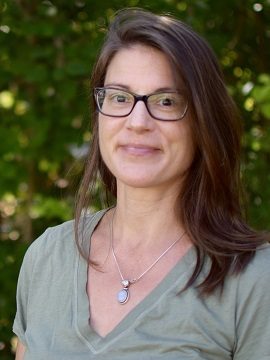
Jeannine Cavender-Bares is the Climate Action Acceleration Professor of Organismic and Evolutionary Biology and Director of the Harvard University Herbaria at Harvard University. Her research focuses on integrating plant physiology, spectral biology, and remote sensing to understand biodiversity patterns and ecosystem processes. Key projects include spectral analysis of plant traits, remote detection of forest diseases, and global biodiversity monitoring initiatives. Her work emphasizes the genetic and evolutionary basis of plant traits, leveraging spectral signatures to advance conservation efforts. She leads the NSF ASCEND Biology Integration Institute and is deeply involved in NextGen herbarium digitization. Collaborative projects like the FAB tree diversity experiments explore species interactions and ecosystem resilience under climate change. Cavender-Bares collaborates internationally to develop protocols for spaceborne biodiversity assessment and urban forest management. Recent studies highlight mechanisms linking plant physiology to spectral reflectance for early disease detection (e.g., oak wilt) and drought stress. Her lab also investigates phylogenetic completeness in biodiversity tracking and functional trait analysis using pressed leaves. These efforts aim to provide actionable insights for sustainability in rapidly changing environments.
Dr. Nina Hewitt is an Associate Professor of Teaching in the Department of Geography at the University of British Columbia's Faculty of Arts, currently on leave until June 2026. She holds a PhD from York University (1999), an MSc from the University of Guelph, and a BA Honours from the University of Western Ontario. As a biogeographer and educator, she directs the Biogeography Teaching and Research Lab, focusing on vegetation dynamics impacted by human activities including ecosystem fragmentation, climate change, and biological invasions. Her research spans forest ecosystems in eastern North America and alpine systems in the Karakoram Himalaya and BC Coast Mountains. She pioneers innovative educational tools, having developed virtual/augmented reality field experiences and community-engaged learning frameworks for geoscience education. Her scholarly contributions include work on the Canadian Mountain Assessment , synthesizing Western and Indigenous knowledges. Awards & Recognition Killam Teaching Prize, Faculty of Arts (2022-23) Dean’s Award for Educational Leadership (2021-2022) Educational Leadership She has led curriculum development for courses including GEOS 102 (Climate & Ecosystems), GEOS 306 (Paleoecology), and field-based GEOS 309. Her pedagogical research examines AR/VR efficacy in environmental education, supported by UBC's Teaching and Learning Enhancement Fund.
Heather Throop is a Professor at Arizona State University with joint appointments in the School of Earth and Space Exploration and School of Life Sciences. She holds affiliations with the Center for Biodiversity Outcomes, Central Arizona-Phoenix Long Term Ecological Research, Water Institute, Global Drylands Center, and the Osher Lifelong Learning Institute. Her research focuses on ecosystem responses to global changes, particularly in arid and semi-arid environments, emphasizing biogeochemical processes, litter decomposition dynamics, and soil carbon cycling. Throop’s work integrates field studies, experimental manipulations, and advanced technologies like 3D photogrammetry to understand dryland ecosystem resilience. She explores how climate variability, land use changes, and biological interactions influence carbon and water dynamics in vulnerable ecosystems. Her interdisciplinary approach addresses critical challenges such as woody plant encroachment, soil degradation, and the role of biodiversity in maintaining ecosystem services. Her research has been supported by grants including the NSF CAREER award for studying soil carbon dynamics under long-term ecological changes. She actively contributes to global initiatives like the Dryland Litter Cycle Project and collaborates with international teams to advance understanding of dryland biogeochemistry. Throop’s teaching spans undergraduate and lifelong learning programs, emphasizing climate change literacy and hands-on environmental science education.
Caroline Locke is an Associate Professor at the University of Derby's College of Arts, Humanities and Education. Her research centers on environmental art, sustainability, and the intersection of art and technology. She creates participatory installations that engage communities with environmental issues through public ceremonies, technological interventions, and narrative-driven projects. Her work explores eco-social change through creative practices that blend artistic expression with environmental advocacy. Key research themes include community-based art, sustainable futures, climate awareness, and the role of ritual in ecological consciousness. Locke's research demonstrates consistent focus on tree conservation and environmental symbolism across her artistic output. Her collaborations frequently bridge art, technology, and community engagement to address ecological challenges through innovative participatory methods.
Dr. Khushi Goda is a Postdoctoral Fellow in the Department of Genetics and Biochemistry at Clemson University's College of Science. Her research focuses on statistical genetics methodologies, including polygenic modeling of human health traits using biobank data and optimization algorithms for forest tree breeding programs. Recent publications demonstrate innovations in reducing bias in genetic epidemiology and developing computational tools like AgMate for breeding optimization. Research spans human genetics (blood pressure trait analysis via UK Biobank) and forestry genetics (Pinus taeda breeding), employing advanced statistical and computational approaches to address challenges in precision medicine and sustainable agriculture.
Dr. Om Rajora is a Professor and Senior Canada Research Chair (Tier 1) in Forest and Conservation Genomics and Biotechnology at the University of New Brunswick's Faculty of Forestry and Environmental Management. He holds a PhD in Forest Genetics from the University of Toronto and has over four decades of experience in forest genetics research. Previously, he served as a Professor and StoraEnso Senior Chair in Forest Genetics and Biotechnology at Dalhousie University, and held roles at the University of Alberta and the National Research Council of Canada. His research focuses on forest tree genetics, genomics, and biotechnology, addressing issues like climate change adaptation, genetic conservation, and sustainable forest management. Dr. Rajora's education includes a BSc in Biology, MSc in Botany, and LL.B. from Meerut University, India. His work spans basic and applied research, including genome mapping, transcriptome sequencing, and the genetic basis of tree responses to environmental stressors. He coordinates international research units like IUFRO's Population, Ecological and Conservation Genetics, and serves on editorial boards of journals like Botany and Forests . His research interests emphasize genetic diversity, population structure, evolutionary potential of forest trees, and conservation strategies. Notable contributions include pioneering studies on eastern white pine, red spruce, and Scots pine, as well as the development of a Population Genomics book series. He is a frequent keynote speaker at international conferences and has authored hundreds of peer-reviewed publications.
Dr. Adam D. Polinko is an Assistant Professor at Mississippi State University's Forest and Wildlife Research Center, specializing in silviculture and forest ecology. He holds a PhD in Forestry from the University of British Columbia. His research focuses on climate-resilient forest management strategies, hurricane impact mitigation, and biodiversity-productivity relationships in forests. Key projects include adapting timber supply strategies to climate change, optimizing crown lifting in loblolly pine plantations, and analyzing western spruce budworm effects on forest resilience. Dr. Polinko has received multiple awards, including the Mississippi State University Three Minute Thesis Peoples Choice Award and first place at the Graduate Research Symposium. Education: PhD in Forestry from University of British Columbia. Research Interests: Silvicultural adaptation to climate change, hurricane-resistant forest structures, and functional biodiversity in managed forests. His work bridges applied forest management with ecological resilience, emphasizing longleaf pine ecosystems and carbon dynamics. Recent publications highlight innovative thinning techniques for timber supply stability, hurricane resilience through structural diversity, and algorithmic tree growth modeling. His team explores biochar and microbial amendments for post-mined soil restoration. Awards: Recognized for impactful research communication and interdisciplinary contributions to silviculture. Active in professional societies including Ecological Society of America and Society of American Foresters.
Tracey N. Johnson is an Associate Professor in the Department of Fish & Wildlife Sciences and Director of Research at the Rinker Rock Creek Ranch, University of Idaho. She holds a Ph.D. in Wildlife Science from Oregon State University (2011), an M.S. in Biology from Kansas State University (2006), and a B.S. in Psychology from Texas A&M University (2001). Her research focuses on wildlife habitat ecology, population dynamics, and the impacts of disturbances like grazing and climate change on ecosystems. Key areas include avian ecology, sagebrush-steppe restoration, and wildlife-grazing interactions. Her work bridges applied ecology and conservation, addressing challenges in rangeland management, avian habitat conservation, and ecosystem resilience. Notable projects include studying greater sage-grouse habitat use, evaluating grazing strategies in mesic meadows, and assessing ecological responses to pinyon-juniper encroachment. She has contributed to outreach initiatives on bark beetle impacts and sagebrush restoration in Grand Teton National Park. Dr. Johnson’s research emphasizes practical solutions for balancing ecological health and human land use. She teaches courses such as Wildland Habitat Ecology, Riparian Ecology, and Integrated Field Studies in Rangelands. Her work has been recognized with the Savery Distinguished Doctoral Student Award (2010).
Cameron Naficy is a Courtesy Faculty member in the Department of Forest Ecosystems & Society at Oregon State University's College of Forestry, focusing on disturbance ecology, landscape ecology, and geospatial methods. His research integrates ecological and human dimensions to study fire regimes, forest dynamics, and climate impacts. B.A. Evolutionary Biology and Ecology, Rice University (2003) M.Sc. Organismal Biology and Ecology, University of Montana (2008) Ph.D. Geography, University of Colorado at Boulder (2017) His work examines fire ecology across North American forests, emphasizing historical fire severity patterns, climate-fire synchrony, and feedbacks between disturbances and forest management. Recent studies analyze fire deficits, wildfire spread extremes, and hydrologic responses post-fire. Cameron's publications highlight cross-scale assessments of fire regimes, human colonization effects on deforestation, and methodological challenges in fire history reconstruction. He employs tree-ring fire-scar networks and geospatial techniques to understand long-term ecological changes. Grants include a 2017 RM-CESU Cooperative Agreement for fire ecology research in Glacier National Park. He maintains active profiles on Google Scholar and LEMMA , with expertise in paleoecology and forest policy.
Steven Perakis is a Courtesy Faculty member in the Department of Forest Ecosystems & Society at Oregon State University's College of Forestry. His research focuses on terrestrial ecosystem ecology and biogeochemistry, particularly nutrient cycling, watershed studies, and riparian biogeochemistry. He holds a B.S. from the University of Pennsylvania (1990), an M.S. from the University of Washington (1994), and a Ph.D. from Cornell University (2000). Perakis’s work addresses how nitrogen and other nutrients interact with climate, disturbances, and ecosystem processes. Recent studies explore nitrogen fixation dynamics, climate change impacts on nutrient cycles, and the role of bedrock-derived nutrients in forest systems. He has contributed to guides on forest responses to air pollution and frameworks for scaling nitrogen fixation measurements. His research integrates field experiments, isotopic tracing, and ecosystem modeling. Key findings include the discovery that nitrogen-fixing red alder trees access rock-derived nutrients and that nitrogen deposition weakens soil carbon control over nitrogen dynamics. Perakis collaborates widely, with publications addressing riparian ecosystem linkages, nutrient limitation patterns, and the ecological consequences of disturbances like fire.
Eric T. Jones serves as Assistant Professor of Practice in the Forest Ecosystems and Society Department at Oregon State University. He teaches graduate courses on human dimensions of sustainable natural resource management, focusing on nontimber forest products, cultural traditions, and ecological systems. Jones leads interdisciplinary research on maple sugaring in the Pacific Northwest, collaborating with small agricultural businesses. His research portfolio includes agroforestry, resource stewardship, traditional ecological knowledge, community-based natural resource management, and sensory evaluation of wild foods. He advises graduate students Elizabeth Davis and Doliah Francis. His work integrates anthropological methods with practical applications in forest management and sustainable harvesting practices, emphasizing community engagement and cultural preservation.
Heather Stoven serves as an Associate Professor (Practice) at Oregon State University in the Department of Horticulture within the College of Agricultural Sciences. As the Community and Small Farms Horticulturalist for Yamhill County, she oversees the Master Gardener program and provides vital support to community gardening and small farm initiatives throughout the region. Her work bridges academic research with practical application, focusing on sustainable horticultural practices that address contemporary challenges facing Oregon's agricultural community. Dr. Stoven holds an M.S. from UC Davis (2003) in Plant Protection and Pest Management, with specialized expertise in mealybug pests of nurseries. Her educational background provided the foundation for her extensive work in pest management and sustainable horticulture practices. Her research interests span multiple critical areas of contemporary horticulture, with particular emphasis on drought-tolerant landscaping using native and adapted plants, sustainable small farm management, integrated pest management for fruit trees, and community-based gardening education. She has conducted extensive research on plant species suitable for Western Oregon's climate without summer irrigation, including manzanitas, rockroses, and California lilacs. Her work in nursery production systems, particularly with alternative substrates and pest management, addresses practical challenges faced by growers. Additionally, she has made significant contributions to understanding urban and suburban landscape management that supports pollinator health. Dr. Stoven's recent publications reveal a strong focus on practical horticultural guidance for Oregon's unique climate challenges. Her work increasingly emphasizes climate-resilient gardening practices, particularly drought-tolerant landscape solutions for Western Oregon. She has produced an extensive series of publications on specific plant groups that thrive without summer irrigation, alongside comprehensive pest management guides for various fruit trees. Her research demonstrates a consistent pattern of translating scientific knowledge into actionable guidance for both professional growers and home gardeners. Dr. Stoven has received numerous prestigious awards recognizing her exceptional contributions to agricultural extension and communication: Communications Award: Newsletter by Team, National Association of County Agricultural Agents (July 17, 2024) Communications Award: Publication (National Finalist), National Association of County Agricultural Agents (August 2023) David Gibby Search for Excellence Award, International Master Gardener Conference (February 21, 2023) Silver Award Winner: Supporting gardeners through an extreme heat event, Social Media Campaign (Organic), Association for Communication Excellence (April 14, 2022) Search for Excellence Award, OSUEA (November 2, 2021) As a dedicated mentor, Dr. Stoven accepts graduate students in Horticulture, guiding the next generation of horticultural professionals. Her extension work through the OSU Small Farms Program has secured significant funding for projects supporting small-scale agricultural operations across Oregon. She has been instrumental in developing resources like the "Croptime" degree-day models, which help farmers optimize planting and harvesting schedules based on climate conditions. Her work with the Master Gardener program has expanded educational opportunities for community members interested in sustainable gardening practices. Dr. Stoven collaborates extensively with the North Willamette Research and Extension Center and contributes to the OSU Extension Service's outreach efforts. Her work with the "Olea Project" demonstrates her involvement in innovative agricultural initiatives, exploring the viability of olive farming in Oregon's climate. She regularly partners with county agricultural agents and conservation districts to address local horticultural challenges, creating a robust network of support for Oregon's gardening and small farm communities.
Dr. Chuck Stewart is a Professor in the Department of Computer Science at Rensselaer Polytechnic Institute, with a focus on applying computer vision to ecological research and environmental conservation. His work bridges artificial intelligence with wildlife monitoring, enabling scalable solutions for animal behavior studies. PhD in Computer Science, University of Wisconsin B.A. in Mathematics, Williams College His research interests center on computer vision for ecological applications, including animal re-identification , drone-based monitoring , and dataset development for behavioral analysis. Recent projects involve creating open-source tools like the WildWing UAS and datasets such as KABR and BaboonLand . Recent publications highlight trends in using AI algorithms for cross-species identification, diffusion models in evolutionary studies, and multimodal knowledge graphs for ecological data. Collaborations span institutions and disciplines, emphasizing interdisciplinary innovation. Dr. Stewart is affiliated with the Darrin Fresh Water Institute and contributes to NSF-funded initiatives, including the AI Research Institute, focusing on multidisciplinary approaches to societal challenges in conservation.
Laurel Hartley is an Associate Professor in the Department of Integrative Biology at University of Colorado Denver. Her research bridges ecology and science education, studying both prairie dog ecosystem impacts and biology education methods. Her ecological research examines plant community responses to herbivory, nutrient inputs, and climate change using black-tailed prairie dog systems. This work investigates how introduced bubonic plague affects prairie dog colonies in urban and rural environments through observational studies and greenhouse experiments. In science education, Hartley develops assessment methods for biological concept understanding at undergraduate and K-12 levels. She creates frameworks for teaching core concepts like biological variation and ecological reasoning. Her recent publications include studies on urban wildlife monitoring networks, active learning effectiveness, and diversity initiatives in biology education. Hartley leads collaborative educational projects including the Action Taxonomy for Learning Assistants (ATLAs) and contributes to national science standard development. Her laboratory employs both quantitative and qualitative approaches to study learning and ecological processes.
Anna Thurmayr is a Professor and Head of the Department of Landscape Architecture at the University of Manitoba, Faculty of Architecture. She holds a Diplom-Ingenieur (equivalent to a Master of Landscape Architecture) from the Technical University of Munich and additional certifications in vocational education and multimedia design. Her professional practice, co-founded with Dietmar Straub as Straub Thurmayr Landscape Architects, emphasizes innovative, low-budget, and community-focused design solutions. Anna’s work bridges academia and practice, with a focus on sustainable strategies for urban landscapes, green infrastructure, and biodiversity conservation. **Education:** Diplom-Ingenieur in Landscape Architecture (Technical University of Munich) Certificates in Professional Desktop Publishing, Vocational Pedagogy, and Educational Psychology **Research & Interests:** Anna’s research explores visualization techniques, sustainable urban design, and material innovation. Her projects, such as the Folly Forest and WY Garden , demonstrate her commitment to reusing urban waste, fostering biodiversity, and creating accessible public spaces. She advocates for design that challenges conventional norms while remaining cost-effective and community-driven. **Awards:** 2021 CSLA National Award of Excellence (Residential Landscapes) 2019 LILA International Landscape Award (Gardens) 2016 Carl R. Nelson Jr. Teaching Award 2014 AZ Award (People’s Choice) **Teaching & Outreach:** Anna teaches courses in landscape architecture and environmental design, emphasizing professional rigor and innovation. Her practice’s pro bono work in underserved communities reflects her belief in design’s social responsibility. **Key Projects:** - Folly Forest: Revitalized urban schoolyard using reclaimed materials and perforated asphalt. - Rooted in Clay: Private garden integrating dynamic topography and local ecology. - Collaborations with Chenshan Botanic Garden and Instant Garden showcasing sustainable design.