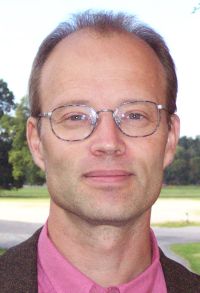
Robert D. Gray is a Professor of Mathematics at the School of Mathematics, University of East Anglia. His research focuses on combinatorial and geometric group and semigroup theory, algorithmic problems in algebra, decidability, homological finiteness properties, and group actions on graphs and topological spaces. EPSRC Research Fellow Editorial Board: International Journal of Algebra and Computation Available for PhD supervision in semigroup and inverse monoid theory His recent work explores: Topological finiteness properties of monoids Undecidability in one-relator inverse monoids Algorithmic properties of inverse monoids Maximal subgroups in special inverse monoids Key article trends include: Geometric and algorithmic aspects of inverse monoids Homological properties of semigroups Connections between group theory and semigroup theory Applications to graph theory and automata Scientific Awards: EPSRC Fellowship EP/V032003/1 EPSRC grant EP/N033353/1 EPSRC Postdoctoral Fellowship EP/E043194/1 Contact: Room S1.29, School of Mathematics, University of East Anglia, Norwich NR4 7TJ. Email: Robert.D.Gray@uea.ac.uk . Phone: +44 1603 591443.
Jens Michaelis is a Professor at the Faculty of Linguistics and Literary Studies, Bielefeld University, specializing in Computational Linguistics, Text Technology, and Linguistic Creativity. He serves as Deputy Head of the Department of Linguistics, Clinical Linguistics, Text Technology and Computational Linguistics, and provides academic advising for Computational Linguistics programs. His office is located at UHG U5-231, with contact details including telephone +49 521 106-6915 and email jens.michaelis@uni-bielefeld.de . Maintaining active research roles, he leads project B01 'Coercion as a creative mechanism in compositional interpretation' within the SFB 1646: Linguistic Creativity in Communication. His teaching responsibilities span modules like 23-CL-BaCL2.1 Selected methodological aspects 23-CL-BaCL5 Advanced Module 23-CL-BaCL6 Project Module 23-LIN-Ma3.1 Basics of Computational Linguistics 23-MeWi-HM3a_a Mathematical-linguistic language modeling across both undergraduate and graduate programs. His scholarly work focuses on formal grammar properties, syntactic mechanisms, and computational modeling of language. As an ordinary member of the Faculty Conference and Habilitation Committee, he contributes to academic governance while maintaining an extensive publication record in mathematical linguistics, minimalist grammars, and formal language theory.
Madhusudan Parthasarathy is a Professor in the Department of Computer Science at the University of Illinois at Urbana-Champaign, College of Engineering. His research focuses on software verification, formal methods, and logic in computer science, with significant contributions to trustworthy AI systems, program synthesis, and security. Ph.D. in Theoretical Computer Science (2002), Institute of Mathematical Sciences, University of Madras Research interests include automating software verification, building correct-by-design systems, and exploring synergies between machine learning and program synthesis. He pioneered visibly pushdown languages , impacting XML processing and program verification. His tools like VEX and Strand advanced security and heap reasoning. Recent articles focus on blockchain verification, timed automata, and learning logics from data. His work has been widely cited, with the visibly pushdown language paper alone generating over 940 scholarly entries. Best Paper Award, 19th USENIX Security Symposium (2010) He has advised numerous students and postdocs, with former advisees now at institutions like Purdue University and Google. His outreach initiatives include the ConTraIL privacy-preserving contact tracing project and the MASSIVELY EMPOWERED CLASSROOMS MOOC platform for Indian undergraduates. He teaches courses like CS 521: Advanced Topics in Programming Systems and CS 474: Logic in Computer Science , while actively serving on program committees for top-tier conferences such as POPL and PLDI.
Santiago Figueira is a Professor at the Department of Computer Science, Faculty of Exact and Natural Sciences, University of Buenos Aires, and a Researcher at the Institute of Computer Science (ICC), CONICET (Argentine National Council for Scientific and Technical Research) in Buenos Aires, Argentina. He leads the Logic, Language and Computability Research Group (GLyC) and co-directs the Argentinian-French Laboratory SINFIN, a collaborative initiative between Université Paris-CNRS and Universidad de Buenos Aires-CONICET. Additionally, he is a researcher in the Quantum Information, Computation, and Communication team (QuICC). Dr. Figueira's research spans theoretical computer science with a strong emphasis on computability theory, algorithmic randomness, Kolmogorov complexity, and mathematical logic. His work extends to applications in database theory, quantum information, and cognitive modeling. He has made significant contributions to modal logics, model theory, and the theory of databases, particularly in the context of data trees and XPath query languages. His interdisciplinary approach bridges formal methods with practical applications in quantum computing and human cognition. His publication record demonstrates a consistent trajectory of high-impact research, with recent work focusing on modal logic extensions, quantum information theory, cognitive modeling of concept learning, and database query languages. His collaborations span international institutions, particularly with French researchers through the SINFIN laboratory, and with cognitive scientists studying human memory and concept formation. Dr. Figueira has supervised numerous PhD students and postdoctoral researchers, including Gabriel Goren-Roig, Santiago Cifuentes, Edwin Pin Baque, Sergio Romano, Gabriel Senno, and Sergio Abriola. His former postdocs and CONICET researchers include Guido Bellomo, María Emilia Descotte, and Ariel Bendersky, indicating an active and productive research group. He has developed lecture notes in Spanish on Logic and Computability (2020) and Computability Theory (2021), contributing to academic education in his field. His research group GLyC serves as a hub for theoretical computer science research in Argentina, fostering collaborations between Argentine and international researchers.
Kai Salomaa is a Professor and Graduate Chair in the School of Computing at Queen’s University, Canada. He holds a Ph.D. from the University of Turku (1989). His research focuses on theoretical computer science, particularly automata theory, formal languages, and their applications. Key areas include descriptional complexity, cellular automata, and quantum computing innovations. Affiliations: Queen’s University, School of Computing. Education: Ph.D. in Computer Science from the University of Turku (1989). Research Interests: Prof. Salomaa explores foundational topics like automata state complexity, nondeterminism measures, and computational models. His work bridges classical theory with modern applications in quantum computing, vehicular networks, and algorithmic resource optimization. Notable contributions include studies on input-driven pushdown automata and the integration of quantum algorithms into practical systems. Publications: His recent work spans quantum-enhanced optimization (e.g., vehicle platooning), fair matching algorithms, and complexity analysis of automata. These studies emphasize innovative solutions for computational challenges in dynamic systems and distributed networks. Grants & Labs: Leads the Formal Languages and Automata Theory Research Group, actively organizing conferences like CIAA and DCFS. His work often addresses practical applications of theoretical computer science in areas like sensor networks and metaverse resource management.
Sven Schewe is a Professor in the Department of Computer Science at the University of Liverpool, affiliated with the School of Electrical Engineering, Electronics and Computer Science. He leads the AI Section and is a founding member and former leader of the Verification Group. He also has secondary affiliations with the Algorithms, Complexity Theory and Optimisation Group and the Institute for Risk and Uncertainty. Research Interests: His research centers on automata theory and game theory, particularly their applications in the verification and synthesis of reactive and safety-critical systems. He investigates infinite-duration games, automata over infinite words and trees, and develops algorithms and tools for automated verification, synthesis, and learning of optimal control strategies. His work extends to reinforcement learning with formal guarantees, cyber-physical systems, and AI safety. Recent Research Trends: His recent publications demonstrate a strong integration of formal methods with machine learning, particularly in adversarial training, neural network robustness, and model-free reinforcement learning under omega-regular objectives. He also applies formal reasoning to interdisciplinary domains such as chemical space exploration and materials science. Scientific Awards: Finalist for the ERCIM Cor Baayen Award 2010 Dr. Eduard Martin Preis 2009 GI Dissertation Award 2008 Advising and Grants: He actively supervises numerous PhD students and postdoctoral researchers. He is Principal Investigator (PI) or Co-Investigator (CI) on multiple major grants, including EPSRC Programme Grants, Royal Society Fellowships, and Horizon Europe projects. His funded research spans topics such as game theory, verification, synthesis, reinforcement learning, and risk analysis. He has hosted visiting researchers and collaborated internationally with institutions in Germany, France, India, Taiwan, and the US. Labs and Teams: He co-founded and led the Verification Group and previously led the AI Section at the University of Liverpool. These groups focus on formal methods, automata, games, and their applications in AI and safety-critical systems.
David Janin is an Associate Professor in Computer Science at Bordeaux INP , specifically within the ENSEIRB-MATMECA school. He leads the PoSET research project, exploring algebraic models for heterogeneous interactive temporal media systems. Research Affiliations : CNRS INS2I , INRIA Bordeaux Sud-Ouest , Idex Bordeaux , LaBRI (CNRS UMR 5800). Research Focus : His work bridges inverse semigroup theory and functional programming to develop algebraic frameworks for synchronizing diverse temporal media (sound, animation, video). This includes T-calculus in Haskell and Octopus for 3D animation. Technical Contributions : Key developments include models for overlapping tiles , birooted tree languages , and causal function semantics in real-time systems. Contact : janin@labri.fr
Luc Segoufin is a Research Professor at INRIA (French National Institute for Research in Computer Science and Automation), affiliated with the Department of Computer Science at École Normale Supérieure (ENS) in Paris. He leads the VALDA research team, focusing on theoretical computer science foundations. His research spans: Database theory: Query answering, consistency, and enumeration complexity Logic and automata: Finite model theory, automata over data structures Computational complexity: Fine-grained analysis and lower bounds Formal methods: Verification and logic-based modeling His recent publications (2022–2024) concentrate on: Dichotomy theorems for query answering under constraints Constant-delay enumeration algorithms for structured data Decidability in logic fragments over trees and graphs Connections between automata, algebra, and complexity No scientific awards are mentioned in available sources. He collaborates extensively within the VALDA team and international researchers on projects involving database theory, logic, and automata. No student advising details are provided.
Thomas Graf is an Associate Professor in the Department of Linguistics and an Affiliate Professor at the Institute for Advanced Computational Science (IACS) at Stony Brook University. He holds a Ph.D. from UCLA (2013) and an M.A. from the University of Vienna. His research focuses on the intersection of theoretical linguistics and computer science, exploring structural complexity in syntax, morphology, and phonology, and its implications for language processing and acquisition. Graf’s work emphasizes computational constraints on natural language, such as subregular complexity and parsing efficiency, and involves empirical studies across languages like English, Icelandic, and American Sign Language. Education: Ph.D., University of California, Los Angeles (2013) M.A., University of Vienna Research interests include computational syntax and phonology, parsing theory, and the formal characterization of linguistic universals. Key themes involve the computational power of linguistic frameworks (e.g., Minimalist grammars), the subregular hierarchy, and the typological implications of computational constraints. Graf’s recent work investigates how empirical phenomena like syntactic islands arise from complexity limits in natural language. His contributions to computational linguistics include Python tools for Minimalist grammar processing and collaborations in labs like the Computational Linguistics Lab (CompLab) at Stony Brook. He has also received a NSF CAREER grant for research on abstract universals in morphosyntax. Labs/Teams: Active member of the Computational Linguistics Lab (CompLab) at Stony Brook University. Leads the MathLing Reading Group and contributes to NLP research initiatives.
François Pottier is a senior researcher at Inria in Paris, France, where he leads the Cambium research team. He is affiliated with the Gallium research group and has maintained an active research profile spanning several decades in programming languages and formal methods. His research focuses on programming languages , particularly functional programming and OCaml, type systems design and implementation, program verification using separation logic, and compiler construction . His work bridges theoretical foundations with practical implementation, evidenced by numerous open-source software tools he has developed. Pottier's publication record shows consistent contributions to top programming languages conferences (POPL, ICFP, ESOP) with recent work emphasizing separation logic frameworks, resource analysis, and formal verification of OCaml systems. His research demonstrates a clear trajectory from foundational type theory toward practical verification techniques for real-world programming languages. He has advised numerous PhD students including Remy Seassau, Tiago Soares, Clément Allain, and Alexandre Moine, among others, many of whom have gone on to research positions at institutions like New York University, Imperial College London, and Inria itself. Pottier maintains active service roles in the programming languages community as a member of IFIP Working Group 2.8 on Functional Programming and IFIP Working Group 2.16 on Language Design, and serves on program committees for major conferences including upcoming roles for JFLA 2026 and ITP 2026. He leads the Cambium research team at Inria, which focuses on programming language theory and implementation, particularly around OCaml and formal verification. The team develops both theoretical frameworks and practical tools that have influenced the broader programming languages ecosystem.
Bengt Jonsson is a Professor at the Division of Computer Systems, Department of Information Technology, Uppsala University. His research focuses on formal methods, real-time and distributed systems, semantics and verification of concurrent systems, and IoT security. Current Projects: UPMARC (Software Technology for Multicore Programming), aSSIsT (Secure Software for IoT), and Designed for UPDATE (Safe Embedded Software Updates) Past Projects: CoDeR-MP (Multicore Real-Time Applications), ProFun (Wireless Sensor Networks), CONNECT (Networked Component Synthesis) His work includes automated verification, model checking, and symbolic execution for concurrent systems. Recent publications address dynamic partial order reduction, IoT protocol testing, and lock-free data structures. Scientific Awards : CAV Award 2017 He advises PhD students and teaches courses like Model-Based Development of Embedded Systems and graduate-level symbolic execution. Personal interests include piano playing and orienteering.
Christof Löding is an Adjunct Professor at the Department of Logic and Theory of Discrete Systems (Computer Science 7) at RWTH Aachen University. His research focuses on automata theory, formal verification, and logical foundations of computer science, with significant contributions to Büchi automata, tree automata, and stochastic games. Academic affiliation: RWTH Aachen University, Germany Research areas: Automata theory, Formal methods, Game theory, Logic in computer science Contact: loeding@informatik.rwth-aachen.de His recent work spans deterministic parity automata construction, finite-valued transducers, and algorithmic solutions for infinite games. Publications emphasize theoretical foundations and practical applications in program verification and XML processing. Articles analyze automata learning, uniformization problems, and lookahead degrees in infinite games, showing interconnections between automata theory and formal verification.
Nathanaël Fijalkow is a Researcher at CNRS in LaBRI (Bordeaux) and a Research Fellow at The Alan Turing Institute in London. His primary research fields include games , machine learning , automata theory , and dynamical systems , with a focus on synthesizing programs from logical specifications and probabilistic models. Research Interests span program synthesis (programming by example), controller synthesis (temporal logic specifications), games on graphs (parity/mean payoff games), probabilistic automata (bounded ambiguity), and invariants for linear dynamical systems. He bridges formal methods with machine learning through projects like DeepSynth . Scientific Contributions include: Undecidability results for probabilistic automata Advances in parity game algorithms (quasi-polynomial lower bounds) Foundations of probabilistic modal logics Efficient synthesis techniques using SMT solvers and distributional learning Supervision involves guiding postdocs and PhD students such as Guillaume Lagarde, Antonio Casares, and Pierre Ohlmann. He has secured grants like the Momentum DeepSynth project (2019-2021) , aiming to merge formal methods with ML for program synthesis.
Christof Löding , currently an Adjunct Professor at the Lehrstuhl für Logik und Theorie diskreter Systeme (Informatik 7) department of RWTH Aachen University , is a leading researcher in Automata Theory , Formal Verification , and Logic in Computer Science . His work bridges theoretical foundations with practical applications in software verification, automata minimization, and game theory. Research Interests include automata theory, formal verification, logic, tree automata, game theory, and computational models. Publications span topics like Finite-valued Streaming String Transducers , Deterministic Parity Automata , and Stochastic Game Strategies . Collaborations with researchers like Emmanuel Filiot , Sarah Winter , and León Bohn highlight his contributions to automata and verification. Email : loeding@informatik.rwth-aachen.de He has actively published in venues such as ICALP , LICS , and STACS , focusing on deterministic automata, transducers, and logic-based computational systems. His work on Hyperlogic for Strategies in Stochastic Games (2025) and Minimal History-Deterministic Automata (2025) showcases his ongoing influence in formal methods and automata theory.
Nicola Galesi serves as an Associate Professor in the Department of Computer, Control and Management Engineering (DIAG) at Sapienza University of Rome since 2022, following 17 years in Sapienza's Department of Computer Science (2005-2022). His academic journey began with an Associate Professorship at Universitat Politecnica de Catalunya (2001-2005) after postdoctoral positions at the Institute for Advanced Studies in Princeton (2000-2001) and University of Toronto (2002-2003) under Stephen Cook and Toni Pitassi. His educational background features a PhD from Universitat Politecnica de Catalunya supervised by Maria Luisa Bonet, complemented by dual Italian habilitations as full professor in Mathematical Logic (2012) and Computer Science. These qualifications underpin his rigorous theoretical approach across research domains. Galesi's research program centers on Computational Complexity and Logic in Computer Science , with specialized expertise in Proof Complexity (investigating resolution refinements and algebraic proof systems), SAT-Solving , Optimization , and applied domains like Group Testing and Network Tomography . His seminal work on space complexity in algebraic proof systems (JACM 2015) established foundational frameworks, while recent network tomography research develops mathematical models for node failure identification in communication networks using Boolean algebra and graph connectivity principles. Analysis of his 15 most recent publications (2022-2025) reveals a cohesive research trajectory bridging theoretical proof complexity and practical network analysis. Key trends include depth lower bounds in stabbing planes for combinatorial principles, vertex-connectivity metrics for failure localization, and algebraic investigations of vanishing sums in polynomial calculus. His work consistently applies combinatorial principles to derive tight bounds across graph structures while advancing the theoretical understanding of proof systems through tensor isomorphism and roots of unity analyses. His scientific recognition includes: ACM Computing Review Most Notable paper in Theory of Computing for 2012 Galesi mentors the next generation through PhD supervision of Massimo Lauria (2009), Ilario Bonacina (2015), and Fariba Ranjbar (2021), while hosting postdocs including Alan Skelley, Olaf Beyersdorff, and Massimo Lauria. His research is amplified through prestigious visiting positions at the Simons Institute for Theory of Computing (2015, 2021) and Tokyo Institute for Technology (2015), building on his foundational work at IAS Princeton and Toronto. He actively shapes the theoretical CS landscape as organizer of the Sapienza LOC3 (Logic, Complexity, Combinatorics, Computability) seminar series and founder of the RaTLoCC workshops (Ramsey Theory in Logic, Complexity and Combinatorics). His editorial role for Logical Methods in Computer Science (LMCS) and program committee service for CIAC, IJCAI, and FSTTCS conferences demonstrate sustained community leadership beyond his core research and teaching responsibilities in Calculus, Mathematical Logic, and Computational Complexity.