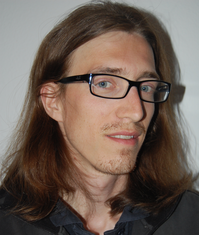
Prof. Bryan Ford leads the Decentralized/Distributed Systems (DEDIS) lab at EPFL. He focuses on secure decentralized systems, including blockchain technology, privacy, and systems security. He earned his Ph.D. from MIT and held faculty positions at Yale University and EPFL. His work spans distributed consensus protocols, peer-to-peer networking, and privacy-preserving systems. Key projects include QuePaxa (timeout-free consensus), UIA (global connectivity for mobile devices), and MedCo (secure healthcare data sharing). He advises numerous PhD students and contributes to open-source projects like Bitcoin collective signing and privacy networks like Riffle. Education: Ph.D., MIT; Postdoctoral work at Yale Research interests include blockchain scalability, consensus algorithms, and cryptographic privacy. His lab develops systems like TRIP for coercion-resistant voting and F3B to mitigate blockchain front-running. His work on NAT traversal and peer-to-peer protocols (e.g., STUN/ICE) remains foundational in network architecture. He emphasizes practical, auditable security solutions such as CertiKOS and atomic cross-chain transactions (Atom). Notable contributions: CoSi (collective signing), OmniLedger (sharded blockchain), and privacy-preserving protocols like PURBs (Protected Unsealable Recursive Boxes). His lab collaborates with Swiss Post to audit e-voting systems and designs democratic cryptocurrencies like PoPCoin.
Prof. Dr. Ingo Scholtes is Chair of Machine Learning for Complex Networks at Julius-Maximilians-Universität Würzburg's Center for Artificial Intelligence and Data Science (CAIDAS). His research spans network science, graph machine learning, and computational social science, with applications in software engineering, ecology, biology, and physics. He received a Juniorfellowship from the German Informatics Society (2014) and an SNSF Professorship (CHF 1.5Mio, 2018). Current affiliations: JMU Würzburg (since 2021), University of Zurich (2018-2024), Bergische Universität Wuppertal (2019-2021) Research focus: Higher-order network modeling, temporal graph analysis, AI for collaborative systems, causality-aware machine learning His recent publications demonstrate strong trends in temporal network analysis , graph neural networks for time-series, and higher-order models across software engineering and social science domains. He co-chairs multiple international workshops on complex networks and serves as associate editor for EPJ Data Science and Advances in Complex Systems. Key scientific contributions: Foundational work on higher-order network models published in Nature Physics Methodological innovations in temporal network visualization (HOTVis) and path-based analysis (pathpy) As both educator and organizer, he leads the Computational Social Science Section at GI e.V., mentors across disciplines, and develops tools like git2net for collaboration analysis. His work bridges theoretical foundations with practical applications in network science.
Leibniz Institute for Jewish History and CultureGermany
Dr. Enrico Lucca serves as a Research Fellow at the Dubnow Institute, where he has held the position of Research Associate since January 2018. He concurrently coordinates the Research Unit 'Knowledge', the Institute's Forum, and oversees peer reviewing for the Dubnow Institute Yearbook. His academic work centers on twentieth-century European-Jewish history and thought, with specialized focus on knowledge transfer between Europe and Israel/Palestine, intellectual history, and institutional history within Jewish contexts. Lucca completed his Master's degree in Philosophy at the University of Milan in 2007, followed by doctoral studies (2009-2012) at the same institution, culminating in a dissertation titled 'A Dialectic Vision of Jewish History. Gershom Scholem and the Legacy of Messianism.' His academic training includes post-graduate specialization in Cultural Studies at Scuola Alti Studi in Modena (2009) and visiting research periods at the University of Chicago Divinity School (2009-2010) and Hebrew University of Jerusalem (2011). His research traverses European-Jewish intellectual history, Jewish cultural studies, and philosophy of religion, with particular emphasis on messianic thought, Kabbalah studies, and Hebrew literature. Lucca's scholarship frequently examines biographical and institutional frameworks that shaped Jewish thought in the twentieth century, especially through figures like Gershom Scholem, Franz Rosenzweig, and Hugo Bergmann. His methodological approach integrates cultural history with philosophical analysis to explore knowledge transmission across geographical and temporal boundaries. Analysis of his 15 most recent publications reveals consistent engagement with Central European Jewish intellectual migration to Palestine/Israel, institutional history of the Hebrew University, and critical reinterpretations of Scholem's legacy. His work demonstrates interdisciplinary breadth across history, philosophy, and literary studies, with recurring themes of linguistic identity, cultural transfer, and the interplay between mysticism and modernity in Jewish thought. No scientific awards are documented in the provided materials. While no formal students are listed, Lucca has secured significant research funding including a Gerda Henkel Foundation fellowship (2016-2017) for 'German-Jewish Knowledge and Cultural Transfer 1918–1948' and currently serves as Principal Investigator for the German Research Foundation-funded International Research Training Group 'Belongings: Jewish Material Culture in Twentieth-Century Europe and Beyond' (since 2024). Lucca actively leads the Research Unit 'Knowledge' and co-directs the International Research Training Group 'Belongings'—a tripartite collaboration between the Dubnow Institute, Leipzig University, and Hebrew University of Jerusalem—focusing on material culture approaches to Jewish history through comparative, transnational frameworks.
László Kozma is an Assistant Professor at the Theoretical Computer Science group of the Institute of Computer Science (Freie Universität Berlin). He obtained his PhD from Saarland University under Raimund Seidel, followed by postdoctoral positions at Tel Aviv University and TU Eindhoven. His research focuses on self-adjusting data structures , adaptive algorithms , and combinatorial optimization with applications to problems like the Traveling Salesman Problem, binary search trees, and geometric data structures. Academic Affiliation: Freie Universität Berlin (since 2018) Education: PhD in Computer Science (Saarland University, 2016); postdoc at Tel Aviv University and TU Eindhoven. His work explores the intersection of data structures, combinatorial algorithms, and geometric methods. He has made significant contributions to problems involving pattern-avoidance in inputs, saddlepoint detection , and self-adjusting heaps . Key areas include: Adaptive algorithms for pattern-avoiding inputs Optimal tree and heap structures Geometric and stochastic approaches to optimization Complexity analysis of classical algorithms Recent publications highlight efficient solutions for exponential cut problems (ESA 2025), balanced TSP partitioning (EuroCG 2025), and randomized saddlepoint algorithms (ESA 2024). His research often bridges theory and practice, exemplified by the smooth heap implementation and fun projects like Recursi and Cuckoo Hashing visualization.
Professor Yann Disser is a faculty member in the Department of Mathematics at TU Darmstadt since 2021. He previously held an Assistant Professor (tenure-track) position at TU Darmstadt (2016-2021), a PostDoc position at TU Berlin (2012-2016), and a Visiting Professor role at Augsburg University (2015). His research spans Combinatorial Optimization , Online Algorithms , Graph Exploration , Computational Complexity , and Robust Optimization . Current position: Professor (W2), TU Darmstadt Previous: Assistant Professor (2016-2021), TU Darmstadt PostDoc & Habilitation: TU Berlin (2012-2016) His research focuses on algorithmic approaches to optimization problems, including: Combinatorial Optimization for problems like Steiner trees and knapsack variants Online Algorithms with applications to scheduling and transportation Graph Exploration by mobile agents and complexity bounds Computational Complexity of linear programming pivot rules Network Flows and geometric reconstruction Recent publications analyze incremental maximization with greedy methods, lower bounds for active-set methods , and universal circuit designs . His work appears in top venues like IPCO , ESA , and SODA . He advises a team of researchers including David Weckbecker, Farehe Soheil, and Alexander Birx. Current and past advisees often focus on algorithmic theory, with placements at institutions like HPI Potsdam and Merck.
Prof. Dr.-Ing. Richard Membarth is a Research Professor for System-on-a-Chip and AI at the Edge Computing at Technische Hochschule Ingolstadt (THI). He is affiliated with the Hardware-Software Co-Design group and holds a secondary position at the German Research Center for Artificial Intelligence (DFKI) Saarbrücken. Co-creator of DSL frameworks like AnyDSL and Hipacc Key contributor to MetaDL (AI metaprogramming) and PRIME (predictive rendering) His research bridges GPU computing , domain-specific languages , and compiler technology , with recent work on Vulkan SPIR-V compilation and device-driven SpMV algorithms . Notable awards include the HiPEAC Paper Award (2018) and multiple Best Paper Awards for his compiler frameworks.
Mohamed Sarwat is an Associate Professor at Arizona State University specializing in databases , spatial data management , and recommender systems . His research focuses on GeoSpark —a cluster computing framework for spatial data—and its extensions like GeoSparkViz for visualization and GeoSparkSim for traffic simulation. Key Contributions: LARS* (Location-Aware Recommender System), Horton* (Graph Reachability), Sindbad (GeoSocial Platform), and Riso-Tree (Graph Database Indexing) Research Themes: Integration of spatial/temporal data with machine learning, efficient indexing for big geospatial datasets, and scalable frameworks for mobility data science His work spans collaborations with 23+ co-authors across institutions like University of Minnesota, University of Melbourne, and University of Salzburg. Current projects emphasize GeoTorchAI —a spatiotemporal deep learning system—and mobility data science infrastructure.
Peter Buneman is a prominent academic affiliated with the University of Edinburgh, UK. His research primarily focuses on databases, data provenance, XML, and semistructured data. He has held significant roles in advancing computational models for data citation, provenance tracking, and distributed systems. Key areas of expertise include database systems, graph algorithms, and collaborative data curation platforms. Buneman's work integrates theoretical foundations with practical applications in pharmacology data, digital libraries, and scientific data management. His contributions to data provenance and citation systems have shaped standards in academic and industrial settings. Notable projects include the Database Wiki platform for collaborative data management and the MITra framework for graph traversal. Buneman collaborates extensively with co-authors like Susan Davidson, Wenfei Fan, and Val Tannen. Publications span 1974–2025, emphasizing methodologies for data integration, distributed computing, and computational biology. His work bridges theoretical computer science with real-world applications in biomedicine and information systems.
Prof. Dr. Frank Erik Pointner serves as Professor of English Literature at the University of Duisburg-Essen within the Faculty of Humanities and Department of English and American Studies. He holds critical administrative roles including academic advisor for Bachelor/Master Anglophone Studies and Teacher Training programs, Chair of the Examination Board for Bachelor/Master programs, and Deputy Chair of the Commission for Teaching and Study Affairs. His institutional presence spans curriculum development, examination oversight, and gender equality initiatives. Pointner earned his MBA from the University of Mannheim (1991), followed by a PhD in Linguistics (1994) with thesis Cockney Glottalling: A Statistical Analysis of Contemporary London Speech , and completed his Habilitation at the University of Duisburg (2001) with Bawdy and Soul: A Revaluation of Shakespeare’s Sonnets . His 2008 professorial appointment solidified his specialization in Medieval/Renaissance studies, Romanticism, and British/American popular culture. His research traverses British/American literary traditions with concentrated expertise in Byron studies, Shakespearean sonnets, phonetics, and cultural representations of identity. Notable intersections include comics as literary adaptation tools, protest music as political expression, and working-class identity construction in popular culture. Methodologically, he bridges historical linguistics with contemporary cultural analysis, examining phenomena from Chaucerian lyrics to Hurricane Katrina's cultural aftermath. Pointner's publication trajectory reveals evolving thematic clusters: early work on phonetics and medieval literature expanded into Romanticism (particularly Byron reception in Germany), then progressively incorporated comics studies and protest music analysis. His recent scholarship demonstrates increasing interdisciplinary reach, connecting graphic narratives with pedagogical applications while maintaining rigorous philological foundations in English literary history. As an educator, he directs curriculum development for English language and literature programs, teaching courses ranging from historical phonology to graphic novels. His administrative leadership in examination boards and study advisory roles directly shapes degree structures across Bachelor, Master, and Teacher Training programs at the university level.
Wenguang Chen is a researcher affiliated with Tsinghua University and Pengcheng Laboratory , specializing in computer science and high-performance computing . His work bridges theoretical advancements with practical applications in domain-specific languages , parallel programming , and machine learning . Research Interests include: Development of modular DSLs for numerical methods (e.g., Mat2Stencil) Performance optimization in distributed and parallel systems Compiler frameworks for privacy-preserving AI (e.g., FHE-based neural network inference) Graph algorithms scaling to trillion-edge datasets Applications of Rust in memory-safe pointer analysis Recent Publications span 2014–2025, focusing on: Parallelization strategies for supercomputing Compiler automation tools Extreme-scale data processing Performance variance diagnosis in production environments
Schloss Dagstuhl - Leibniz Center for InformaticsGermany
Ruben Taelman is a postdoctoral researcher at IDLab , Ghent University – imec, specializing in decentralization, Linked Data publishing, and querying. He develops open-source JavaScript libraries like the Comunica engine for decentralized data access and focuses on intelligent infrastructure for data publication and retrieval. His research bridges academic and industrial perspectives, addressing challenges in decentralized knowledge graphs, policy negotiation, and data governance. Key projects include Triple Storage for versioned RDF querying and contributions to the Solid ecosystem for user-centric data control.
Thilo Fehmel is a Professor of Social Administration and Social Policy at the Leipzig University of Applied Sciences and serves as Dean of the Faculty of Architecture and Social Sciences . His academic career spans institutions like the University of Leipzig (habilitation in sociology) and Cooperative State University Gera. Research Focus: Social policy, welfare state theory, European sociology, labor sociology, and sociological theory (conflict, autonomy, deviance). Projects: Led research on Citizen Participation in the Digital Society (2019-2021, funded by Saxony) and Social Policy by Collective Agreement (2015-2019, funded by Hans Böckler Foundation). Publications: Over 25 monographs and edited volumes, including Tarifsozialpolitik (2021) and Sicherungsbewahrung (2013). Academic Leadership: Contributed to journals like Traverse and Soziologie , and edited special issues on welfare state transformation. His work bridges theoretical sociological analysis with practical policy implications, emphasizing the role of collective bargaining and institutional frameworks in shaping social security systems across Europe.
Schloss Dagstuhl - Leibniz Center for InformaticsGermany
Catherine Faron is a Full Professor at Université Côte d'Azur , affiliated with the I3S laboratory and Inria center . She serves as vice-head of the Wimmics joint research team and leads the Artificial Intelligence and Data Engineering (IAID) program at Polytech Nice Sophia engineer school. Habilitation à diriger les recherches (HDR) in Computer Science, UCA (2017) PhD in Computer Science, Univ. Paris 6 (1997) Her research focuses on Artificial Intelligence , particularly in Knowledge Representation and Reasoning (KRR) and Semantic Web technologies. She develops hybrid intelligent systems combining KRR with machine learning for knowledge extraction, integration, and exploitation across education, health, and digital humanities. Recent publications highlight her work on: 2025 : Knowledge graphs for historical zoological data 2024 : Semantic annotation frameworks in agronomy 2023 : Agricultural data mapping and medical record enrichment 2022 : Visual exploration of big linked data Scientific recognitions include: 2023: Best Paper Award, ESWC 2017: Scientific Excellence Award, UCA 2016: Best Demo Award, ISWC 2015: Best Paper Award, IC 2008: Best PhD Paper Award, ECPPM She has supervised 19 PhD/Master's students and leads/has led projects like D2KAB , DEKALOG , and ZOOMATHIA , with partnerships across academic and industrial institutions.
Artur Czumaj is a Professor of Computer Science and Director of the Center for Discrete Mathematics and its Applications (DIMAP) at the University of Warwick, United Kingdom. He is a member of the Global Faculty at the University of Cologne and serves as President of the European Association for Theoretical Computer Science (EATCS). PhD and Habilitation from University of Paderborn Recipient of the IBM Award and Fellow of EATCS His research focuses on theoretical computer science, particularly in the design of randomized algorithms, analysis of large data, and applications to parallel/distributed computing, property testing, sublinear algorithms, optimization algorithms, and algorithmic game theory. His work has been funded by major institutions including EPSRC, NSF, Royal Society, European Union, Simons Foundation, and IBM. The 15 most recent publications reflect expertise in graph algorithms, distributed systems, approximation techniques, and algorithmic complexity. His research spans foundational algorithm design to practical applications in large-scale data processing. Fellow of the European Association for Theoretical Computer Science (EATCS) IBM Award recipient Czumaj has held leadership roles in prominent conferences, including Program Committee Chair for STOC, ICALP, SODA, and HALG. His academic career is supported by grants from multiple international research councils and organizations.
Benjamin Suger is a researcher in the Department of Computer Science at the University of Freiburg, affiliated with the Autonomous Intelligent Systems group within the Faculty of Engineering. His work centers on robotics and intelligent systems, particularly in autonomous navigation and environment modeling. Diploma in Mathematics, University of Freiburg (2003–2011) PhD Student, Autonomous Intelligent Systems Group, University of Freiburg (2011–2017) His research interests include traversability analysis, SLAM, 3D modeling, and mobile robotics. He applies machine learning and computer vision techniques to enable robust robot navigation in complex and dynamic environments. His work often integrates sensor data from 3D lidar and visual systems to improve perception and localization. The recent publications highlight a strong focus on long-term autonomy, outdoor navigation, and memory-efficient SLAM algorithms. Key themes include handling perceptual changes, terrain adaptability, and integration of open geospatial data like OpenStreetMap. His work bridges theoretical algorithm development with real-world robotic applications. Scientific recognition includes being a finalist for the Best Conference Paper Award. This reflects the impact and quality of his contributions to the robotics community. Best Conference Paper Award Finalist Benjamin Suger has contributed significantly to research projects such as LifeNav and has served as a teaching assistant for the Introduction to Mobile Robotics course. While no direct advising of students is listed, his collaborative work with prominent researchers like Wolfram Burgard indicates active participation in a larger academic and research team. He has not received external grant mentions in the provided text. He is part of the Autonomous Intelligent Systems lab at the University of Freiburg, a leading group in robotics research, where he contributes to advancing the state of the art in autonomous navigation and environmental understanding for mobile robots.