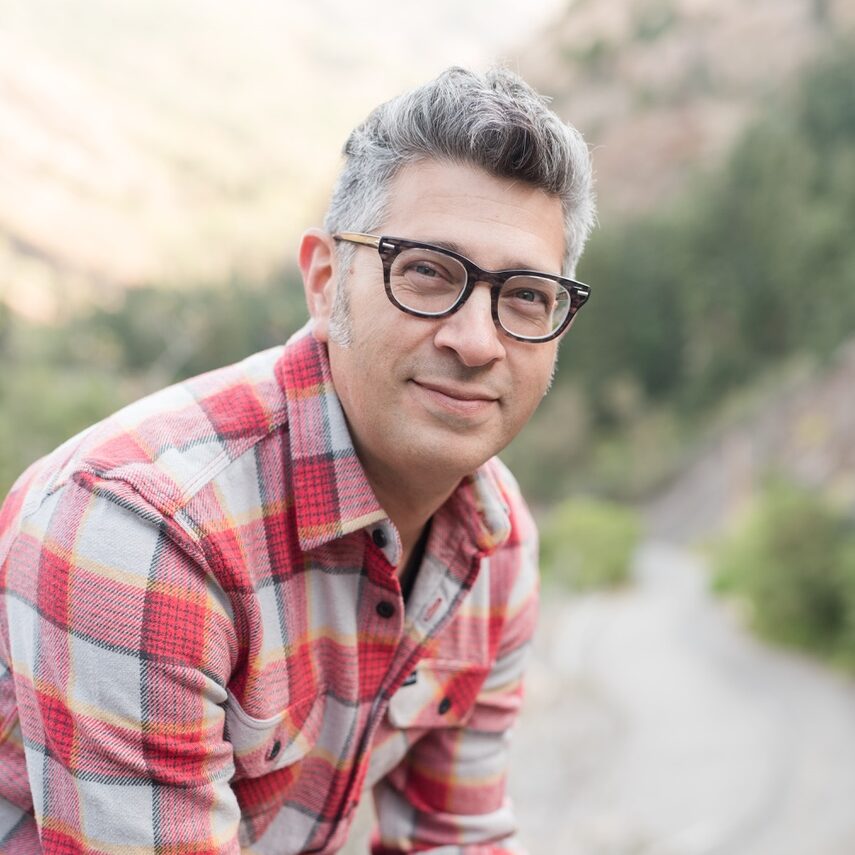
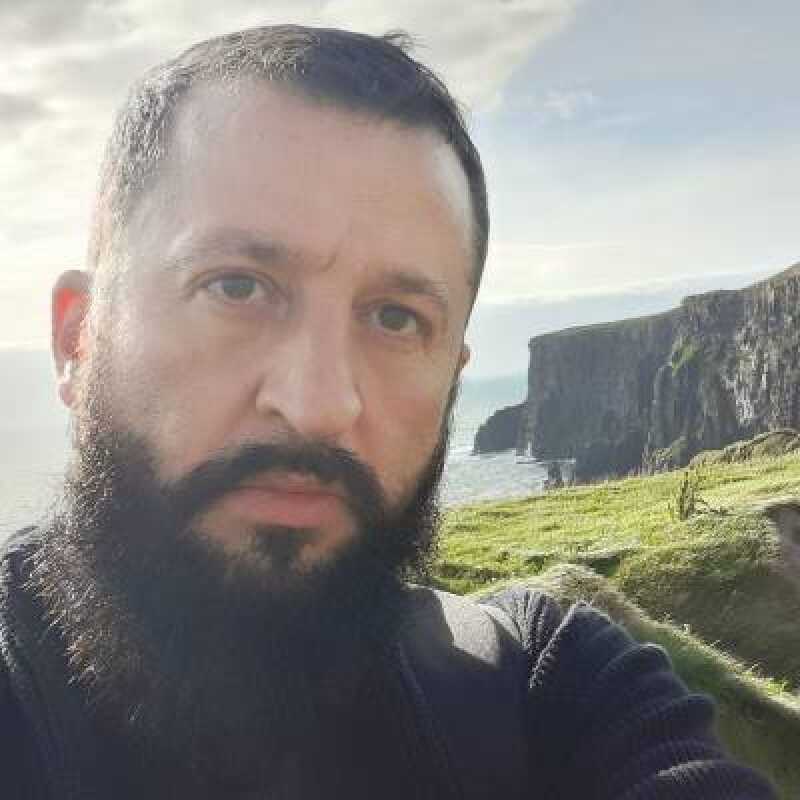
Michael Mejia is an Associate Professor in the Department of English at the University of Utah, where he teaches creative writing. He is also Editor-in-Chief of Western Humanities Review and co-founding editor of Ninebark Press . Mejia is the author of the novels TOKYO and Forgetfulness , with his work appearing in journals like AGNI , DIAGRAM , and Seneca Review . His creative practice bridges fiction, nonfiction, and visual media, interrogating narrative form and socio-cultural dynamics.
Dr. Silvia VESCO is an Associate Professor in the Department of Asian and North African Studies at Ca' Foscari University of Venice, where she specializes in Japanese art history, particularly Edo-period visual culture, ukiyo-e prints, illustrated books, and the works of Katsushika Hokusai. She is actively involved in research, teaching, and cultural curation, with a strong focus on Italian collections of Japanese art and cross-cultural artistic dialogues between Japan and the West. Education: PhD in History of Indian and East Asian Art, Ca' Foscari University of Venice (1999) Master in Art & Archaeology, SOAS, University of London (1995) Degree in Oriental Languages and Literatures, University of Venice (1993, with honors) Her research interests encompass Japanese aesthetics, museum studies, and the global reception of Japanese art. She has led major digitization projects for the Museum of Oriental Art in Venice and contributed to the development of its new museological framework. Her scholarly work reveals a consistent focus on Hokusai, Edo-period print culture, and the philosophical dimensions of Japanese visual forms. The recent publications highlight a deep engagement with Hokusai’s pedagogical works, the aesthetics of emptiness, and contemporary reflections on nature in post-Fukushima Japan. Her interdisciplinary approach bridges art history, cultural studies, and museum practice. Scientific Recognition: Finalist, Premio Nazionale per la divulgazione scientifica 'Giancarlo Dosi' (2020) Japan Foundation Fellowship (1997) Postgraduate scholarship from the University of Venice (1994) She has supervised numerous MA theses, served on PhD committees, and mentored students in Japanese art history. Her research has been supported by grants from the Japan Foundation and institutional collaborations with museums and cultural centers. She is a referee for VQR, Edizioni Ca' Foscari, and international journals, and serves on the scientific committees of several academic and museum publications. Labs and Teams: Scientific Committee, Museum of Oriental Art, Ca' Pesaro, Venice Scientific Committee, Edizioni Ca' Foscari Coordinator, Scientific Committee for Ca' Foscari Japanese Studies, Arts and Literature Member of the editorial board of 'Venezia Arti' and 'Quaderni del Polo museale del Veneto'
Alaina Lemon is a Professor of Anthropology at the University of Michigan, affiliated with the College of Literature, Science, and the Arts (LSA). She serves as Director of Undergraduate Studies in Anthropology and holds affiliations with the Center for Russian, East European, and Eurasian Studies (CREES), the Weiser Center for Europe and Eurasia, and the Interdepartmental Program in Anthropology and History. Her research focuses on socio-cultural anthropology, performance studies, and visual culture, with expertise in Russia, the Romani diaspora, and post-Socialist states. Education: BA in Anthropology (University of Wisconsin, 1987), MA (University of Chicago, 1988), and PhD (University of Chicago, 1996). Notable awards include the Wayne S. Vucinich Book Prize (2001), Heldt Book Prize (2001), and a 2023 visiting scholar position at the École des Hautes Études en Sciences Sociales (Paris). Her work bridges historical and contemporary issues, exploring themes like phatic labor, media infrastructures, and affective politics. Recent projects include editing the documentary Tremors (2023) and researching Soviet-era moral projects through studies of Moscow’s Metro and canine-human interactions. Lemon’s interdisciplinary approach integrates performance studies, linguistic anthropology, and critical race theory to analyze cultural dynamics in transitional societies. Grants include a 2019-2024 University of Michigan Office of Research grant for film collaboration and a 2002-2003 International Research and Exchanges Board fellowship. She has authored influential books such as Between Two Fires (2000) and Technologies for Intuition (2017), and her films document Romani experiences and urban cultural phenomena.
Kamila Kociałkowska is an Assistant Professor in the Department of History of Art at the University of Warwick, Faculty of Arts. She joined the department in 2024 after holding postdoctoral fellowships at the Metropolitan Museum of Art, the Getty/ACLS, and Harvard University’s Davis Center. Education: PhD in History of Art, University of Cambridge MA in History of Art, Courtauld Institute of Art MA in Fine Art, University of Edinburgh Her research centers on modernism in Eastern Europe, especially the interplay between artistic production and systems of censorship and surveillance in the Soviet Empire and its peripheries. She employs new materialist approaches to analyze redacted and fragmented visual and textual sources, rethinking the origins of abstraction beyond traditional resistance narratives. Her work also explores the cryptographic imagination and the impact of surveillance technologies on interwar avant-garde aesthetics. Her recent publications span topics such as Suprematist resistance, undead imagery in Stalinist propaganda, and explosive futurist texts, reflecting a deep engagement with avant-garde experimentation under repression. These works reveal recurring themes: the materiality of censorship, subversive semiotics, and the transformation of political constraint into aesthetic innovation. Scientific Awards and Fellowships: Leonard A. Lauder Postdoctoral Fellow, Metropolitan Museum of Art Getty/ACLS Postdoctoral Fellow in the History of Art Visiting Scholar, Davis Center, Harvard University She is currently completing her first book, The Black Square and the Blue Pencil: Censorship and the Stimulation of Modernist Style , which charts how censorship shaped avant-garde aesthetics in Russia, Georgia, Ukraine, and Azerbaijan. Her second project, Coding Modernity: The Cryptographic Imagination and the Interwar Avant-Garde , investigates the cultural history of spying and secret policing in interwar Europe. She does not currently have any listed advisees or research grants in the provided text.
Alison Landsberg is a Professor at George Mason University, affiliated with the Department of History and Art History and the Cultural Studies PhD program. Her research focuses on the politics of memory, affective engagements with the past, visual culture, and the intersections of race, aesthetics, and history. A leading scholar in memory studies, she explores how mass media and popular culture shape historical consciousness and political subjectivity. Her seminal works include *Prosthetic Memory* (2004) and *Engaging the Past* (2015), which analyze how mediated experiences of history foster empathy and progressive politics. Landsberg’s interdisciplinary work bridges film studies, cultural theory, and historiography. She examines how audiovisual media—from films to immersive digital exhibits—produce alternative historical narratives that challenge traditional academic historiography. Her current project, *Impossible Histories*, critiques conventional ‘historicism’ and explores counterhegemonic modes of historical representation. Her teaching spans courses on historical cinema, visual culture, and the politics of memory. She has advised over 20 doctoral students, many of whom explore topics like public history, digital memory, and cultural activism. Landsberg is a frequent keynote speaker at international conferences and has contributed to NPR’s *On the Media* and *The American Scholar* on topics ranging from racial representation to post-postracial America. Landsberg’s research emphasizes the urgency of rethinking historical engagement in an era of fragmented media and contested identities. Her work underscores the ethical and political stakes of how societies remember—and forget—the past.
Professor Dorit Abusch is a faculty member in the Department of Linguistics and Philosophy at Cornell University's College of Arts & Sciences. Her research focuses on semantics, pragmatics, and their applications to visual narratives. She explores topics like tense semantics, presupposition triggering, modal logic, and the interplay between language and visual media. Current work extends linguistic methodologies to analyze art forms such as comics, cave paintings, and temple sculptures. Her research interests include formal semantics applied to visual narratives, dynamic semantics, possible world theory, and multimodal discourse representation. She investigates how visual elements like sequential art and pictorial sequences convey temporal progression, aspectual distinctions, and free perception constructions through semiotic frameworks. Recent presentations include talks on applying semantics to film and picturebooks at institutions like MIT and the University of Padua. Her publications emphasize cross-media analysis, with key works published in Linguistics & Philosophy and Sinn und Bedeutung . Abusch has received grants for projects studying visual narratives in Indian art and wall paintings of Rajasthan. These include a 2012-2013 Humanities Research Grant and a Cornell Institute for Social Sciences award. Her work bridges linguistics with philosophy and visual studies, offering innovative frameworks for understanding non-linguistic communication through formal semantic tools.
Dr. Doyle D. Calhoun serves as University Assistant Professor of Francophone Postcolonial Studies within the Department of French at the Faculty of Modern and Medieval Languages and Linguistics, University of Cambridge, where he is also a Fellow of Peterhouse College. His scholarly profile spans African and Caribbean literary studies, cinema analysis, and historical sociolinguistics with a focus on resistance narratives. His educational trajectory includes a Ph.D. in French from Yale University (2022), an M.A. in Linguistics from KU Leuven, and undergraduate studies in Linguistics and French Literature at Boston College. Additional academic development occurred through residencies at Fondation Camargo (Cassis) and Bibliothèque Marmottan (Paris). Calhoun’s research centers on Francophone postcolonial resistance, particularly suicidal acts against French colonialism as documented in The Suicide Archive (2024). His work excavates silenced histories of Atlantic slavery, abolition movements, and Négritude philosophy through literary and cinematic archives, emphasizing Senegalese and Caribbean contexts. He explores how contemporary writers reconstruct erased narratives of enslaved resistance through transmedia practices. His recent publications reveal a methodological convergence between literary analysis, historical recovery, and decolonial theory. Articles frequently address archival silences in colonial documentation while examining how contemporary artists reimagine resistance through linguistic innovation, cinematic storytelling, and embodied protest. Key thematic clusters include the weaponization of silence, subversive uses of missionary linguistics, and the politics of memory in postcolonial contexts. 2024 Malcolm Bowie Prize (Society for French Studies) 2024 William R. Parker Prize (Modern Language Association) 2021 Ralph Cohen Prize (New Literary History) 2016 Vivien Law Prize (Henry Sweet Society) Calhoun actively mentors graduate students in African/Caribbean literatures and cinema studies, with current projects including Africa after 1848 and Florence . His grant history features academic residencies at Fondation Camargo and Bibliothèque Marmottan, alongside a 2021 scholarship from the latter institution. Public engagement includes the 2025 La Noire de... film symposium and contributions to Los Angeles Review of Books and Salon . He contributes to the Cambridge Language Collective and Polyglossia Magazine while organizing events through Peterhouse. His 2025 podcast appearances on Stegi Radio and New Books Network demonstrate active knowledge dissemination beyond traditional academic channels.
Dr Maurizio Cinquegrani is a Senior Lecturer in Film and Equity, Diversity and Inclusion Lead at the University of Kent's School of Arts. He holds a PhD from King's College London and has held roles including Head of Film and Media, School Director of Graduate Studies, and Deputy Dean (Student Experience). His research focuses on film's relationship with space, memory, and historical events, particularly the Holocaust and Cold War. He is a Fellow of the Royal Geographical Society (2018-2023). Education: PhD in Film Studies (King's College London, 2010), MA in Contemporary Cinema Cultures (King's College London), BA in Film Studies (University of Bologna). Research interests include cinematic geographies, urban space representation, and documentary film. His notable works include Of Empire and the City: Remapping Early British Cinema (2014), Journey to Poland: Documentary Landscapes of the Holocaust (2018), and Film, Hot War Traces and Cold War Spaces (2022). He has also produced essay films such as Aran Diary (2023) and Formosa 228 (2024). Professional activities include editorial roles for Immagine. Note di Storia del Cinema and AHRC-funded research projects. He supervises doctoral students in film history, documentary cinema, and spatial memory studies. Key awards include the Royal Geographical Society Fellowship. His teaching emphasizes research-led learning and has been influenced by his extensive international collaborations, including visiting roles at Taipei National University of the Arts and Poznań University of Technology.
Michelle Arrow is a Professor at Macquarie University's School of Humanities and Centre for Media History. Her research focuses on cultural history, post-war Australia, and feminist movements. She holds a PhD from the University of Sydney (1999), with notable works including Upstaged (2002), Friday on Our Minds (2010), and The Seventies (2019), which won the Ernest Scott Prize. Her work explores how culture shapes identities and responds to political shifts. She has led projects like 'Public Intimacy: A Biography of Anne Deveson' and contributed to media initiatives such as ABC TV's Rewind . Awards include Fellowships from the Academy of the Social Sciences (2023) and the Royal Historical Society (2025). Her current projects include a biography of Anne Deveson and studies on gender citizenship and LGBTQIA+ activism. Michelle has been a media commentator on topics like historical representation and social policy. Education: PhD in History, University of Sydney (1999) Thesis: Social and cultural history of Australian women playwrights (published as Upstaged ) Research Interests: 1970s Australia, Royal Commissions, feminist politics Popular culture and its political dimensions Historical representation in media and film Awards: Ernest Scott Prize (2020) NSW Premiers' Multimedia History Prize (2014) Elected Fellowships (2023, 2025) Grants/Projects: ARC-funded projects on women's refuges and children's rights Audio-visual archive prototyping (2017) Biography of Anne Deveson (2020–2023) Media Engagement: ABC TV presenter ( Rewind ) Contributions to The Conversation and public talks
Loli Kim is a Lecturer on Modern Korea at the Faculty of Asian and Middle Eastern Studies, University of Oxford, with a Leverhulme Postdoctoral Research Fellowship (2022–2025). She specializes in cross-cultural multimodal analysis of Asian communication systems, particularly Korean cinema, folklore, and representation in media. Education: DPhil in Asian and Middle Eastern Studies (2019–2022), University of Oxford Research Focus: Multimodal discourse analysis, foodscaping theory, haenyeo women’s communication Editorial Roles: Assistant Editor of European Journal of Korean Studies; General Editor of 'Foodscaping Asia' series Her work develops the Segmented Film Discourse Representation Structures (SFDRS) methodology for analyzing Korean films' narrative conventions, including violence in revenge cinema and socio-pragmatic dimensions of fashion. She collaborates globally as a visiting lecturer and conference organizer. Kimi’s recent publications examine multimodal translation gaps, cultural representation in children’s literature, and the sociocultural implications of foodscaping. She has delivered keynote talks at institutions including Edinburgh University and SOAS, and co-organizes the Translating Squid Game talks series.
Gerhard Hirschfeld is an Honorary Professor at the Department of History, University of Stuttgart, and has served as Director of the Bibliothek für Zeitgeschichte since 1989. His research focuses on Social and Cultural History of World War I , Comparative Occupation History of World War II , 20th Century Netherlands History , and Academic Emigration post-1933 . He has been a Fellow of the Netherlands Institute of Advanced Studies in the Humanities and Social Sciences (1996/1997, 2006/2007) Fellow of the German Historical Institute London and held leadership roles including Chair of the German Committee for the History of WWII (1991–2000) and President of the International Committee for the History of WWII (2000–2010). His publications span monographs, edited volumes, and essays on occupation policies, collaboration, and exile studies. Recent works emphasize the media representation of WWI , continuity of nationalist rhetoric , and ethical dimensions of historical taboos . He contributes to journals like Zeithistorische Forschungen and Tijdschrift voor Geschiedenis . Scientific awards include Fellowships at NIAS and DHIL Editorial leadership in academic series like Zeit der Weltkriege and Schriften der Bibliothek für Zeitgeschichte and advocacy for interdisciplinary war studies.
Homi K. Bhabha is the Anne F. Rothenberg Professor of the Humanities at Harvard University. His work spans colonial and postcolonial theory, cultural change, cosmopolitanism, and human rights within aesthetic contexts. He has been a pivotal figure in the Department of Comparative Literature since its inception as a graduate program in 1904. Education BA (1970) - University of Bombay MPhil/MA/DPhil (1990) - Christ Church, Oxford Bhabha's research focuses on cultural hybridity , ambivalence in colonial discourse , and postcolonial ethics . His theoretical frameworks analyze authors like Joseph Conrad, Walter Benjamin, and Toni Morrison through lenses of identity, power, and globalization. While his recent works On Art and A Global Measure await publication, his seminal texts like The Location of Culture (1994) and Framing Fanon (2005) remain foundational in postcolonial studies. These works explore sub-fields including: Transnational memory frameworks Psychoanalytic colonial critique Decolonizing discourse Visual culture in postcolonialism Temporal suspensions in cultural production Global trauma narratives
Akanksha Mehta is a Lecturer in Gender, Race and Cultural Studies at Goldsmiths, University of London , where she co-directs the Centre for Feminist Research. She joined Goldsmiths in September 2018 after lecturing at the School of Global Studies, University of Sussex (2016-2018). Research Focus: Intersections of gender, sexuality, race, and everyday politics/violence; affective and material structures in nationalist movements; decolonial pedagogies. Key Projects: Co-founded the 'Mind the BAME Gap' initiative at Sussex; ongoing book project on right-wing women's mobilizations. Recognition: Recipient of the EISA Best Dissertation Award (2018) and Rachel Tanur Memorial Prize (2016). Publication Trends: Her work spans feminist critiques of Hindutva, queer rights in post-377 India, ethnographic analyses of right-wing women, and decolonial pedagogical frameworks. Recent outputs engage with racial justice in universities, affect theory, and visual sociology. Scientific Awards: Best Dissertation Award, EISA (2018) Rachel Tanur Memorial Prize, ISA (2016) Collaborative Work: Engages with decolonial visual practices, collective complaint mechanisms in academia, and intergenerational feminist dialogues through the podcast 'The F Less Travelled'.
Pavle Levi serves as the Osgood Hooker Professor of Fine Arts and Department Chair within Stanford University's Art Department, where he leads the Film and Media Studies Program. His academic position anchors interdisciplinary scholarship bridging cinematic theory, historical analysis, and contemporary art practice within the university's intellectual ecosystem. Levi's research interrogates the complex interplay between cinematic form and ideological frameworks, with concentrated expertise in East European film history, experimental media practices, and the philosophical dimensions of visual representation. His scholarship consistently examines how aesthetic choices negotiate political contexts, particularly through avant-garde and non-narrative film traditions that challenge conventional cinematic language. This work extends into contemporary art discourse, modern art movements, and the evolving relationship between scientific inquiry and artistic production. His publication trajectory reveals a sustained investigation into cinema's material boundaries and perceptual impacts, moving from historical analyses of film disintegration to contemporary explorations of cinematic consciousness. These works collectively establish a critical framework for understanding film as both cultural artifact and sensory experience, emphasizing the destabilizing potential of experimental techniques across temporal contexts. Scientific recognition includes: Gores Award for Excellence in Teaching (2011)
Muhammad Farooq is an Assistant Professor of English at Seton Hall University's Department of English. He specializes in 20th- and 21st-century British, postcolonial, and global Anglophone literature, with research focusing on postcolonial studies, necropolitics, memory, and spatial literary studies. His current book project, The Production of Necrospace: Literary Imaginary and Ungrievable Lives in the Af-Pak Frontier , examines necrogeographies through literary texts from the British colonial era to contemporary Af-Pak works. Education: PhD in English, Kent State University (2023) His research explores intersections between literature and socio-political structures, particularly in contested regions like the Afghanistan-Pakistan frontier. Farooq’s work often addresses how literature conceptualizes spaces of death (necrospace) and the politics of grievability. His recent publications analyze Afghan American fiction’s soundscapes, Pashto poetry’s engagement with drone warfare, and modernist narratives like Virginia Woolf’s works. He has received multiple awards including the 2024 University Research Council Grant and the 2023 Ohio International Consortium Award. Farooq teaches courses such as Postcolonial Theory and Literature and Death, Memory, and Resilience , emphasizing critical thinking across cultural divides. Grants: University Research Council Grant (2024), Newberry Renaissance Consortium Grant (2020) No specific labs or research teams are mentioned, but his interdisciplinary approach bridges literary analysis with geopolitical and cultural studies.