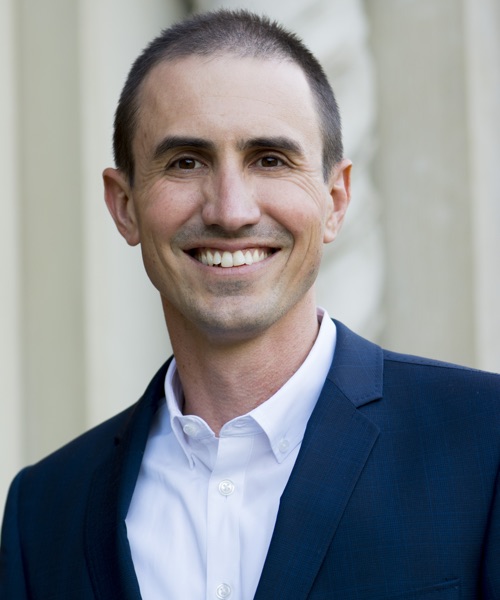
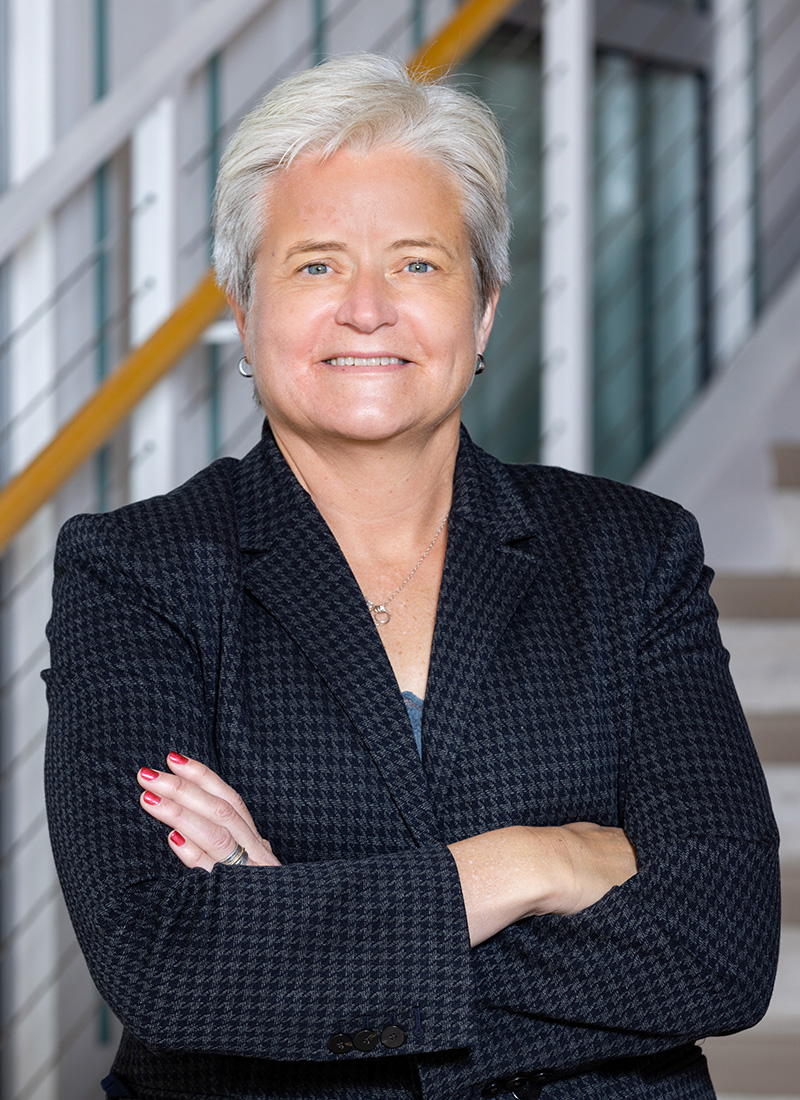
Eileen Klein is an Associate Professor of Social Work and Convener of the BSW Program at Ramapo College of New Jersey's School of Social Science and Human Services. Her work focuses on LGBTQ mental health treatment , community support systems , and policy reform for marginalized populations. Klein has presented extensively at international conferences on topics like cultural competency in social work education and LGBTQ health disparities . Ph.D., M.S., and M.S.W. from New York University and SUNY Buffalo Key research areas: LGBTQ Mental Health, Community Health Disparities, Forensic Social Work Published 15+ works (2013-2021) on topics ranging from polypharmacy to support programs for LGBTQ clients Active in professional development: Delivered presentations at conferences across the U.S. and Italy on topics including integrated treatment and supervision of student interns
Maisha T. Winn serves as the Excellence in Learning Graduate School of Education Professor at Stanford University and is Faculty Director of the Stanford Accelerator for Learning's Equity in Learning Initiative. She leads the Futuring for Equity Lab as Principal Investigator and holds significant leadership positions including President-Elect of the American Educational Research Association and membership in the National Academy of Education. Dr. Winn's research examines how non-dominant youth and communities develop literate trajectories across historical and contemporary settings. As an ethnographer by training, she investigates how communities depicted as under-resourced create their own educational practices, processes, and institutions. Her scholarship bridges historical analysis with contemporary educational practice to build more just, collaborative, and equitable futures in education. Her work spans restorative justice in education, Black literacy studies, and transformative justice approaches, with particular attention to the school-to-prison pipeline, independent Black institutions, and futures-oriented educational frameworks. Dr. Winn analyzes how historical educational models can inform contemporary practices that center community knowledge and cultural identity. Andrew W. Mellon Fellow at CASBS (2022-23) American Educational Research Association Fellow Member of the National Academy of Education Dr. Winn advises doctoral students including Christina Hewko and Misbah Naseer, and leads research initiatives focused on educational equity. Her Futuring for Equity Lab develops frameworks for understanding how marginalized communities have historically created educational spaces that affirm their identities and knowledge systems, with direct implications for contemporary educational practice and policy. Her research team collaborates with community organizations and schools to translate scholarly insights into practical applications that promote educational justice, particularly in areas of school discipline reform and literacy education for marginalized youth.
Dr. Chelsey Holden is an Associate Professor of Child and Family Sciences at the School of Child and Family Sciences, University of Southern Mississippi. She holds licenses as a Licensed Marriage and Family Therapist (LMFT) and Licensed Professional Counselor (LPC), with certifications in Telemental Health and National Certification as a Counselor. Her academic journey includes a Ph.D. in Counselor Education (2017) from Mississippi State University, an MS in Marriage and Family Therapy (2013) from the University of Southern Mississippi, and a BS in Human Environmental Sciences (2011) from Troy University. Dr. Holden's research focuses on wellness for helping professionals, college students, and romantic couples, with emphasis on financial wellness, mental-physical health connections, and digital training methods. Her recent work explores imposter syndrome, perfectionism, and telehealth advancements, reflecting interdisciplinary interests in psychology, family systems, and technology. Her publications span journals like Contemporary Family Therapy and Journal of College Student Retention, addressing burnout, resilience, and behavioral dynamics in therapeutic and familial contexts. She teaches courses in counseling ethics, family theories, and marriage therapy, while maintaining affiliations with professional bodies such as the Mississippi Association for Marriage and Family Therapy.
Nathan W. Hudson is an Associate Professor in the Department of Psychology at Southern Methodist University (SMU) in Dallas, Texas. Previously, he received his Ph.D. in Psychology from the University of Illinois at Urbana-Champaign in 2016. His research focuses on personality psychology, particularly how people's personalities change across time and how individuals function in romantic relationships. He leads the Δ Lab at SMU, which investigates individual differences in human personality. Education: 2016 – Ph.D., Psychology, University of Illinois at Urbana-Champaign 2011 – M.A., Psychology, University of Illinois at Urbana-Champaign 2009 – B.A., Purdue University Nathan Hudson's primary research area is volitional personality change—people's desires and attempts to change their own personality traits. His groundbreaking research has shown that approximately 90% of people want to change aspects of their personality traits, and moreover, they may be able to find some degree of success in doing so. He also studies adult attachment styles and how people function in close relationships. Hudson's work suggests that attachment anxiety is linked to false memories, and that people's attachment styles can change over time. His research integrates both theoretical and applied perspectives, with implications for therapeutic interventions and personal development. Hudson's recent publications demonstrate a clear trajectory toward understanding the mechanisms of personality change and developing effective interventions. His work spans across multiple domains of personality psychology, with a particular emphasis on the Big Five personality traits, attachment theory, and well-being. A consistent theme throughout his research is examining how people's desires for change translate into actual personality growth. His work has increasingly focused on the practical applications of personality science, including developing measures and interventions that can help people achieve their desired personality changes. Scientific Awards: Goss-Lucas Award for Excellence in Teaching James Davis Fellowship Foundation for Personality and Social Psychology Heritage Dissertation Award Hudson actively mentors students in the Δ Lab at SMU, where they conduct research on personality change, attachment, and well-being. He has secured multiple grants to support his research on volitional personality change and the development of personality assessment tools. His lab has developed several psychological measures, including the Change Goals Big Five Inventory (C-BFI2) and its variants, which are freely available for academic research. Hudson also engages with the public through his TEDx talk "You Can Change Your Personality" and has been featured in Olga Khazan's book "Me, But Better," which applies his research to real-life settings. The Δ Lab, led by Hudson, is dedicated to understanding individual differences in personality and how people can intentionally change aspects of themselves. The lab values all individual differences among humans, recognizing that variance in human thoughts, feelings, and behaviors is adaptive and makes humanity resilient. The lab wholeheartedly supports the LGBTQ+ community and emphasizes that individual differences between humans are what personality science is all about.
ALEJANDRO ESPI MACIAS is a Professor in the Department of Surgery at Universitat de València, where he is actively involved in research related to solid tumors and surgical immunology. He is a member of the InDeST Research Group (Innovative Diagnostic and Therapeutical Developments in Solid Tumors), focusing on advancing diagnostic and therapeutic strategies for cancer patients. His research interests lie at the intersection of surgery and immunology, particularly in how surgical intervention affects the immune system. Key areas include the role of immunoglobulins (G, A, M) and the complement system in response to surgical trauma, with implications for postoperative immunity and cancer progression. His work supports the development of innovative clinical approaches in oncological surgery. The trends in his research, though not detailed in publications here, suggest a long-standing focus on the immunological consequences of surgery, especially in cancer contexts. This foundational work contributes to personalized surgical strategies and improved patient outcomes in solid tumor management. Member, InDeST Research Group – Innovative Diagnostic and Therapeutical Developments in Solid Tumors He completed his doctoral studies at Universitat de València in 1984, with a thesis titled "Efecto de la agresión quirúrgica sobre las inmunoglobulinas (G.A.M.) y sistema del complemento", supervised by Dr. Juan García de Lomas Barrionuevo. While no formal advisees or grants are listed, his academic leadership as a Titular Professor indicates significant contributions to surgical science and mentorship within his department. His work is centered within the InDeST research group, which aims to bridge diagnostic innovation with therapeutic advancement in solid tumor oncology, integrating clinical surgery with immunological monitoring and response assessment.
Joshua B. Guild is an Associate Professor in the Department of African American Studies at Princeton University. He is also an Associated Faculty member in the Program in Urban Studies and has been involved with the Center for Digital Humanities. His scholarly work bridges historical research with public engagement and digital innovation. His education includes a PhD in History and African American Studies from Yale University and an undergraduate degree from Wesleyan University, where he was a Mellon Mays Undergraduate Fellow. Professor Guild's research centers on 20th- and 21st-century African American social and cultural history, urban history, and the modern African diaspora. His interests include migration, black internationalism, black popular music, and the black radical tradition. He is deeply engaged in the digital humanities and public scholarship, organizing seminars and contributing to podcasts and public exhibitions. The recent publications and projects reflect a strong focus on urban Black communities, transnational migration, and cultural politics. Themes include the Great Migration, postwar New York and London, New Orleans after Katrina, and the Black 1980s. His work combines historical analysis with cultural critique and social justice advocacy. Scientific Awards and Fellowships: Mellon Mays Undergraduate Fellowship Andrew W. Mellon Foundation Fellowship Ford Foundation Fellowship Woodrow Wilson National Fellowship Foundation Award Charles Warren Center Fellowship (Harvard University) W.E.B. Du Bois Institute Fellow (Harvard University) Professor Guild has advised graduate students through seminars and collaborative projects, though no individual students are named. He has led initiatives supported by institutional grants, particularly in digital humanities and public engagement. His leadership in the 'Black Studies in the Digital Age' seminar and editorial work on the 'Black 1980s' special issue demonstrates his commitment to advancing the field through interdisciplinary collaboration. He is affiliated with the Program in Urban Studies and the Center for Digital Humanities at Princeton, where he contributes to shaping curricula and research directions in African American Studies and digital scholarship.
Laura E. Brumariu is a Professor and Associate Dean for Professional Programs and Student Advancement at the Gordon F. Derner School of Psychology, Adelphi University. She holds a Ph.D. from Kent State University and completed postdoctoral research fellowships at Harvard Medical School. Her office is located in the Hy Weinberg Center, and she is licensed as a psychologist in New York State. Education: Postdoctoral Research Fellow, Harvard Medical School/CHA/MGA (2013) Postdoctoral Research Fellow with Clinical Attributions, Cambridge Health Alliance/Harvard Medical School (2012) Ph.D., Kent State University (2010) Her research adopts a developmental psychopathology perspective, focusing on how parent-child attachment influences emotional and social development, particularly in middle childhood. She investigates emotion regulation, anxiety, disorganized attachment, role-confusion, and family processes related to borderline personality features and dissociation. She developed the Middle Childhood Attachment Strategies Coding System and leads the Child and Adolescent Research (CARE) Lab. Her recent work emphasizes meta-analytic reviews on emotion socialization, attachment, anxiety, and empathy. Her most recent publications reflect trends in attachment theory, emotion regulation, parenting, and internalizing disorders across development, often using meta-analytic and longitudinal methods. Much of her work integrates international collaboration, especially with Romanian researchers. Scientific Awards and Honors: Clinical Research Training Program, Harvard Medical School, Research Fellow (2010–2012) The Jeanette and Louis Reuter Fellowship in Developmental Sciences, Kent State University (2008–2009) She has mentored numerous doctoral students whose research spans topics such as gratitude, empathy, emotion socialization, and trauma. She teaches courses in psychological research, family therapy, and doctoral thesis supervision. She has secured research funding and collaborates extensively on studies related to child and adolescent mental health, though specific grants are not detailed in the text. Her professional activities include frequent presentations at major psychological conferences such as the Association for Psychological Science and the International Attachment Conference. Labs and Research Teams: She directs the Child and Adolescent Research (CARE) Lab at Adelphi University, which focuses on attachment, emotion regulation, and psychopathology in children and adolescents. The lab conducts both observational and survey-based research and trains graduate students in developmental and clinical methods.
Professor Kendrick Oliver is a faculty member in the Department of History at the University of Southampton, holding the rank of Professor of American History. His research focuses on 20th-century American political, social, and cultural responses to existential questions, with emphasis on scientific cosmology, space history, communication technology, evangelical religious history, and the Vietnam War. He has served as Head of the Department of History from 2018 to 2022 and contributed to founding the Historians of the Twentieth Century United States organization (2000s). Current research examines the social and cultural history of the Big Bang theory, supported by grants from the American Philosophical Society and others. Teaching responsibilities include undergraduate modules on McCarthyism, the Space Age, and America's global role since 1945, alongside a master's-level course on conspiracies and paranoia in American history. He is developing the MA Global Challenges program launching in 2024. Supervision includes four PhD students across history disciplines. Oliver has authored three books, including *The My Lai Massacre in American History and Memory* and *To Touch the Face of God: the Sacred, the Profane and the American Space Program, 1957-75*. His scholarship bridges science and religion, analyzing topics like prison ministry origins, cosmic microwave background discovery narratives, and evangelical globalization. Oliver’s work frequently intersects with broader themes of memory, technology, and Cold War context.
Yoel Inbar is an Associate Professor at the University of Toronto, affiliated with the Department of Psychology and the Morality, Affect, and Politics (MAP) Lab. His research explores the intersection of moral intuitions, emotions, and political/social beliefs, with a focus on disgust sensitivity and its implications. He also investigates public acceptance of emerging technologies like genetic engineering. Contact: yoel.inbar@utoronto.ca . PhD, Cornell University BA, University of California at Berkeley His research spans moral psychology, political ideology, and behavioral responses to technological innovation. Recent studies employ natural language processing to analyze morality in real-world contexts, such as political discourse and environmental attitudes. The MAP Lab emphasizes interdisciplinary approaches, integrating psychology, behavioral economics, and computational methods to study moral decision-making and its societal consequences. Alumni from the lab include researchers now at institutions like UC Berkeley, University of the Fraser Valley, and Cornell University, reflecting his mentorship of advanced psychological and behavioral science scholars.
Dr. Shanna Williams is an Assistant Professor in the Department of Educational and Counselling Psychology at McGill University's Faculty of Education. She holds clinical licensure in Quebec and Ontario, with expertise in forensic child psychology and maltreatment-related research. Her work focuses on child lie-telling, commercial sexual exploitation, moral development, and eyewitness testimony. Prior roles include a postdoctoral fellowship at the University of Southern California’s Gould School of Law and forensic law enforcement collaboration in Los Angeles. Education: Ph.D., McGill University: School/Applied Child Psychology M.A., McGill University: Educational Psychology B.A., McGill University: Psychology Postdoctoral Visiting Fellow, University of Southern California Research Interests: Lie-Telling Dynamics: Investigating how cognitive and social factors influence children's deception across contexts. Child Maltreatment: Developing trauma-informed forensic interview protocols and assessing maltreatment impacts on memory and disclosure. Legal Systems: Enhancing child-witness support through improved questioning techniques and cross-cultural legal practices. Publications Trends: Her recent work emphasizes pandemic-era challenges in child protection, digital exploitation, and legal system adaptations. Over 20 peer-reviewed articles address topics like forensic interviewing methods, maltreatment detection, and interdisciplinary collaboration. Awards: SSHRC Postdoctoral Fellowship (2016-2017) SSHRC Joseph-Armand Bombardier CGS Doctoral Fellowship (2010-2013) Advising & Grants: Supervises graduate students in child psychology and maltreatment studies. Research funded by SSHRC, NSF, and NIH grants focusing on forensic child development. Labs/Teams: Child Interviewing & Witness Lab Canadian Child Interviewing Research Team
Nancy E. Glass, PhD, MPH, MS, RN, FAAN, is a Professor and Associate Director of the Johns Hopkins Center for Global Health, while holding the Independence Chair in Nursing Education at the Johns Hopkins School of Nursing. She specializes in clinical and community-based intervention research targeting gender-based violence (GBV) and health equity globally. Global Health Expertise: Focuses on improving safety and economic security for women in humanitarian settings, particularly addressing GBV in Somalia, South Sudan, and Kenya. Technological Innovation: Develops mHealth tools like the MyPlan app for abuse intervention and collaborates on ASIST-GBV screening methods. Research Focus: Dr. Glass leads federally funded projects (NICHD, NIMHD, CDC, etc.) to challenge social norms sustaining violence against women and enhance healthcare systems' responses to GBV through partnerships and mHealth technologies. Scientific Awards: 2017 Independence Chair in Nursing Education 2015 Edith Moore Copeland Award 2014 PathPaver Award 2009 Fellow, American Academy of Nursing 2007 Linda Saltzman New Investigator Award Dr. Glass mentors colleagues and students globally, partnering with community organizations and experts to address health, safety, and economic disparities for women and families.
Dr. Siobhán Dowling is a Senior Lecturer in Education at the School of Education, University College Cork (UCC), with expertise in Religious Education, Music Education, and the intersection of The Arts in Education. She earned her PhD from the University of Wales, Trinity St David, Lampeter, UK, in 2011 and has served in both teaching and administrative roles at UCC since 1998, including Director of the Structured PhD in Education. Education: PhD (2011) in Biblical and Musical Reception History, University of Wales, Trinity St David. Current Roles: Senior Lecturer, Tutor, Placement Supervisor, Director of Structured PhD in Education. Her research focuses on the reception history of biblical narratives in music , particularly themes like the Sacrifice of Isaac, Eve, and the Book of Samuel. She explores collaborative learning in teacher education and integrates creative pedagogy in Religious Education. Her work spans interdisciplinary analysis of the Bible’s influence on music, art, and cultural identity. The 15 most recent publications highlight her pioneering work on biblical stories in musical compositions (2025), visual and musical reception of Dives (2024), and peer-reviewed studies on collaborative learning (2023). Her contributions to the Encyclopedia of the Bible and its Reception (2025–2016) cover topics like patriarchs, psalms, and gendered biblical figures. Scientific Awards: Recipient of two book awards in the USA for co-authored work 'The Bible in Music: A Dictionary of Songs, Works and More' (2015). Research Grants and Supervision: Awarded multiple Erasmus+ Staff Mobility Grants (2023, 2014) for international training and a Kurt Weill Foundation Travel Award (2014). Supervised PhD, MEd, and PME students while serving as Internal/External Examiner. Leadership: Coordinated UCC’s Cohort PhD in Education (2001–2014) and led the MAAP in Guidance and Counseling program. Delivered invited seminars at KU Leuven, University of Tuebingen, and Trinity College Dublin.
Professor Philip Birch is a distinguished academic in Criminology at the University of Technology Sydney (UTS), Faculty of Design & Society, School of International Studies & Education. With over 15 years of academic experience across British, American, and Australian university systems, he has established himself as a leading expert in policing, community safety, and criminal justice. His extensive practical background in criminology, including roles as a Specialist Crime Team Manager, Community Safety Research Manager, and Through Care Worker in UK correctional facilities, informs his applied research approach. Professor Birch's educational background includes a BSocSci. (Hons) in Social Policy (Crime & Justice) from the University of Manchester, multiple postgraduate qualifications from the Open University (including an MSc. in Social & Criminological Research Methods), a Post Graduate Certificate in Higher Education Practice from the University of Huddersfield, and a PhD in Criminology from the University of New South Wales. He also holds a Fellowship with the Higher Education Academy. His research centers on six key areas: Police & Policing; Community Safety & Crime Prevention; Prisons, Probation & Parole Policy & Practice; Assessment, Treatment & Management of Offenders; Gender & sexuality inclusive Domestic and Family Violence; and Sex Work, Sex Workers and Procurement. His work emphasizes the practical application of criminological research to real-world justice issues, with strong industry engagement across law enforcement and correctional services. Recent publications reveal a clear trend toward police mental health, aging in policing, hate crime identification, trauma-informed policing approaches, and digital community safety initiatives. His research employs diverse methodologies including qualitative case studies, Delphi methods, rapid evidence assessments, and comparative analyses across multiple jurisdictions. Teaching award (2019) from Australian College of Educators for outstanding contribution to education Literati Award (2019) for published work Fellowship of the Higher Education Academy Professor Birch has supervised numerous Honours, Masters by Coursework, Masters by Research and PhD students in Criminology, Criminal Justice and Policing, with several completions to date. He has secured over $1.3 million in research funding, including an ARC Linkage grant, and has acted as an external assessor for domestic and international funding bodies. His research projects address critical issues in criminology and policing, often with direct policy implications. He established the Crime & Security Science (CaSS) Research Group at UTS in 2022, a cross-faculty initiative connecting academia with industry to advance evidence-based criminology, criminal justice, policing, and community safety research. This group serves as a hub for collaborative projects addressing contemporary security challenges through translational research.
David N. Ku is the Lawrence P. Huang Endowed Chair for Engineering Entrepreneurship and Regents' Professor at Georgia Institute of Technology. He holds appointments in the School of Mechanical Engineering (Woodruff School) within the College of Engineering. His research focuses on biofluid mechanics, medical device innovation, and translational technology, with emphasis on thrombosis mechanisms and vascular diseases. Education: M.D. from Emory University (1984); Ph.D. and M.S. from Georgia Tech (1983, 1982); B.A. from Harvard University (1978). Research interests include unsteady fluid dynamics in vascular systems, nanoparticle medical devices for thrombosis prevention, and porous thrombus applications for hemostasis. His work bridges bioengineering with entrepreneurship, teaching product development at the Business School and collaborating with Emory University, Paris Tech-Mines, and ETH Zurich. Key awards include the American Institute for Medical and Biological Engineering Fellowship, DLA Piper Inventor of the Year, and NSF Presidential Young Investigator Award. His research is funded by NIH, NSF, and industry partners. Labs/Teams: Leads a lab using microfluidics and computational mechanics for vascular disease solutions. Collaborates on technologies to address post-partum hemorrhage and traumatic bleeding.
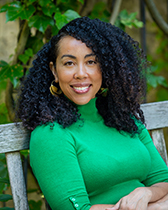
Kihana Miraya Ross is an Assistant Professor in the Department of Black Studies at Northwestern University, affiliated with the Weinberg College of Arts & Sciences. She holds a Ph.D., M.A., and B.A. from UC Berkeley in Social and Cultural Studies of Education, African American Studies, and Sociology. Her research focuses on antiblackness in education, Black educational fugitivity, and educational reparations, employing critical ethnography and participatory design methods. Her book project examines the afterlife of school segregation and strategies for Black educational futurities. She co-directed the documentary Stolen School , exploring the closure of Evanston’s Foster School and its lasting impacts. Ross has received major grants from the Spencer Foundation and fellowships from the Ford Foundation. Education: Ph.D. in Social and Cultural Studies of Education (UC Berkeley, 2016) M.A. in Social and Cultural Studies of Education (UC Berkeley, 2011) B.A. in African American Studies, Sociology, and Education (UC Berkeley, 2002) Key Projects: Spencer Foundation-funded research on Evanston’s educational reparations Documentary Stolen School (2023) Awards: 2021 Spencer Foundation Large Grant 2017 Ford Foundation Postdoctoral Fellowship Ross’s work bridges historical analysis and contemporary activism, advocating for systemic change through frameworks like Black fugitivity. She collaborates with community organizations like Shorefront Legacy Center and mentors interdisciplinary projects on race, education, and spatial justice.