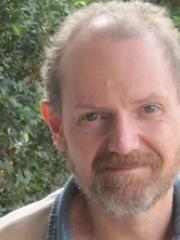
Dr. Gavin Morris is a Lecturer in Education at Charles Darwin University's College of Education, with over two decades of teaching experience in Australian schools. His academic qualifications include a PhD from Charles Darwin University (2019), Master of Education from University of Sydney (2016), and Bachelor of Education from James Cook University (2000). Morris specializes in Indigenous research methodologies, Health & Physical Education, and Sport Science. His qualitative work focuses on trauma healing, truth-telling, and decolonization practices in Aboriginal communities, particularly using Dadirri (deep listening) methodologies. Recent research explores digital platforms for cultural preservation and community resilience. As a registered postgraduate research supervisor, Morris contributes to undergraduate and postgraduate programs while maintaining active fieldwork in remote Northern Territory communities like Nauiyu at Daly River.
Bunty Avieson is a Senior Lecturer in Journalism and Media at the University of Sydney's Faculty of Arts and Social Sciences. She holds a PhD and MPhil from Macquarie University, specializing in media theory and literary analysis. Her research focuses on Bhutanese media development, Wikipedia's societal impact, and the intersection of journalism with literary practices. PhD Thesis: Media development in Bhutan during its democratic transition MPhil: 'The Poetics of Paranoia' exploring self-construction through Derrida and Nagarjuna Research Interests: Her work spans media policy in Bhutan, Wikipedia's role in knowledge equity, and the ethics of memoir writing. She has published extensively on Bhutan's media evolution and co-edited volumes on memory mediation and trauma narratives. Articles Trends: Recent work examines lifestyle journalism identity, Wikipedia's pandemic-era contributions, and Bhutan's unique digital media strategies. Earlier research explored Bhutan's transition from oral traditions to social media under Gross National Happiness principles. Awards: Vice-Chancellor's PhD Commendation (2013), Ned Kelly Awards for crime fiction (2001-2003) Grants & Projects: Principal Investigator in the Bhutan-Wiki Project (DECRA-funded), co-developed the Australian Colonial Narrative Journalism Database. Received grants for Tamil diaspora storytelling and Bhutan media studies. Professional Roles: Wikimedia Australia Vice President, member of journalism education associations, and former editor of Woman's Day.
Felicity McArdle is a Professor in the Department of Early Childhood Education within the Faculty of Education at Queensland University of Technology. With a distinguished career spanning over two decades, her work centers on reimagining early childhood pedagogy through critical lenses of social justice, art education, and play-based learning. Her research has significantly influenced Australian early childhood policy and practice. McArdle's research interests demonstrate a consistent commitment to transformative education. She critically examines how art and play function as vehicles for social justice, challenging neoliberal discourses in early childhood education. Her work on refugee children's artistic expression and anti-bias curriculum development reveals her dedication to equity-oriented pedagogy. Through collaborative drawing methodologies and visual research approaches, she has pioneered innovative ways of understanding children's perspectives. Her publication trends reveal a sophisticated evolution from foundational work on visual arts in education (2001-2010) toward increasingly critical examinations of power, policy, and social justice (2011-2021). The consistent citation impact of her work—particularly her 2002 paper 'Early Childhood Art Education: A Palimpsest' with over 13,000 citations—demonstrates her field-defining contributions to reconceptualizing art education as critical praxis. McArdle has held significant editorial roles including co-editing the influential 2013 volume 'Young Children, Pedagogy and the Arts' and serving on the editorial board of Australian Journal of Early Childhood. Her collaborations with leading scholars like Susan Grieshaber, Jennifer Sumsion, and Linda Knight have produced seminal work on intentional teaching and play-based learning. Her research methodology expertise centers on visual and arts-based approaches, particularly collaborative drawing techniques that engage children as active research participants. This methodological innovation reflects her commitment to ethical research practices that honor children's agency while generating meaningful insights about early childhood experiences.
Professor Philip Birch is a distinguished academic in Criminology at the University of Technology Sydney (UTS), Faculty of Design & Society, School of International Studies & Education. With over 15 years of academic experience across British, American, and Australian university systems, he has established himself as a leading expert in policing, community safety, and criminal justice. His extensive practical background in criminology, including roles as a Specialist Crime Team Manager, Community Safety Research Manager, and Through Care Worker in UK correctional facilities, informs his applied research approach. Professor Birch's educational background includes a BSocSci. (Hons) in Social Policy (Crime & Justice) from the University of Manchester, multiple postgraduate qualifications from the Open University (including an MSc. in Social & Criminological Research Methods), a Post Graduate Certificate in Higher Education Practice from the University of Huddersfield, and a PhD in Criminology from the University of New South Wales. He also holds a Fellowship with the Higher Education Academy. His research centers on six key areas: Police & Policing; Community Safety & Crime Prevention; Prisons, Probation & Parole Policy & Practice; Assessment, Treatment & Management of Offenders; Gender & sexuality inclusive Domestic and Family Violence; and Sex Work, Sex Workers and Procurement. His work emphasizes the practical application of criminological research to real-world justice issues, with strong industry engagement across law enforcement and correctional services. Recent publications reveal a clear trend toward police mental health, aging in policing, hate crime identification, trauma-informed policing approaches, and digital community safety initiatives. His research employs diverse methodologies including qualitative case studies, Delphi methods, rapid evidence assessments, and comparative analyses across multiple jurisdictions. Teaching award (2019) from Australian College of Educators for outstanding contribution to education Literati Award (2019) for published work Fellowship of the Higher Education Academy Professor Birch has supervised numerous Honours, Masters by Coursework, Masters by Research and PhD students in Criminology, Criminal Justice and Policing, with several completions to date. He has secured over $1.3 million in research funding, including an ARC Linkage grant, and has acted as an external assessor for domestic and international funding bodies. His research projects address critical issues in criminology and policing, often with direct policy implications. He established the Crime & Security Science (CaSS) Research Group at UTS in 2022, a cross-faculty initiative connecting academia with industry to advance evidence-based criminology, criminal justice, policing, and community safety research. This group serves as a hub for collaborative projects addressing contemporary security challenges through translational research.
Dr Fiona Hum is a Senior Lecturer at Monash University's Faculty of Law, where she conducts research and teaches. Admitted as a solicitor and barrister of the Supreme Court of Victoria, she previously practiced commercial litigation, criminal law, and personal injury law while consulting for major insurers and the Victorian police force. Her doctorate from the University of Melbourne focused on Northern Territory euthanasia laws. Education: Doctorate in Law, University of Melbourne (thesis on euthanasia laws) Admitted Solicitor and Barrister, Supreme Court of Victoria Research Focus: Dr Hum's work centers on Evidence Law , Wrongful Convictions , and Gender/Race Relations in Law , with pioneering studies on compassion training for law students now expanding into climate change law. Her research directly supports UN Sustainable Development Goals for justice, equality, and well-being through interdisciplinary approaches connecting legal theory with psychological and social frameworks. Publication Trends: Recent work (2022-2025) analyzes high-profile cases like Kathleen Folbigg and Cardinal Pell while advancing evidence law pedagogy through her Cambridge University Press textbook. Earlier scholarship (2010) established foundational critiques of gender bias in evidentiary processes, particularly regarding women complainants and pregnant patients. Scientific Awards: Faculty Teaching Award for Teaching Excellence (2010) Certificate of Recognition for S1 Unit Performance (2015) Certificate of Recognition for S2 Unit Improvement (2016) Nominee: Inspiring Woman Award (2021) Nominee: Australian Legal Education Award (2023) Advising & Professional Impact: Accepting PhD students, Dr Hum actively shapes legal education through curriculum innovation and peer review for top journals ( University of New South Wales Law Journal , Sydney Law Review ). Her external collaborations include specialist lectures for Monash's Faculty of Medicine and keynotes at national conferences like the Women's Lawyers Conference on 'Justice for All'. Institutional Roles: Current member of the Australasian Law Academics Association (2025-2028) and former Honorary Fellow at the University of Melbourne (2019-2021), she bridges academic rigor with real-world legal practice through ongoing consultancy work.
Professor Paul A. Raschky is affiliated with the Department of Economics at Monash University , where he also directs the SoDa Labs and co-founded the KASPR Datahaus PTY LTD and IP Observatory . His academic focus spans Political Economy , Environmental Economics , Insurance Economics , and Development Economics , with a specialization in natural hazards and data science applications. Education: PhD (University of Innsbruck, 2008), with a postdoctoral research visit at the Wharton School . Research: Explores intersections of disaster risk , governance , and economic development , leveraging machine learning and big data . Recent Publications: Focus on generative AI productivity , ethnic favoritism , disaster insurance , and conflict economics . Awards: Recipient of the ABDC Award for Innovation and Excellence in Research (2022) and Dean’s Excellence in Research Award (2016) . Projects: Leads initiatives on internet suppression in Myanmar , news media availability , and AI-driven policy insights in South-East Asia and the Pacific. Future Work: Will be on sabbatical in 2025 , likely expanding on AI applications and disaster resilience .
Associate Professor Naseem Ahmadpour is a leading researcher in Human-Computer Interaction (HCI) and Design at the University of Sydney 's School of Architecture, Design and Planning. She directs the Affective Interactions Lab and serves as Associate Dean (Research) and Chair of the EDI Committee . PhD, University of Montreal MSc, Chalmers University of Technology BSc, Bahonar University Her research critically examines the ethical implications of sociotechnical systems in care and work futures, focusing on participatory design with vulnerable populations. She explores immersive technologies like VR for mental health, pain management, and clinical training, while advocating for equity in design practices. Recent work includes 15+ publications (2023-2026) on VR applications, ethical design tools, and sociotechnical critiques. She has received the SOAR Prize (2022-2023) and led grants on VR in clinical education, digital volunteering, and aging technologies. Dr. Ahmadpour supervises PhD students in projects like Collaborative Reflection in Mental Health and Cultural Bias in Digital Design . She contributes to the Design. Think. Make. Break. Repeat methodology handbook and co-leads the VirtX Community of Practice for immersive realities.
Dr. Mohamed Khalifa is a Visiting Fellow at the Centre for Health Informatics, Australian Institute of Health Innovation, Macquarie University, Sydney. He holds a PhD in Health Innovation from Macquarie University (2020) and an MSc in Health Informatics from the University of Edinburgh (2012). His expertise spans health informatics, AI-driven healthcare solutions, and strategic healthcare management. He has led multidisciplinary teams in developing evidence-based frameworks like GRASP for clinical predictive tools. Affiliations: Visiting Fellow, Macquarie University Director of Studies, College of Health Sciences (Education Centre of Australia) Former Digital Health Officer, Australian Digital Health Agency (2020–2021) His research focuses on AI applications in healthcare, clinical decision support systems, and health analytics. Over 20 years, he has published 60+ peer-reviewed papers and holds an innovation patent (2018). He has received awards including the IMIA Best Paper (2020) and ICIMTH Best Paper (2015). Dr. Khalifa’s work emphasizes improving healthcare efficiency through technology, including projects on predictive tools, emergency room performance, and diabetes management. He is a Fellow of the Australasian Institute of Digital Health and certified in healthcare information systems (CPHIMS).
Associate Professor Tim Moore serves as Deputy Director at the Australian Catholic University's Institute of Child Protection Studies, where he leads child-inclusive and child-informed research initiatives. With over two decades of experience, he is internationally recognized for his work in child protection, youth justice, residential care, and child sexual abuse prevention. His research directly informs policy and practice, having advised major inquiries including the national Royal Commission into Institutional Responses to Child Sexual Abuse. Moore's research interests span child protection systems, therapeutic residential care, youth justice, homelessness, young carers, and children's rights advocacy. His work emphasizes children's participation in research on sensitive topics and developing child-safe organizations. He has shaped numerous local, national, and international initiatives aimed at improving children's lives through evidence-based approaches that center children's voices and experiences. His publication record demonstrates consistent focus on child safety in institutions, residential care quality, and children's participation in decision-making. Recent work examines therapeutic residential care models, children's conceptualizations of safety, and the implementation of the United Nations Convention on the Rights of the Child in Australia. His research increasingly addresses intersectional issues including disability, domestic violence, and youth engagement in abuse prevention. Moore has provided expert advice to multiple government inquiries and commissions, translating research into practical frameworks for organizations working with children. His work with the Royal Commission into Institutional Responses to Child Sexual Abuse significantly influenced national approaches to child safety in institutions. As Deputy Director of the Institute of Child Protection Studies, Moore leads initiatives that bridge research, policy, and practice in child protection. His team develops resources and training for organizations on child-safe practices, with particular emphasis on understanding children's perspectives and experiences within institutional settings.
Tully O'Neill is a Lecturer in Criminology at La Trobe Law School, La Trobe University (since July 2022). Previously, they held academic positions at The University of Melbourne and Victoria University. Their PhD from RMIT University (2020) earned the RMIT Prize for Research Excellence. Education: PhD in Criminology, RMIT University (2020) Research focuses on sexual and gender-based violence, digital justice, and anti-queer violence. Key themes include: Technology's role in harm and justice Queer and feminist theoretical frameworks Public survivor narratives post-#MeToo Media representations of violence Publications span digital criminology, technology-facilitated violence, and survivor disclosure practices. Recent work emphasizes digital justice mechanisms and the intersection of technology with trauma. Awards include the 2020 RMIT Prize for Research Excellence. Supervises Master's and PhD students in criminology. Engaged with media and digital platforms for public dialogue on justice issues. Affiliated with La Trobe Law School's criminology research unit, contributing to interdisciplinary projects on digital justice and survivor advocacy.
Maree Higgins is a Senior Lecturer at the University of New South Wales (UNSW) , affiliated with the Faculty of Arts and Social Sciences and the School of Social Work . She serves as the Social Work Honours Program Convenor and is an Associate of the Australian Institute of Human Rights , with links to the Forced Migration Research Network , Kaldor Centre , and Gendered Violence Research Network . Education : Doctor of Philosophy (Social Work), Australian Catholic University (ACU National) Bachelor of Social Work (Hons First Class), UNSW Research Interests : Maree’s work centers on social justice , human rights , and contextualized lived experience , with a focus on refugee and migrant populations , disability studies , aged care , criminal justice reform , and participatory research methods . Her recent publications emphasize lived experience-led knowledge , co-design practices , and trauma-informed approaches . Grants : She has secured funding for projects like Missing Girls: from childhood runaway to criminalised woman (2022–2025; $204,307) and Ethics and community-based participatory research in refugee studies (2019; $5,000). Supervision : Maree supervises PhD candidates in areas such as intellectual disability and support needs , intimate partner violence , and border policy impacts on asylum seekers . Her completions include honors and master’s theses on autonomy in eating disorder treatment , technology-facilitated abuse , and Aboriginal women in maternity care . Professional Engagement : She collaborates with organizations including STARTTS , Foundation House , Black Dog Institute , and Prince of Wales Hospital , while actively participating in Australian Heads of Schools of Social Work , National Field Educational Network , and African Studies Association of Australasia and the Pacific .
Dr. Nigel Lee is a Lecturer and NHMRC Emerging Leadership Fellow at the University of Queensland's School of Nursing, Midwifery and Social Work. He also serves as an Adjunct Associate Professor with the Molly Wardaguga Research Centre at Charles Darwin University and is affiliated with the Centre for Innovation in Pain and Health Research (CIPHeR). Dr. Lee completed his PhD in 2013 at Australian Catholic University, researching sterile water injections for managing back pain in labour. His research interests span midwifery care, labour pain management, breastfeeding support, perineal trauma prevention, and consent practices during childbirth. He has developed significant expertise in randomized controlled trials and mixed methods research design, with a strong focus on translating research into clinical practice. His recent publications (2023-2025) demonstrate continued productivity across multiple areas of maternal health, with particular emphasis on labour induction trends, breastfeeding education, perineal trauma prevention, and consent practices during labour and birth. These works reflect his commitment to improving evidence-based midwifery practice through rigorous research. Scientific Awards: NHMRC Emerging Leadership Fellow NHMRC Investigator Grant (2023-2027) for 'Water injections: Transforming childbirth pain management for any woman, anywhere' Dr. Lee actively supervises multiple PhD and Master's students across various topics including respectful maternity care, perineal trauma prevention, and breastfeeding support. His current NHMRC-funded projects extend through 2027, demonstrating sustained research productivity. He collaborates extensively with researchers across Australia, Sweden, the UK, and the USA, reflecting his strong international research network. Dr. Lee's work bridges clinical practice and research, with a clear focus on improving maternal health outcomes through evidence-based practice. His leadership in the Consortium for Sterile Water Injections Research and Training (ConSIRT) demonstrates his commitment to translating research findings into practical clinical applications.
Petra T. Buergelt is an Associate Professor of Psychology at the University of Canberra’s Faculty of Health. She holds affiliate roles at the UC Health Research Institute, HEAL Global Research Centre, and Joint Centre for Disaster Research (Massey University, NZ). A transdisciplinary scholar, her work bridges Indigenous knowledge systems with Western paradigms, focusing on disaster risk reduction, climate adaptation, and cultural revitalization. She has led over $10.32M in grants, including the NAIDOC award-winning Dharray Manymakkuŋ Energy Efficiency Project. Education: PhD (Massey University, 2011) Master (1st Class Honours, Massey University, 2004) Bachelor (Psychology, Massey University, 2001) Bachelor (Horticulture, Dresden-Pillnitz, 1993) Research Interests: Her research employs Indigenist participatory action research to explore resilience, disaster preparedness, and climate adaptation in remote Indigenous communities. Notable projects include the Waka Ngurrkanhayngu initiative with Yolŋu clan leaders in Australia and Taiwanese Indigenous communities. Teaching & Leadership: She leads the Psychology Indigenising Curriculum Team, redesigning curricula to incorporate Indigenous epistemologies. Her teaching spans Health Psychology, Qualitative Research, and Cross-cultural Competence workshops. Awards & Recognition: UC Faculty of Health Outstanding Early Career Researcher (2021) Indigenization of the Curriculum Award (2023) Sylff Fellow (Tokyo Foundation, 2011–present) Grants & Partnerships: $9.12M Manymak Energy Efficiency Project (2013–2016) $219,770 Waka Ngurrkanhayngu project (2021–2024) Collaborations with ANU, CDU, and international institutions Labs & Teams: Co-founder of the Group of Energy Efficient Researchers (GEER) Australia and leadership roles in the International Transformative Learning Association (ITLA).
Professor Pauleen Bennett is a leading scholar in Anthrozoology at La Trobe University's Bendigo campus, serving in the Department of Psychology, Counseling and Therapy within the College of Science, Health and Engineering since 2018. Her research program centers on human-companion animal relationships, particularly focusing on the psychological dimensions of human-dog bonds, veterinary wellbeing, and child-pet interactions. Her research interests span Anthrozoology , Human-Animal Relationships , and Companion Animal Psychology , with particular emphasis on dog behavior, veterinary burnout, and the therapeutic applications of human-animal bonds. Bennett leads the Anthrozoology Research Group (www.anthrozoologyresearchgroup.com) and has made significant contributions to understanding how animals impact human mental health across diverse contexts from farms to universities. Analysis of her recent publications reveals three dominant research trajectories: (1) human-animal relationship measurement tools development, (2) veterinary workplace wellbeing challenges, and (3) practical applications of human-animal bonds in agricultural, educational, and healthcare settings. Her work consistently bridges theoretical psychology with practical animal welfare applications. Bennett previously served as Associate Editor for Anthrozoos and on the board of the International Society for Anthrozoology. She co-supervises higher degree students across multiple Australian universities and maintains active community engagement through the Anthrozoology Research Group. Her funded research includes the Wildlife Victoria Inc Mental Health and Wellbeing Review (2021-2024), which developed recommended good practice guidelines for wildlife volunteer support programs. Bennett also serves as a consultant on human-animal interaction projects, translating academic research into practical community applications. Bennett maintains a productive research laboratory focused on human-animal interactions, with current projects examining puppy socialization practices, veterinary technician burnout, and the psychological benefits of animal-assisted interventions in university settings. Her Bendigo-based laboratory operates in close collaboration with Australian farms, veterinary clinics, and community organizations.
Professor Stephanie Watson OAM is a corneal surgeon and academic at the University of Sydney, leading the Corneal Research Group and serving as Head of the Corneal Unit at Sydney Eye Hospital. She holds leadership roles in Sydney Nano as co-Deputy Director for Industry, Innovation, and Commercialisation, and chairs key professional organizations including the Australian Vision Research Committee and the Asia Pacific Ophthalmic Trauma Society. Her clinical practice focuses on corneal and cataract surgery, with appointments at Sydney Eye Hospital, Sydney Children’s Hospital, and Prince of Wales Hospital. She is a RANZCO trainer and actively contributes to policy advocacy through roles in ARVO and other global bodies. Her research spans corneal therapies, keratoconus treatment via corneal cross-linking, dry eye disease management, and nanotechnology applications in ophthalmology. She leads the Save Sight Keratoconus and Dry Eye Registries, analyzing real-world patient outcomes and informing clinical guidelines. Her work bridges basic science (e.g., stem cell therapies) and clinical innovation (e.g., chitosan-based surgical adhesives), with notable contributions to antimicrobial resistance strategies in ocular infections and ocular trauma epidemiology. Professor Watson has been recognized with an Order of Australia Medal (OAM), the 2019 NSW Premier’s Prize for Science & Engineering, and global accolades including being named among the top 100 female ophthalmologists. Her research has driven advancements in corneal cross-linking techniques, dry eye quality-of-life metrics, and nanoparticle drug delivery systems. She actively engages in public education through media appearances, patient webinars (e.g., KeraClub series), and policy advocacy to address ocular health disparities. Her grants include projects on breast cancer chemotherapy’s ocular impact, AI-driven diagnosis of infectious keratitis, and high-throughput nanoparticle synthesis systems. She collaborates with industry partners like Brandon Capital and the Sydney Nano Institute, translating research into clinical solutions. Her leadership in international trauma registries (e.g., IGATES) advances global understanding of ocular injury patterns and preventive strategies.