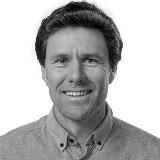
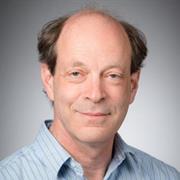
Dr. Crystal Senko is an Assistant Professor and Canada Research Chair in Trapped Ion Quantum Computing at the Institute for Quantum Computing (IQC) , University of Waterloo. Her research focuses on quantum simulations, quantum computing with trapped ions, and qudit-based systems. She holds a Ph.D. in Physics from the University of Maryland (2014) and a B.Sc. in Physics from Duke University (2009). Her research interests span Quantum Computing , Quantum Simulation , Trapped Ion Manipulation , and Photonics . Key projects include optimizing qudit-based quantum computing protocols and developing photonic crystal waveguides for atom-photon interactions. Recent work emphasizes trapped ion efficiency, laser noise mitigation, and programmable quantum simulators. Dr. Senko has authored influential papers on trapped ion systems, including studies on multi-level qudit control, nanophotonic cavity coupling, and non-thermalization in spin chains. Her work bridges theoretical quantum models and experimental advancements in scalable quantum hardware. Awards: Canada Research Chair (Trapped Ion Quantum Computing) Teaching: Courses include Quantum Physics 2 (PHYS 334), Quantum Mechanics 1 (PHYS 701), and Special Topics in Quantum Information Processing (PHYS 768/QIC 890). Labs/Teams: Affiliated with IQC and previously contributed to Harvard’s Center for Ultracold Atoms.
K. Rajibul Islam is an Associate Professor at the University of Waterloo, affiliated with the Institute for Quantum Computing (IQC) and the Department of Physics and Astronomy. He holds a joint appointment with the Perimeter Institute for Theoretical Physics and co-founded Open Quantum Design and Lightflow Optics Inc. His research focuses on quantum information processing, quantum simulation, and trapped ion systems, with applications in quantum computing and entanglement studies. Education: Ph.D. in Physics (2012, University of Maryland), M.Sc. in Physics (2007, Tata Institute of Fundamental Research), B.Sc. in Physics (2005, Jadavpur University). Postdoctoral research at Harvard University (2012–2015) and MIT (2015–2016). Research Interests : Quantum simulation of spin models, quantum computing with trapped ions, entanglement measurement, frustrated spin systems, and quantum materials. His lab, QITI (Quantum Information with Trapped Ions), develops scalable quantum simulators and open-access quantum computers like 'QuantumIon.' Awards : Fellow of the American Physical Society (2024), VAIBHAV Fellowship (2024), Excellence in Teaching Award (2024), Early Researcher Award (2019), and Distinguished PhD Dissertation Award (2012–13). Teaching : Courses include PHYS 701 (Graduate Quantum Physics), PHYS 234 (Quantum Physics I), PHYS 393 (Physical Optics), and PHYS 256 (Geometrical and Physical Optics). He emphasizes outreach via initiatives like Bigyan.org.in , a Bengali-language science platform. Lab and Collaborations : Active in developing trapped-ion quantum hardware, including ion trap designs, optical addressing systems, and holographic control methods. Collaborates on quantum algorithms, machine learning for quantum systems, and experimental quantum thermodynamics.
Dr. Stefanie Czischek is an Assistant Professor in the Department of Physics at the University of Ottawa, leading the APRIQuOt research group focused on artificial and physically realizable intelligence for quantum applications. She joined uOttawa in 2022 after postdoctoral work at the University of Waterloo. Her research bridges quantum technologies and neural networks, with expertise in quantum simulation, neuromorphic computing, and machine learning applications in quantum physics. Research Interests: Quantum computation/simulation using neural networks Neuromorphic hardware implementations Quantum many-body systems Machine learning for quantum control and tomography Her publications demonstrate strong interdisciplinary focus, combining quantum physics with cutting-edge ML techniques. Recent works explore transformer models for quantum simulation, neural network quantum states, and quantum sensing applications. The research shows consistent evolution toward hardware-algorithm co-design for quantum problems. Awards: Springer Thesis Award (2020) for doctoral research on neural-network simulation of quantum systems. Research Group & Advising: Leads the APRIQuOt lab with 1 postdoc, 6 graduate students, and 1 undergraduate. Current projects include large language models for quantum states, quantum optimal control via reinforcement learning, and neuromorphic quantum simulations. The group collaborates with experimental teams and maintains strong industry-academia partnerships.
Michael P. Bradley is a Professor in the Department of Physics and Engineering Physics at the University of Saskatchewan, affiliated with the College of Arts and Science. He holds a Ph.D. from MIT and is a Professional Engineer (P.Eng.). His research focuses on precision measurement techniques, plasma-based nanofabrication, and quantum metrology, including work on diamond NV-centre magnetometers and superconducting watt balance systems. He leads the University of Saskatchewan Plasma Physics Laboratory (U of S PPL) and has received a Canada-UK Joint Quantum Technology grant for quantum sensor development. Education BSc (Honours) in Applied Physics, University of New Brunswick Ph.D. in Physics, Massachusetts Institute of Technology (MIT) Research Interests Bradley specializes in quantum magnetometry , plasma processing , semiconductor nanostructures , and precision electromagnetic measurements . His lab develops novel techniques for materials characterization and fabrication, including plasma immersion ion implantation (PIII) for micro- and nano-scale engineering, graphene doping, and silicon photonics. Recent work includes advancements in diamond NV-centre magnetometry for quantum technologies. Grants & Collaborations Recipient of a prestigious Canada-UK Joint Quantum Technology grant (2023). Collaborated internationally, including at the Bureau International des Poids et Mesures (BIPM) in France, where he contributed to superconducting watt balance prototypes for redefining mass standards. Teaching Teaches courses in optics, thermodynamics, and planetary astronomy, including EP421: Optical Systems & Materials and ASTR104: Planetary Astronomy .
Christine Muschik is an Associate Professor at the Institute for Quantum Computing (University of Waterloo) and Associate Faculty at Perimeter Institute for Theoretical Physics. Her research bridges quantum technologies with particle physics to develop hybrid quantum-classical simulation techniques. University of Waterloo (2017–present) Perimeter Institute (2019–present) University Research Chair (2022–present) Her work focuses on quantum simulation, quantum sensing, and high-dimensional quantum computing (qudits). Key applications include lattice gauge theories, quantum chemistry, and fundamental particle interactions. Recent publications highlight advancements in qudit-based simulation of vacuum dynamics and SU(2) hadron models. Awards include the CIFAR Azrieli Global Scholar Fellowship (2020–2022), Sloan Fellowship (2019), and Emmy Noether Fellowship (2018). Nature Physics 2025: Qudit simulation of lattice gauge theories Nature Communications 2021: SU(2) hadron modeling Nature 2016: Few-qubit lattice gauge simulations She teaches advanced quantum physics courses at the University of Waterloo and leads the "Quantum Interactions" research group.
Dr. Chitra Rangan is a Professor in the Department of Physics at the University of Windsor and serves as the Associate Dean of the Faculty of Graduate Studies. She holds cross-appointments in Chemistry and Biochemistry (2008–2011) and has been a Visiting Associate Professor at the University of Michigan (2006–present). Her research focuses on quantum control, nanoplasmonics, and light-matter interactions, with applications in clinical diagnostics and quantum computing. She leads the BiopSys NSERC Strategic Network and contributes to Mathematics of Information Technology and Complex Systems (MITACS) . Education: Ph.D. in Physics, Louisiana State University (2000) M.Sc., Indian Institute of Technology, Madras (1993) B.Sc., University of Madras (1991) Affiliations: Ontario Physics Education Network (PI) NSERC Evaluation Committee (2018) International Day of Light Steering Committee (2018) Her research interests span quantum control theory, nanoplasmonic biosensors, and optimization in medical physics. She has advised over 40 students, many of whom pursue advanced degrees or careers in academia and industry. Notable grants include NSERC, CFI, and Mitacs funding. Publications highlight advancements in quantum state initialization, nanoplasmonic sensor design, and trapped-ion qubit control. Awards include the CAP Medal for Teaching and UWindsor Research Excellence (Emerging Scholars). Dr. Rangan actively promotes science outreach, organizing events like Science Rendezvous Windsor and delivering public lectures on quantum mechanics and medical physics. She has mentored dozens of students through co-op programs and summer projects, emphasizing hands-on learning and interdisciplinary collaboration.
David J. Wineland is an American physicist and Nobel laureate in Physics (2012), currently serving as the Knight Research Professor at the University of Oregon's Department of Physics. He is also affiliated with the Ion Storage Group at the National Institute of Standards and Technology (NIST). His research focuses on quantum physics, particularly the laser cooling of trapped ions, quantum computing, and the development of optical atomic clocks. Wineland's contributions include pioneering work on quantum state control, quantum teleportation, and quantum logic spectroscopy. Wineland earned his bachelor's degree from UC Berkeley (1965), and his PhD from Harvard University (1970), under Norman Foster Ramsey Jr. He joined NIST in 1975, where he founded the ion storage group. In 2018, he moved to the University of Oregon while maintaining a consulting role at NIST. His research interests span quantum systems, including trapped ion qubits, precision measurement techniques, and the application of quantum mechanics to real-world technologies. He has received numerous accolades, including the National Medal of Science (2007), the IRI Medal (2020), and the Schawlow Prize (2001). Wineland’s work has advanced fields such as quantum information science and atomic clocks, with his group demonstrating foundational experiments in quantum entanglement and superposition. Collaborations include the Boulder Atomic Clock Network and studies on ultralight dark matter using trapped ions.
Joseph Emerson is an Associate Professor at the University of Waterloo's Department of Applied Mathematics and a faculty member at the Institute for Quantum Computing (IQC). He is also a Fellow of CIFAR's Quantum Information Science program and CEO of Quantum Benchmark, a startup specializing in quantum computing error diagnostics. His research focuses on scalable quantum error correction, foundational quantum theory, and protocols like randomized benchmarking, now a global standard for quantum gate characterization. Emerson earned a BSc from McGill University, an MSc in experimental nuclear physics, and a PhD in theoretical physics from Simon Fraser University. His postdoctoral work at MIT and the Perimeter Institute explored quantum randomness and decoherence. He has held roles at IQC since 2005, advancing quantum computing's practical implementation through error suppression and validation techniques. Research Highlights Developed randomized benchmarking for error diagnostics across quantum platforms. Framework for unitary t-designs applied to quantum algorithms and thermodynamics. Investigated contextuality in quantum mechanics as a computational resource. Awards & Recognition Early Researcher Award (Ontario, 2008–2013) CIFAR Quantum Information Science Fellow NSERC Postdoctoral Fellowship (2003–2005) Labs & Affiliations Emerson leads research teams at IQC and collaborates with Perimeter Institute and industry partners. His work bridges theoretical foundations with practical tools for quantum computing scalability.
Bin Li is an Associate Professor and Associate Chair of Actuarial Science in the Department of Statistics and Actuarial Science at the University of Waterloo. He holds a PhD in Applied Mathematical and Computational Sciences (2013, University of Iowa), and master's and bachelor's degrees in Computational Mathematics from Xi’an Jiaotong University (2008 and 2005, respectively). His research focuses on quantum optics and optical engineering, particularly in developing robust laser-driven systems for quantum light sources, solid-state emitters, and trapped ion quantum computing. He has pioneered techniques like Notch-filtered Adiabatic Rapid Passage (NARP) and advanced femtosecond pulse engineering for high-performance quantum systems. His work bridges theoretical quantum physics with experimental optical innovations. Research interests include: Optical driving schemes for quantum emitters Adiabatic inversion and rapid passage methodologies Individual ion addressing in quantum simulators Spin dynamics in 2D perovskite materials Publications span 2018–2025, emphasizing advancements in quantum engineering, ultrafast optics, and atomic-scale systems. While no scientific awards are explicitly listed, his impactful contributions to quantum technologies suggest active recognition in the field. Advising and grants: No specific advisees or grants are documented in the provided texts, though his research activities imply involvement in graduate supervision and funding programs.
Professor Hongbin Li is a Professor and Canada Research Chair in the Department of Chemistry at the University of British Columbia. His research program focuses on single molecule biophysical chemistry, biomaterials, and protein engineering. He leads an active research group investigating the mechanical properties and conformational dynamics of elastic proteins using advanced single molecule techniques. Professor Li received his B.Sc in Polymer Engineering from Tianjin University, China in 1993. He earned his Ph.D. in Polymer Chemistry and Physics from Jilin University, China in 1998 under the supervision of Profs. Jiacong Shen, Xi Zhang and Hermann E. Gaub. During his doctoral studies, he was a visiting PhD student at Ludwig-Maximilians-Universität München, Germany (1996-1997) working with Prof. Hermann E. Gaub. Following his Ph.D., he completed a Research Fellowship at Mayo Medical Center, USA (1999-2002) with Prof. Julio M. Fernandez. Professor Li's research program centers on understanding the mechanical properties and conformational dynamics of elastic proteins at the single molecule level. His laboratory combines protein engineering with single molecule atomic force microscopy (AFM) and computational approaches to rationally design and engineer proteins with tailored mechanical properties. Using AFM as their primary tool, his team directly manipulates proteins one molecule at a time to measure mechanical properties and monitor folding/unfolding trajectories in real time. His research spans four main directions: (1) Protein Mechanics and Engineering, where they design proteins with specific mechanical properties; (2) Single Protein Folding/Unfolding Dynamics, investigating folding mechanisms at the single molecule level; (3) Protein-based Biomaterials, designing biomaterials with tailored mechanical properties for biomedical applications; and (4) Polymer physical chemistry using single molecule AFM. His work bridges fundamental protein mechanics with practical applications in biomaterials design. Professor Li has received numerous prestigious awards recognizing his contributions to biophysical chemistry and protein engineering: 2020: AAAS Fellow (the American Association for the Advancement of Science) 2012: Changjiang Guest Chair Professorship (Jilin University, China) 2011: JILA Visiting Fellowship (JILA and University of Colorado, Boulder) 2011: Alexander von Humboldt Fellowship (Technical University of Munich, Germany) 2010: JILA Distinguished Short-term Visiting Fellow 2010: Charles McDowell Award for Research (UBC) 2006: Michael Smith Foundation for Health Research Career Investigator Award 2005: Peter Wall Institute for Advanced Studies Early Career Award (UBC) Professor Li has mentored numerous graduate students and postdoctoral fellows throughout his career at UBC. His research has been supported by multiple grants, including his Canada Research Chair position which he has held continuously since 2004. His work bridges chemistry, physics, and biology, attracting funding from diverse sources including the Natural Sciences and Engineering Research Council of Canada (NSERC), the Michael Smith Foundation for Health Research, and international collaborations. His laboratory maintains strong connections with research groups worldwide, particularly in China and Germany, reflecting his international research profile. Professor Li leads an active research group within the Department of Chemistry at UBC that combines expertise in protein engineering, single molecule biophysics, and biomaterials science. His laboratory is equipped with state-of-the-art atomic force microscopes and optical trapping systems, enabling cutting-edge single molecule studies. The group maintains close collaborations with researchers in the Michael Smith Laboratories and other interdisciplinary centers at UBC, fostering a highly collaborative research environment focused on understanding protein mechanics and developing novel protein-based materials.
Michael Zurel is a NSERC Postdoctoral Fellow in the Department of Mathematics at Simon Fraser University, working under Dr. Nadish de Silva, Canada Research Chair in the Mathematics of Quantum Computation. His research focuses on foundational aspects of quantum computation, quantum information, and nonclassical physics. Key interests include quantum contextuality, negativity in quasiprobability representations, and classical simulation algorithms for quantum systems. He holds a PhD, MSc, and BSc in Physics and Mathematics from the University of British Columbia (2024, 2020, 2019), all supervised by Dr. Robert Raussendorf. His doctoral work explored classical descriptions of quantum computations via hidden variable models and quasiprobability representations. His master’s thesis addressed hidden variable models and classical simulation algorithms for quantum computation with magic states on qubits. Research interests emphasize bridging quantum foundations with computational efficiency, particularly how nonclassical features like contextuality enable quantum advantage. Collaborators include prominent figures such as Robert Raussendorf, Juani Bermejo-Vega, and Cihan Okay. His scientific achievements include the NSERC Postdoctoral Fellowship. Advising and grants are not explicitly detailed, but his work is supported by foundational research grants. He collaborates actively within quantum information theory and computational physics communities.
Ben Lanyon is a Research Fellow at the Institute of Experimental Physics , University of Innsbruck, specializing in Quantum Information Science . His work focuses on quantum entanglement control, trapped ion systems, and quantum network development. PhD in Physics, University of Queensland MPhil in Physics, University of Warwick BSc in Physics, University of Warwick His research spans two core projects: large-scale entanglement engineering (50+ trapped ions) and quantum networking (ion-photon entanglement over 50 km). Key contributions include scalable entanglement demonstration (2018) and long-distance entanglement distribution (2019). Scientific Awards : Austrian Science Board (FWF) START prize (2015) European Union Marie-Curie Fellowship (2011) University of Queensland ‘ResTeach’ grant (2010) Dean’s award for Outstanding Research Thesis (2010) Australian Government European Endeavour Award (2007)
Richard Arès is a professor at the University of Montreal specializing in semiconductor epitaxy, photovoltaics, and photonics. His research spans electrical engineering, mechanical engineering, and condensed matter physics. Doctorate in Physics from Simon Fraser University (1998) Master's in Physics from Université de Montréal (1993) Bachelor's in Physics from Université de Montréal (1990) His work focuses on: Advanced semiconductor growth techniques High-efficiency multi-junction solar cells Photonics device fabrication Nanomaterials engineering Surface and interface analysis Process control in ultra-high vacuum environments Recent publications highlight expertise in: Through-cell via contacts for photovoltaics Quantum dot enhanced solar cells Mesoporous semiconductor structures Nonlinear optical waveguides Temperature-sensitive epitaxy processes
Adrian Howard Kitai is a Professor in the Department of Engineering Physics at McMaster University. His research focuses on fundamental and applied aspects of luminescent materials and devices, including oxide phosphors (Zn 2 SiO 4 :Mn, Ga 2 O 3 :Eu), thin-film electroluminescence, and nanostructured optoelectronic systems. He develops novel display technologies such as Sphere-Supported Thin Film Electroluminescent (SSTFEL) devices for flexible displays and optical fiber liquid crystal systems for electronic posters. Research Areas: Luminescent materials: Oxide/II-VI phosphors, thin-film growth via RF sputtering Device innovation: SSTFEL, avalanche-injection EL, nanowire-enhanced EL Advanced displays: Flexible electroluminescent sheets, optical fiber LC displays Nanoscale optoelectronics: SiC/ZnO nanostructures, quantum dot applications His recent publications (2020-2025) demonstrate strong focus on silicon carbide (SiC) and zinc oxide (ZnO) nanostructures for electroluminescent devices, UV photodetectors, and bandgap engineering. Over 70% of these works involve experimental characterization of nanomaterial optoelectronic properties, with consistent emphasis on industrial applications in displays and lighting. Dr. Kitai teaches advanced courses including Nanoscale Semiconductor Devices , Electronic Materials , and Thin Film Synthesis , with ongoing instruction through 2025. No awards or student advisees are explicitly mentioned in available sources.
Jens Lassen is an Adjunct Professor in the Department of Physics and Astronomy at the University of Manitoba, affiliated with the Faculty of Science. His research and teaching interests focus on advanced laser spectroscopy techniques and their applications in nuclear physics. Research Areas: Laser resonance ionization spectroscopy, Lasers in nuclear physics, Collinear fast beam laser spectroscopy, Laser development, Trapped ions, Mass spectrometry Contact: Email Jens.Lassen@umanitoba.ca | Phone 604-222-7588