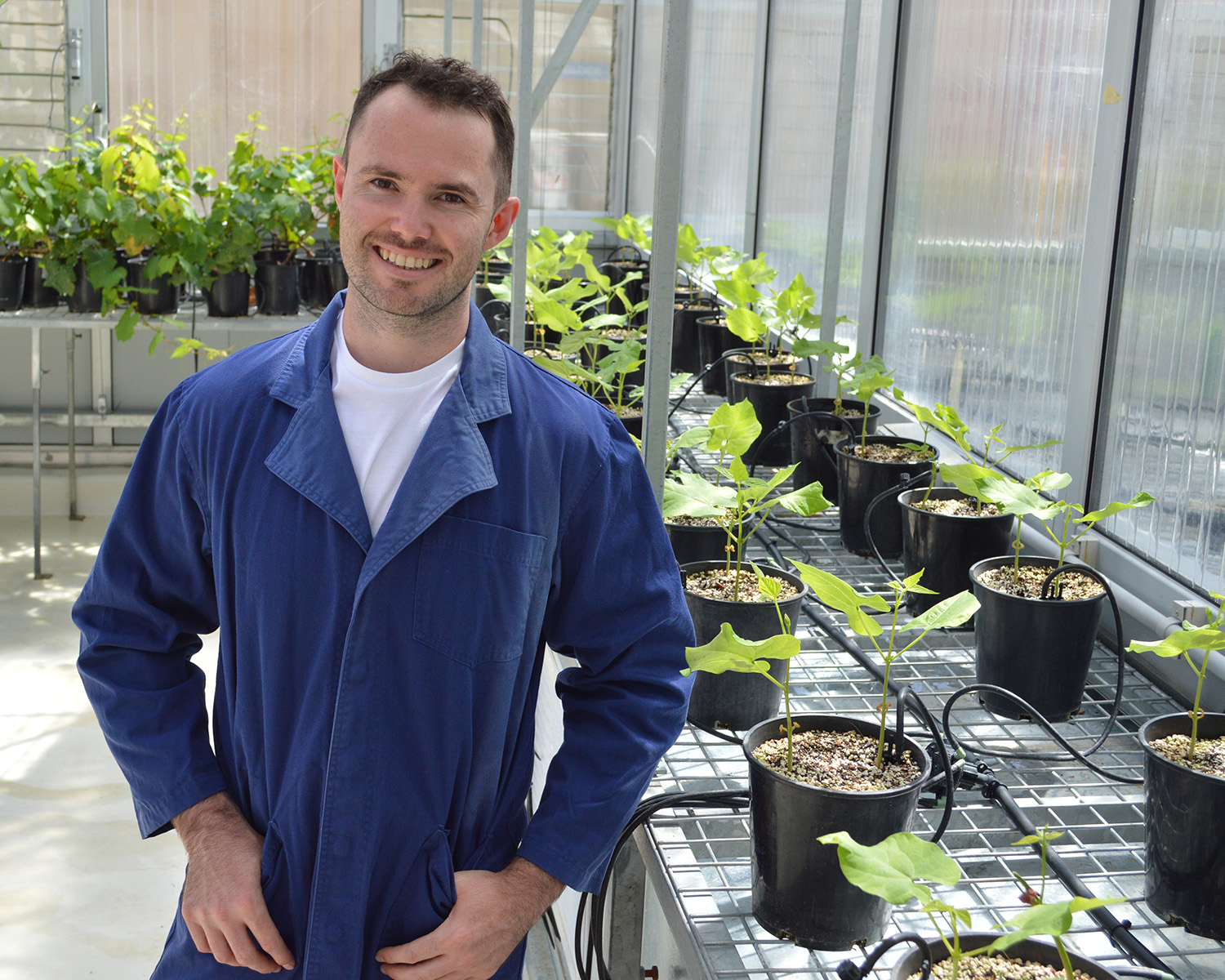
Janine Deakin is Professor and Executive Dean of the Faculty of Science and Technology at the University of Canberra. She holds a PhD from Macquarie University (1998) and completed postdoctoral research at the University of Texas Health Science Center and Australian National University. Her research focuses on comparative genomics, chromosome evolution, and conservation genetics in marsupials and reptiles. Education: PhD in Immunological relationship of mother-pouch young relationships in the brushtail possum, Macquarie University (1998) Her research explores chromosomal speciation, sex determination mechanisms, and transmissible cancers like devil facial tumour disease, with strong emphasis on conservation applications. She employs cutting-edge genomic technologies to understand evolutionary adaptations in Australian wildlife. Recent publications demonstrate a consistent focus on chromosome dynamics across species, utilizing Hi-C mapping, telomere analysis, and comparative genomics to investigate genome reorganization in reptiles, marsupials and mammals. Her work frequently bridges molecular biology with conservation priorities. Scientific Awards: ARC Future Fellowship (2010) She has supervised numerous PhD students and leads collaborative initiatives including the Oz Mammals Genomics consortium. Her laboratory investigates chromosomal rearrangements impacting gene flow in threatened species.
Maria Dall'Era, MD is the Jean S. Engleman Distinguished Professor of Medicine and Chief of the Division of Rheumatology at the University of California, San Francisco (UCSF). She also serves as Director of the UCSF Rheumatology Clinical Research Center and Co-director of the UCSF Lupus Clinic. Her clinical and research focus centers on systemic lupus erythematosus (SLE) and lupus nephritis, with expertise in developing novel therapies and studying epidemiology and outcomes of lupus patients. Education: BA in Immunology, University of California, Berkeley, 1993 M.D., University of California, San Francisco School of Medicine, 1997 Residency in Internal Medicine, University of California, San Francisco Fellowship in Rheumatology, University of California, San Francisco, 2004 Dr. Dall'Era's research interests span multiple dimensions of lupus care and management. She investigates treatment optimization for lupus nephritis, epidemiological patterns of disease manifestation across diverse populations, and the development of novel therapeutic approaches. Her work emphasizes health disparities, particularly examining how race, ethnicity, and socioeconomic factors influence lupus outcomes. She has pioneered research on the relationship between physical activity, stress, and disease activity in lupus patients, and has contributed significantly to understanding epigenetic and molecular mechanisms underlying disease heterogeneity. Analysis of her recent publication record reveals a strong focus on precision medicine approaches to lupus management, with particular attention to biomarker discovery, treatment response prediction, and addressing health disparities. Her work spans basic science investigations into molecular mechanisms of disease through to large-scale clinical studies and guideline development. The interdisciplinary nature of her research connects immunology, genomics, epidemiology, and patient-centered outcomes research. Scientific Awards: Evelyn V. Hess Award, Lupus Foundation of America, 2023 Edmund L. Dubois Memorial Lectureship Award, American College of Rheumatology, 2018 Purple Ribbon Award, Lupus Foundation of America, 2014 Exceptional Physician Award, UCSF, 2010 Ira M. Goldstein Award for Outstanding Teaching in Rheumatology, UCSF, 2007 Ephraim Engleman Award for Excellence in Arthritis Research, UCSF, 2006 Dr. Dall'Era serves as Principal Investigator for the CDC-funded California Lupus Epidemiology Study, a population-based longitudinal lupus cohort in the San Francisco Bay Area. She also leads multiple clinical trials focused on SLE and lupus nephritis. Her leadership extends to national organizations where she serves as Co-Chair of the Lupus Therapeutics Board of Directors, Co-Chair of the LRA's Lupus Industry Council, and member of the Lupus Accelerating Breakthroughs Consortium Research Committee. She is actively involved in developing the American College of Rheumatology's Guidelines for the Treatment of SLE and lupus nephritis. Her laboratory and research team work within the UCSF Rheumatology Clinical Research Center, collaborating with the Accelerating Medicines Partnership RA/SLE Network and other multidisciplinary teams to advance understanding of lupus pathogenesis and treatment. The team employs approaches ranging from single-cell analysis and epigenetic studies to large-scale epidemiological investigations and clinical trials.
Matthew B Hufford is a Professor in the Department of Ecology, Evolution, and Organismal Biology (EEOB) at Iowa State University. He joined the faculty in 2013 as an Assistant Professor and currently holds the Cassling Family Professorship. His research focuses on the evolution and ecology of crops, particularly maize and its wild relatives, including teosintes. Key areas include demography of maize landraces, gene flow dynamics in Zea genus, and comparative genomics of grass species. Education: B.S. in Biology from Wheaton College (1999), M.S. in International Agricultural Development and Ph.D. in Ecology, both from UC Davis (2010). Research interests span genomic diversity in maize, adaptation to environmental conditions, and the role of transposable elements in genome evolution. His lab investigates genomic resources like pan-genomes and assembly tools (e.g., Gapless assemblies using long-read technologies). Recent trends in publications highlight advancements in genomic tools, climate adaptation, and comparative analyses across grass species. Labs/Teams: The Hufford Lab at Iowa State University focuses on evolutionary genomics, leveraging genomic data to understand crop domestication and adaptation. Collaborations involve bioinformatics, genetics, and ecological studies.
Nora J. Besansky is the Martin J. Gillen Professor in the Department of Biological Sciences at the University of Notre Dame, where she has been a faculty member since 1997. She leads a research laboratory focused on the evolutionary, ecological, and functional genomics of malaria-transmitting mosquitoes, particularly Anopheles species in Africa. Her research interests span Genetics & Genomics , Evolutionary Biology , Entomology , Ecology , and Infectious Disease . She investigates how genomic variation, chromosomal inversions, and environmental adaptation influence vector behavior, population structure, and malaria transmission dynamics. Her work integrates molecular biology, field ecology, and bioinformatics to advance vector control strategies. Her recent publications reveal a strong focus on Anopheles genomics, species divergence, environmental adaptation (e.g., aridity, salinity, heat), and population structure across Africa. She frequently contributes to high-impact journals such as Nature , Science , and Molecular Ecology , often in collaboration with international consortia like the Anopheles 1000 Genomes Project. Her scientific contributions include editorial leadership and tribute articles recognizing pioneers in vector biology, reflecting her standing in the field. She advises graduate students and leads a dynamic research team at Notre Dame. Her laboratory has received continuous funding for projects on vector genomics, adaptation, and malaria epidemiology. She has held prior research positions at the CDC and Emory University, building a career at the intersection of public health and evolutionary genomics. Her lab operates at the forefront of vector biology, combining cutting-edge genomic technologies with ecological field studies to address one of the world’s most persistent infectious disease challenges—malaria.
Professor Marcel Dinger is a prominent academic and researcher currently serving as Professor and Head of School for Biotechnology and Biomolecular Sciences at UNSW Sydney. With over 20 years of experience in genomics, he has established himself as a leading figure in both academic and entrepreneurial spheres within the field. He has published 153 papers with over 24,000 citations and maintains an h-index of 61 on Google Scholar. His leadership extends beyond academia as he serves as President of the Australasian Genomics Technologies Association (AGTA) and holds director positions at Pryzm Health and the National Centre for Indigenous Genomics (NCIG). Professor Dinger's research laboratory focuses on establishing new links between phenotype and genotype, particularly examining rare and complex diseases in relation to underexplored regions of the genome including pseudogenes, repetitive elements, non-canonical DNA structures, and noncoding RNAs. His work harnesses population-scale genomic datasets and sophisticated data science methods to bring an objective perspective to understanding how the genome stores information and how it is transacted in biology. His research interests span genomics, non-coding RNA biology, clinical applications of genomic medicine, and the development of computational approaches for analyzing complex genomic data. Analysis of Professor Dinger's recent publications reveals a strong emphasis on non-coding RNA research, particularly long noncoding RNAs and their roles in disease mechanisms. His work spans cancer genomics, neurological disorders, and fundamental genomic mechanisms including DNA secondary structures like i-motifs and G-quadruplexes. His research combines experimental approaches with advanced bioinformatics to address fundamental questions in genomic medicine and has significant translational implications for disease diagnosis and treatment. Highly Cited Researcher in Cross-Field category (2019, 2020, 2021) Fellow of the Faculty of Science (Research), Royal Society of Pathologists of Australasia (2016) NHMRC Career Development Award (2010) Queensland Government Smart Futures Fellowship (2009) Foundation of Research, Science and Technology New Zealand Postdoctoral Fellowship (2005) Professor Dinger has been instrumental in establishing and leading several significant research initiatives including Genome.One, one of the first companies globally to provide clinical whole genome sequencing services, and the Kinghorn Centre for Clinical Genomics at the Garvan Institute of Medical Research. His entrepreneurial experience includes founding four biotechnology and IT startups. He serves on multiple governance boards including the National Centre for Indigenous Genomics, focusing on using genomics to improve health outcomes for Australia's First Peoples. His laboratory at UNSW continues to advance our understanding of genomic regulation and its implications for human health and disease.
Travis Wheeler is an Associate Professor in the Department of Pharmacy Practice & Science at the University of Arizona. His work spans bioinformatics, computational biology, and algorithm development for genomic sequence analysis. Developed tools like HMMER and Dfam Research focuses on transposable elements, sequence alignment, and epigenetics Co-author of key works with Robert Finn, Sean Eddy, and colleagues Research Interests include machine learning applications in biological sequence annotation, drug discovery, and evolutionary genomics. His work bridges computational methods with biomedical applications. Notable Contributions : Advancing profile Hidden Markov Model (HMM) methodologies Creating community resources for transposable element research Developing alignment algorithms for biological sequences Collaborations include institutions like Institute for Systems Biology, Harvard University, and Montana State University.
Wen Huang is an Associate Professor at the Michigan State University , affiliated with the BioMolecular Science Gateway Faculty and the Genetics & Genome Sciences Program . His research integrates genetics, genomics, and bioinformatics to study complex traits in Drosophila melanogaster and livestock species. Research Interests : Elucidating genetic architectures of quantitative traits Transposon dynamics and alternative splicing regulation Livestock genomics for agricultural improvement Publication Trends : Recent work focuses on genome-wide association studies (GWAS), telomere-to-telomere assemblies, and multi-omic analyses of gene regulation in pigs and Drosophila . Collaborative Initiatives : Co-leads large-scale projects like FarmGTEx and RT2T Consortium, aiming to improve functional annotation of animal genomes.
Karen Carleton is a Professor in the Department of Biology at the University of Maryland, specializing in the evolution of visual systems and sensory communication in vertebrates. Her research focuses on African cichlid fishes and other species, exploring how natural and sexual selection shape visual adaptations. She teaches courses such as BSCI 207 (Principles of Biology III), BSCI 338C (Genomics of Sensory Systems), and PHYS 131 (Fundamentals of Physics for Biologists). Her work integrates genetics, ecology, and genomics to understand the mechanisms underlying visual tuning and spectral sensitivity. Key research interests include the evolution of phototransduction proteins, opsin gene expression plasticity, and the role of transposable elements in diversification. She is affiliated with the Graduate Program in Physiological Systems (PSYS), Behavior, Ecology, Evolution, & Systematics (BEES), and Molecular & Cellular Biology (MOCB) at the University of Maryland. Her lab, the Carleton Lab, investigates topics such as color vision in deep-sea fish and visual adaptation in nocturnal species. Recent publications highlight her contributions to understanding genomic mechanisms driving sensory evolution, including studies on cichlid diversity, opsin gene regulation, and visual adaptation in extreme environments. She has been recognized with Faculty Honors & Awards (2023) and contributes to interdisciplinary education initiatives, such as UMD's Grand Challenge courses on Global Change.
Dr. Joseph Pegler is a Lecturer in molecular plant biology at the School of Environmental and Life Sciences, University of Newcastle. His research focuses on improving crop yields under abiotic stress through understanding plant genetic and molecular responses, particularly involving microRNA pathways and nutrient transport. He holds a PhD in Biological Sciences from the University of Newcastle and has received awards including the 2024 Early Career Researcher Excellence Award and the 2021 Fulbright Future Scholarship. Education Doctor of Philosophy (Biological Sciences), University of Newcastle Bachelor of Biotechnology (Honours), University of Newcastle Bachelor of Biotechnology, University of Newcastle Research Interests Dr. Pegler’s work addresses food security challenges via molecular mechanisms in plants, including RNA silencing, abiotic stress responses, and sugar transport pathways. He explores how microRNAs regulate plant adaptation to environmental stressors like drought, salinity, and heavy metals. His research also extends to optimizing cannabinoid production in Cannabis sativa and enhancing crop resilience through genetic manipulation. Teaching & Service He teaches courses in plant adaptation, biochemistry, and molecular genetics, and holds administrative roles such as Deputy Program Convenor for the Bachelor of Biotechnology and College of Engineering, Science and Environment Board member. He has received multiple teaching awards, including the 2024 Teaching Excellence Award (Highly Commended). Funding & Grants Dr. Pegler has secured over $238,891 in grants, including funding for studies on environmental pollutants and plant-based solutions like Moringa’s PFAS sequestration. Recent grants include the 2024 Hunter Medical Research Institute project and an Australian Academy of Science grant. Collaborations His international collaborations include work at the University of Minnesota (Fulbright Fellowship) and research on cannabis at the University of Newcastle. He actively engages in interdisciplinary projects, emphasizing cross-sector solutions to global challenges.
Prof Benjamin Schwessinger is a Professor at the Australian National University (ANU), affiliated with the Division of Plant Sciences. His research focuses on plant pathogens, fungal genomics, and the evolutionary dynamics of pathogen adaptation. Key areas include understanding rust fungi biology, host-pathogen interactions, and structural genomic variations in plants like Eucalyptus. He has pioneered methodologies for high-throughput protein secretion optimization in yeast and developed diagnostic tools for invasive pathogens such as Austropuccinia psidii (myrtle rust). Research Interests: Plant-microbe interactions and immunity Fungal genomics and sexual recombination mechanisms Evolving pathogen populations in agricultural systems Genomic tools for disease surveillance and biosecurity His recent work explores the genomic basis of pathogen adaptation, including studies on wheat stripe rust and myrtle rust. Collaborations span fungal pathogenomics, eucalyptus structural genomics, and yeast biotechnology. He leads multiple projects funded by ANU and ARC, including the Plant Biosecurity Training Centre. His lab emphasizes reproducible research practices and early career researcher development. Key projects include: Digital yeast bioprospecting for non-alcoholic beer production Surveillance of airborne pathogens in Australian Botanic Gardens Genome evolution of cereal rust fungi Labs/Teams: Core member of ANU's Plant Biosecurity Group and collaborator in the ARC Training Centre in Plant Biosecurity.
Joseph Strauss is a Full Professor at the University of Natural Resources and Life Sciences Vienna (BOKU), leading the Institute of Microbial Genetics. With a career spanning over three decades, he has focused on fungal genetics, epigenetics, and bioactive metabolite discovery, particularly in filamentous fungi and pathogens. His work bridges fundamental research with applications in agriculture, medicine, and environmental biotechnology. Research Focus: Epigenetic regulation of fungal secondary metabolism, chromatin dynamics, bioactive compounds, nitrate signaling, and microbial interactions. Projects: Leads multiple grants from Austrian Science Fund (FWF), European Commission, and industry partners, including studies on chromatin engineering, fungal biotechnology, and toxin biosynthesis. His recent publications highlight advancements in chromatin proteomics, fungal pathogenicity, and novel bioactive molecules like luteapyrone and rasfonin. Articles emphasize broad disciplines such as Fungal Genetics, Epigenetics, and Natural Product Discovery, with subfields including secondary metabolite clusters, histone modifications, and stress response mechanisms. Scientific Awards: 2021 - Keratinophyton straussii fungal species named after him 1999 - START Preis 1995 - EMBO Stipendium 1994 - OTTO LOEWI Stipendium He has supervised over 69 theses and contributed to 186 publications, reflecting his leadership in fungal genomics and its applications. Projects like 'Bioaktive Mikrobielle Metaboliten' and 'TASSMATA' underscore his commitment to translating research into sustainable solutions.
Christian Schlötterer is a Full Professor of Population Genetics at the University of Veterinary Medicine Vienna (Vetmeduni Vienna). He serves as head of the Institute of Population Genetics and founded the Vienna Graduate School of Population Genetics, which he has led for over 10 years. His research focuses on experimental evolution, molecular adaptation, and genetic architecture of traits in Drosophila populations. His laboratory investigates Mechanisms of adaptation to temperature regimes using experimental evolution and NGS Gene expression regulation (cis-, trans-effects, sex-biased expression) Comparative analysis of pigmentation and temperature stress resistance via Pool-GWAS Evolutionary dynamics of repetitive DNA, transposable elements, and orphan genes Inference of selection from population genomic data Current research projects are funded by ERC Advanced Grant ARCHADAPT FWF grants (P33734, P29133, P32935, etc.) Translational research in cattle and ecological-genomic studies in Brassicaceae Laboratory team includes PhD students Scientific assistants Technical assistants
Judith Korb is a Professor at the University of Freiburg, working within the Institute of Biology I in the department of Evolutionary Biology and Animal Ecology. She leads the Korb Lab, which focuses on social insects, particularly termites, examining their evolution, ecology, and sociobiology. Her research spans multiple areas of evolutionary biology and social insect behavior, with a particular emphasis on termite societies. Dr. Korb has made significant contributions to understanding social evolution, caste differentiation, reproductive division of labor, and the molecular mechanisms underlying social behavior in termites. Her work explores the exceptional longevity of social insect queens, termite mound architecture, chemical communication in social insects, and the genomic basis of eusociality. Dr. Korb's research combines field studies in Africa with molecular and genomic approaches to unravel the complexities of social insect biology. Dr. Korb's publication record demonstrates consistent scientific productivity, with numerous high-impact papers in leading journals across evolutionary biology, ecology, and genomics. Recent work has focused on the genomic basis of social evolution, aging in social insects, and termite ecology, revealing important insights into how sociality reshapes fundamental biological processes like aging and development. Over 200 publications including high-impact papers in Nature Ecology and Evolution, PNAS, and Philosophical Transactions of the Royal Society B Contributor to authoritative references including the Encyclopedia of Social Insects Extensive international collaborations across Europe, Africa, and North America Dr. Korb has supervised numerous students and collaborated extensively with researchers worldwide, contributing significantly to our understanding of social evolution in termites and other insects. Her laboratory employs a range of methodological approaches, including behavioral observations, molecular techniques, genomic analyses, and field ecology to investigate the evolution and maintenance of sociality in insects.
Sebastian Falk is an Associate Professor at the Max Perutz Labs, part of the University of Vienna, within the Department of Structural and Computational Biology. His research focuses on the biogenesis and action of small RNAs, particularly piRNAs, employing structural biology and biochemical approaches to elucidate molecular mechanisms. He received the prestigious EMBO Young Investigator award in 2022. His lab investigates RNA surveillance pathways, mRNA splicing, and the interplay between RNA processing and degradation. Key projects include studying the MTR4-NRDE2-CCDC174 complex and piRNA processing factors in C. elegans. Falk has organized major symposia on RNA biology and contributed to high-impact publications in journals like Nature and Nucleic Acids Research . EMBO Young Investigator (2022) Grants: 'Characterization of piRNA processing factors in C. elegans' (2023-2026)
Tina Kabelitz is a Researcher at the Leibniz-Institut für Agrartechnik und Bioökonomie e.V. (ATB) , leading the working group Infections and AMR in Farm Animals since September 2021. Her work integrates sensor technology, digitalization, and artificial intelligence to address antimicrobial resistance (AMR) in livestock systems through a One Health approach. Education : PhD in Epigenetics of Plants (University of Potsdam, 2011-2015) MSc Molecular and Cellular Biology (University of Potsdam, 2009-2011) BSc Molecular Biology/Physiology (University of Potsdam, 2006-2009) Her research focuses on antimicrobial resistance dynamics in livestock, particularly through environmental pathways in pig and poultry farming. She investigates resilient housing design for biosecurity and animal welfare, microbiome changes in manure storage , and machine learning-based mastitis risk assessment using multisensor systems. Her projects include LeibnizLabPP (pandemic preparedness), AirBarn (bioaerosol AMR transmission), ENVIRE (AMR control in chicken systems), and AMR-PIG (AMR spread mechanisms). Recent publications analyze AMR gene dynamics in manure systems (2025), machine learning applications for mastitis prediction (2025), and environmental impacts of dairy farming mitigation strategies (2024). Her work emphasizes systemic solutions like anaerobic digestion plants and slurry injection techniques to reduce emissions.