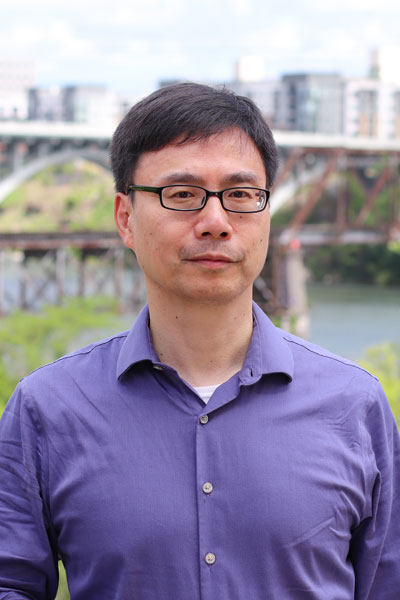
Ikjot Saini is a Professor at the University of Windsor’s Faculty of Engineering, co-leading the SHIELD Automotive Cybersecurity Centre of Excellence, Canada’s first organization addressing threats in connected transportation. Her research focuses on automotive cybersecurity, vehicular networks, and privacy-preserving technologies. She has supervised doctoral students Shiva Nejati and Kunj Dhonde, and contributed to courses in the University’s Continuing Education program, specializing in cybersecurity education for professionals. Her work includes pioneering studies on blockchain-based security for connected autonomous vehicles (CAVs), machine learning-driven intrusion detection systems, and privacy-enhancing mechanisms like pseudonym-changing strategies. She has been recognized with the K.W. Michael Siu Award from the APMA Institute for Automotive Cybersecurity (2020). Saini’s research bridges theoretical advancements with real-world applications, ensuring vehicles and infrastructure remain secure against evolving cyber threats. Her contributions span academic publications, industry partnerships, and policy recommendations, positioning her as a leader in vehicular cybersecurity. Ongoing projects emphasize eco-efficiency in cybersecurity solutions and adversarial modeling for privacy evaluation.
Wolf Ketter is a Full Professor of Next Generation Information Systems at the Department of Technology and Operations Management, Rotterdam School of Management, Erasmus University, and Chaired Professor of Information Systems at the University of Cologne. He serves as Director of the Institute of Energy Economics (EWI) in Cologne and leads the Erasmus Centre for Future Energy Business in Rotterdam. He is a leading figure in designing sustainable smart markets using advanced computing and simulation techniques. His research focuses on Information Systems , Machine Learning , Energy Economics , and Sustainable Smart Markets . He pioneered the use of Competitive Benchmarking through simulation platforms like Power TAC to tackle complex sustainability challenges. His work bridges computer science, economics, and business to design intelligent systems for energy, transportation, and resource allocation. The recent articles highlight a strong trend toward real-time decision-making in sustainable systems—such as electric bus operations, shared electric vehicles, traffic signal control via reinforcement learning, and local energy markets. These reflect his focus on AI-driven optimization , smart market design , and urban sustainability . Scientific Awards: INFORMS ISS Design Science Award (2012) Runner-up for Best European IS Research Paper (2013) ERIM Top Article Award (2013) ERIM Impact Award (2014) He has supervised over 10 PhD students and secured significant research impact through grants and collaborative projects. His editorial roles include serving on the boards of Information Systems Research and MIS Quarterly , the top journals in the IS field. He has chaired over 20 international conferences and workshops, advancing global discourse in trading agents and sustainable systems. Wolf Ketter founded and leads the Learning Agents Group at Erasmus University and chairs the annual Erasmus Energy Forum . His labs and teams focus on building simulation environments and AI agents to model and improve real-world sustainable markets, particularly in energy and mobility.
René M.B.M. de Koster is a Full Professor of Logistics and Operations Management at the Rotterdam School of Management (RSM), Erasmus University, where he has been a faculty member since 1995. He holds a PhD from Eindhoven University of Technology (1988) and is a leading expert in warehousing, material handling, and sustainable logistics. PhD, Eindhoven University of Technology, 1988 Professor, RSM, Erasmus University, 1995–present Honorary Francqui Chair, Hasselt University, 2018 His research focuses on warehousing systems , robotics in logistics , container terminals , and behavioural operations . He integrates operations research with real-world logistics challenges, emphasizing sustainability and automation. His work contributes to UN Sustainable Development Goals related to responsible consumption and industry innovation. The most recent publications highlight a strong trend toward autonomous systems and AI-driven logistics , particularly in robotic fulfillment, dynamic routing, and human-robot collaboration. These works reflect interdisciplinary engagement with computer science, industrial engineering, and behavioural science. Notable scientific awards include: IISE Annual Conference Best Student Paper Award (2024) Transportation Science Paper of the Year (2023) EJOR Best Paper Award (2023) Best European Journal of Operational Research Review Paper (2022) Best Paper Finalist at major logistics conferences Professor de Koster has supervised over 30 students and is actively involved in editorial service for top journals such as Transportation Science , Production and Operations Management , and International Journal of Production Research . He is chairman of Stichting Logistica and founder of the Material Handling Forum, contributing significantly to both academic and industry advancement in logistics. He leads research in advanced logistics labs focusing on robotic sorting, mobile fulfillment, and sustainable supply chains, often in collaboration with European institutions and industry partners.
Timothy B. Curry, M.D., Ph.D., is a Professor of Anesthesiology and Assistant Professor of Physiology at Mayo Clinic, Rochester, Minnesota. He holds academic roles including Vice Chair for Clinical Practice in the Department of Anesthesiology and Perioperative Medicine, and leads initiatives in individualized medicine through the Center for Individualized Medicine. His research focuses on autonomic nervous system regulation of cardiovascular and metabolic functions, employing advanced techniques such as microneurography and glucose clamping. Key interests include perioperative outcomes, environmental physiology, and hyperbaric medicine. Education: B.A. in Molecular Biology & Biochemistry (Middlebury College) M.D./Ph.D. via Medical Scientist Training Program (SUNY Buffalo) Residency in Anesthesiology (Mayo Clinic) Research Interests: Dr. Curry’s work spans autonomic nervous system physiology, metabolic syndrome mechanisms, and perioperative glycemic control. He leads the Human Integrative Physiology and Clinical Pharmacology Laboratory and collaborates globally on microneurography studies. Recent projects include investigating cerebral oxygen metabolism under hypoxia and developing genomic medicine training programs (COGENT). Awards: Emerald Award for Excellence (2015) Mayo Excellence in Leadership Award (2009) Multiple research and teaching accolades Grants & Leadership: Co-director of Mayo’s Clinomics Program, Team Leader for Perioperative Glucose Management, and Chair of multiple committees overseeing clinical practice and research. Labs & Teams: Directs the Human Integrative Physiology Lab and collaborates with the Clinical Research Unit. Active in multidisciplinary teams addressing autonomic dysfunction and precision medicine.
Kyprianos Papadimitriou is a Researcher at the Microprocessor and Hardware Laboratory within the School of Electrical and Computer Engineering at the Technical University of Crete . He holds a PhD in Electronic and Computer Engineering (2012) and has been involved in teaching laboratory courses such as Logic Design , Computer Architecture , and VLSI/ASIC Circuit Design . Research Areas : His work spans Reconfigurable Systems , Hardware Design , Computer Architecture , RFID Systems , and Real-Time Systems . He has developed innovative approaches in FPGA-based dynamic reconfiguration, MPSoC security, and 3D stereo vision for surveillance. Key Trends : Runtime reconfiguration for FPGAs Security frameworks for NoC-based MPSoCs Low-cost embedded vision systems Optimization of reconfiguration overhead Hardware task scheduling methodologies Genetic algorithm implementations on FPGAs Scientific Contributions : 1 USA patent (2005) Co-author of VLSI-SoC 2013 paper nominated for 1st Prize Active member of scientific committees (FPL, ReConFig) Peer reviewer for IEEE, Elsevier, and Springer journals Session chair at IEEE CNS and HPCC conferences Grants & Projects : Participated in competitive European and national programs, serving as scientific manager, coordinator, and technical coordinator. Developed spin-off company (2003-2005) to commercialize master's thesis research. Laboratory & Teaching : Affiliated with the Microprocessor and Hardware Laboratory , focusing on practical training in digital systems, processor-based systems, and VLSI design.
Professor Anna Korre is a leading academic in Environmental Engineering at Imperial College London's Faculty of Engineering. She serves as Associate Provost (Sustainability) and held the role of Co-Director of Energy Futures Lab (2018-2024). Her primary affiliation is with the Department of Earth Science & Engineering, where she leads the Minerals, Energy and Environmental Engineering Research Group. Her research focuses on risk modeling, environmental impact assessments, and engineering solutions for sustainable resource production and decarbonization. Key areas include carbon capture and storage (CCS), geothermal energy, and life cycle analysis of industrial systems. Affiliations: Energy Futures Lab, Institute for Molecular Science & Engineering, Minerals, Energy and Environmental Engineering Group Committee Roles: Chair of Earth Science & Engineering Sustainability Committee, member of University Sustainability Strategy Committee Her work integrates computational modeling, artificial intelligence, and multi-disciplinary collaboration to address global energy challenges. Over 150+ peer-reviewed publications and high-impact projects funded by UKRI, EU, and industry partners demonstrate her leadership in advancing sustainable technologies. She has appeared in media including BBC's The Life Scientific podcast discussing carbon capture innovations. Research highlights include optimizing CO2 storage networks, assessing geothermal reservoir risks, and evaluating lithium production sustainability. She champions industry-academia partnerships to translate research into real-world decarbonization solutions.
Francine Battaglia is a Professor and Chair of the Department of Mechanical and Aerospace Engineering at the University at Buffalo, part of the School of Engineering and Applied Sciences. She directs the Advanced Simulations for Computing ENergy Transport (ASCENT) Laboratory. Her research focuses on computational fluid dynamics (CFD) applications in building energy systems, renewable energy, turbulent multiphase flows, and combustion. She holds a PhD in Mechanical Engineering from Pennsylvania State University (1997), and MS/BS degrees from SUNY Buffalo (1992, 1991). Research interests include CFD modeling for HVAC optimization, natural ventilation design, pathogen dispersion mitigation, and biomimetic aerodynamics inspired by insect flight. Her work bridges engineering, biology, and environmental science, addressing challenges in energy efficiency, public health, and sustainable architecture. Key contributions include developing predictive models for hydroplaning safety, solar chimney systems, and microbial fuel cells. She has received accolades such as the ASME Fellow distinction (2009), MAC Academic Leadership Fellowship (2019-2020), and Virginia Tech’s Teaching Excellence Award (2016). Her articles span CFD advancements in fluidization, combustion, and ventilation strategies, emphasizing practical applications in energy systems and public health. The ASCENT Lab collaborates on adaptive HVAC technologies and eco-friendly building designs, reflecting her dedication to interdisciplinary innovation. Awards: MAC Leadership Fellow, ASTFE Fellow, ASME Dedicated Service Award Education: PhD (Penn State), MS/BS (SUNY Buffalo) Labs: ASCENT Lab (focusing on CFD and energy transport)
Dr. Bence Borda is an Assistant Professor in Mathematics at the University of Sussex, affiliated with the School of Mathematical and Physical Sciences. He holds a PhD from Rutgers University (2016), advised by József Beck, and has held postdoctoral positions at the Alfréd Rényi Institute of Mathematics (2017–2019) and Graz University of Technology (2019–2024), supported by a Lise Meitner Fellowship (FWF) from 2022–2024. PhD: Mathematics, Rutgers University (2016) His research lies at the intersection of probabilistic number theory , Diophantine approximation , random walks on groups , and harmonic analysis , with a focus on equidistribution theory and discrepancy measures. Recent publications explore limit laws for cotangent sums, quantum modular forms, and stochastic behavior in number-theoretic sequences. Key trends in his work include the use of Wasserstein metrics for quantifying equidistribution, random matrix eigenvalues in compact groups, and determinantal point processes on geometric manifolds. His contributions span both theoretical analysis and computational applications. Scientific Awards Lise Meitner Fellowship (FWF), 2022–2024 He has supervised teaching at institutions including Rutgers University and Budapest Semesters in Mathematics, covering calculus, analysis, and graduate-level courses. He co-organized the 2025 Analysis and Optimal Transport Workshop at Sussex and actively participates in international conferences.
Cyril Poriel is a CNRS Research Director (equivalent to Full Professor) at the University of Rennes, affiliated with the Institut des Sciences Chimiques de Rennes (ISCR-UMR 6226). He leads the 'Organic Semiconductors for Electronics' group, focusing on designing advanced materials for organic electronic devices such as OLEDs and organic field-effect transistors. His research emphasizes fluorophore design, high triplet hosts for phosphorescent OLEDs, and nanohoop chemistry. Education: PhD in Chemistry (2003, Rennes 1), Habilitation for Academic Research (2013). Postdoctoral training under Prof. Chris Moody (UK) and Prof. Kevin Smith (USA). Research interests span organic electronics, semiconductor materials, and nanotechnology. Notable awards include the Young Chemist Award (2009), Emerging Investigator (2014), and multiple CNRS excellence grants. He coordinates major grants like the ANR 'HOME-OLED' and 'EVOLUTION', involving collaborations with institutions in France, China, Japan, and Belgium. Publications focus on OLED efficiency, nanohoop structures, and hydrocarbon host materials. His work appears in top journals like J. Am. Chem. Soc. , Angew. Chem. Int. Ed. , and Adv. Mater.
Ethan A. Scott is a Research Assistant Professor in the Department of Mechanical and Aerospace Engineering at the University of Virginia. He holds a B.S. (2015) and Ph.D. (2021) in Mechanical and Aerospace Engineering from UVA, followed by a postdoctoral research associate position at Sandia National Laboratories. His research focuses on experimental techniques for analyzing heat and energy transfer in extreme material conditions, including micro- and nanoscale phenomena. He serves as Deputy Director of the EXSiTE Lab led by Professor Patrick Hopkins. Education: B.S., Mechanical Engineering, University of Virginia (2015) Ph.D., Mechanical and Aerospace Engineering, University of Virginia (2021) Postdoctoral Research Associate, Sandia National Laboratories (2021–2023) Research Interests: Ethan explores advanced thermal transport phenomena using electro- and optothermal methods. Key areas include micro/nanoscale heat transfer, microfabrication, and infrared thermal detection. His work addresses challenges in material size extremes (e.g., nanoscale thin films) and environmental extremes (e.g., high-energy ion irradiation effects). Publications: His recent work emphasizes thermal conductivity manipulation through ion irradiation, optothermal sensor development, and novel material characterization. Themes include defect engineering in crystalline systems and optimizing thin-film thermometry for high sensitivity. Awards: Editor’s Pick, Applied Physics Letters (2021) Nuclear Regulatory Commission Fellowship (2017) Labs & Teams: Deputy Director of the EXSiTE Lab, focusing on experimental studies of thermal and mechanical properties of materials under extreme conditions.
Kevin W. Plaxco is a Professor in the Department of Chemistry & Biochemistry at the University of California, Santa Barbara (UCSB), leading the Plaxco Group. His research focuses on protein folding, biomolecular engineering, and the development of electrochemical aptamer-based (EAB) sensors for real-time molecular monitoring in vivo. These sensors enable high-resolution measurements of drugs and biomarkers in biological fluids, with applications in pharmacokinetic analysis, feedback-controlled drug delivery, and biomedical diagnostics. The lab also investigates protein-surface interactions to enhance biotechnological applications. Research interests include: Protein folding mechanisms and their application to sensor design Electrochemical sensor technology for in vivo diagnostics Real-time pharmacokinetic monitoring and closed-loop drug delivery systems Biophysics of biomolecules at surfaces Advising and Lab Contributions: The Plaxco Group has mentored numerous graduate students, postdoctoral researchers, and visiting scholars, contributing to over 200 publications. The lab is affiliated with UCSB’s Center for Bioengineering and collaborates across disciplines to advance sensor innovation and biophysical studies. Labs/Teams: The Plaxco Group operates within the Department of Chemistry & Biochemistry, emphasizing interdisciplinary approaches to biomedical engineering and molecular sensing.
Mingzhou Jin is a Professor and Department Head in the Department of Industrial and Systems Engineering at the University of Tennessee, Knoxville, within the Tickle College of Engineering. He also directs the Institute for a Secure and Sustainable Environment (ISSE) and the FERSC Center, a DOT/UTC Tier-1 Center. Holding the John D. Tickle Professorship, he is a recognized leader in sustainability, optimization, logistics, and smart manufacturing. PhD, Industrial and Systems Engineering, Lehigh University, 2001 MS, Management Science, Zhejiang University, 1998 BS, Electrical Engineering and Mixed Class, Zhejiang University, 1995 Dr. Jin's research focuses on sustainability, climate change, transportation and logistics, supply chain engineering, additive and smart manufacturing, and energy efficiency. His work integrates operations research and systems engineering to solve complex environmental and industrial challenges. He has secured over $19 million in research funding from agencies including NSF, DOE, DOT, DHS, and industry partners like FedEx, Boeing, and Schneider Electric. His recent publications span high-impact journals such as Nature , Nature Communications , and European Journal of Operational Research , with themes in net-zero strategies, wildfire modeling, smart manufacturing, and sustainable supply chains. The research demonstrates a strong trend toward interdisciplinary, data-driven solutions for global environmental and industrial systems. 2023 Dr. Kenneth Kirby Endowed Faculty Award 2021 UTK Award for Success in Multidisciplinary Research 2020 UTK Chancellor’s Research and Creative Achievement Award 2020 TCE Research Achievement Award IISE Fellow (2018) Multiple teaching, advising, and service awards from TCE and UTK Dr. Jin has advised numerous graduate students and led large-scale research initiatives. He has served as Editor-in-Chief of Cleaner and Circular Bioeconomy , Executive Editor of Journal of Cleaner Production , and held leadership roles in IISE. His research has been supported by extensive grants from federal agencies and industry, reflecting strong collaboration and real-world impact. He also held adjunct professorships at Zhejiang University and Central South University of Forestry and Technology. He leads the Institute for a Secure and Sustainable Environment (ISSE) and the FERSC Center, fostering interdisciplinary research in sustainability, energy, and resilient infrastructure. These centers bring together experts from engineering, environmental science, and policy to address pressing global challenges through systems-level innovation.
Kash Barker serves as the John A. Myers Professor and David L. Boren Professor at the University of Oklahoma in the Department of Industrial & Systems Engineering within the College of Engineering. As Graduate Liaison, he leads research on network resilience, supply chains, and systems engineering for societal good, with applications spanning infrastructure, supply chains, and community systems. His lab has produced 11 Ph.D. graduates (10 in academia) and 31 M.S. graduates. Research Domains: Resilient networks and interdependent systems Risk and decision analytics Supply chain survivability Pandemic economic impact modeling Climate migration optimization Cyber-Physical-Social Systems Article Trends emphasize disinformation defense , network restoration optimization , and multi-layer resilience modeling across infrastructure, supply chains, and community systems. His work combines game theory , machine learning , and decision analysis frameworks. Scientific Awards & Roles: Fellow, Institute of Industrial and Systems Engineers Senior Member, IEEE Fellow, Fulbright Finland Foundation (2023) Associate Editor roles in IISE Transactions and Naval Research Logistics Editorial Board Member for Risk Analysis and Scientific Reports Faculty Advisor, OU INFORMS student chapter Educational Background: Ph.D., Systems Engineering, University of Virginia M.S., Industrial Engineering, University of Oklahoma B.S., Industrial Engineering, University of Oklahoma
Lukas Seitner is a researcher at the Technical University of Munich (TUM), affiliated with the School of Computation, Information and Technology and the Department of Electrical Engineering. He operates within the Associate Professorship of Computational Photonics led by Prof. Christian Jirauschek, focusing on advanced modeling of quantum cascade devices and terahertz photonics systems. His research spans quantum cascade lasers (QCLs), terahertz frequency combs, optical solitons, and computational photonics. Seitner has developed sophisticated simulation frameworks including Maxwell-Bloch and density matrix approaches to study nonlinear dynamics in optoelectronic devices. Key contributions involve passive mode-locking mechanisms in THz QCLs, graphene-integrated saturable absorbers for pulse generation, and backscattering effects in ring-cavity soliton formation. His work bridges theoretical modeling with practical device engineering for next-generation terahertz sources. As an educator, Seitner serves as assistant lecturer for multiple courses including Computational Photonics Laboratory (5 PR), Partial Differential Equations for Electrical Engineering (4 VI), and Simulation of Quantum Devices (4 VI). He actively participates in doctoral candidate seminars and specialized courses on quantum engineering, demonstrating strong commitment to academic training in photonics and quantum device physics. His teaching integrates cutting-edge research concepts into practical computational exercises. Seitner maintains active collaboration within the EU Project QOMBS and contributes to TUM's Computational Photonics group research infrastructure. His technical expertise encompasses numerical methods for partial differential equations, semiconductor device simulation, and nonlinear optical modeling. Current projects focus on optimizing THz comb sources for spectroscopic applications and extending quantum walk models for novel frequency comb generation mechanisms.
Alberto Rodrigues da Silva is a Professor at the Institute Superior Técnico , part of the University of Lisbon . He teaches Fundamentals of Information Systems , primarily during the 1st Semester of the 2025/2026 academic year. His scientific interests revolve around Information Systems , Model-Driven Engineering (MDE), Requirements Engineering (RE), Social Computing , and Software Engineering . He has extensively contributed to the development of rigorous requirements specification languages like RSL (Requirements Specification Language) and its extensions (e.g., RSL-IL4Privacy for privacy policies). His collaborative work spans automated acceptance testing, GDPR compliance, and domain-specific languages (DSLs) for applications such as mobile development , digital twins , and legal contexts (e.g., LegalLanguage ). His research trends focus on integrating model-driven engineering with privacy policies , IoT applications , and low-code platforms . He has also explored tools like Maestro for data classification and usability testing, and RiverCure for flood simulation. Email: alberto.silva@tecnico.ulisboa.pt .